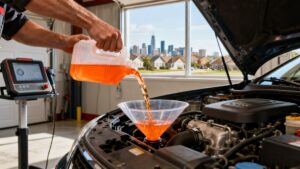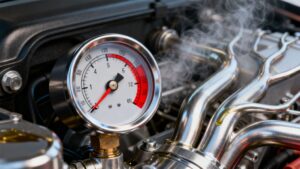
It starts with a single top-off between oil changes. Then it becomes two. Before you know it, you're buying oil by the case. Excessive oil consumption is what happens when your engine starts burning through oil much faster than the manufacturer considers normal, and it's a red flag for an internal problem that needs a professional look.
Why Your Car Suddenly Needs More Oil
Your engine's oil system is a lot like the plumbing in your house—it's meant to be a closed loop. It circulates a precise amount of oil to lubricate moving parts, carry away debris, and keep temperatures in check. A small, hidden leak under your sink might not seem like a big deal at first, but that slow drip can cause major damage over time. Your car's engine works the same way.
Now, it's true that all engines use a tiny bit of oil, especially older or high-mileage ones. But a sudden jump in consumption is a clear warning sign. This isn't just about the hassle of constantly checking your dipstick; it’s a symptom of a deeper issue. Ignoring it is like turning up the radio to drown out a clunking noise from under the hood—the problem is still there, and it's probably getting worse.
Normal Use Or A Real Problem
Knowing the difference between what’s acceptable and what’s a serious issue is the first step. For some manufacturers, a car needing a quart of oil every 1,000 miles might be considered within the normal range. But if that same car suddenly needs a quart every 500 miles, you definitely have a problem brewing.
This isn't just a personal headache; it has a bigger impact. The U.S. is the world's top oil consumer, using an astonishing 20.25 million barrels per day as of 2025, which is 20% of the global total. When individual cars burn excess oil, they run less efficiently and contribute to that demand. Ignored oil issues can even lead to 10-20% higher fuel use from increased engine friction, hitting you right in the wallet. You can explore more data on global consumption patterns to see the full picture.
To help you figure out what’s going on with your vehicle, we've put together a quick guide. This table makes it easy to see if your car's oil habits are normal or if it's time to call a professional.
Quick Guide to Normal vs Excessive Oil Consumption
| Symptom / Check | Normal Oil Consumption | Potential Excessive Oil Consumption |
|---|---|---|
| Oil Level Between Changes | May drop slightly; might need one quart added over several thousand miles. | Requires adding oil multiple times between scheduled service intervals. |
| Exhaust Smoke | No visible smoke under normal driving conditions. | Blue or grayish smoke coming from the tailpipe, especially during acceleration. |
| Engine Performance | Engine runs smoothly and quietly. | Noticeable decrease in power, rough idling, or new engine noises. |
| Visible Leaks | No dark puddles or drips under the car after it has been parked. | Dark, oily spots on your driveway or garage floor. |
Remember, this table is a starting point. The only way to know for sure is with a proper diagnostic check.
The key isn't just how much oil is used, but how quickly it's being used. A sudden change in your car's oil consumption habits is the most reliable indicator that something has gone wrong internally.
By keeping an eye on these simple signs, you can catch an oil consumption problem before it spirals into catastrophic engine damage. It’s the most important thing you can do to save yourself from expensive repairs and keep your engine running strong for years to come.
The 7 Most Common Reasons Your Car Is Burning Oil
If you find yourself constantly topping off your engine oil, your car is trying to tell you something. A sudden thirst for oil isn't normal; it’s a clear warning sign that something is wrong under the hood. Getting to the root of excessive oil consumption is the first step to fixing it for good.
Here are the seven most common culprits that cause an engine to burn through its oil.

As you can see, oil has a vital job to do. When it starts getting burned up or leaking out, you need to investigate the cause before it leads to bigger, more expensive problems.
1. Worn Piston Rings
Think of piston rings as the gatekeepers between the combustion chamber (where the action happens) and the crankcase below (where the oil lives). They're designed to form a super-tight seal against the cylinder wall, keeping oil out and combustion pressure in.
With enough time and miles, these rings can wear out, lose their springiness, or get gummed up with carbon deposits. Once that seal is broken, a little oil sneaks past and gets burned up with the fuel. The tell-tale sign is bluish-gray smoke puffing out of your exhaust, especially when you step on the gas.
2. Failing Valve Seals
Your engine’s valves are constantly opening and closing to let the fuel-air mix in and exhaust out. At the top of each valve stem is a tiny rubber seal that stops oil from dripping down from the top of the engine into the cylinders.
These seals live in a very hot environment, so they eventually get hard, brittle, and crack. When that happens, you’ll often see a distinct puff of blue smoke from the tailpipe right after you start the engine, especially if the car has been sitting for a while.
3. Faulty PCV Valve
The Positive Crankcase Ventilation (PCV) system acts like your engine's respiratory system. Its job is to vent harmful gases out of the crankcase and send them back into the engine to be burned off. A small valve is in charge of controlling this flow.
If that PCV valve gets clogged or stuck, pressure builds up inside the engine. This pressure has to go somewhere, and it will often push oil right past gaskets and seals, causing both leaks and internal oil burning. A bad PCV valve is a cheap and easy fix, but ignoring it can cause serious damage down the road.
A malfunctioning PCV system doesn't just cause oil consumption; it can lead to a cascade of other problems, including blown seals and accelerated engine wear. It's a small part with a big job.
4. Leaky Gaskets And Seals
This one isn't about burning oil, but losing it. Your engine uses gaskets to seal stationary parts (like the valve cover or oil pan) and seals for moving parts (like the crankshaft). Together, they keep the oil inside where it belongs.
Over time, these rubber and cork components dry out, shrink, and crack, letting oil seep out. If you're seeing dark, oily spots on your driveway, a leaky gasket or seal is almost always the reason. While the oil isn't technically being "burned," the end result is the same: a dangerously low oil level.
5. Incorrect Oil Viscosity
Using the wrong kind of oil can absolutely cause problems. Viscosity is just a measure of the oil's thickness—how easily it flows. Your car's manufacturer designed the engine to work with a specific viscosity, like 5W-20 or 10W-30.
If you use oil that’s too thin, it can slip past piston rings and seals much more easily. On the other hand, oil that's too thick won't flow properly, leading to poor lubrication, extra heat, and wear that eventually causes oil burning. The lesson is simple: always stick to the oil recommended in your owner's manual.
6. High Oil Pressure
This is less common, but it does happen. Excessively high oil pressure can overwhelm the engine's seals and gaskets, forcing oil into places it shouldn't be. This is usually caused by a blockage somewhere in an oil passage or a faulty pressure relief valve. That extra pressure pushes lubricant past its barriers, leading to both burning and external leaks.
7. Worn Turbocharger Seals
If your vehicle has a turbo, you have another potential culprit. A turbocharger spins at incredible speeds—often well over 100,000 RPM—and relies on a steady flow of engine oil to keep it lubricated and cool.
Specialized seals inside the turbo keep that oil where it belongs. When these seals wear out from heat and age, oil can leak into either the engine's intake or the hot exhaust system. This usually results in major oil consumption and thick clouds of blue or white smoke pouring from the tailpipe.
How To Pinpoint The Source Of Your Oil Leak
So, you’ve noticed your car has developed a thirst for oil. Before jumping to the worst-case scenario, it’s time to put on your detective hat. Finding the source of excessive oil consumption often starts with a few simple checks you can do right in your driveway, no special tools needed.
These first steps will give you valuable clues about whether your engine is burning oil internally or leaking it externally.

The first, and most important, step is to start tracking the loss. This isn't just about noticing the level is low; it’s about measuring how quickly it’s disappearing.
Start A Simple Oil Consumption Test
You don't need a lab coat for this one—just your dipstick and a way to track mileage. The goal is to figure out a clear rate of oil loss.
- Get A Baseline: With the engine cool and the car parked on a level surface, check the oil and top it off right to the "Full" mark. Write down your car's current mileage.
- Drive Normally: Go about your regular driving routine for the next 500 to 1,000 miles.
- Re-Check And Measure: Park in the exact same level spot with the engine cool. Check the dipstick again and see how much oil you need to add to get it back to the "Full" line.
- Calculate The Rate: Divide the miles you drove by the amount of oil you added (in quarts). For instance, if you drove 750 miles and had to add half a quart, your consumption rate is 1,500 miles per quart.
This simple log gives you concrete data. Walking into a shop with this information is far more helpful to a technician than just saying, "I think it's using a lot of oil."
Check For External Leaks And Exhaust Smoke
Next, it's time to look for physical evidence. Slide a large piece of clean cardboard under your engine and leave it overnight. In the morning, check for any drips. A puddle of dark brown or black fluid points directly to an oil leak, likely from a failing seal or gasket.
A bad oil pan gasket, for example, can cause a slow but steady drip that adds up to major oil loss over time. If you think that might be the issue, you can read our guide on the signs of a failing car oil pan gasket.
The color of your exhaust smoke is another huge clue:
- Blue or Grayish Smoke: This is the classic sign that oil is being burned up inside the combustion chamber. You might notice a puff when you first start the car (a hint of bad valve seals) or see it when you accelerate (pointing toward worn piston rings).
- White Smoke: If you see thick, sweet-smelling white smoke, it's usually a coolant leak, not oil.
- Black Smoke: This typically means the engine is running rich, burning way too much fuel.
Don't mistake a small puff of vapor on a cold morning for a real problem. True oil smoke has a distinct bluish tint, a noticeable burning smell, and will stick around even after the engine is fully warmed up.
When To Call In The Pros: Advanced Diagnostics
If your at-home investigation points to an internal problem—or if you just can't find an obvious leak—it’s time for a professional diagnosis. Technicians have specialized tools to see what’s happening inside your engine without having to tear it apart.
Two of the most common procedures are the compression test and the leak-down test.
A compression test measures the amount of pressure each cylinder can build up. If the compression is low in one or more cylinders, it’s a strong sign that the piston rings are worn or the valves aren't sealing right, which allows oil to get into places it shouldn't be.
A leak-down test is even more precise. The mechanic fills a cylinder with compressed air and measures how fast that air escapes. By listening for where the air is going, they can pinpoint the exact cause—a hissing sound from the oil cap points to piston rings, while air escaping from the exhaust pipe suggests a bad exhaust valve. These tests take the guesswork out of the equation and help us create an accurate plan for the repair.
Fixing Oil Consumption And Preventing Future Problems
Once your mechanic has figured out why your car is drinking oil, the next step is getting it fixed. The good news is that solutions can range from simple, affordable repairs to more involved engine work. Even better, knowing what to fix helps you shift from putting out fires to preventing them in the first place, which will save you a ton of money and headaches down the road.

Thankfully, a lot of oil consumption issues are actually minor repairs. These are often the first things a good technician will check because they’re common culprits and relatively cheap to sort out.
Common Repair Solutions
Depending on what the diagnostic tests show, the fix could be surprisingly simple. For instance, if a clogged PCV valve is the problem, replacing it is a quick and low-cost job. This one little part can cause a lot of trouble by building up pressure inside the engine, and a new one can stop the oil loss immediately.
Fixing external leaks by swapping out old, worn-out gaskets is another very common repair. The labor can vary—an oil pan gasket is much easier to get to than a rear main seal—but these repairs stop the bleeding and keep your oil where it belongs.
But what if the problem is deeper inside the engine? If the diagnosis points to internal wear, the repairs get a bit more serious. Things like worn-out piston rings or failing valve stem seals mean a technician has to open up the engine. While these are bigger jobs, they're the only correct way to stop internal oil burning and bring your engine back to life.
If you need professional help, your best bet is to start with a complete car diagnostic test. It’s the only way to get an accurate repair plan.
The goal of any repair isn't just to stop the oil loss; it's to restore the engine's internal balance. A proper fix addresses the root cause, ensuring all components work together as designed for optimal performance and longevity.
Estimated Repair Costs For Common Oil Consumption Issues
To give you a better idea of what to expect, here’s a breakdown of potential costs and timelines for these kinds of repairs. Keep in mind these are just estimates—your vehicle's make and model will affect the final price.
| Repair | Estimated Cost Range | Estimated Repair Time |
|---|---|---|
| PCV Valve Replacement | $50 – $150 | 15 – 30 Minutes |
| Valve Cover Gasket | $150 – $400 | 1 – 3 Hours |
| Oil Pan Gasket | $250 – $600 | 2 – 4 Hours |
| Valve Stem Seals | $800 – $2,000+ | 6 – 12 Hours |
| Piston Ring Replacement | $2,500 – $5,000+ | 15 – 25+ Hours |
This table should help you budget and manage expectations when you head to the shop. A clear estimate from your mechanic is always the next step.
Turning Repairs Into Prevention
Honestly, the best way to deal with excessive oil consumption is to make sure it never happens. Proactive maintenance is always cheaper and less stressful than major repairs. A few good habits can make a huge difference in your engine's lifespan.
Use The Right Oil: This one is non-negotiable. Your car's manufacturer specifies a certain oil weight (like 5W-30) for a reason. Using the correct oil provides the right lubrication, cooling, and sealing your engine needs to fight off premature wear.
Stick To A Maintenance Schedule: Regular oil changes are the single most important thing you can do for your engine. Fresh, clean oil protects all those moving parts and prevents the sludge and carbon buildup that causes piston rings to get stuck and seals to fail.
Another fantastic way to avoid these problems is to be smart when you're car shopping. If you’re looking at a used car, a thorough pre-purchase inspection can spot potential oil burners before they become your headache.
By pairing the right repairs with a smart prevention strategy, you can take back control of your vehicle’s health. This approach doesn't just fix the immediate oil loss—it protects your engine for years to come.
A Guide For Commercial Fleets And High-Mileage Vehicles
As a commercial fleet manager, you know that excessive oil consumption isn't just a minor maintenance task—it’s a direct hit to your bottom line. What might be a slight annoyance for a single driver (an extra quart of oil here and there) quickly becomes a massive financial drain when multiplied across an entire fleet.
Left unchecked, this seemingly small issue snowballs. You'll see it in higher fuel bills, more vehicle downtime, and those dreaded, budget-wrecking engine repairs. This is especially true for your high-mileage workhorses. As the miles stack up, parts like piston rings and valve seals naturally wear down, making them prime candidates for oil consumption. For delivery vans and work trucks that live on the road, it's not a matter of if it will happen, but when.
The High Cost Of Inaction
Putting off what seems like a minor oil consumption problem in a fleet vehicle is a recipe for operational disaster. The costs aren't just about the oil itself; they compound in ways that can cripple your schedule and budget. For instance, a vehicle burning old, dirty oil can waste up to 2-5% more fuel because of increased friction and poor lubrication.
Think about that across your entire fleet. When you consider that some experts estimate we only have about 47 years of global oil reserves left from the current 1.77 trillion barrels, you can see why preventive maintenance is so crucial. You can learn more about how global demand impacts your fleet's fuel budget.
Beyond fuel and the cost of oil, you're also paying for the labor hours spent constantly checking and topping off levels. But the biggest risk is catastrophic engine failure. A single seized engine can pull a key vehicle out of service for weeks, leading to thousands in repair costs and lost revenue.
Proactive Fleet Management Strategies
The only way to get ahead is to switch from a reactive mindset to a proactive one. Instead of waiting for a breakdown, you can implement systems to catch these problems while they're still small and manageable.
- Data-Driven Maintenance: Use a system to track oil consumption for every vehicle. Modern telematics can alert you the moment a truck starts using more oil than usual, letting you schedule an inspection before it becomes a real headache.
- Regular Oil Analysis: Don't just drain the oil—analyze it. Sending samples to a lab can reveal microscopic metal particles, fuel in the oil, or coolant contamination. These are the earliest warning signs of internal engine wear, long before you'd notice a performance drop.
- Preventative Parts Replacement: Get to know the common failure points on your vehicles. If you know a specific engine model tends to have PCV valve issues around 80,000 miles, make a plan to replace them across the fleet before they fail and cause costly downtime.
For a fleet, consistency is king. A standardized maintenance protocol ensures every vehicle receives the same level of care, reducing variability and making it easier to spot outliers that signal an emerging problem.
By adopting these strategies, fleet managers can transform excessive oil consumption from an unpredictable crisis into a predictable maintenance item. This approach doesn't just lower your total cost of ownership—it maximizes vehicle uptime and helps you get more service life out of your entire fleet. For older vehicles, using the right products is key; you might be interested in our guide on when to switch to a high-mileage oil change service.
Frequently Asked Questions About Excessive Oil Consumption
Even after digging into the causes and fixes for excessive oil consumption, a few questions might still be bouncing around in your head. We get it. This is where we’ll give you clear, straight answers to the most common things we hear from drivers every day.
Our goal is to clear up any lingering confusion so you can feel confident about the next steps for your car.
Is It Normal For A Car To Burn Some Oil Between Changes?
Yes, it's completely normal for an engine to use a little bit of oil between services. You can think of it as a small "tax" for all the hard work your engine does. As a car racks up the miles, the tiny spaces between parts like piston rings and cylinder walls can get a bit wider, letting a very small amount of oil burn off with the fuel.
In fact, manufacturers plan for this. It's not unusual for an automaker's specs to say that using up to one quart of oil every 1,000 to 2,000 miles is within an acceptable range. The real concern isn't if your car uses oil, but how much and how quickly.
What you really need to watch for is a change in the pattern. If your car has always gone 5,000 miles between oil changes without needing a top-off and suddenly it’s asking for a quart at 2,500 miles, that's a big red flag. A sudden jump in oil use is a clear sign something has worn out or failed, and it's time to find out why your car is suddenly so thirsty.
Can Switching To A Thicker Oil Stop My Car From Burning It?
This is a classic "mechanic in a bottle" idea that many drivers think about, and in some cases, it can provide a short-term patch. Moving to a higher-viscosity oil—like going from a 5W-20 to a 10W-30—can sometimes slow down oil consumption. But it's vital to understand this is usually just a bandage on a bigger problem.
The thicker oil creates a stronger film that has a tougher time getting past worn piston rings or old valve seals. This can cut down on the amount of oil entering the combustion chamber, particularly in older, high-mileage engines where parts are a bit looser.
However, this trick comes with some serious risks. Your engine was built to work with a specific oil viscosity. Using an oil that's too thick can:
- Increase Startup Wear: Thicker oil doesn't flow as well when it's cold, which can leave critical engine parts without proper lubrication for the first few moments after you start the car.
- Strain The Oil Pump: The pump has to work much harder to push the heavier oil around, which can lead to it wearing out sooner.
- Impair Modern Engine Systems: Many newer vehicles have systems like variable valve timing that depend on precise oil pressure and flow. The wrong oil can mess with how they operate.
Using a thicker oil is not a permanent fix for excessive oil consumption. While it might mask the symptom for a short time, the underlying mechanical issue—be it worn rings, seals, or gaskets—is still there and will likely continue to worsen.
Before you ever change your oil type, it's always smart to talk to a professional technician. They can figure out the real problem and tell you if a different viscosity is a safe, temporary stopgap or if it will just cause more harm.
How Often Should I Check My Oil If I Suspect A Problem?
If you've got a gut feeling that your car is starting to use too much oil, it's time to be more watchful. You need to switch from being a passive owner to an active monitor. The old advice to "check it at every oil change" just isn't going to cut it anymore.
A fantastic habit is to check your oil level every time you fill up your gas tank. This gives you a regular, consistent schedule for checking and helps you spot a dropping level long before it gets dangerously low.
To get a good, accurate reading, just follow these simple steps:
- Make sure your car is parked on a level surface so you don't get a false high or low reading.
- Wait at least five to ten minutes after turning the engine off. This lets the oil drain back down into the pan. Checking a hot engine right after it's been running will give you an inaccurate, low reading.
- Pull out the dipstick, wipe it completely clean, push it all the way back in, and then pull it out again to check the level.
By checking your oil this often, you'll gather some really valuable information. Being able to tell your mechanic you've lost half a quart over 600 miles gives them a solid, concrete place to start their diagnosis.
Will My Check Engine Light Come On For Low Oil?
This is a very common and dangerous misunderstanding. The check engine light is there to warn you about problems with your engine's management and emissions systems, like a bad oxygen sensor or even a loose gas cap. It will not usually turn on just because your oil level is getting low.
The warning you absolutely must pay attention to is the oil pressure light, which typically looks like a red or amber oil can. This light means you have a critical drop in oil pressure, not just a low oil level. By the time this light comes on while you're driving, your engine is already being starved of lubrication, and catastrophic damage could be just seconds away.
If that oil pressure light ever flickers or stays on, your first and only move should be to pull over safely and shut the engine off immediately. Don't even think about driving any further. The cost of a tow is nothing compared to the cost of a new engine.
If you're dealing with excessive oil consumption or any other maintenance issue, don't wait for a small problem to turn into a major repair. The expert technicians at Kwik Kar Oil Change and Auto Care are here to provide a thorough diagnosis and a transparent repair plan. Schedule your visit today and drive with confidence.