Still holding onto that old 3,000-mile oil change rule? It's time to let it go. For most modern cars, that advice is about as current as a cassette deck. Today’s engines and advanced oils mean your car can likely go much further, typically between 5,000 to over 10,000 miles between changes.
But the real answer depends on your car, the oil it uses, and—most importantly—how you drive.
Your Quick Guide to Modern Oil Change Intervals
There’s no magic number that works for every vehicle. Your daily drive is the biggest clue to how often you need an oil change. Cruising down the highway puts far less strain on your engine than crawling through stop-and-go Dallas traffic during a sweltering August afternoon.
This chart breaks down how your driving habits directly influence your maintenance needs.
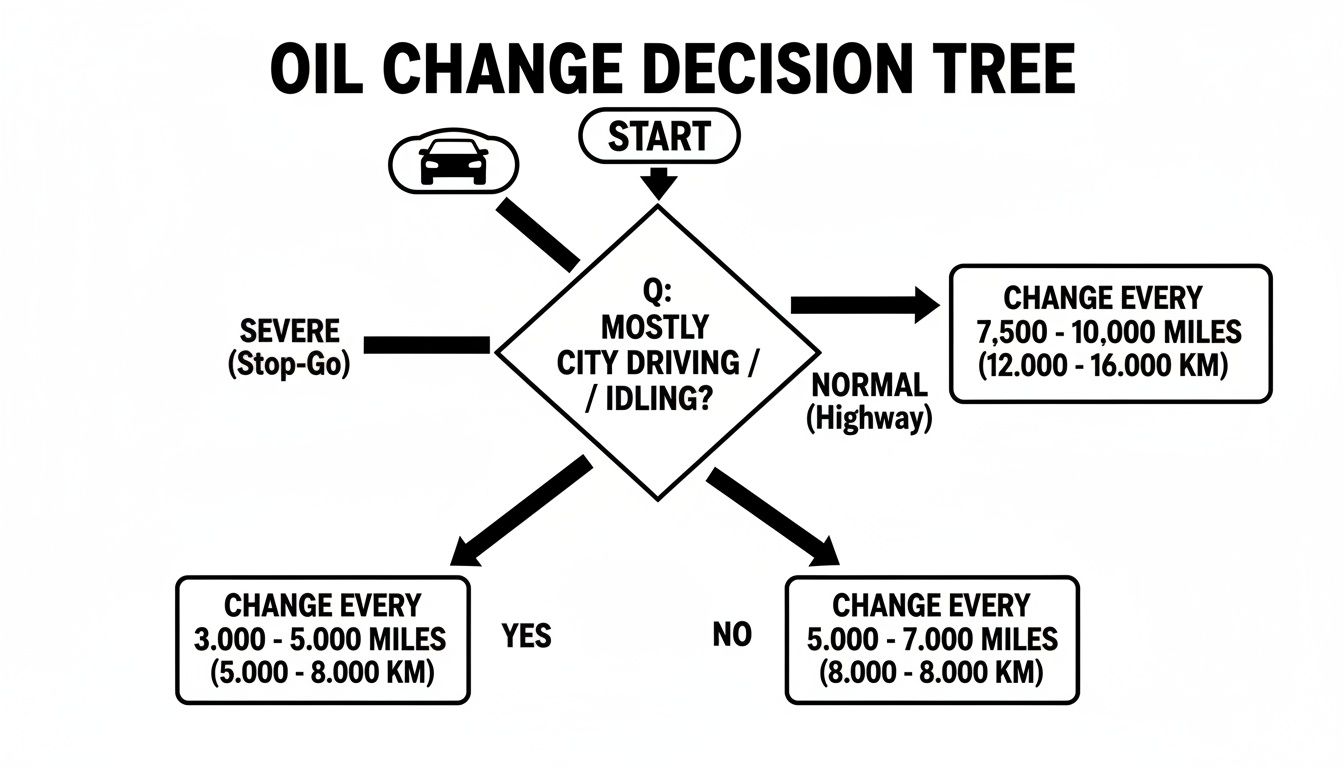
As you can see, the first step is figuring out if your daily routine counts as "normal" or "severe." Getting this right is the key to protecting your engine and keeping your car running smoothly for years to come.
Defining Your Driving Conditions
So, what exactly is "severe" driving? You might be surprised to find out it describes the daily reality for most Dallas drivers. If any of these sound familiar, your car is operating under severe conditions and needs more frequent oil changes:
- Lots of Short Trips: If your drives are consistently under five miles, your engine rarely gets hot enough to burn off moisture and other gunk that builds up in the oil.
- Stop-and-Go Traffic: The constant braking and accelerating on roads like I-35 or the Central Expressway puts a ton of stress on your engine and degrades your oil faster.
- Extreme Temperatures: Those blistering Dallas summers are no joke. High heat breaks down oil, stripping it of its ability to protect vital engine parts.
- Towing or Hauling: Pulling a trailer or loading up your vehicle for a big job makes your engine work much harder, generating extra heat and demanding more from its oil.
The honest truth is that for most people driving in a city, their "normal" commute is what car manufacturers consider "severe." That's why a personalized schedule is so much better than a generic one.
To make things easier, here's a quick reference guide for modern oil change schedules based on real-world conditions.
Recommended Oil Change Intervals for Dallas Drivers
| Oil Type | Normal Driving Conditions (Miles) | Severe Driving Conditions (Miles) |
|---|---|---|
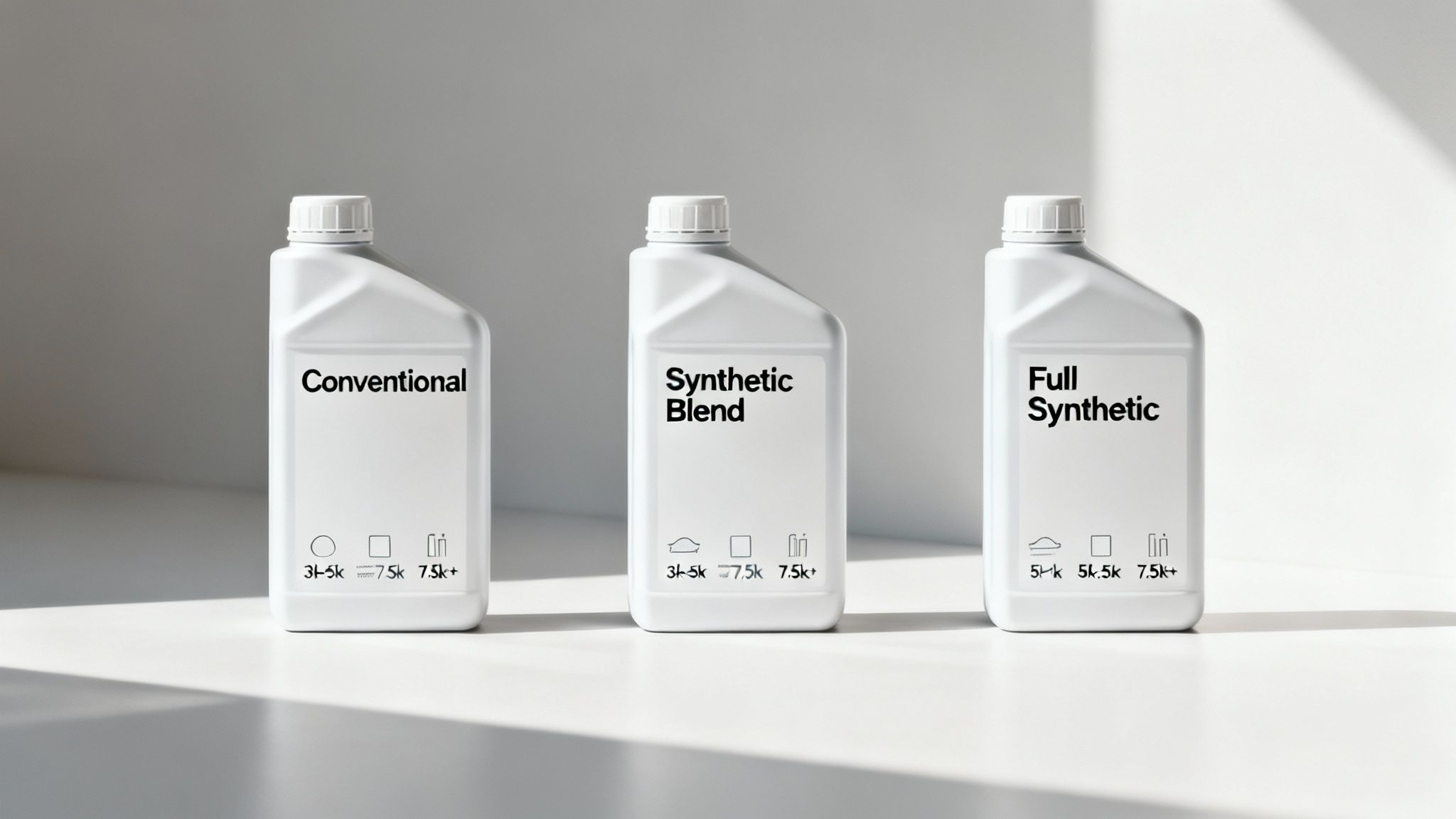
| Conventional Oil | 3,000–5,000 miles | 3,000 miles |
| Synthetic Blend Oil | 5,000–7,500 miles | 3,000–5,000 miles |
| Full Synthetic Oil | 7,500–15,000 miles | 5,000–7,000 miles |
This table provides a solid starting point, but always remember to check your owner's manual for the manufacturer's specific recommendations for your vehicle.
Matching Oil Type to Your Needs
Once you know your driving style, you can match it to the right oil. Each type has a different lifespan and is engineered for different levels of performance. For instance, understanding the ideal synthetic oil change interval can help you decide if it's the right choice for your high-mileage commuter.
At Kwik Kar, our technicians can help you sort through the options. We'll set you up with the best oil and a schedule that fits your car, your driving habits, and your budget, giving you confidence that your engine has the protection it needs to handle whatever Dallas roads throw at it.
Why Regular Oil Changes Are Your Engine's Best Friend
Think of engine oil as the unsung hero working deep inside your vehicle. It’s not just some brown fluid; it's the lifeblood flowing through your engine's veins, juggling several critical jobs all at once. Without fresh, clean oil, the beautiful, high-speed dance of metal components would quickly turn into a destructive, grinding mess.
Fresh oil creates a thin, protective film over pistons, cylinders, and every other moving part. This slick layer is what prevents direct metal-on-metal contact, which is the number one cause of friction and heat. Over time, that friction would simply wear down parts, killing performance and eventually leading to catastrophic engine failure.
Lubrication: The Primary Role
The job everyone knows oil for is lubrication. Just imagine hundreds of metal parts moving at thousands of revolutions per minute—the friction and heat they generate are immense. Oil forms that crucial barrier that lets these parts glide past each other smoothly, which dramatically minimizes wear and tear.
As oil ages, it gets cooked by all that heat and pressure and starts to break down. It loses its viscosity, which is just its ability to flow properly and coat surfaces. This breakdown is exactly why knowing when to do an oil change is so critical. You're not just topping off a fluid; you're restoring your engine's most important line of defense.
Cleaning Away Harmful Deposits
Your engine is a hot, messy place by nature. The combustion process creates all sorts of nasty byproducts like soot, carbon, and other microscopic gunk. If you just let that stuff circulate, it clumps together and forms a thick, damaging substance we call engine sludge.
Thankfully, fresh oil comes packed with detergents and dispersants designed to fight this.
- Detergents: These additives act like soap, scrubbing away existing sludge and preventing new deposits from sticking to engine surfaces.
- Dispersants: These agents grab onto tiny dirt and grime particles, keeping them suspended in the oil so they can't settle and clog up narrow passages.
When you drain that old oil, you're flushing out all that captured crud with it. Skipping an oil change is like letting that sludge build up, starving critical parts of lubrication and setting the stage for very expensive damage.
A regular oil change is the single most effective and affordable piece of preventive maintenance you can do for your car. It’s a tiny investment that protects the most expensive component you own—the engine.
Regulating Engine Temperature
While your car's cooling system does the heavy lifting, engine oil plays a huge supporting role in keeping things from overheating. It pulls heat away from high-friction hotspots like the pistons and crankshaft bearings, carrying it down to the oil pan where it can cool off.
Old, dirty oil just can't transfer heat as well. This can create hot spots inside the engine, raising the risk of parts warping and wearing out way too soon. Sticking to a consistent schedule ensures your oil is always ready to help keep your engine cool under pressure, especially during those brutal Dallas summers. For older cars that have seen a lot of miles, our guide on high-mileage oil changes offers some extra pointers.
The benefits of staying on top of this aren't just theoretical; the data backs it up in a big way. Following the right oil change schedule can extend your car's engine life by up to 50%. In fact, extensive studies have shown that engines getting fresh oil every 5,000 to 7,500 miles had a 45-50% reduction in wear and tear. This resulted in breakdowns being 40% less frequent than in neglected vehicles.
Understanding Your Car's Oil Monitoring System
That little light on your dashboard is a lot smarter than you might think. We've come a long way from the days of relying on a static cling sticker in the corner of your windshield to guess when an oil change is due. Modern cars are packed with intelligent systems designed to give you a much more accurate picture of your engine's health.
These systems are called Oil Life Monitoring Systems (OLMS), and they've completely replaced the old-school, fixed-mileage reminders. Instead of just counting miles, an OLMS acts more like a personal health tracker for your engine oil, creating a maintenance schedule that’s actually personalized to you.
How Your Oil Life Monitor Works
An OLMS isn't just a simple timer or an odometer counter. It’s a clever algorithm that's constantly pulling data from your vehicle’s computer. Think of it as a silent partner on every drive, taking notes on how you use your car to figure out the real-world condition of your oil.
This system is always analyzing a mix of factors to make its calculations:
- Engine Revolutions: It literally counts every single rotation your engine makes. Pushing the engine into high RPMs puts more stress on the oil.
- Operating Temperatures: The system knows the difference between a long, steady cruise at optimal temperature and a series of cold starts.
- Driving Habits: It knows if you’re towing a heavy load up a hill or just gently cruising down the highway.
- Trip Duration: It logs all those short trips to the store versus long highway drives, since frequent cold starts are particularly tough on oil.
By crunching all this data, the OLMS calculates the remaining useful life of your oil and lets you know when it's time for service—usually with a message like "Oil Life 15% Remaining." This is a massive leap forward from the outdated, one-size-fits-all 3,000-mile rule.
Trusting the Tech: The Computer vs. The Sticker
This brings up a question we hear all the time: should you follow the car's alert or the mileage on the service sticker? The answer is simple: trust the technology your car’s manufacturer built into it. The OLMS gives a much more accurate assessment because it's based on your specific driving patterns, not an arbitrary number.
Your car's Oil Life Monitoring System is designed to save you money and protect your engine. It avoids unnecessary oil changes while making sure you never go too long between services, tailoring the schedule directly to how you drive.
But, this technology isn't completely foolproof. The OLMS is an incredibly sophisticated calculator, but it doesn't have eyes. It can't physically sense the oil's actual condition or its level. That means it won't detect a leak or tell you if the oil has been contaminated with fuel or coolant, which can happen if other mechanical issues pop up.
Why a Professional Eye Still Matters
Even with a top-of-the-line OLMS, you should see a system alert as the absolute minimum for service. It’s a powerful tool, but it doesn't replace the value of having a professional take a look under the hood. A trained technician at Kwik Kar does more than just swap out fluids; they perform a vital health check on your vehicle.
During an oil change, our technicians can spot problems your car’s computer might miss:
- Checking for Leaks: We can identify failing gaskets or small drips that point to bigger problems down the road.
- Inspecting the Old Oil: The color and consistency of used oil can tell a story. We look for signs of metal shavings or coolant contamination.
- Topping Off Fluids: We make sure other critical fluids like coolant, brake fluid, and washer fluid are at safe levels.
Ultimately, your car’s monitoring system is an excellent guide for knowing when to get an oil change. Treat it as your primary indicator, but pair that technology with the expert eyes of a professional. It's the best way to get complete peace of mind and keep your vehicle running smoothly on Dallas roads.
How to Manually Check Your Oil in 5 Simple Steps
While your car's dashboard lights are helpful, nothing beats a good old-fashioned manual check to see what’s really going on inside your engine. It's a simple, five-minute job that puts you in the driver's seat of your vehicle's maintenance. Knowing how to check your oil level and condition tells you the whole story, helping you decide on an oil change based on real evidence, not just a blinking light.
This hands-on check is invaluable. You can spot things like a slow leak that's lowering your oil level or catch contamination issues long before your car’s computer ever would.
Get Your Vehicle and Tools Ready
Before you pop the hood, a little prep work goes a long way toward getting an accurate reading and keeping your hands clean.
- Park on a Level Surface: This is non-negotiable for an accurate reading. If your car is on a hill, the oil will tilt to one side of the pan, giving you a false reading that it's too high or too low.
- Let the Engine Cool Down: For safety and accuracy, the engine needs to be off and cool. If you just got back from a drive, give it a good 10-15 minutes. This lets all the oil drain back down into the pan where it can be measured properly.
- Grab a Rag: You’ll need a clean, lint-free cloth or a paper towel to wipe the dipstick.
Follow These Steps for an Accurate Check
Once you’re set, the process itself is a breeze. Even if you’ve never looked under the hood before, you can do this with confidence.
- Locate and Pull the Dipstick: Open the hood and look for the dipstick. It almost always has a brightly colored handle (usually yellow or orange) and might have a little oil can symbol on it. Give it a firm pull to remove it completely.
- Wipe It Clean: Use your rag to wipe the dipstick clean from top to bottom.
- Reinsert and Get a Reading: Shove the dipstick all the way back into its tube until it's fully seated. Pause for a second, then pull it straight out again. This time, don’t wipe it.
- Check the Oil Level: Look closely at the tip. You'll see two marks, a pair of dots, or a crosshatched area that shows the "Full" and "Add" levels. The top of the oil film should be sitting comfortably between those two marks. If it's below the "Add" line, you're running low and need to top it off right away.
- Inspect the Oil's Condition: This is just as critical as the level. Rub a little bit of the oil between your thumb and forefinger to get a feel for it.
The condition of your oil is a direct window into the health of your engine. The level tells you how much oil you have, but the color and texture tell you how well it's still doing its job.
Healthy, fresh oil has a smooth feel and a translucent, amber color. If you see any of these signs, it's time for a change, no matter how many miles you've driven:
- Dark and Opaque: If the oil is pitch black and you can't see the dipstick through it, it’s full of gunk and contaminants.
- Gritty Texture: If it feels gritty or sandy, that means dirt and tiny metal particles are circulating in your engine instead of being filtered out. That's a bad sign.
- Burnt Smell: A sharp, burnt odor means the oil has been breaking down under extreme heat and has lost its ability to protect your engine.
If your check reveals dark, gritty oil, that's a clear signal that your engine is crying out for fresh lubrication. The experts at Kwik Kar are always ready to help with a fast, professional service to get your car running smoothly again.
Key Warning Signs Your Car Needs an Oil Change Now
While the mileage sticker on your windshield and your car’s fancy oil monitoring system are great reminders, your vehicle has its own, more urgent ways of telling you it needs service. Learning to spot these signals is one of the most important things you can do for your engine’s health, as they often pop up long before a minor problem turns into a major, wallet-draining repair.
Think of these warnings as your engine's cry for help. Ignoring them is like ignoring a smoke alarm—the problem is only going to get worse.
Check Engine or Oil Pressure Light Comes On
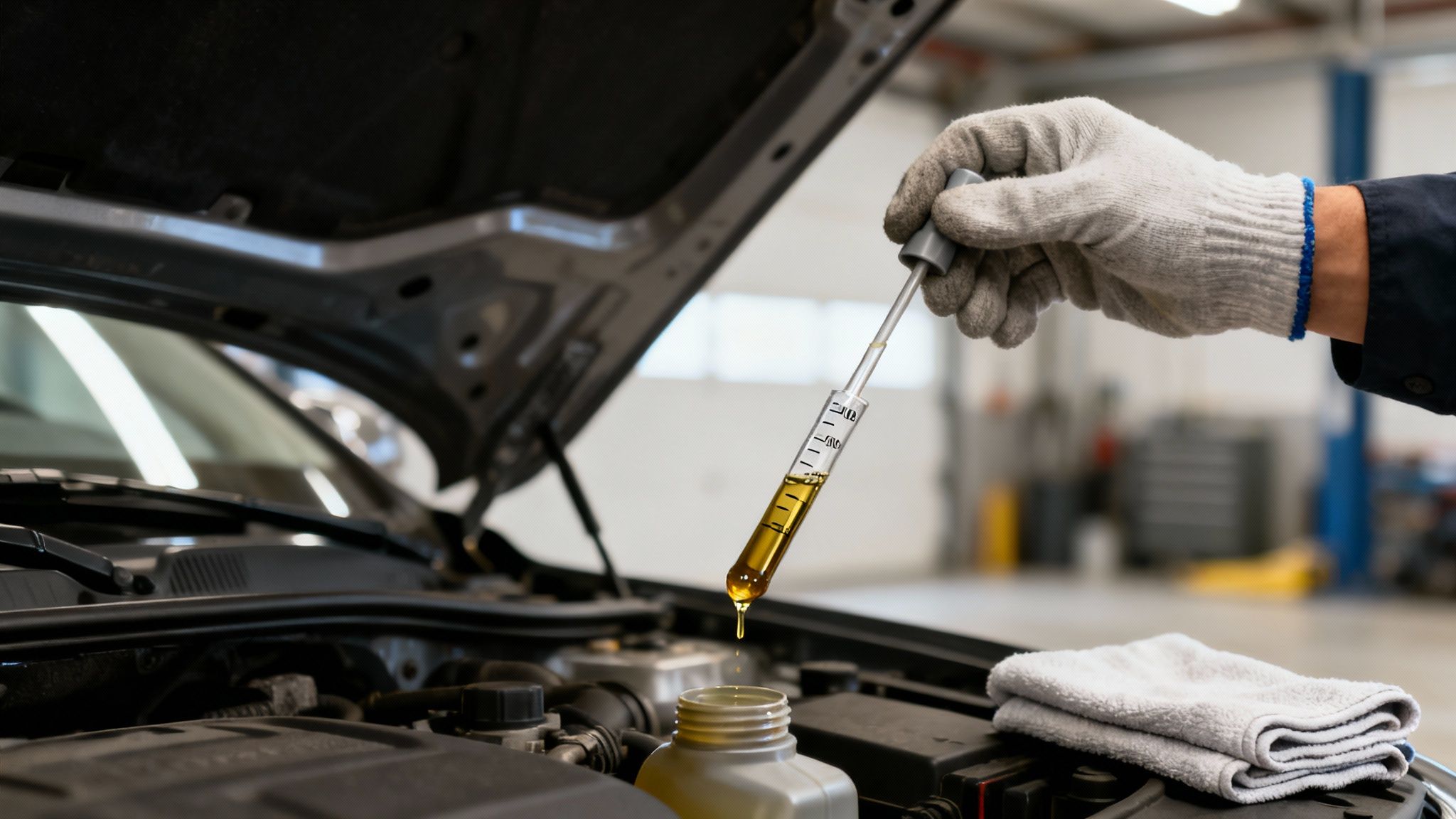
This is the most direct warning your car can possibly give you. If that oil pressure light flashes on, it's a critical alert. It often means the oil level has dropped dangerously low or the oil pump isn't circulating fluid like it should. Pull over safely as soon as you can and shut off the engine to prevent serious damage.
The check engine light can be a bit more mysterious, triggered by dozens of potential issues, but old, dirty oil is a frequent offender. When oil gets too thick and sludgy, it can interfere with sensors and engine timing, which is enough to trip the light. Don't just dismiss these dashboard warnings; they’re your first and best line of defense.
Increased Engine Noise and Knocking
Fresh, clean oil creates a vital cushion between all the moving parts inside your engine. As that oil breaks down and loses its viscosity, that protective film vanishes, leading to harsh metal-on-metal contact.
You might start hearing some new, unwelcome sounds coming from under the hood:
- Rumbling or Knocking: This is often the sound of connecting rods wearing out due to poor lubrication. It’s a loud knocking that tends to get worse as you accelerate.
- Ticking or Tapping: A light ticking noise, especially right after you start the engine, can be a sign that oil isn't getting to the top of the engine fast enough to lubricate components like the valvetrain.
These noises are a dead giveaway that friction is winning the battle inside your engine. Ignoring them can lead directly to catastrophic damage. In fact, an incredible 70% of engine failures are caused by improper lubrication, which really drives home why timing your oil change is non-negotiable. Drivers who stick to the manufacturer's schedule typically see their repair costs end up 60% lower over five years. You can find more insights on how oil quality affects engine demand on Kpler.com.
Visible Exhaust Smoke or Oily Smells
What’s coming out of your tailpipe and the smells you notice in the cabin can tell you a whole lot about what’s going on inside the engine.
If you can see or smell an oil problem, it means the issue has likely been progressing for some time. Acting quickly is essential to prevent further damage and ensure your safety on the road.
Keep your senses peeled for these tell-tale cues:
- Dirty Exhaust Smoke: Normal exhaust is almost invisible. But if you see thick, blue, or gray smoke puffing out of your tailpipe, that's a classic sign of an internal oil leak. It means oil is seeping into the combustion chambers and burning up with the fuel.
- Smell of Burning Oil: If a sharp, nasty smell of burning oil hits you while you're in the car, it could mean oil is leaking onto hot engine parts like the exhaust manifold. This isn't just an unpleasant smell; it’s a potential fire hazard.
- Oil Smell Without Smoke: Sometimes you might just smell hot, old oil without seeing any smoke. This can happen when degraded oil overheats and starts to vaporize, letting fumes creep into your ventilation system.
If you notice any of these symptoms, your car is telling you something is wrong. Don't wait for it to get worse. These are definitive signs that you need to get a professional inspection right away. Here at Kwik Kar, our technicians can quickly figure out if it's just time for a change or if there's a more serious leak, and get you back on the Dallas roads safely.
Your Trusted Partner for Dallas Car Maintenance
Knowing when to get an oil change is half the battle. Knowing where to get it done is just as crucial for your car’s long-term health and your own peace of mind. A good auto shop doesn’t just drain and refill oil; they become a partner in protecting your investment. For Dallas drivers, who are always juggling packed schedules and tough commutes, finding a shop that’s reliable, convenient, and truly knows its stuff is non-negotiable.
That’s exactly where Kwik Kar Oil Change and Auto Care comes in. We get the unique challenges Dallas drivers face—from the brutal summer heat that cooks your oil to the endless stop-and-go traffic that puts a heavy strain on your engine. We’ve designed our services to tackle these local problems head-on, making car care something you can finally check off your list without any stress.
Making Expert Car Care Fit Your Schedule
We know your time is gold. Trying to squeeze in car maintenance during a busy workweek can feel like an impossible task. That's why we're open seven days a week, making it easy to find a time that works for you, not the other way around. Our online scheduling system is a breeze, letting you book a spot in minutes and say goodbye to phone tag for good.
But convenience doesn’t mean cutting corners. Every oil change is handled by skilled, certified technicians who are obsessed with getting the job done right the first time. We only use high-quality oils and genuine parts that meet or beat your car’s factory specs, so you can drive away knowing your engine has the best protection possible.
Transparent Pricing and Real Savings
Being proactive about maintenance with Kwik Kar doesn't just feel smart—it pays off. Here's a game-changer: keeping up with oil changes can boost your fuel efficiency by 1-2%. At recent gas prices, that saves the average driver around $150 a year. An EPA study confirmed it: fresh oil cuts down on friction, improving MPG by up to 2% in sedans and SUVs and 1.5% in light trucks. For someone driving 15,000 miles a year, that could mean burning 500 fewer gallons of fuel annually. And in a market like Dallas, where 65% of vehicles are SUVs or trucks, those savings add up fast across the city.
We believe in honest, straightforward service. No smoke and mirrors here. Our pricing is transparent, and we even offer online specials to make taking care of your car even more affordable. You’ll always know exactly what you’re paying for before we even pick up a wrench.
Choosing a service center isn’t just about one oil change. It’s about building a relationship with a team you can trust to care for your vehicle for years to come. That’s the Kwik Kar promise.
Solutions for Dallas Drivers and Fleets
Whether you’re in charge of the family SUV or an entire fleet of work trucks, Kwik Kar has you covered. We bring the same meticulous level of care to every single vehicle that rolls into our bays.
- For Individual Drivers: We’re your one-stop shop for everything from oil changes and state inspections to complex brake repairs and engine diagnostics.
- For Fleet Managers: Our custom fleet programs are built to keep your vehicles on the road, maximize uptime, and keep your operating costs in check.
With a long list of glowing reviews on Google and Yelp, we've worked hard to earn the trust of the Dallas community. We do it by delivering reliable work and fantastic service, day in and day out. When you’re ready for a car care experience that actually puts you first, check out our professional oil change services and book your appointment today.
Frequently Asked Questions About Oil Changes
Even with all this ground covered, a few questions always seem to pop up. Let’s tackle some of the most common things we hear from Dallas drivers to give you total confidence in managing your car's health.
Can I Really Go Longer Than 7,500 Miles?
Yes, but it comes with a big "if." If you're driving a newer car, exclusively using a top-tier full synthetic oil, and most of your miles are clocked on long, steady highway cruises, then stretching to 10,000 miles or even more might be okay.
However, that doesn't describe the typical Dallas commute. For most of us navigating stop-and-go traffic and running short errands, pushing the interval that far is asking for trouble. Your owner's manual is your best friend here, but you also have to be honest about your driving habits before going past that 7,500-mile guideline.
Your manufacturer's recommendation is the gold standard. If your car has an Oil Life Monitoring System (OLMS), trust it—it provides a personalized countdown based on your actual driving, which is far more accurate than just watching the odometer.
When in doubt, it’s always smarter to change your oil a little early than a little too late. The cost of a timely oil change is nothing compared to the gut-wrenching expense of engine damage from running on worn-out oil.
What Happens If I Use the Wrong Oil Type?
Using the wrong oil is a lot like giving your engine the wrong prescription. It might not cause an immediate problem, but it will absolutely cause serious internal damage over time. The "wrong oil" can mean a couple of different things, and none of them are good.
- Wrong Viscosity (e.g., 5W-20 instead of 5W-30): An oil that's too thin won't create a strong enough protective film, leading to accelerated wear. If it's too thick, it can't flow quickly to critical parts, starving them of lubrication—especially during a cold start.
- Wrong Type (Conventional instead of Synthetic): If your car's manufacturer specifies synthetic oil, there's a good reason. High-performance and turbocharged engines run hotter and demand the stability that only synthetics can provide. Using conventional oil in these engines can lead to sludge, overheating, and rapid oil breakdown.
The easiest way to avoid this mess is to just stick with the oil type and viscosity grade listed in your owner's manual. It guarantees your engine gets the exact protection it was designed for.
Do Older Cars Need More Frequent Oil Changes?
Absolutely. As a car gets up there in mileage, engine components naturally wear. Seals might become a bit brittle, which can lead to small leaks or cause the engine to consume a little more oil between changes. An older engine is simply working harder and is more vulnerable to damage from dirty oil.
For high-mileage vehicles (think anything over 75,000 miles), it's smart to shorten the oil change interval. If you were doing it every 7,500 miles, tightening that up to every 5,000 miles is a great preventative measure. This helps flush out harmful contaminants more often and keeps that engine running as smoothly as possible, for as long as possible. Using a high-mileage oil formula, which has additives to help condition older seals, is another fantastic choice.
Your vehicle deserves expert care from technicians who understand its specific needs. The team at Kwik Kar Oil Change and Auto Care is ready to answer your questions and provide the fast, dependable service you need to stay on the road safely. Schedule your appointment online today.