



That unsettling vibration you feel through your steering wheel when you brake isn't just an annoyance—it's your car telling you something needs attention. More often than not, the reason your front end shakes when braking is due to warped brake rotors. This creates a pulsing sensation as the brake pads try to grip a surface that's no longer perfectly flat.
Decoding the Shudder When You Hit the Brakes
When you press the brake pedal, you expect a smooth, quiet stop. A sudden shake or shudder is alarming, but it's usually a mechanical issue with a logical explanation.
This vibration, which you'll often feel most in the steering wheel or brake pedal, is your vehicle's way of communicating a problem. It almost always points to an issue within the braking, suspension, or wheel systems. Figuring out the root cause is the first step toward a safe and confident repair.
The most common culprit behind this issue is the brake rotor. Think of a perfectly flat dinner plate. Now, imagine that plate has tiny waves or high and low spots on its surface. When the brake pads clamp down, they grab and release these uneven spots over and over, creating a rapid pulsation that travels up through your suspension and right into your steering wheel. This is exactly what’s happening when a brake rotor "warps."
Why Rotors Are the Primary Suspect
Brake rotors have a tough job. They endure immense heat and friction every time you slow down. Over time, all that thermal stress can cause them to distort or wear unevenly.
Several things can speed up this process:
- Aggressive Driving: Frequent hard braking from high speeds generates extreme temperatures that can warp the metal.
- Improper Lug Nut Torque: This is a big one. If lug nuts are tightened unevenly, they can physically bend the rotor against the wheel hub. It's a surprisingly common issue after a DIY tire change.
- Worn Brake Pads: When pads get too thin, they can't dissipate heat effectively, forcing more of it directly into the rotor and increasing the risk of warpage.
This is far from a rare problem. The Brake Manufacturers Council reports that warped rotors contribute to over 25% of all brake-related repair visits each year. More critically, that brake pulsation can increase your stopping distance by 10-15 feet from 60 mph, which is a massive safety concern. You can learn more about how rotor health affects braking systems from the experts at Bell Performance.
Key Takeaway: While a few different issues can cause shaking, warped rotors are the leading cause by a long shot. The vibration you feel is the brake pad skipping over the rotor's uneven surface, compromising both your comfort and your safety.
Here's a quick-reference summary to help you pinpoint the issue.
Quick Guide to Common Causes of Shaking Brakes
This table breaks down the most frequent reasons your front end might shake when you apply the brakes, helping you identify potential issues at a glance.
| Symptom | Most Likely Cause | Severity Level |
|---|---|---|
| Pulsing/vibrating steering wheel or pedal | Warped Brake Rotors | Moderate to High |
| Grinding or squealing with shaking | Severely Worn Brake Pads | High (Stop driving!) |
| Shaking felt at all speeds, worse when braking | Tire/Wheel Imbalance or Damage | Moderate |
| Clunking or looseness with shaking | Suspension or Wheel Bearing Issues | High |
| Vibration after a recent tire change | Loose Lug Nuts | Critical (Pull over!) |
| Pulsing and potential brake lock-up | Failing ABS Module | High |
Remember, this is just a guide. A proper diagnosis from a professional is the only way to be certain.
Addressing this symptom quickly is crucial. What starts as a simple vibration can escalate into more significant damage to your brake calipers, pads, and even suspension components if you ignore it. Understanding what's happening allows you to seek the right professional help before a small annoyance becomes a costly and dangerous failure. This guide will walk you through the other potential causes and help you figure out the best next steps for your vehicle.
Pinpointing the Source of the Shake
That jarring vibration isn't just an annoyance; it's a direct message from your vehicle, and it's time to listen. Now that you know the symptoms, we can play detective and start narrowing down the culprits. A few simple, safe checks can give you a ton of information, helping you or your mechanic find the right fix much faster.
Think of it like a process of elimination. We'll start with the most common cause and work our way down, using visual clues and straightforward tests to isolate the problem. This is how you empower yourself and understand exactly why your front end shakes when braking.
This simple decision tree lays out the most common diagnostic path when you're dealing with brake vibrations.
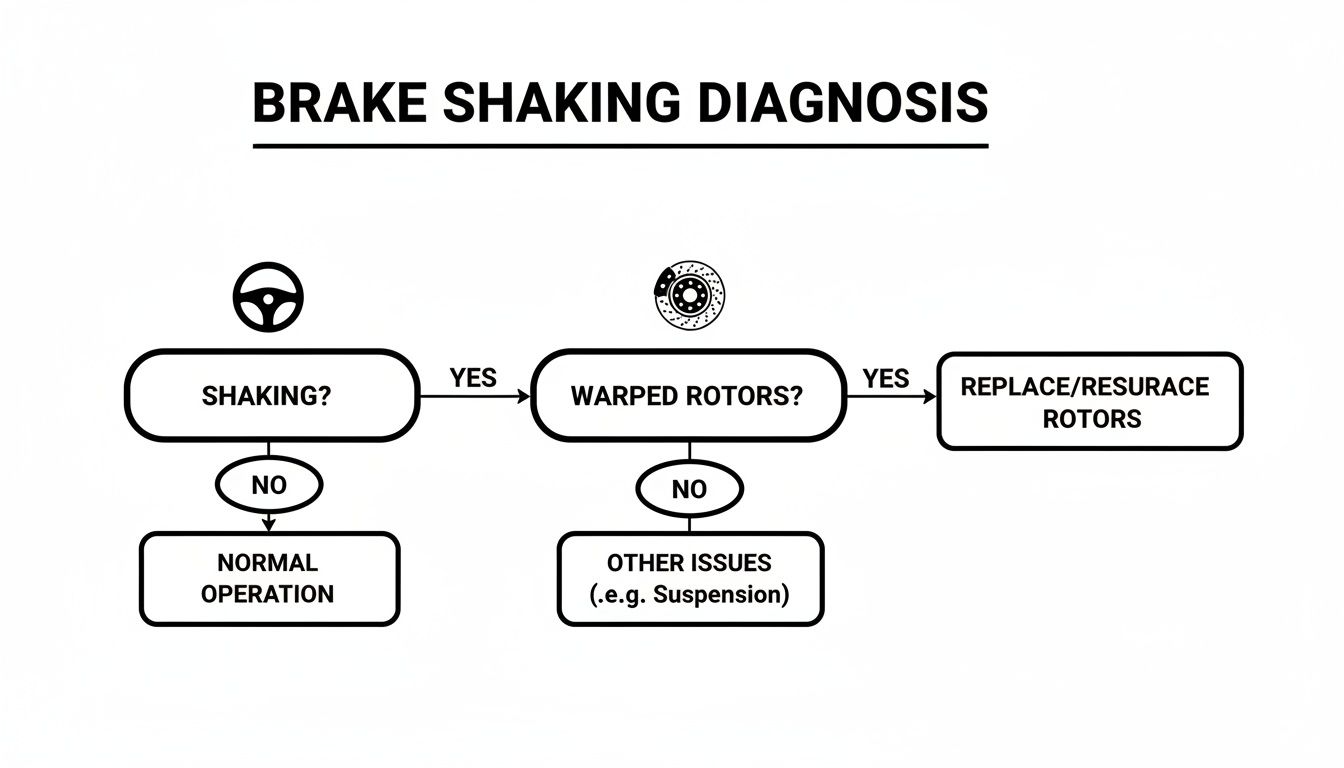
As you can see, the first and most likely thing to check when the shaking happens only when you brake is the condition of your brake rotors.
Investigating Warped Rotors and Worn Pads
Hands down, warped rotors are the number one reason for a pulsating brake pedal or a vibrating steering wheel. The uneven, high-and-low surface of the rotor forces the brake pad to skip and grab instead of applying smooth pressure, creating that shudder you feel. A visual inspection is your first move.
After parking on a level surface, take a look through your wheel spokes at the shiny brake rotor. You're looking for obvious signs of trouble.
- Deep Grooves or Scoring: Do you see noticeable lines or rings cut into the metal? That’s a clear sign of uneven wear.
- "Hot Spots" or Discoloration: Bluish or dark patches on the rotor are a dead giveaway for overheating, which is what causes warping in the first place.
- Visible Rust or Pitting: While a little surface rust after it rains is normal, deep pitting creates an uneven surface that will definitely cause shaking.
While you're there, check your brake pads. If they're worn down to less than 1/4 inch of pad material, they can't handle heat properly, which often cooks the rotors and causes damage. Worn-out pads are a major safety issue all on their own. Our guide on common car brake problems goes into more detail on how to spot bad pads.
Here's the key takeaway: rotors and pads are a team. When one starts to fail, it almost always takes the other one with it. Inspecting them together gives you the full story on your brake system's health.
Checking for Wheel and Tire Issues
Sometimes, the problem isn't the brakes at all—the act of braking just makes an existing issue impossible to ignore. Problems with your wheels and tires can create vibrations at all speeds, but the massive forward shift in weight during braking can really amplify the sensation.
Start with a simple walk-around and look closely at your tires.
- Uneven Tread Wear: Is one edge of the tire significantly more worn than the other? This classic symptom points to an alignment problem.
- Bulges or Bubbles: A visible bubble on the sidewall means the tire's internal structure is damaged. This is extremely dangerous and needs immediate attention.
- Flat Spots: These can happen if a car sits for a long time or after a panic stop where the tires skid.
A common and often-overlooked culprit is a simple wheel imbalance. If one of the small weights clipped to your wheel has fallen off, the tire will vibrate at certain speeds, a feeling that's easily mistaken for a brake issue. If the shaking is there at highway speeds before you even touch the brakes, an imbalance is a very likely suspect.
Feeling for Suspension and Steering Looseness
Your car's suspension is a complex web of joints and arms designed to keep your wheels planted firmly on the road. When a part like a ball joint or tie rod end wears out, it creates extra "play," or looseness. You might not feel this slack during normal driving, but the intense forces generated by braking can cause that loose component to shudder violently.
Here’s a safe way to check for this:
- Make sure the vehicle is in park on level ground, with the parking brake set.
- Get a firm grip on one of your front tires at the top and bottom (the 12 o'clock and 6 o'clock positions).
- Try to rock the wheel in and out, pushing with one hand while pulling with the other.
If you feel any clunking or noticeable movement, you've likely got a worn ball joint or a bad wheel bearing. A failing wheel bearing also tends to make a humming or grinding noise that gets louder the faster you go.
The Final Quick Check: Loose Lug Nuts
This is the easiest and most critical check you can do. If your front end shakes when braking right after you’ve had a tire rotation or any service that involved removing a wheel, loose lug nuts are a very real and dangerous possibility. A loose wheel will cause severe vibrations and is a major safety hazard.
Just look at each lug nut. Do they all appear snug against the wheel? If you have a torque wrench, check that they're tightened to your vehicle’s spec. If you don't but you suspect they're loose, do not drive the vehicle. Call for a tow or professional help immediately. This one simple check can prevent a catastrophic failure.
The Connection Between Rotors and Lug Nuts
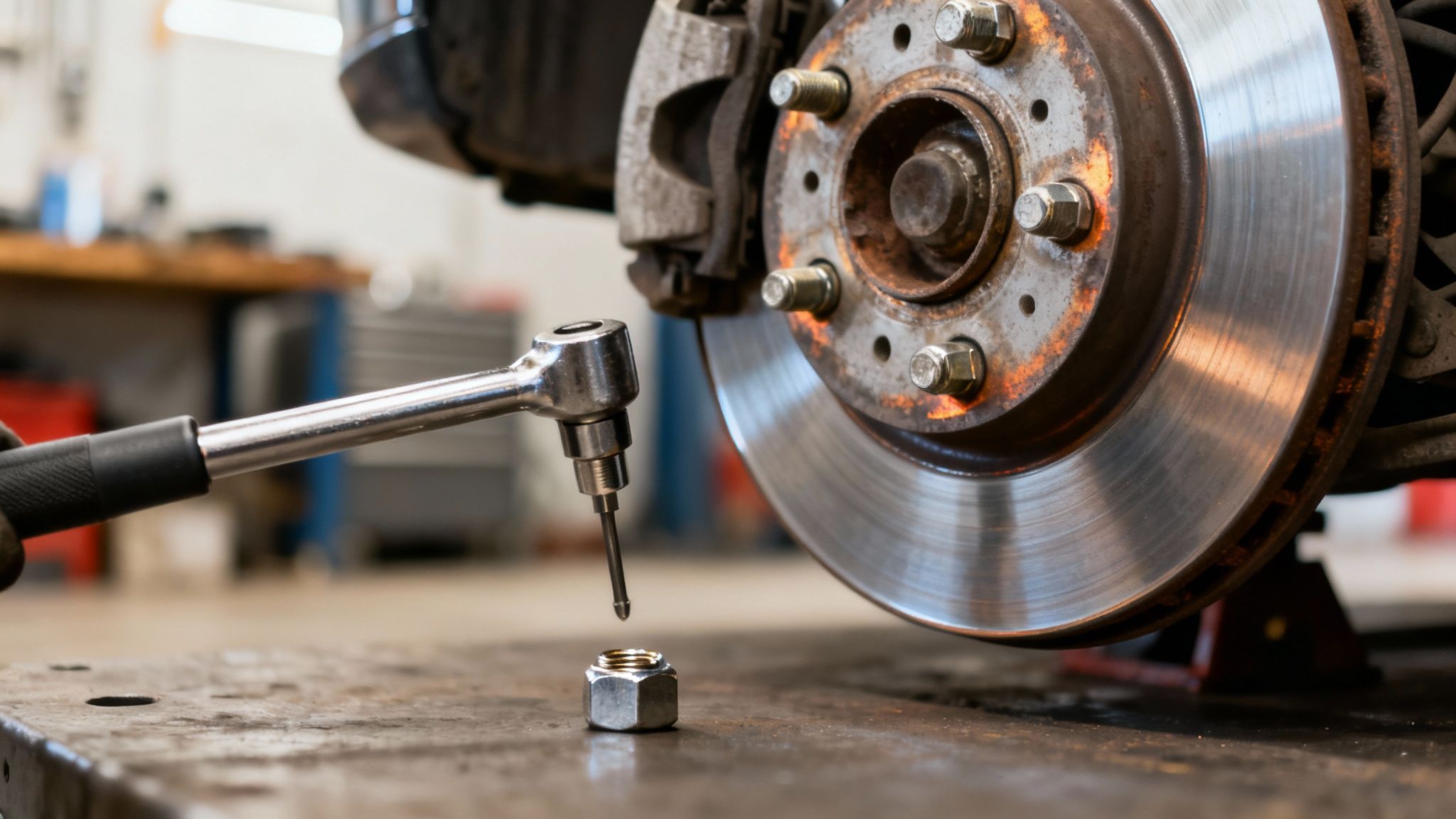
It’s a frustrating cycle we see all the time. A car comes in with a shudder when braking, we fix the rotors, and a few months later, the vibration is back. While warped rotors are the direct cause of the shaking, they’re often just a symptom. The real culprit is usually something much simpler: improperly tightened lug nuts.
That might sound strange. How can the small nuts holding your wheel on possibly damage a heavy-duty piece of steel like a brake rotor? The answer is all about the immense forces and extreme temperatures your brake system handles every day. Precision isn't just a suggestion here; it's an absolute must for smooth, safe operation.
Understanding Thermal Stress and Runout
Every time you hit the brakes, the pads clamp down on the rotors, creating friction that generates a massive amount of heat. On a long downhill drive or in stop-and-go traffic, rotors can easily top several hundred degrees. At these temperatures, the metal becomes slightly more pliable.
This is where the lug nuts come into play. Your brake rotor is sandwiched between the wheel hub and the wheel. If the lug nuts are tightened unevenly or cranked on way too tight, they create uneven pressure points across the rotor's surface. This unequal clamping force can physically distort the hot, expanded rotor.
As the rotor cools, it doesn't return to its perfectly flat shape. It holds onto that tiny warp. This deviation from a perfectly flat surface is called lateral runout, and a variation of just a few thousandths of an inch is all it takes to cause that annoying front end shakes when braking sensation.
The Problem with Impact Guns
Think about the last time you had tires put on. You probably heard the loud, rapid-fire rat-a-tat-tat of an air-powered impact gun. These tools are fantastic for speed, but they are notoriously terrible for precision.
An impact gun can easily blast a lug nut on with 150 ft-lbs of torque or more, which is far beyond the typical 80-100 ft-lbs specification for most cars. Worse, it rarely applies that force evenly across all the nuts. This creates the exact uneven stress that distorts rotors. In fact, one study found that over-tightening lug nuts was the number one cause of brake pulsation, responsible for up to 40% of cases in busy shops.
The Torque Wrench Difference
This is why a true professional always finishes the job with a calibrated torque wrench. This specialized tool allows a technician to tighten each lug nut to the precise manufacturer-specified torque, guaranteeing perfectly even clamping pressure.
It’s a common scenario:
- A driver gets a flat tire and a well-meaning friend helps them out, tightening the lug nuts as hard as possible with the basic wrench from the trunk.
- A few weeks go by, and a faint vibration starts when braking on the highway.
- Over the next month, that vibration becomes a full-on shudder, especially coming down a long exit ramp.
In this case, the over-tightened lug nuts warped the rotor, a problem that only got worse with every heat cycle. It's a classic example of how a simple task, done without the right tool, leads to a more expensive and dangerous issue. This is also why understanding component wear is so important; you can learn more by reading our guide on the average life of brake pads.
Key Insight: A torque wrench isn't just a "nice-to-have" tool; it's essential for modern brake and wheel service. It ensures the wheel is mounted perfectly flush and secure without putting undue stress on the rotor, hub, or wheel studs. Next time you get your tires serviced, don't be afraid to ask if they use a torque wrench for the final tightening—it’s the sign of a shop that does things right.
When It’s Not Your Brakes After All
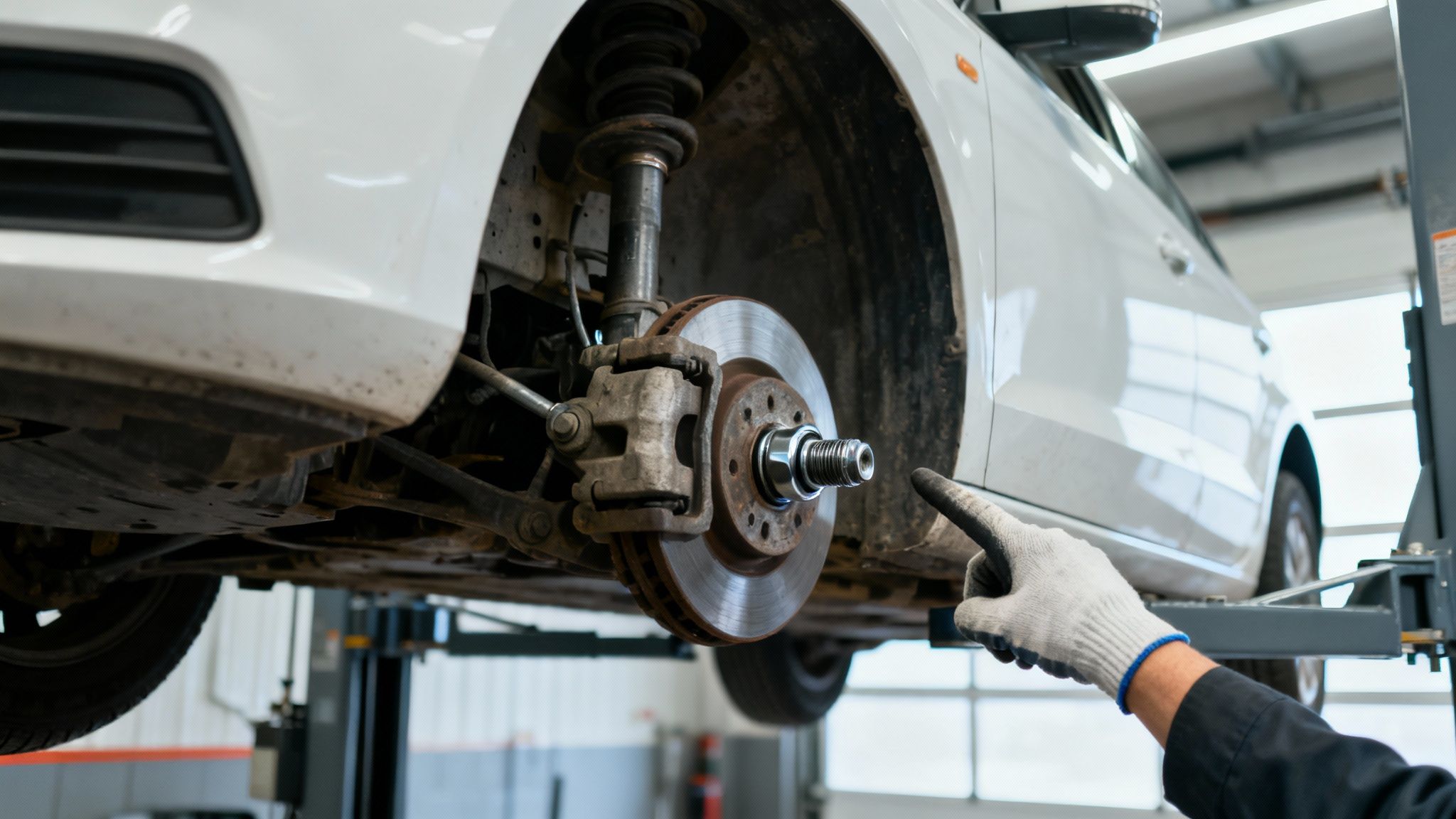
It’s completely natural to assume that any shaking you feel while braking has to be a brake problem. And a lot of the time, that's exactly what it is. But it’s not the whole story.
Sometimes, the powerful forces involved in stopping your car just expose a hidden problem somewhere else. The sudden forward shift in your car’s weight puts a ton of stress on your tires and suspension, turning a minor issue into a very noticeable shudder that you feel right through the steering wheel.
Figuring out these other causes is key. You don't want to waste time and money chasing a brake issue when the real culprit is hiding in the suspension. Let's dig into the usual suspects that can pretend to be a brake problem so you can get to the true source of that shake.
Worn Suspension Components
Your car’s suspension is a complex network of joints, arms, and bushings, all working together to give you a smooth ride and keep your tires glued to the road. Over time, these parts wear down and develop "play," or looseness. This might not be obvious when you're just cruising along, but hitting the brakes changes everything.
Think about a worn-out ball joint or tie rod end. These parts, which connect your wheel hub to the steering and suspension, are no longer held tight. When you brake, the wheel shudders back and forth in that tiny gap, creating a vibration that feels almost identical to a warped rotor.
Common suspension culprits include:
- Worn Ball Joints: These are the critical pivot points for your wheels. When they wear out, the wheel can wobble, especially when you hit the brakes.
- Failing Tie Rod Ends: These connect your steering to your wheels. Any looseness here can cause sloppy steering and a distinct shake when you slow down.
- Degraded Control Arm Bushings: These rubber parts are meant to absorb vibrations. Once they crack or fail, they can't keep your suspension geometry stable under the stress of braking.
This is a bigger deal than many people realize. One analysis found that suspension damage contributes to 20% of shake complaints, often because bushings start cracking after just 60,000 miles.
The Role of Tires and Wheels
Problems with your tires and wheels can also be the secret source of your braking shudder. For a smooth ride, you need perfectly balanced, perfectly round tires. Any little imperfection can cause vibrations that get a lot worse when the brakes are on.
A classic example is an out-of-balance wheel. If one of those small weights on your wheel rim falls off, the tire will vibrate at speed. It's easy to mistake this for a brake problem because the vibration often gets stronger as the tire is pressed firmly into the pavement during braking.
Another tire-related issue is an "out-of-round" tire or a damaged sidewall. Hitting a pothole can cause a flat spot or a bulge, leading to a constant thump or vibration that braking only amplifies. This often points back to a bigger alignment problem. A quick look for uneven tread wear is a great first step here. You can learn more in our guide on the importance of a proper four-wheel alignment.
Key Insight: Before you jump to the conclusion that your rotors are warped, try the simple "12 and 6" wheel check. Safely lift the front of the vehicle and grab the tire at the top and bottom. Try to wiggle it. Any clunking or movement is a dead giveaway for a worn suspension part, not your brakes.
Budgeting for Repairs and Knowing When to Call a Pro
Once you’ve poked around and have a hunch about what’s causing that front-end shake, two questions always come next: "What’s this going to cost me?" and "Can I just fix it myself?" Getting these answers right is the key to saving yourself money and a massive headache.
Understanding the potential costs isn't just about budgeting; it’s about recognizing the financial damage of procrastination. A slight vibration today might only need a simple rotor resurfacing. But ignore it, and you could be looking at a full brake replacement or, worse, damage to expensive suspension components.
For fleet managers running light trucks, brake problems can sideline a vehicle, racking up downtime costs that average $500 per incident—and that’s before you even factor in the safety risks. Even for your daily driver, catching warped rotors early enough for a resurfacing can be a fraction of the cost of a full replacement, but only if they’re still within spec. You can find more expert insights on vehicle maintenance costs from the team at Bell Performance.
Estimated Repair Costs for Brake Shudder Fixes
So, what should you expect to see on an invoice? Here’s a breakdown of typical repair costs for common issues causing front-end shaking. This will help you get a real-world idea of what to budget for when you bring your car in for professional service.
| Repair Service | Estimated Cost Range | Typical Time to Complete |
|---|---|---|
| Brake Inspection & Diagnostic | $50 – $150 | 30-60 Minutes |
| Rotor Resurfacing (Per Axle) | $100 – $250 | 1-2 Hours |
| Brake Pad & Rotor Replacement (Per Axle) | $350 – $700+ | 1.5-3 Hours |
| Wheel Balancing (All Four) | $50 – $100 | 45-60 Minutes |
| Wheel Alignment (Front or Four-Wheel) | $80 – $200 | 1-1.5 Hours |
| Tie Rod End Replacement (Per Side) | $200 – $400+ | 1-2 Hours |
| Ball Joint Replacement (Per Side) | $300 – $600+ | 2-3 Hours |
| Wheel Bearing Replacement (Per Hub) | $400 – $800+ | 2-4 Hours |
As you can see, a quick wheel balancing is a lot easier on the wallet than replacing suspension parts that got worn out by a vibration you ignored. Acting fast is always the cheapest option in the long run.
Key Insight: Don't let a small repair bill turn into a large one. The moment you feel that shudder, it's a signal to act. Catching a warped rotor early might mean a simple resurfacing is possible, saving you hundreds on a full replacement.
The Clear Signs You Need a Professional
While plenty of car enthusiasts are comfortable with basic maintenance, some symptoms are undeniable red flags. It’s time to put the tools down and call a pro. Your brake and suspension systems are non-negotiable safety items, and there's absolutely no room for guesswork.
Here’s when you need to get your car to an expert technician at Kwik Kar immediately:
- Grinding or Scraping Noises: If that shake comes with a nasty, metal-on-metal grinding sound, your brake pads are toast. They've worn down to the metal backing plate, which is now chewing up your rotors. This isn't just damaging—it's incredibly dangerous.
- A Spongy or Soft Brake Pedal: Your brake pedal should feel firm and solid. If it feels mushy or sinks slowly to the floor, you might have air in the brake lines, a fluid leak, or a failing master cylinder. This is a critical safety failure just waiting to happen.
- The Vehicle Pulls to One Side: Does your car try to change lanes on its own when you hit the brakes? That often points to a stuck brake caliper, a collapsed brake hose, or a major suspension problem. In an emergency stop, a car that pulls is dangerously unpredictable.
Beyond these urgent warnings, any persistent shake that you can’t fix with a simple check—like making sure your lug nuts are tight—needs a professional eye. Technicians have specialized equipment like dial indicators to measure rotor runout with perfect accuracy and lifts to safely inspect every single component under your car.
When DIY Isn’t Worth the Risk
Sure, you can find a video for just about any repair, but tackling a full brake job or replacing a ball joint isn't something to take lightly. These jobs require specific tools, experience, and a deep understanding of precise torque specifications.
Get it wrong, and it’s not just that the front end shakes when braking will come back. You could cause a catastrophic failure.
Picture this: A weekend mechanic does a brake job but doesn't use a torque wrench, instead just cranking down on the lug nuts. Those brand-new rotors warp within a few hundred miles. The money "saved" on labor disappears instantly because the job has to be done all over again, this time with another new set of parts.
At the end of the day, your safety and peace of mind are what matter most. When you notice a problem, go through the simple checks we've outlined. But if you hit any of those serious warning signs or just feel like you're in over your head, bringing your vehicle to a trusted shop like Kwik Kar is the smartest and safest call you can make.
Common Questions About Shaking Brakes
Even after you’ve got a good idea of what’s going on, it’s natural to have a few more questions about that front end shake when braking. It’s a nerve-wracking feeling, and the more you understand, the more confident you'll be in the repair process.
We hear these questions all the time from drivers, so we've put together some clear, direct answers to help you out. This should give you a better grasp of the situation and help you have a more informed chat with your technician.
Can I Just Replace the Brake Pads and Not the Rotors?
Technically, you can, but it’s almost always a bad idea if the rotors are what's causing the shaking in the first place.
Think of it like trying to write on a crumpled piece of paper—the result will never be smooth. When you put brand-new, perfectly flat brake pads on a warped rotor, they immediately start to wear down unevenly to match the rotor's distorted surface. You'll not only ruin a fresh set of pads, but the vibration will likely come right back in just a few hundred miles.
For a lasting, safe fix, you have to address the rotors. A professional will measure the rotor's thickness to see if it can be safely resurfaced. If it's too thin, the only safe option is to replace the rotors and pads together.
How Often Should I Have My Brakes Inspected?
A good rule of thumb is to get your brakes professionally inspected at least once a year or every 12,000 miles. This simple check can spot small problems before they balloon into expensive repairs.
But remember, your driving habits play a big role. If you’re constantly in stop-and-go city traffic or live in a hilly area, your brakes are working overtime and need more frequent check-ups. Most importantly, always listen to your car. If you feel a shake, hear a squeal, or notice a soft pedal, get them checked right away, no matter when your last inspection was.
Is It Safe to Drive with a Front End Shake?
No, it really isn't safe. Even a slight vibration when you hit the brakes is a clear warning sign from one of your car’s most critical safety systems. That shake can seriously increase your stopping distance, which could make all the difference in an emergency.
Critical Safety Warning: Continuing to drive with a shaking front end compromises your ability to control the vehicle in a panic stop and can lead to more severe component failure. We strongly recommend getting the issue diagnosed and fixed as soon as possible to ensure your safety and avoid much costlier damage down the line.
Ignoring it won't make it disappear; it’s guaranteed to get worse.
Does Hot Weather Make the Shaking Worse?
Absolutely. Hot weather and heavy use can definitely make the shaking more noticeable. Brakes work by turning motion into heat, and high summer temperatures add to that thermal load, making it much harder for the rotors to cool down.
During demanding drives, like sitting in summer traffic or descending a long, steep hill, rotors can get incredibly hot. This extreme heat can worsen existing warping or even cause new distortions in rotors that were already on the edge. That’s why keeping your brake system in top shape is especially crucial for drivers here in Texas and other warmer climates.
If that shudder in your steering wheel is ruining your drive, don't wait for it to get worse. The expert technicians at Kwik Kar Oil Change and Auto Care have the diagnostic tools and experience to pinpoint the problem and fix it right the first time. Schedule your brake inspection today and drive with confidence again.