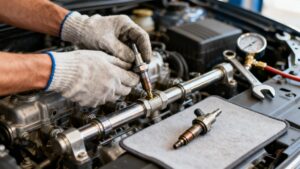




That rough idle or unexpected "Check Engine" light can be a real headache, and more often than not, the culprit is something sneaky like a vacuum leak. So, what exactly is it? Put simply, a vacuum leak is just outside air finding its way into your engine where it doesn't belong.
Your engine is designed to be a sealed system, running on a very precise mixture of air and fuel. When a leak introduces extra, unmeasured air, it throws that whole recipe out of whack. Mechanics call this a "lean" condition—too much air for the amount of fuel being injected. This imbalance sends your car's computer scrambling to compensate, triggering all sorts of performance issues that are hard to miss.
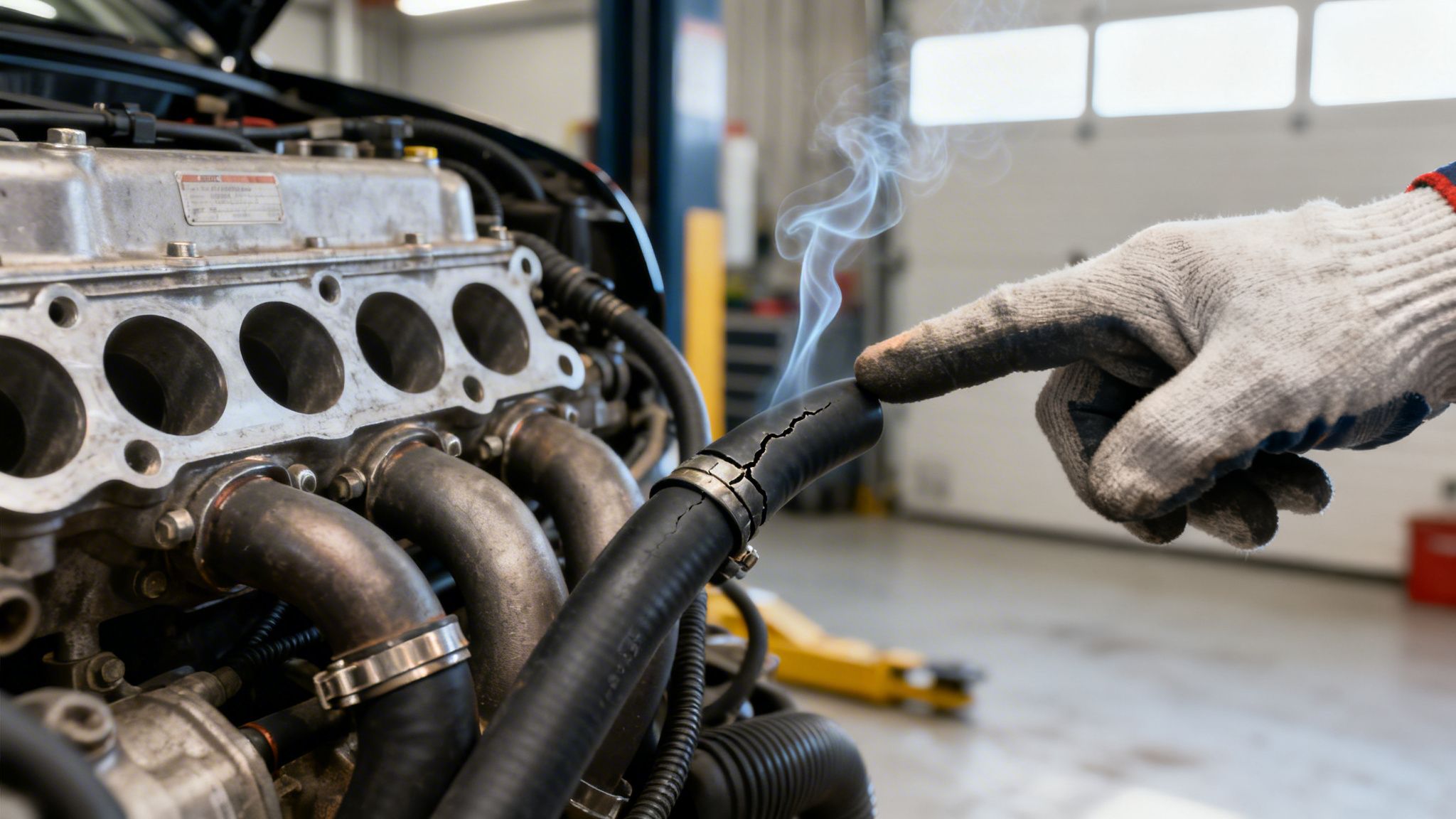
Why You Can't Afford to Ignore a Vacuum Leak
Trying to ignore a vacuum leak is a losing game, both for your car's health and your wallet. The problems it causes can escalate from minor annoyances to some pretty serious damage if you let it go.
A small vacuum leak might seem minor at first, but it can quickly lead to bigger headaches. Here’s a quick rundown of the most common signs you might be dealing with one.
Quick Reference Vacuum Leak Symptoms
| Symptom | What You'll Notice | Why It Happens |
|---|---|---|
| Rough or High Idle | Your engine stutters, shakes, or idles much faster than usual. | The engine's computer is struggling to stabilize the erratic air-fuel mixture. |
| Check Engine Light | The dreaded light appears on your dashboard. | The computer detects a lean fuel condition and logs an error code. |
| Poor Acceleration | The car feels sluggish or hesitant when you press the gas pedal. | The lean mixture doesn't provide enough power for smooth combustion. |
| Hissing Noises | A faint hissing or whistling sound comes from the engine bay. | This is the sound of air being sucked into the engine through a crack or hole. |
| Reduced Fuel Economy | You're making more trips to the gas station than usual. | The engine injects extra fuel to compensate for the excess air, tanking your MPG. |
If any of these sound familiar, it’s a good idea to investigate further before a small issue becomes a costly repair.
Here are some of the real-world consequences you can expect from an unchecked leak:
- Terrible Fuel Economy: To counteract the lean mixture, your engine starts dumping in more fuel. The result? Your miles per gallon (MPG) take a serious nosedive.
- Sluggish Performance: An improper air-fuel ratio leads to weak combustion. You’ll feel this as hesitation when you accelerate and an overall lack of power.
- Risk of Engine Damage: Running lean for too long can significantly raise combustion temperatures. Over time, this heat can damage critical components like pistons and valves.
- Guaranteed Failed Emissions Test: That wacky exhaust chemistry is an instant red flag for any state emissions inspection. You won’t pass.
A tiny crack in a hose might not look like much, but it’s a silent performance killer. Finding and fixing it quickly is the best way to protect your engine from long-term stress and wallet-draining repairs.
The financial hit goes way beyond just future repair bills. A vacuum leak can slash your fuel efficiency by 20-30%, turning every trip to the pump into a frustrating experience. It’s such a common problem that the global market for automotive leak testing is expected to hit $584.5 million by 2030, as the industry gets more serious about catching these sneaky, efficiency-robbing issues.
Learning how to check for vacuum leaks yourself is a great first step toward getting that lost performance back and saving some money.
Recognizing the Telltale Signs of a Leak
Your car has its own way of communicating problems, and a vacuum leak speaks a distinct language. Picking up on these signals is the first step in diagnosing the issue, turning you into a detective before you even pop the hood.

The most common clue is a rough, shaky, or unusually high idle. When you’re stopped, the engine might feel like it’s sputtering or vibrating more than it should. This happens because the engine’s computer is desperately trying to correct the air-fuel mixture that the extra, unmetered air has thrown completely out of whack. In more severe cases, your car might even stall at a stoplight.
Audible and Performance Clues
Another classic sign is something you can often hear right from the driver’s seat. A distinct hissing or whistling noise coming from the engine bay is the literal sound of air being sucked through a crack or a loose hose. This high-pitched sound is caused by air rushing into the low-pressure intake system.
Pay close attention to how the car drives, too. If you notice poor or hesitant acceleration, that’s a strong indicator. The engine isn’t getting the right fuel concentration for a powerful burn, making the car feel sluggish when you hit the gas pedal.
A vacuum leak forces your engine into a constant state of adjustment. The symptoms you experience—from a shaky idle to poor acceleration—are the direct result of its struggle to compensate for an imbalanced air-fuel ratio.
Decoding the Check Engine Light
Often, the first sign of trouble is the one you can’t ignore: the check engine light. A vacuum leak is one of the most frequent triggers for this warning. When you plug in an OBD-II scanner to read the codes, you’ll probably see one of these:
- P0171 – System Too Lean (Bank 1)
- P0174 – System Too Lean (Bank 2)
“System Too Lean” is just a technical way of saying the oxygen sensors are detecting too much air in the exhaust. The engine’s computer flags this, logs a fault code, and lights up your dashboard. If you want to dive deeper into what these codes mean, our guide on check engine light service can help. Understanding these codes is like getting a direct message from your car, pointing you right at the problem.
Assembling Your DIY Detection Toolkit
You don’t need a high-end garage full of expensive equipment to figure out how to check for vacuum leaks. Honestly, you can pull together a pretty effective toolkit using stuff you probably already own, maybe adding a couple of affordable items from the auto parts store. The real goal here is to get you geared up to work safely and find the problem without spending a fortune.
Before you even pop the hood, let’s talk about the most critical tool you have: your own safety awareness. Always work in a space with good airflow, wear safety glasses, and stay keenly aware of moving parts like the fan and belts. The engine needs to be running for most of these tests, so tying back long hair or securing loose clothing isn’t just a suggestion—it’s a must.
The Everyday Essentials
Let’s start with the basics. The workhorse for many DIY vacuum leak hunts is a simple, clean spray bottle. It’s cheap, easy to find, and incredibly effective for the spray test method we’ll cover.
Next up, grab a good flashlight. A bright LED one or a headlamp you can wear is even better. Lots of vacuum lines are tucked away deep in the engine bay, hiding in the shadows, and a strong light is your best friend for a thorough visual inspection. Don’t ever skip a simple visual check before you start spraying things around.
Safety first, always. When you’re leaning over a running engine and using sprays—some of which can be flammable—taking a few extra seconds for precaution isn’t just a good idea, it’s essential for preventing accidents.
Choosing Your Spray Solution
What you fill that spray bottle with actually matters quite a bit, and each option has its pros and cons. They all work on the same principle: when you spray the liquid over a leak, it temporarily seals the crack, which causes a noticeable change in how the engine is running.
- Soapy Water: This is your safest bet, hands down. A little dish soap mixed with water won’t harm your engine’s components or mess up your paint, and it’s 100% non-flammable. If you’re new to this, start here.
- Carburetor Cleaner: This is a more potent option. It works really well because the engine sucks in the flammable cleaner and burns it, causing a very obvious surge in RPMs. However, you have to use it with extreme caution. It’s highly flammable and can damage plastic or rubber parts if you overdo it.
- Propane or Butane Torch (Unlit): Now we’re getting into more advanced territory. Using an unlit torch lets you aim a small, controlled stream of flammable gas at suspected leak points. Just like carb cleaner, it’ll make the engine RPMs jump when it finds the source. This method is really for more experienced DIY-ers because of the obvious fire risk.
Leveling Up Your Toolkit
If you’re ready to get a bit more serious, a couple of extra tools can give you much clearer answers. A mechanic’s stethoscope is surprisingly inexpensive and is fantastic for zeroing in on sounds. It lets you pinpoint the exact source of a hissing noise that your ears just can’t isolate on their own.
For those who like hard data, a vacuum gauge is an invaluable diagnostic tool. It connects right to a vacuum port on the intake manifold and gives you a precise reading of the engine’s vacuum pressure. A nice, steady needle sitting in the green zone means you have a healthy, sealed system. A needle that’s bouncing all over the place or sitting too low is a dead giveaway that you’ve got a leak.
Proven Methods for Pinpointing Vacuum Leaks
Now that you have your tools laid out, it’s time to play detective and track down that pesky leak. There are a few tried-and-true ways to check for vacuum leaks, each with its own advantages. We’ll start with the simplest and work our way up to the more precise techniques.
Think of yourself as an investigator arriving at the scene. The first rule is always to look around for the obvious clues before you start digging deeper.
The Foundational Visual Inspection
Before you even think about spraying anything under the hood, a solid visual inspection is your first move. You’d be surprised how many vacuum leaks are just old, brittle rubber hoses that have finally cracked under pressure. A lot of problems get solved right here, without any fancy gear.
Grab your flashlight and start tracing every vacuum hose you can find. Pay extra close attention to the bends and anywhere a hose connects to something else—those are the prime spots for failure.
So, what are you looking for?
- Cracked or Brittle Hoses: Look for any visible splits or fractures. If a hose looks dried out or feels stiff and hard, it’s a prime suspect.
- Disconnected Lines: It sounds almost too simple, but hoses can get bumped loose during other engine work. Double-check that everything is connected snugly.
- Collapsed Hoses: A hose that’s gone soft can actually get sucked flat by the engine’s vacuum, causing a major blockage.
- Damaged Gaskets: Peer around the base of the throttle body and where the intake manifold meets the engine. You’re looking for any signs of gasket material that’s crumbling or pushed out.
Pro Tip: Start your search in the high-stress areas. The hose for the PCV (Positive Crankcase Ventilation) valve and the big hose running to the brake booster are common culprits. They deal with a ton of heat and vacuum, making them wear out faster.
The Classic Spray Test
If looking around doesn’t turn up the culprit, the spray test is the next logical step. The idea is simple: you spray a liquid over a suspected leak, the engine sucks it in, and the idle changes. It’s a classic diagnostic trick for a reason—it just plain works.
With the engine running and the car in park, start spraying your liquid (soapy water is safest) in short, controlled bursts. Hit all the likely spots: hose connections, gasket seams, and around any sensors plugged into the intake manifold.
Now, listen. When you spray over the leak, you’ll hear the engine’s rhythm change. It might be a small dip in RPMs or a more noticeable surge, but it will be immediate. That’s your “X marks the spot.”
The simple, safety-first process for a DIY spray test is laid out below.
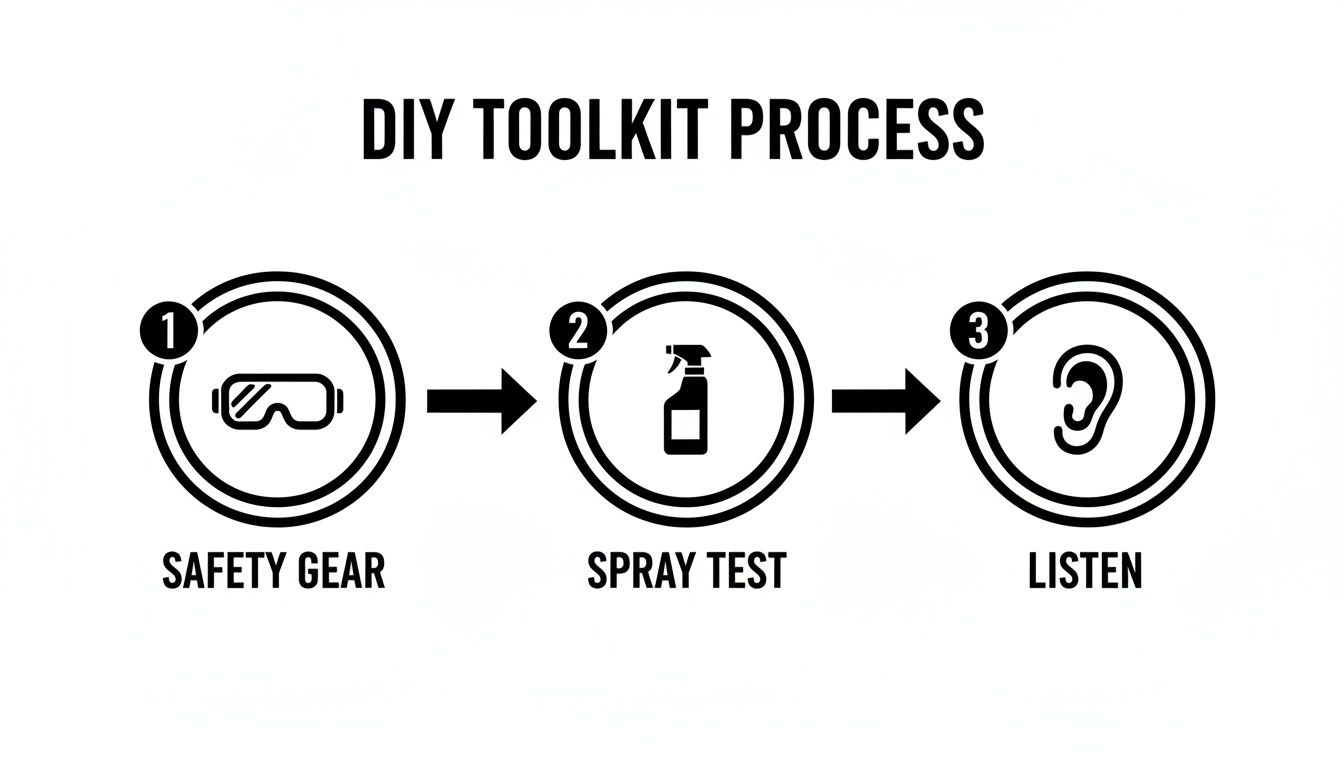
This guide walks you through the safe way to apply, listen, and pinpoint the leak.
The Propane Pinpoint Method
For those who are a bit more experienced, using an unlit propane torch can be a very precise method. This technique is incredibly effective but it does come with an inherent fire risk and must be done with extreme caution. Only attempt this in a well-ventilated space, far from any sparks or ignition sources.
The principle is the same as the spray test. You slowly move the tip of the torch (with the gas flowing but not lit) around potential leak areas. When the combustible propane gets sucked into the engine, it acts as extra fuel, causing a very distinct and immediate jump in the engine’s RPMs.
This is often better for sniffing out tiny, hairline cracks that a liquid spray might bridge over without causing a big change. Again, because of the safety concerns, only try this if you’re confident in what you’re doing and have a fire extinguisher on hand.
While these DIY methods are great, professional tech is always moving forward. Shops now use acoustic imaging tools that can literally “hear” the unique hiss of a vacuum leak with 95% accuracy, even in a noisy garage. This kind of tech helps cut down on energy waste by 10-20% in modern engines. The market for air leak testing is set to grow from $720.26 million in 2025 to $1.47 billion by 2035, showing just how critical it is to catch these performance-killing issues. For more on these industry trends, you can read up on reports from leaders like FLIR.
When to Call in the Professional Tools
Sometimes, no matter how carefully you inspect and spray, a vacuum leak can be incredibly stubborn. This happens all the time with tiny, hairline cracks in gaskets or leaks tucked away in places your eyes and hands just can’t reach.
When you’ve tried all the DIY tricks in the book and still come up empty, it’s not a defeat. It’s just a sign that it’s time to bring in the high-tech equipment the pros use.
The Power of a Professional Smoke Machine
This is where a professional-grade smoke machine becomes a technician’s best friend. The concept is simple but absolutely brilliant: the machine gently fills the entire intake system with a thick, non-toxic vapor.
Wherever there’s a leak—no matter how small—a visible stream of smoke will pour out. It makes even the most microscopic flaw impossible to miss and takes all the guesswork out of the equation.
Beyond the Smoke: Advanced Leak Detection
For the really tricky situations, technicians have even more advanced gear in their arsenal. An ultrasonic leak detector is a specialized tool that can “hear” the high-frequency hissing sound a vacuum leak makes, a sound that’s completely inaudible to the human ear. A tech will scan the engine bay with a wand-like sensor, and the device translates that ultrasonic noise into a tone that gets louder as it gets closer to the leak. It’s like a high-tech game of hot and cold.
A professional diagnosis with these tools isn’t just about finding the leak; it’s about finding the right leak, the first time. This prevents the frustrating and expensive cycle of replacing parts based on guesswork, saving you a ton of time and money in the long run.
Another powerful method is helium leak detection. This technology is so precise that it’s expected to account for 35% of the vacuum leak detector market by 2025. Its ability to pinpoint leaks smaller than 10^-6 mbar*l/s helped cut automotive recalls by 12% industry-wide since 2015. You can dig deeper into this market evolution and its impact on vehicle safety in this detailed industry report.
Understanding these advanced methods shows the real value of a professional service. While your DIY spirit is fantastic, knowing when to hand the keys over to an expert with the right equipment is the smartest move you can make. It’s simply the fastest path to a correct solution.
To see how these tools fit into a larger diagnostic process, check out our guide on what a full car diagnostic test involves.
You Found the Leak—What Happens Next?
Alright, you’ve pinpointed the source of that pesky vacuum leak. That’s a huge win, but the job isn’t quite over. Now it’s time to figure out the repair, and that starts with an honest look at how complex the job really is. What you found determines everything.
The good news is that a lot of vacuum leaks are surprisingly simple fixes, well within reach for a weekend warrior. More often than not, the culprit is something as basic as a cracked or disconnected vacuum hose.
DIY-Friendly Repairs
If you’re dealing with a bad hose, you’re in luck. The fix is usually pretty straightforward:
- Get the Right Part: Your best bet is to take the old hose with you to the auto parts store. This ensures you get an exact match for both length and diameter.
- Swap it Out: Grab a pair of pliers to loosen the clamps holding the hose, then give it a gentle twist to work it off the connection points.
- Install the New Hose: Slide the new hose into place, secure it with the clamps, and double-check that it’s snug and doesn’t have any weird kinks.
A repair like this usually takes less than 15 minutes and only requires basic hand tools. It’s one of those satisfyingly quick fixes that brings immediate results.
Deciding between a DIY fix and professional service comes down to the three T’s: Tools, Time, and Talent. If you’re missing any one of these for a specific repair, calling a pro is the smarter, safer choice.
When to Call a Professional Mechanic
Not all leaks are created equal, though. If your smoke test or spray bottle pointed to a more serious component, it’s crucial to know when to put the tools down and call in the pros. Trying to tackle a job you aren’t equipped for can turn a manageable issue into a very expensive headache.
It’s probably time to call a technician if the leak is coming from:
- A failed intake manifold gasket. This isn’t a simple swap; it requires taking apart the top end of your engine.
- A leaking throttle body gasket. This is another part that, once replaced, might require a recalibration of the system. To get a better handle on this critical part, check out our guide on what throttle body cleaning involves.
- A faulty brake booster. This is a critical safety component, and any work on it should be left to an experienced mechanic.
These kinds of repairs demand specialized tools, a deep well of knowledge, and a serious time commitment. Making the right call here will get your car back to running smoothly without the stress of a botched repair job.
Still Have Questions About Vacuum Leaks?
Even after running through the tests, it’s natural to have a few more questions. It’s a tricky part of your engine, after all. Here are a couple of the most common things we hear from drivers trying to diagnose these issues themselves.
Can a Vacuum Leak Cause Transmission Problems?
You bet it can. It’s actually a really common misdiagnosis. Many automatic transmissions rely on steady engine vacuum to know when to shift gears. When a leak messes with that pressure, the transmission gets confused.
The result? You might experience really harsh, clunky shifts or delayed shifting. It feels like a major transmission failure, but often, the real culprit is just a cheap, cracked vacuum hose. Fixing that simple leak can make your transmission shift smoothly again.
Will a Vacuum Leak Go Away on Its Own?
Absolutely not. In fact, it’s guaranteed to get worse.
The materials that cause these leaks—like rubber hoses and old gaskets—are constantly under stress from engine heat and vibration. A small crack will only get bigger, and a brittle gasket will only crumble more over time. Ignoring it means you’re signing up for worse performance, terrible gas mileage, and eventually, the risk of more serious engine damage.
If you’ve given it your best shot and that pesky leak is still playing hide-and-seek, don’t worry. The expert technicians at Kwik Kar Oil Change and Auto Care have the professional-grade smoke machines and diagnostic tools to find it in no time. Schedule your diagnostic service today and let’s get your car running the way it should.