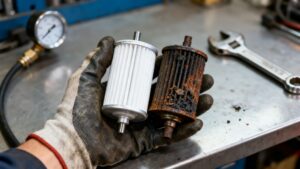
When a motor mount goes bad, it means the component holding your engine in place has worn out. It can't secure the engine or absorb its vibrations anymore, which is why you might feel excessive shaking, hear loud clunking noises, or even risk damage to other parts of your car.
These small but essential parts are the unsung heroes of a smooth, quiet ride. Once they fail, your car will start to feel rough, unstable, and just plain wrong.
What Are Motor Mounts and Why They Matter

The easiest way to think about a motor mount is to picture it as a heavy-duty shock absorber, but for your engine. Its whole job is to cushion the connection between your engine and the car's frame, isolating your cabin from all the intense vibrations that a running engine produces.
Without good motor mounts, every single rev, gear shift, and bump in the road would send a shudder straight through your steering wheel and seats. They are cleverly built from a simple combination of tough metal and dense, flexible rubber. The metal provides the strength to bolt the powertrain down, while the rubber soaks up all the shaking and movement.
The Two Critical Jobs of a Motor Mount
Motor mounts really have two key responsibilities. When you understand what they do, it becomes crystal clear why a bad one causes so many noticeable problems.
- Anchoring the Powertrain: First and foremost, a motor mount holds your engine and transmission securely in the engine bay. This is what keeps the entire powertrain from lurching forward or backward when you accelerate or hit the brakes.
- Isolating Vibrations: Its second job, just as important for your comfort, is to act as a dampener. That rubber element absorbs the engine's natural vibrations, stopping them from ever reaching the car’s frame and getting to you in the cabin.
A healthy motor mount perfectly balances strength and flexibility. It's rigid enough to restrain thousands of pounds of force but pliable enough to make your ride feel smooth and controlled.
Over time, that rubber can crack, get soaked with oil, or separate from the metal casing. When that happens, it just can't do its job. The engine starts to shift around more than it should, which is where you get those clunks and thuds that point to bad motor mounts. At the same time, it loses its ability to absorb vibrations, causing that constant shaking you feel inside the car.
For a broader collection of automotive insights and car care tips, other resources can offer great information. Grasping this basic concept is the first step toward figuring out why your peaceful drive has suddenly turned into a noisy, shaky mess.
The Top 7 Symptoms of Bad Motor Mounts

When your motor mounts begin to give out, they almost never go quietly. Your car will start sending you some pretty clear signals—new sounds, strange vibrations—letting you know that the critical connection between the engine and the car’s frame is failing. Catching these signs early is the best way to head off bigger problems and more expensive repairs later on.
If you’ve noticed your car acting up lately, it’s time to pay attention. Here are the seven most common symptoms that point straight to bad motor mounts.
To help you quickly identify the issue, we've put together a simple chart summarizing the key signs.
Quick Guide to Bad Motor Mount Symptoms
| Symptom | What You Might Feel or Hear | When It Is Most Obvious |
|---|---|---|
| Excessive Vibration | A heavy, deep shaking in the steering wheel, floor, or seats. | When idling at a stoplight while in "Drive." |
| Impact Noises | A loud "clunk," "bang," or "thud" from the engine bay. | When accelerating, shifting gears, or braking suddenly. |
| Engine Movement | The engine block visibly lurches or jerks. | When revving the engine in Park or Neutral. |
| Secondary Damage | Broken belts, cracked hoses, or frayed wires near the engine. | During a visual inspection under the hood. |
| Rough Idle | The entire car feels unsettled and shaky while stopped. | When the car is idling in Park or at a stop. |
| Constant Humming | A low, droning buzz that fills the cabin and changes with RPMs. | While driving at various speeds. |
| Drivetrain Misalignment | Premature wear on axles or driveshafts. | Over time; often discovered during other repairs. |
This table is a great starting point, but let’s dive into what each of these symptoms really means for your vehicle.
1. Excessive Vibrations
The most immediate and obvious sign of a worn-out motor mount is a sudden increase in vibration you can feel inside the car. Since the mount's main job is to soak up engine vibrations, a failing one lets all that shaking pass right through the frame and into the cabin.
You’ll most likely feel this as a heavy, persistent shake through your steering wheel, the floorboards, and even your seat. It’s often worst when you're stopped at a red light with the car still in "Drive."
2. Loud Impact Noises
Do you hear a loud "clunk," "bang," or "thud" when you hit the gas, tap the brakes, or shift gears? These sharp impact noises are a textbook symptom of a bad motor mount.
When a mount fails, the engine suddenly has too much room to move around. That sound you’re hearing is the heavy engine block physically lurching and smacking against the chassis or other parts under the hood. It’s most pronounced during moments of high torque, like when you accelerate from a stop or shift between Park, Reverse, and Drive.
3. A Visibly Shifting Engine
In really bad cases, you can actually see the problem with your own eyes. A completely failed mount will let the engine sag or sit crooked in the engine bay. It might also jump noticeably when you rev it.
A healthy engine should barely move—just a slight tremor when you give it some gas. If you see your engine lurch or rock by a few inches, that’s a sure-fire sign that at least one mount has completely failed and isn't holding it securely.
4. Impact Damage to Other Parts
An engine that’s free to rock and roll is a serious danger to its neighbors under the hood. All that lurching and shaking can cause the engine to slam into nearby components, leading to a cascade of secondary damage.
Common victims of a loose engine include:
- Cracked Radiator Hoses: The engine's movement can easily stretch, pull, or tear the vital hoses connecting to the radiator.
- Damaged Fan Shrouds: An engine fan can strike and shatter its plastic shroud.
- Broken Belts: Excessive movement can throw pulleys out of alignment, shredding serpentine or timing belts.
- Frayed Wires: Nearby wiring harnesses can get stretched, rubbed raw, or even disconnected completely.
5. Rough and Unsettled Idle
A bad motor mount can make your car feel rough and jittery even when it’s just sitting still. The engine's natural vibrations at idle speed are no longer being absorbed, which creates a shaky and unpleasant feeling in the cabin. If your car shakes a lot while idling, a bad mount is a very likely culprit.
6. A Constant Buzzing Sound
Beyond the loud clunks, you might also hear a constant, low-frequency buzzing or droning noise that seems to fill the whole car. This sound is created when engine vibrations are transmitted directly into your car's metal frame. The frame essentially acts like a giant speaker, amplifying the vibration into an audible hum that gets louder and higher as your engine's RPMs increase.
7. Engine Misalignment
Finally, a severely worn mount can allow the engine to sag, creating a permanent misalignment of the entire drivetrain. This puts a constant, unnatural strain on your axles, driveshafts, and transmission linkages. While it's a less common initial symptom, it can cause premature wear on these very expensive parts if the bad motor mount isn’t fixed.
While many different issues can make your vehicle shake, recognizing the specific signs of bad motor mounts is crucial for a correct diagnosis. For more insight on other potential causes, check out our guide on why your car might be shaking when you drive.
What Causes Motor Mounts to Fail
So, you know the signs of a bad motor mount, but what actually causes them to give out? It’s a fair question. These parts are built tough to handle incredible forces, but even they have their limits. Most of the time, failure comes down to one of three things: old age, a rough driving life, and contamination from other failing parts.
At their core, motor mounts are a simple combination of metal and a dense, vibration-absorbing rubber. Sometimes they're even filled with fluid for extra dampening. It’s that rubber component that does all the hard work, and just like anything made of rubber, it doesn't last forever.
The Inevitable Effects of Age and Mileage
Time and heat are the biggest enemies of the rubber inside your motor mounts. After years of service and tens of thousands of miles, the constant exposure to engine heat and non-stop vibration cycles takes its toll. The rubber starts to dry out, becoming hard and brittle.
Think of an old rubber band you find in a drawer. It's no longer stretchy and flexible; instead, it’s stiff and snaps the moment you try to use it. That’s exactly what’s happening inside an aging motor mount. Tiny cracks form in the rubber, growing larger over time until the mount just can't hold the engine's weight or soak up vibrations anymore. This is why it's so common to see mount failure on vehicles with over 100,000 miles.
Aggressive Driving and Heavy Loads
The way you drive plays a huge role in the lifespan of your motor mounts. Every time you stomp on the gas, slam on the brakes, or throw the car into gear, you’re forcing the engine to lurch and twist against its mounts.
This repeated, violent stress puts immense strain on the rubber, essentially trying to tear it right off the metal frame. If you're constantly driving on bumpy roads, or if you tow or haul heavy loads, you're putting that much more strain on them. These habits can dramatically shorten a mount’s life compared to one in a gently driven car.
A motor mount is engineered to handle the smooth transfer of power. Aggressive driving forces it to endure sharp, violent impacts it was never designed for, leading to premature failure.
Fluid Contamination from Engine Leaks
This is probably the most common reason we see motor mounts fail before their time. Their location in the engine bay often puts them right in the line of fire for fluid leaks from above.
When engine oil, power steering fluid, or coolant drips onto a mount, the rubber soaks it up like a sponge. These petroleum-based fluids are basically solvents for rubber, causing it to swell up, get mushy, and chemically break down. A slow, steady oil leak can destroy a mount in a few months that was designed to last for a decade.
Keep an eye out for these common culprits:
- Leaking Valve Cover Gaskets: Oil dripping from the top of the engine is notorious for ruining the upper motor mounts.
- Failed Power Steering Hoses: Power steering fluid can easily leak onto and contaminate mounts on the side of the engine.
- Coolant Leaks: Antifreeze is also highly corrosive to the rubber compounds used in many motor mounts.
Catching and repairing fluid leaks early is one of the best things you can do to protect your motor mounts. By understanding what causes them to fail, you can be more mindful of your driving and stay on top of maintenance to help them go the distance.
How to Safely Check for Bad Motor Mounts at Home
So, you suspect a motor mount has gone bad, but before you pick up the phone, there are a couple of simple checks you can do right in your driveway. These quick tests can help confirm your suspicions, giving you a much clearer picture before you talk to a technician. All you really need is a friend to help you out and a good flashlight.
First up is a visual inspection. Get your car into Park, make sure the parking brake is on tight, and turn the engine off. It’s critical to let the engine cool down completely before you start poking around. Once it’s safe, pop the hood and use your flashlight to find the motor mounts. You'll usually spot one or two near the top of the engine and another one underneath, securing the transmission.
Performing a Visual Inspection
With your light on a mount, take a close look at the rubber portion. You’re looking for deep cracks, not just tiny surface-level crazing. See if the rubber has pulled away from its metal housing or if the whole mount just looks squashed and saggy.
If your car has fluid-filled hydraulic mounts, keep an eye out for dark, greasy grime on or around the mount itself. That’s a dead giveaway the internal dampening fluid has leaked out, meaning it’s no longer doing its job. This is all part of the natural aging process for a mount.

As you can see, factors like age, hard driving, and fluid leaks all work together to break down the mount's ability to hold the engine steady.
Conducting an Engine Torque Test
If a visual check doesn’t give you a clear answer, the engine torque test is your next best bet. This test shows just how much the engine is moving under load, but you have to be extremely careful. Have a helper you trust get in the driver's seat while you stand safely to the side of the car—never in front.
Here’s what to do:
- Double-check that the parking brake is fully engaged and have your helper press their foot firmly on the brake pedal throughout the test.
- Have your helper start the engine and shift the car into Drive.
- Now, instruct them to give the gas pedal a quick, gentle tap while keeping their foot on the brake.
- Keep your eyes glued to the engine. A healthy engine will twist just a little, but an engine with a bad motor mount will often jump or lurch an inch or more.
- Do the test again, this time in Reverse, with another gentle tap on the gas. This loads the mounts in the other direction and can expose a different failed mount.
A significant lurch or jump is a definitive sign that a mount has failed and can no longer restrain the engine’s torque.
These simple home checks can often give you the answer you need. Keep in mind, though, that other issues can cause similar symptoms. For example, a rough idle could also be a vacuum leak, and you can learn more about how to check for vacuum leaks in our other guide. If you saw any major movement or obvious damage during your tests, your next call should be to schedule a professional inspection.
Understanding Motor Mount Replacement Costs
Nobody likes the surprise of a car repair bill, and the biggest question is always, "How much will this cost?" When it comes to motor mounts, getting a handle on the price range can make the whole process a lot less stressful. The final invoice is a combination of parts and labor, and a few key factors will determine where your repair lands on that spectrum.
One of the first things we'll discuss is whether to replace just the one broken mount or all of them. While swapping out only the failed one is cheaper today, it can often mean you'll be back sooner than you'd like.
When one mount fails from age and wear, the others have been picking up the slack and are usually not far behind. Replacing them all at once gives you long-term peace of mind and often saves on labor costs down the road.
Breaking Down the Costs
Typically, you can expect a motor mount replacement to fall somewhere between $250 and $800 per mount, but that's a wide range for a reason. The final price really comes down to the part itself and how much work it takes to get to it.
The rule of thumb is simple: the more difficult it is to access the mount, the higher the labor cost will be. Some mounts are right there when you open the hood, while others require us to remove suspension parts or even the entire subframe to reach them.
Several things will directly affect your final bill:
- Vehicle Make and Model: It's no surprise that parts for luxury or performance cars cost more than those for your average daily driver. A mount for a BMW is going to have a much higher price tag than one for a Honda Civic.
- Type of Mount: A basic, solid rubber mount might only run $50-$100. But the advanced hydraulic or active electronic mounts in many newer cars can easily cost $300 or more for the part alone.
- Labor Time: This is the biggest variable. A straightforward swap might take an hour, but a really tough one could take three or four hours of a technician's time.
The Growing Importance of Quality Mounts
As cars have gotten more complex and powerful, the need for high-quality engine mounts has become more important than ever. The global market for automotive engine mounts is massive, valued at USD 83.99 billion in 2024 and projected to hit USD 136.94 billion by 2032.
North America holds a 29.15% share of that market, largely because of how popular SUVs and trucks are here in the U.S. This huge demand shows just how vital these components are for the safety and longevity of modern vehicles. It's a trend that really drives home why using quality replacement parts is a must. You can explore more data on the automotive mounts market to see how these industry shifts impact vehicle maintenance.
Ultimately, the only way to get a firm quote is to have a professional take a look. An experienced technician can pinpoint which mounts have failed, figure out the labor involved, and help you decide on the best, most cost-effective repair for your car.
Choosing a Trusted Auto Repair Partner in Dallas
Okay, so you’ve noticed the tell-tale signs of bad motor mounts. That’s the first step. But what comes next is even more crucial: finding the right professional to handle the fix. This isn't just another item on a maintenance checklist; it’s a repair that directly impacts your vehicle's stability and your safety on the road.
When a part this important is involved, getting the diagnosis and installation right is non-negotiable. That's why having a reliable auto care partner here in Dallas is so essential. You need a team with the right experience and the right tools to get the job done correctly the first time around.
Why Professional Expertise Matters for Motor Mounts
Replacing a motor mount is a job that demands precision. It’s a lot more involved than just unbolting an old part and slapping a new one in. A technician needs to have a solid understanding of your car's specific engineering.
If a mount is installed improperly, you won't just be back where you started with the same old vibrations. You could end up with brand-new problems or even damage the new mount itself.
As vehicles get more sophisticated, so do their components. Many newer cars use advanced mounting systems designed to prevent early failure, which can lead to serious trouble like engine shifting and throttle linkage issues. A good mechanic stays on top of these changes, and you can discover more insights about these automotive market dynamics on mordorintelligence.com.
For Dallas drivers, it all comes down to finding a shop that pairs hands-on experience with a real commitment to quality. If you want to dive a bit deeper, you can also read also about the top reasons to trust local auto repair in Dallas TX.
Kwik Kar: Your Local Dallas Solution
At Kwik Kar Oil Change and Auto Care, we’ve built our reputation on being that trusted partner for our neighbors. Our skilled technicians have seen it all—from simple worn-out rubber on older sedans to complex hydraulic mount leaks in modern SUVs.
We believe trust is earned through transparency. That’s why our process always starts with a thorough, hands-on inspection to confirm exactly what’s going on. We’ll show you what we find and give you a clear, honest estimate before a single tool is picked up.
Choosing a repair shop isn't just about fixing what's broken; it's about finding a partner dedicated to your vehicle's long-term health and your safety on the road. We are committed to being that partner for the Dallas community.
Our shop is fully equipped with the diagnostic tools needed to accurately trace those rattles and clunks back to their source. We only use high-quality replacement parts, ensuring your repair lasts and brings back that smooth, quiet ride you’ve been missing. Don’t let bad motor mounts disrupt your drive any longer.
Ensure your vehicle is in expert hands. For a professional inspection and reliable auto care in Dallas, trust the team at Kwik Kar Oil Change and Auto Care. Schedule your appointment online today!