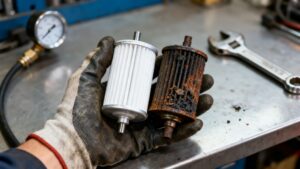
A broken spark plug isn't just a minor hiccup; it’s a critical failure that your engine will shout about immediately. The symptoms are hard to miss and often include a rough, shaking idle, a major loss of power when you hit the gas, and that dreaded blinking check engine light. This all happens because the fracture stops the plug from creating the spark needed to ignite fuel in the cylinder.
What Happens When a Spark Plug Breaks

When a spark plug physically breaks, your car’s smooth ride comes to an abrupt end. That small part’s entire job is to create a tiny bolt of lightning that ignites the air-fuel mix inside your engine's cylinders. A crack or a complete break, whether on the white ceramic insulator or the metal tip, instantly kills that process.
This failure leads to an engine misfire, which is the direct cause of all the nasty symptoms you’re feeling. Your engine might feel like it’s sputtering or vibrating violently, especially when you're stopped at a light. You’ll also notice your car feels sluggish and weak because one of its cylinders is no longer doing any work to help move you forward.
Old Plug vs. Broken Plug
It’s crucial to know the difference between a spark plug that’s just old and one that has physically broken. A failing plug usually gives you some warning signs over time, but a broken one causes severe problems right away.
For instance, a car with worn-out plugs might be a little harder to start or you might notice your gas mileage slowly getting worse. A car with a broken spark plug will shake like it’s coming apart and may even stall out completely.
Key Takeaway: A blinking check engine light is your car's most urgent cry for help. It almost always points to a severe misfire that could quickly destroy expensive parts, like your catalytic converter. If you see it, pull over and stop driving as soon as it's safe.
With nearly 1.45 billion vehicles on the world’s roads by 2024, it’s no surprise that spark plugs are a common maintenance item. In fact, the market for automotive spark plugs is expected to hit USD 7.1 billion by the early 2030s.
Symptoms of Failing vs. Broken Spark Plugs
To make it easier to tell what’s going on, it helps to see the symptoms side-by-side. A worn plug whispers that it needs attention; a broken one screams.
| Symptom | Failing/Worn Spark Plug | Broken Spark Plug |
|---|---|---|
| Engine Performance | Gradual loss of power, slight hesitation | Immediate, severe power loss and rough running |
| Idle Quality | Mildly rough or inconsistent idle | Violent shaking, shuddering, and potential stalling |
| Check Engine Light | Solid light may appear over time | Blinking light almost immediately |
| Starting the Car | May take longer to start | Difficulty starting, or it may not start at all |
This table should give you a clear picture of the urgency.
Ultimately, a broken spark plug is a non-negotiable problem that needs your immediate attention. Putting it off can turn a straightforward fix into a catastrophic and costly engine disaster. If you're seeing that blinking check engine light, it’s a good time to learn more about what a professional car diagnostic test can tell you.
Why Spark Plugs Actually Break
A broken spark plug is one of those frustrating problems that seems to come out of nowhere. While it’s easy to just chalk it up to bad luck, I can tell you from experience that spark plugs almost never just snap on their own. There's always a reason, and figuring it out is the best way to prevent a repeat headache.
Nine times out of ten, the culprit is simply overtightening during installation. A lot of people—DIYers and even some pros—skip the torque wrench and just go by feel. That's a huge mistake. Spark plugs have a very specific torque spec, and cranking down on them puts a ton of stress on both the metal shell and the ceramic insulator, setting them up to fail down the road.
Thermal Shock and Engine Stress
Another common cause we see is thermal shock. Think about what happens when you pour cold water into a hot glass pan—it can crack instantly. The same thing can happen inside your engine when a super-hot spark plug is suddenly cooled, causing a stress fracture in the ceramic.
This kind of stress is usually a symptom of bigger engine issues, like:
- Engine Detonation: You might hear this as a "pinging" or "knocking" noise. Detonation is basically an uncontrolled explosion in the cylinder, and the shockwave it creates is more than enough to crack a spark plug's fragile porcelain.
- Lean Fuel Conditions: When your engine runs "lean," it means there's too much air and not enough fuel. This makes combustion temperatures soar, which can cause the plug's tip to overheat, become brittle, and eventually break off.
In my experience, if you keep breaking a spark plug in the same cylinder, that's a massive red flag. It almost always points to a deeper problem, like a bad fuel injector causing that one cylinder to run dangerously lean.
The Role of Quality and Compatibility
Finally, the plug itself matters. You can't just throw any old spark plug in and expect it to work. Using a plug that isn't made for your specific engine is just asking for trouble. If it’s too long, it can actually hit the piston. If it has the wrong heat range, it’ll overheat.
We're also seeing a big shift in the market toward high-performance materials like iridium and platinum, which are designed to handle the heat and pressure of modern engines far better than old-school copper plugs. You can read more about these advancements in spark plug materials.
But even the most expensive, high-tech plug will fail if it's not installed correctly. Using a cheap, poorly-fitting socket can put uneven pressure on the insulator and crack it before you’ve even turned the key. At the end of the day, proper technique is just as important as the part itself.
Safely Removing a Broken Spark Plug Yourself
Discovering a broken spark plug can feel like a real headache, but don't panic. With some patience and the right tools, it’s often a job you can tackle in your own garage. Before you even think about grabbing a wrench, though, safety comes first. Always start by disconnecting the negative battery terminal and giving the engine plenty of time to cool down completely.
How you get the plug out really comes down to where it broke. Did it snap off cleanly above the cylinder head, leaving the hex nut you can grab? Or did the worst happen, and it broke off flush, leaving the threads stuck inside? Each situation calls for a different game plan.
First Things First: Clean the Area
Before you try to extract anything, your first job is to get the area around that broken plug spotless. Any bit of dirt, rust, or debris that finds its way into the cylinder could lead to some serious engine trouble down the road.
Having the right gear makes all the difference in DIY repairs. A good 100 PSI air compressor is a lifesaver here, letting you blow out all the gunk from the engine bay and the spark plug well. If you don't have one, a shop vacuum with a narrow crevice tool will also do the trick.
Pro Tip: Once you've cleaned everything out, douse the broken plug with a good quality penetrating oil. Don't be shy with it. Let that oil soak for at least 30 minutes, but a few hours is even better. This one step is your best friend for loosening up a seized plug and can mean the difference between an easy extraction and a total nightmare.
Scenario 1: The Plug Broke Above the Head
If part of the plug is still sticking out of the cylinder head, you're in luck. This is the best-case scenario. If the hexagonal nut is intact, you might be able to get it out with a regular spark plug socket.
After the penetrating oil has had time to work its magic, seat the socket firmly over the hex nut. The trick here is to avoid just cranking on it. Instead, try a gentle back-and-forth wiggle. Tighten it ever so slightly first—just a hair—to break the bond of corrosion, then slowly turn it counter-clockwise. This patient rocking motion can often coax a stubborn plug out without damaging the threads in the cylinder head.
So, how does this happen? Overtightening is a common culprit, as the infographic below shows.

That extra stress from overtightening, combined with the intense heat and pressure inside the engine, creates the perfect storm for a fracture.
Scenario 2: The Plug Snapped Off Inside the Head
Now for the tough one. If the spark plug broke off flush with the cylinder head—or even worse, below it—you'll need a special tool. This job calls for a spark plug extractor kit. These kits are made for exactly this kind of frustrating situation.
After you’ve cleaned the area and given the penetrating oil plenty of time to soak, you can start the extraction.
First, you have to get rid of the ceramic porcelain insulator that's still inside the plug's metal shell. Most kits come with a small tool to help you carefully break it up. Once it's in pieces, use a vacuum to get every last shard out of there. Be meticulous—you don't want any of that falling into your engine.
Next, you'll use the thread-cutting tool (or tap) from the kit. You’ll carefully drive this into the empty metal shell of the spark plug still in the head. This creates new threads inside the broken plug for the extractor to grab onto.
With the new threads cut, gently screw the extractor's reverse-threaded puller into the plug's shell.
Finally, attach a ratchet to the puller and begin turning it slowly counter-clockwise. Because it has reverse threads, it will dig into the broken plug and begin backing it out. The key here is to go slow and steady. Feel for the resistance.
This is a delicate operation. If you feel the tool start to slip or meet extreme resistance, stop right away. Trying to force it can strip the threads in the cylinder head itself, turning a tricky repair into a complete catastrophe. This is where you have to know your limits and decide if it's time to call in a pro.
Dealing with Damaged Cylinder Head Threads

Getting that broken spark plug out feels like a massive win, but don't spike the football just yet. The next step is just as critical. The threads inside the aluminum cylinder head are surprisingly delicate, and whatever force snapped that plug could have easily mangled them on the way out.
Before you even think about putting a new plug in, you absolutely have to inspect the threads. Grab a bright flashlight and get a good look inside the spark plug hole. You’re hunting for any tell-tale signs of trouble: cross-threading, stripped sections, or little metal burrs. A good trick is to run a clean, thin pick tool gently around the threads. If it snags or you feel obvious gouges, you've got a problem on your hands.
Trust us, ignoring even what looks like minor thread damage is a recipe for disaster. A new plug won’t seat properly, which can cause compression loss and those frustrating misfires you were trying to fix. Even worse, a poorly seated plug can seize up or get blown right out of the cylinder head while you’re driving down the highway.
Minor Cleanup with a Thread Chaser
If the damage seems minimal—maybe just some caked-on carbon or one slightly buggered-up spot—your best friend is a thread chaser. It might look like a tap, but it’s designed to clean and reform existing threads, not cut new ones.
Here’s how to use it safely:
- Put a light coat of grease on the chaser. This is the most important part—the grease will catch and hold onto any tiny metal filings, keeping them from falling into your engine’s cylinder.
- Start threading the chaser in by hand. Never force it. If you feel it binding up, back it out and try again.
- Once it's threaded all the way in, back it out, and wipe off the gunk-filled grease. Repeat the process until it goes in smoothly and comes out clean.
This simple cleanup can often be all it takes to restore the threads so your new spark plug can seal up perfectly.
One of the most common mistakes we see is someone using a cutting tap instead of a thread chaser. A tap is way too aggressive for this job. It can easily remove too much metal from the soft aluminum head, weakening the threads and making the problem much, much worse. Always start with the gentlest tool possible.
Serious Damage and Thread Repair Inserts
What if the threads are clearly stripped out or too mangled for a chaser to fix? Now you’re looking at a more serious repair, but it's still manageable with a thread repair insert. Kits like Heli-Coil were made for exactly this situation. They let you install a new, tough set of steel threads inside the damaged aluminum hole.
The job involves drilling out the old, ruined threads, using a special tap to cut new, larger threads for the insert, and then carefully screwing the steel insert into place. While it’s a proven and effective fix, this is an advanced repair. The single biggest risk is failing to keep every last metal shaving out of the cylinder. One stray bit of metal can score the cylinder wall, chew up your piston, or even lead to bigger issues like a bad head gasket.
If you are not 100% confident you can do this job with absolute precision and cleanliness, this is the time to put the tools down and call a pro. A botched insert repair can fail and lead to catastrophic engine damage. The peace of mind that comes with a guaranteed, professional repair is almost always worth the cost.
Knowing When to Call a Professional
The smartest home mechanics aren't the ones who can fix everything—they’re the ones who know their limits. When you're staring down a broken spark plug, that line between a manageable fix and a catastrophic engine problem can get blurry fast. There are a few clear red flags that mean it's time to put the tools down and call a pro.
If your attempt to pull the plug remnant goes wrong, stop what you're doing. A common DIY nightmare is when the extractor tool snaps off inside the broken plug. Now you’re dealing with hardened steel stuck inside more hardened steel, and the risk of damaging the cylinder head just shot through the roof.
The Point of No Return
Another critical moment is when the ceramic insulator shatters and pieces fall into the cylinder. Don't make the mistake of thinking you can just vacuum them out. A single, tiny shard of porcelain left behind can score the cylinder wall, wreck a piston, or get wedged in a valve seat, leading to an expensive, full engine teardown.
Professionals use specialized tools like a borescope—a tiny camera on a flexible tube—to get eyes directly inside the cylinder. This ensures every last bit of debris is gone. It's not just about finishing the job; it’s about preventing thousands of dollars in future engine damage.
Finally, be honest with yourself about your ability to repair damaged cylinder head threads. If you aren't 100% confident you can install a thread insert perfectly, it’s time for help. A botched thread repair is a serious safety risk, as it can cause the spark plug to literally shoot out of the engine under pressure. For tough situations like this, knowing when to rely on professional auto repair services is what protects your vehicle.
Is This a DIY Job or One for the Pros?
Sometimes, it's hard to know whether you should keep wrenching or head to the shop. This table breaks down the key factors to help you make the right call.
DIY vs Professional Broken Spark Plug Removal
| Factor | DIY Approach | Professional Service |
|---|---|---|
| Tools | Basic socket set, standard extractor kits | Specialized extractors, borescopes, thread repair kits |
| Risk | High risk of cylinder head damage or broken tools | Low risk; technicians are insured and experienced |
| Debris Removal | Difficult to confirm all debris is removed | Borescope inspection guarantees a clean cylinder |
| Thread Repair | High potential for error, requires precision tools | Performed with specialized tools for a permanent, safe fix |
| Time | Can take many hours or even days for a novice | Typically 1-3 hours, depending on complexity |
| Cost | Low upfront cost, but high potential for expensive mistakes | Higher initial cost, but prevents larger repair bills later |
Ultimately, a professional has the right tools and the experience to handle worst-case scenarios, turning a potential disaster into a routine repair.
What to Expect from a Professional Repair
When you bring your car to a trusted shop like Kwik Kar, you're not just paying for a repair; you're paying for expertise and peace of mind. A straightforward extraction might take an hour or two and cost between $150 and $300.
If the job is more complex and requires thread repair, expect the cost to be higher—potentially $400 to $700—due to the extra labor and precision needed. Calling a pro isn't giving up; it’s making a smart financial choice to protect your engine. If you're facing a tough repair, you can learn more about our full engine repair services and let our experts take it from here.
Common Questions About Broken Spark Plugs
It's natural to have questions when you're staring down a repair like a broken spark plug. It’s a stressful situation, and we get a lot of the same questions from drivers. Let's clear up a few of the biggest concerns.
Can I Drive My Car with a Broken Spark Plug
Our professional advice? Don't do it. Driving with a broken plug forces your engine to misfire, which you'll feel as a rough, violent shuddering.
That misfire is more than just an annoyance. It sends raw, unburnt fuel straight into your exhaust system. This can rapidly overheat and destroy your catalytic converter—a repair that can easily top $1,500. Driving any further also puts your engine's internal components at risk of serious damage. Your best and safest bet is to call for a tow. Don't risk turning a manageable problem into a catastrophic one.
Your check engine light is your car's primary warning system. But a blinking check engine light is an emergency. It signals a severe misfire that's actively damaging your vehicle. If you see it, pull over and shut the engine off as soon as it's safe.
How Much Does It Cost to Fix a Broken Spark Plug
The final bill for a broken spark plug can vary quite a bit, depending on how easily the plug comes out. Here's what you can generally expect:
- Simple Extraction: If our technicians can get the broken piece out without any drama, you’re typically looking at $150 to $300. This covers the labor for a straightforward extraction.
- Complex Repair: Things get more involved if the threads in the cylinder head are damaged. Repairing them with a thread insert requires more time and precision, pushing the cost into the $400 to $700 range.
- Worst-Case Scenario: In very rare cases, the cylinder head might need to be removed to perform the repair. This is a much larger job and the cost can easily go past $1,000.
We always provide a clear, detailed estimate after we’ve had a chance to properly diagnose the situation.
How Can I Prevent Spark Plugs from Breaking
An ounce of prevention is worth a pound of cure, especially here. Overtightening is the number one reason spark plugs break. The single most important thing you can do is use a quality torque wrench and tighten the plugs to the exact specification provided by your car’s manufacturer.
You should also only work on a cool engine. Metal expands when it's hot, which dramatically increases the chances of a plug seizing and snapping during removal. Finally, stick to the recommended service intervals for your spark plugs. Replacing them on time prevents them from becoming seized in the cylinder head in the first place.
Will a Broken Spark Plug Trigger the Check Engine Light
Yes, a broken spark plug will trigger the check engine light almost instantly. The break causes a definite engine misfire, which your car’s main computer (the ECU) is designed to detect immediately.
Once detected, the ECU illuminates the light and stores a Diagnostic Trouble Code (DTC), usually something between P0300-P0308. These codes are incredibly helpful because they tell a technician exactly which cylinder is having the problem, saving valuable diagnostic time.
If you're dealing with a stubborn broken spark plug or just want to leave your vehicle in expert hands, the team at Kwik Kar Oil Change and Auto Care is here to help. Our skilled technicians have the specialized tools and experience to handle even the trickiest repairs safely and efficiently. Schedule your service with us today and get back on the road with confidence.