When a warning light pops up on your dashboard, it’s your car trying to tell you something’s up. A car diagnostic test is basically a conversation with your vehicle, using special tools to figure out exactly what that warning light means and what to do about it. This whole process takes the expensive guesswork out of repairs, making sure you only pay for what actually needs fixing.
Your Car Is Talking, But What Is It Saying?
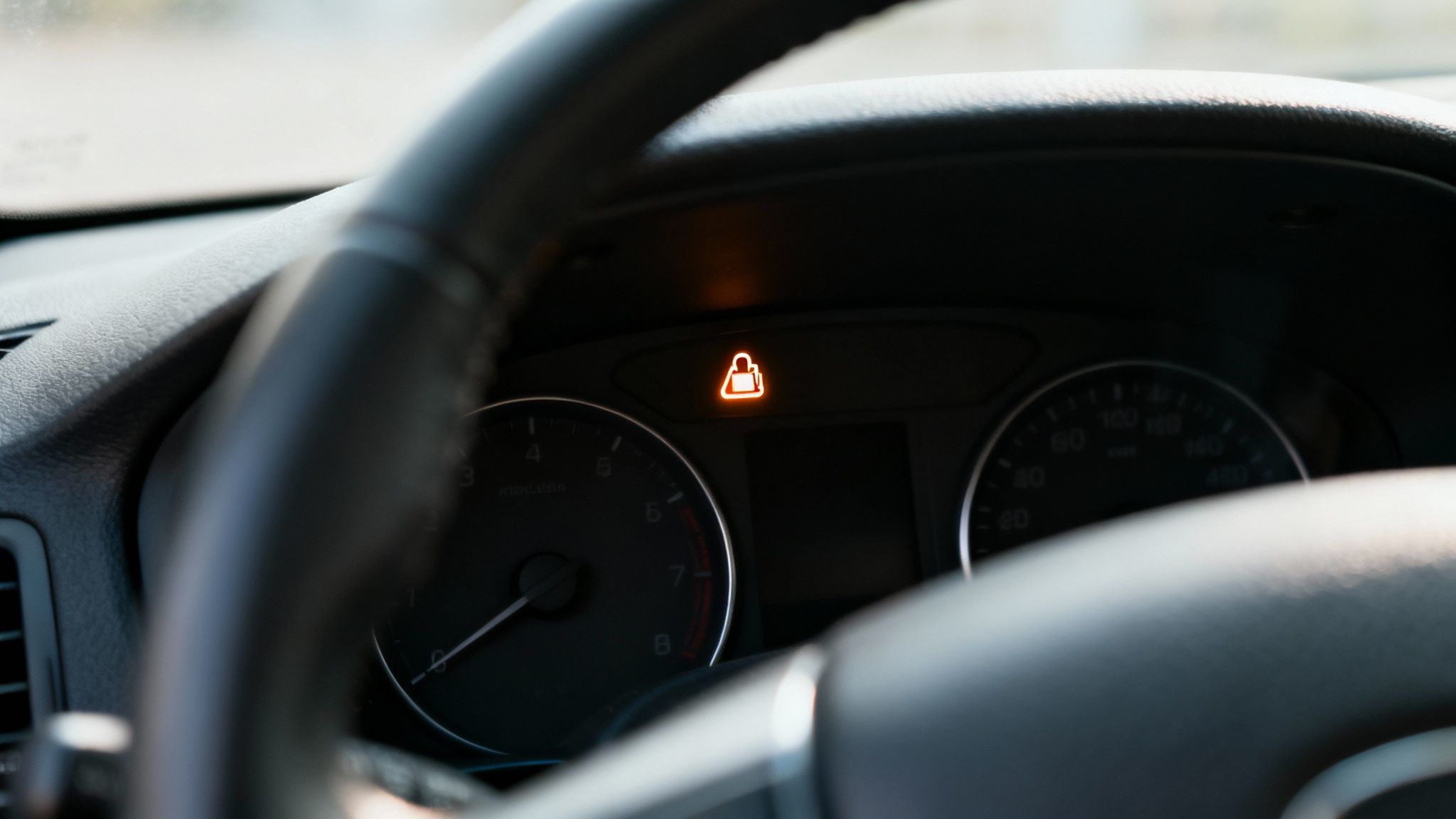
Think of your dashboard lights as symptoms. A check engine light could mean anything from a gas cap that wasn’t tightened properly to a serious engine misfire. If you just start guessing, you could end up replacing parts that are perfectly fine or, even worse, ignoring a major problem that’s only going to get more expensive.
A car diagnostic test is how a skilled technician taps into your car's onboard computer system. This system, called On-Board Diagnostics (OBD-II), keeps an eye on all the critical parts of your vehicle—like the engine, transmission, and exhaust system. When it spots a problem, it logs a specific Diagnostic Trouble Code (DTC) and flips on that warning light to get your attention.
To clear things up, let's break down what a professional diagnostic test really is versus what people often think it is.
A Car Diagnostic Test At a Glance
| What It Is | What It Is Not |
|---|---|
| A starting point for investigation | A magic button that tells you exactly what to replace |
| A way to read computer codes (DTCs) that point to a problem area | An instant and complete repair solution |
| A professional analysis of your car's data by a trained technician | A simple code scan you can do with a cheap reader from a parts store |
| A comprehensive health check of major vehicle systems | Just for the "check engine" light |
Ultimately, the goal is to use technology to get to the root of the problem, not just treat the symptoms. It’s the first, most crucial step in any modern auto repair.
The Role of Professional Diagnostics
Sure, you can buy a basic code reader at any auto parts store, but the code itself is just a clue, not the answer. The real value comes from a professional technician who knows how to interpret that clue and use it to start a deeper investigation.
A diagnostics test is one of the most effective ways to uncover hidden issues before they turn into expensive repairs. Advanced tools ensure vehicles are safe, efficient, and performing at their best.
This methodical approach has never been more important. Cars are getting more complex every year, and so are the systems running them. This is reflected in the global market for vehicle diagnostics, which was valued at USD 42.19 billion in 2024 and is expected to hit USD 64.22 billion by 2030. You can explore the full research about this growing market on marknteladvisors.com. That kind of growth shows just how vital professional diagnostics are for keeping modern cars on the road.
What a Diagnostic Test Reveals
A thorough car diagnostic test gives us a detailed health report on your vehicle, pinpointing issues with:
- Engine Performance: We can identify problems with things like fuel injectors, ignition coils, or oxygen sensors that are hurting your fuel efficiency and power.
- Transmission System: The test can detect faults inside the transmission that might be causing shifting problems or could lead to a major failure down the line.
- Braking System: It allows us to check the anti-lock braking system (ABS) for any sensor or module issues that could compromise your safety.
- Exhaust System: We can make sure components like the catalytic converter are working as they should to meet emission standards.
In the end, this crucial first step saves you time and money. It gets you back on the road safely and with a crystal-clear understanding of what’s going on with your vehicle.
When Does Your Car Need a Diagnostic Test?
That glowing check engine light on your dashboard is the most obvious sign you need a car diagnostic test, but it's rarely the first. Your vehicle usually sends out more subtle warnings before things get serious. Catching these early clues lets a technician find the root cause before a small headache turns into a major, expensive migraine of a repair.
One of the most common early warnings is a sudden dip in your gas mileage. If you find yourself becoming a regular at the local gas station way more often than usual, it could be pointing to a problem with an oxygen sensor or a fuel injector—something a quick diagnostic scan can easily pick up.
Another key sign is any kind of unusual noise. Squealing, grinding, or knocking sounds are your car's way of crying for help. These noises can mean anything from worn-out brake pads to serious engine trouble, and a diagnostic test is the fastest way to narrow down the source of the racket.
Performance and Drivability Issues
Beyond strange sounds, you need to pay close attention to how your car feels when you're on the road. A rough or shaky idle when you're stopped at a traffic light is a classic symptom that something isn't right. This could be caused by something as simple as old spark plugs or a clogged fuel filter, but it could also be a vacuum leak.
Likewise, if your engine is having trouble starting or you notice big changes in performance, like sluggish acceleration, those are clear signals your car needs a professional look-over. These issues often trace back to problems with the battery, alternator, or the ignition system.
Here are a few other critical signs you absolutely shouldn't ignore:
- Transmission Problems: If your car hesitates, jerks, or struggles to shift gears smoothly, it’s crucial to get it checked out immediately.
- Warning Lights: The check engine light gets all the attention, but don't ignore other warnings like the ABS or airbag lights. You can find more details in our guide on what your check engine light means.
- Strange Smells: Funky odors like burning rubber, raw gasoline, or a sweet-smelling exhaust can point to dangerous fluid leaks that need immediate attention.
Getting a car diagnostic test scheduled as soon as you notice these symptoms is one of the smartest investments you can make for your vehicle's health and longevity. Waiting almost always leads to more complicated and more expensive repairs down the line.
At the end of the day, you know your car best. If something just feels, sounds, or smells off, trust your gut and don't ignore it.
How Technicians Decode Your Vehicle's Health
So, what really goes on during a professional car diagnostic test? It all starts when one of our trained technicians plugs a specialized On-Board Diagnostics II (OBD-II) scanner into a port just under your dashboard. Think of this tool as a translator that lets us have a direct conversation with your vehicle’s main computer.
This connection immediately pulls up a list of Diagnostic Trouble Codes, or DTCs. You can think of these as short, coded messages straight from your car—like "P0420" or "P0300." Each code points to a specific system or part that’s flagged an issue. It’s the essential first step that gives us a roadmap for the investigation.
It's critical to understand, however, that a DTC is just a clue, not the final verdict. It tells the technician where to start looking, but it doesn’t always tell them exactly what is broken. This is where real, hands-on expertise makes all the difference.
From Code to Conclusion
An experienced technician uses that DTC as a jumping-off point. For example, a code for a faulty oxygen sensor doesn't automatically mean the sensor needs to be replaced. That code could be triggered by a vacuum leak, a wiring problem, or even a fuel delivery issue that's tricking the sensor into sending a false report.
The technician’s job is to run a series of follow-up checks to nail down the root cause. This investigative work typically involves:
- Visual Inspection: Looking for the obvious signs of trouble, like frayed wires, cracked hoses, or fluid leaks in the area related to the code.
- Component Testing: Using other tools, like a multimeter or pressure gauge, to test the performance of the specific part and its neighbors.
- Data Analysis: Reviewing live data streams from the vehicle’s computer to see how different systems are performing and interacting in real-time.
This methodical approach is what prevents unnecessary repairs and ensures we fix the right problem the first time around. The chart below shows some of the common triggers that tell a driver it's time for a diagnostic check.
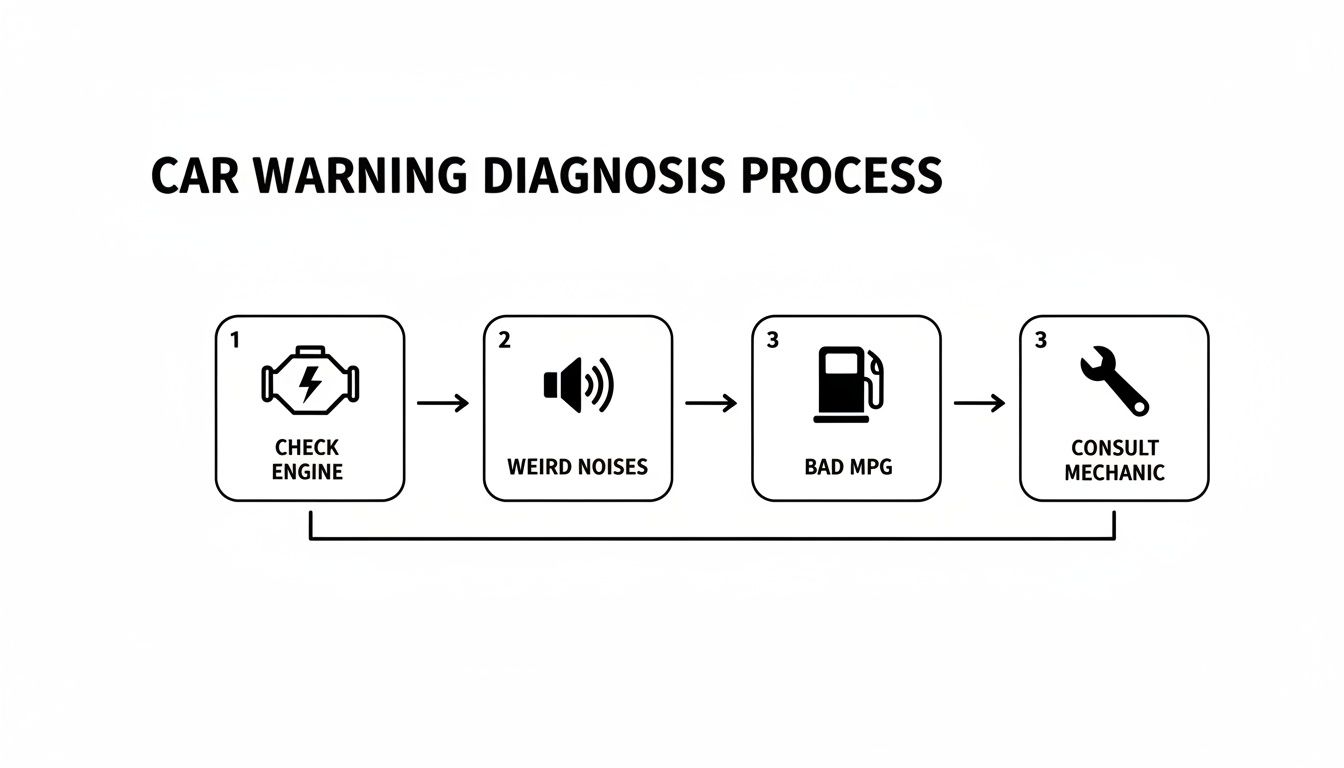
This process shows how dashboard warnings, strange sounds, or a sudden drop in fuel economy are all symptoms that need a professional to take a deeper look.
The Growing Importance of Advanced Tools
The technology powering these tests is always evolving to keep pace with the complexity of modern vehicles. The wider automotive test equipment market, which includes these diagnostic systems, was valued at USD 2.92 billion in 2025 and is expected to hit USD 4.46 billion by 2033. This growth is fueled by the ever-increasing amount of software in new cars and the rise of electric vehicles. You can find more details in this automotive test equipment market report from Grand View Research.
An accurate diagnosis is more than just reading a code; it's about interpreting the data, understanding the vehicle's complete system, and applying years of experience to solve the puzzle.
At the end of the day, a car diagnostic test is a perfect blend of high-tech tools and old-school expertise. It’s a detailed health check that decodes what your vehicle is trying to tell you, making sure you get a precise and effective plan to get it back on the road safely.
Understanding Common Diagnostic Trouble Codes
The results from a car diagnostic test can look like gibberish at first—a string of letters and numbers that don't mean much to the average driver. But each code is your car's way of telling a very specific story about its health. Think of a Diagnostic Trouble Code (DTC) as a targeted message pointing our technicians in the right direction.
These codes are all part of the standardized OBD-II system. They usually start with a letter that tells us which system is having a problem. "P" codes are for the powertrain (engine, transmission), "B" is for the body, "C" is for the chassis, and "U" codes signal a network communication problem. While there are thousands of codes out there, we tend to see a few pop up more often than others.
Translating Common Fault Codes
Let's pull back the curtain on some of these codes. A basic scanner might give you the textbook definition, but a seasoned mechanic knows the real-world story behind it. That hands-on experience is critical because a single code can point to several different potential culprits.
Take a P0171 code, for example. The scanner will say "System Too Lean (Bank 1)." That doesn't mean a specific part has failed. It just tells a technician the engine is getting too much air or not enough fuel. The actual cause could be anything from a tiny crack in a vacuum hose to a weak fuel pump or even a dirty mass airflow sensor. Just throwing parts at it is a good way to waste money.
The Diagnostic Trouble Code is the beginning of the diagnostic process, not the end. It guides a technician’s investigation, helping them ask the right questions and test the right components to find the true source of the problem.
This is exactly why a professional diagnosis is so valuable. Our technicians use that initial code as a starting point, then perform targeted tests to confirm the real issue before any wrenches are turned. This approach saves you time and protects you from paying for repairs you don't actually need.
Decoding Common Diagnostic Trouble Codes (DTCs)
To give you a better idea of what we're talking about, here’s a quick look at some of the codes we see most often. Notice how one simple code can send a technician down a few different investigative paths to find the real problem.
| Code | What It Means | Potential Issues |
|---|---|---|
| P0420 | Catalyst System Efficiency Below Threshold | This could mean a failing catalytic converter, but it’s often caused by something else, like a faulty oxygen sensor, an exhaust leak, or an engine misfire. |
| P0300 | Random/Multiple Cylinder Misfire Detected | This means multiple engine cylinders aren't firing right. The list of suspects includes worn spark plugs, bad ignition coils, clogged fuel injectors, or low fuel pressure. |
| P0442 | Evaporative Emission System Leak Detected (Small Leak) | The classic cause for this is a loose or bad gas cap. If that's not it, it could be a cracked hose or a leak in the EVAP system's canister. |
| P0128 | Coolant Thermostat (Coolant Temperature Below Thermostat Regulating Temperature) | This usually means your engine isn't warming up properly. Most of the time, it's a thermostat that's stuck open, but it could also be a bad coolant temperature sensor. |
Understanding these details is what separates a quick scan at the auto parts store from a real, professional car diagnostic test. It’s not just about reading the clue; it’s about solving the entire puzzle.
What to Expect From a Professional Diagnostic Service

Taking your vehicle to a professional auto shop for a car diagnostic test should turn a confusing problem into a clear path forward. Even though the technology behind it all is pretty complex, the experience for you should be simple and totally transparent. Our goal is to build your confidence by showing you exactly what’s going on under the hood and how we can fix it.
A real diagnostic service is way more than just plugging in a tool and spitting out a code. It's a complete process designed to give you peace of mind, starting the second you walk in the door.
The Customer-Focused Diagnostic Process
It all begins with a good old-fashioned conversation. A service advisor will listen to your concerns, asking about the symptoms you’ve noticed—maybe it’s a weird noise, a drop in performance, or just that dreaded check engine light. This chat gives our technicians crucial context that helps them narrow down the possibilities before they even touch a scanner.
Once your car is in the service bay, here’s how our technicians tackle the issue:
- Connect the OBD-II Scanner: First, they'll hook up a professional-grade scanner to your vehicle's computer to pull any Diagnostic Trouble Codes (DTCs).
- Perform a Comprehensive Analysis: They don’t just read the codes; they interpret them. These codes are just the starting point for more hands-on testing and visual checks to pinpoint the true root cause.
- Create a Detailed Report: You'll get a clear, straightforward explanation of what we found, without all the confusing technical jargon. The technician will show you the problem and explain why it’s happening.
- Provide a Prioritized Repair Plan: The report comes with a detailed, transparent estimate that clearly separates urgent, "must-fix" repairs from things that can wait a bit or just be monitored.
A professional diagnostic service is built on clear communication. You should never feel pressured or confused. The technician's job is to translate complex data into a straightforward action plan that puts you in control.
This structured approach makes sure you fully understand your vehicle's health and can make informed, confident decisions about any repairs.
Technology and Transparency in Vehicle Diagnostics
As cars get more and more complicated, the value of a professional diagnostic service just keeps growing. The market for automotive diagnostic scan tools was valued at a massive USD 35.3 billion in 2023 and is expected to climb to USD 64.35 billion by 2032. That growth shows just how much drivers realize that catching problems early and accurately saves a lot of money and headaches down the road.
For businesses that manage a whole fleet of vehicles, these professional diagnostics are often tied into systems built to keep everything running smoothly. Using tools like the best fleet maintenance software can help prevent costly downtime and make repair scheduling a breeze.
Ultimately, a quality diagnostic experience should leave you with a clear path forward, feeling confident that the right problem has been found and the recommended fix is the right one.
From Diagnosis to Driving: Your Next Steps
Once the diagnostic scan is finished, the real work begins. The test results give us a technical roadmap, full of codes and data, but it's the technician's job to translate that into a clear, prioritized repair plan for you. This is the moment you find out exactly what your car needs to get back on the road safely and reliably.
Our technician will walk you through everything they found, explaining which problems need to be fixed right away and which ones can wait. For example, a serious engine misfire or a critical fault in your brake system are non-negotiable—they need immediate attention for your safety. On the other hand, something like a minor evaporative emissions leak might be something we can schedule for a later date without putting you at risk.
Creating Your Action Plan
This conversation after the diagnosis is all about empowering you. We’ll provide a clear, itemized estimate that breaks down the costs and time needed for any repairs we recommend. It's the perfect time to ask questions and make sure you understand everything.
Your action plan will usually be sorted into a few key areas:
- Urgent Repairs: These are the safety-critical issues. We'll strongly advise getting these handled before you do any extensive driving.
- Preventive Maintenance: Think of these as smart fixes. Tackling them now will save you from much bigger, more expensive headaches down the line.
- Items to Monitor: Some things don't need a fix right now, but they do need to be watched. For instance, we might suggest keeping an eye on your battery and checking its health again in a few months. You can learn more about checking your car battery health in our detailed guide.
Acting on what a diagnostic test finds is one of the best forms of preventive care you can give your vehicle. It shifts you from guessing what's wrong to having a proactive strategy, saving you from surprise breakdowns and helping your car last longer.
After a diagnostic test pinpoints the problem, you'll know exactly what you're dealing with. From there, you can decide whether to have us handle the repair or, for simpler jobs, look into DIY auto repair if you're comfortable with it. The ultimate goal is to send you off with a solid plan and the confidence that you’re making the right calls to keep your car running its best for years to come.
Your Top Questions About Car Diagnostics Answered
Stepping into an auto repair shop can feel intimidating, especially when you're not sure what's wrong with your car. When it comes to a car diagnostic test, knowing the basics can make all the difference, helping you feel more in control. We've put together answers to the most common questions we hear from drivers just like you.
This way, you’ll walk in knowing exactly what to expect and why this service is so critical for keeping your car healthy for the long haul.
How Long Does a Car Diagnostic Test Take?
The first step—plugging in the scanner and pulling the trouble codes—is the easy part. That only takes a few minutes. But a real, comprehensive diagnostic test goes much deeper. A full professional analysis will typically take anywhere from 60 to 90 minutes.
That extra time is crucial. It allows our technicians to dig in and find the real reason behind the code, which might mean testing specific parts, checking wiring, or doing a thorough visual inspection. If the problem is tricky or buried deep in the engine, it might take a bit longer.
How Much Does a Diagnostic Test Cost?
The cost for a professional car diagnostic test varies, but most reputable shops charge a flat fee for the service. Think of this fee as paying for the technician's time, their expertise in reading the complex data, and the use of highly specialized scanning equipment.
It's really important to see this as a separate service from the repair itself. This cost is purely for pinpointing the problem. Investing in a proper diagnosis upfront is the smartest thing you can do—it stops you from throwing money away on parts you never needed in the first place.
How Often Should I Get a Diagnostic Test?
There's no rigid "every 5,000 miles" rule for this. The best practice is simply to get a diagnostic check whenever your car is trying to tell you something is wrong. That means coming in when a warning light pops on, if you hear a weird noise, feel a stutter when you accelerate, or even notice your gas mileage suddenly dropping.
Beyond that, many drivers have us run a diagnostic test during their annual service or before heading out on a long road trip for peace of mind. It’s also an absolute must-do before buying a used car to uncover any hidden problems. A clean diagnostic report is also a huge help when you need to learn how to pass your vehicle inspection without any last-minute surprises.
Think of a car diagnostic test as a preventive health screening for your vehicle. Catching problems early is almost always cheaper and easier than dealing with a major failure down the road.
At the end of the day, being proactive with diagnostics is the best way to keep your vehicle safe, dependable, and running efficiently.
When your car sends up a flare, don't just guess what it means—get real answers. The expert technicians at Kwik Kar Oil Change and Auto Care use state-of-the-art diagnostic tools to accurately pinpoint any issue and give you a clear, transparent plan to fix it. Schedule your car diagnostic test today and get back on the road with confidence.