When your car starts making a loud, unusual noise, it’s almost always trying to tell you something. That sound is a direct sign of a mechanical problem, which could be anything from a minor annoyance like a loose heat shield to a critical failure like a bad engine bearing. The specific sound—whether it’s a grinding, rattling, or squealing—is the best clue you have to figure out what's wrong.
How you should react depends entirely on the noise itself and when you hear it.
What to Do When Your Car Starts Making a Loud Noise
That sudden, unwelcome noise can set anyone on edge. Is it a small problem you can deal with later, or a sign of an imminent breakdown? The most important thing is not to panic. Instead, it’s time to play detective. By calmly gathering a few details, you can make a safe and smart decision about your next move.
This quick assessment is crucial for both your safety and the health of your car. I like to call it the "Listen, Locate, and Learn" method. Paying attention to the details will be a massive help, whether you're trying a simple check on your own or describing the problem to a technician here at Kwik Kar.
Listen, Locate, and Learn
Start by asking yourself three simple questions to help narrow down the cause:
- What does the noise sound like? Is it a high-pitched squeal, a deep grinding sound, a rhythmic knocking, or a light metallic rattle? Each one points to a different system in your vehicle.
- Where is it coming from? Try your best to pinpoint the source. Does it sound like it's from the engine bay, from underneath the car near the exhaust, or from one of the wheels?
- When does it happen? Take note of the specific conditions. Does the noise only pop up when you accelerate, turn, or brake? Or is it constant, even when the engine is just idling?
Making the right call starts with that first crucial choice: keep driving or pull over? This simple decision path can make all the difference.

As the flowchart shows, some noises mean you can carefully make your way to a repair shop, while others are a clear signal to stop driving immediately. To help you tell the difference, we've put together a quick reference guide.
Quick Guide to Common Car Noises and Recommended Actions
This table connects some of the most common sounds you might hear with their likely causes and what you should do right away.
| Sound | Potential Cause | Recommended Action |
|---|---|---|
| Grinding when braking | Worn-out brake pads or rotors | Stop driving if severe. Drive cautiously to a shop if minor. |
| High-pitched squealing | Loose or worn serpentine belt | Drive to a shop soon. Pull over if accompanied by a battery or temperature warning light. |
| Rattling from under car | Loose exhaust system or heat shield | Safe to drive to a shop, but address it soon to prevent further damage. |
| Loud knocking from engine | Low oil level or severe engine wear | Pull over immediately and turn off the engine. Do not drive. |
Think of any new sound as your vehicle's way of asking for help. Ignoring it can quickly turn a small, affordable fix into a major, wallet-draining repair down the road.
Decoding Common Car Noises From Grinding to Hissing

Think of your car as a patient that can’t speak. Instead, it uses a unique language of noises to tell you when something is wrong. That sudden, unfamiliar sound might be unsettling, but it’s also an incredibly valuable clue.
Learning to translate these sounds is the first step toward figuring out what’s going on under the hood. It’s the difference between catching a small issue early and facing a major, expensive repair down the road. This section is your translation guide.
Grinding Noises: The Unmistakable Sound of Metal-on-Metal
A grinding sound is one of those noises that makes you physically cringe, and for good reason. It almost always means two metal parts that should never touch are being forced together. More often than not, the culprit is your brake system.
If you hear a harsh, metallic grind when you press the brake pedal, consider it a critical warning. This usually means your brake pads have worn down completely. The metal backing plate of the pad is now scraping directly against the brake rotor, causing serious damage with every stop.
Common Causes of Grinding:
- Worn-Out Brake Pads and Rotors: This is the #1 cause, especially if the noise is tied to braking.
- Failed Wheel Bearing: A constant grinding or growling noise that changes pitch as you speed up or turn is a classic sign of a bad wheel bearing.
- Transmission Problems: In some situations, a grinding noise when shifting gears can signal deep, internal problems with your transmission.
A grinding brake isn't just an annoying sound; it's a major safety failure in progress. The average stopping distance for a passenger car at 60 mph is around 120 feet, but with compromised brakes, that distance can increase dramatically. Don't take that risk.
Rattling Sounds: The Telltale Sign of Something Loose
A rattle sounds just like you’d imagine—like shaking a can of spray paint or having a handful of pebbles in a tin box. While it might seem less urgent than a loud grind, a rattle should never be ignored. It’s a clear signal that a part has worked itself loose and is vibrating against something else.
One of the most common sources for a rattle coming from under your car is a loose exhaust heat shield. These thin metal plates can rust over time, break their mounting points, and create a tinny, buzzing rattle at certain engine speeds. While not an emergency, if left alone, it can lead to other exhaust parts failing.
For more specifics, you might find our guide on what causes an engine rattle when accelerating helpful.
Another possibility is a failing catalytic converter. The ceramic honeycomb structure inside can break apart, and those loose pieces will rattle around inside the converter’s housing. This is a more serious problem that will hurt your car’s performance and guarantee a failed emissions test.
DIY Check for Rattling
Wait until your car is completely cool. Then, gently tap on the exhaust pipe and muffler with a rubber mallet. If you can make the rattle happen, you've likely found a loose shield or an internal converter problem.
Hissing and Popping: Your Car's Way of Announcing Leaks and Misfires
Hissing is the classic sound of something escaping. Think of air leaking from a punctured tire—that same sound under the hood can point to a few different problems. It could be a split vacuum line, which can throw off your engine’s air-fuel mixture and cause rough idling.
A hissing sound can also mean you have a coolant leak. If you hear it after the engine has warmed up, it’s likely steam escaping from a cracked hose, a bad radiator cap, or the radiator itself. This is often paired with the distinct, sweet smell of antifreeze and can lead to overheating very quickly.
A popping noise, on the other hand, is usually connected to your engine's combustion or exhaust. A loud "pop" or "bang" from the tailpipe, especially when you take your foot off the gas, is a backfire. This happens when the engine runs too rich (too much fuel) or has an ignition timing issue. A persistent pop can damage your exhaust system and catalytic converter.
Key Takeaways for Hissing and Popping:
- Hissing: Look for obvious cracks in rubber hoses and try to pinpoint where the sound is coming from while the engine is running.
- Popping: This almost always requires a professional diagnosis, as it ties directly to your engine’s internal performance and timing.
Understanding what your car is trying to tell you is empowering. By knowing the difference between a grind, a rattle, or a hiss, you’ll be much better prepared to take the right action and keep your vehicle running safely.
High-Stakes Sounds: Knocking, Squealing, and Whining
While some car noises are just minor annoyances, others are serious warnings that you just can't ignore. Sounds like a deep engine knock, a sharp squeal, or a persistent whine absolutely fall into that high-stakes category. Turning up the radio and hoping they go away is a gamble that can lead to catastrophic failure, eye-watering repair bills, and genuinely dangerous situations on the road.
When your car starts making these kinds of loud noises, it’s trying to tell you something is critically wrong. These are signs of severe mechanical stress. Paying close attention to the specific sound is the first step in understanding just how urgent the problem is and why getting a professional diagnosis is your only safe move.
The Dreaded Engine Knock
Of all the sounds a car can make, an engine knock is one of the most serious. It’s a deep, rhythmic, metallic hammering that seems to come from the very heart of the engine. You'll often hear it get worse as you accelerate and maybe quiet down at a steady speed, but don't be fooled—it’s a clear signal of a major internal problem.
Imagine someone put a small hammer inside your engine, and it's striking metal with every single rotation. That's essentially what’s happening with rod knock. This is caused by worn-out bearings that are supposed to cushion the connecting rods. Without that cushion, the rod literally knocks against the crankshaft, sending destructive vibrations through your engine's most critical parts.
- Likely Cause: Worn connecting rod bearings, usually a result of low oil pressure, poor lubrication, or simply very high mileage.
- Consequences of Ignoring: Continuing to drive will quickly destroy the crankshaft and connecting rods, and can even crack the engine block. This almost always ends in a complete engine seizure, where the engine just locks up and dies.
- Immediate Action: If you hear a clear, deep knocking sound, pull over as soon as it's safe and shut the engine off immediately. Don't even think about trying to drive it further. Your only safe bet is to have it towed to a professional shop like Kwik Kar.
A seized engine is one of the single most expensive repairs you can face, often costing thousands of dollars for a full rebuild or a complete replacement. A tow and a proper diagnosis will cost a tiny fraction of that.
High-Pitched Squealing and Screeching
That piercing squeal or screech, especially one that climbs in pitch and volume when you press the gas, is another sound that demands a prompt response. More often than not, this noise is tied to your serpentine belt—the long, rubber belt responsible for powering your alternator, power steering pump, water pump, and A/C compressor.
Think of the sound your sneakers make when you skid to a stop on a gym floor. A similar noise coming from under the hood means the belt is slipping. This could be because the belt itself is old, cracked, and has lost its grip, or because the tensioner designed to keep it tight has failed.
Common Reasons for Squealing:
- A worn, glazed, or cracked serpentine belt.
- A failing belt tensioner or a bad idler pulley.
- Fluids like oil or coolant have leaked onto the belt, causing it to slip.
While a squealing belt might not sound as scary as an engine knock, the parts it runs are non-negotiable. If that belt snaps, you lose power steering instantly. Your battery will stop charging. And worst of all, the water pump will stop circulating coolant, causing your engine to overheat in a matter of minutes. It’s also worth noting that some brake problems can create a similar noise, which you can read more about in our guide to brake pad wear.
Whining Noises That Change with Engine Speed
A whining or groaning noise that changes pitch as you rev the engine usually points to a problem with the transmission or one of the accessories driven by the serpentine belt. The key identifier is that the sound follows the engine's RPMs, not your road speed.
If the whine gets louder when you turn the steering wheel, that’s a textbook symptom of a failing power steering pump, often because it's low on fluid. If the whine is constant and seems to come from the engine bay, it could be a bad alternator. The bearings inside the alternator can wear out and start humming or whining right before the unit gives up completely.
Even more serious is a whining sound coming from your transmission. This can be a sign of low transmission fluid, but it can also indicate a much bigger problem, like a failing torque converter. Ignoring a transmission whine can lead to rough shifting, the transmission slipping out of gear, and eventually, a complete and costly failure.
Your Car’s Noise Is Your Neighbor’s Problem, Too

When your car starts making a racket, your mind probably jumps straight to safety and repair bills. We get it. But that grinding, roaring, or squealing sound is doing more than just signaling a problem under your hood—it’s affecting everyone around you.
A car problem is almost never just a personal inconvenience.
Think about it. That faulty exhaust system that roars to life every time you hit the gas or the worn-out muffler that drones down the highway isn't just annoying for you. It rattles windows, wakes up sleeping kids, and ruins a quiet evening for an entire neighborhood. In many cities, you can even get slapped with a fine for violating local noise ordinances.
The Limits of Regulation
For years, governments have tried to tackle this by setting noise regulations for new cars rolling off the assembly line. The goal was simple: engineer quieter vehicles from the start. But the real-world results haven't been what anyone hoped for.
Even with stricter standards, the actual noise on city streets hasn't really gone down. A recent noise monitoring campaign discovered that real-world vehicle noise hasn't significantly decreased, even with all these new, supposedly quieter cars on the road. You can dig into the full findings on urban traffic noise pollution to see the data for yourself. This points to one thing: factory rules don't mean much if cars aren't maintained properly.
"A well-maintained vehicle is an act of civic responsibility. Fixing a car making loud noise is about more than just your car's reliability; it’s about contributing to a quieter, more pleasant environment for everyone."
Your Role in a Quieter Community
This is where you come in. That rattling heat shield or booming exhaust leak might not feel like a top-tier emergency, but fixing it is part of being a good neighbor. It’s about showing a little respect for the shared spaces we all live in.
When you address a car making loud noise, you’re doing more than just saving yourself from a bigger repair bill later. You are actively helping to turn down the volume on the constant background noise of daily life.
Common Noise Issues with Community Impact:
- Damaged Mufflers: A busted muffler can turn your car’s normal purr into a disruptive roar that can be heard for blocks.
- Exhaust Leaks: These not only create loud popping or hissing sounds but can also pump harmful fumes into the air.
- Worn-Out Brakes: That high-pitched squeal is one of the most irritating sounds in stop-and-go traffic, piercing through everything.
At the end of the day, taking care of your vehicle is a form of community care. When you bring your car to Kwik Kar for a noise diagnosis, you aren’t just looking after your own property. You’re helping make your neighborhood a better, quieter place to call home.
How Modern Cars Are Engineered for Silence
Have you ever jumped into a newer car and been struck by how quiet it is? That peaceful ride isn't a happy accident. It's the result of countless hours of engineering dedicated to hunting down and silencing every potential squeak, rattle, and hum before the car ever leaves the factory.
This intense focus on creating a quiet cabin is exactly why any new, loud noise in your car feels so jarring. It’s a sudden interruption in a space that was meticulously designed for tranquility. Manufacturers use a clever mix of advanced materials and smart tech to absorb, block, and even cancel out the sounds a car naturally makes.
The Science of a Quiet Ride
Creating that library-quiet interior involves a battle against what engineers call NVH—Noise, Vibration, and Harshness. Think of it as soundproofing a concert hall, except this one is moving down the highway at 65 mph.
- Sound-Dampening Materials: Your car's body is lined with specialized materials. Sheets of asphalt-based insulation and high-tech foam are placed in the floor, inside the door panels, and along the firewall separating you from the engine, all to soak up vibrations and road noise.
- Acoustic Glass: The windshield and even side windows on many modern cars are more than just glass. They're made of laminated acoustic glass, which has a layer of sound-absorbing vinyl pressed between two panes, specifically to dull the whoosh of wind and the drone of traffic.
- Aerodynamic Design: The sleek, flowing lines of today's cars aren't just for looks. Every curve, from the shape of the side mirrors to the smooth panels under the car, is designed to let air pass over it with minimal resistance, cutting down on wind noise.
Because of all this deliberate work, any unexpected sound—whether it’s a grind, a squeal, or a knock—stands out. It's an unwanted guest in a carefully controlled environment.
Active Noise Cancellation in Your Car
Some of the most advanced vehicles take it a step further with active noise cancellation (ANC). If you’ve ever used a pair of high-end noise-canceling headphones, you already know how this works. Microphones are hidden throughout the cabin to listen for persistent, low-frequency sounds, like engine drone or tire rumble.
Once the system detects an annoying noise, the car's audio system instantly fires back with an opposing sound wave—an "anti-noise." This new wave is perfectly out of sync with the unwanted sound, and when they meet, they cancel each other out. The result is a pocket of near-silence for you and your passengers.
What was once a feature reserved for luxury brands is now becoming a widespread expectation. This trend reflects a major shift in how both manufacturers and drivers think about the in-car experience, prioritizing comfort and tranquility over the raw mechanical sounds of the past.
The demand for these quiet cabins has fueled some serious growth. In 2025, the global market for automotive noise cancellation systems was estimated at $1,361 million, and it's only expected to get bigger. You can see more data on the growth of this automotive technology for yourself.
This push for silence makes a professional noise diagnosis more crucial than ever. When your car is built to be this quiet, any new sound is a clear signal that something needs a closer look.
What to Expect from a Professional Noise Diagnosis
When you’ve done your own listening and simple checks but still don’t have a clear answer, it’s time to let a professional step in. Walking into an auto shop for a strange sound can feel a little intimidating, but knowing how the process works removes the guesswork and puts you back in the driver's seat. At a shop you trust, a proper diagnosis isn’t about hunches; it’s a systematic method to pinpoint the exact reason your car is making a loud noise.
The whole thing starts with you. All those details you gathered—what the sound is, when it happens, where it seems to be coming from—are the first and most valuable clues we get. Our certified technicians will always start by listening to your description, because your experience with the car is the best starting point for any investigation.
The Technician's Diagnostic Method
After we talk, the technician takes over, blending their hands-on experience with some specialized tools. This is where professional skill really makes a difference. An experienced ear can often tell the low grumble of a bad wheel bearing from the droning of a worn-out tire, a subtle difference that’s easy to miss.
To confirm what their ears are telling them and to dig deeper, they use a range of proven techniques:
- The Road Test: First, a technician will drive your vehicle, trying to replicate the exact noise you described. They’ll pay close attention to how the sound changes when accelerating, braking, or turning.
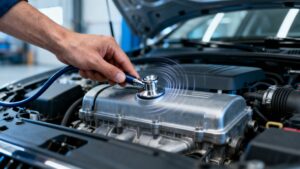
- Chassis Ears: Think of these as electronic stethoscopes for your car. We can clip multiple sensors to different suspension and chassis parts, letting us listen to each component in isolation while driving to track down the sound’s origin.
- A Full Visual Inspection: We’ll get your car up on a lift for a complete underbody inspection. This gives us a clear, up-close look at the exhaust system, suspension, axles, and wheel hubs for any obvious signs of damage, looseness, or wear.
- Computer Diagnostics: If the noise seems tied to the engine or transmission, we’ll plug in a high-level scan tool. This device talks to your car’s onboard computer, pulling any fault codes that can point directly to a failing sensor or an internal problem. You can learn more in our guide on what a car diagnostic test actually reveals.
From Diagnosis to Decision
Once the technician has definitively found the source of the noise, the next step is all about clear and honest communication. Our goal is to give you total transparency so you can make an informed decision without feeling any pressure. You won’t be left in the dark about what’s wrong or what it’s going to cost.
A professional diagnosis is a partnership. We combine your observations with our technical skill to find the problem, then present a clear, upfront plan so you can approve repairs with complete confidence.
Before a single tool is picked up for the repair, we’ll give you a full breakdown. This includes a plain-English explanation of the failed part, why it’s making noise, and what’s involved in the fix. You’ll get a detailed, itemized estimate that separates the cost of parts and labor, so there are absolutely no surprises on your final bill.
Finally, we’ll lay out a recommended repair plan and a clear timeline. We also make sure to advise you on the safety of the situation—letting you know if a repair is urgent or if it's something that can wait. This transparent approach ensures you are always the one making the final call on your vehicle’s care.
Answering Your Top Questions About Loud Car Noises

Even after you've spent time trying to figure out what that new sound is, plenty of questions can pop up. Hearing a car making loud noise is never fun, but getting clear answers can give you some much-needed peace of mind. Here, we'll tackle the most common questions we hear from drivers just like you.
Our goal is simple: to give you the practical know-how to handle the situation with confidence. When you understand the basics, you're better prepared for a conversation with a technician and can shake off some of that stress that comes with car troubles.
How Much Does a Noise Diagnostic Cost?
This is usually the first question on everyone's mind, and for good reason. While every auto shop sets its own rates, a professional diagnostic for a strange noise will typically run between $75 and $150. This fee pays for a skilled technician's time to properly inspect your vehicle and pinpoint the exact source of the sound.
Think of it as a smart investment. Paying for a correct diagnosis from the start ensures you’re only fixing what's actually broken. It saves you from wasting money on guessing games and gets you straight to a reliable solution.
Is It Safe to Keep Driving with a Loud Car Noise?
This is a critical question, and the answer really depends on the specific sound your car is making. As we've gone over, some noises are red flags that demand you stop immediately, while others give you a little more leeway.
- Stop Immediately: If you hear a loud, rhythmic knocking from the engine or a severe grinding from your brakes, you need to pull over as soon as it's safe. Turn off the car and call for help.
- Drive Cautiously to a Shop: A steady squeal, a faint rattle, or a humming noise usually means you can drive directly to a repair shop. Just don't put it off.
When you're in doubt, always play it safe. A short tow is always going to be cheaper and safer than risking major engine failure or a complete loss of your brakes while on the road.
Why Does My Car Only Make Noise When It's Cold?
This is an incredibly common issue. You start your car in the morning and hear a squeal or a light tapping sound, but it vanishes after a few minutes of driving. This usually happens because metal parts and rubber components contract when they're cold.
A good example is a serpentine belt that’s getting a bit old. It might be stiff enough to slip and squeal when cold, but as the engine warms it, the belt becomes more flexible and gets its grip back. In the same way, certain hydraulic parts like valve lifters might tap away until the engine oil warms up, thins out, and starts circulating properly.
Don't let a strange car noise throw off your entire day. If you're struggling with a sound you can't identify, the expert technicians at Kwik Kar Oil Change and Auto Care are here to give you a clear diagnosis and a repair you can count on. Schedule your appointment online and get back to driving with confidence.