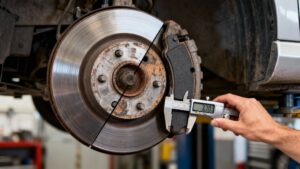
That unmistakable smell of burning rubber is one of the more alarming scents your car can produce. When you catch a whiff of it, it's completely natural to feel a bit of concern. It’s not just an unpleasant odor; it’s your car’s way of sending up a smoke signal that something is wrong.
This guide will act as your on-call mechanic, helping you figure out what that smell means and what you should do next. We’ll break down the usual suspects so you can understand the difference between a simple fix and a serious hazard.
Why That Burning Rubber Smell Is a Serious Warning
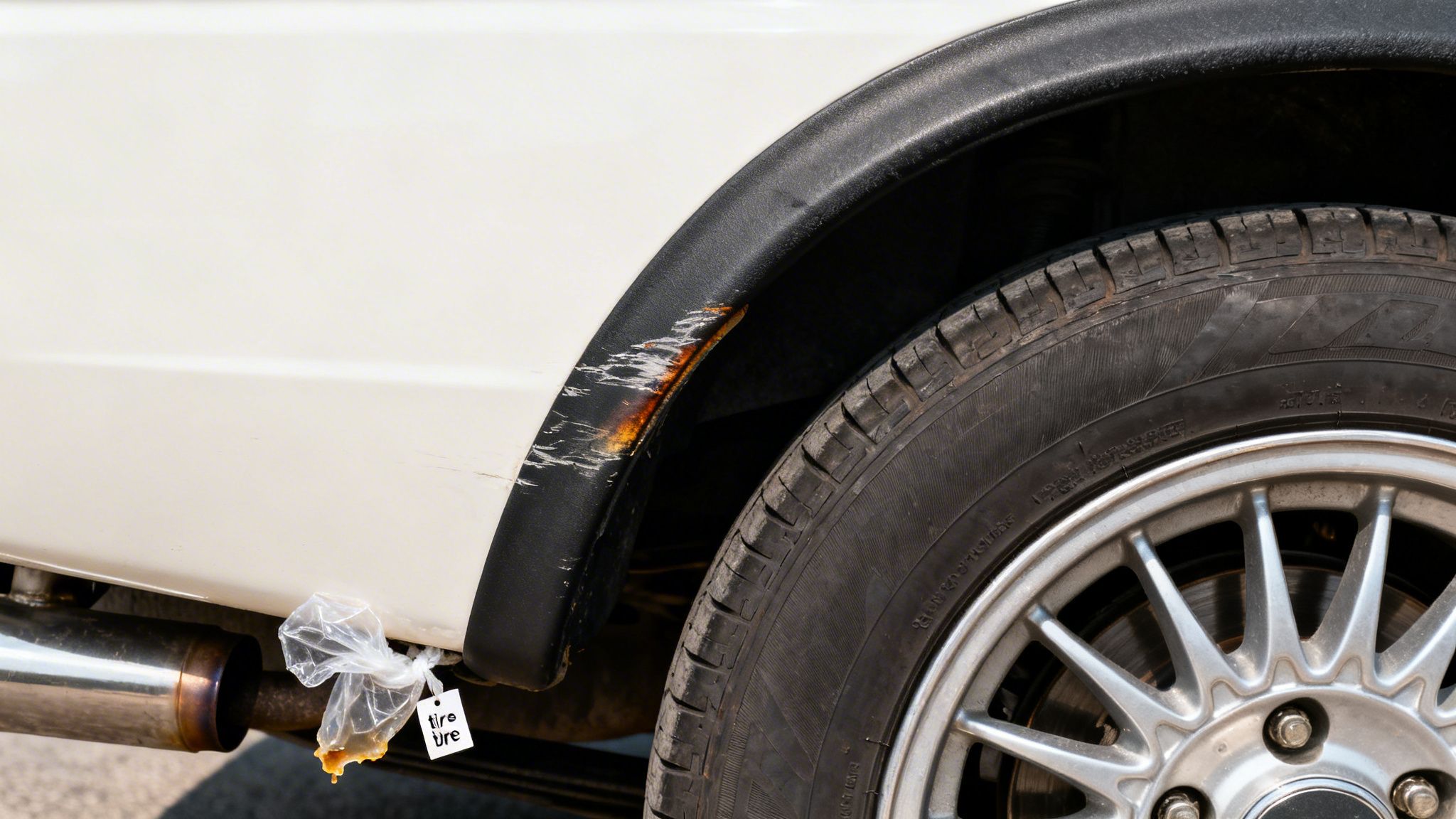
Sometimes, the cause is harmless—like a plastic grocery bag that melted onto your hot exhaust pipe. More often than not, though, it’s a sign of a mechanical or electrical problem that needs your immediate attention.
Let's dive into the most common reasons you might be smelling burning rubber.
Common Causes and Their Risk Levels
Here are the most frequent culprits behind that acrid smell, ranging from moderate to severe issues.
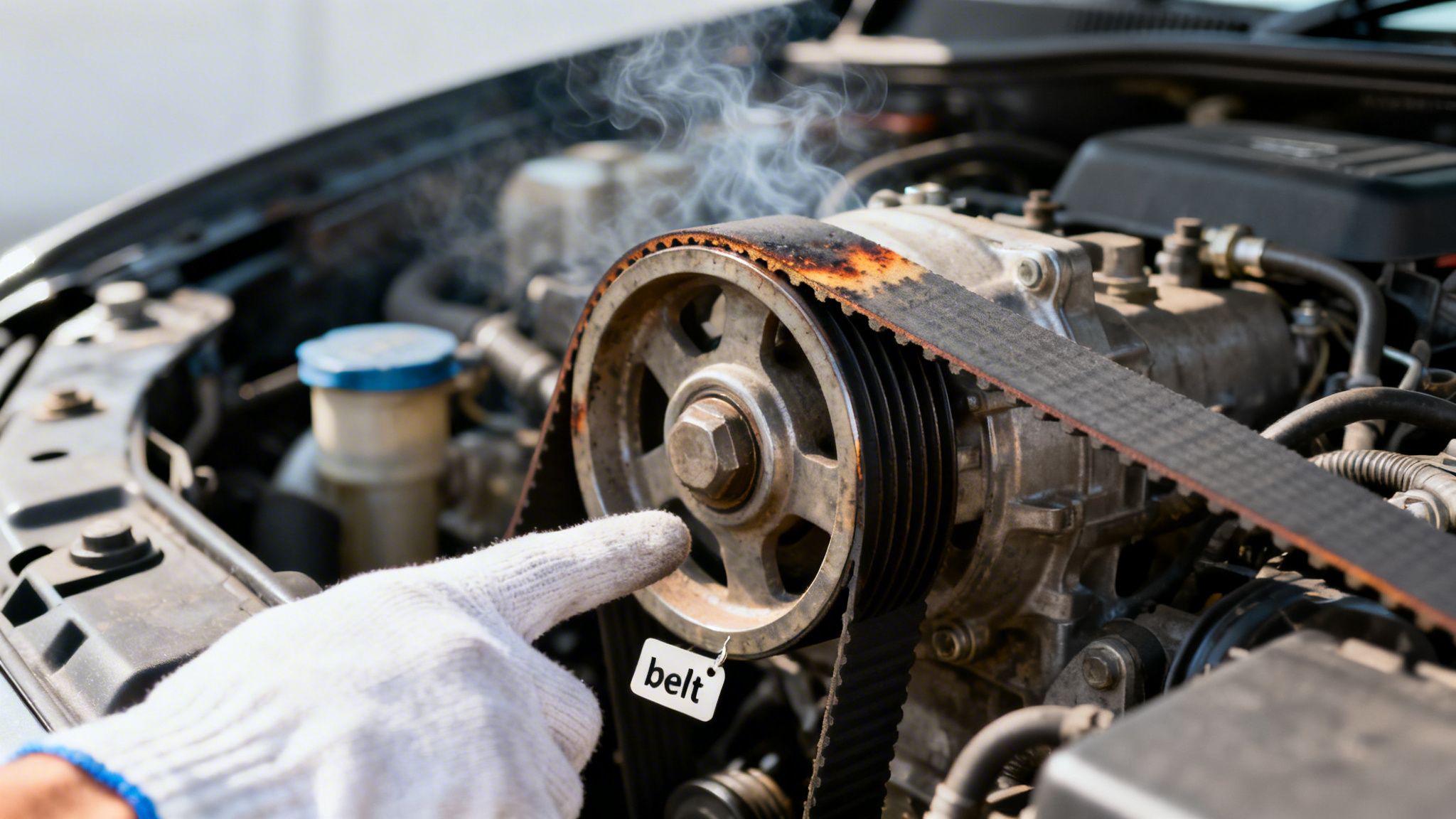
- Slipping Belts: Your engine has several belts, like the serpentine belt, that run various accessories. If a belt is old, worn, or loose, it can slip on its pulley, creating intense friction and a sharp burning smell.
- Overheating Brakes: If a brake caliper gets stuck or you've been driving aggressively downhill, your brake pads can overheat. This produces a harsh, chemical-like burning smell that's hard to miss.
- Failing Clutch: For those driving a manual transmission, a slipping clutch is a classic cause. As the clutch wears out, it fails to grip properly, creating friction that smells a lot like burnt toast or, you guessed it, rubber.
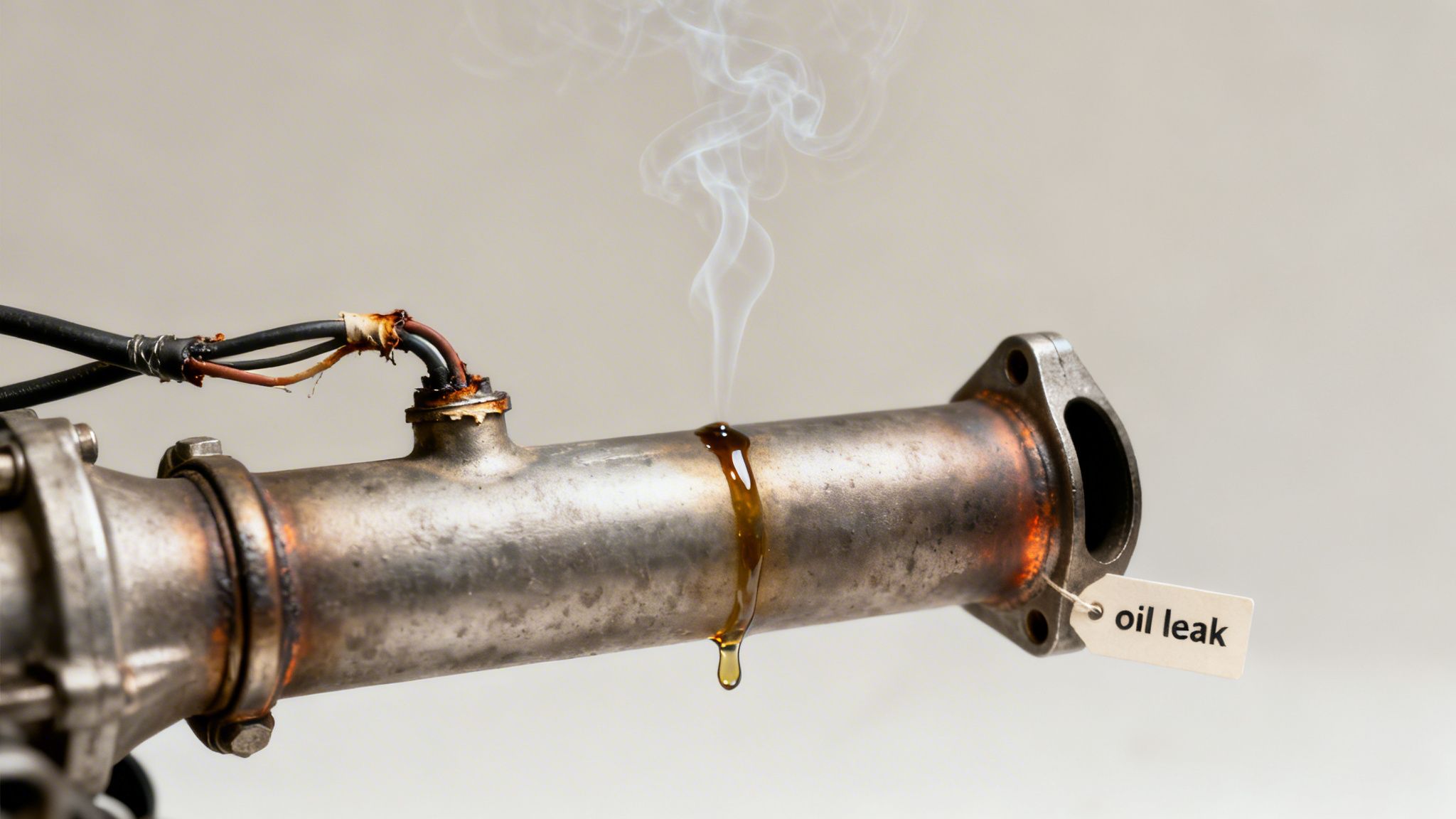
- Fluid Leaks: Engine oil or transmission fluid are not supposed to be on the outside of your engine. If they leak onto a hot exhaust manifold or other heated parts, they can produce a pungent burning smell that is often mistaken for rubber.
- Electrical Shorts: This is one of the most dangerous causes. Melting plastic insulation around a short-circuiting wire creates a very distinct, chemical burning odor and poses a significant fire risk.
- Tire Issues: A misaligned, underinflated, or worn-out tire can rub against the suspension or fender. This friction generates extreme heat, leading to a true burning rubber smell directly from the tire itself.
This quick reference table can help you assess the situation at a glance.
Quick Guide to Burning Rubber Smells
| Potential Cause | Severity Level | Recommended Action |
|---|---|---|
| Slipping Belts | Moderate | Inspect belts for wear and tension. Plan for a replacement soon. |
| Overheating Brakes | High | Pull over safely. Let brakes cool. Have them inspected immediately. |
| Failing Clutch | Moderate to High | Avoid heavy acceleration. Get it checked by a mechanic as soon as possible. |
| Fluid Leaks | Moderate | Check for drips under the car. Identify the source and schedule a repair. |
| Electrical Shorts | Critical | Pull over, turn off the engine immediately. Do not drive. Call for a tow. |
| Tire Rubbing/Dragging | High | Pull over safely. Check tires for damage, inflation, and clearance. |
This table is a starting point, but any burning smell is a signal to pay closer attention to your vehicle's health.
The flowchart below gives you a visual guide on how to react when you first notice the smell.
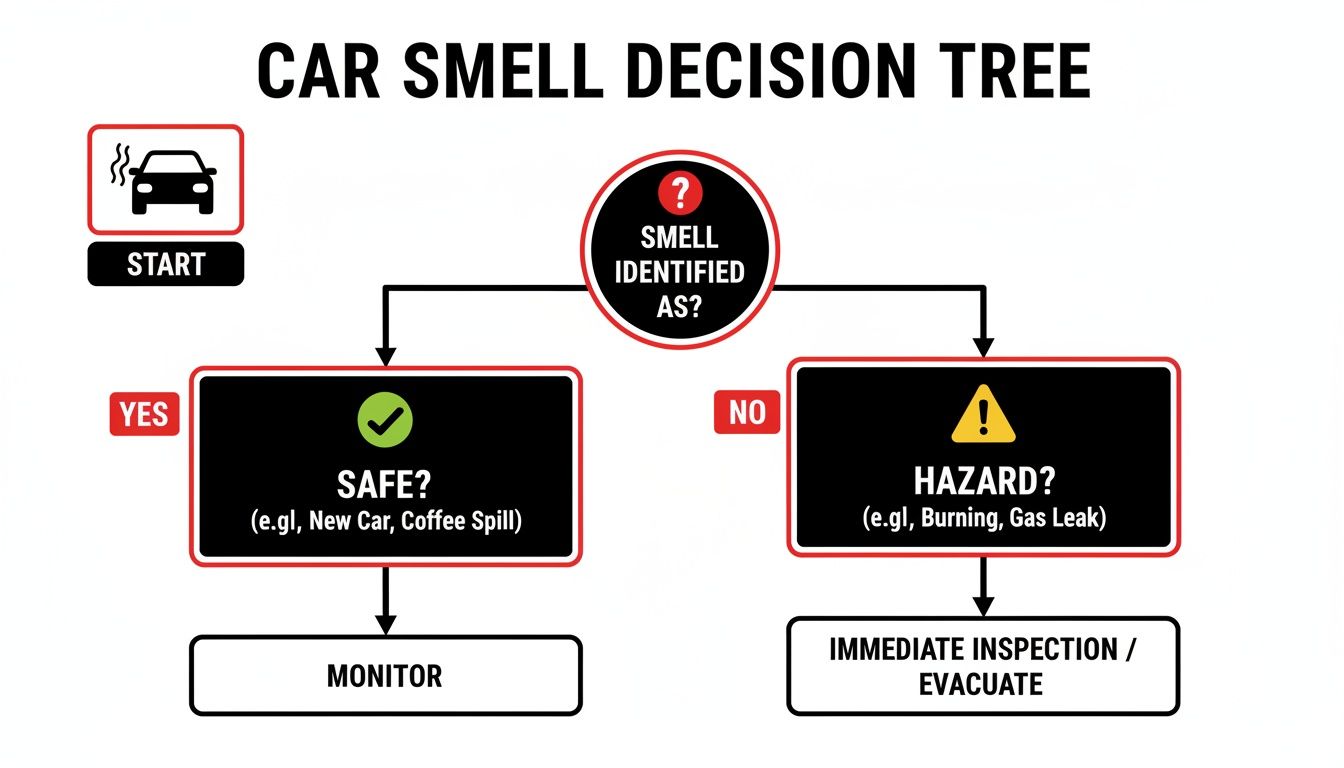
As you can see, while every smell warrants an investigation, some—like those from electrical systems or brakes—require you to stop driving right away.
A burning rubber smell is your vehicle's early warning system. Ignoring it is like ignoring a smoke detector—the risk often outweighs the inconvenience of checking it out. Addressing the cause promptly can prevent a minor annoyance from becoming a major breakdown.
A smell coming directly from your tires, for example, is especially dangerous. According to the National Highway Traffic Safety Administration (NHTSA), tire blowouts are a factor in approximately 11,000 crashes in the U.S. each year. That pungent odor is a sign of excessive heat, which weakens the rubber and dramatically increases the risk of a blowout. You can read more about tire blowout safety and prevention to better protect yourself on the road.
When you catch a whiff of burning rubber from your car, it’s often a sign that one of three key systems is working way too hard: your accessory belts, your brakes, or the clutch. These parts all rely on friction to do their jobs, but when that friction gets out of control, it creates intense heat and that unmistakable, worrying smell.
Think of it like this: a little friction is good, but too much leads to a mechanical burnout. Let’s pinpoint which one might be causing the trouble.
The Slipping Belt
Your engine uses a long, tough rubber belt—the serpentine belt—to run critical parts like the alternator, power steering pump, and A/C compressor. It acts like a chain on a bicycle, transferring the engine's power to keep everything spinning.
Under normal conditions, this belt grips a series of pulleys and turns them smoothly. But as a belt gets old, shiny, or loose, it starts to lose its grip. When you hit the gas or turn on the air conditioner, the sudden power demand can make the belt slip against a pulley instead of turning it.
This slipping action is like a tire spinning out on an icy road. It generates a ton of friction and heat almost instantly, scorching the rubber and creating a sharp burning smell. You'll often hear a loud squeal along with the odor, especially when you first start the car or accelerate hard. If you're hearing that noise, our guide on how to fix a squealing serpentine belt has some great tips.
A slipping belt is much more than just a bad smell. If that belt snaps, you'll lose power steering, the alternator will stop charging your battery, and your engine can overheat in minutes—a situation that could easily leave you stranded on a Dallas highway.
When Brakes Are the Source
Your brake system is built to use friction to slow you down. When you step on the pedal, brake pads squeeze a spinning metal disc (the rotor). This friction turns your car's forward motion into heat, bringing you to a stop.
The problem starts when a part, like a brake caliper, gets stuck and doesn't fully release the brake pad. It’s the mechanical version of driving around with your foot resting on the brake pedal.
Because the pad is constantly grinding against the rotor, the friction creates an incredible amount of heat. This can literally cook the materials in the brake pad, releasing a harsh, acrid smell that’s often far more pungent than a slipping belt. In serious cases, you might even see smoke pouring from one of the wheels.
Here are a few tell-tale signs of a brake issue:
- The smell gets strongest after you've been driving for a bit.
- You feel the car pulling to one side.
- The odor seems to come from one specific wheel.
- Your brake pedal feels soft or "spongy."
This is a major safety risk. Overheating can cause brake fade, a dangerous condition where your brakes lose their stopping power and it takes much longer to stop your car.
That Burning Smell from a Slipping Clutch
If you drive a manual transmission, a burning rubber smell might actually be your slipping clutch. The clutch is the friction disc that connects your engine to the transmission, letting you shift gears smoothly.
Imagine it as a dimmer switch for your engine's power. Pushing the pedal down disconnects the power. As you let it up, the clutch disc gently engages the flywheel to send power to the wheels.
But as a clutch wears down, its friction material gets thin and it can’t grip the flywheel as tightly. When you try to accelerate, especially from a stop or up a hill, the clutch disc slips against the flywheel instead of grabbing it. This slippage creates a very distinct burning odor, often described like burnt toast or smoldering paper—very different from hot oil or melting plastic.
This is a really common problem for anyone dealing with the stop-and-go traffic Dallas drivers know all too well. All that shifting and feathering the clutch wears it out fast. If you notice your engine revving higher but your car isn't picking up speed to match, a slipping clutch is the most likely culprit.
When It's Not Rubber: Leaks and Electrical Dangers
While belts and brakes are often the first things that come to mind, sometimes the car smells like burning rubber for reasons that have nothing to do with rubber components. These "imposter" smells often point to fluid leaks or even dangerous electrical faults, and knowing the difference is critical for your safety.
Your engine bay is a hot, crowded place where fluids and wiring run side-by-side. When something leaks or a wire shorts out, the smell can easily be mistaken for burning rubber. But the real problem can be very different—and sometimes, far more serious.
Burning Smells From Leaking Fluids
Think of your engine's exhaust manifold like a hot skillet on a stove. Now, imagine what happens if a flammable liquid like oil drips onto it. You get an instant sizzle and a thick, acrid smoke with a really pungent odor that smells a lot like burnt rubber.
This is a common scenario, often caused by a failing valve cover gasket or oil pan gasket. These seals are meant to keep oil where it belongs, but they can get brittle and crack over time. You can learn more about those specific signs in our guide to the symptoms of a leaky oil pan gasket.
Other fluids can create similar burning smells, each with its own tell-tale character.
- Engine Oil: Creates a thick, heavy, acrid smell when it hits hot exhaust parts. It’s one of the most common "imposter" smells mistaken for rubber.
- Transmission Fluid: This smells a bit like burning oil but often has a sharper, more "chemical" or tart quality to it.
- Coolant (Antifreeze): A coolant leak has a very distinct smell. When antifreeze burns, it gives off a strangely sweet, almost syrupy scent. This is a major warning that your engine is in danger of overheating.
The bottom line is that any burning smell—even if you think it's rubber—is a good reason to check for leaks. Look for fresh drips on the ground where you park; it's one of the easiest ways to confirm you have a fluid leak.
The Critical Warning: An Electrical Burning Smell
Out of all the possibilities, an electrical short is the most dangerous cause of a burning smell. If you catch a whiff of a sharp, chemical odor that reminds you of burning plastic, treat it as a major red flag. This is one smell you absolutely cannot ignore.
Your car’s wiring is covered in plastic and rubber insulation. When a wire shorts out, it can heat up to extreme temperatures in a split second, melting that insulation. This creates a very distinct, sharp odor that’s different from oil or rubber—it’s much more like an overheated hair dryer or melting plastic.
An electrical burning smell often means a vehicle fire could be just moments away. The short circuit can easily ignite nearby flammable materials, like oil residue on the engine, plastic covers, or the sound-dampening material under your hood.
If you think you smell an electrical fire:
- Pull Over Immediately: Get to a safe spot off the road as quickly as you can.
- Turn Off the Engine: Kill the power to the car to stop the flow of electricity.
- Get Out of the Vehicle: Don't try to find the source of the smell yourself. Get yourself and any passengers a safe distance away.
- Call for a Tow: Your car needs to be towed to a professional mechanic. Do not try to restart or drive it under any circumstances.
This is an emergency. Putting your safety first by stopping immediately is the only right move. A professional technician can then safely track down and fix the electrical issue before it leads to a total catastrophe.
Inspecting Your Tires and Under the Vehicle
Sometimes the simplest answer is the correct one. Before you even think about popping the hood and getting overwhelmed, a quick walk around your car can often tell you everything you need to know. The source of that nasty burning smell might be something you can spot in a minute.
Your first stop should always be the tires. They are, after all, literally made of rubber. If there’s any unusual friction happening down there, you’re going to get a genuine burning rubber odor. This check is easy, safe, and can save you a lot of worry.
Check Your Tires for Friction and Wear
When your car smells like burning rubber, tire issues are one of the most common culprits. That smell is a dead giveaway for excessive heat from friction, which can happen for a few different reasons. A quick look can tell you if your tires are the source of the problem.
Start by looking at the tire surfaces and the area immediately around them in the wheel wells. You're looking for any signs of trouble:
- Aggressive Driving: Let's be honest—if you just did a "burnout" or were driving hard, the smell is probably just hot tires. It should go away on its own pretty quickly.
- Misalignment: When your wheels aren't aligned properly, a tire can be forced to drag sideways down the road. This constant scrubbing action generates an incredible amount of heat on the tire’s edge.
- Underinflation: Low tire pressure makes the sidewalls of your tire bulge and flex way more than they're designed to. This creates massive friction and heat. A severely underinflated tire can overheat fast, leading to a very dangerous blowout.
A tire rubbing against another part of your car is a serious issue. The constant friction can wear through the tire's sidewall surprisingly fast, dramatically increasing the risk of a sudden and dangerous blowout, especially at highway speeds.
Look for Signs of Rubbing
Next, get a little closer and check your wheel wells for any evidence that the tire has been making contact. Feel the plastic inner fender liner and look at the suspension parts closest to the tire. If a tire is rubbing, you’ll usually find a clean, scuffed patch where the rubber has been grinding away.
You should also look for a shiny, worn-down area on the tire’s sidewall itself. This is a tell-tale sign that the tire is hitting something it shouldn't. This often happens if you've put on bigger wheels and tires or if a suspension component is bent or broken.
Scan for Melted Debris Under the Car
If the tires seem fine, the next logical step is to check underneath for any foreign objects that have hitched a ride. It happens more often than you'd think, and the results can be really smelly. Your exhaust system gets incredibly hot—it can easily exceed 500°F.
Grab a flashlight and take a safe peek under your car, tracing the path of the exhaust pipe from front to back. You’re looking for anything that’s obviously not supposed to be there.
Common Culprits to Look For:
- Plastic Bags: This is the #1 offender. A stray plastic grocery bag loves to wrap itself around a hot exhaust pipe and melt. This creates a powerful, acrid smell that is very easily mistaken for burning rubber.
- Road Debris: Chunks of tar, old tire scraps, or other bits of rubber and plastic can get kicked up and stick to the hot exhaust. As they cook, they'll let off some pretty potent odors.
- Dragging Parts: Make sure a plastic underbody shield or a mudflap hasn't come loose and isn't dragging on the pavement or rubbing against a spinning tire.
By running through this simple external check, you can quickly rule out some of the most common and obvious causes. If you find a melted bag or see clear evidence of a tire rubbing, you've likely found your culprit. If everything looks clean, the smell is probably coming from somewhere deeper within the engine bay or drivetrain.
How to Describe the Problem to Your Mechanic
Walking into a repair shop and just saying “my car smells like burning rubber” can feel a little vague. We get it. You know something’s wrong, but putting your finger on it—and describing it to a technician—isn't always easy.
But here’s a little secret from our side of the counter: clear communication is the best tool you have for getting a quick and accurate fix. Think of it less like you needing to be a car expert and more like you’re the key witness.
The more clues you can give us, the faster we can pinpoint what's going on. This isn't about you diagnosing the problem yourself. It’s about giving the professionals at Kwik Kar a clear picture so we can get to work efficiently. A few simple details can be the difference between a 10-minute diagnosis and a much longer one.
What to Tell Your Technician
When you come see us, being ready with a few specifics is a huge help. It’s a good idea to jot down what you’ve noticed in your phone's notes app so you don’t forget the details when you’re talking to our service advisor.
Here’s a quick checklist of the clues our technicians find most useful:
- When does the smell show up? Only when you first start the car? After you've been driving on the highway for a bit? Or does it seem to come and go randomly?
- What are you doing when you smell it? Let us know if it happens when you're accelerating hard, hitting the brakes, making a sharp turn, or just sitting at a red light.
- Where is the smell strongest? Does it seem to be wafting from under the hood? Coming from one of the wheels? Or is it just filling up the inside of your car?
- Are there any strange sounds that go with it? Listen for any squealing, grinding, hissing, or thumping noises. The combination of a sound and a smell is a major clue.
- Did you see anything? Did you notice a puff of smoke from the engine bay or near a tire? Have you spotted any drips or puddles on your driveway?
Providing this kind of context helps our team narrow things down immediately. For example, a burning smell that only happens when you brake points us straight toward your brake system. A smell that appears when you’re accelerating hard makes us think about a slipping belt or clutch first.
Being a good automotive storyteller is the best way to ensure an accurate and cost-effective repair. The details you provide act as a roadmap, guiding the technician straight to the problem area and saving valuable diagnostic time.
The Diagnostic Process at Kwik Kar
Once you’ve shared what you’ve observed, our skilled Kwik Kar technicians take it from there. Using the information you gave us, we can skip the guesswork and start a focused, systematic check of your vehicle.
For a burning smell, a typical diagnostic journey at our shop looks something like this:
- Verification: First, we’ll try to recreate the situation you described. We want to experience the smell firsthand to confirm what you’re noticing.
- Visual Inspection: Next, we put eyes on everything. Our tech will do a thorough visual sweep, looking for obvious signs like a glazed, shiny serpentine belt, fluid residue on a hot exhaust pipe, or scuff marks on a tire or fender liner.
- Hands-On Testing: Depending on what we suspect, this might mean checking the tension of your belts, spinning the wheels to feel for a dragging brake caliper, or even pressure testing your cooling system if a hose is the likely culprit.
- Advanced Diagnostics: If we think it’s an electrical issue, we’ll break out specialized tools like a multimeter. This lets us trace short circuits and find bad wiring without having to tear half your dashboard apart.
Our goal at every step is complete transparency. We believe in showing you exactly what we find and explaining why a certain repair is needed. Before any work starts, you’ll get a clear breakdown of the problem and a detailed estimate for your approval. No surprises, no runaround—just honest, expert service to get you back on the road safely.
Preventing Future Problems With Smart Maintenance
Let's be honest—the best way to handle a burning rubber smell is to make sure you never have to smell it in the first place. While it's great to know what to do in an emergency, the real secret to a stress-free life with your car is shifting from reactive repairs to proactive care. Smart, routine maintenance is your best defense against surprises.
Think of your car's maintenance schedule less like a chore list and more like a series of quick, simple check-ins. These inspections are your golden opportunity to catch a small problem before it turns into a big one that leaves you stranded. A little bit of time now can save you a mountain of headaches and money down the road.
Building a Proactive Maintenance Routine
A good maintenance plan doesn't need to be complicated. It really just boils down to a few key services that give our technicians a regular chance to see what's going on under the hood. This approach turns car ownership from a string of stressful emergencies into a predictable, safe experience.
Your scheduled oil change is the perfect anchor for this whole strategy. While we’re already under the car and looking at the engine to change the oil and filter, it’s the ideal time for our team to perform other vital checks.
Proactive care is all about prevention, not reaction. A simple, regular checkup can catch a worn belt before it snaps or a small leak before it causes major engine damage, turning a potential crisis into a simple, manageable repair.
For example, during a routine oil change, a technician can easily check the serpentine belt for cracks, glazing, or proper tension. They can also spot the early signs of an oil or coolant leak long before it gets bad enough to drip onto a hot exhaust pipe and create that scary burning smell.
Key Preventative Checks to Schedule
To keep these kinds of issues from ever starting, you just need to focus on a few high-impact maintenance items. When you make these part of your regular service visits, you create a powerful safety net against the most common causes of that burning rubber odor.
Essential Maintenance Tasks:
- Routine Oil Changes: This one is non-negotiable. It's more than just fresh oil—it's a consistent opportunity for a professional to spot oil leaks, check your belts, and notice other developing issues before they escalate.
- Regular Brake Inspections: Don’t wait until you hear a grinding noise or smell something burning. Getting your brake pads, rotors, and calipers checked annually helps us catch wear before it leads to dangerous overheating or a stuck caliper.
- Consistent Tire Rotations: Rotating your tires every 5,000 to 7,000 miles is crucial for promoting even wear. This simple step helps prevent alignment problems and uneven tread that could cause a tire to rub against a fender or suspension part.
By following a straightforward schedule, you put yourself in the driver's seat and stay ahead of problems. To get started, you can explore our comprehensive car maintenance checklist to build a plan that’s right for your vehicle. This simple approach turns maintenance from a reaction into a strategy for reliability.
Your Burning Rubber Questions Answered
When you notice a strange smell like burning rubber, a bunch of questions probably pop into your head right away. Let's tackle some of the most common ones so you have a better idea of what might be going on under the hood.
What if the Smell Only Shows Up When I Speed Up?
If you only catch that burning rubber scent when you really step on the gas, the culprit is almost always a slipping belt.
Think about it: when you accelerate hard, you’re putting a sudden, intense demand on parts like the alternator and AC compressor. If a belt is old, cracked, or just plain loose, it can’t grip the pulleys tightly enough. That slip creates a ton of friction, and friction creates that unmistakable smell.
Is It Safe to Drive My Car if It Smells Like This?
The honest answer is, it depends. Your first priority is always safety, and you should always err on the side of caution.
If you suspect an electrical problem (which often has a sharp, chemical-like smell) or a serious brake issue (a strong smell paired with smoke or a mushy pedal), pull over safely and turn off the engine immediately. These are serious safety hazards that could lead to a fire or complete brake failure. For other causes, you might be able to drive carefully to our shop. When in doubt, call for a tow.
Can a New Clutch Cause a Burning Smell?
Yes, and this is one of the few times it’s perfectly normal. A brand-new clutch goes through a "break-in" period. A slight burning odor during the first few hundred miles is just the new material settling in.
However, if that smell is overwhelming, sticks around for a long time, or your clutch feels like it's slipping, something might be off. It could point to an issue with the installation. In that case, it’s smart to have a technician double-check the work to make sure everything is aligned and working as it should.
Don't let a strange smell turn into a major roadside problem. The expert technicians at Kwik Kar Oil Change and Auto Care can quickly diagnose the issue and give you a transparent, reliable fix. Schedule your appointment today and get back on the Dallas roads with confidence.