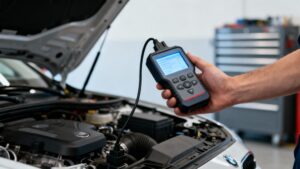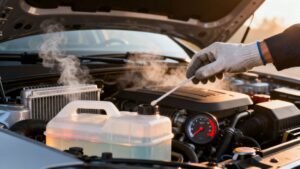
So, what exactly is a coolant flush service? It’s a full-system detox for your vehicle's engine. We don’t just top off the old fluid; we completely drain the contaminated coolant, along with any rust, gunk, and scale that’s built up, and then replace it with a fresh, clean supply. This process is absolutely essential for making sure your engine stays at the right temperature, no matter what the Dallas traffic throws at it.
Why a Coolant Flush Is Your Engine's Best Friend

Think of your car’s cooling system like its own circulatory system. The coolant—or antifreeze—is the lifeblood that keeps everything running smoothly. Its main job is to pull the incredible heat generated by your engine and get rid of it through the radiator. Especially in the punishing Texas heat, a healthy cooling system is the only thing standing between you and a catastrophic engine failure on the side of the road.
Over time, though, the additives in the coolant that protect your engine start to break down. When that happens, the fluid turns acidic and loses its effectiveness, which quickly leads to corrosion, sludge, and scale deposits. All that junk can clog up the narrow passages in your radiator and engine block, choking off the flow and causing your engine to overheat. Just topping it off is like pouring a cup of clean water into a muddy bucket—it doesn’t fix the real problem.
The True Cost of Neglect
Putting off cooling system maintenance is a high-stakes gamble. Overheating is a serious threat, and some statistics show that as many as 50% of engine breakdowns are directly related to cooling system failures, often starting with old, neglected coolant. It’s no surprise that the global antifreeze market is expected to hit USD 9.75 billion by 2031; this fluid is critical for every car on the road. You can learn more about the trends in the global antifreeze market and see just how vital it is.
A professional coolant flush service isn't just a repair—it's one of the most effective forms of preventive care you can invest in. It safeguards your engine, prevents rust and corrosion, and saves you from the stress and expense of a roadside breakdown in the Dallas heat.
A complete flush is the only way to truly clean out those harmful deposits and get your cooling system working like new again. When you invest in this service, you're directly protecting your engine's most important parts—like the water pump, thermostat, and head gasket—from failing way too soon.
To put it simply, here are the core benefits you get from this essential service.
Key Benefits of a Professional Coolant Flush
| Benefit | Why It Matters for Dallas Drivers |
|---|---|
| Prevents Overheating | Keeps your engine cool during scorching Texas summers and stop-and-go traffic on I-635. |
| Removes Contaminants | Eliminates sludge and scale buildup that can clog your radiator and cause costly damage. |
| Inhibits Rust & Corrosion | Fresh coolant contains additives that protect internal metal parts from deteriorating. |
| Extends Engine Life | A well-maintained cooling system is fundamental to the long-term health and reliability of your vehicle. |
In short, a coolant flush is a small investment that pays huge dividends by keeping your car reliable and helping you avoid much bigger, more expensive repair bills down the line.
How Your Car's Cooling System Actually Works
To really get why a coolant flush service is so important, it helps to understand the incredible job your car's cooling system does every single second you're on the road. Just think: your engine is basically a powerhouse of controlled explosions. That process creates a massive amount of heat—so much that without a cooling system, the engine's metal parts would quickly warp, melt, and lock up, leading to catastrophic failure.
The real hero of this whole operation is the coolant, also known as antifreeze. This brightly colored liquid is always on the move, on a critical mission to manage all that intense heat. It travels in a continuous loop to make sure your engine stays in its happy place, which is typically between 195 and 220 degrees Fahrenheit.
This isn't just fluid sitting in a tank; it's a dynamic, high-pressure circulatory system designed for one purpose: keeping your engine alive.
The Journey of Heat Exchange
At the heart of it all is the water pump. It's driven by the engine and its job is to forcefully push coolant through special passages built right into the engine block and cylinder head. As the coolant rushes through, it acts like a sponge, soaking up the extreme heat created by combustion.
Once it's full of heat, the now-hot coolant flows away from the engine through a big rubber hose and into the radiator. The radiator, which sits right at the front of your car, is a brilliant piece of engineering. It’s a whole network of thin metal fins and tubes, designed to maximize its surface area to the air coming at you as you drive. A large fan helps pull even more air through when you're stuck in traffic.
As that hot coolant snakes through the radiator's tubes, the airflow whisks the heat away, cooling the liquid right back down. The now-chilled coolant leaves the bottom of the radiator and starts its journey back to the engine, ready to grab more heat and do it all over again.
Key Players in the Cooling System
Several key parts work together to make this happen flawlessly. Each one has a specific role in keeping your engine from overheating, especially during a brutal Dallas summer day.
- The Thermostat: This is the system's smart gatekeeper. It's a small valve between the engine and the radiator that stays closed when your engine is cold, letting it warm up fast. Once the engine hits its ideal temperature, the thermostat opens up and lets the coolant flow to the radiator.
- Radiator Hoses: These are the flexible, tough rubber tubes connecting the engine to the radiator. They're built to handle high pressure and heat, but over time they can get brittle and crack.
- The Overflow Tank: You might know this as the reservoir. It's a plastic tank that holds extra coolant. When the fluid heats up and expands, it flows into this tank. As it cools down and contracts, it gets drawn back into the system.
The fluid in your car is way more than just simple antifreeze. Modern coolants are complex chemical cocktails with corrosion inhibitors, anti-foaming agents, and lubricants for the water pump. Over time, these critical additives break down, turning the coolant acidic and useless.
This chemical breakdown is the number one reason a complete coolant flush is so necessary. Just topping off old, worn-out fluid with new coolant won't get rid of the harmful, acidic gunk that's already built up. A full flush is the only way to completely purge the system of these contaminants and bring back its ability to protect your engine from rust, corrosion, and the constant threat of overheating.
Warning Signs Your Car Needs a Coolant Flush
Your car is surprisingly good at telling you when something’s wrong. Long before a major component fails, it sends out little distress signals. When it comes to the cooling system, these warnings are your first and best defense against serious, expensive engine damage. Ignoring them is like ignoring a smoke alarm—you really don't want to find out what happens next.
Paying attention to these clues helps you know when a coolant flush service goes from being just routine maintenance to an urgent necessity. The signs can be subtle at first, like an odd smell, or as blatant as a flashing light on your dash.
The Temperature Gauge Is in the Red
This is the most direct warning your car can give you. If you see the temperature gauge on your dashboard creeping into the red zone, or the engine temp light pops on, your car is overheating. It's a clear sign that the coolant isn't doing its job, either because it's old and contaminated, the level is low, or there’s a clog somewhere in the system.
When your engine overheats, things get serious fast. Internal metal parts can warp, crack, or even melt under that intense heat. Driving for even a few more minutes can lead to thousands of dollars in repairs for a blown head gasket or a completely seized engine.
If you see that needle rising, the best thing you can do is pull over safely as soon as possible and shut the engine off. This isn't something to ignore; it needs immediate attention.
Unusual Smells or Visible Leaks
Have you ever noticed a sweet, almost syrupy smell inside or outside your car after a drive? That distinct aroma is a classic sign of an ethylene glycol leak, which is the main ingredient in most coolants. Even if the smell is faint, it means coolant is escaping from a hose, the radiator, or heater core and burning off on a hot engine surface.
You'll also want to keep an eye out for puddles under your car. Coolant is usually a vibrant color—bright green, orange, or even pink. If you see a colorful puddle forming on your Dallas driveway, that's a sure-fire sign of a leak that needs to be fixed before you run dangerously low on this vital fluid. Our guide can help you better understand the symptoms of low coolant.
The diagram below shows the journey coolant takes to keep your engine safe.

This cycle of absorbing engine heat and releasing it through the radiator has to work perfectly to prevent overheating.
Poor Heater Performance
Here's one of the less obvious signs, which you might only notice when the weather turns cool. If you crank up your car's heater and all you get is lukewarm or cold air blowing out, it could point directly to a coolant problem. That’s because your car's heater actually uses hot coolant flowing from the engine to warm up the cabin.
If the heat isn't working, it could be for a couple of reasons:
- Low Coolant Level: There simply isn't enough hot fluid making its way to the heater core to do the job.
- System Clog: Old, dirty coolant is full of rust, scale, and other gunk that can clog up the narrow passages of the heater core, restricting flow.
A weak heater might not feel like an emergency on a mild day, but it’s a symptom of a cooling system that’s already struggling. That same system won't stand a chance under the stress of a brutal Texas summer. A coolant flush can often clear things out, getting your heater back in business and—more importantly—protecting your engine from much bigger problems.
DIY vs Professional Coolant Flush Service
So, it's time for a coolant flush. Lots of Dallas drivers think about rolling up their sleeves and tackling the job themselves to save a few bucks. While we respect the DIY spirit, this isn't like a simple oil change. A coolant flush is a tricky process where a small mistake can lead to big, expensive engine problems. For most people, letting a professional handle it is the smarter, safer bet.
Doing this in your garage means more than just draining old fluid and pouring in new. You're dealing with toxic antifreeze, which is incredibly dangerous for pets and bad for the environment if not handled correctly. Plus, you have to get all of the old, gunk-filled fluid out, and that's almost impossible without the specialized equipment we use in the shop.
Even a little bit of the old coolant left behind can contaminate the fresh fluid, cutting its life short and weakening its ability to protect your engine from day one.
The Headaches of a DIY Coolant Flush
One of the biggest problems with a home-brewed flush is the risk of trapping air pockets in the cooling system. When you refill the radiator, air can easily get stuck in the heater core, hoses, or small passages inside the engine block. These air pockets stop the coolant from flowing freely, creating dangerous hot spots that can quickly cause your engine to overheat and suffer serious damage. Our technicians use special vacuum-filling tools specifically to prevent this from ever happening.
Then there's the disposal issue. Used antifreeze is considered hazardous waste. You can't just pour it down the drain or dump it in the backyard. You have to collect it, seal it, and take it to an approved recycling facility, which adds another layer of hassle to the whole project.
Let's get real about what a DIY flush involves:
- Handling Toxic Fluid: Antifreeze is made with ethylene glycol, a poison. You have to be extremely careful with handling and storage to keep kids and pets safe.
- Getting a Real Flush: A simple drain-and-fill at home only gets rid of about 50-60% of the old stuff. Our professional service uses a pressurized machine to force out nearly 100% of the old fluid and nasty contaminants.
- The Air Pocket Danger: Without the right equipment, trapping air in the system is incredibly easy and a top cause of overheating right after a DIY job.
- Hazardous Waste Disposal: You're on the hook for getting rid of the used coolant according to local environmental laws.
The Kwik Kar Professional Advantage
Choosing Kwik Kar for a professional coolant flush isn’t just about buying new fluid. You’re investing in our expertise, proper equipment, and total peace of mind. Our certified technicians have the training and tools to do the job perfectly, ensuring your cooling system is spotless and refilled correctly.
We hook up an advanced flushing machine that circulates a powerful cleaning agent through your entire system, breaking up any scale, rust, or gunk. Then, it pushes out all of the old, worn-out coolant. After that, we use a vacuum-fill process to pull in the exact type of coolant your car's manufacturer specifies, which guarantees no air pockets are left behind to cause trouble. You can read more about how our pros identify hidden problems with our car diagnostic test services.
Coolant technology has come a long way. Modern extended-life formulas have changed how often service is needed, but the importance of doing it right hasn't changed a bit. The global market for automotive coolant is expected to hit USD 12.0 billion by 2035, which just goes to show how critical it is to use the right high-quality fluid for every single vehicle. You can discover more insights about the automotive coolant market and its growth here.
Bringing your vehicle to us means you skip all the risks of a DIY job and know your engine is protected. We take care of the hazardous waste disposal and back our service with a guarantee. You can drive away with confidence, knowing your car is ready for anything the Dallas heat throws at it.
Comparing DIY vs Professional Coolant Flush
Deciding whether to tackle a coolant flush yourself or bring it to the pros can be tough. This table breaks down the key differences to help you make the best choice for your vehicle and your peace of mind.
| Consideration | DIY Approach | Kwik Kar Professional Service |
|---|---|---|
| Thoroughness & Quality | A drain-and-fill only removes 50-60% of old fluid. Risk of contamination. | Pressurized flush removes nearly 100% of old fluid and debris. |
| Risk of Engine Damage | High risk of trapping air pockets, which can lead to severe overheating. | Professional vacuum-fill tools eliminate all air pockets, ensuring proper coolant circulation. |
| Tools & Equipment | Requires purchasing funnels, drain pans, and other basic tools. | Uses advanced flushing and vacuum-filling machines for a perfect result. |
| Safety & Handling | You are responsible for safely handling and storing toxic antifreeze. | Certified technicians handle hazardous materials safely. |
| Waste Disposal | You must find an approved facility and transport hazardous waste yourself. | We handle all hazardous waste disposal according to environmental regulations. |
| Time & Convenience | Can take several hours, including cleanup and trip to a disposal center. | Quick, efficient service that gets you back on the road fast. |
| Cost | Lower upfront cost for fluid and basic tools. | Higher upfront cost, but prevents expensive future repairs caused by mistakes. |
| Warranty & Guarantee | No guarantee. If something goes wrong, you're responsible for the repair costs. | Our work is backed by a service guarantee for your peace of mind. |
While the initial savings of a DIY job can be tempting, the risks often outweigh the reward. A professional service at Kwik Kar ensures the job is done right, protecting your engine's health and saving you from potential headaches and costly repairs down the road.
What to Expect from a Kwik Kar Coolant Flush

When you choose a professional coolant flush service, you’re really entrusting your vehicle’s long-term health to a team of skilled technicians. Here at Kwik Kar, we’re big believers in transparency, so you’ll know exactly what’s happening under the hood every step of the way.
Our process is designed to do more than just swap out old fluid. We’re aiming to restore your entire cooling system to peak efficiency, giving you real confidence on every Dallas road. It’s a systematic procedure that goes far beyond a simple drain-and-fill you might try at home. We use specialized equipment to make sure every last ounce of contaminated fluid and harmful gunk is removed.
Our Step-by-Step Service Process
When you bring your vehicle in for a coolant flush, our ASE-certified technicians follow a precise, multi-stage process. This is how we guarantee quality and safety every single time.
System Inspection: First things first, we start with a thorough visual inspection of your cooling system. Our techs check all the hoses for cracks or soft spots, examine connections for leaks, and look over the radiator and water pump for any signs of trouble. Catching a small issue here can save you from a major breakdown later.
Connecting the Flushing Machine: Next, we hook up our advanced flushing equipment directly to your car’s cooling system. This machine isn’t just for draining; it uses pressure to circulate a powerful cleaning solution through the engine block, heater core, and radiator.
Complete Fluid Evacuation: The machine forcefully pushes out nearly 100% of the old, worn-out coolant along with all the rust, scale, and sludge that’s built up over thousands of miles. This is the crucial step that a simple gravity drain just can't replicate.
Refilling with Premium Coolant: Once the system is sparkling clean, we refill it with premium coolant that meets or exceeds your car manufacturer’s specific requirements. Using the right type of antifreeze is absolutely essential for preventing corrosion and keeping things running cool.
Removing Air Pockets: Finally, we use a special vacuum-fill procedure to get rid of any air pockets that could be trapped in the system. These air bubbles are a common cause of post-service overheating, but our professional tools ensure your system is filled with solid fluid, ready to do its job.
A professional coolant flush isn't just about the fluid; it's about the process. By using advanced equipment to thoroughly clean the system and vacuum-fill it correctly, we prevent the common pitfalls of a DIY job, like trapped air bubbles that lead to dangerous engine hot spots.
Quality You Can Trust
At every stage, our focus is on doing the job right. We make sure every component is checked, every passage is cleared, and the correct fluid is used for your specific make and model. This commitment to detail is what sets a Kwik Kar coolant flush apart.
It’s how we provide reliable protection against that brutal Texas heat and give you total peace of mind. We even handle the environmentally safe disposal of the old, toxic antifreeze, so you don't have to worry about a thing.
Protecting Your Business with Fleet Maintenance
If your Dallas business runs on vehicles, you know that uptime isn't just a metric—it's everything. A delivery van, a service truck, or even a sales rep's car stuck on the shoulder of I-635 with steam pouring from the hood brings your operation to a screeching halt. The costs add up instantly: lost work, a hit to your reputation, and the unplanned expense of towing and emergency repairs. This is exactly where a proactive coolant flush service stops being a simple maintenance item and becomes a smart business strategy.
Preventive maintenance is, without a doubt, the most effective way to control your operating costs and get the most out of your vehicle investments. A regular coolant flush is a perfect example. It’s a low-cost service that directly addresses one of the most common—and most expensive—reasons for a roadside breakdown: cooling system failure. For a fleet, the positive impact of preventing this is multiplied across every single vehicle you own.
The Real-World ROI of Coolant Maintenance
Keeping your cooling systems in peak condition has a direct, measurable effect on your bottom line. When coolant gets old and dirty, it can't pull heat away from the engine effectively. This puts a massive strain on the engine itself and leads to premature failure of critical parts like water pumps and head gaskets. A consistent coolant maintenance schedule gives your business several key advantages:
- Maximized Vehicle Uptime: Regular service drastically cuts down the risk of those unexpected, productivity-killing breakdowns.
- Lower Long-Term Repair Costs: It's a simple calculation: preventing major engine damage saves you thousands compared to paying for a catastrophic failure.
- Extended Asset Lifespan: A well-cared-for engine simply lasts longer, meaning you get more working years out of every vehicle in your fleet.
- Improved Fuel Efficiency: An engine running at its ideal temperature is an efficient engine. Those small fuel savings add up to a significant number across your entire fleet.
For a fleet manager, a coolant flush isn't just vehicle maintenance; it's risk management. By investing in this simple service, you're building a more reliable, efficient, and profitable fleet that keeps your business moving forward without interruption.
The entire auto industry is paying closer attention to thermal management. In fact, the global coolant market is expected to jump from USD 8.42 billion in 2025 to USD 11.61 billion by 2034. While passenger cars are a huge part of that, the light commercial vehicle segment is growing the fastest, which speaks directly to the needs of Dallas fleet operators like you.
When you partner with Kwik Kar, we help you build a customized fleet preventive maintenance program that gives you a strategic edge. While we focus on critical engine care like this, we also understand that great fleet management involves thinking about broader automotive maintenance to protect your investment and keep your drivers happy. We'll help you create a service schedule that keeps your assets on the road and your business running at full speed.
Common Questions About Coolant Flush Services
Even after getting the rundown on what a coolant flush is, it's totally normal to still have a few questions. We get it. To help Dallas drivers feel confident before they come in, we’ve put together some quick, no-nonsense answers to the questions we hear most often at the shop.
How Often Should I Get a Coolant Flush?
This is easily the number one question we're asked. The honest answer is: it depends on your vehicle. As a general rule of thumb, most car manufacturers suggest a coolant flush every 30,000 to 50,000 miles, which usually works out to every 3 to 5 years.
But the absolute best place to look is your vehicle's owner's manual. That's the definitive guide. Also, keep in mind that Dallas driving conditions—with our blazing hot summers and constant stop-and-go traffic—put a ton of extra stress on a cooling system. If that sounds like your daily commute, you might want to consider doing it a bit more frequently to keep your engine safe.
What Is the Difference Between Coolant Types?
This is a big one, because not all coolants are the same, and using the wrong kind can spell disaster for your engine. There are three main families of coolant you'll run into:
- Inorganic Additive Technology (IAT): This is the old-school, bright green stuff. It has a shorter lifespan and typically needs to be changed out every couple of years or 24,000 miles.
- Organic Acid Technology (OAT): Often orange or red, this is a long-life coolant designed for much longer service intervals—sometimes up to five years or 150,000 miles.
- Hybrid Organic Acid Technology (HOAT): This is a blend of the other two types and comes in a rainbow of colors like yellow, pink, or turquoise. You'll find it in a lot of modern American and European cars.
It is absolutely critical to use the specific type of coolant your car's manufacturer recommends. Mixing them is a recipe for trouble. The different additives can react, turning your coolant into a thick gel that will clog up the entire system and can lead to catastrophic engine failure.
Is Topping Off Coolant the Same as a Flush?
Not even close. They are two completely different things. Topping off your coolant is just adding a little fresh fluid to the old, contaminated stuff that's already circulating. Think of it like adding a cup of clean water to a bucket of mud—the mud is still there. It doesn’t do anything to remove the rust, scale, and gunk that's built up over time.
A complete coolant flush, on the other hand, is a deep clean. We use specialized equipment to push out nearly 100% of the old fluid and all the debris along with it. We clean the whole system before refilling it with fresh, clean coolant, completely restoring its ability to protect your engine.
Can Old Coolant Really Damage My Engine?
Yes, without a doubt. Over time, the anti-corrosion additives in your coolant break down, and the fluid actually becomes acidic. When that happens, it starts eating away at the metal components inside your engine—the radiator, the water pump, you name it.
This corrosion creates little particles of rust and scale that can clog the tiny passages in your radiator and heater core. That’s what leads to overheating, which can cause blown head gaskets or even a completely seized engine. A regular flush is one of the simplest and most effective ways to prevent that kind of expensive, long-term damage and keep your car reliable on Dallas roads.
Ready to give your engine the protection it deserves? The expert technicians at Kwik Kar Oil Change and Auto Care are here to provide a professional, thorough coolant flush service to keep your vehicle running smoothly. Schedule your appointment online today!