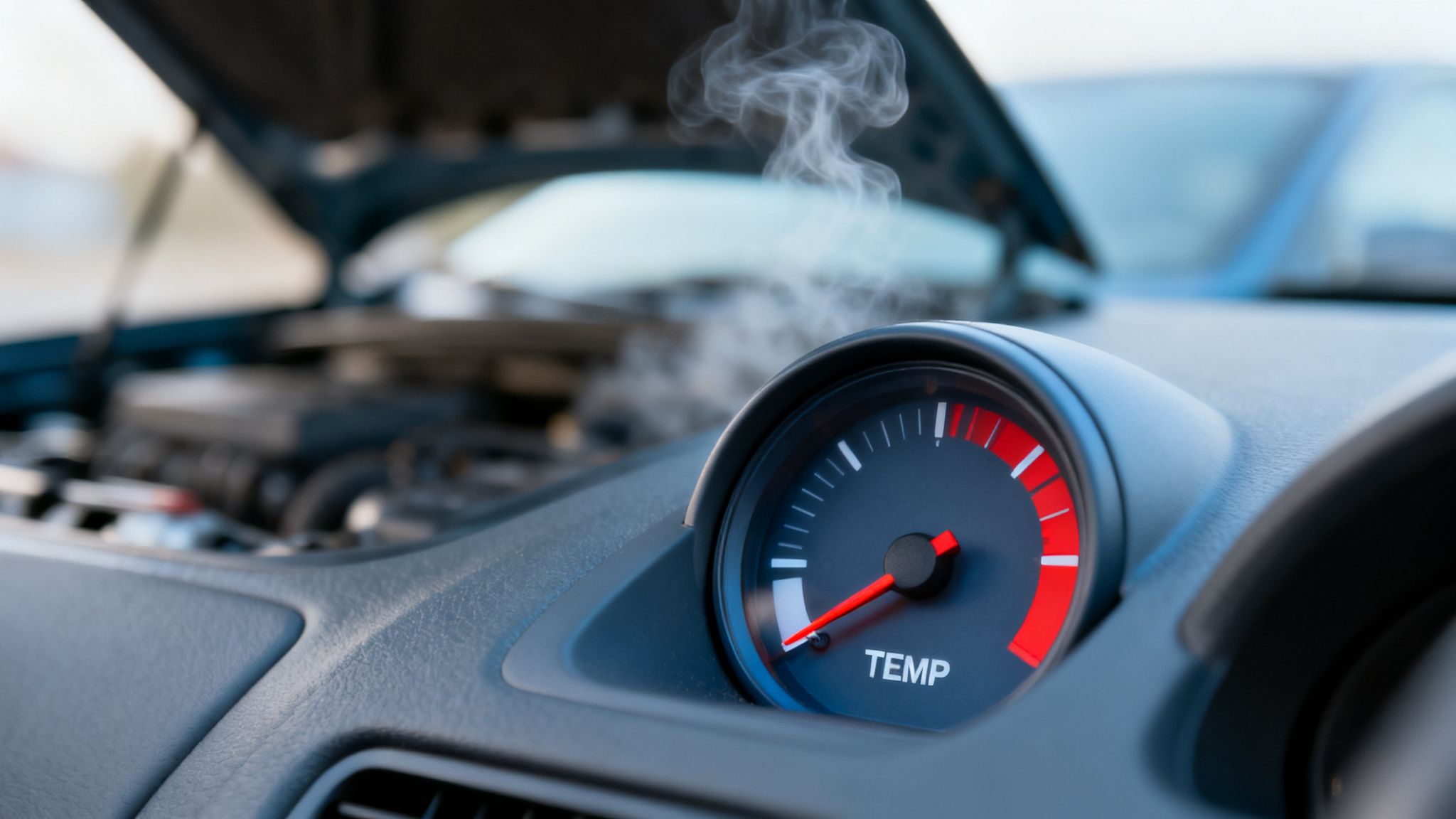
The most obvious low coolant in car symptoms are an engine that's running way too hot, a temperature gauge creeping into the red, and a heater that only blows cold air. You might also get a low coolant warning light on your dash or even see steam pouring out from under the hood.
Why Coolant Is Your Engine's Best Friend
Think of coolant—often called antifreeze—as your engine's personal climate control system. Its main job is to soak up the incredible heat created by the thousands of tiny explosions happening inside your engine every single minute. Without that coolant, the metal parts would get hot enough to warp, melt, and completely seize up.
This special fluid is constantly on the move, circulating through the engine to absorb heat before heading to the radiator up front. There, the heat gets released into the air, and the cooled-down fluid cycles right back to the engine to do it all over again. It's a non-stop loop designed to keep your engine humming along at its ideal temperature, which is usually somewhere between 195 and 220 degrees Fahrenheit.
The Dual Role of Antifreeze
But coolant isn't just for cooling. The "antifreeze" part of its name is just as critical, especially when temperatures drop. It’s formulated with chemicals like ethylene glycol that prevent the water in the system from turning into a solid block of ice, which could easily crack your engine block.
A properly functioning cooling system is the first line of defense against catastrophic engine failure. Low coolant levels compromise this entire process, turning a simple fluid issue into a potentially massive repair bill.
What Happens When Levels Drop
When your coolant is low, there simply isn't enough fluid in the system to pull the heat away effectively. This is where you start seeing the classic signs of trouble. The temperature needle starts to climb, warning lights pop on, and in really bad cases, you might smell something sweet and syrupy. That's the distinct smell of coolant leaking and burning on hot engine parts.
Keeping an eye on your fluids is a fundamental part of any solid car maintenance checklist. Ignoring these early low coolant symptoms is just asking for serious, long-term engine damage down the road.
To help you quickly identify a problem, here’s a breakdown of what to look out for.
Quick Reference Low Coolant Symptoms
| Symptom | What to Look For | Urgency Level |
|---|---|---|
| Engine Overheating | Temperature gauge in the red zone; steam or smoke from the hood. | High – Pull over immediately and turn off the engine. |
| Poor Heater Performance | Heater blows lukewarm or cold air, even when the engine is warm. | Medium – A sign that coolant isn't circulating properly. |
| Dashboard Warning Lights | The low coolant light or engine temperature light comes on. | High – Do not ignore this light. Check levels as soon as it's safe. |
| Visible Puddles or Leaks | Bright green, pink, or orange puddles under your car. | Medium – Indicates a leak that needs to be addressed soon. |
| Sweet Smell | A distinct, sweet, syrupy odor coming from the engine bay. | Medium – This is the smell of burning antifreeze from a leak. |
This table should give you a good starting point for diagnosing the problem, but remember that some symptoms can point to more than one issue. If you’re ever in doubt, it’s always best to have a professional take a look.
The Real Cost Of Ignoring Low Coolant Levels
Ignoring the signs of low coolant is more than a small oversight; it's a high-stakes gamble with the heart of your vehicle—the engine. Think of it like a marathon runner trying to finish a race without any water. At first, they might feel okay, but pretty soon, their performance will crater and critical systems will start to shut down.
When your engine is starved of coolant, its internal temperature can shoot far beyond its normal operating range. This kind of extreme heat is the mortal enemy of all the precision-engineered metal parts that have to work together perfectly inside your engine. The consequences aren't just mechanical—they hit you right in the wallet, and hard.
From Minor Leak To Major Meltdown
That small, inexpensive fix—like a simple cracked hose—can quickly spiral into catastrophic engine failure if you let it go. The intense heat from a lack of coolant can cause some of the most dreaded and costly problems a car owner can face.
Here’s what can happen when you ignore those early warning signs:
- Warped Cylinder Head: The cylinder head sits right on top of the engine block, and it needs a perfectly flat surface to create a seal. Extreme heat can literally warp this massive piece of metal, leading to a loss of compression and a whole host of serious engine problems.
- Blown Head Gasket: This is the crucial seal between the cylinder head and the engine block. Overheating is the #1 cause of head gasket failure, period. When it blows, coolant can mix with your oil or leak into the combustion chambers, causing widespread, devastating damage.
- Cracked Engine Block: In the worst-case scenario, the thermal stress from overheating can physically crack the engine block itself. For most engines, this is the point of no return. It almost always means you're looking at a complete—and very expensive—engine replacement.
These aren't just technical terms your mechanic throws around. They represent repair bills that can easily climb into the thousands of dollars. The financial leap from a simple coolant flush to a head gasket job is massive, which makes keeping an eye on your coolant a very smart investment.
Driving with low coolant is like playing Russian roulette with your engine. Every single mile you travel with that temperature gauge in the red drastically increases the odds of irreversible damage.
The Statistics Tell A Sobering Story
This isn't just about a few unlucky drivers. Cooling system failures are a primary reason for major vehicle breakdowns on the road. In fact, research shows that approximately 25% of all major engine failures are directly tied to problems within the cooling system, often stemming from a lack of proper coolant maintenance.
This alarming figure really drives home how critical this one fluid is for your vehicle's health. You can learn more about the risks of neglecting your coolant over at AutomobileRepairShop.ca.
Ultimately, the real cost of ignoring low coolant symptoms isn't just about the money. It’s the stress of an unexpected breakdown, the major inconvenience of losing your car for days or even weeks, and the very real possibility of a small, fixable issue rendering your car completely useless. A little bit of attention to your cooling system now can save you from a world of hurt later.
Decoding The 7 Key Symptoms Of Low Coolant
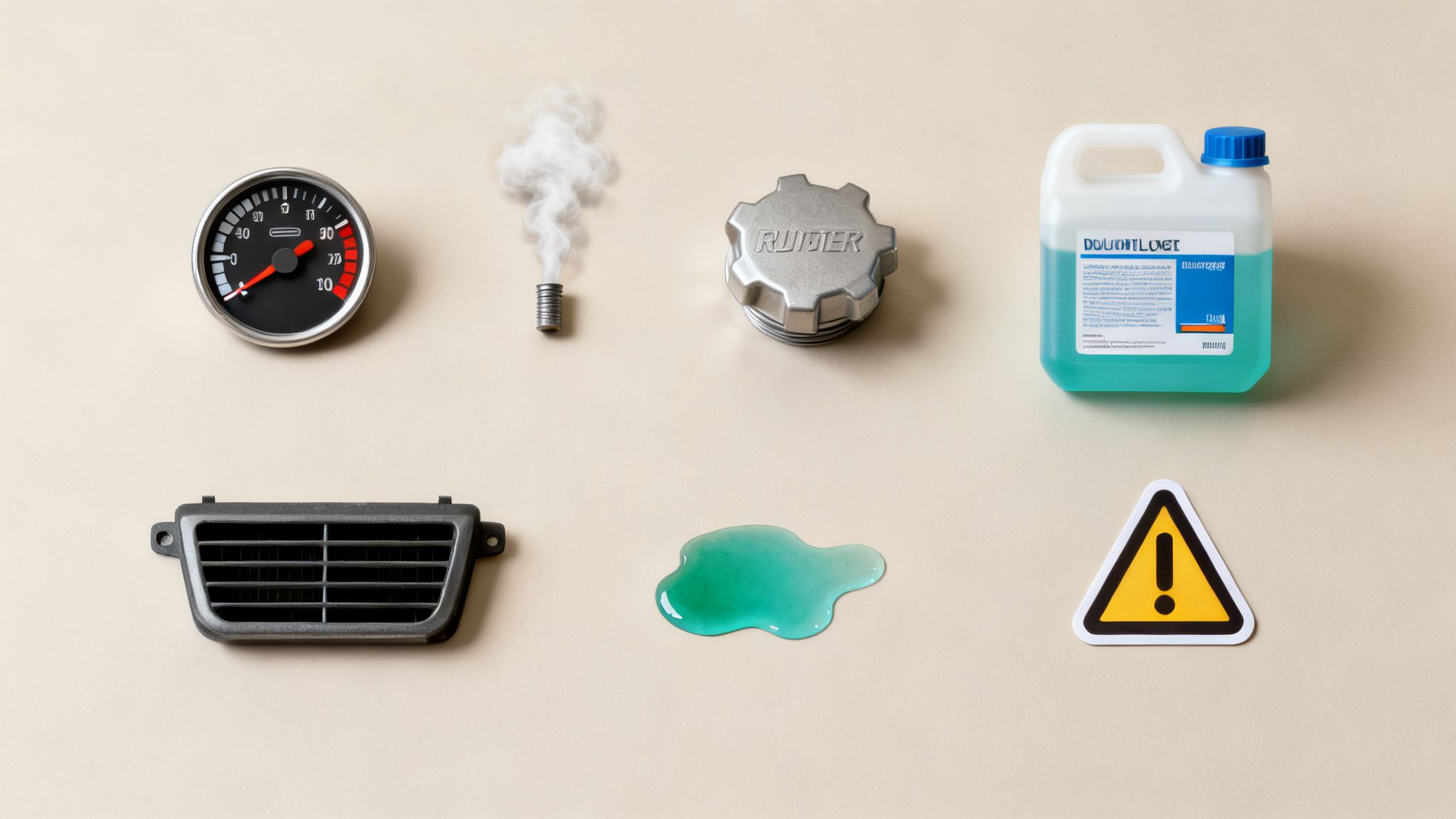
Your car has its own way of communicating problems, and learning to speak its language is the best way to head off major repair bills. When your cooling system is in trouble, the signals it sends are usually pretty clear—if you know what to look for.
Catching these early symptoms of low coolant can mean the difference between a simple, inexpensive fix and catastrophic engine failure. Let's walk through the 7 most common signs that your car is thirsty for this vital fluid.
1. The Temperature Gauge Spikes into the Red
This is your car's most urgent cry for help. That temperature gauge on your dashboard is a direct line to your engine's core, and if it starts creeping past the halfway point toward the "H," it’s screaming that the cooling system isn't keeping up.
When coolant is low, there isn't enough liquid to pull the intense heat away from the engine. Temperatures skyrocket, putting an incredible amount of stress on all those critical metal parts. Ignoring a hot-running engine is a surefire way to cause serious, expensive damage. If you ever find yourself in this situation, we have a helpful guide on what to do when your car is overheating.
2. Your Heater Suddenly Blows Cold Air
It sounds strange, right? But a heater that refuses to warm up on a cold day is a classic symptom of low coolant. Your car’s cabin heater actually uses a small, separate radiator called a heater core. Hot coolant flows through it, and a fan blows air across the hot fins to warm up the car.
But if your coolant level drops too far, there's just not enough fluid to make it all the way to the heater core. It often gets left high and dry. So, if you're shivering and getting nothing but an icy blast from the vents, it's a strong sign that you need to check your coolant level.
3. That Unmistakable Sweet Smell
Ever notice a weirdly sweet, almost syrupy smell around your car, especially right after you park? That’s the signature scent of ethylene glycol, the main chemical in most antifreeze. This odor is a dead giveaway that coolant is leaking somewhere.
What you're smelling is the fluid dripping onto a hot engine block or exhaust pipe and instantly vaporizing. You might catch a whiff inside the car or just standing next to it. Don't ignore it.
4. Visible Puddles Under Your Car
This is one of the most obvious low coolant in car symptoms you can find. To make leaks easier to find, manufacturers dye coolant bright colors—usually a vibrant green, pink, or orange.
If you pull out of your parking spot and see a colorful puddle on the pavement, you've got an active leak that needs to be addressed.
5. Steam or "Smoke" Pouring from the Hood
Seeing steam billowing out from under the hood is a dramatic and scary sight. It's a crystal-clear sign your engine is overheating badly. This happens when the remaining coolant literally boils over and escapes the system as pressurized steam.
If this ever happens, pull over to a safe location immediately and shut the engine off.
6. The Low Coolant Warning Light Pops On
Thankfully, modern vehicles don't just rely on you noticing smells and puddles. They have sensors that monitor fluid levels. If a "Low Coolant" warning or a high engine temperature icon lights up on your dashboard, your car is telling you point-blank to get it checked out—now.
7. Your Engine's Performance Tanks
An engine that's running too hot simply can't perform at its best. The vehicle's computer will often try to protect the engine from destroying itself, which can lead to noticeable issues like sluggish acceleration, a rough idle, or even stalling completely. If your car suddenly feels weak and unwell, overheating could be the culprit.
What To Do The Moment You Suspect Low Coolant
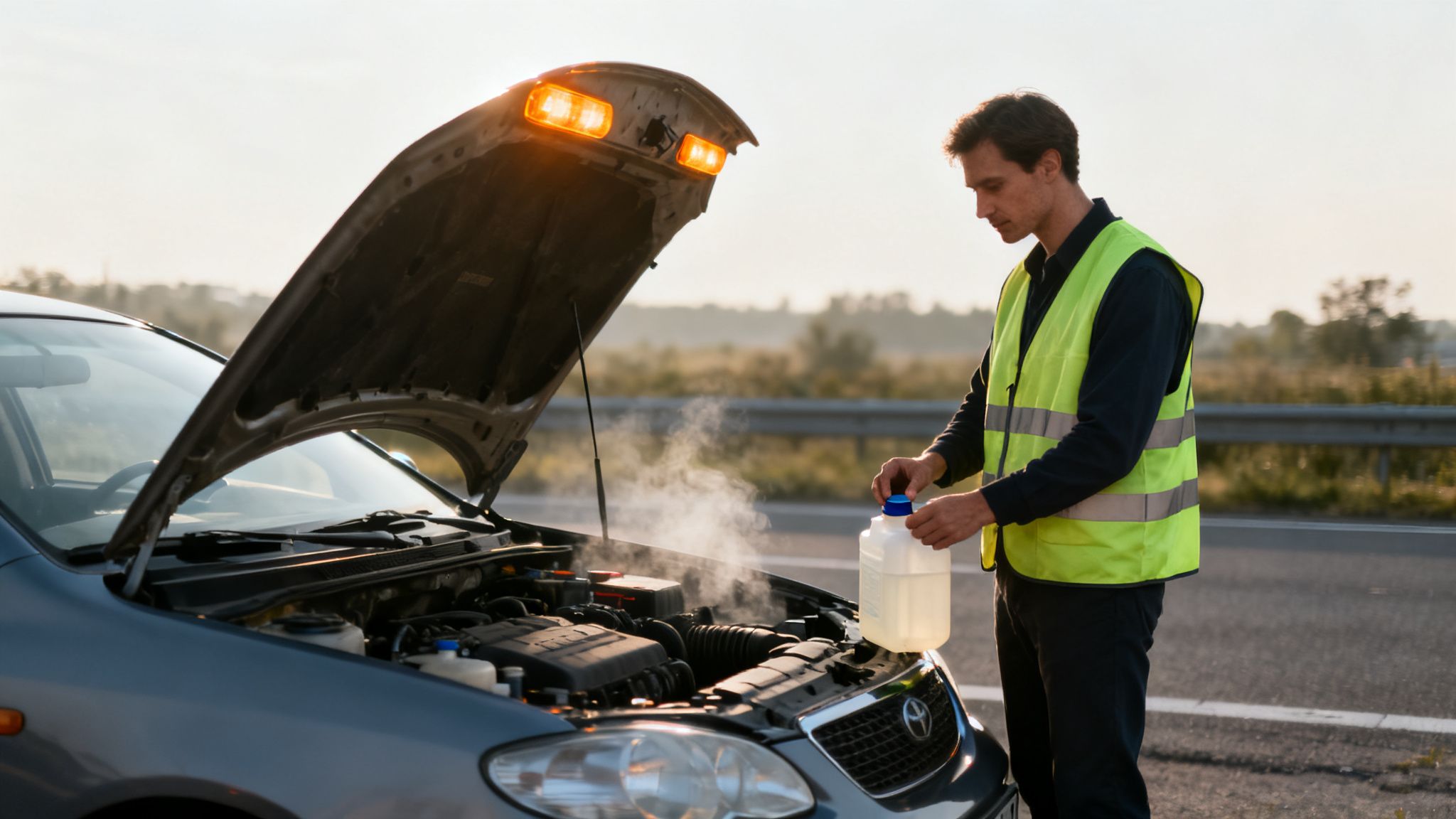
That heart-stopping moment when a warning light flashes or your temperature gauge rockets into the red can be seriously nerve-wracking. But how you react in the next few minutes can mean the difference between a simple fix and a catastrophic engine failure. Knowing the right, safety-first steps is crucial for protecting you and your vehicle.
First thing's first: find a safe place to pull over and immediately turn off the engine. Every second you continue to drive, you're generating more heat and drastically increasing the risk of severe, permanent damage. Once you're safely parked, your most important tool is patience.
Give It Time To Cool Down
Whatever you do, do not attempt to open the radiator cap while the engine is hot. That cooling system is under intense pressure. Opening it too soon can unleash a violent, dangerous spray of boiling-hot coolant and steam, which can cause severe burns.
You have to wait for the engine to cool down completely. This isn't a quick process—it can take anywhere from 30 minutes to over an hour. A good rule of thumb is to wait until you can comfortably touch the hood. This pause is non-negotiable for your safety.
How To Perform A Quick Visual Check
Once things have cooled off, you can pop the hood and take a look. Thankfully, most modern cars make this pretty easy with a translucent plastic overflow tank, often called the coolant reservoir.
Here’s a simple checklist to follow:
- Locate the Reservoir: Look for a plastic tank near the radiator, which usually has a brightly colored cap. You'll see "Min" (or "Low") and "Max" (or "Full") lines clearly marked on the side.
- Check the Fluid Level: The level of the coolant should be sitting somewhere between those two marks. If it's hugging or below the minimum line, you’ve found your problem: you're low on coolant.
- Inspect the Coolant's Condition: Take a peek at the fluid itself. It should look clean and have its original color (often green, orange, or pink). If you see sludge, debris, or a nasty, milky-brown appearance, it’s a red flag for a more serious internal issue, like a blown head gasket that's allowing oil to mix with your coolant.
If the coolant level is just low, a temporary top-off might get you to a shop. But remember, coolant doesn't just evaporate into thin air. A low level is always a symptom of an underlying problem, like a leak that needs a professional diagnosis. It’s a band-aid, not a long-term solution.
Uncovering The Root Causes Of Low Coolant
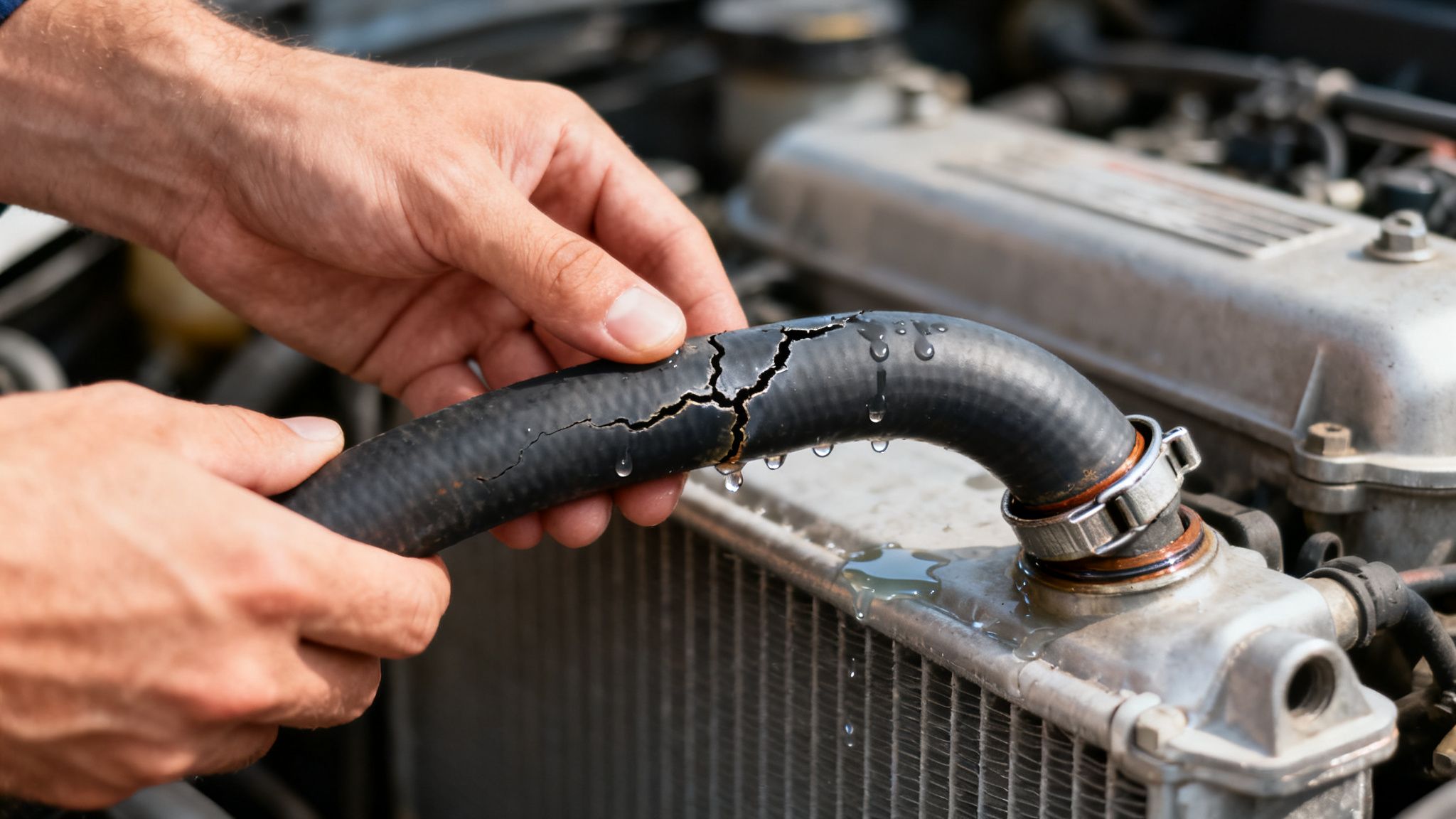
So you've noticed the signs and suspect your coolant is low. The next logical question is, where did it all go? It's a critical question because coolant lives in a closed, pressurized system. It shouldn't just "disappear" or evaporate like water in a puddle. If your level is dropping, that’s a sure-fire sign something is wrong.
Just pouring more coolant into the reservoir is only a temporary band-aid. Think of it like pumping air into a tire with a slow leak—you're addressing the symptom, not the problem. To get to the bottom of it, you have to find the source of the leak, because there's almost always a leak.
Common Culprits Behind Coolant Loss
Your car's cooling system is a whole network of parts working in harmony. A single failure anywhere in that network can spring a leak and send your coolant levels plummeting.
Here are some of the usual suspects we see in the shop:
- Cracked or Brittle Hoses: The rubber hoses shuttling coolant between your engine and radiator endure some pretty extreme temperatures and constant vibration. Over time, they can get hard, brittle, and eventually crack, letting coolant escape.
- A Failing Water Pump: The water pump is the heart of your cooling system, pushing the coolant where it needs to go. Its internal seals can wear out, causing a slow, steady drip that's often tough to spot until it becomes a major leak.
- Damaged Radiator: It’s right at the front of your car, so the radiator can take a beating from road debris. It can also corrode from the inside out. Even a tiny pinhole is enough to cause a gradual but constant loss of coolant.
- A Faulty Radiator Cap: This is a surprisingly common and easily missed problem. The cap isn't just a lid; it’s designed to hold a specific amount of pressure in the system. If its seal fails, it can't maintain pressure, allowing coolant to boil off and escape as steam.
Finding the source of a coolant leak is essential. A professional diagnosis can pinpoint whether it's a simple fix like a new radiator cap or a more complex issue with the water pump, preventing small problems from turning into catastrophic engine failure.
Why Professional Diagnosis Matters
Sure, some leaks are obvious—a big split in a hose is hard to miss. But others are incredibly sneaky. A slow leak from a water pump seal or a small crack in the radiator might only seep out when the engine is hot and the system is under full pressure. Once it cools down, the evidence is gone.
This is where a professional technician's experience really counts. We can perform a pressure test on the system, which forces air into the lines to make even the most minuscule leaks show themselves. Diagnosing the issue correctly means you fix the right part the first time, saving you time and money. For a closer look at these parts, check out our guide on comprehensive engine repair services and see how everything is connected.
Simple Habits To Protect Your Cooling System
The absolute best way to deal with low coolant is to make sure it never happens in the first place. You want to get ahead of the problem, not just react to it. This shift in mindset is probably the most important thing for your engine’s long-term health—and your own peace of mind. A few small, consistent habits can save you from massive headaches and even bigger repair bills down the road.
Think of it like a quick health checkup for your car. You keep an eye on your own well-being, right? Well, your car's vital fluids need the same kind of attention. The good news is, you don't need to be a master mechanic to do it. It just takes a little awareness.
Building Proactive Habits
Making these simple checks part of your regular routine will make a world of difference:
- Check Coolant at Every Oil Change: This should be non-negotiable. When you pop the hood to check your oil, take a peek at the coolant reservoir. It’s a simple 30-second visual check, and it’s your first and best line of defense against slowly dropping levels.
- Perform Visual Hose Inspections: Once a month, just give the main radiator hoses a quick look-over. You’re scanning for any signs of trouble like cracking, bulging, or spots that feel unusually soft. Catching a worn hose before it decides to spring a leak is a huge win.
- Schedule Regular Coolant Flushes: Coolant doesn't last forever; its anti-corrosive additives break down over time. Sticking to your manufacturer's recommendation for a coolant flush—usually every 30,000 to 50,000 miles—is critical. It’s what stops rust and gunk from building up inside your engine.
Adopting these simple habits is the single most effective way to avoid the common symptoms of low coolant. It’s a small investment in reliability that ensures your engine stays cool and your travels stay uninterrupted.
For Dallas drivers, staying on top of your cooling system is even more important with our Texas heat beating down on the pavement. If you're not sure about your coolant's condition or the last time it was serviced, don't just wait for a warning light to tell you something's wrong. Let the pros at Kwik Kar Spring Valley perform a professional inspection to keep your engine protected.
Your Top Car Coolant Questions Answered
When you're dealing with potential coolant issues, it’s natural to have a lot of questions running through your mind. To help you feel more confident about what’s going on under the hood, we’ve put together some straightforward answers to the questions we hear most often from drivers.
In a Pinch, Can I Just Use Water Instead of Coolant?
If you're in a real bind, adding a little distilled water can be a temporary lifeline to get you to a safe spot or the nearest auto shop. But you have to think of it as a temporary patch, not a long-term fix. Water on its own doesn't have the anti-corrosion agents or the high boiling point that makes proper coolant so essential.
Using just water drastically weakens the whole system's ability to prevent both boiling over and freezing up, leaving your engine in a vulnerable spot. As soon as you can, you need to get the system properly flushed and refilled with the coolant your car's manufacturer recommends.
How Often Should I Get My Coolant Changed?
The exact timing can vary from one car to another, but a solid rule of thumb is to plan for a full coolant flush every 30,000 to 50,000 miles. For most people, that works out to about every three to five years. If you let it go too long, the coolant loses its protective abilities.
Your vehicle's owner's manual is always the best source of truth on this. Following that specific service schedule is the number one way to prevent rust and gunk from building up in your engine's cooling passages.
Is It Okay to Drive if My Low Coolant Light Comes On?
Absolutely not. You should never try to drive any significant distance once that low coolant light is on. Think of that light as one of your car’s most urgent warnings—it’s telling you there’s a problem that could lead to serious engine overheating in a hurry.
Trying to push it just a few more miles can turn a minor leak into a catastrophic failure, like a warped cylinder head or a blown head gasket. Those are the kinds of repairs that can easily run into thousands of dollars. The smartest and safest thing to do is pull over as soon as you can, shut off the engine, and call for help.
If you're in the Dallas area and any of these low coolant in car symptoms sound familiar, don't put off getting it checked. The expert technicians at Kwik Kar Oil Change and Auto Care are ready to pinpoint the problem and get you back behind the wheel safely. Schedule your cooling system check-up online today!