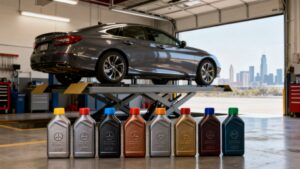
Choosing the right oil for your car involves more than just grabbing the first bottle off the shelf. You’ve got a few main oil change types to consider: conventional, synthetic blend, full synthetic, and high-mileage options. The best choice isn't one-size-fits-all; it depends entirely on your vehicle's specific needs.
Why Your Oil Choice Matters
Think of motor oil as your engine's lifeblood. It's constantly working behind the scenes to lubricate moving parts, clean away harmful gunk, and keep temperatures in check. Just like you wouldn't wear hiking boots to a wedding, your car’s engine needs a specific oil formula to perform at its best and last for the long haul.
The right oil keeps everything humming along smoothly. The wrong one can lead to faster wear and tear, worse fuel efficiency, and even expensive engine damage down the road.
This guide is here to take the guesswork out of the equation. We’ll break down the different oil change types, helping you figure out which one is the perfect match for your car's age, mileage, and your driving habits here in Dallas.
Making the Right Decision for Your Vehicle
Picking an oil can feel overwhelming, but it gets a lot simpler when you narrow it down to a few key factors about your car. This decision tree helps visualize that process, walking you through a few questions about your vehicle's age, mileage, and typical driving conditions.

As you can see, a newer car with low miles will likely do great with a synthetic blend, while a vehicle that's seen a lot of road benefits from the specialized additives in a high-mileage formula.
Making a smart choice here not only protects your engine but also makes sense for your budget and maintenance schedule. The first step is getting a handle on the core oil types available.
Choosing the correct oil is one of the most important and cost-effective ways to maintain your vehicle's performance and reliability. It directly impacts engine health, fuel economy, and long-term value.
At Kwik Kar, our team is always ready to help you sort through these choices. We’ll look at what your car's manufacturer recommends, consider your personal driving style, and give you a clear, confident recommendation every single time. Next, let's dive into the specifics of each formulation.
Breaking Down the Core Motor Oil Formulations
At the heart of every oil change is the oil itself, but let's be clear: not all motor oils are created equal. When you walk down the auto parts aisle, you're hit with a wall of choices—"conventional," "synthetic blend," and "full synthetic." These aren't just marketing terms. They describe the oil's fundamental DNA, which directly impacts how it protects your engine, how long it lasts, and even your gas mileage.
Think of it like this: conventional oil is a classic, hearty home-cooked meal. It’s reliable, gets the job done, and has nourished engines for decades. Full synthetic oil, on the other hand, is like a scientifically formulated diet for an Olympic athlete—every single molecule is engineered for peak performance and endurance. Synthetic blends? They land right in the middle, giving you a taste of both worlds.
Making the right choice is more than just a minor detail; it's critical for your engine's health and longevity. With global oil demand projected to hit 104.4 million barrels per day by 2026, getting the most out of every drop has never been more important. For Dallas drivers, understanding these different oil types is the first step to smarter vehicle maintenance.
Conventional Oil: The Tried-and-True Original
Conventional motor oil is the old-school classic, the one most of us grew up with. It's refined directly from crude petroleum that’s pumped out of the ground. Technicians then mix in a variety of additives to help it lubricate moving parts, clean away deposits, and keep your engine cool under pressure.
For many years, this was the only option, and it's still a popular, budget-friendly choice. Conventional oil is perfectly fine for a lot of older, lower-mileage vehicles with simpler engine designs. If your car doesn't have a high-performance engine and you’re diligent about regular maintenance, conventional provides solid, dependable protection.
It still holds about 55% of the U.S. market, making it the go-to for cost-conscious drivers who stick to a traditional 3,000 to 5,000-mile oil change schedule.
Key Characteristics of Conventional Oil:
- Affordability: It's the most wallet-friendly option for an oil change.
- Basic Protection: Delivers the essential lubrication and defense against engine wear that standard vehicles need.
- Shorter Lifespan: It breaks down more quickly under high heat, meaning you'll need to change it more often.
Synthetic Blend Oil: The Hybrid Contender
As engines got more powerful and complex, they started demanding more from their oil. That's where synthetic blend motor oil comes in. It's a hybrid, mixing conventional base oils with man-made synthetic ones to get a product that performs better without the full price tag of a pure synthetic.
A synthetic blend offers much better resistance to heat and oxidation than conventional oil can alone. This translates to better protection against engine wear and sludge, especially in tough conditions like Dallas stop-and-go traffic or when you're towing a trailer.
It’s an excellent middle-ground choice for drivers who want a step up in protection but aren't ready to go all-in on full synthetic. Synthetic blends are used in about 30% of oil changes and can comfortably last up to 7,500 miles between services.
A synthetic blend oil acts as a bridge. It gives you some of the key benefits of synthetics—like better sludge resistance and stability in extreme temperatures—at a much more accessible price.
Full Synthetic Oil: The Peak of Performance
Full synthetic motor oil is the pinnacle of modern lubrication technology. Unlike conventional oil that's simply refined, full synthetic is completely engineered in a lab. This process strips out almost all impurities and allows scientists to design molecules of a uniform size and shape, tailor-made for specific jobs inside your engine.
The result is an oil that delivers the absolute highest level of protection available. Full synthetic flows better in frigid temperatures for easier winter starts and maintains its protective film under scorching heat, preventing the kind of breakdown that leads to sludge and deposits. This makes it the non-negotiable choice for modern high-performance, turbocharged, and luxury engines. If you want to dive deeper, check out our guide on synthetic vs conventional oil.
Because it resists breaking down so well, full synthetic oil lasts much, much longer. It's not uncommon to see change intervals of 10,000 to 15,000 miles or even more. While it costs more upfront, its longevity and potential to improve fuel economy by 2-5% can actually save you money in the long run. It currently makes up about 15% of the market, but it's easily the fastest-growing category.
Comparing the Three Formulations
| Feature | Conventional Oil | Synthetic Blend Oil | Full Synthetic Oil |
|---|---|---|---|
| Origin | Refined from crude oil | Mix of conventional and synthetic | Chemically engineered |
| Performance | Basic protection | Enhanced protection | Maximum performance |
| Change Interval | 3,000-5,000 miles | 5,000-7,500 miles | 10,000-15,000+ miles |
| Cost | $ | $$ | $$$ |
| Best For | Older, low-mileage cars | Daily drivers, SUVs, trucks | High-performance, new cars |
Choosing Specialty Oils for Unique Engine Needs
Beyond the standard choices, the world of motor oil opens up to specialty products designed for vehicles with specific life stories. A brand-new sports car has completely different needs than a hardworking diesel truck, just as a beloved family sedan that’s seen more than its share of road trips requires special attention. This is where specialty oils come in.
Think of them like specialized medicine. A general pain reliever works fine for a common headache, but you might need something stronger for a more specific condition. Likewise, high-mileage and diesel oils are formulated to address the unique symptoms of older or more powerful engines, ensuring they keep running smoothly for years to come.
Knowing when your vehicle graduates into one of these categories is key to its long-term health. These oils aren't just clever marketing; they contain distinct additive packages that solve real-world problems.

High-Mileage Oil for Well-Loved Engines
Once your car’s odometer rolls past the 75,000-mile mark, its engine enters a new phase. Over all those miles, seals and gaskets can become a bit brittle, leading to small but annoying oil leaks. The engine might also start to "consume" or burn off small amounts of oil between changes. This is exactly what high-mileage oil is engineered to fix.
This special blend is packed with unique additives and seal conditioners. These conditioners are designed to soak into and restore the elasticity of rubber seals, helping them swell just enough to stop minor drips. It’s like applying a quality moisturizer to dry skin—it brings back flexibility.
On top of that, high-mileage formulas often have a slightly thicker viscosity and include extra detergents to clean out the sludge that can build up in older engines. You can learn more about how a high mileage oil change can give your vehicle a new lease on life.
High-mileage oil is a proactive maintenance choice. It’s designed not just to lubricate, but to actively condition and preserve an engine that has worked hard, helping prevent common age-related issues before they become serious problems.
Diesel Engine Oil for Powerful Workhorses
Diesel engines are the undisputed champs of torque and towing, but they play by a completely different set of rules than their gasoline cousins. They run at much higher compression and produce way more soot and acidic byproducts. A standard motor oil would break down in a hurry under that kind of stress.
That's why diesel engine oil is in a class of its own. It’s formulated with a much more robust package of detergents and dispersants to handle the dirty work.
- Detergents: These additives are crucial for neutralizing the acids created during diesel combustion, preventing corrosion of internal engine parts.
- Dispersants: This component is designed to grab and hold the large amounts of soot produced by diesel engines, keeping it suspended in the oil so it doesn't turn into damaging sludge.
Think of it this way: if a regular oil’s cleaning package is like a household dust cloth, a diesel oil’s package is an industrial-grade shop vac. It’s built to handle a much tougher mess, making sure heavy-duty trucks keep running reliably under the heaviest loads.
Choosing the right specialty oil isn't about being fancy; it's about providing precise care. At Kwik Kar, our technicians understand these differences and will help you select the perfect oil to match your vehicle’s specific condition and purpose.
Decoding Oil Viscosity Numbers and Quality Seals
Ever picked up a bottle of motor oil and felt like you were trying to read a secret code? All those numbers and symbols, like 5W-30, can seem confusing. But they tell a critical story about how that oil will protect your engine, and knowing the code helps you make smarter choices for your car.
Think of motor oil's viscosity—its resistance to flow—like honey. When honey is cold, it's thick and moves slowly. Warm it up, and it becomes thin and runny. Motor oil acts in a similar way, and its viscosity rating tells you exactly how it will perform at different temperatures.
This is a big deal for Dallas drivers, who deal with everything from chilly winter mornings to scorching summer afternoons. The wrong viscosity can leave your engine vulnerable right when it needs protection the most.

Cracking the SAE Viscosity Code
Those numbers on the bottle, like 5W-30 or 0W-20, come from a system created by the Society of Automotive Engineers (SAE). It’s a multi-grade rating, which just means the oil has two different viscosity behaviors.
Let's break it down:
The First Number with a 'W' (e.g., 5W): The "W" stands for Winter. This number tells you how easily the oil flows when your engine is cold, like on a frosty morning. A lower number means the oil is thinner and will get to vital engine parts faster during a cold start.
The Second Number (e.g., 30): This number shows the oil's viscosity when the engine is at its normal, high operating temperature. A higher number means the oil stays thicker and more protective under the intense heat of a running engine.
So, a 5W-30 oil acts like a thinner 5-weight oil in the cold for quick startup protection but gives you the thicker, more durable film of a 30-weight oil once your engine is hot.
Your vehicle's manufacturer has already done the engineering to figure out the perfect viscosity grade for your engine. Always check your owner's manual for their specific recommendation—using the wrong grade can lead to poor performance and more wear and tear.
The Seals of Quality: API and ILSAC
Beyond viscosity, you'll see two important symbols on high-quality motor oils: the API "Donut" and the ILSAC "Starburst." Think of these as official seals of approval. They guarantee the oil has passed a gauntlet of tough tests for performance and engine protection.
The American Petroleum Institute (API) "Donut" symbol gives you three key pieces of information at a glance:
- API Service Rating: A two-letter code (like SP for gasoline engines) showing the oil meets the latest industry performance standards.
- SAE Viscosity Grade: The familiar 5W-30 or other rating is right in the center.
- Resource Conserving: This label indicates the oil is formulated to improve fuel economy and protect your emissions system components.
The International Lubricant Specification Advisory Committee (ILSAC) "Starburst" is even simpler. If you see this symbol, it means the oil meets the most current performance and protection standards set by both U.S. and Japanese automakers.
The oil change services market is seeing rapid growth, with a projected compound annual growth rate of 11.80% from 2026 to 2033. This shows a growing understanding among car owners about how important it is to use high-quality, certified products to maintain their vehicles. You can discover more about this growing market on Einpresswire.com.
By understanding these numbers and seals, you're no longer just guessing. You can confidently read any oil bottle and know exactly what you're putting into your engine.
Selecting the Right Oil Change Service for Your Car
Figuring out the right motor oil is a big first step, but where you get that oil changed is just as important for your car’s long-term health. You’ve got a lot of options out there, from the quick lube shop on the corner to the dealership where you first bought your car. Knowing the difference helps you get the right blend of value, speed, and expertise.
Think of it like choosing where to eat. Sometimes you just need a quick drive-thru because you're in a hurry. Other times, you want a full-service meal where the chef is paying close attention to every detail. Your car's needs can be just as varied, which makes picking the right service provider a key part of the process.
The demand is huge. The oil filter market alone, which is part of every oil change, is projected to hit $4.53 billion in 2025 and jump to $4.86 billion by 2026. With nearly 1.5 billion vehicles on roads worldwide, it's no surprise the auto maintenance industry is massive. This has created a whole ecosystem of service models, each designed for different types of car owners. You can read more about the trends in the oil change services market to see how things are evolving.

Comparing Your Service Options
When it’s time for an oil change, you really have three main paths to choose from. Each one strikes a different balance between speed, cost, and how deep the service goes.
Quick Lube Shops: These places are built for one thing: speed. They get you in, out, and on your way fast, which is perfect for a simple oil and filter swap. The experience can sometimes feel a bit transactional, though, with less focus on a full vehicle inspection.
Dealerships: A dealership brings brand-specific expertise. Their technicians are factory-trained and know your car's make and model inside and out. While the service quality is usually high, it often comes with a premium price tag and might require booking an appointment far in advance.
Full-Service Auto Care Centers: Shops like Kwik Kar aim to give you the best of both worlds. We deliver the efficiency you'd want from a quick lube service but combine it with the thorough vehicle health checks you’d expect from a dedicated repair shop.
The Value of a Comprehensive Check
A great oil change should be more than just draining old fluid and pouring in new. It’s a perfect opportunity to have a trained pair of eyes give your vehicle a once-over.
At Kwik Kar, our standard service includes a multi-point inspection. We check all the essentials like tire pressure, fluid levels, belts, and filters. This simple step turns a routine task into proactive maintenance. Catching a worn belt or low coolant during an oil change can save you from a much more expensive breakdown down the road.
A quality oil change isn't just a task to check off a list; it's the simplest and most effective form of preventative care you can give your vehicle. It’s an investment in reliability and peace of mind.
Understanding Common Upsells Like Engine Flushes
During an oil change, you might get offered an engine flush. This service uses a chemical solution to break down and wash away built-up sludge before the new oil goes in. But do you actually need it?
For most vehicles that have had regular oil changes with quality oil, an engine flush usually isn't necessary. Modern motor oils already contain detergents that do a fantastic job of keeping your engine clean all on their own.
However, an engine flush can be a good idea in a few specific situations:
- You just bought a used car and have no idea what its service history looks like.
- You've seriously stretched your oil change intervals, allowing sludge to form.
- You own an older engine that’s known for deposit buildup.
A trustworthy shop will explain these scenarios honestly instead of just pushing an extra service. At Kwik Kar, our goal is to be transparent, recommending services only when they offer real value for your vehicle’s condition. We want to be your trusted partner for all your maintenance needs, whether you're an individual driver or managing a commercial fleet.
Making Kwik Kar Your Dallas Oil Change Partner
Choosing the right oil for your car isn't just another item on a maintenance checklist—it's a critical investment in your vehicle's health and longevity. Now that you can tell the difference between conventional and full synthetic, and you know how to decode those viscosity grades, you're equipped to make a smart decision for your engine. Getting this right means better performance, improved gas mileage, and fewer unexpected repair bills down the road.
But knowing what to do is only half the battle. This whole process is about more than just picking a product off a shelf; it’s about finding a team you can genuinely trust. At Kwik Kar, we pair our technical expertise with a real commitment to taking care of our customers. We see the unique demands of Dallas driving every day and can help you select the perfect oil for your situation, whether you’re driving a daily commuter or managing an entire fleet of work vehicles.
Your vehicle is one of your most important assets. Our mission is to provide the expert care and transparent advice needed to protect that investment, keeping you safe and confident on the road.
More Than Just an Oil Change
We're here for the big picture. While we specialize in all oil change types, our ASE-certified technicians are equipped to handle everything from state inspections to tricky engine diagnostics. We built our reputation on clear communication and honest recommendations, so you can be sure you're only getting the services you actually need.
When you choose Kwik Kar, you’re choosing a partner dedicated to keeping your vehicle at its best. We always use quality parts and deliver efficient service, but we never cut corners on the details that truly matter. It's time to experience the difference expert care makes for your car.
Ready for a service experience you can feel good about? You can learn more about our full range of Dallas oil change services and schedule your appointment today. Let us show you why so many Dallas drivers trust Kwik Kar for all their automotive needs.
Common Questions About Oil Change Types
Even after you get a handle on the different oil change types, it's totally normal to have a few lingering questions. Motor oil is a surprisingly complex topic, and new formulas and technologies are always hitting the market. We've put together some of the most common questions we hear from drivers to give you direct, practical answers for your next maintenance decision.
Can I Switch Between Synthetic and Conventional Oil?
Yes, you can absolutely switch between conventional and synthetic oils. In fact, making the jump from a conventional product to a synthetic blend or full synthetic can give your engine a serious boost in protection, especially when dealing with extreme temperatures.
There's no need for any special "flushing" or complicated prep work; a standard drain and fill is all it takes. While it's perfectly safe to switch, we've found that sticking with one type of oil provides the most consistent performance over the life of your vehicle. If you're on the fence, our technicians can give you a solid recommendation based on your car's age, mileage, and how you drive it.
Is a Full Synthetic Oil Change Really Worth It?
For the vast majority of modern cars, the answer is a resounding yes. While full synthetic oil comes with a higher price tag upfront, it pays off in the long run. It delivers far superior protection against engine wear, holds up incredibly well in the intense Texas heat, and allows for much longer stretches between oil changes—sometimes up to 15,000 miles.
Over time, these benefits can lead to real long-term savings through fewer service visits and even slightly improved fuel economy. It's especially recommended for high-performance engines, vehicles used for towing, or anyone who frequently drives in demanding conditions.
How Often Should I Actually Change My Oil?
That old "change your oil every 3,000 miles" rule of thumb is pretty much a thing of the past for most cars on the road today. The best source of truth is always your vehicle's owner's manual. The manufacturer lays out the specific intervals based on the exact oil your engine was designed for.
But for a quick reference, here’s a general guideline for the different oil types:
- Conventional Oil: Every 3,000 to 5,000 miles.
- Synthetic Blend Oil: Around 5,000 to 7,500 miles.
- Full Synthetic Oil: Can go 10,000 to 15,000 miles or more.
Don't forget that your driving habits play a huge role, too. If you’re constantly in heavy stop-and-go traffic or do a lot of towing, you’ll want to shorten those intervals a bit. Here at Kwik Kar, we always cross-reference the manufacturer’s guidelines with your personal driving style to give you the most accurate and reliable advice.
At Kwik Kar Oil Change and Auto Care, our expert team is here to answer all your questions and provide top-tier service tailored to your vehicle's needs. Schedule your next appointment today and experience the peace of mind that comes with expert car care. Visit us online at https://www.kwikkarspringvalley.com.