The number one serpentine belt squeal fix usually involves replacing a worn-out or contaminated belt. That high-pitched scream is the sound of rubber slipping on metal pulleys, a clear sign that your engine needs attention before a small annoyance becomes a big problem.
Why Is My Serpentine Belt Making That Noise?
That unmistakable squeal from under the hood isn’t just an irritating sound; it's a warning shot from your car. The serpentine belt is the workhorse that drives your alternator, power steering, water pump, and A/C compressor. When it starts yelling at you, something in that critical system is failing.
The noise happens when the belt loses its grip on the pulleys it's meant to turn. It's slipping instead of grabbing, and that friction is what you hear. Several things can cause this loss of traction, and they’re not all created equal.
Translating Squeal Sounds and What They Signal
Sometimes, the type of squeal and when you hear it can give you some major clues about what's going on under the hood. It’s like learning your car’s secret language. This quick chart can help you start your diagnosis.
| When You Hear The Squeal | What The Noise Is Like | What It Likely Means |
|---|---|---|
| Only on cold, damp mornings | A few short chirps that go away quickly | Moisture. Condensation on the belt is causing temporary slippage. It's usually not a big deal if it stops. |
| When you start the car or turn the A/C on | A loud, continuous squeal that may quiet down | Low Tension or a Bad Tensioner. The belt is slipping under heavy load. The tensioner might be weak or failing. |
| Whenever the engine is running | A constant, high-pitched squeal or grinding noise | Worn Belt or Failing Pulley. Could be a glazed belt, or worse, a bad bearing in a pulley (alternator, idler). |
| When you turn the steering wheel all the way to one side | A sharp, loud squeal | Power Steering Pump. The pump is putting maximum load on the belt, causing a weak belt to slip. |
While this table is a great starting point, a persistent squeal always warrants a closer look to pinpoint the exact cause.
Common Causes of Belt Squeal
One of the most common culprits is just plain old age. Serpentine belts typically have a lifespan between 60,000 and 100,000 miles. But here in Dallas, where we see summer temps over 100°F, that heat can slash a belt's life by up to 30%, causing it to crack, glaze over, and lose its grip.
Other major reasons for a noisy belt include:
- Contamination: Any fluid leak—engine oil, power steering fluid, coolant—is bad news for a belt. It makes the surface slick and causes slippage.
- Improper Tension: The belt tensioner's job is to keep the belt tight. If that spring-loaded part gets weak, the belt will loosen and squeal under load.
- Misalignment: If a pulley on one of the accessories is just slightly out of alignment, it forces the belt to run at an angle, causing noise and rapid, uneven wear. This can sometimes be a sign of a failing component, like an alternator with a bad bearing. You can read more about what happens when an alternator starts to go bad and how it impacts other systems in our guide on the signs of a failing alternator.
Key Takeaway: A persistent squeal is never "just a noise." While a quick chirp on a humid morning might be nothing, a steady squeal means something is wrong. Ignore it, and you risk the belt snapping, which instantly kills your power steering, stops the battery from charging, and can cause the engine to overheat.
Your Hands-On Serpentine Belt Inspection Checklist
Alright, let's get under the hood and play detective. Before you fix that squeal, you have to find out exactly where it's coming from. It’s tempting to just slap a new belt on and call it a day, but if a bad pulley is the real problem, that new belt won't last long. A thorough inspection is your roadmap to getting this done right the first time.
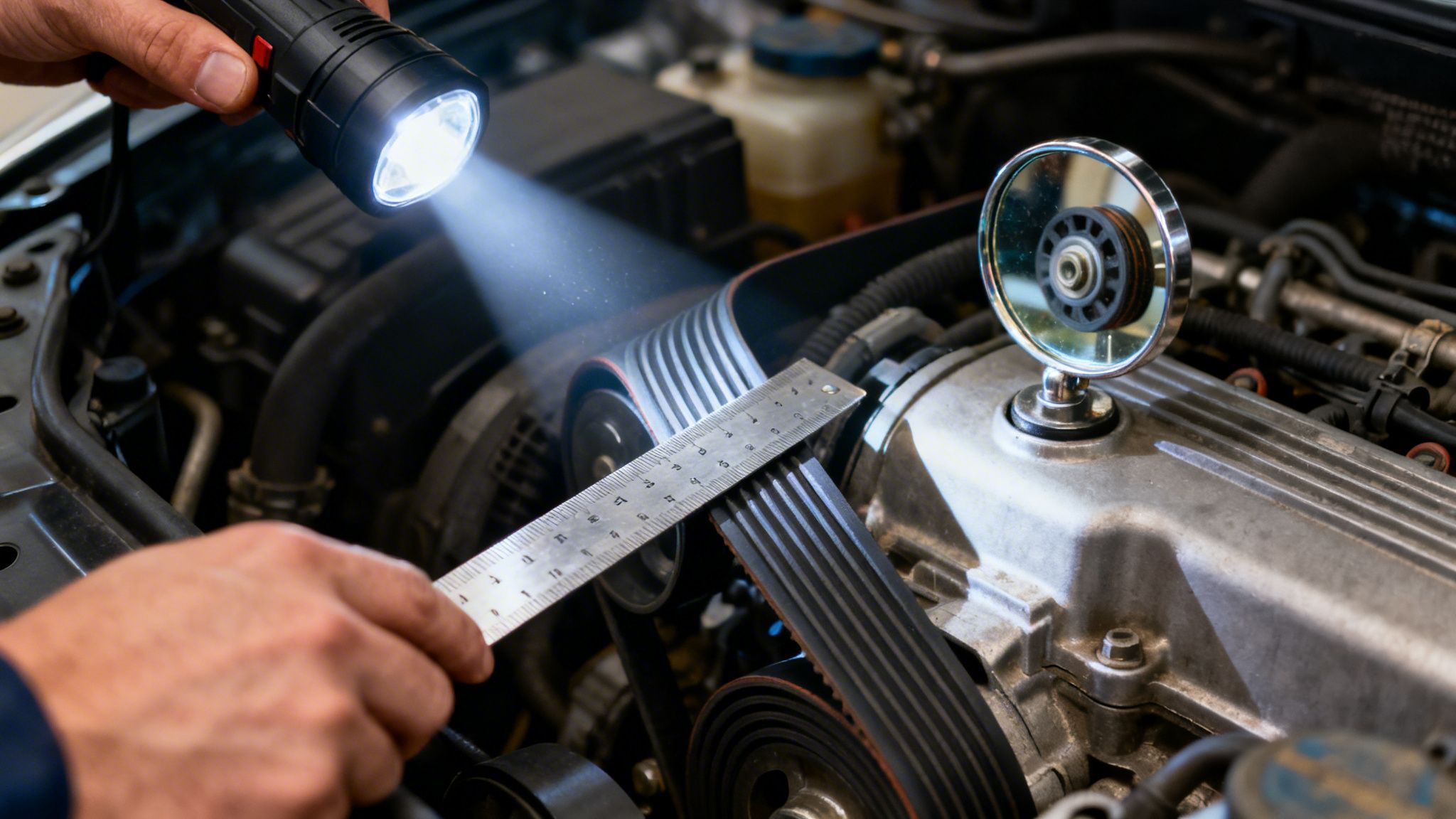
First thing's first: safety. Make absolutely sure the engine is off and the keys are nowhere near the ignition. The last thing you want is for the engine to kick on while your hands are in there. Grab a good, bright flashlight and let's get to it.
Checking The Belt's Condition
The belt itself is the most obvious place to start. You’re hunting for any sign of wear that could be causing it to lose its grip and slip on the pulleys.
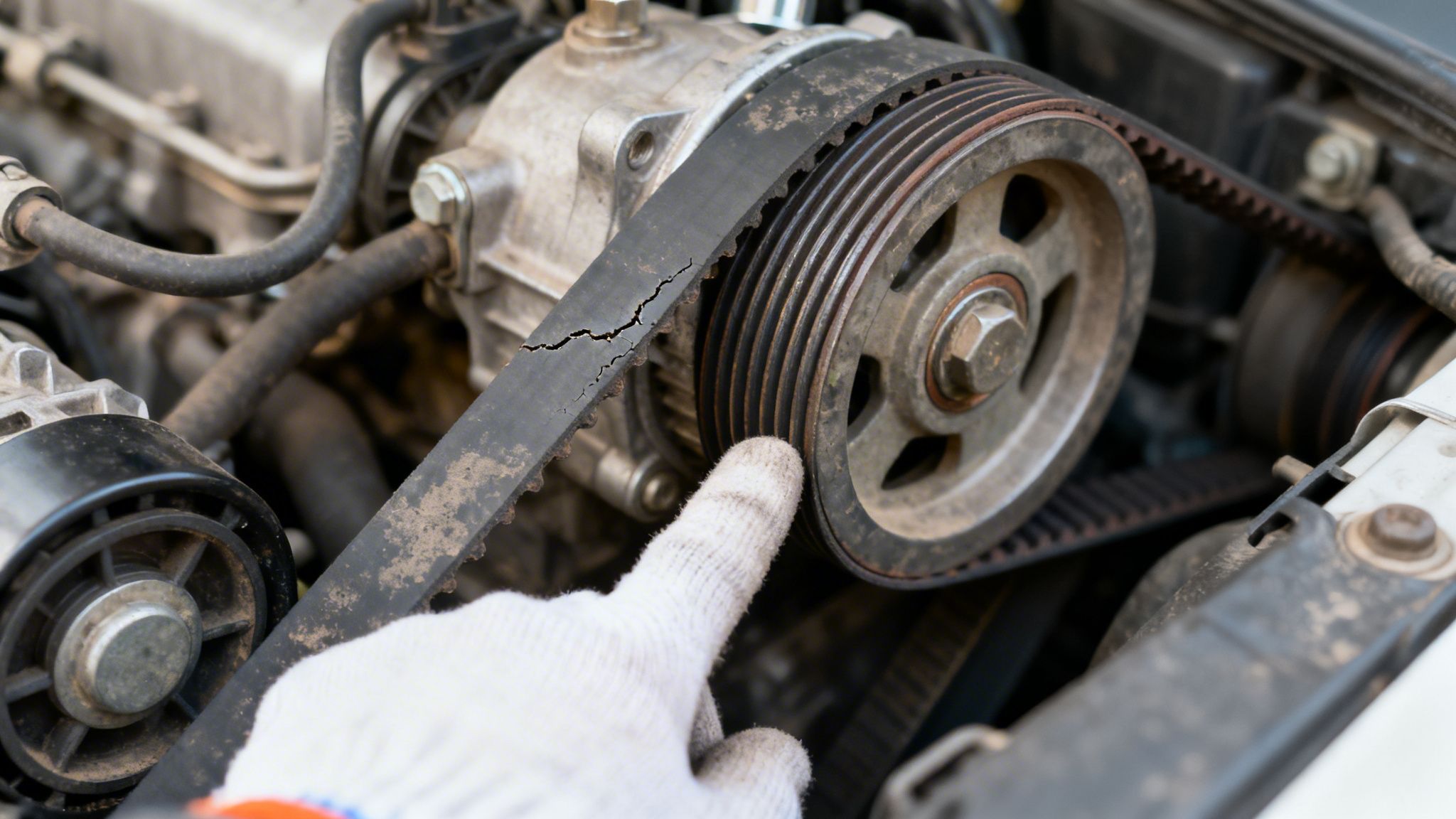
Shine your light along the entire belt, checking both the smooth top side and the ribbed underside. Keep an eye out for these tell-tale signs:
- Cracks: Any small cracks running across the ribs mean the rubber is getting old and brittle.
- Glazing: If the belt looks shiny and feels hard, it’s “glazed.” That slick surface has lost its grip and is definitely causing slipping.
- Fraying: Frayed edges or visible cords underneath are a major red flag. This belt is on its last legs and could snap at any moment.
- Contamination: Any signs of oil or grease mean you've got another leak somewhere that needs to be fixed first.
A quick tip: Newer EPDM belts don't always show the deep cracks that older ones did. Instead, they wear down by losing material. If the grooves on the belt look shallow or you can see little chunks missing, it’s time for a replacement.
Inspecting The Tensioner and Pulleys
A perfect new belt is useless if the parts it runs on are shot. The tensioner and all the pulleys are just as critical to inspect.
Start with the automatic tensioner, which is the spring-loaded part that keeps the whole system tight. Find a long, straight section of the belt and give it a firm push. The tensioner arm should move smoothly but offer plenty of resistance. If it feels spongy, bounces around, or you hear a grinding noise, that spring is worn out.
Now, move on to the individual pulleys (the alternator, power steering pump, idlers, etc.). With the belt still on, try to wiggle each one. There should be zero play—no wiggle side-to-side or in-and-out. Any movement at all points to a failing bearing.
If you take the belt off, you can give each pulley a spin by hand. They should turn freely, smoothly, and silently. Any hint of grinding, roughness, or resistance means the bearing is bad. Ignoring a failing pulley will just shred your new belt, and you'll be right back here with a much bigger bill. This is how you make sure the fix is a permanent one.
Diagnosing The Real Problem Beyond A Worn Belt
If you've replaced your serpentine belt only to have that awful squeal return a few weeks later, you're not alone. It's a frustrating experience that often means the worn belt was just a symptom, not the root cause.
Before you spend more time and money on another belt, it's time to play detective. We need to investigate the two most common hidden culprits behind a stubborn squeal: pulley misalignment and fluid contamination. Many drivers assume the belt is the only part that can fail, but the components it spins are just as likely to cause problems.
The Overlooked Issue of Pulley Misalignment
Pulley misalignment is a subtle but seriously destructive problem. This happens when one of the accessory pulleys—for the alternator, power steering pump, or an idler pulley—is no longer perfectly in line with all the others.
Even a millimeter of misalignment forces the belt to track at an angle. This causes its edges to chafe and slip against the pulley grooves, creating that high-pitched squeal you can't stand. It's a far more common issue than most people realize.
In fact, pulley misalignment is the #1 cause of serpentine belt noise, accounting for roughly 50% of squealing issues reported in major auto repair surveys. Loose mounting bolts or worn-out bearings are often the cause, allowing a pulley to wobble or tilt just enough to throw the whole system off. You can learn more about how technicians diagnose these tricky alignment issues at Dayco.com.
The Water Spray Test: A Simple Diagnostic Trick
Here’s a quick test you can do to figure out if your noise is from misalignment or simple belt slippage. With the engine running and the squeal present, carefully spray a small amount of water on the ribbed side of the belt.
- If the noise gets louder, you likely have a misalignment or tensioner problem.
- If the noise goes away temporarily, the belt is probably slipping due to wear, glazing, or contamination.
This simple test can point you in the right direction, saving you from replacing parts that aren't actually broken. A car making a loud noise can be stressful, but isolating the cause is the first step toward a quiet ride.
How Fluid Contamination Ruins Belts
The second major hidden cause of belt squeal is fluid contamination. Serpentine belts are made of a tough EPDM rubber, but they are highly vulnerable to automotive fluids like oil and coolant.
A slow leak from a power steering pump, a weeping water pump, or a faulty engine gasket can drip these fluids directly onto the belt's path. When that happens, the belt is in serious trouble.
- Loss of Friction: The fluid acts as a lubricant, which is the exact opposite of what you want. This causes the belt to slip and squeal.
- Rubber Degradation: Oil and coolant cause the rubber to swell, soften, and break down way too early. A contaminated belt can fail in a fraction of its expected lifespan.
If you see any wetness or dark, grimy buildup on your belt or pulleys, it's a dead giveaway that you have a leak. Just replacing the belt won't solve anything; the new one will quickly get soaked and start squealing, too. You have to find and fix the source of the leak first for any repair to last.
A Practical Guide to Replacing Your Serpentine Belt
Alright, if you're ready to get your hands dirty and fix that squealing serpentine belt yourself, good preparation is the key to success. This is a totally doable job for a confident DIYer, and with the right game plan, you can get it done right and save a trip to the shop.
The most critical first step—and trust me, it’s the one everyone wants to skip—is to map out the belt's path. Before you even think about picking up a tool, grab your phone and take a clear picture of how the belt is routed. A quick sketch works too. This simple action will save you a world of frustration when you’re trying to remember how the new belt weaves around all those pulleys.
Releasing Tension and Removing the Old Belt
Once you've got your routing picture, you can get that old, noisy belt out of there. You'll need to release the tension from the automatic tensioner pulley. This is a spring-loaded part that keeps the belt tight, so you'll need the right tool to move it.
A long-handled serpentine belt tool is ideal, but a standard breaker bar or long ratchet that fits the bolt or square opening on the tensioner will also work just fine.
- Find the Tensioner: Locate the pulley that's mounted on a spring-loaded arm. That's your target.
- Apply Steady Pressure: Fit your tool onto the tensioner and slowly push or pull in the direction that loosens the belt's tension. You'll feel the spring fighting you.
- Slip the Belt Off: With enough slack created, slide the belt off a smooth pulley (like an idler pulley). Then, slowly guide the tensioner back to its resting spot.
With the tension gone, you can easily unthread the old belt from the rest of the pulleys. Take your time so it doesn't get snagged on anything on the way out.
This is the perfect time for a quick but important inspection. With the belt off, give every single pulley a spin by hand. They should all turn freely and quietly. If you feel any grinding, notice any wobble, or meet any resistance, that’s a dead giveaway of a bad bearing that needs to be replaced before you go any further.
Installing the New Serpentine Belt
Now it’s time to thread on the new belt, using that diagram you smartly made earlier. This is where that prep work pays off. Start by wrapping the new belt around all the grooved pulleys first, making sure the ribs on the belt line up perfectly inside the grooves on each pulley.
This workflow graphic shows how the diagnostic steps lead you to this point.
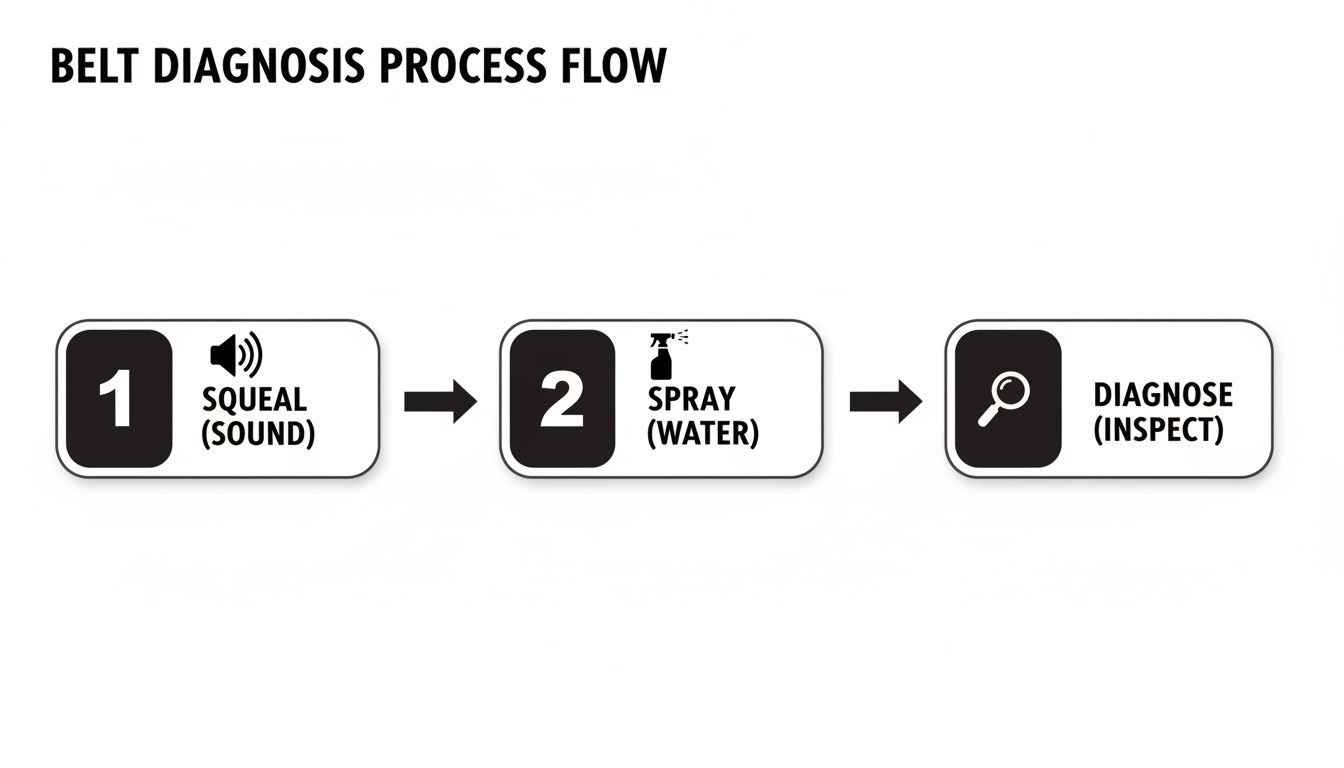
As the chart shows, a simple water test can help you figure out if you're dealing with belt slip or a bigger issue like misalignment, which is what guides your decision to replace the belt.
Pro Tip: Before you put the new belt on, take a wire brush and clean out the grooves on each pulley. They get packed with old rubber dust and road grime, which can cause a new belt to make noise or wear out way too fast.
Leave one of the smooth, easy-to-reach pulleys for the very last step. Get your tool back on the tensioner, pull it back to create slack again, and slip the final loop of the belt over that last pulley. Carefully and slowly release the tensioner, watching to make sure the belt stays centered on every pulley as it tightens up. One final look to double-check your routing, and you're all set.
When To Trust A Kwik Kar Pro For The Fix
Doing your own car repairs can be a great feeling, but sometimes, the smartest tool in your box is knowing when to call for backup. A squealing serpentine belt seems like a straightforward problem, but getting the diagnosis wrong can mean you'll be right back under the hood in a few weeks—and potentially out more money.
It's one thing to swap out a worn belt, but it's another thing entirely to hunt down a hidden issue. If you've given it a good look and the real problem still isn't obvious, it’s probably time to let a professional take over. Some jobs just demand tools and experience that most of us don't have sitting in the garage.
Red Flags That Point To A Pro Job
Some noises and symptoms are your car’s way of telling you this is more than a simple DIY fix. Don't hesitate to book an appointment with us at Kwik Kar if you run into any of these situations:
- Suspected Pulley Misalignment: Remember that water spray test? If the squeal gets louder instead of quieter, you're likely dealing with misaligned pulleys. This isn't something you can eyeball. Correcting it requires precision laser alignment tools to get every component perfectly in sync.
- A Noisy or Wobbly Pulley: Any grinding, scraping, or side-to-side wobble from a pulley is a dead giveaway of a failing bearing. That bearing is inside a critical component like your alternator, water pump, or power steering pump, and replacing those parts is a much more involved repair.
- Visible Fluid Contamination: Spotting oil, coolant, or power steering fluid on your belt means you’ve got a bigger problem: a leak. Fluid contamination is a huge culprit, responsible for about 25-30% of all serpentine belt squeals. For cars over five years old—which make up 60% of vehicles on Dallas roads—aging seals and gaskets are a common source of leaks that will destroy a new belt in no time. You can learn more about how fluids damage belts at SaveMoreAutomotive.com.
Just slapping on a new belt without fixing the leak is a waste of time and money. A Kwik Kar technician will trace that leak to the source—whether it’s a bad gasket or a cracked hose—and fix it properly before installing the new belt.
The Kwik Kar Advantage
For Dallas drivers, being without your car isn't an option. Our technicians have the experience and the right diagnostic tools to find the true cause of the squeal and fix it correctly the first time. We handle everything from tricky pulley alignments to hunting down the fluid leaks that cause belts to fail, including problems deep within the power steering system. You can learn more by reading our guide on what a power steering assist fault means.
Common Questions We Hear About Serpentine Belt Squeals
Even after you’ve poked around under the hood, a few questions about that squeal are bound to pop up. We get these all the time at the shop, so let's clear up some of the most common concerns you might have.
Can I Just Use Belt Dressing To Fix The Squeal?
It’s tempting, we get it. A quick spray that promises to silence the noise sounds like a perfect fix. But using "belt dressing" is one of the biggest mistakes you can make.
Think of it as a sticky, gooey band-aid. It might quiet the squeal for a day or two, but it does absolutely nothing to fix the real problem. Whether you have a worn-out belt, a failing tensioner, or a pulley that’s out of line, the dressing just masks the symptom.
Even worse, that sticky gunk attracts dirt and road grime, which acts like sandpaper on your pulleys and the belt itself. It actually makes things wear out faster.
A professional technician will never use belt dressing. The only real serpentine belt squeal fix is to diagnose and repair the root cause of the noise.
Is It Safe To Drive With A Squealing Serpentine Belt?
Honestly, you're rolling the dice. A squealing belt is a belt that's crying for help, and you never really know when it’s going to give up for good. A faint chirp on a cold, damp morning might not be a red-alert emergency, but a loud, constant squeal is a major warning sign. It means the belt is slipping badly and could snap at any moment.
If that belt breaks while you're on the road, your car will instantly lose power to some of its most critical systems:
- Power Steering: The steering wheel will suddenly become incredibly heavy and difficult to turn.
- Alternator: Your battery will stop charging. The car will run for a short while on battery power alone, then die completely.
- Water Pump: This is the big one. Coolant will stop circulating, and your engine will start to overheat almost immediately, putting you at risk for severe, wallet-crushing engine damage.
Trying to save a few dollars by ignoring the noise can easily turn into a massive bill for a tow truck and much more expensive repairs.
How Much Does A Professional Serpentine Belt Fix Cost?
The final cost really depends on what’s actually making the noise. If it’s just an old, worn-out belt, the repair is usually pretty affordable. The game changes, however, if another part is the true culprit.
For instance, swapping out just the serpentine belt is a fairly quick job. But if our diagnosis finds that the automatic tensioner has gone weak or the bearing inside an idler pulley has failed, those parts have to be replaced, too. If they aren't, your brand-new belt will just start squealing again in no time.
This is exactly why a proper diagnosis is key—it makes sure you aren't coming back and paying for the same job twice.
When that squeal just won’t quit, don’t play the guessing game. Get a professional diagnosis from technicians who see this every day. The experts at Kwik Kar Oil Change and Auto Care have the right tools and deep experience to find the true source of the problem and fix it correctly the first time. Schedule your appointment today at https://www.kwikkarspringvalley.com.