Throttle body cleaning is a maintenance service that gets rid of the carbon and grime building up inside the valve that controls your engine's air intake. Think of it as clearing your car's throat so it can breathe properly. It’s a straightforward procedure that’s absolutely essential for keeping any modern fuel-injected engine running smoothly, restoring both performance and efficiency.
Your Engine's Air Traffic Controller
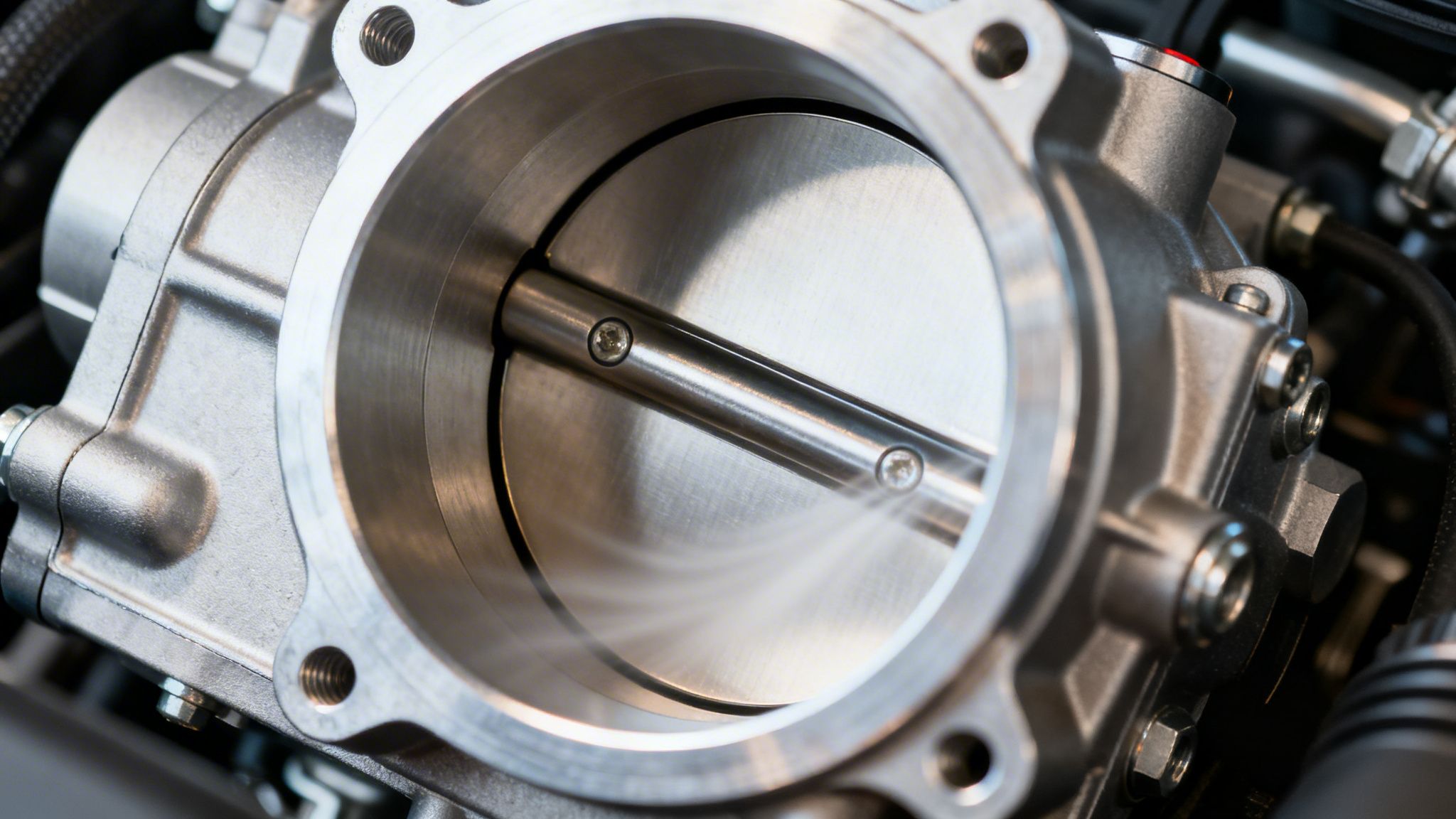
The best way to think of your engine's throttle body is as its dedicated air traffic controller. When you step on the gas pedal, you're not pushing fuel directly into the engine—you're actually telling this critical valve to open up.
The wider that valve opens, the more air rushes in to mix with fuel, generating the power you need to get moving. This delicate balance of air and fuel is vital for everything from a steady idle at a stoplight to having responsive power when you need it on the highway.
Over time, this crucial "airway" gets clogged. A sticky mix of carbon, oil, and dirt from the engine's crankcase ventilation system builds up on the throttle plate and the surrounding housing. This gunk literally restricts the airflow, kind of like a blocked runway causing chaos at an airport. Your engine’s computer tries its best to compensate for the blockage, but it can only do so much, eventually leading to noticeable performance issues.
Why It Matters: A clean, unobstructed path for air is non-negotiable for a healthy engine. When buildup interferes, the precise air-fuel mixture is thrown off, impacting performance, fuel economy, and emissions.
A professional throttle body cleaning service is designed to safely dissolve and remove this buildup without harming any of the sensitive electronic components nearby.
Throttle Body Cleaning At a Glance
Here’s a quick summary table to break down what this essential service involves and why it matters so much for your vehicle.
| Key Question | Simple Answer |
|---|---|
| What is it? | A maintenance service that removes carbon and gunk buildup from the throttle body valve, which controls air intake for your engine. |
| Why is it needed? | Buildup restricts airflow, causing poor performance like rough idling, hesitation, and decreased fuel efficiency. |
| What are the benefits? | Restores engine responsiveness, improves gas mileage, ensures a smoother idle, and helps reduce emissions. |
Getting a handle on this basic concept really clarifies why keeping your engine’s "air traffic controller" clean is so important for the overall health and drivability of your car.
Signs Your Car Needs a Throttle Body Service
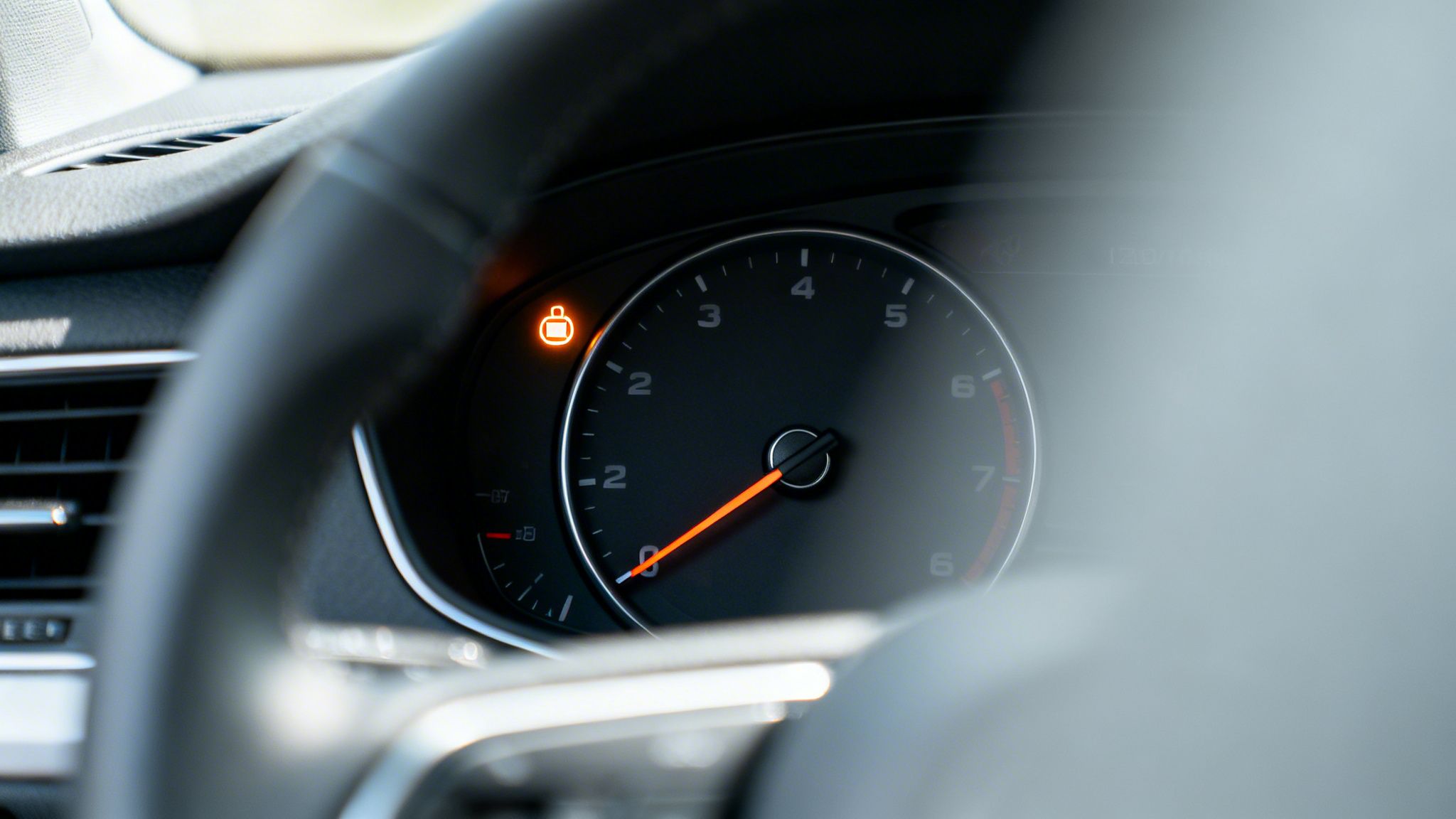
Your car has its own way of telling you when something’s not quite right. When the throttle body gets dirty, these signals can start as small annoyances but can quickly grow into serious performance problems. Learning to spot these early warnings is the key to avoiding bigger headaches down the road.
One of the first things you'll probably notice is a rough or shaky idle. You might feel your car vibrating more than usual at a stoplight, or see the RPM needle jumping around instead of holding steady. This happens because that layer of grime prevents the throttle plate from closing just right, messing up the precise air-fuel mixture your engine needs to run smoothly.
Another dead giveaway is sluggish acceleration. If you step on the gas and feel a frustrating hesitation before your car picks up speed, a gunked-up throttle body is often the culprit. In worse cases, your engine might even stall out at low speeds or when you first start it up, simply because it's being starved of the consistent airflow it needs.
Common Warning Signs of a Dirty Throttle Body
Beyond idling and acceleration trouble, there are a couple of other red flags to watch for. Each one points back to the same core issue: restricted airflow from carbon and dirt buildup.
- Worse Fuel Economy: Your engine’s computer is smart, but it can only do so much. It'll try to compensate for the bad airflow readings by pumping in more fuel than needed, meaning you'll be visiting the gas station a lot more often.
- The Check Engine Light Comes On: Modern cars are packed with sensors that notice when airflow is off. If the throttle body isn’t working correctly, it will almost always trigger a fault code and light up that dreaded warning on your dash. If you see it, you can learn more about what it might mean in our guide to check engine light service.
Symptoms of a Dirty Throttle Body and What They Mean
It helps to connect the dots between what you're feeling behind the wheel and what's actually happening under the hood. This table breaks down the most common symptoms.
| Symptom | What You Experience | Why It's Happening |
|---|---|---|
| Rough Idle | The car shakes or vibrates at a stop; the RPM needle bounces. | Carbon buildup stops the throttle plate from closing properly, disrupting the air-fuel mix. |
| Poor Acceleration | You press the gas, but the car hesitates or feels sluggish. | The sticky throttle plate can't open smoothly, delaying airflow to the engine. |
| Engine Stalling | The engine cuts out at low speeds, during idle, or on a cold start. | Severe airflow restriction is starving the engine of the air it needs to run. |
| Bad Gas Mileage | You're filling up the tank more frequently than usual. | The ECU overcompensates for bad sensor readings by injecting too much fuel. |
| Check Engine Light | The orange warning light appears on your dashboard. | The car's computer has detected an airflow problem and logged a fault code. |
Recognizing these issues early on can save you a lot of trouble and money. Don't ignore what your car is trying to tell you
The Real Benefits of Professional Throttle Body Cleaning
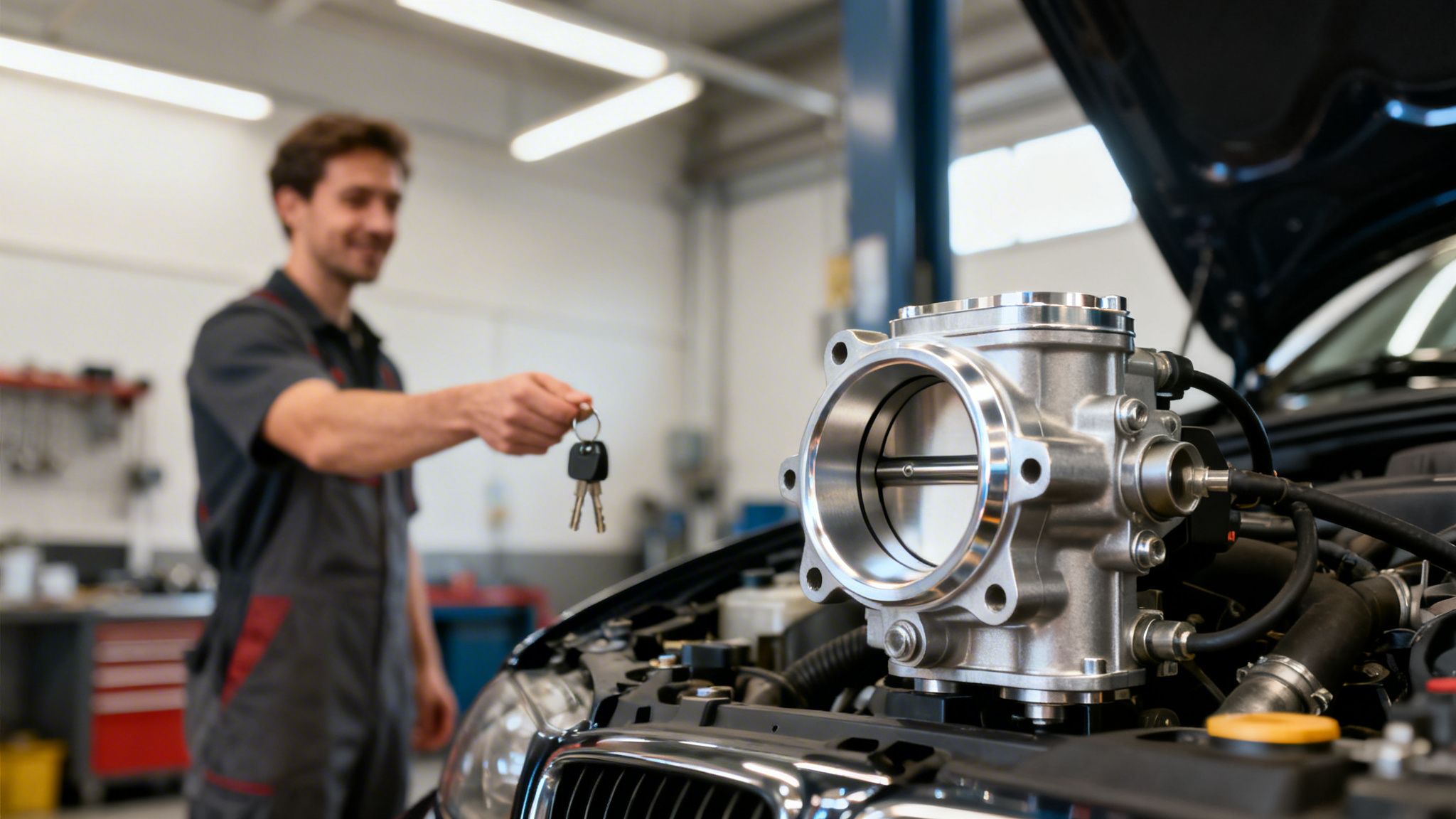
After you've started to notice symptoms like a rough idle or sluggish acceleration, the big question is always, "Is it really worth fixing?" We can tell you the answer is a definite yes. A professional throttle body cleaning isn't just another repair; it's a smart investment in your car’s performance, efficiency, and long-term health.
The benefits go far beyond just fixing an annoying problem. One of the first things you'll notice is that your car's performance is back to where it should be. The engine will feel more responsive, with smooth acceleration and a steady, quiet idle. That hesitation you felt when pulling away from a stoplight will be gone, replaced by the crisp, predictable power you expect from your vehicle.
This simple service is about more than just a smooth ride—it’s about getting back the performance and reliability you paid for when you first bought your car.
A clean throttle body also directly helps your wallet. By letting the engine's computer precisely manage the air-fuel mixture, this service can significantly improve your fuel economy. That means fewer trips to the pump and real savings over time.
Restoring Engine Health and Efficiency
Beyond how the car feels to drive, this service plays a vital role in your engine's overall health. A clean system reduces strain on related components and helps your vehicle run cleaner, which is crucial for passing state emissions tests.
The automotive throttle body market is actually growing, driven by the demand for fuel-efficient vehicles that meet strict emission norms. A dirty throttle body, clogged with carbon and grime, can slash engine performance by 10-15% and significantly increase harmful emissions. If you're interested, you can discover more insights about the throttle body market.
Ultimately, a professional cleaning is a key piece of preventative maintenance. It helps you avoid more complex and expensive engine issues down the road, ensuring your car runs as efficiently and reliably as it was designed to.
DIY Cleaning vs a Professional Service
If you spend any time on YouTube, you’ll find countless videos that make throttle body cleaning look like a simple weekend project. We get it—the appeal of saving a few bucks is strong. But this is one of those jobs where a tiny mistake can snowball into a massive, expensive repair bill, turning what looked like a quick fix into a major headache.
The biggest risk? Damaging the sensitive electronics packed into modern throttle bodies. These aren't simple mechanical flaps anymore; they're complex components with delicate sensors and special coatings. Grabbing the wrong can of cleaner—like brake or carburetor cleaner—can instantly strip these protective layers and fry the sensors. Even worse, trying to force the throttle plate open on an electronic unit can easily wreck the delicate internal gears.
The Pitfalls of a DIY Job
Beyond the risk of causing physical damage, the real deal-breaker for most DIY attempts comes at the very end.
- The Relearn Procedure: Once everything is clean, your car’s computer has to be recalibrated. It needs to learn the throttle plate’s new, fully closed position. Without the right diagnostic tools to kick off this “relearn” procedure, you’ll likely end up with a high or erratic idle that’s far worse than the problem you started with.
- Misdiagnosis: Are you sure the throttle body is even the problem? A rough idle or poor acceleration can easily be caused by something else, like old spark plugs, cracked vacuum hoses, or even just a dirty air filter. A pro will diagnose the real root cause first, which might be as simple as finding out how often to change your car air filter.
Choosing a professional service is about more than just the repair itself; you're paying for peace of mind. Trained technicians know exactly which sensor-safe solvents to use and have the expensive diagnostic equipment needed to perform the relearn procedure correctly. It gets done right the first time, period.
When you're looking for a reliable shop, it’s also good to know that effective automotive repair shop marketing helps connect customers with trustworthy experts. Trusting a professional takes all the guesswork out of the equation and, most importantly, protects your vehicle from accidental damage.
What to Expect from Our Throttle Body Cleaning Process
We believe you have a right to know exactly what’s happening with your vehicle. Trust is built on transparency, so we want to pull back the curtain on our professional throttle body cleaning service. Knowing what we do, and why we do it, helps you feel confident your car is getting the expert care it needs.
Our process always kicks off with a thorough diagnostic check. We don't just jump in and start scrubbing. First, we need to confirm that a dirty throttle body is the real culprit behind your car's symptoms. This simple step ensures you’re only paying for a service you actually need.
Once we’ve confirmed the issue, our skilled technicians carefully access the throttle body. We use specialized, sensor-safe solvents specifically formulated to dissolve stubborn carbon and grime without harming the delicate electronic components or factory coatings found in modern vehicles. This is a massive difference from generic, off-the-shelf cleaners that can cause expensive damage.
The Final, Crucial Steps
After the physical cleaning is done, the job isn't over. A couple of final steps are absolutely essential to make sure your car runs perfectly afterward.
- Reassembly: We carefully reinstall the throttle body, making sure every gasket and connection is perfectly secure. This prevents any vacuum leaks that could create a whole new set of performance problems.
- Relearn Procedure: This might be the most important step of all. We hook up a professional diagnostic tool to trigger the engine computer’s “relearn” procedure. This process teaches the computer the throttle plate's new, clean starting point, guaranteeing a smooth and stable idle right out of the bay.
As cars get older, this service is key to preventing efficiency losses that affect 70% of cars with over 75,000 miles. Keeping this part clean is vital, since untreated buildup can feel like a 15-25% power deficit and lead to higher emissions. You can read the full research on the growing automotive throttle body market to learn more.
This chart below really breaks down the difference between a DIY attempt and our guaranteed, professional service.
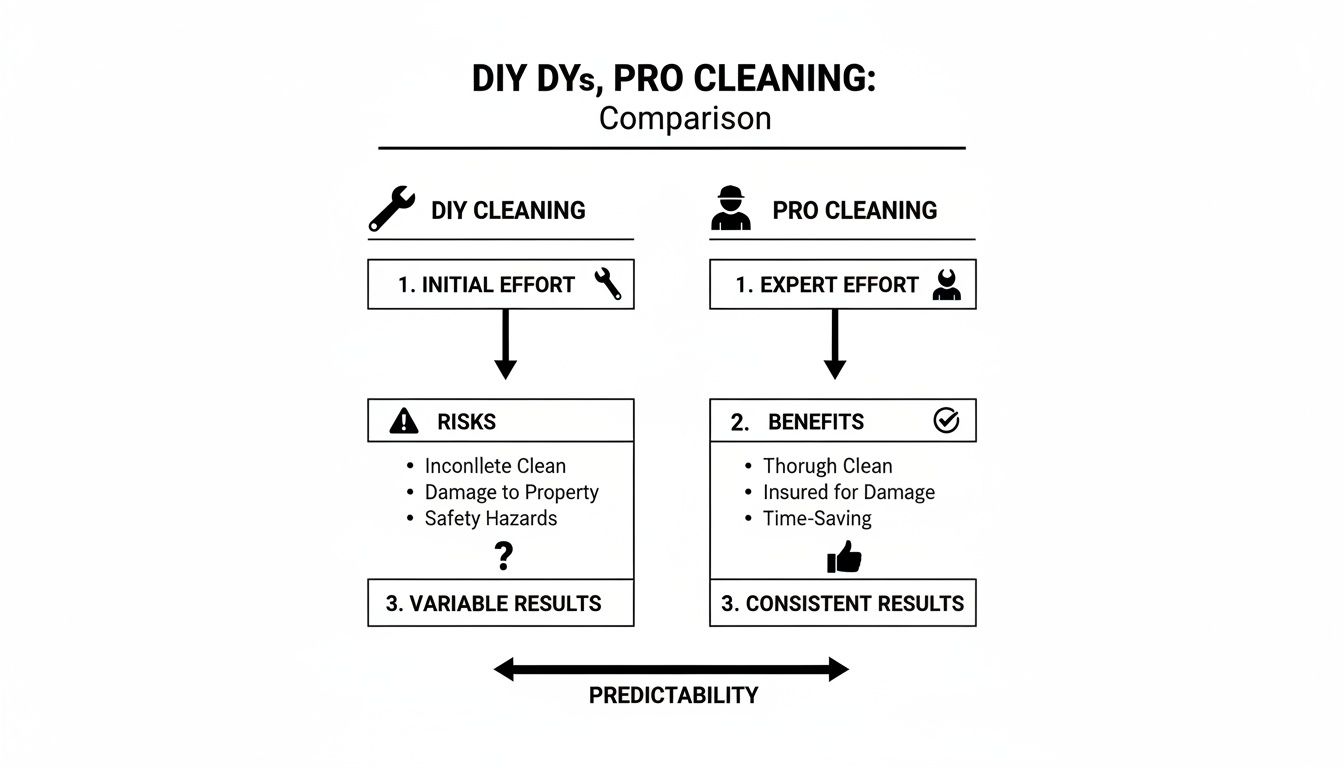
It’s pretty clear that while a DIY cleaning might seem like a good way to save a buck, the risk of damaging sensitive electronics often isn't worth it. Our professional service, on the other hand, delivers safety, reliability, and peace of mind.
Common Questions About Throttle Body Cleaning
Even after seeing the benefits, most drivers we talk to still have a few practical questions about throttle body cleaning. Getting straight answers is the best way to feel confident about your car’s maintenance, so we've put together the questions we hear most often at the shop to clear things up.
One of the first things people ask is how often this is needed. There isn't a single magic number, but a solid rule of thumb is to have your throttle body inspected every 75,000 to 100,000 miles. Your driving habits really matter here, though. If you spend most of your time in stop-and-go city traffic, that carbon buildup can happen a lot faster, and you might need the service sooner.
Another big concern is passing state inspections. The answer is yes, a dirty throttle body can absolutely cause your car to fail an emissions test. When airflow is choked off, it messes with the air-fuel mixture. That imbalance leads to higher emissions like unburned hydrocarbons and carbon monoxide—two of the biggest red flags on any emissions report.
Answering Your Key Concerns
It's also important to have realistic expectations about what this service can and can't do. While it's a powerful fix for many performance hiccups, it's not a silver bullet for every issue your car might be facing.
- Will this fix all my idle problems? It’s often the solution for a rough, jumpy, or unstable idle, but it's not a guaranteed fix. Similar symptoms can pop up from other culprits, like worn-out spark plugs, bad ignition coils, or even a vacuum leak.
- What is a 'relearn' procedure? After a really good cleaning, the throttle plate settles into a slightly different position when it's closed. The relearn procedure is where we use a diagnostic tool to teach the car's computer this new "home" position. If you skip this, you can end up with a high or erratic idle that feels even worse than the problem you started with.
A proper car diagnostic test is the only way to be sure we're targeting the real source of the problem before any work begins. You can get a better sense of why this is such a crucial first step in our guide to understanding a car diagnostic test. This makes sure we’re solving the root cause instead of just chasing symptoms, which ultimately saves you time and money.
At the end of the day, a throttle body cleaning is a fantastic piece of preventative maintenance. Taking care of it proactively helps bring back lost performance, boost your fuel economy, and stop a small nuisance from snowballing into a major engine repair.
Is your car showing the classic signs of a dirty throttle body? Don't wait for things to get worse. The expert technicians at Kwik Kar Oil Change and Auto Care have the right tools and deep experience to diagnose the issue correctly and perform a professional cleaning that gets your vehicle running like it should. Schedule your service today and get back on the road with confidence.