
For as long as most of us have been driving, the advice has been the same: change your oil every 3,000 miles. But for most cars on the road today, that rule is officially a thing of the past. Thanks to huge advances in engine technology and oil formulas, most modern vehicles can easily go 5,000 to 10,000 miles or even more between services.
Moving Past the 3,000-Mile Oil Change Myth
If you've ever owned a car, you've heard the 3,000-mile rule repeated like gospel. That advice was solid for a long time, but its time is up. To understand why, you have to look back at where it came from.
This whole mantra started back in the 1950s and '60s. Engines were simpler, built with less precision, and the oils were basic mineral-based lubricants. That old-school oil broke down fast under heat and pressure, and dusty roads meant more gunk found its way into the engine. When quick-lube shops started popping up, that frequent service interval became their bread and butter, cementing the 3,000-mile myth in our minds.
Why Modern Cars are Different
Today's automotive world is a completely different ballgame. Engines are engineered with much tighter tolerances and run hotter and more efficiently. This massive leap in hardware required an equally big jump in lubrication technology—and that's where synthetic oils came in.
These modern lubricants are a world away from their predecessors:
- Way More Durable: They resist breaking down from heat far better than conventional oils, holding onto their protective qualities for thousands of extra miles.
- Superior Cleaning Power: Synthetic oils are packed with detergents and additives that actually clean sludge and stop nasty deposits from forming inside your engine.
- Better All-Around Performance: They flow smoothly when it's cold out for easier starts and maintain their thickness in extreme heat, giving you consistent protection no matter the conditions.
The biggest shift in modern car care isn't a new part or tool—it's moving from a rigid 3,000-mile rule to a smarter, flexible schedule based on your actual car and how you drive it. This saves you money, cuts down on waste, and just makes more sense for today's vehicles.
This doesn’t mean mileage is irrelevant now, but it’s just one piece of the puzzle. The real answer to "when should I change my oil?" now depends on your car's age, the specific type of oil you're using, and your driving habits. Getting a handle on the improved synthetic oil change interval is the first step toward a maintenance plan that truly fits your car.
How Your Driving Habits Affect Your Oil Life
Think of your car's oil change schedule like a personalized fitness plan—what works for one person won't necessarily work for another. The manufacturer's recommended interval is just a starting point. Your daily driving habits play a huge role in how often you should change your oil, directly impacting your engine's health and performance.
Not all miles are created equal. Automakers usually define two kinds of driving conditions: "normal" and "severe." Most of us probably think our driving is pretty normal, but the truth is, a lot of daily commutes, especially in a busy area like Dallas, fall squarely into the severe category.
Normal vs. Severe Driving Conditions
A smooth, steady drive down the Dallas North Tollway with minimal stopping? That’s what carmakers consider normal driving. Your engine gets up to a consistent, optimal temperature, which lets the oil do its job perfectly. This is the ideal scenario your owner's manual bases its longest oil change intervals on.
But that stop-and-go grind on I-35 during rush hour is a completely different beast. That kind of driving is severe because it forces your engine to work harder without ever really reaching its most efficient operating temperature. Even frequent short trips, like running to the grocery store a mile away, are surprisingly tough on your oil.
This infographic does a great job of showing how we've moved past the old, outdated 3,000-mile myth for modern cars.
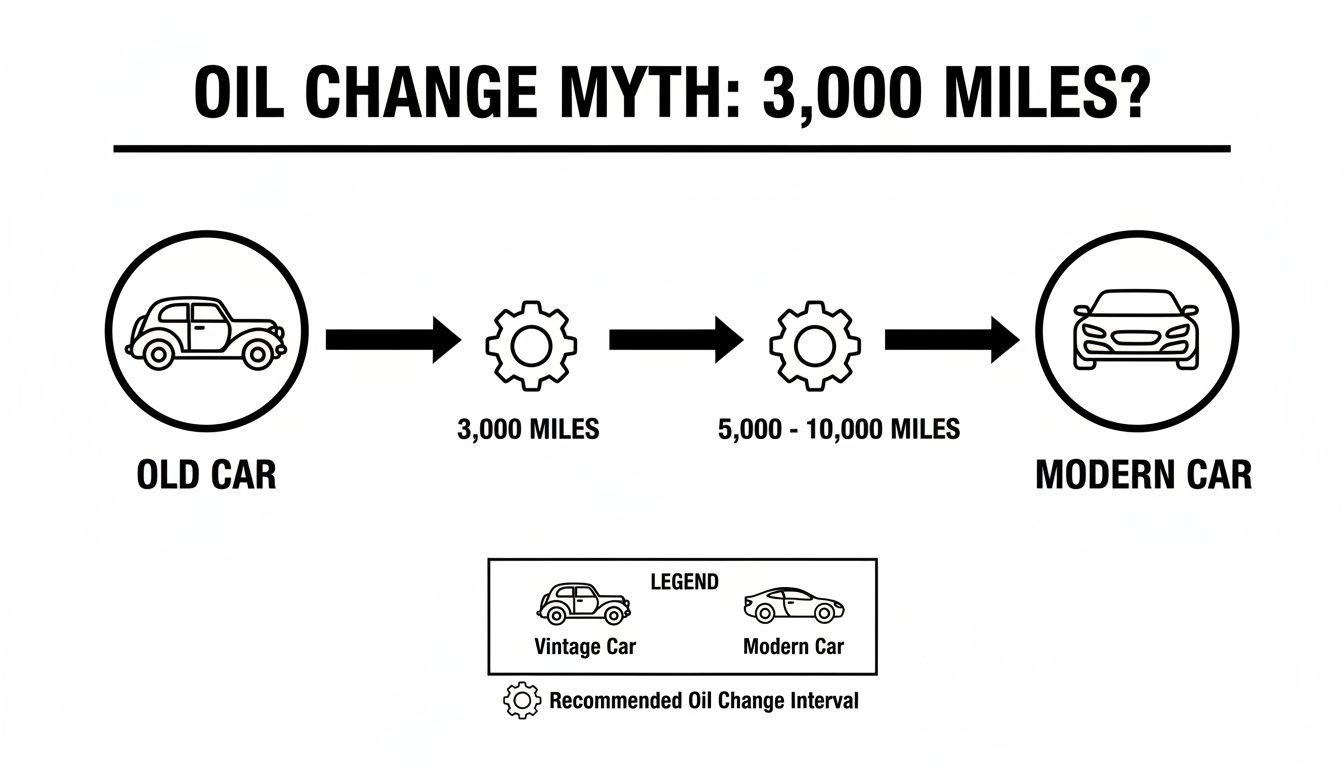
As you can see, modern vehicles have graduated to much longer intervals compared to the cars we grew up with.
So, where do your driving habits fit in? A lot of us fall into the 'severe' category without even realizing it. Use this table to see if your driving style puts extra stress on your engine oil.
Normal vs Severe Driving What's Your Style?
Use this table to see if your driving habits fall under the 'severe' category, which requires more frequent oil changes to protect your engine.
| Driving Condition | Normal Service | Severe Service |
|---|---|---|
| Trip Length | Mostly long-distance highway driving | Mostly short trips (under 5-10 miles) |
| Traffic | Minimal stop-and-go | Heavy city traffic, frequent idling |
| Climate | Moderate temperatures | Extreme heat (over 90°F) or cold |
| Towing/Hauling | Infrequent or never | Regularly towing trailers or carrying heavy loads |
| Road Conditions | Paved, clean roads | Dusty, muddy, or salty roads |
| Speed | Consistent highway speeds | Frequent short bursts of speed and braking |
If you found yourself nodding along with the "Severe Service" column, it’s a good sign you should be leaning toward the shorter end of your manufacturer’s recommended interval. It's a simple adjustment that can make a huge difference in your engine's longevity.
Factors That Accelerate Oil Breakdown
Certain driving habits really put your engine oil through the wringer, causing it to break down much faster. If your daily routine includes any of these, you'll definitely want to schedule more frequent oil changes:
- Frequent Short Trips: Any trip under five miles is a problem. The engine never gets hot enough to burn off moisture and unburnt fuel contaminants, which mix with the oil and can eventually turn into nasty sludge.
- Extreme Texas Heat: Just idling in 100°F summer traffic is enough to cause oil to thin out and degrade. This reduces its ability to properly lubricate all those critical moving parts inside your engine.
- Towing and Hauling: Pulling a boat out to Lake Ray Hubbard or hauling a heavy load for work puts immense strain on your engine. This generates a ton of excess heat, which is the mortal enemy of engine oil.
- Dusty or Dirty Roads: Driving on unpaved roads or through construction zones kicks up a lot of contaminants. Your oil and filter have to work overtime to trap all that extra grit before it can cause damage.
In the US, short trips under five miles—which account for 60% of commutes—cause cold starts that degrade oil up to three times faster by mixing in fuel and moisture. Add stop-and-go city driving and extreme heat, and oils can degrade 20-30% quicker than on long highway trips. Explore more on how driving conditions impact engine oil.
Understanding these factors is the key. Once you recognize that your driving style might be "severe," you can adjust your maintenance schedule accordingly. It’s a small change that helps protect your engine from premature wear and saves you from costly repairs down the road.
Choosing Between Synthetic and Conventional Oil
Deciding on the right engine oil can feel like a complicated choice, but it gets a lot simpler once you understand the key differences. Is synthetic oil really worth the extra cost? Let's break it down.
Think of conventional oil like a standard, everyday meal. It gets the job done and provides the basic nourishment your engine needs to run. Full synthetic oil, on the other hand, is more like a high-performance nutritional plan designed for a professional athlete. It’s engineered in a lab to be purer and more uniform, then packed with advanced additives for superior protection and performance. This isn't just marketing fluff; the refined molecular structure of synthetic oil makes a real-world difference in your engine's health.
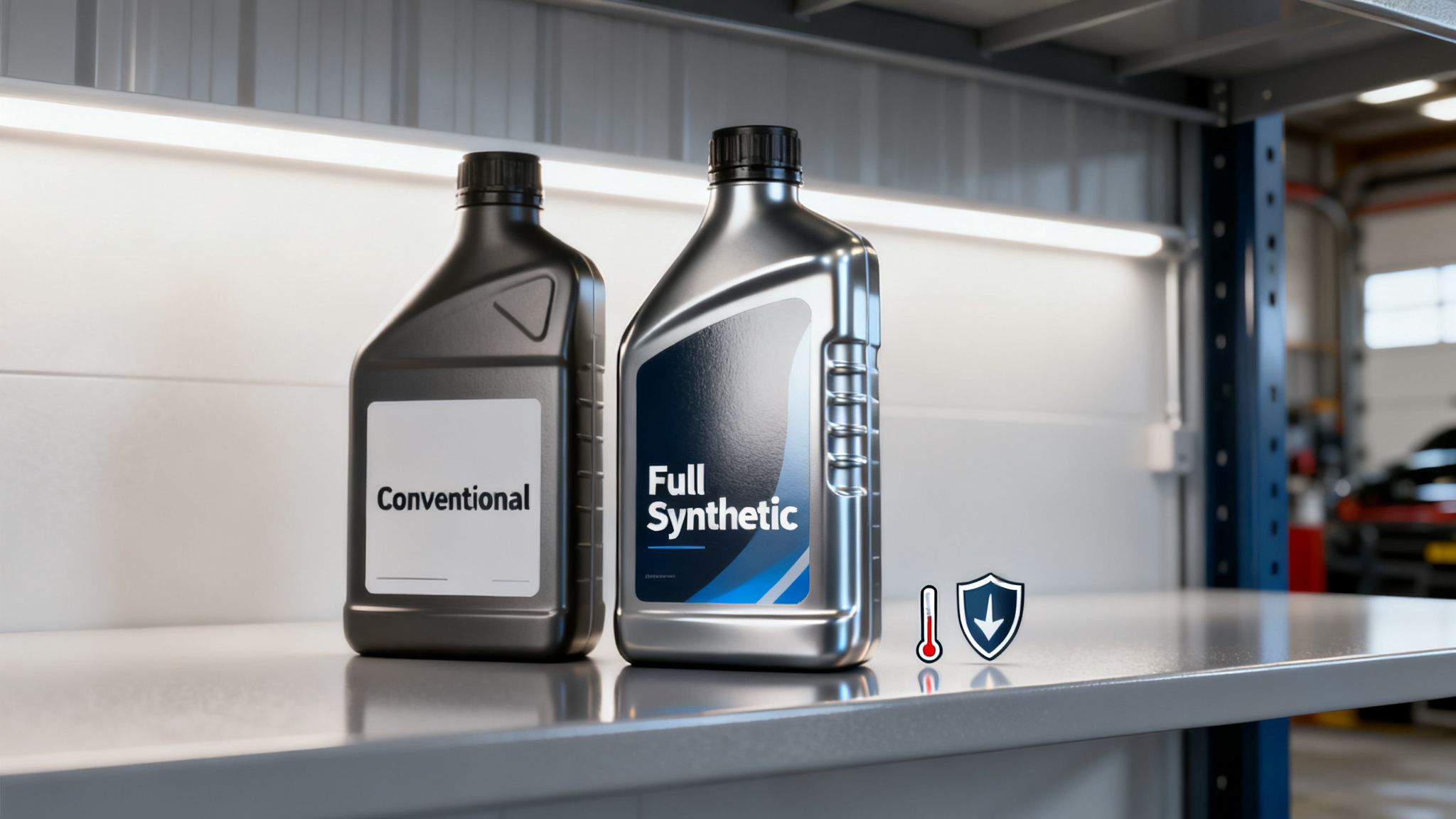
This advanced composition is why when to change oil in car depends so heavily on the type you use, as synthetics can safely go much longer between services.
The Real-World Benefits of Synthetic Oil
While conventional oil is a perfectly fine option for many older cars with less demanding engines, synthetic oil has some clear advantages, especially for modern vehicles and tough driving conditions. The intense Dallas heat, for example, is where synthetic oil truly proves its worth.
- Superior Temperature Stability: Synthetic oil resists breaking down under extreme heat, holding onto its protective viscosity far better than conventional oil. This is a game-changer during Texas summers when engine temperatures can skyrocket.
- Enhanced Cleaning Properties: It contains powerful detergents that actively clean out existing sludge and prevent new gunk from forming, keeping your engine's internal parts running smoothly.
- Longer Change Intervals: Because it degrades so much more slowly, full synthetic oil allows for significantly longer stretches between changes—often 7,500 to 15,000 miles or more, depending on your vehicle and driving habits.
Synthetic oil is engineered to handle extreme temperatures better than its conventional counterpart. It maintains its lubricating properties longer, resists breakdown under high heat, and ultimately offers superior engine protection, which is a major advantage for drivers in hot climates.
These benefits all add up to more consistent, reliable engine protection over thousands of miles, which means less long-term wear and tear on your car.
Addressing the Price Difference
There’s no getting around it: a full synthetic oil change costs more upfront. That initial price tag often makes drivers pause, but it’s important to look at the bigger picture. The higher cost reflects the advanced refining process and the premium additives that deliver those enhanced benefits.
In the long run, synthetic often becomes the smarter financial choice. Since you can go so much longer between services, you’ll actually be paying for fewer oil changes over the life of your vehicle. For instance, two conventional oil changes might cost less individually, but one synthetic change covering the same mileage could easily be more cost-effective.
Beyond that, the superior engine protection offered by synthetics can help you dodge costly repairs down the road. By keeping your engine cleaner and better lubricated, you’re investing in its overall health and longevity. To dive deeper into this, you can learn more about the specific differences between synthetic vs. conventional oil in our detailed guide. At the end of the day, choosing the right oil helps ensure your vehicle performs reliably for years to come.
Understanding Your Car's Oil Life Monitor
That little wrench icon or "maintenance required" message on your dashboard is a lot smarter than you might think. Many drivers just assume it's a simple mileage counter, but your car's Oil Life Monitoring (OLM) system is actually a pretty sophisticated computer. It's built to give you a much more accurate answer to the age-old question: when to change oil in car.
Instead of just ticking off the miles, the OLM system acts more like a built-in analyst for your engine. It's constantly collecting and crunching data points to get a real-time picture of your oil’s health, watching way more than just your odometer.
How Your Oil Life Monitor Works
Think of the OLM as a personal health tracker for your engine oil. It isn’t guessing; it’s calculating. The onboard computer uses a specialized algorithm that weighs a variety of factors that directly cause oil to break down.
These key data points include:
- Engine Revolutions: It literally counts every single turn of the engine, knowing that higher RPMs put more stress on the oil.
- Operating Temperatures: The system keeps tabs on how hot your engine gets and for how long. Extreme heat, after all, is a primary killer of engine oil.
- Trip Duration: It knows the difference between a long, steady highway cruise and short, stop-and-go city trips, which are much tougher on your oil.
- Idling Time: Your monitor also factors in time spent sitting in traffic, which builds up heat without adding a single mile to the trip meter.
By piecing all this data together, the system estimates the remaining useful life of your oil and lights up the dash when it's time for a service. This intelligent approach gets you away from outdated, fixed-mileage rules and puts you on a maintenance schedule that perfectly matches your real-world driving habits.
The whole point of an Oil Life Monitor is to replace guesswork with data. It delivers a personalized oil change interval based on how you actually use your vehicle, not on a generic, one-size-fits-all recommendation.
One Critical Thing Your Monitor Cannot Do
While you can and should trust your OLM system to tell you when to change your oil, there is one vital task it absolutely cannot do: it does not check your oil level. This is a common—and dangerous—misconception. The monitor only assesses oil quality and its remaining life.
A car can have perfectly healthy oil according to the monitor but be dangerously low because of a slow leak or natural consumption. For this reason, you still need to pull out the dipstick and check your oil level yourself at least once a month. Trust the light for the timing, but always trust the dipstick for the level.
In fact, these oil life monitors are now standard in over 90% of cars built after 2010, finally ditching old calendar-based rules for real-time engine data. These systems can safely stretch intervals to 10,000-15,000 miles by alerting you when the oil’s viscosity drops or contaminants build up. Even so, a recent study pointed out that 29% of U.S. owners are still late on their oil changes, risking engine failures that cost over $4,000 on average. You can learn more about these oil maintenance findings and why they matter.
Warning Signs Your Engine Needs an Oil Change
Your car’s dashboard isn’t the only place to look for clues about its health. Long before a warning light ever flashes, your vehicle sends out subtle signals that it's time for some fresh oil. Learning to spot these signs is key to preventing a minor maintenance need from snowballing into a major engine problem.
Think of your engine oil as the lifeblood of your car. When it’s clean and flowing freely, everything runs like a dream. But over time, it picks up dirt, debris, and sludge, making it less effective at lubricating and cooling all those critical moving parts. This breakdown is usually what’s behind the warning signs that tell you an oil change is due.

Key Symptoms to Watch For
Believe it or not, your own senses are powerful diagnostic tools. Just by paying attention to how your car looks, sounds, and smells, you can catch the earliest indicators that your oil is past its prime. Ignoring them can lead to unnecessary wear and tear on your engine.
Here are some of the most common red flags:
- Dark and Gritty Oil: Fresh engine oil has a clean, amber color and is smooth to the touch. As it circulates, it traps particles and eventually turns dark brown or black. If the oil on your dipstick is thick, dark, and feels gritty, its cleaning additives are worn out and it’s time for a replacement.
- Unusual Engine Noises: Clean oil forms a protective cushion between engine parts, which keeps things running quietly. When that oil gets too thin or dirty, you might start to hear a knocking or ticking sound—that’s the sound of metal components making contact.
- An Oily Smell Inside the Cabin: The distinct smell of burning oil inside your car is a clear sign of trouble. It almost always points to an oil leak, where drips are hitting hot engine parts and vaporizing.
- Visible Exhaust Smoke: A little bit of vapor from the tailpipe is normal, but thick, blue, or gray smoke is not. This often means oil is leaking into the engine’s combustion chambers and burning up along with the fuel.
An illuminated check engine light can sometimes be related to oil issues, but it’s a symptom of a broader problem. If you notice any of these other signs, it's best to be proactive. Waiting for the light often means a more serious issue has already developed. To understand what this light might be telling you, check out our guide on what to do when you need an engine light service.
How to Check Your Oil Properly
Checking your oil is a simple but vital habit that takes less than five minutes. It’s the best way to get a direct look at your oil’s level and condition between professional services.
Just follow these quick steps:
- Park on Level Ground: For an accurate reading, make sure your car is on a flat surface. Turn off the engine and wait at least 5-10 minutes so the oil has time to settle back down into the pan.
- Locate and Pull the Dipstick: Find the dipstick—it usually has a brightly colored, looped handle. Pull it all the way out.
- Wipe and Reinsert: Use a clean cloth or paper towel to wipe the entire dipstick clean. Then, push it all the way back into its tube until it's fully seated.
- Check the Level and Condition: Pull the dipstick out one last time. The oil level should be somewhere between the "MIN" and "MAX" or "ADD" and "FULL" marks. While you're at it, take a look at the oil's color and consistency. Is it clean and amber, or dark and dirty?
Kwik Kar's Approach to Modern Vehicle Maintenance
Figuring out the right time for an oil change is more than just hitting a certain number on your odometer. It’s really about balancing the manufacturer's recommendations with your actual, day-to-day driving. At Kwik Kar, we bring all this knowledge together, giving Dallas drivers and fleet managers a clear, dependable maintenance partner that takes the guesswork out of the equation.
We don't cling to outdated, one-size-fits-all rules. Instead, our technicians look at your specific vehicle, the type of oil it needs, and how you drive it. This way, your car gets exactly what it needs to perform its best and last longer, whether you’re stuck in city traffic or cruising down the highway.
Why Professional Service Matters
Choosing an expert service center like Kwik Kar gives you a lot more than just a simple oil drain and refill. Our entire approach is built on a few core promises:
- The Right Parts Every Time: We stick to genuine, manufacturer-recommended oil and filters. This guarantees a perfect fit and the best possible protection for your engine.
- Responsible Disposal: We handle and recycle every drop of used oil and every old filter according to strict environmental standards. It’s just part of being a good neighbor.
- Proactive Inspections: Every oil change comes with a complimentary multi-point inspection. We check for small issues, like low fluids or worn belts, to catch them before they turn into big, expensive headaches.
A professional oil change isn't just another task on your to-do list; it's an investment in the long-term health of your vehicle. It’s the peace of mind that comes from knowing the right products were used, potential problems were spotted early, and you're driving away with confidence.
Beyond just oil changes, a solid understanding of general vehicle maintenance is what truly keeps a car running for the long haul. For fleet managers, our programs are built to keep your vehicles on the road and reduce your operating costs. For every customer, we deliver transparent, guaranteed service that puts you in the driver's seat. Experience the Kwik Kar difference and keep your vehicle running smoothly.
Frequently Asked Questions About Oil Changes
Let's wrap things up by tackling a few of the most common questions we hear from drivers about their oil changes. Think of this as a quick-reference guide to clear up any lingering confusion and make sure you leave feeling confident about your car's maintenance.
Can I Just Top Off My Oil Instead of Changing It?
Topping off your oil is a great temporary fix if you notice the level is low, but it's no substitute for a full oil change. Imagine adding a cup of clean water to a bathtub full of dirty water—it doesn't really get rid of the grime. An oil change is crucial because it completely drains all the sludge, tiny metal particles, and other contaminants that accumulate over thousands of miles.
Only by getting all of that old, dirty oil out can you ensure your engine is properly lubricated and protected from wear.
Topping off addresses oil quantity, not oil quality. Only a complete oil change removes the contaminants that cause long-term engine damage, making it a non-negotiable part of your vehicle's health.
Does My Warranty Require Service at the Dealership?
Absolutely not, and it’s important to know your rights as a car owner. The Magnuson-Moss Warranty Act is a federal law that protects you, ensuring you can have maintenance performed at any qualified independent shop, like Kwik Kar, without voiding your new vehicle warranty.
The only catch? You have to keep good records of your service. We make that easy by providing you with detailed service records after every single visit.
How Do I Know Exactly What Oil My Car Needs?
Your vehicle’s owner's manual is the ultimate source of truth for its specific oil needs. It will tell you the correct viscosity (like 5W-30) and specify whether it needs conventional, synthetic blend, or full synthetic oil.
If you can't find your manual, don't worry. Our technicians can look up the manufacturer’s exact recommendations in seconds, guaranteeing your engine gets the precise oil it was designed for to ensure peak performance and a long, healthy life.
For expert service that answers all your questions and keeps your vehicle in top condition, trust the professionals at Kwik Kar Oil Change and Auto Care. Schedule your next appointment online or stop by today. Visit us at https://www.kwikkarspringvalley.com.