


You're navigating Dallas traffic, and then it happens. A small, amber light flickers to life on your dashboard—the dreaded check engine soon light. It's easy to feel a knot of dread in your stomach, but don't panic. This light is just your car's way of telling you its onboard computer has flagged something, and the fix could be anything from incredibly simple to something more serious.
Figuring out what it means is the first step to getting back on the road with confidence.
Your Car Is Trying to Tell You Something
Think of the check engine light as your car's version of a smoke detector. It blares an alarm to let you know there's a potential problem, but it doesn't tell you exactly where the "fire" is or how big it might be. This warning comes from your vehicle's On-Board Diagnostics (OBD-II) system, a smart computer network that keeps a constant eye on your engine, transmission, and emissions.
When the OBD-II system gets a reading that’s outside of the normal range—maybe the air-fuel mix is off or a sensor is on the fritz—it triggers the light. At the same time, it stores a specific Diagnostic Trouble Code (DTC) in its memory. This code is the breadcrumb trail a technician uses to pinpoint the real issue.
It might surprise you, but ignoring this light is a common habit.
A detailed study from CarMD revealed that nearly half of all U.S. drivers (49%) have at least one warning light illuminated. The check engine light is one of the most frequently overlooked, making up 20% of all those ignored alerts. You can dive into the full report on vehicle repair trends over at AutoInc.org.
Steady vs. Flashing: What Is the Urgency?
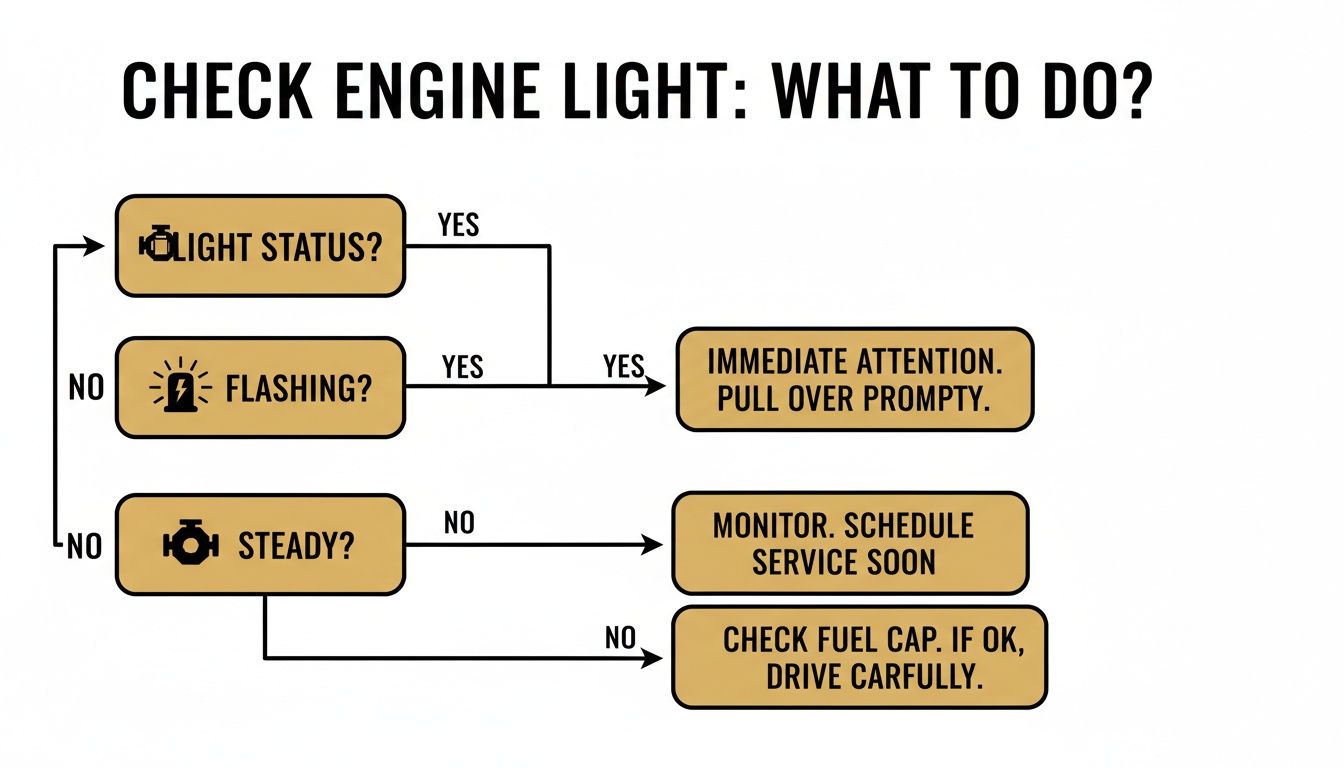
Not all check engine lights are created equal. The way it behaves is your biggest clue to how serious the problem is. A steady, solid light usually means a non-emergency issue that needs to be checked out soon. A flashing light, on the other hand, is a red alert for a major problem that requires you to pull over immediately.
To make it simple, we've put together a quick guide to help you know exactly what to do based on how the light is behaving.
Check Engine Soon Light Status: Your Immediate Next Steps
This table helps you quickly interpret the light's behavior and take the appropriate next step for your safety.
| Light Status | What It Likely Means | Recommended Action |
|---|---|---|
| Steady (Solid) | A non-urgent fault has been detected. | Your car is likely safe to drive, but you should schedule a diagnostic check as soon as possible to prevent minor issues from becoming major ones. |
| Flashing (Blinking) | A severe, critical issue is happening right now, often a major engine misfire. | Pull over and stop driving as soon as it's safe. Continuing to drive can cause catastrophic and expensive damage to your engine or catalytic converter. |
The most important thing to remember is this: a flashing light means stop driving. Now.
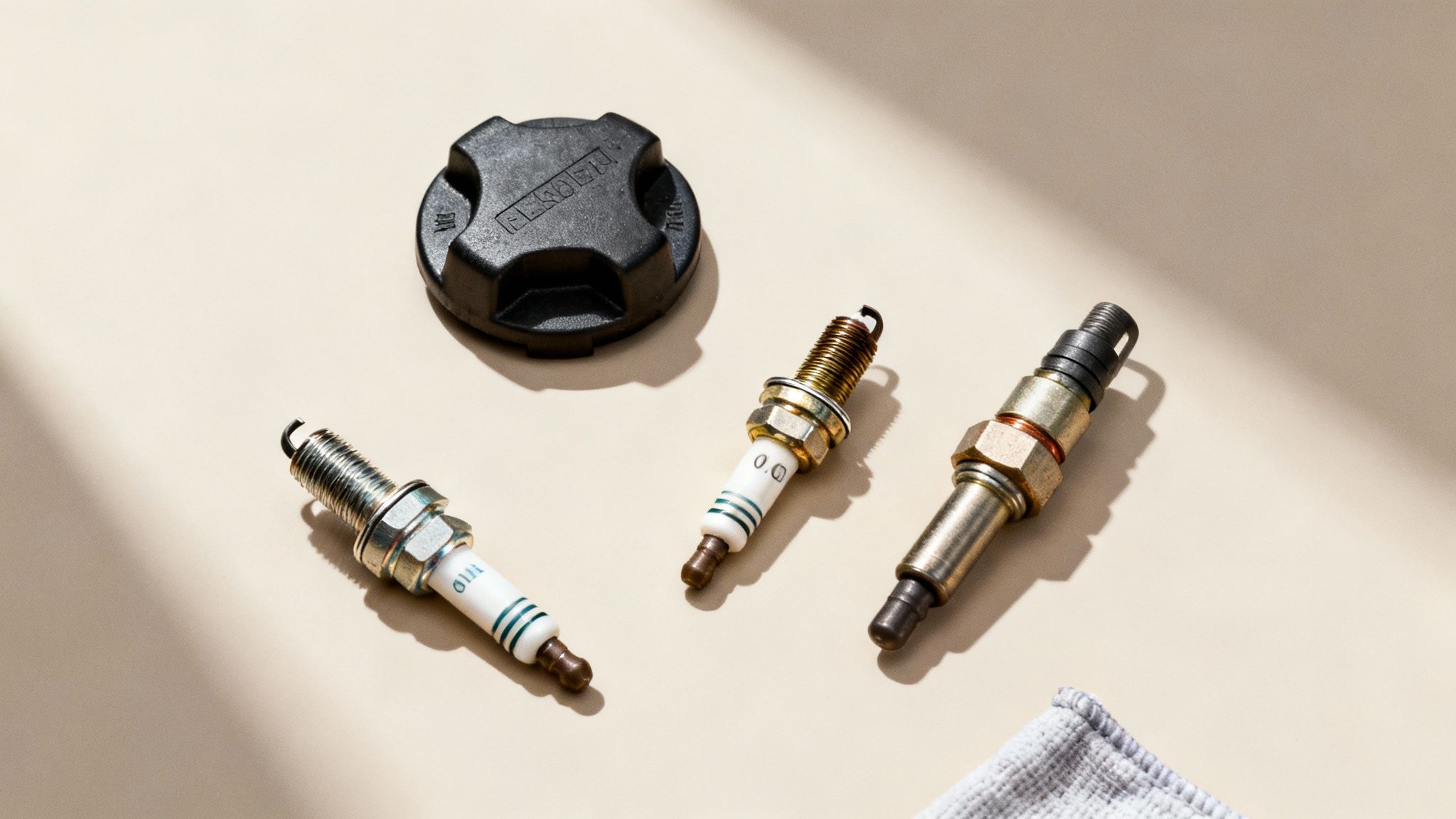
A steady light is far less alarming but shouldn't be ignored. The cause could be as simple as a loose gas cap, but it could also point to a failing oxygen sensor or worn-out spark plugs. Even if your car feels fine, letting it go can lead to worse gas mileage and much costlier repairs down the line. The best defense is a good offense, and staying on top of your vehicle's needs with our comprehensive car maintenance checklist is the surest way to prevent these warnings in the first place.
Decoding The Most Common Check Engine Light Triggers
That steady amber glow on your dashboard is your car's way of sending a message, but it doesn't always spell disaster. Often, the cause behind a check engine soon light is surprisingly simple and affordable to fix. Still, ignoring the warning is a gamble many drivers seem willing to take.

It's surprising how many people choose to just keep driving. A survey of U.S. drivers found that only 36.1% rush to a mechanic within the first week. What's more concerning is that nearly 25% never get it inspected at all, while another 29.6% wait anywhere from a month to a full year before taking action. You can dig into more of these driver habits in the full survey from Reviews.com.
Getting familiar with the most common culprits can help you gauge the seriousness of the issue and understand why a professional diagnosis is so crucial.
The Surprisingly Simple Loose Gas Cap
Believe it or not, one of the most frequent triggers is also the easiest one to fix: a loose or faulty gas cap. It’s not just a simple lid; its job is to create a perfect seal for the entire fuel system.
When that cap isn't tightened properly or its seal is cracked, fuel vapors can escape. Your car's onboard computer is sensitive enough to detect this tiny pressure leak and immediately flags it as a problem, switching on the light.
- What it does: Maintains pressure within the fuel tank and stops harmful vapors from leaking into the atmosphere.
- Urgency: Low. This isn't an emergency, but you should get it sorted out. An unsealed fuel system can cause a slight dip in your fuel efficiency.
- Quick Fix: Check that your gas cap is tight—it should click several times. If the light doesn't go off after a few more drives, the cap's rubber seal might be worn out and need replacing.
Failing Oxygen Sensor
An oxygen (O2) sensor is a critical part of your car's emissions and engine management systems. Think of it as your engine’s "nose," constantly sniffing the exhaust to measure how much unburned oxygen is passing through.
This information helps the computer fine-tune the air-to-fuel ratio for the best possible performance and efficiency. When an O2 sensor starts to fail, it sends back bad data, which usually causes the engine to burn way more fuel than it needs to.
Ignoring a failing oxygen sensor is like throwing money out the window with every mile you drive. It silently degrades your fuel economy by as much as 40%, forcing you to the pump more often while slowly damaging more expensive components over time.
Worn Spark Plugs or Faulty Ignition Coils
Spark plugs and ignition coils are the dynamic duo responsible for igniting the air-fuel mixture inside your engine's cylinders. A spark plug delivers the actual spark, and the ignition coil provides the high-voltage juice it needs to do its job.
Over time, spark plugs wear out and ignition coils can fail. When this happens, they can’t create a strong enough spark, which leads to an engine misfire—that’s when a cylinder fails to fire correctly. This not only robs you of power and fuel economy but can also dump unburned fuel into the exhaust system, putting your catalytic converter at serious risk.
Failing Catalytic Converter
The catalytic converter is one of the most important—and expensive—parts of your entire exhaust system. Its job is to convert harmful pollutants like carbon monoxide into much less harmful gases before they ever leave your tailpipe.
It’s built to last the life of the vehicle, but it can fail prematurely if other engine issues are ignored. For instance, a continuous engine misfire from bad spark plugs sends raw, unburned fuel straight into the converter. This causes it to overheat and literally melt down internally, creating a blockage that suffocates your engine and kills its performance.
How Professionals Pinpoint the Real Problem
When your check engine soon light pops on, it’s your car’s way of sending out an S.O.S. It logs a secret message in its onboard computer, and a professional technician's first job is to act as a codebreaker, using specialized tools to read it. This process is much more sophisticated than what a basic, off-the-shelf scanner can pull off.
Our technicians plug an advanced On-Board Diagnostics (OBD-II) scanner directly into your car’s port. This powerful device retrieves one or more Diagnostic Trouble Codes (DTCs) that your car’s computer has flagged. But think of a DTC not as a final answer, but as a single, crucial clue in a larger automotive mystery.
That clue points them in the right direction, saving valuable time and preventing a lot of unnecessary guesswork.
Why a Code Is Just the Starting Point
A common mistake is thinking a trouble code points directly to a broken part. If only it were that simple! In reality, a DTC tells a technician which system is having a problem, but it doesn't explain why it's happening.
Let's take a real-world example. A code like P0420 signals an issue with "Catalyst System Efficiency Below Threshold." A cheap scanner might lead you to believe you need a new, very expensive catalytic converter.
But an experienced technician knows better. They know the P0420 code could be triggered by several completely different underlying issues:
- A failing oxygen sensor sending bad data to the computer.
- An exhaust leak somewhere before the catalytic converter.
- Worn-out spark plugs that cause unburned fuel to overheat the converter.
- Or, yes, the catalytic converter itself might actually be failing.
Just replacing the converter without finding the root cause is a recipe for disaster—and wasted money. The new part would just fail again for the exact same reason the old one did.
The real value of a professional diagnosis isn't just reading a code; it's interpreting the story that code is trying to tell. Technicians combine the DTC with hands-on inspections, live data analysis, and deep system knowledge to deliver an accurate diagnosis.
The Technician’s Diagnostic Process
Pinpointing the exact fault is a methodical process that blends technology with hard-earned expertise. After pulling the DTC, a Kwik Kar technician will typically run a series of targeted tests to confirm what's really going on under the hood.
This investigative work is what separates professional service from DIY guesswork. It’s what ensures you only pay for the repairs your vehicle actually needs.
Whether you're dealing with a simple sensor or need more complex diagnostics, our expert team provides comprehensive engine repair services to get to the bottom of any problem. This careful process is the key to an effective, lasting repair that turns off your check engine light for good.
Understanding Potential Repair Costs and Timelines
Let's get right to it and answer the one question every driver has when that little amber light pops on: "How much is this going to set me back?" The truth is, fixing a check engine soon light issue can range from a free, five-second fix to a much bigger investment.
Getting a handle on these potential costs and timelines helps you know what to expect and really drives home the value of acting quickly.
The financial side of these repairs is becoming more significant. As cars get smarter and emissions standards get tighter, the whole industry around check engine light diagnostics is growing. Projections show it jumping from $1,345.31 million in 2021 to an estimated $5.9 billion by 2033. You can dive deeper into these industry trends and what they mean for drivers by checking out this detailed service engine light report.
This growth just proves how important professional diagnostics are to avoid throwing money away on the wrong fixes.
The High Cost of Procrastination
Ignoring a steady check engine light is like seeing a small leak in your roof and just putting a bucket under it. At first, it’s a minor hassle. But over time, that small drip can lead to thousands of dollars in water damage, rotted wood, and mold. Your car works the exact same way.
A classic example is the relationship between an oxygen sensor and a catalytic converter. A failing oxygen sensor is a pretty manageable fix, usually costing somewhere between $150 and $250. But if you let it go, that bad sensor feeds the wrong info to your car's computer, making it run a fuel mixture that's way too rich.
All that unburned fuel gets dumped into the exhaust system, where it basically cooks and destroys the catalytic converter. Suddenly, that initial $200 problem has ballooned into a repair that can easily top $1,500. Acting fast saves money. It's that simple.
The smartest financial decision you can make when your check engine light comes on is to get it diagnosed promptly. A small investment in a diagnostic check today can prevent a major, wallet-draining repair tomorrow.
Common Check Engine Light Repairs Estimated Cost and Urgency
To give you a clearer picture, we've laid out some of the most common check engine light culprits, what they typically cost to fix, and how urgently they need your attention. Just remember, these are estimates. The final price tag will always depend on your specific car and the labor involved.
Here’s a quick breakdown to help you understand what you might be looking at.
Common Check Engine Light Repairs Estimated Cost and Urgency
| Common Cause | Estimated Repair Cost Range | Repair Urgency |
|---|---|---|
| Loose or Faulty Gas Cap | $0 – $25 | Low – Check it yourself first, but don't ignore it if the light stays on. |
| Failing Oxygen (O2) Sensor | $150 – $250 | Medium – Address soon to prevent poor fuel economy and catalytic converter damage. |
| Worn Spark Plugs & Wires | $200 – $400 | Medium – Worn plugs can lead to misfires, damaging the catalytic converter. |
| Faulty Mass Airflow Sensor | $250 – $450 | Medium – A bad MAF sensor hurts performance and can damage other components. |
| Failing Catalytic Converter | $1,000 – $2,500+ | High – Often the result of ignoring smaller issues. Requires immediate attention. |
As you can see, the cheapest repairs are often the very ones that, if ignored, lead directly to the most expensive ones. This table makes it pretty clear why getting a quick, professional diagnosis is always the most cost-effective way forward.
Proactive Maintenance to Keep the Light Off
The best way to handle a check engine soon light? Never see it in the first place. While a repair fixes an immediate problem, proactive maintenance is your number one defense against those surprise warnings popping up on your dash. If you stay ahead of your car's needs, you can easily prevent the common wear and tear that triggers most alerts.
Think of it like this: you don’t wait for a cavity to start brushing your teeth. That same logic applies perfectly to your car. Simple, consistent care is far more effective—and a whole lot cheaper—than waiting around for a critical part to fail. Regular service directly targets the root causes behind many of those frustrating diagnostic trouble codes.
Your Go-To Maintenance Checklist
Keeping your engine healthy and happy doesn't involve complex, time-consuming procedures. It’s all about consistently performing a few key services that make a massive difference in your car's long-term reliability and performance. Sticking to a schedule prevents those minor issues from snowballing into the kind of costly failures that switch that light on.
This simple checklist can help you steer clear of some of the most common problems we see every day at the shop:
- Regular Oil Changes: Clean oil is the lifeblood of your engine, period. It lubricates all the moving parts and stops sludge from building up, which can clog vital passages and mess with sensors, leading straight to performance-related codes.
- Timely Spark Plug Replacement: Worn-out spark plugs are a leading cause of engine misfires. This doesn't just kill your power and fuel efficiency; it can dump unburned fuel into the exhaust system and completely destroy the catalytic converter—one of the single most expensive repairs you can face.
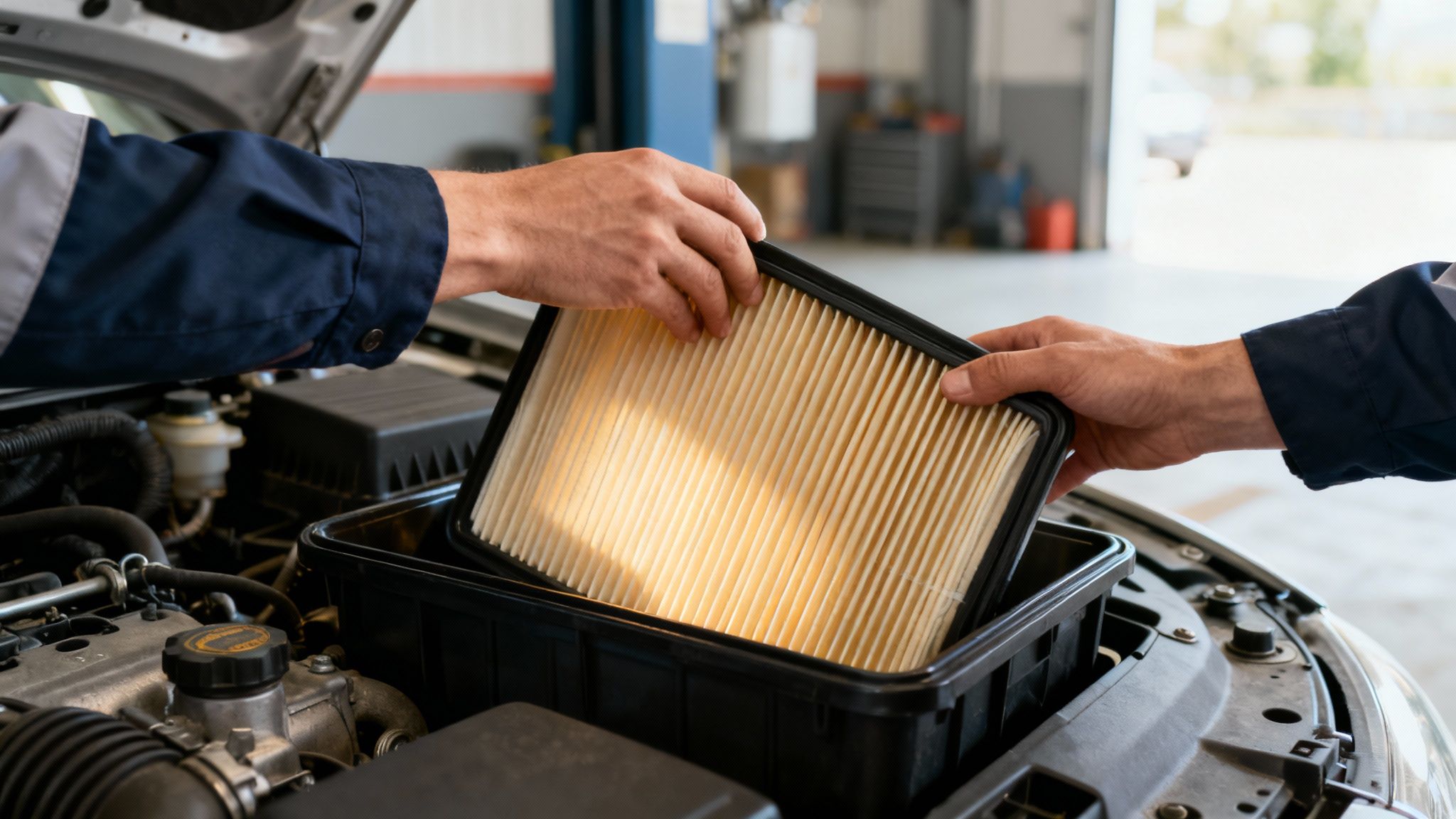
- Air Filter Inspection: A dirty, clogged engine air filter literally chokes your engine, restricting airflow. This forces it to work much harder and throws off the delicate air-fuel mixture, which can easily trigger sensors and tank your gas mileage. To learn more, check out our guide on how often to change your car air filter.
Proactive maintenance is not an expense; it’s an investment in your vehicle’s future. By spending a little on routine care today, you save yourself from the stress and high costs of emergency repairs tomorrow.
Ultimately, taking this approach changes your relationship with your vehicle. Instead of just reacting to problems, you start building reliability. A well-maintained car is a dependable car, and that gives you the peace of mind you deserve every time you get behind the wheel.
Your Local Solution for Check Engine Soon Light Diagnostics
Knowing what that little check engine soon light means is half the battle, but taking the right action is what really protects your car and your budget. After running through all the potential causes and costs, the next step becomes much clearer. A flashing light is a full-blown emergency telling you to pull over now. A steady light? That's your car's firm request to get a professional diagnosis, and soon.
Grabbing a DIY code reader from the auto parts store might seem like a quick fix. The trouble is, it often gives you just one piece of a much bigger puzzle. This can easily lead you down the wrong path, replacing parts that didn't need replacing and wasting money. Real peace of mind comes from an accurate diagnosis by experts who can read the code and understand the full story behind it.
Your Trusted Partner in Dallas
When that light pops on, you need a local partner you can count on. Here at Kwik Kar, we're staffed with ASE-certified technicians who use modern diagnostic tools to get to the root of the problem, fast. We know what Dallas drivers need—whether you're just trying to pass your Texas state inspection or you want to make sure your car is safe for the daily commute.
It's always a good idea to understand how local auto repair shops and dealerships work when you're looking for a reliable solution. We make a point of giving you clear explanations and transparent service, so you're never left wondering about your vehicle's health.
Don't let a small warning light snowball into a major headache. An expert diagnosis is the quickest and most cost-effective way to get back on the road with confidence, knowing the real issue was fixed right the first time.
Our convenient hours and commitment to quality make scheduling an appointment a simple, stress-free next step. We're here to turn that light off for good and get your car running its best with a professional repair you can trust.
Common Questions About That Pesky Check Engine Light
That little light on your dash can cause a lot of confusion and a little bit of dread. We hear the same questions from drivers all the time, so let's clear up some of the mystery right now.
Is It Safe to Keep Driving?
This is the big one, and the answer depends entirely on how the light is behaving.
If the light is steady and the car feels normal, you're generally okay to continue driving to a safe spot, like your home or directly to our shop. It's the car's way of saying, "Hey, there's a minor issue here that needs attention, but it's not a full-blown emergency."
However, a flashing light is a totally different story. This signals a serious problem, often an engine misfire that's dumping unburnt fuel into your exhaust system. You need to pull over as soon as it's safe and turn off the engine to prevent expensive, sometimes catastrophic, damage to your catalytic converter.
Can I Pass a Texas State Inspection With the Light On?
The short answer is no. Here in Texas, an illuminated check engine soon light is an automatic failure of the emissions part of the state inspection. The issue causing the light has to be properly diagnosed and repaired by a professional before your vehicle can get a passing grade.
Don't be tempted to just clear the code and hope for the best. The car's computer is smart; it will run its checks again, re-detect the fault, and that light will pop right back on—guaranteeing another failed inspection. You have to fix the root cause.
Will Disconnecting the Battery Turn It Off?
Yes, disconnecting the battery might make the light go away temporarily, but it's a really bad idea. Doing this erases the diagnostic trouble codes—the valuable data our technicians need to figure out exactly what's wrong.
The light will almost certainly come back on once the car's computer system re-detects the problem anyway. You'll be right back where you started, but you'll have made the diagnostic process harder.
Don't let a warning light on your dashboard add stress to your day. The expert team at Kwik Kar Oil Change and Auto Care has the advanced diagnostic tools to get an accurate read on the problem and recommend a reliable repair. Schedule your diagnostic appointment online today!