



When you opt for a synthetic blend oil change, you're choosing a motor oil that mixes conventional and synthetic base oils. The result? Better engine protection than conventional oil, but at a more wallet-friendly price than going full synthetic. Think of it as hitting the sweet spot between performance and value. This upgrade is a smart move, especially for more modern vehicles and anyone who puts their car through demanding driving conditions.
What Exactly Is Synthetic Blend Oil?
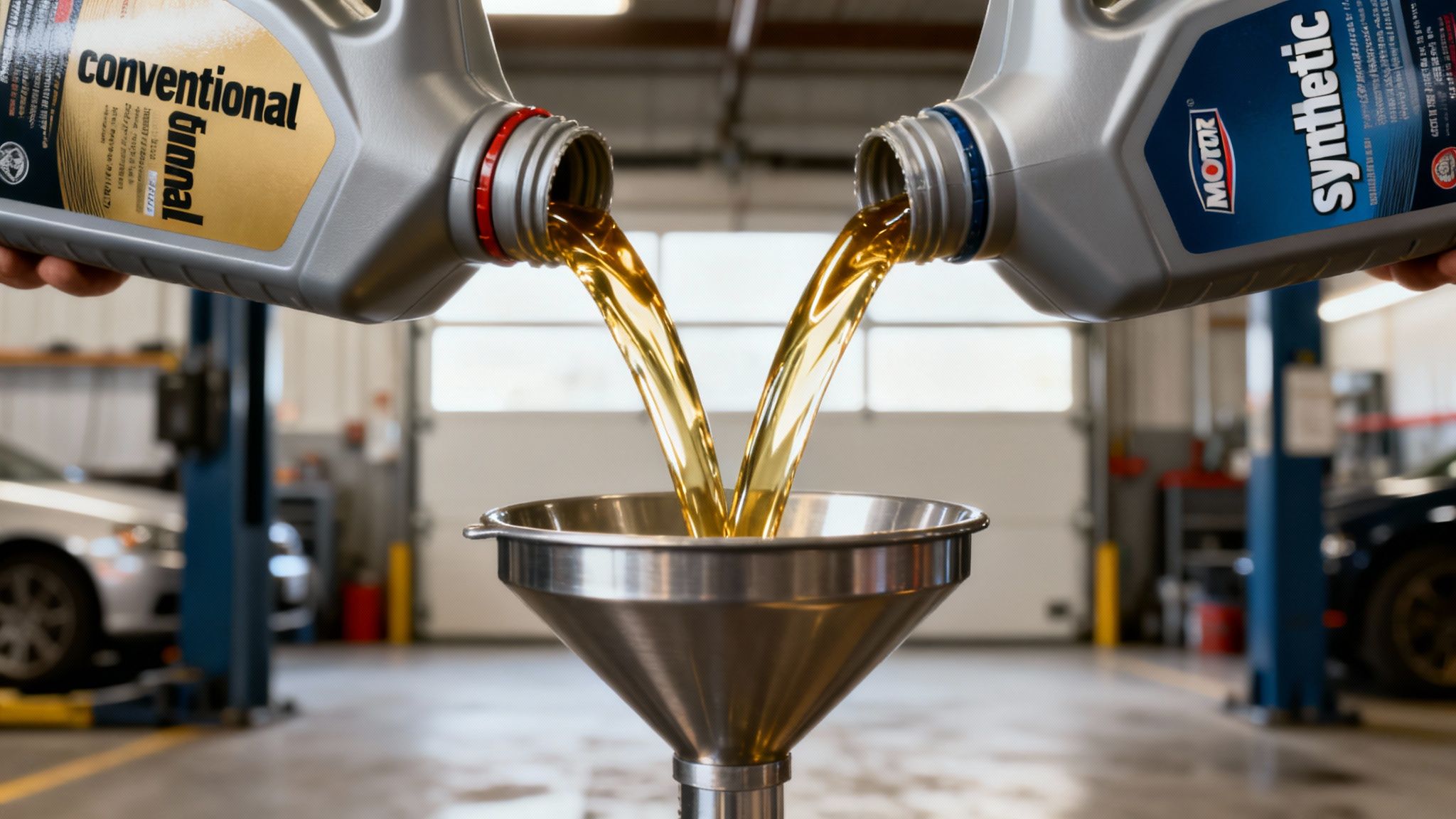
To really get what synthetic blend oil is, imagine mixing a classic cup of drip coffee with a potent shot of espresso. You still get that familiar, reliable coffee base, but now it has an extra kick of performance and flavor. A synthetic blend oil change does something pretty similar for your engine.
It all starts with a foundation of conventional mineral oil, the kind that’s refined straight from crude petroleum. On its own, this oil does a basic job of lubricating your engine. But the real magic happens when oil chemists blend in high-performance synthetic base stocks along with a package of advanced additives. This process creates a powerful, hybrid fluid that gives your engine more than just the basics.
The Best of Both Worlds
This clever combination gives you many of the benefits you’d find in a full synthetic oil, just at a more approachable price. The synthetic components dramatically improve the oil's ability to resist breaking down under high heat and do a much better job preventing harmful engine sludge from forming.
That enhanced stability is a huge deal for Dallas drivers who are constantly dealing with stop-and-go traffic on the I-635 or just trying to survive our blistering summer temperatures. Those conditions put a massive amount of stress on an engine. A synthetic blend provides that extra layer of defense needed to keep all the moving parts properly lubricated and running cool.
A synthetic blend oil change is a crucial upgrade from conventional oil. It delivers improved wear protection, performs better in extreme temperatures, and fights off sludge buildup. It’s simply the smart, high-value choice for keeping your engine healthy.
A Growing Market Trend
The power of this formulation isn't just a secret among mechanics; it's a major trend across the entire industry. The global synthetic lubricants market is on track to grow to USD 23.4 billion by 2030, a surge driven by the demand for better temperature control and heat resistance.
Within that huge market, motor oils are the dominant slice of the pie, and synthetic blends are expected to make up a massive 43.6% of that segment by 2025. This isn't just a fad—it's the future of engine maintenance. You can dig into more of the data on this industry shift over at GrandViewResearch.com.
Comparing Synthetic Blend to Other Oil Types
Picking the right motor oil for your car can feel overwhelming, but it gets a lot simpler when you line up the main options side-by-side. Synthetic blend oil holds a unique and valuable spot right between its two famous cousins: conventional and full synthetic. Figuring out these differences is the key to making a smart choice for your next oil change.
Each type of oil is built to handle different performance needs and fit different budgets. Think of conventional oil as the standard, entry-level option, while full synthetic is the premium, top-shelf choice. A synthetic blend oil change offers a brilliant compromise, giving you a major upgrade from conventional without the premium price tag of a full synthetic.
Oil Type Comparison Chart
To make things even clearer, let's break down how these three oils stack up against each other across the most important categories. This chart gives you a quick, at-a-glance view of the pros and cons of each.
| Feature | Conventional Oil | Synthetic Blend Oil | Full Synthetic Oil |
|---|---|---|---|
| Base Material | Refined crude oil | Mix of conventional and synthetic | Chemically engineered |
| Performance | Basic protection | Enhanced protection | Maximum performance |
| Temperature Stability | Poor | Good | Excellent |
| Sludge Prevention | Basic | Better | Superior |
| Service Interval | 3,000-5,000 miles | 5,000-7,500 miles | 7,500-10,000+ miles |
| Cost | $ | $$ | $$$ |
As you can see, the synthetic blend really does hit that sweet spot, offering a balanced profile of performance, longevity, and cost that works for a huge range of vehicles.
Conventional Oil: The Traditional Choice
Conventional motor oil is the original formula, refined directly from crude petroleum. It provides the basic lubrication and protection needed for older vehicles or cars with very simple, low-stress engine designs. For decades, it was the go-to standard and is still the most wallet-friendly option on the shelf.
But its weaknesses show up quickly under pressure. Conventional oil breaks down much faster at high temperatures—a common problem in Dallas traffic—and can get thick and sludgy in cold weather, making it harder for your engine to start. Its natural impurities also mean it’s more likely to form harmful deposits that can clog up your engine. Because it degrades so fast, it needs to be changed more often, usually every 3,000 to 5,000 miles.
Full Synthetic Oil: The Performance Leader
On the other end of the spectrum, you have full synthetic oil. This isn't just refined oil; it's chemically engineered in a lab to deliver the absolute highest levels of purity and performance. Its molecules are perfectly uniform in size and shape, which slashes friction and provides incredible protection against engine wear.
Full synthetic oil is the champion in every category. It holds its viscosity across extreme hot and cold temperatures, resists thermal breakdown for far longer than other oils, and is packed with powerful detergents that actively clean your engine as you drive. This makes it the only real choice for high-performance cars, vehicles with turbocharged engines, and any driver who wants the best protection money can buy. Its superior formula also allows for much longer oil change intervals, often 7,500 to 10,000 miles or even more.
A synthetic blend provides a balanced solution, offering many of the protective benefits of full synthetic oil—like better temperature stability and resistance to breakdown—at a price point that is much closer to conventional oil.
Finding the Sweet Spot with Synthetic Blend
This is exactly where synthetic blend oil shines. By mixing conventional and synthetic base oils, it creates a product that’s truly greater than the sum of its parts. You get a serious boost in performance and protection compared to what conventional oil can offer. If you want to dig deeper into the science, check out our guide comparing synthetic vs. conventional oil.
A synthetic blend handles heat better, fights off sludge more effectively, and lasts longer in your engine. That means you can stretch your oil change intervals to between 5,000 and 7,500 miles. This balanced, do-it-all profile makes it a fantastic and cost-effective upgrade for the vast majority of modern sedans, SUVs, and light trucks you see on the road today.
The Real-World Benefits of a Synthetic Blend

Choosing a synthetic blend oil change is more than just a small step up from conventional oil. Think of it as a strategic investment in your engine’s health and future. The advantages really hit home when you consider the driving conditions we all face here in Dallas—from bumper-to-bumper traffic on the Central Expressway to the relentless heat of a Texas summer.
These benefits aren't just technical jargon. They translate directly into better performance, less worry, and real long-term value for you and your vehicle. By mixing the best parts of both conventional and full synthetic oils, a blend creates a tougher, more effective lubricant that’s built for modern driving. It means your engine is simply better equipped to handle stress, giving you a smoother and more reliable ride.
Superior Engine Protection and Cleanliness
One of the biggest wins with a synthetic blend is its ability to resist breaking down under high heat. Imagine conventional oil like butter in a hot pan; it thins out and loses its protective qualities pretty quickly. A synthetic blend, on the other hand, is much more stable. It holds its protective film on crucial engine parts, even during intense stop-and-go driving.
This stability drastically cuts down on wear and tear on critical components like your pistons and bearings.
Plus, these blends are packed with advanced detergents that actively fight the buildup of sludge and varnish. These nasty deposits can clog up the narrow passages your oil needs to flow through, starving parts of lubrication and leading to expensive—or even catastrophic—engine failure.
A synthetic blend keeps your engine cleaner, which directly helps with:
- Improved Efficiency: A clean engine has less friction, helping you maintain better fuel economy over time.
- Reduced Wear: No sludge means consistent lubrication and better protection for all those moving parts.
- Longer Engine Life: It’s simple—a cleaner, well-lubricated engine is an engine that lasts longer.
The real value of a synthetic blend oil change is its power to defend against heat, wear, and sludge. This proactive protection is crucial for extending the life of your engine and avoiding costly repairs down the road.
This balanced performance is exactly why synthetic blends are becoming the go-to choice for so many drivers. In fact, industry reports show that synthetic blends are on track to capture a massive 43.6% share of the global motor oil market by 2025. That growth is all thanks to their exceptional engine cleanliness, wear protection, and thermal stability. You can dive deeper into these trends over at Coherent Market Insights.
Better Performance in Extreme Temperatures
Dallas weather can throw anything at us. We get chilly winter mornings and absolutely scorching summer afternoons, and your motor oil has to perform perfectly through it all. Compared to conventional oil, a synthetic blend offers far better control over its thickness, or viscosity, across this wide temperature range.
On a cold start, it flows more easily, getting to vital engine parts almost instantly. This helps prevent that grinding, metal-on-metal wear that happens in the first few seconds after you turn the key.
On the flip side, during a summer heatwave, it resists thinning out, ensuring a strong, consistent protective layer when your engine is working its hardest. This stability means you get reliable performance all year long, giving you confidence every time you start your car.
Is a Synthetic Blend Oil Change Right for Your Car?
Deciding if a synthetic blend is the best call for your vehicle really boils down to three things: your car, your driving habits, and your budget. This isn't just about grabbing a bottle off the shelf; it's about matching the right level of engine protection to what you actually need. The goal is to hit that perfect balance between performance and value.
For a huge range of modern vehicles, a synthetic blend is an excellent choice. If you're driving a contemporary sedan, SUV, or light-duty truck, this oil probably lands right in the sweet spot. It’s engineered for drivers who want a serious upgrade from conventional oil but aren't quite ready to shell out for a full synthetic.
Identifying Ideal Vehicle and Driving Scenarios
This type of oil really proves its worth in common, everyday driving situations. It gives you robust protection for the grind of a daily Dallas commute, the occasional long-haul road trip, and even light towing. That enhanced formula provides a safety net that old-school conventional oil just can't offer when the engine is working under these moderate to heavy loads.
Think about these scenarios where a synthetic blend is a perfect fit:
- Modern Engines: Cars and trucks from the last 10-15 years have more complex engine designs. They benefit immensely from the improved protection against sludge and wear that a blend provides.
- Stop-and-Go Traffic: If your daily drive is a series of red lights and traffic jams, the superior thermal stability of a blend helps shield your engine from that constant stress.
- Variable Weather Conditions: A blend's ability to perform reliably, from cold morning starts to blistering summer heat, makes it ideal for the wild Texas climate.
Why Modern Engines Need More Protection
Today’s engines, especially those with turbochargers or Gasoline Direct Injection (GDI), run a lot hotter and operate under much higher pressures than older designs. These conditions are brutal on motor oil, causing it to break down much faster. Conventional oil often just can't keep up in these demanding environments.
The most important first step is always to crack open your vehicle's owner's manual. The manufacturer lays out the specific oil type and viscosity grade (like 5W-30) that were engineered to keep your engine healthy for the long haul.
A synthetic blend delivers that extra resistance to heat breakdown and deposit formation that these modern engines demand. In fact, research shows that synthetic blends give you many of the key advantages of full synthetics at a much friendlier price point. You get superior cold-crank starts, better viscosity control, and top-notch oxidation resistance for 30-50% less than premium full synthetic options.
This makes a synthetic blend oil change a smart, cost-effective upgrade for anyone with a turbo-GDI or hybrid vehicle. You can learn more about the growing demand in the synthetic blend oil market forecast here.
Ultimately, if your owner's manual gives the green light and you're looking for better engine protection that won't break the bank, a synthetic blend is an outstanding choice. It provides the advanced defense your engine needs to run smoothly for years to come.
Your Synthetic Blend Service at Kwik Kar Dallas
When you swing by a Kwik Kar in Dallas for a synthetic blend oil change, you're getting a whole lot more than just fresh oil. You’re getting a quick, professional service that’s built around your schedule and what your car actually needs. We’ve fine-tuned our process to be all about quality, honesty, and getting you back on the road without a fuss.
Our ASE-certified technicians are the heart of our operation. They don’t just perform a simple drain-and-fill; they understand the unique stress that Dallas driving—from stop-and-go traffic to highway speeds—puts on an engine. We only use high-quality synthetic blend oils and premium filters that meet or beat your manufacturer’s specs. It's our promise that your engine gets the protection it deserves.
We get it, your time is valuable. That’s why we’re open seven days a week, making it easy to fit in maintenance when it works for you.
What to Expect During Your Visit
From the second you pull in, our goal is to make the experience totally straightforward. No hidden fees, no confusing jargon, and no high-pressure upsells. We give you clear, upfront pricing on all our oil change packages and always have specials running to make sure you get the best value possible.
Our synthetic blend service includes:
- An Expert Consultation: We'll chat with you to make sure a synthetic blend is the perfect fit for your specific car and how you drive.
- Premium Oil and a New Filter: We use only top-tier synthetic blend oil and replace your old filter with a new, high-quality one.
- A Comprehensive Check-Up: Our technicians also perform a multi-point inspection to look over other vital fluids and key components, just to be safe.
This flowchart can help you see if your vehicle is a good candidate for a synthetic blend.
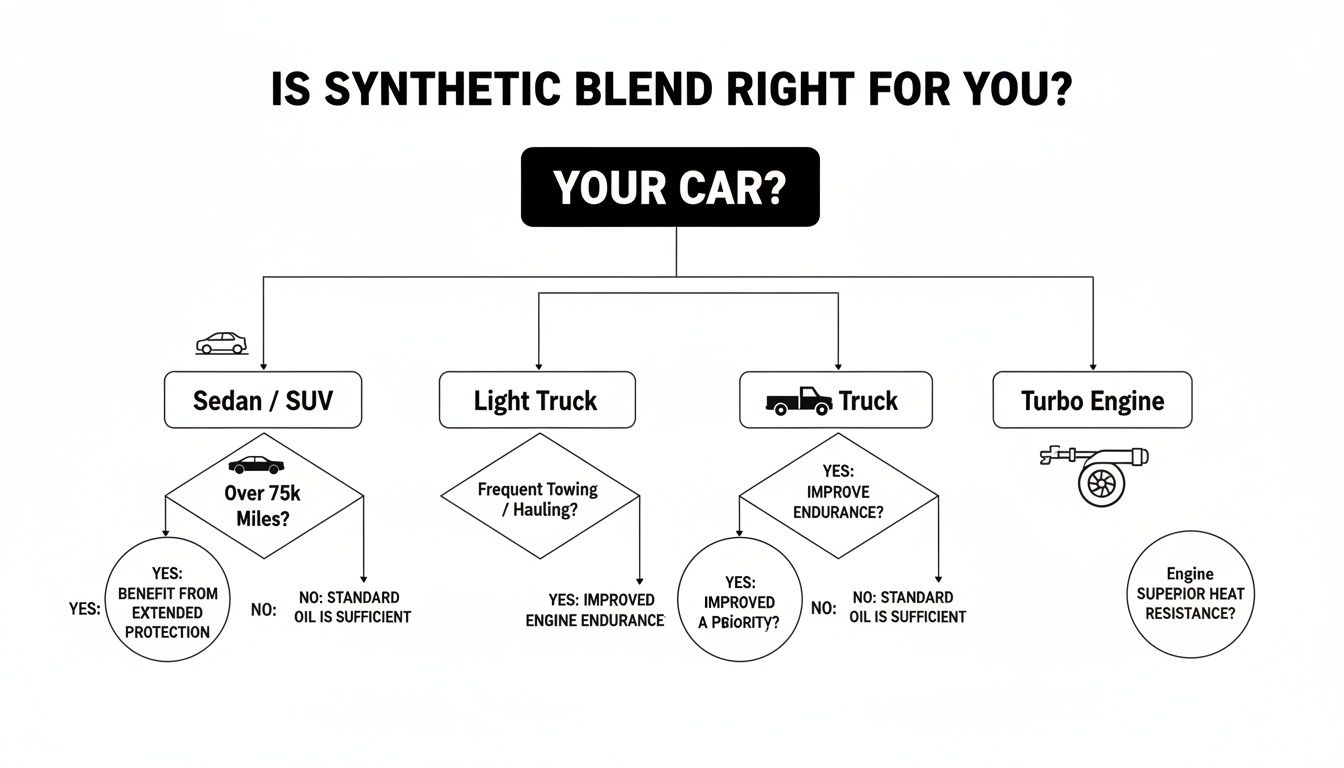
As you can see, modern sedans, most SUVs, light trucks, and especially vehicles with turbo engines are all prime candidates to benefit from an upgrade to synthetic blend oil.
Fleet Services for Dallas Businesses
For our local business clients, we offer custom maintenance programs designed to keep your entire fleet of vehicles in top shape. Switching your fleet to a synthetic blend oil change schedule can seriously cut down on operating costs by pushing service intervals further apart and preventing long-term engine wear. It's a proactive move that keeps your vehicles on the road and protects your bottom line.
Whether you need a standard Kwik Kar oil change for a single vehicle or a comprehensive plan for your whole fleet, we’ve got your back.
Common Questions About Synthetic Blend Oil
Deciding to try a new kind of motor oil naturally brings up a few questions. We get it. To help you feel completely confident in your choice, we’ve put together some clear, straightforward answers to the questions we hear most often from Dallas drivers about synthetic blend oil changes.
Our goal is to give you all the info you need to make the best call for your car's long-term health. Let's get into the details that really matter.
How Often Should I Get a Synthetic Blend Oil Change?
This is probably the most important question we hear, and for good reason. One of the biggest perks of upgrading to a synthetic blend is stretching the time between services. While you’re probably used to changing conventional oil every 3,000 to 5,000 miles, a synthetic blend is built to go the distance.
Most car manufacturers recommend a synthetic blend oil change every 5,000 to 7,500 miles. Why the extra mileage? The synthetic components in the blend are much better at resisting breakdown, so they keep their protective qualities far longer than basic conventional oil. For a deeper dive, check out our guide on the ideal synthetic oil change interval.
Of course, your owner’s manual is always the final word, so be sure to give it a look for your car’s specific needs.
Can I Switch From Conventional Oil to a Synthetic Blend?
Absolutely! Making the switch from conventional to a synthetic blend is not only perfectly safe, but it's also a great move for your engine's health. You don't need any special flushing or complicated prep work. Just ask for a synthetic blend at your next oil change.
Think of it as upgrading your engine's diet. You're moving from a basic, functional meal to one that's enriched with better ingredients for improved health and longevity. Your engine will thank you with better performance and protection.
The advanced additives and higher-quality base oils in a synthetic blend get to work immediately, providing much better defense against heat, friction, and nasty sludge buildup. It’s one of the easiest and most cost-effective upgrades you can make for your vehicle.
Is a Synthetic Blend Really Worth the Extra Cost?
A synthetic blend oil change does cost a little more than a conventional one—usually somewhere between $40 and $70—but it delivers real value that more than makes up for the price difference. The payoff comes from two key places: better engine protection and longer service intervals.
The superior defense against engine wear and sludge can help you sidestep expensive repairs down the road. Plus, since you can go longer between oil changes, you’ll be making fewer trips to the shop each year. When you crunch the numbers, the cost-per-mile is often very competitive with conventional oil, all while giving your engine far superior protection.
What Brands of Synthetic Blend Oil Does Kwik Kar Offer?
Here at Kwik Kar, we're committed to using only high-quality, trusted products that meet or exceed what your car’s manufacturer specifies. We stock a variety of top-tier synthetic blend oils from leading brands known for their reliability and performance. Our expert technicians will help you pick the exact oil that's perfectly matched to your vehicle’s make, model, and engine, ensuring you get the best protection possible.
Ready to give your engine the balanced protection it deserves? The expert team at Kwik Kar Oil Change and Auto Care is here to help. Schedule your synthetic blend oil change today and experience the difference quality service makes. https://www.kwikkarspringvalley.com