



Keeping your vehicle's engine running smoothly is a non-negotiable part of car ownership, especially when navigating Dallas's demanding stop-and-go traffic and fluctuating seasonal temperatures. But when you pull into the service bay, the menu of options can be confusing. Understanding the different types of oil change is crucial for making the right choice for your car's health and your wallet. Is a basic conventional oil change sufficient for your daily commute on the Dallas North Tollway, or does your high-performance vehicle require the superior protection of a full synthetic oil?
This comprehensive guide is designed to eliminate the guesswork. We will break down the most common oil change services available, from budget-friendly conventional options to specialized high-mileage and robust diesel formulas. For each type, we’ll clearly outline the pros and cons, recommended service intervals, and typical costs, empowering you to make a confident, informed decision. By matching the right service to your specific vehicle and driving habits, you can significantly extend your engine's life, boost performance, and ensure your car is ready for any Texas road. Let's dive into the specifics so you can choose the perfect service during your next Kwik Kar visit.
1. Conventional Oil Change
A conventional oil change is the traditional, most fundamental type of vehicle maintenance service. It utilizes motor oil refined directly from crude petroleum, featuring a blend of base oils and additives designed to lubricate, cool, and clean your engine’s internal components under normal operating conditions. This has been the standard for decades, offering reliable performance at the most affordable price point.
Who is it for?
This service is an excellent, budget-friendly choice for a specific range of vehicles and driving habits. It's often the manufacturer-recommended option for older cars, particularly those built before the widespread adoption of advanced, high-performance engines.
Consider a conventional oil change if you:
- Drive an older vehicle, typically with a less complex engine design.
- Have a low-mileage driving routine with a moderate commute, like many Dallas residents.
- Are a budget-conscious driver looking for the lowest upfront cost for routine maintenance.
- Follow a consistent maintenance schedule and prefer more frequent check-ins with your mechanic.
Key Considerations and Recommendations
While effective, conventional oil has a shorter lifespan than its synthetic counterparts due to its natural composition, which breaks down more quickly under high heat and stress.
Kwik Kar Tip: For optimal engine health, we recommend a conventional oil change every 3,000 to 5,000 miles. Sticking to this interval is crucial for preventing sludge buildup and ensuring your engine receives consistent protection.
To maximize the value of your service, combine it with a tire rotation. This bundled approach not only saves you a trip but also addresses two critical maintenance needs at once, keeping your vehicle safe and reliable. If you're unsure whether this is the right choice versus a synthetic option, you can learn more about the differences between synthetic and conventional oil to make an informed decision for your car.
2. Synthetic Oil Change
A synthetic oil change is a premium service that uses motor oil engineered in a lab rather than refined directly from crude oil. This process results in purer, more uniform molecules that provide superior performance, enhanced engine protection, and greater stability across a wide range of temperatures. It's designed to resist breakdown, reduce deposits, and flow better in both cold starts and high-heat conditions, making it the top choice for modern and high-performance engines.
Who is it for?
This service is ideal for drivers who demand the highest level of performance and longevity from their vehicles. It is often the required standard for newer, more technologically advanced engines, particularly those with turbochargers or direct-injection systems.
Consider a synthetic oil change if you:
- Drive a modern vehicle, especially one manufactured after 2010.
- Own a high-performance, luxury, or European car (like BMW, Mercedes, or Audi).
- Frequently drive in extreme Dallas heat or engage in stop-and-go city traffic.
- Want to maximize the time between oil changes without sacrificing engine protection.
Key Considerations and Recommendations
While a synthetic oil change has a higher upfront cost, it offers long-term value through extended service intervals and superior engine preservation. The chemically engineered base oils provide exceptional resistance to thermal breakdown, preventing the formation of harmful sludge and keeping critical engine parts cleaner for longer.
Kwik Kar Tip: For vehicles using full synthetic oil, we recommend an oil change every 7,500 to 10,000 miles, though you should always consult your vehicle’s manual. This extended interval makes synthetic a convenient and cost-effective option over the life of your vehicle.
To get the most out of your premium service, pair it with a high-quality oil filter designed for synthetic oil longevity. This combination ensures your engine receives the cleanest possible oil for the entire duration of the service interval. Ask our technicians about available synthetic oil specials to get the best performance for the best value.
3. Synthetic Blend Oil Change
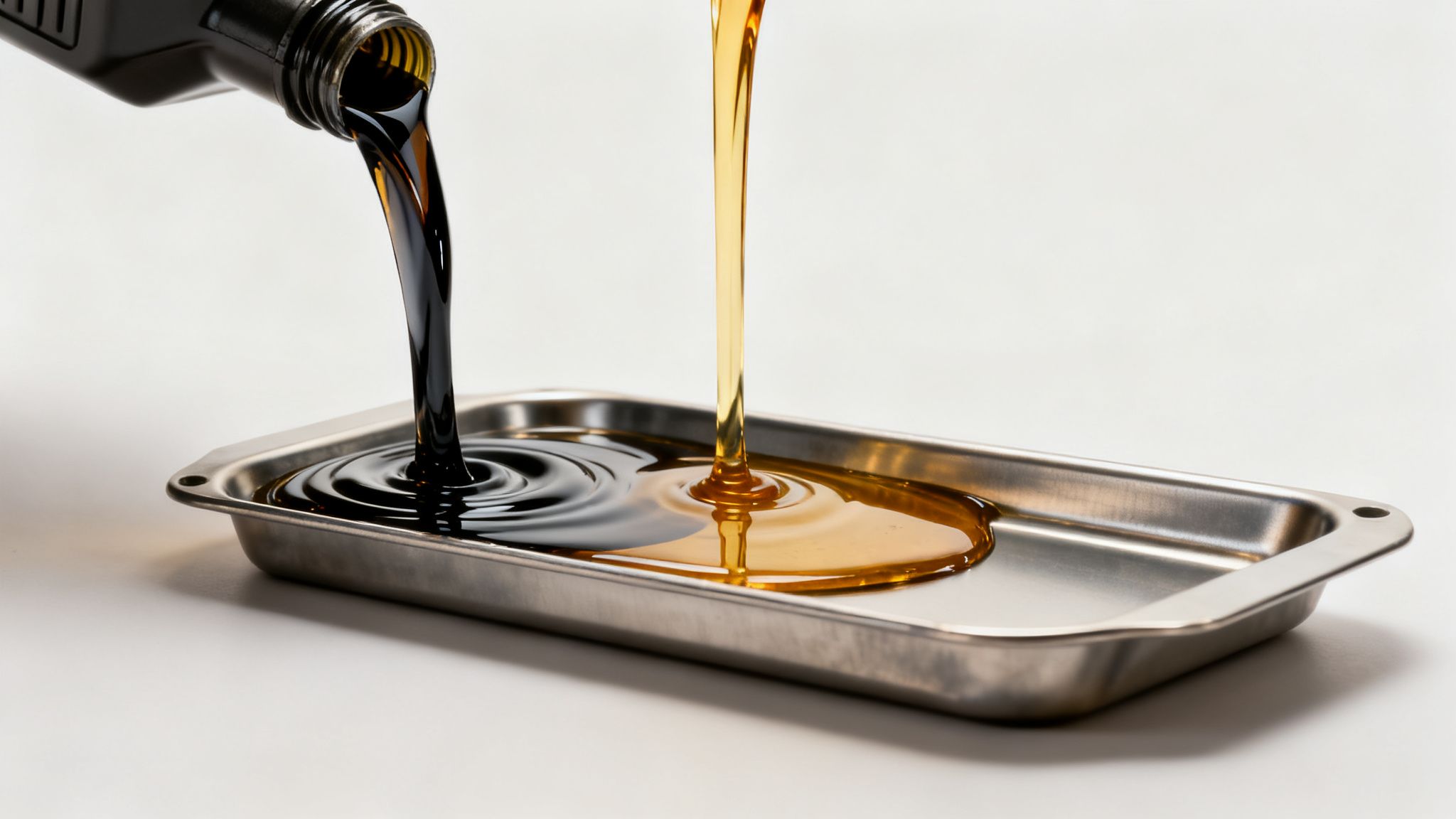
A synthetic blend oil change offers a "best-of-both-worlds" approach, acting as the ideal middle ground between conventional and full synthetic options. This service uses a hybrid motor oil created by mixing conventional base oils with a percentage of synthetic additives. The result is an oil that provides enhanced protection and performance compared to conventional oil, but at a more accessible price point than a full synthetic service.
Who is it for?
This type of oil change is perfect for drivers who want to step up their engine protection without committing to the full cost of synthetic oil. It's a popular choice for many modern vehicles, including family SUVs and trucks that see moderate use, and it often meets the warranty requirements for cars manufactured between 2005 and 2015.
Consider a synthetic blend oil change if you:
- Drive a modern vehicle that doesn't strictly require full synthetic oil.
- Are looking for an affordable upgrade from conventional oil for better engine defense.
- Operate a commercial fleet and need to balance performance with maintenance costs.
- Want to extend the time between oil changes slightly longer than the conventional interval.
Key Considerations and Recommendations
The synthetic additives in the blend provide better resistance to oxidation and thermal breakdown, which helps keep your engine cleaner and better protected under a wider range of conditions. This makes it a smart, practical choice for many Dallas drivers facing stop-and-go traffic and high summer temperatures.
Kwik Kar Tip: We recommend a synthetic blend oil change every 5,000 to 7,500 miles. This interval allows you to benefit from the oil's enhanced durability while ensuring your engine remains in peak condition. Always consult your owner's manual for specific requirements.
Before your service, check for our online specials to maximize your savings. A synthetic blend oil change is an excellent way to transition your vehicle to a higher level of protection, and our technicians can help you track your maintenance history to ensure you remain in compliance with your vehicle's warranty.
4. High-Mileage Oil Change
A high-mileage oil change is a specialized service designed for vehicles that have surpassed the 75,000-mile mark. This type of oil change utilizes a motor oil specifically formulated with a unique blend of additives and seal conditioners. These unique components are engineered to address the common issues found in older engines, such as minor leaks, increased oil consumption, and reduced compression.
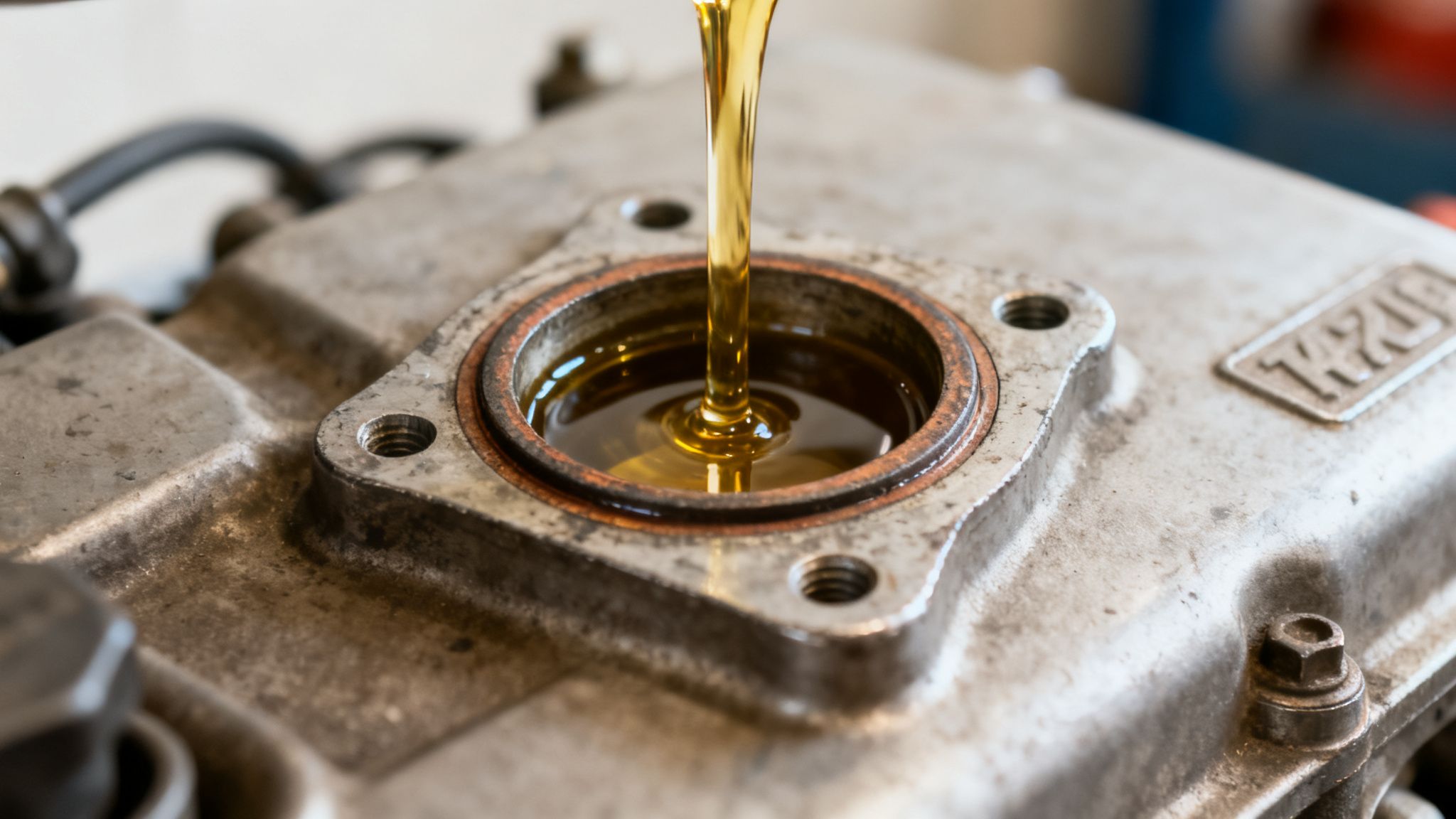
This targeted formulation helps rejuvenate aging seals, clean out accumulated sludge, and provide a more robust oil film to protect worn internal components, effectively extending the life and reliability of a well-traveled engine.
Who is it for?
This service is the ideal choice for drivers committed to maximizing the lifespan of their older vehicles. It provides crucial preventative care that standard oils may not offer for engines with significant wear and tear.
Consider a high-mileage oil change if you:
- Drive a personal or family vehicle with over 75,000 miles on the odometer.
- Manage older commercial fleet vehicles that are still in regular service around Dallas.
- Own a classic or vintage car that you drive regularly.
- Recently purchased a second-hand vehicle and want to ensure its long-term health.
Key Considerations and Recommendations
Transitioning to high-mileage oil is a proactive step to combat the natural aging process of an engine. Its specialized formula helps swell and condition rubber seals, which can shrink and harden over time, leading to common oil drips and leaks.
Kwik Kar Tip: We recommend switching to a high-mileage oil formulation around the 75,000-mile mark and sticking with it. Consistency helps maintain the conditioning effects on your engine's seals and provides stable protection.
For comprehensive care, pair this service with inspections of other vital systems, such as the transmission and coolant, which also face wear in older vehicles. If you're wondering what makes this oil different, you can explore our guide on the best oil for high-mileage cars to understand its specific benefits.
5. Diesel Engine Oil Change
A diesel engine oil change is a specialized service tailored for the unique demands of diesel-powered vehicles. Unlike gasoline engines, diesel engines operate under much higher compression and temperatures, producing more soot and combustion byproducts. This service uses specially formulated diesel oil with robust additive packages to handle these conditions, offering superior soot control, acid neutralization, and wear protection.
Who is it for?
This service is non-negotiable for any vehicle equipped with a diesel engine. This includes heavy-duty pickup trucks, commercial fleet vehicles, and some modern passenger SUVs known for their towing capacity and fuel efficiency. If your vehicle runs on diesel fuel, it requires diesel-specific motor oil.
Consider a diesel engine oil change if you drive:
- A heavy-duty truck with a Cummins, Duramax, or Powerstroke engine.
- Commercial vehicles that are part of a Dallas-based fleet, requiring maximum uptime.
- A premium diesel SUV or car that you rely on for towing or long-distance travel.
- Any vehicle where the manufacturer specifies a diesel-rated motor oil like those meeting API CK-4 or FA-4 standards.
Key Considerations and Recommendations
Using the wrong oil, like a standard gasoline engine oil, in a diesel engine can lead to catastrophic failure. Diesel oils are engineered with a higher viscosity and a different blend of detergents and dispersants to manage soot and protect against the intense pressures unique to diesel combustion.
Kwik Kar Tip: For diesel engines, service intervals can vary significantly based on usage, from every 7,500 miles for light-duty trucks to longer intervals for heavy-duty commercial vehicles. Always consult your owner’s manual, but for optimal performance, we recommend pairing every diesel oil change with a fuel filter replacement.
Our ASE-certified technicians at Kwik Kar are trained to service all types of diesel engines, ensuring the correct oil specification is used every time. Proper, documented maintenance is not just about performance; it’s crucial for protecting your investment, especially for valuable fleet assets operating in and around Dallas.
6. Eco-Friendly/Green Oil Change
An eco-friendly oil change is a forward-thinking service designed to reduce your vehicle's environmental impact. It utilizes biodegradable, sustainable, or re-refined motor oils formulated to minimize harm to ecosystems. These specialized oils often have a lower carbon footprint during production and are made from renewable or recycled base stocks, offering effective engine protection while aligning with sustainability goals.

Who is it for?
This service is a perfect match for environmentally conscious drivers and businesses committed to green initiatives. It's particularly valuable for organizations that need to document their sustainability efforts for corporate reporting or certification programs, and for individuals who want to make more eco-conscious choices in their daily lives.
Consider an eco-friendly oil change if you:
- Manage a corporate fleet with sustainability targets or green certifications.
- Are an environmentally aware driver seeking to reduce your carbon footprint.
- Operate municipal or government vehicles required to meet environmental standards.
- Want to support the use of recycled and renewable resources in automotive maintenance.
Key Considerations and Recommendations
The primary benefit of this type of oil change is its reduced environmental impact, from production to disposal. However, it's crucial to ensure the products used meet industry performance standards (like API certification) alongside their green credentials to guarantee proper engine protection.
Kwik Kar Tip: When choosing a green oil change, verify that the service includes certified recycling of your old motor oil. Proper disposal is just as important as the new oil you put in, and our process ensures every drop is handled responsibly.
For Dallas businesses, an eco-friendly service can be a powerful part of your corporate social responsibility program. Documenting your choice to use sustainable products demonstrates a tangible commitment to the environment. Ask our technicians about options that meet both your vehicle's performance needs and your company's green objectives.
7. Transmission Fluid Drain and Fill Service
While not an engine oil change, a transmission fluid drain and fill is a critical fluid service often performed alongside other types of oil change services. This comprehensive maintenance involves draining the old, degraded transmission fluid and refilling it with fresh, manufacturer-approved fluid. This process is essential for lubricating your transmission's moving parts, preventing overheating, and ensuring smooth gear shifts.
Who is it for?
This service is a vital part of preventive maintenance for nearly every vehicle with an automatic transmission. Neglecting it can lead to poor performance, premature wear, and costly transmission failure. It's especially important for vehicles under significant stress, like those navigating Dallas traffic daily.
Consider a transmission fluid service if you:
- Own a vehicle approaching its manufacturer-recommended service interval, typically 40,000 to 60,000 miles.
- Notice shifting delays, harsh gear engagement, or unusual noises during gear changes.
- Manage a fleet of commercial vehicles that require robust and reliable performance.
- Recently purchased a used vehicle and are unsure of its service history.
Key Considerations and Recommendations
The type of transmission fluid used is extremely specific to your vehicle's make and model; using the wrong kind can cause severe damage. Always refer to your owner's manual or consult with a trusted technician to ensure the correct fluid is used.
Kwik Kar Tip: Your transmission fluid should be a translucent red color. If it appears dark brown, black, or smells burnt, it's a clear sign that a service is overdue. Proactive maintenance is always less expensive than a transmission replacement.
For ultimate convenience, schedule your transmission service during a regular oil change visit. Bundling these services ensures all your vehicle's critical fluids are addressed in one stop. To understand the signs more deeply, you can learn more about when to change transmission fluid and keep your vehicle running smoothly.
8. Mobile/On-Site Oil Change Service
A mobile or on-site oil change service brings professional vehicle maintenance directly to your location, whether it's your home, office, or commercial fleet yard. This modern approach eliminates the need to visit a service center, saving valuable time and minimizing operational downtime. Equipped with all necessary tools and supplies, certified technicians perform a complete oil change wherever your vehicle is parked, delivering convenience without compromising on quality.
Who is it for?
This service is a game-changer for busy professionals, multi-vehicle households, and especially commercial fleet operators who need to keep their vehicles on the road. It provides a seamless solution for maintaining vehicle health with minimal disruption to a packed schedule or business operations.
Consider a mobile/on-site oil change service if you:
- Are a busy professional in Dallas finding it difficult to schedule a shop visit.
- Manage a corporate fleet of vehicles that need coordinated, efficient maintenance.
- Operate a construction, delivery, or real estate business with vehicles stationed at various job sites.
- Want the ultimate convenience of having routine maintenance completed while you work or relax at home.
Key Considerations and Recommendations
The primary benefit of a mobile oil change is its unmatched convenience, which is particularly impactful for fleet management. Organizing service for multiple vehicles can be a logistical challenge, but an on-site visit streamlines the entire process, ensuring every vehicle is serviced promptly and consistently.
Kwik Kar Tip: To maximize efficiency for fleet services, schedule your mobile oil change during business hours. Ensure our technicians have clear access instructions and adequate space to work, allowing us to service multiple vehicles in a single, coordinated visit.
This service is an excellent component of a comprehensive preventive maintenance program. By scheduling recurring appointments, you can ensure your entire fleet remains in peak condition, reducing the risk of unexpected breakdowns and costly repairs. Documenting each on-site service also simplifies your fleet's maintenance tracking and record-keeping.
8-Point Oil Change Comparison
| Service | Implementation Complexity 🔄 | Resource Requirements ⚡ | Expected Outcomes ⭐📊 | Ideal Use Cases 💡 | Key Advantages ⭐ |
|---|---|---|---|---|---|
| Conventional Oil Change | Low 🔄 — straightforward quick-lube process | Low ⚡ — mineral oil, standard filter, basic tools | Basic engine protection; frequent intervals (3,000–5,000 mi) ⭐📊 | Older/standard vehicles, budget drivers, short local commutes 💡 | Most affordable and widely available ⭐ |
| Synthetic Oil Change | Low–Medium 🔄 — standard procedure but requires correct specs | High ⚡ — premium synthetic oil, slightly higher cost, tech awareness | Superior protection; long intervals (7,500–10,000+ mi); better fuel economy ⭐📊 | Newer/high-performance cars, long commuters, extreme climates 💡 | Extended intervals and enhanced engine longevity ⭐ |
| Synthetic Blend Oil Change | Low 🔄 — similar to conventional service | Medium ⚡ — blended oil, standard tools | Improved protection vs conventional; moderate intervals (5,000–7,500 mi) ⭐📊 | Mid-range vehicles, families upgrading on a budget, moderate use 💡 | Balanced cost-to-performance; lower frequency than conventional ⭐ |
| High‑Mileage Oil Change | Low–Medium 🔄 — standard change with specialty formulation | Medium ⚡ — high‑mileage oil with seal conditioners | Reduces leaks/oil consumption; restores seal flexibility; 5,000–7,500 mi intervals ⭐📊 | Vehicles ≥75k–100k mi, aging engines, older fleet units 💡 | Targets aging-engine issues; cost-effective alternative to overhaul ⭐ |
| Diesel Engine Oil Change | Medium–High 🔄 — requires diesel-specific specs and care | High ⚡ — diesel-grade oil, soot-control additives, skilled techs | Prevents soot buildup; strong anti-wear protection; extends heavy-duty life ⭐📊 | Diesel trucks, commercial fleets, towing/power‑demand vehicles 💡 | Essential for diesel reliability and warranty compliance ⭐ |
| Eco‑Friendly / Green Oil Change | Low–Medium 🔄 — standard service using certified formulas | Medium ⚡ — biodegradable/renewable oils, certified disposal | Lower environmental impact; often comparable performance for normal use ⭐📊 | Sustainable fleets, eco-conscious owners, corporate green programs 💡 | Reduced environmental footprint; supports sustainability goals ⭐ |
| Transmission Fluid Drain & Fill | Medium–High 🔄 — more complex than engine oil (pan/filter work) | High ⚡ — transmission fluid, filter (if applicable), skilled technician | Improved shifting; prevents overheating/failure; extends transmission life 📊⭐ | Automatics at 30k–60k mi, vehicles with shifting issues, fleet maintenance 💡 | Preventive care that avoids costly transmission repairs ⭐ |
| Mobile / On‑Site Oil Change | Medium 🔄 — logistical coordination; service performed remotely | High ⚡ — fully equipped mobile unit, technician, waste collection | Same maintenance outcomes with high convenience; reduced downtime ⭐📊 | Busy professionals, corporate fleets, on‑site fleet servicing 💡 | Time savings and scheduling flexibility; minimizes vehicle downtime ⭐ |
Your Trusted Partner for Expert Oil Changes in Dallas
Navigating the different types of oil change services can seem complex, but understanding the specific benefits of each is the cornerstone of proactive vehicle maintenance. From the dependable, budget-friendly protection of a conventional oil change to the superior performance and extended drain intervals of full synthetic, you are now equipped with the knowledge to make an informed decision for your vehicle's long-term health. The choice you make directly impacts engine longevity, fuel efficiency, and overall performance.
We’ve explored how a synthetic blend offers a cost-effective bridge between conventional and full synthetic oils, while a high-mileage oil change is specifically engineered with additives to rejuvenate seals and reduce consumption in engines that have seen more of the road. For the workhorses of Dallas, a specialized diesel engine oil change is not just recommended, it's essential for handling the higher temperatures and soot associated with these powerful engines. Each service type is a tailored solution designed for a particular engine, age, and operational demand.
Making the Smart Choice for Your Vehicle
Ultimately, the best oil change is the one that aligns with your manufacturer’s recommendations, your driving habits, and your vehicle's current condition. An occasional driver with an older, low-mileage car might be perfectly served by conventional oil, whereas a Dallas commuter navigating stop-and-go traffic in a modern turbocharged vehicle will see significant benefits from full synthetic.
Key Takeaway: Your oil change is more than just a routine task; it's a critical investment in your vehicle’s future. Choosing the correct type of oil change prevents premature engine wear, maintains optimal performance, and can save you from costly repairs down the line. It's the single most important piece of preventative maintenance you can perform.
For local businesses like ours, being a reliable resource for Dallas drivers is our top priority. We understand that visibility and trust are built both in our service bays and online. To solidify your position as a trusted local provider and reach more Dallas drivers, understanding how to improve local SEO for service businesses is crucial in today's digital landscape.
Your Next Steps to a Healthier Engine
Armed with this information, your next step is simple: assess your vehicle's needs and schedule the right service. Don't wait for the oil light to come on. Being proactive is the key.
- Check Your Owner’s Manual: Start here for the manufacturer's specific recommendations.
- Consider Your Driving Style: Are you a city driver, a highway commuter, or do you frequently tow heavy loads?
- Evaluate Your Engine’s Age: Does your vehicle have over 75,000 miles?
- Consult a Professional: When in doubt, let an expert technician at Kwik Kar provide a personalized recommendation.
By mastering these concepts, you transform from a passive car owner into an active participant in your vehicle's maintenance journey. This proactive approach not only ensures reliability but also enhances your vehicle’s resale value. Choosing the right oil change is a small decision that delivers a massive return on investment, providing peace of mind every time you turn the key.
Ready to give your vehicle the expert care it deserves? Schedule your next service with Kwik Kar Oil Change and Auto Care, where our technicians are trained to handle all types of oil change services with precision and professionalism. Visit our website to find a convenient location, view our latest specials, and book your appointment today