



Let's be honest—we've all been there. You finish an oil change, feeling accomplished, only to spot a dreaded drip-drip-drip from that brand-new filter. The question immediately pops into your head: can you change the oil filter without changing the oil all over again?
The short answer is yes, you can. But—and this is a big but—it’s a trick you should only pull out of your sleeve in a few very specific, emergency-type situations. It’s absolutely not a shortcut for regular maintenance.
When a Filter-Only Swap Actually Makes Sense

Think of this as a do-over, not a routine procedure. The only time it’s really okay to swap just the filter is when the oil in your engine is practically brand new. You're simply correcting an immediate mistake without dumping out perfectly good, expensive synthetic oil you just poured in.
Even with fresh oil, a new filter is still going into a system where contaminants have already started to circulate. It’s a temporary fix to get you back on the road safely, but it's important to know exactly when it's a smart move and when it's just wishful thinking.
Valid Scenarios for a Filter-Only Change
This quick fix is really only for a handful of "oops" moments that happen right after an oil change.
- A Leaking or Defective New Filter: You've tightened everything down, but there’s a steady leak from the filter’s base. It could be a bad gasket or a defect right out of the box.
- Installing the Incorrect Filter: It happens. You realize the filter you just spun on has the wrong threads or gasket for your vehicle. That needs to be fixed immediately to prevent major leaks or engine damage.
- Accidental Damage to the Filter: A stray rock from the road or a slip with a tool punctures the filter canister shortly after your oil change. If the oil is still fresh, just replacing the filter is fine.
The idea of a filter-only swap has been a garage-day-saver for decades. It's especially common in DIY circles where someone might forget to buy a new filter—an issue in an estimated 15-20% of at-home oil changes. Just be prepared for a small mess; you’ll likely spill about 0.25 to 0.5 quarts of oil, so have some on hand to top things off.
When to Absolutely Avoid It
On the other hand, trying this on an engine with old oil is a terrible idea. A new filter can’t magically rejuvenate used oil that has lost its viscosity and is full of sludge and microscopic metal particles.
This is never a way to save a few bucks on your scheduled maintenance. If your dashboard is telling you it’s time for a service, listen to it. Putting a clean filter on dirty oil is like taking a shower and putting your sweaty gym clothes back on. It just doesn’t make sense and does next to nothing for your engine's health.
Knowing your oil is key. The properties of conventional, synthetic, and high-mileage oils differ, and understanding why old oil breaks down can make it clear why a new filter isn't enough. You can explore our guide on the different types of motor oil to see why fresh oil is so critical.
To make it even clearer, here’s a quick guide to help you decide.
Filter-Only Swap Scenarios
| Scenario | Recommended Action | Justification |
|---|---|---|
| Just finished an oil change, new filter is leaking | Filter-Only Swap | The oil is fresh. You are simply correcting a faulty part without wasting new fluid. |
| Approaching your 5,000-mile service interval | Full Oil and Filter Change | The oil has degraded and is contaminated. A new filter won't restore its protective properties. |
| Installed the wrong size filter by mistake | Filter-Only Swap | The oil is still new. An incorrect filter can cause serious leaks or poor oil pressure. |
| Oil is dark and gritty on the dipstick | Full Oil and Filter Change | Dark, gritty oil is a clear sign it's at the end of its life and needs to be completely replaced. |
| Filter was physically damaged by road debris | Filter-Only Swap | As long as the oil change was recent, you only need to replace the damaged component. |
Ultimately, a filter-only swap is a specific tool for a specific job. For everything else, a complete oil and filter change is the only way to properly protect your engine.
Gathering Your Tools and Preparing for the Job
To pull off an oil filter change without draining all the oil, you've got to be prepared. This isn’t a job you want to start, only to realize you’re missing a crucial tool while oil is dripping down your arm. A little prep work turns what could be a messy headache into a quick, clean task.
The single most important piece of the puzzle is, of course, the new oil filter. Don't just eyeball it on the shelf. You need the exact part number for your vehicle's make, model, and engine. The wrong filter might seem to fit, but if the thread pitch or gasket is off, it’s a guaranteed leak.
Essential Tools and Supplies
Before you slide under the car, get all your gear together and lay it out. This simple habit saves you from scrambling around later.
- The Correct New Oil Filter: Double-check that it’s the right one. If you’re not sure what your car takes, our guide to the 7 types of oil filters is a great place to start.
- Oil Filter Wrench: You’ll need a cap-style wrench that fits your filter perfectly or a more universal strap wrench. You only hand-tighten when you install a filter; getting the old one off almost always needs a tool.
- Drain Pan: A low-profile pan is best. Shove it right under the filter to catch the oil that’s about to come out. You can expect to lose between 0.25 and 0.5 quarts.
- Shop Rags or Towels: Have a big stack ready. You'll need them for cleaning the filter mounting surface, wiping drips, and getting your hands clean.
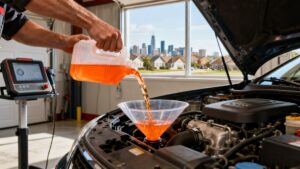
- New Motor Oil: Grab at least a quart of the exact same oil already in your engine. You have to top things off after you’re done.
Non-Negotiable Safety Preparations
Let's be clear: working under a car has real risks. This is not the place to cut corners. Your safety is priority number one.
First off, make sure the engine is cool. Trying to work around a hot engine is just asking for trouble. Hot oil can give you a nasty burn, and bumping against a hot exhaust manifold is a painful mistake you only make once. Let the car sit for at least an hour.
Next, get the vehicle secured the right way. A car jack is only for lifting the car up. Never get under a car that's only supported by a jack. Always use a pair of properly rated jack stands and place them on a solid, level surface like a concrete garage floor.
Before you even think about loosening that old filter, put on your safety glasses. Getting a splash of used motor oil in your eye isn't just irritating—it can cause serious damage. It’s the single most important piece of safety gear for this job.
Finally, have a bag of kitty litter or some other oil-absorbent material handy. Oil spills are more than just a mess; they're a slip hazard and a fire risk. Being ready to clean one up immediately turns a potential disaster into a minor cleanup.
Alright, so you’re looking to swap out just the oil filter. It's a handy trick to know, especially if the filter gets damaged or you've put on the wrong one. Getting this right is all about technique and being prepared for a little bit of a mess. With the right approach, you can do this cleanly and get a perfect, leak-free seal every time.
First things first, let's get your workspace ready. After you’ve safely secured the car on jack stands and let the engine cool down, you'll want to slide a low-profile drain pan right under the old oil filter. Think about where the oil will spill from and position the pan to catch it. Trust me, you'll also want a good supply of shop rags close by—you’re going to need them.
This quick visual guide breaks down the prep work into three simple stages.

As you can see, getting your safety gear and tools organized is the foundation of a good job, long before you even think about loosening a part.
The Removal and Installation Technique
Your next job is to find the filter. It's usually a black or blue canister screwed right onto the engine block, but the exact location can vary quite a bit between different cars. Once you've spotted it, get your oil filter wrench situated around the canister.
The secret to keeping the mess to a minimum is working with speed and confidence. Use the wrench to break the seal, then immediately switch to unscrewing it the rest of the way by hand. The second it’s free, spin it off fast and tip it upright to keep the oil inside from spilling out. Move it straight to your drain pan.
Here’s a critical pro tip many people miss: pre-fill the new filter about a quarter of the way with fresh oil. This simple step helps prevent a "dry start," which is when the engine briefly runs without full oil pressure. It’s a small thing that significantly reduces wear and tear on your engine’s internal parts right after the change.
Before you even think about putting the new filter on, grab a clean rag and wipe down the mounting surface on the engine. You need it to be spotless, with no residue from the old gasket. Next, dip your finger in some new motor oil and rub a thin layer onto the rubber gasket of the new filter. This step is absolutely essential for creating a tight seal and stopping the gasket from twisting or tearing as you tighten it.
Getting the Tightness Just Right
This is where a lot of DIY mechanics get it wrong. You want to thread the new, lubricated filter onto the engine by hand. It should spin on without any effort. If you feel it fighting you, stop right away—you might be cross-threading it. Just back it off and start again.
Once the gasket makes contact with the engine block, you only need to tighten it another three-quarters of a turn by hand. Do not use a wrench for this part. Hand-tightening is all you need for a solid seal, and cranking on it with a wrench can damage the gasket or make the filter nearly impossible to get off next time.
After the new filter is on, you’ll need to top off the oil you lost. Pour in the same type of oil that’s already in your car until the dipstick shows "full." To finish up, start the engine and let it run for about a minute. While it’s running, get under there and check for any drips around the new filter. If you see any, shut the engine off immediately and double-check your work. If it's all dry, you're good to go
The Real Risks of Skipping a Full Oil Change

Sure, knowing how to change an oil filter without changing the oil can get you out of a tight spot, but it’s a trick you should never turn into a habit. Think about it this way: you’re putting a brand-new, perfectly clean filter into an engine full of old, contaminated oil.
It’s like taking a long shower only to put your dirty, sweaty clothes right back on. That little bit of fresh oil you add to top it off? It gets contaminated instantly, doing next to nothing for your engine’s long-term health.
The Immediate Contamination Problem
Old engine oil is more than just "used." It’s a nasty soup of burnt fuel, moisture, tiny metal shavings, and other breakdown products that have been grinding away inside your engine for thousands of miles. It has lost its ability to properly lubricate and protect those critical moving parts.
The moment you screw on that new filter, it gets to work, pulling all that sludge and gunk out of the dirty oil. But it's fighting a losing battle from the start. The sheer amount of contamination means the new filter can get clogged and overwhelmed in just a fraction of its normal lifespan.
This "shortcut" became popular during past economic slumps as a way to pinch pennies. But the reality is that you’re risking your engine. Some industry tests have shown that a new filter in old oil can be saturated so fast that it starts releasing 40-60% more particulates back into the engine in as little as 500 miles.
A new filter is designed to work with clean oil, giving your engine a fresh start. When you pair it with thousands of miles of built-up grime, you’re asking it to do an impossible job, and its effectiveness drops through the floor.
The Danger of Bypass Mode
Every oil filter has a built-in safety feature called a bypass valve. Its job is to open up if the filter gets so clogged that oil can't pass through it anymore. This is a last-ditch effort to prevent your engine from being starved of oil, which would be catastrophic.
But here’s the catch: when that bypass valve is open, the oil circulating through your engine is completely unfiltered. All those abrasive metal particles, soot, and sludge get a free pass to grind away at your engine's most sensitive components—the bearings, camshafts, and pistons.
By constantly just swapping the filter to stretch your oil change, you dramatically increase the chances of the filter going into bypass mode. You might feel like you’re saving a few bucks now, but you could be setting yourself up for some very expensive and premature engine repairs down the road. You can avoid this by learning the key signs your oil is past its prime. Our guide on when to change the oil in your car can give you the clarity you need.
When to Trust a Professional for Your Auto Care
While tackling a quick filter swap can be a handy skill in a pinch, it’s really no substitute for proper, routine vehicle maintenance. Let’s be honest, a DIY job on your driveway is time you could be spending with family or on a hobby you actually enjoy.
For drivers who want to get the most out of their car and drive with total peace of mind, professional service is always the smartest way to go. When you trust a skilled technician, you’re getting the right parts, every single time. They understand the little details of your specific vehicle and use advanced tools to spot problems before they turn into major headaches.
Beyond the Basics of Oil and Filters
A professional service appointment is so much more than just swapping out a part—it’s an investment in your car's long-term health.
- Expert Diagnostics: Our technicians have the experience to see underlying issues that a simple filter change could easily mask. A strange noise to you might be a clear symptom of a bigger problem to them.
- Correct Parts and Fluids: There’s zero guesswork involved. Professionals use the exact filters and fluids that meet your car's OEM specifications, which is absolutely critical for today's complex engines.
- Comprehensive Inspections: A routine service with us usually includes vital checks on your brakes, tires, and other safety systems. This gives you a complete, top-to-bottom picture of your car’s condition.
A professional service gives you the confidence that the job was done right. Every component is torqued to spec, and all related systems are double-checked. It turns car maintenance from a greasy, weekend-eating chore into a simple appointment that protects your investment.
While you might feel confident changing an oil filter, some jobs are best left to the pros. More complex issues like an ignition repair or replacement definitely demand the specialized expertise and tools of a professional to guarantee your vehicle operates safely. These are areas where one small mistake can lead to significant and costly problems down the road.
Ultimately, choosing a trusted shop like Kwik Kar for your maintenance means you're getting more than an oil change; you're gaining a partner dedicated to keeping your vehicle reliable. From state inspections to complex engine work, trusting the experts is the best way to ensure safety and performance for thousands of miles to come.
Common Questions About Changing Your Oil Filter
Even after you've tightened the last bolt, a few questions always seem to linger. It’s one thing to know how to swap a filter, but it's just as important to understand the little details that come with it. Let's clear up some of the common things people wonder about after doing a filter-only change.
Knowing what to expect—from how much oil you'll lose to whether it'll make that dashboard light go away—is part of being a smart vehicle owner.
How Much Oil Will I Lose?
When you pull off just the oil filter, you can expect to lose between a quarter and a half-quart of oil. That works out to roughly 8 to 16 ounces. The exact amount really depends on your specific vehicle.
The size of your filter and where it's mounted on the engine play the biggest roles. A filter that sits upside-down is naturally going to drain out more than one mounted on the side.
This might not sound like a lot, but it’s more than enough to drop your oil level below the "full" mark. You absolutely must top it off with the correct type of fresh oil to bring the level right back where it needs to be on the dipstick.
Is This Okay if I Just Had an Oil Change?
Yes, and this is pretty much the only time a filter-only swap is a good idea. If your oil is fresh—we're talking less than 1,000 miles—and you find out the filter is leaky, defective, or the wrong part, then just replacing the filter makes perfect sense. You're simply fixing a problem without dumping perfectly good oil.
But if your oil is older or getting close to its next service date, you really don't gain anything. A new filter will just get clogged with the old contaminants floating in that oil almost instantly. This defeats the whole purpose of the filter and puts your engine under needless stress.
Will a Filter-Only Swap Reset My Oil Change Light?
No, changing just the filter won't do anything to your oil life monitor or service light. Your car's computer doesn't have a sensor that magically knows a new filter is on there. Instead, it tracks things like mileage, engine hours, and your driving habits to estimate the oil's lifespan.
To get that light to turn off, you have to perform the specific reset procedure for your make and model. This is something you're only supposed to do after a complete oil and filter change. Think of a filter-only swap as a quick patch, not a full service. The light will stay on until you get the proper service done and reset the system manually.
Even with the best DIY skills, some jobs are best left to a professional. For guaranteed peace of mind and expert service on everything from routine oil changes to complex auto repairs, you can always trust the team at Kwik Kar Oil Change and Auto Care. Schedule your appointment online today and let us take care of the rest.