


Your car's engine oil level is one of its most important vital signs. It tells you if there’s enough oil to properly lubricate, cool, and clean all the crucial moving parts inside your engine. Keeping that level right where it should be—not too full, not too empty—is the key to preventing friction, stopping overheating, and avoiding catastrophic engine damage.
Think of it as your car’s pulse. A quick check is one of the simplest and most fundamental things you can do to sidestep expensive, time-consuming repairs down the road.
Why Your Engine Oil Level Is So Important
Letting your oil level drop is a gamble you just can't afford to take. This fluid does a whole lot more than just keep things slick. It’s also a critical coolant, pulling intense heat away from high-friction parts like the pistons and bearings. Without enough oil, these components would heat up and fail in a hurry.
At the same time, your oil acts like your engine's cleaning crew. It picks up and suspends nasty particles, from microscopic metal shavings to soot from combustion, and carries them off to the oil filter. When the oil level gets too low, the engine loses its ability to cool and clean itself effectively.
The Real-World Consequences
When an engine is starved for oil, its most important metal parts start grinding directly against each other without any protection. That friction and heat can escalate quickly, turning poor performance into a completely seized engine—leaving you stranded and facing a massive repair bill.
The financial toll of this simple oversight is pretty shocking. Low oil levels are a contributing factor in 40% of all automotive engine failures worldwide. That translates to around 1.2 million engine replacements every single year in the United States alone, costing drivers an estimated $3.5 billion in repairs. You can dig into more of these automotive statistics to see the full picture.
The Dangers of Too Much Oil
On the flip side, having too much oil in the engine is just as bad. When you overfill it, the spinning crankshaft can churn the oil into a useless, airy foam.
This frothy mixture is a terrible lubricant. It can't create the protective film your engine parts need, leading to the same kind of friction, wear, and expensive damage you’d see from having too little oil.
Whether you're just driving the family car or managing an entire fleet of work trucks, checking the engine oil is a non-starter. It’s one of the most powerful and cost-effective pieces of preventive maintenance you can perform, potentially saving you thousands in repairs and downtime.
How To Check Your Engine Oil The Right Way
Knowing how to check your engine oil is one of the most fundamental skills any car owner can have. It’s a simple check that can save you from a world of expensive, frustrating engine problems down the road. But to get an accurate reading, you have to do it the right way.
First things first, find a flat, level spot to park. If your car is on a slope, even a slight one, the oil will pool to one side of the pan and throw off your reading completely.
Now, let's talk about engine temperature. While some folks say to check it cold, the most reliable reading on most cars comes from a warm engine. A good rule of thumb is to drive for a few minutes to get the oil circulating, then park, shut off the engine, and wait about 3-5 minutes. This gives the oil enough time to drain back into the pan while still being warm enough to measure accurately.
If you're ever unsure, we've got a deeper dive into whether you should check your oil when it's hot or cold.
Finding And Reading The Dipstick
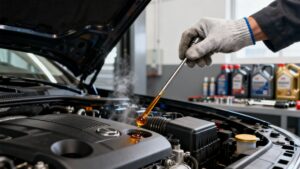
With the engine off and the car parked, go ahead and pop the hood. You’re looking for the dipstick—it almost always has a brightly colored handle, usually yellow or orange, designed to be easy to spot. Grab a clean, lint-free rag or a paper towel before you pull it.
Pull the dipstick all the way out. You're going to completely ignore what you see on this first pull. Why? Because oil splashes all over the dipstick while you're driving, so this initial reading is useless. Wipe the metal end completely clean with your rag.
Now for the real reading. Push the clean dipstick all the way back into its tube. Make sure it seats fully. Then, immediately pull it back out and hold it horizontally so the oil doesn’t run and smudge the reading.
Take a close look at the markings on the end. This is where you’ll see the safe operating range for your oil level.
The dipstick is your window into the engine's health. The table below will help you quickly understand what you’re seeing and what to do about it.
Dipstick Reading Quick Reference Guide
| Oil Level on Dipstick | What It Means | Recommended Action |
|---|---|---|
| Above the FULL/MAX line | The oil level is too high. This can cause foaming and put stress on engine seals. | Do not drive. Contact a mechanic to have the excess oil drained. |
| Between the FULL/MAX and ADD/MIN lines | The oil level is in the safe operating range. Your engine has the correct amount of oil. | No action needed. Check again in a few weeks. |
| At or below the ADD/MIN line | The oil level is low. The engine is at risk of damage from poor lubrication. | Add about half a quart of the correct oil, wait a minute, and recheck. Repeat until the level is in the safe range. |
| No oil on the dipstick | The oil level is critically low. Driving could cause severe, immediate engine damage. | Do not start the engine. Add one full quart of oil, wait a few minutes, and check again. Add more as needed. |
Interpreting the reading correctly is just as important as the check itself. Never overfill, but definitely don't let it run low.
This is why getting the level right is so important—oil does more than just lubricate.

As you can see, oil is the lifeblood that lubricates moving parts, pulls heat away from the engine, and cleans away harmful deposits. When the level is wrong, every single one of these critical jobs is compromised, putting your engine at risk.
What Your Dipstick Is Actually Telling You
That little dipstick is telling a story, and it’s about a lot more than just your engine oil level. The color and feel of the oil are your first clues to what’s happening deep inside your engine. When you know how to read these signs, a simple check becomes a powerful diagnostic peek under the hood.

Fresh, clean oil looks just like you'd expect: a clean, almost translucent honey or amber color. As it circulates and does its job cleaning your engine, it will absolutely get darker, turning brown or even black. This is perfectly normal; it just means the oil is trapping soot and other gunk. The real trouble shows up in the oil's texture and smell.
Reading The Red Flags
After you wipe the oil onto a clean paper towel, run your fingers through it. If it feels gritty or you can see tiny metallic specks, that oil is saturated with debris and well past its prime. Those little particles can grind away at engine components, causing premature wear.
There are a couple of other, more urgent warning signs you need to watch for:
- Milky or Frothy Appearance: This is a major red flag. If your oil looks like a creamy, coffee-colored milkshake, it almost always means coolant is leaking into your engine. This can lead to catastrophic failure if you don’t get it looked at right away.
- Strong Burnt Smell: A sharp, burnt odor is another bad sign. It tells you the oil is getting way too hot. This could mean your engine is overheating, or the oil itself has broken down and can’t lubricate properly anymore.
A European automotive commission report has linked improper oil levels to 28% of premature engine wear cases. Furthermore, studies have shown that engines running on consistently low oil can experience a 45% faster breakdown in viscosity, which really hurts your fuel economy. You can find more insights about how proper fluid levels impact vehicle performance on carboncredits.com.
Catching these problems early can be the difference between a simple, inexpensive fix and a full, wallet-draining engine replacement. So next time you check your oil, don't just glance at the level. Take a moment to really see what it's telling you.
Common Reasons For An Incorrect Oil Level
Okay, so you've checked the dipstick and the reading is off. An incorrect engine oil level isn’t just a number to ignore—it’s a clear symptom that something’s going on with your vehicle. Figuring out the root cause is the first real step toward a fix, whether it's a quick top-off or a sign you need a professional to take a look.

Why Is My Oil Level Low?
A low oil reading is definitely the more common problem we see. It can happen for a few different reasons, ranging from totally normal to something that needs immediate attention.
One of the most frequent causes is just normal oil consumption. As an engine gets older and racks up the miles, its seals and gaskets naturally wear a bit. This can allow a tiny amount of oil to burn off with the fuel during combustion. If you’re driving an older, high-mileage car, adding a quart of oil between changes isn't usually a red flag. We have a guide that explains more on when you might be facing excessive oil consumption.
On the other hand, a more serious problem is an active oil leak. This is when oil is physically escaping the engine from a failed gasket, a cracked seal, or even a loose oil drain plug from a previous service. The tell-tale signs are pretty obvious: dark, oily spots on your driveway or a distinct burning oil smell when the engine gets hot.
This is a surprisingly widespread issue. In 2022, studies revealed that 35% of vehicles inspected had oil levels outside the safe operating range, which contributed to a 25% higher rate of breakdowns. A lot of this comes down to simple neglect; some reports found that 42% of car owners skip monthly oil checks, a habit that can drastically shorten an engine's lifespan.
Why Is My Oil Level High?
Seeing an oil level that’s too high is almost always a result of good old-fashioned human error—specifically, overfilling the engine during an oil change.
When there's too much oil in the system, the crankshaft can't just skim the surface. Instead, it violently churns the oil into a frothy, bubbly mess. This aerated oil is completely useless for lubrication, leading to friction, overheating, and serious engine damage.
When To Seek Professional Help From Kwik Kar
Checking your own oil is a great skill for any car owner, but knowing your limits is just as crucial. Some things you might find on the dipstick aren't just minor quirks—they're your car's way of sending up a flare, signaling it's time for an expert eye.
If you feel like you're constantly adding more oil between changes, that's a big one. A persistent drop in your engine oil level means you're either leaking oil or burning it. Our technicians at Kwik Kar can get to the bottom of it before a small problem turns into a major repair bill.
Similarly, some readings on the dipstick are an immediate cause for concern.
When The Dipstick Shows Trouble
If you pull the dipstick and the oil looks milky or frothy—almost like a coffee-colored milkshake—stop right there. This is a classic sign that coolant is mixing with your oil, a serious issue that can quickly destroy an engine. Don't even try to start the car; have it brought to a professional.
Another red flag is simply not being sure what you're seeing. If the oil's color, smell, or texture just seems off and you can't put your finger on why, it's always the safer bet to get an expert opinion.
At Kwik Kar, our skilled technicians don't just perform an oil change; they conduct a comprehensive health check. We use advanced diagnostic tools to identify underlying issues, ensuring your sedan, SUV, or light truck gets the specific care it needs for long-term reliability.
Beyond just oil, regular engine care involves a few other things. For example, don't overlook the benefits of professional car engine cleaning services for maintaining overall performance and helping your engine last longer.
We built our reputation on convenient, transparent service. You'll always know exactly what your vehicle needs and why. Trusting Kwik Kar means choosing peace of mind on the road.
Your Top Engine Oil Questions, Answered
Even after you've mastered the dipstick, a few questions always seem to pop up. We get them all the time at the shop, so we’ve put together answers for the most common ones to give you a bit more confidence.
How Often Should I Check My Engine Oil?
Making it a monthly habit is a great rule of thumb. Just pop the hood and check the oil at least once a month.
If you drive an older car, often tow a trailer, or put on a lot of highway miles, it’s a smart idea to check it more frequently—maybe every other fuel stop. Catching a small issue early is always better than dealing with a major repair down the road.
What Kind of Oil Should I Add If It's Low?
Your owner's manual is your best friend here. It will tell you the exact type and weight of oil your engine needs (for example, 5W-30).
Using the wrong oil is a serious gamble. It might not protect your engine properly at different operating temperatures, which can lead to unnecessary wear and tear. If you want to dig deeper into oil types and change schedules, check out our guide on when to change your car's oil.
If you're ever in doubt or just don't have the right oil handy, the safest move is to swing by a service center like Kwik Kar. We’ll make sure your engine gets exactly what it needs to run smoothly.
Is It Safe to Drive With a Low Oil Level?
This really depends on how low the oil is. If the level is just a little below the 'Full' line but still well above the 'Add' or 'Min' mark, you're probably okay to drive a short distance to grab a quart of oil.
However, if the dipstick shows the level is at or below the minimum mark, you have a problem. If your oil pressure warning light flicks on, do not drive the car. Running an engine with critically low oil can cause catastrophic, and often permanent, damage in minutes. Your best bet is to pull over safely and call for assistance.
If you’re running into any of these issues or just want the peace of mind that comes from a professional eye, stop by Kwik Kar Oil Change and Auto Care. Our technicians can handle everything from a quick top-off to a full engine diagnostic. Schedule your visit today at https://www.kwikkarspringvalley.com.