

The most obvious leaky oil pan gasket symptoms are usually those fresh oil spots on your driveway. You might also notice a consistently low oil level or even a burning oil smell coming from a hot engine. These are classic signs that the seal at the bottom of your engine has failed, letting vital motor oil escape.
The Telltale Signs of a Failing Oil Pan Gasket
Think of your engine’s oil pan gasket like the simple but crucial washer on a garden hose. When it's new and flexible, it creates a perfect, watertight seal. But over time, the rubber hardens and cracks, and you get that annoying, persistent drip. It’s the exact same principle with a failing oil pan gasket, only instead of water, it’s leaking your engine’s lifeblood.
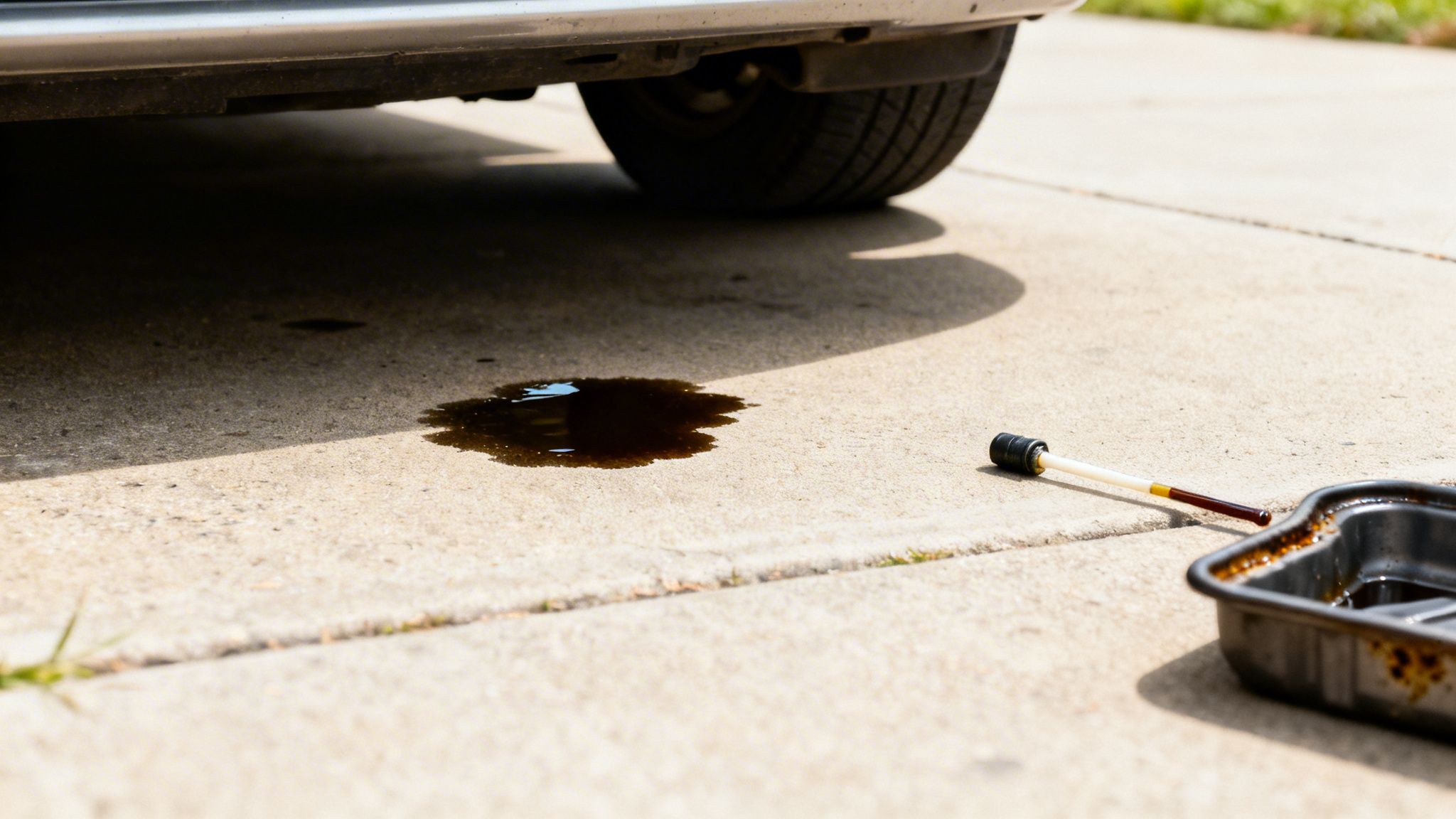
The most unmistakable symptom is seeing those dark, fresh oil spots or even small puddles on your garage floor. Because the oil pan is at the very bottom of the engine, gravity makes this the first and most obvious clue you’ll get.
Quick Guide to Leaky Gasket Symptoms
To help you spot the problem early, here’s a quick rundown of the most common signs that your oil pan gasket might be on its way out.
| Symptom | What to Look For | Severity Level |
|---|---|---|
| Visible Oil Drips | Fresh, dark puddles or spots under the front of your car after it's been parked. | High – Active leak in progress. |
| Low Oil Level | The dipstick consistently reads low, or the oil pressure light flickers on your dash. | High – Can lead to engine damage. |
| Burning Oil Smell | A sharp, acrid smell of burning oil, especially after the engine is hot. | Medium – Oil is dripping on hot components. |
| Oily Grime on Pan | The bottom of the oil pan is coated in a thick layer of oil and road dirt. | Low – Indicates a slow, long-term seep. |
Recognizing these symptoms is the first step. The sooner you catch it, the better you can protect your engine from serious harm.
Checking for Other Key Indicators
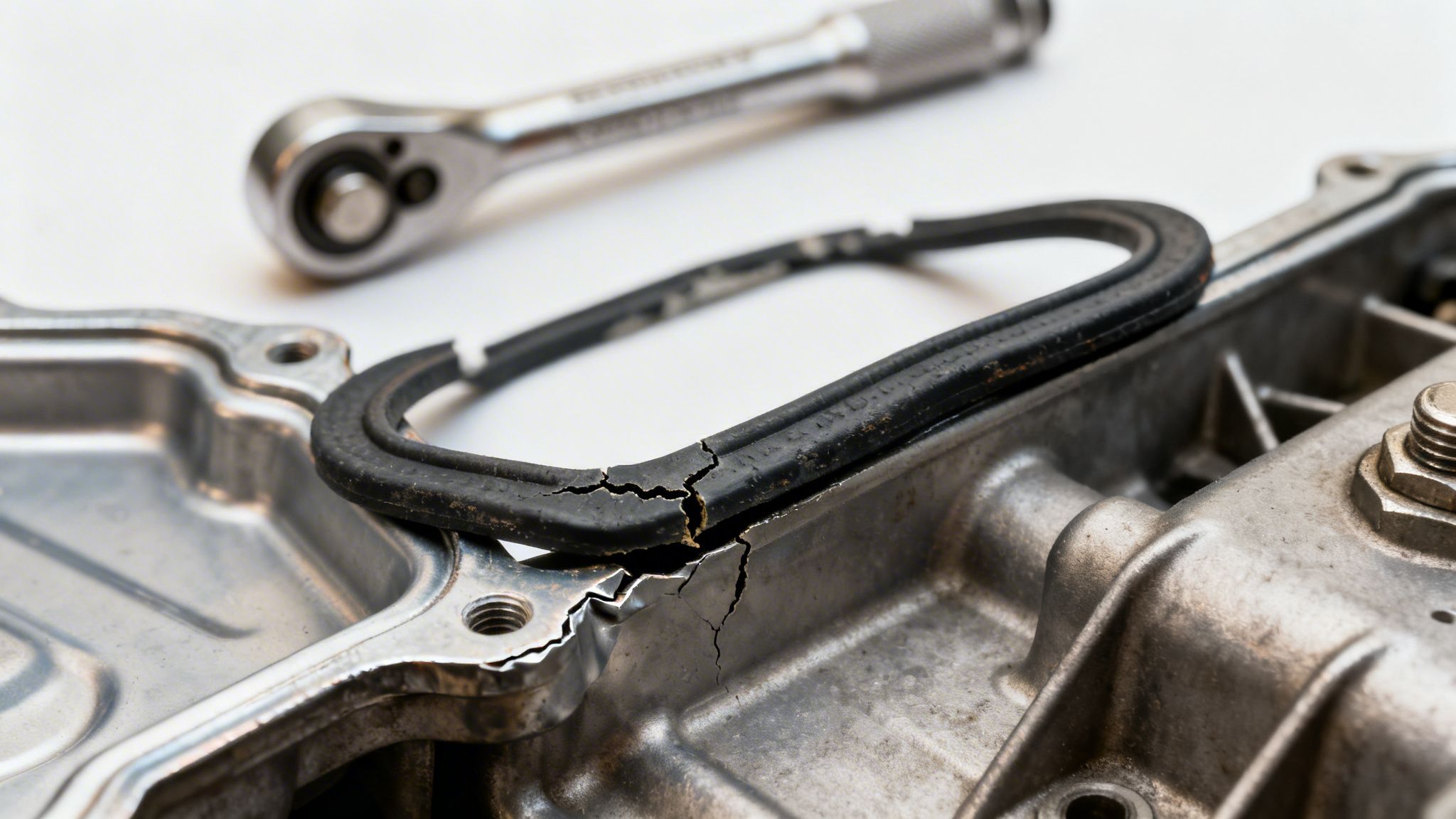
Beyond puddles on the ground, other signs can help confirm the problem. Take a quick peek under your vehicle. You might see a film of oily grime and road dust caked onto the oil pan itself. This buildup happens as oil slowly seeps out and attracts dirt.
You may also notice your oil light flickering on the dashboard or find yourself needing to top off your oil more often between changes. This is a direct result of the leak. For a more detailed guide on how to read the signs, you can learn more about checking your engine oil level in our dedicated article.
An active oil leak is more than just a messy inconvenience; it's a direct threat to your engine's health. Consistently low oil levels from a bad gasket can cause increased friction, overheating, and eventually, catastrophic engine damage.
This decision tree can help you visualize the diagnostic process, starting from the moment you first suspect an oil leak.
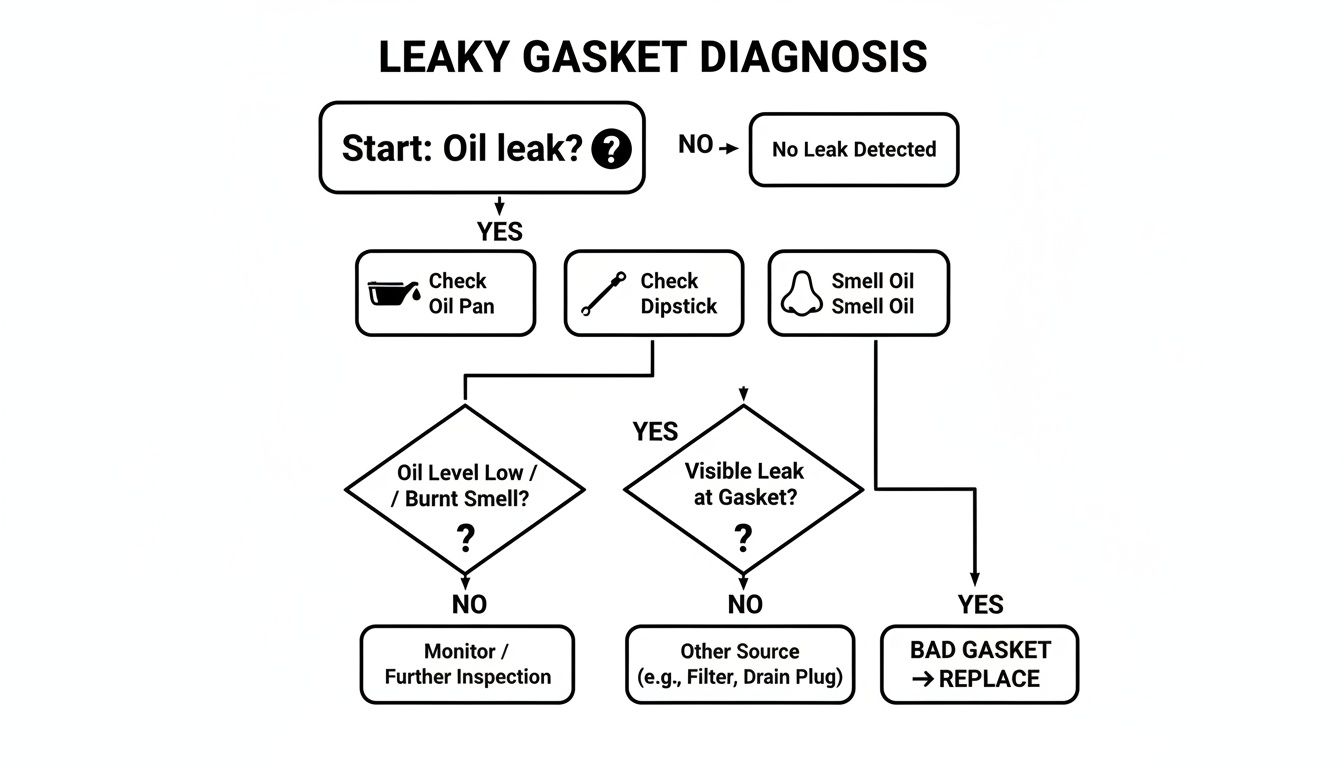
The flowchart simplifies things by walking you through checks for the most common symptoms: visible leaks, low oil levels, and any unusual smells.
Smells and Sounds of a Leak
Another huge clue is that distinct smell of burning oil. You'll especially notice it after the engine has been running for a while and is fully warmed up. This odor happens when dripping oil hits the hot exhaust system, which is often located right next to the oil pan.
The symptoms of a leaky oil pan gasket are hard to miss once you know what to look for, with puddles on the pavement being the number one sign. Whether it's a damaged pan or a worn-out gasket, the resulting low oil levels can trigger your car's warning systems. Spotting these signs early gives you time to get professional help before it becomes a bigger, more expensive problem.
Why Your Oil Pan Gasket Is So Important
Before we get into the tell-tale signs of a leak, let’s talk about why this simple part is so critical. The best way to think about your engine’s lubrication system is to compare it to your body’s circulatory system. Motor oil is the lifeblood, and the oil pan at the bottom of the engine is the reservoir holding that blood, ready to be pumped wherever it’s needed.
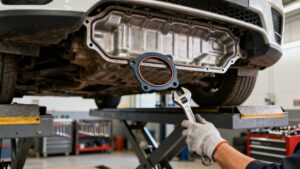
The oil pan gasket is the unsung hero of this whole operation. It’s a precisely shaped seal, usually made of tough rubber, cork, or silicone, and it fits perfectly between the engine block and the oil pan. Its one job? To create an absolutely leak-proof barrier.
The Role of a Perfect Seal
This seal has to keep every last drop of oil contained, often while dealing with serious pressure and scorching temperatures. It's what guarantees your engine has a constant supply of lubricant to cut down on friction and keep things from overheating. Without a perfect seal, the entire system is at risk.
And believe me, this gasket has a tough life. It’s constantly exposed to intense heat cycles, engine vibrations, and corrosive oil. Over many miles and years, these conditions will eventually cause the gasket material to get hard, brittle, and even shrink. That’s when the leaks start.
A healthy oil pan gasket is the primary defense against oil starvation. It’s a simple component that prevents catastrophic engine failure, ensuring your vehicle’s longevity and saving you from incredibly expensive repairs down the road.
Understanding the job of parts like the oil pan gasket is just as important as keeping up with regular maintenance. Routine and reliable oil change services are what keep your engine healthy and help us spot potential leaks before they become big problems.
The moment this gasket fails—even with a tiny leak—your oil level starts to drop. If it drops too low, the oil pump can start sucking in air instead of oil, starving critical engine parts of the lubrication they need to survive. This is exactly how a small, cheap gasket can turn into a massive, engine-killing disaster. Taking care of your car’s lubrication system is non-negotiable, and our team in Dallas can walk you through how our comprehensive 17-point oil change process helps protect your investment.
What Causes an Oil Pan Gasket to Fail
Knowing the common symptoms of a leaky oil pan gasket is a great first step, but understanding why the gasket fails in the first place can help you head off future problems. Just think of that gasket as a tireless guard, standing watch in a pretty harsh environment. Over time, a few key things can wear down its defenses and cause a breach.
These failures almost always boil down to one of three culprits: simple wear and tear, a mistake during installation, or physical damage from the road. Each one undermines the gasket's ability to maintain that perfect seal, eventually letting motor oil escape.
The Inevitable Effects of Heat and Age
The single most common reason an oil pan gasket gives up is just old age, combined with the brutal conditions inside your engine. Your engine creates a massive amount of heat, and that gasket has to survive thousands of heat cycles—getting scorching hot and then cooling all the way down every single time you drive.
This constant expansion and contraction is especially hard on gaskets made from older materials like cork or even standard rubber.
- Cork Gaskets: These have a tendency to dry out over time, becoming hard and brittle. Once they lose their flexibility, they start to shrink and crack, creating tiny pathways for oil to seep through.
- Rubber Gaskets: While they're certainly more durable, rubber gaskets aren't immune. They eventually lose their elasticity, becoming hardened and permanently compressed. They just can't form that tight seal against the engine block and oil pan anymore.
After tens of thousands of miles, this breakdown of the material is pretty much unavoidable. It’s really not a question of if the gasket will wear out, but when.
The Problem with Improper Installation
Here's something that surprises a lot of people: a brand-new gasket can fail almost right away if it isn’t installed correctly. This is a frustratingly common issue that can turn what should be a straightforward fix into a recurring headache. The problem is usually improper bolt torque.
A leaky oil pan gasket is one of the most frequent maintenance issues, and a significant number of these failures stem directly from improper installation. Incorrect bolt torque during the repair causes uneven clamping pressure, which distorts the oil pan and prevents the gasket from sealing properly, leading to a premature leak. You can review more details about these automotive maintenance trends and their causes on market analysis sites.
Imagine tightening the lug nuts on your tire in a completely random order instead of the star pattern. You’d end up with a wobbly, unsafe wheel. The very same principle applies here. If the oil pan bolts are cranked down too hard or tightened in the wrong sequence, it can actually warp the metal oil pan, creating an uneven surface that the new gasket simply can't seal.
Physical Damage from the Road
Finally, the oil pan's location right at the bottom of your car makes it a prime target for impacts. Smacking a piece of road debris, dropping into a deep Dallas pothole, or scraping a high curb can send a nasty jolt right to the oil pan.
Sometimes, the impact is strong enough to dent or even crack the pan itself. More often, though, the shock is just enough to knock the pan slightly and compromise the gasket’s seal, creating an instant leak. It’s a good reminder that what happens out on the road can have a direct impact on the health of your engine.
The High Cost of Ignoring an Oil Leak
That little dark spot on your driveway might seem easy to ignore, but letting a leaky oil pan gasket go unfixed is one of the most expensive mistakes you can make. That slow drip isn’t just an annoyance; it’s a warning light telling you something bigger is on the horizon.
The biggest danger here is engine oil starvation. Think of it like trying to run a marathon without a single drop of water. When the oil gets too low, the oil pump starts sucking up air instead of oil. Without proper lubrication, you get metal grinding against metal, creating intense friction and heat.
How a Small Leak Causes Big Engine Damage
This is where things can go from bad to worse, fast. That lack of lubrication sets off a chain reaction that can destroy your engine from the inside out, turning a straightforward gasket replacement into a massive and costly repair.
- Warped Components: The extreme heat from all that friction can literally warp critical metal parts, like the cylinder head.
- Seized Bearings: The bearings that help parts rotate smoothly will grind to a halt, seizing up entirely.
- Catastrophic Engine Failure: Ultimately, all these issues lead to a completely seized engine. That’s a repair that often costs thousands of dollars—sometimes more than the car is even worth.
One of the first sounds you might hear is an engine rattle when accelerating. It’s a tell-tale sign of low oil. We have a whole guide on what that means and how to diagnose an engine rattle.
It's More Than Just Mechanical Damage
The problems don't stop with your engine. A constant oil leak creates other serious issues that put your safety, wallet, and the environment at risk.
The economic impact of ignoring leaky oil pan gasket symptoms extends far beyond the simple cost of gasket replacement. For commercial fleet managers in Dallas, a severely leaking gasket can result in catastrophic engine damage. Preventive maintenance programs help mitigate these risks by identifying wear before failure occurs, as case studies show expenses multiply exponentially when engine damage results from oil starvation. You can read more about automotive gasket industry trends and their financial implications.
On top of everything, oil dripping onto a hot exhaust pipe is a major fire hazard. If you smell burning oil, that’s not just a bad smell—it’s a serious warning sign. Plus, leaving oil stains on public roads is bad for the environment, and a visible leak is an automatic fail on your annual Texas state inspection. You'll be forced to get it fixed anyway, so it's best to take care of it sooner rather than later.
DIY Repair vs Professional Service in Dallas
Okay, so you've found the signs of a leaky oil pan gasket and you're pretty sure that's the problem. Now comes the big question: do you roll up your sleeves and do it yourself, or do you bring it to a professional shop here in Dallas?
This choice really comes down to your mechanical skills, what tools you have in your garage, and how much you can tolerate a job that can get messy and frustrating fast. Making the right call here will save you a ton of time, money, and stress.
The DIY route can seem tempting, especially if you like getting your hands dirty and working on your own car. But replacing an oil pan gasket is a whole different level from a basic oil change. It demands a specific set of tools and a healthy dose of patience.
The Challenges of a DIY Gasket Replacement
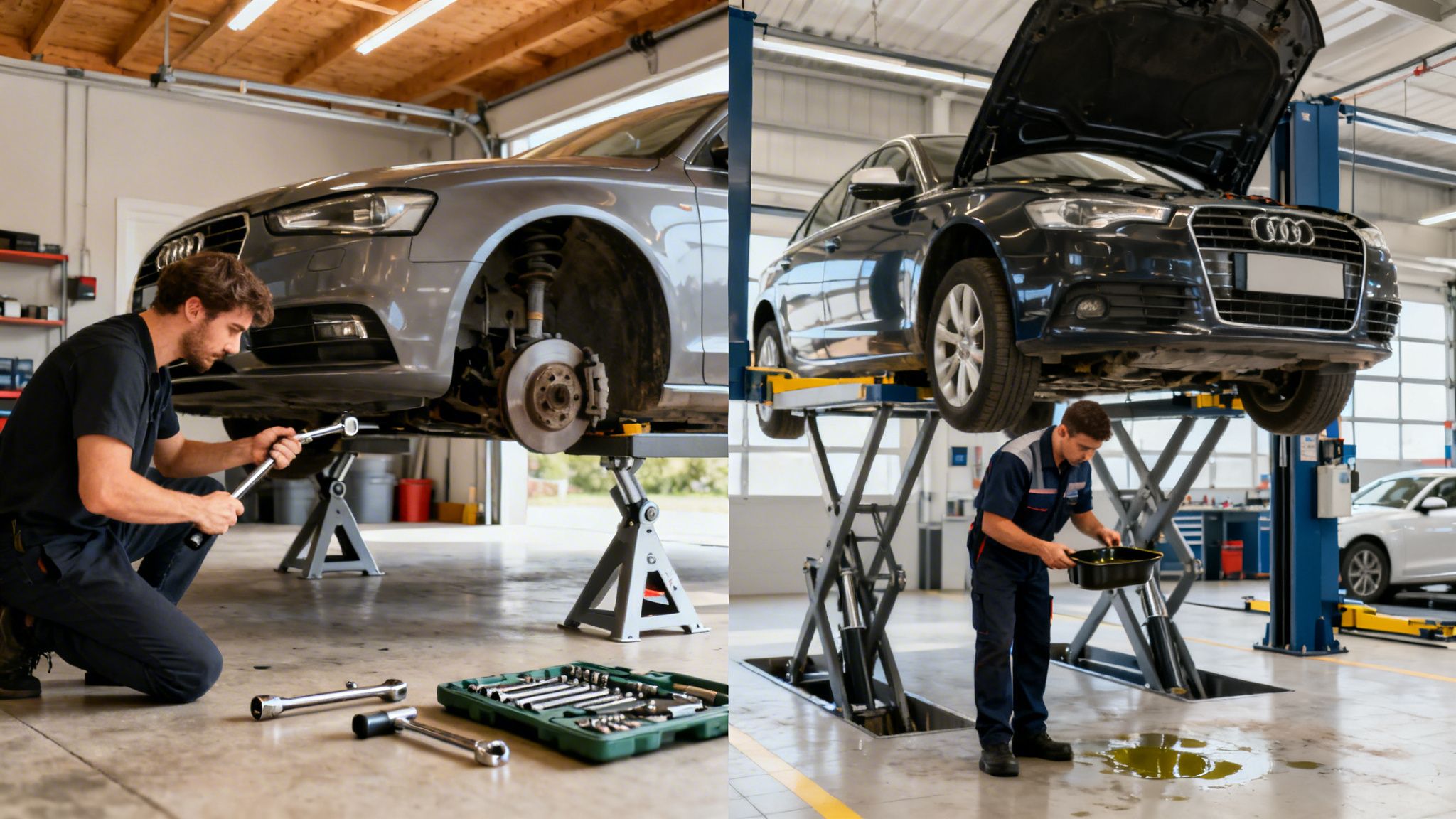
For the dedicated home mechanic, the job starts by safely jacking up the car and securing it on stands. Then you drain the oil and start unbolting the pan itself. Sounds simple enough, right? The problem is, you almost always run into roadblocks.
Often, parts of your exhaust system or even the vehicle's subframe are in the way, meaning you have to take a lot more apart just to get to the oil pan.
A huge pitfall for DIYers is getting the bolt torque just right. If you overtighten, you can bend the oil pan or crush the brand-new gasket, causing another leak. If you undertighten, it will definitely leak. Without a proper torque wrench and the manufacturer's exact specs, you're just guessing, and that can mean doing the whole job twice.
Once the pan is finally off, you have to meticulously scrape and clean every bit of old gasket material and oily gunk from both the pan and the engine block. For the new gasket to seal properly, these surfaces have to be perfectly clean—no exceptions. After that, you fit the new gasket, reinstall the pan, and tighten the bolts in the correct pattern to the exact torque spec.
The Advantages of Professional Service
Choosing a professional service like Kwik Kar in Dallas takes all that guesswork and risk off your plate. Our technicians work on vehicle lifts every day, giving them safe, easy access to your engine's underside. We have the model-specific knowledge and access to service manuals that spell out the exact procedure for your car.
Most importantly, our ASE-certified technicians have all the right tools for the job, including calibrated torque wrenches to make sure every single bolt is tightened to factory specifications. That expertise guarantees the new gasket will have a perfect, leak-free seal the first time. Plus, we back our work with a warranty, giving you peace of mind that the problem is solved for good.
Comparing Your Options Head-On
To make a confident choice, it helps to weigh the pros and cons based on your own situation.
Here's a straightforward comparison to help you decide whether to tackle this job yourself or let the pros at Kwik Kar handle it.
| Factor | DIY Repair | Professional Repair (Kwik Kar) |
|---|---|---|
| Cost | Lower cost for parts, but requires purchasing tools if you don't own them. | Higher upfront cost that includes labor, parts, and a warranty. |
| Time | Can take a full day or weekend, especially for first-timers. | Typically completed in a few hours, getting you back on the road faster. |
| Tools | Requires jack stands, a full socket set, scrapers, a torque wrench, and a drain pan. | All specialized tools and vehicle lifts are on-site and ready. |
| Success Guarantee | Success depends entirely on your skill; a mistake means starting over. | The repair is guaranteed to be done correctly, with a warranty to back it up. |
Ultimately, while the potential cost savings of a DIY repair are appealing, the job comes with significant risks and frustrations. For a repair this critical to your engine's health, having it done professionally ensures it's fixed right, fixed fast, and backed by a guarantee.
Why Choose Kwik Kar for Your Auto Repair Needs
When you start noticing leaky oil pan gasket symptoms, you need a shop in the Dallas area you can count on for a reliable fix. At Kwik Kar, we get it—your top priority is getting your car repaired correctly and without a lot of hassle. That’s exactly why we’ve built our service around solid expertise, honest communication, and making things easy for you.
Our team isn't just a group of mechanics; we're staffed with ASE-certified technicians who have mastered the fine details of jobs just like a gasket replacement. This isn't a repair where "close enough" is good enough. It requires precision, and our experts have the hands-on experience to do it right the first time.
Precision Diagnostics and Honest Pricing
Figuring out the exact source of an oil leak is the most important first step. Is it the oil pan gasket, the valve cover, or maybe the rear main seal? Guesswork is a recipe for a return visit, which is why we use modern diagnostic tools to pinpoint the problem before we ever pick up a wrench.
Our commitment to accuracy means we fix the right part, which saves you both time and money. We believe in being transparent and upfront with our pricing, giving you a clear, honest quote so there are no surprises when you get the bill.
This approach gives you the confidence to make the best decision for your car. We don't just see this as a one-off fix; it's a key part of keeping your vehicle healthy for the long haul.
Service Centered on Your Needs
We know that car trouble throws a wrench in your day. To keep that disruption to a minimum, our Dallas-area shops are open seven days a week. Our goal is to get you back on the road safely and as quickly as possible.
- Guaranteed Quality: We stand behind our work. Your repair is done right, and we guarantee your satisfaction.
- Comprehensive Care: We treat every service as a chance to check on your vehicle's overall health, catching small issues before they become big ones.
- Local Trust: As a staple in the Dallas community, we're dedicated to keeping our neighbors’ cars running reliably and safely.
Choosing Kwik Kar means you’re picking a partner who is committed to the safety and longevity of your vehicle. Let our team handle your car with the skill and integrity you and your car deserve.
Common Questions About Oil Pan Gasket Leaks
Even after you’ve spotted the signs of a leaky oil pan gasket, a few practical questions usually pop up. We hear these all the time from drivers here in Dallas, so let’s get you some clear, straightforward answers to help you figure out your next move.
How Much Does It Cost to Replace an Oil Pan Gasket?
The cost to get a new oil pan gasket installed can be all over the map, running anywhere from a few hundred bucks to well over a thousand dollars. What really drives that price is how much work it takes to get to the pan on your specific make and model.
On some vehicles, the oil pan is right there in the open, making for a pretty simple job. But on others, a technician might have to remove major parts like the subframe or exhaust system just to access it, and that adds a lot of labor time. For a real number, your best bet is always to get a specific quote from a shop you trust, like Kwik Kar, for your exact car.
Can I Use a Stop Leak Additive Instead?
Honestly, we strongly recommend against using a "stop leak" additive. At best, it's a temporary patch. These products work by making the rubber gasket swell up a bit, which might slow down a very minor drip for a short while. They do absolutely nothing for a gasket that's torn, cracked, or has shifted out of place.
Using stop leak additives is a real gamble because they can make you think the problem is solved when it’s actually getting worse. The leak continues behind the scenes, and you could end up with catastrophic engine damage from low oil. A professional gasket replacement is the only way to truly fix the problem and protect your engine for the long haul.
How Long Should an Oil Pan Gasket Last?
In a perfect world, a quality oil pan gasket should last for 80,000 to 150,000 miles, sometimes even longer. But real-world conditions can definitely shorten that lifespan. The high-heat Texas climate, constant Dallas stop-and-go traffic, and even hitting a few rough patches of road can make the gasket material break down much quicker.
Having a technician give it a quick look during your regular oil changes is the best way to catch any wear and tear early on, before a small problem turns into a big, messy leak.
If you're noticing signs of an oil leak, don't put it off and let it become a bigger headache. The ASE-certified technicians at Kwik Kar Oil Change and Auto Care are here to help. Schedule your appointment online or swing by our Dallas shop for an expert diagnosis and a reliable fix.