



It can be pretty jarring to pull out your dipstick and find black oil, but it’s often a sign that your oil is doing exactly what it was designed to do. The main reason it darkens is that it's busy trapping soot, carbon, and other byproducts from the engine's normal combustion process. In a lot of cases, dark oil actually means you have a clean engine.
The Real Reason Your Engine Oil Is Black
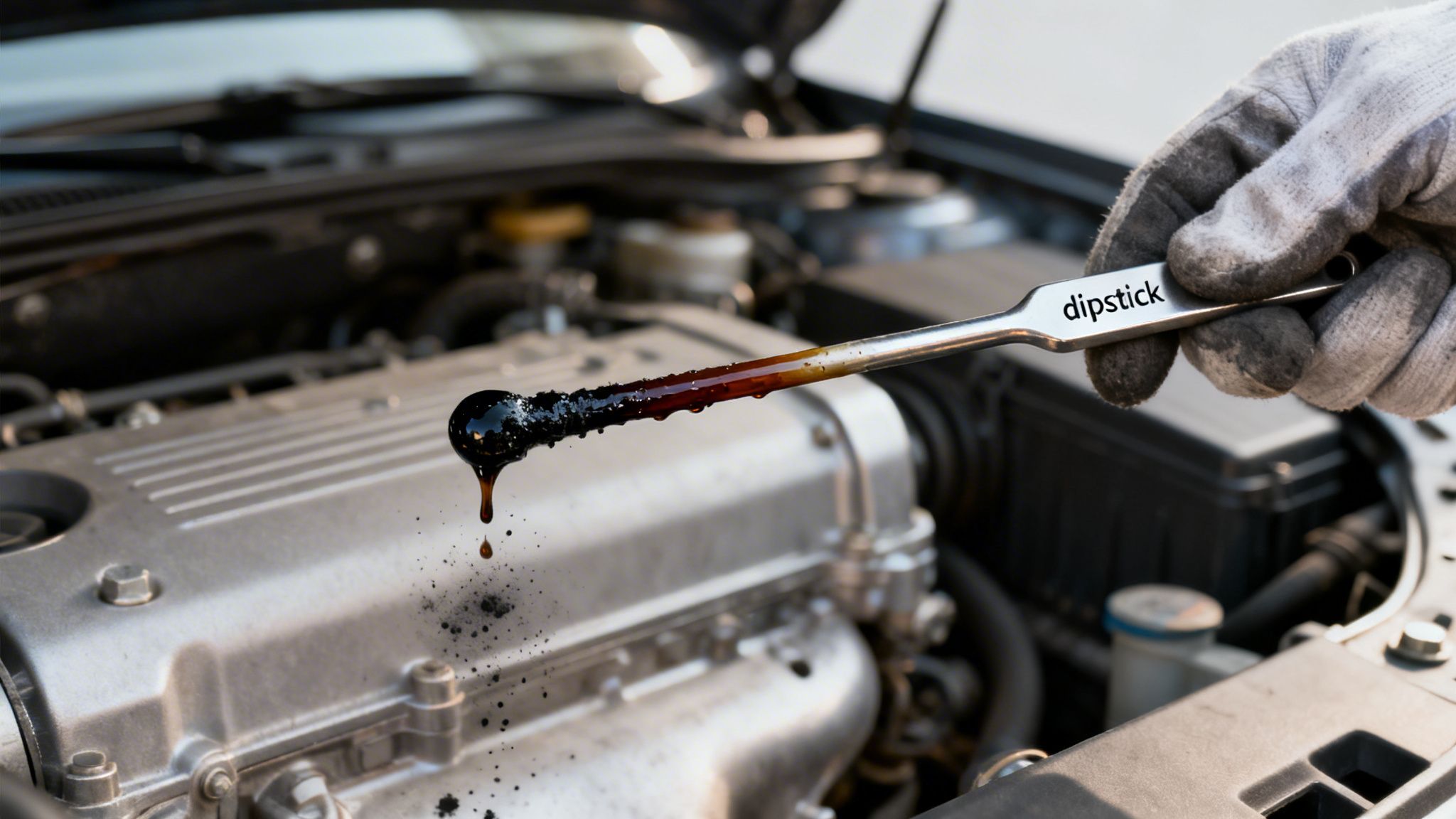
Think of your engine oil like a dedicated cleaning crew for the heart of your vehicle. That fresh, honey-amber color it has in the bottle doesn’t last long once it starts circulating. The second it gets to work, its job is to lubricate moving parts, cool down critical components, and, just as importantly, clean up messes.
This cleaning action is precisely what causes engine oil to turn black. Modern oils contain special detergents designed to capture and suspend contaminants. These contaminants are tiny particles of soot and carbon created by the thousands of controlled explosions happening inside your engine every single minute.
By keeping these particles suspended, the oil stops them from clumping together into harmful sludge. That sludge could clog up narrow oil passages and starve your engine of lubrication. So, seeing black oil is proof that those detergents are on the job, actively protecting your engine.
Soot: The Primary Culprit
The number one reason your oil’s color changes is soot, a natural byproduct of incomplete combustion. This is especially true for newer engines, like gasoline direct injection (GDI) models, which tend to produce more of this particulate matter than older engine designs.
These microscopic soot particles, often smaller than a single micron, get trapped by the oil's detergents. As the oil collects more and more of them, it naturally turns dark. Following a regular oil change schedule, typically every 3,000-5,000 miles for conventional oil, is the best way to get that dirty oil out and keep your engine healthy. For some great user discussions on this, you can read the full thread about oil darkening on BobIsTheOilGuy.com.
While a dark color is usually nothing to worry about, you do need to know the difference between healthy, hard-working oil and oil that’s signaling a deeper problem. The table below gives you a quick guide to help you tell the difference at a glance.
Black Engine Oil At a Glance: Normal vs. Warning Signs
| Symptom | Normal Cause (Usually OK) | Potential Warning Sign (Needs Inspection) |
|---|---|---|
| Dark Brown or Black Color | Oil is doing its job, trapping soot and byproducts from normal combustion. | Oil is extremely thick like tar, has a sludgy texture, or smells strongly burnt. |
| Turns Dark Quickly | New oil is cleaning out leftover deposits from the last oil change. This is very common in GDI or diesel engines. | Oil appears milky, frothy, or like coffee with cream, which points to coolant contamination. |
| Slightly Thinner When Hot | Oil's viscosity (thickness) naturally changes with temperature. This is expected. | Oil feels gritty when rubbed between your fingers or you can see visible metal particles or flecks. |
Knowing what to look for can save you a lot of stress. If you see any of the warning signs in the right-hand column, it's time to have a professional take a closer look.
Why Healthy Engine Oil Naturally Darkens
Think of your engine oil as the cleaning crew for your engine. When it's fresh out of the bottle, it has a clean, golden amber color. But its job isn't to stay pristine—it's to get its hands dirty, protecting your engine from the inside out. Seeing that oil darken over time is actually a sign that it’s working hard.
The main reason for this color change comes down to something called detergency. High-quality engine oils are packed with detergent additives that act like tiny magnets for grime. They seek out and grab onto soot, carbon, and other gunk left over from combustion.
Instead of letting these particles build up and create harmful sludge, the detergents keep them suspended in the oil. The oil then carries these contaminants away to be trapped by the oil filter. As more and more of this grime gets mixed in, the oil’s color naturally shifts from amber to dark brown, and eventually, to black.
Heat and Oxidation: A Tough Environment
Beyond just cleaning, your oil is in a constant battle with two other elements that change its color: intense heat and oxidation. Your engine runs hot, with normal operating temperatures between 195°F and 220°F (90°C-104°C). Every single drive puts the oil through a heat cycle—it heats up, does its job, and cools back down when you park.
This constant heating and cooling alone is enough to slowly darken the oil and its additives over time, much like how heat browns food in a pan. It's a completely normal part of the process.
At the same time, this high heat kicks a chemical reaction called oxidation into high gear. Oxygen molecules from the air attack the oil, causing it to break down chemically. Think of it like rust forming on metal—it’s a slow degradation that changes the oil's structure and darkens it. This is even more of a factor in today's turbocharged engines, which are found in over 40% of new U.S. SUVs. For a deeper dive, you can explore more about oil oxidation and heat on AMSOIL.com.
Key Takeaway: Dark oil is not failed oil. It is working oil. The darkening shows that the oil’s detergents and additives are actively suspending contaminants and resisting breakdown from heat, exactly as they should.
So, what does this really mean when you check your dipstick?
- Your Detergents Are Working: The dark color is proof that soot and grime are floating in the oil, not sticking to your engine’s vital components.
- Your Additives Are Holding Strong: The color change shows that the performance additives are withstanding high temperatures and fighting off oxidation.
- Your Engine is Being Protected: A darker oil confirms that it’s doing its critical jobs of cleaning, cooling, and lubricating your engine.
Ultimately, seeing dark oil on your dipstick between changes is a good thing. It means the oil is doing exactly what you paid for it to do: protecting your engine from the daily grind. This visual confirmation should give you peace of mind, knowing your engine’s cleaning crew is hard at work.
Warning Signs When Black Oil Signals Trouble
So, we’ve established that dark oil is usually a good thing. It means the oil is doing its job cleaning your engine. But sometimes, it’s a red flag for a much bigger problem. The trick is knowing how to tell the difference between normal, hard-working oil and oil that’s screaming for help.
Not all black oil is the same. This chart breaks it down simply, showing you when to relax and when you need to take a closer look.
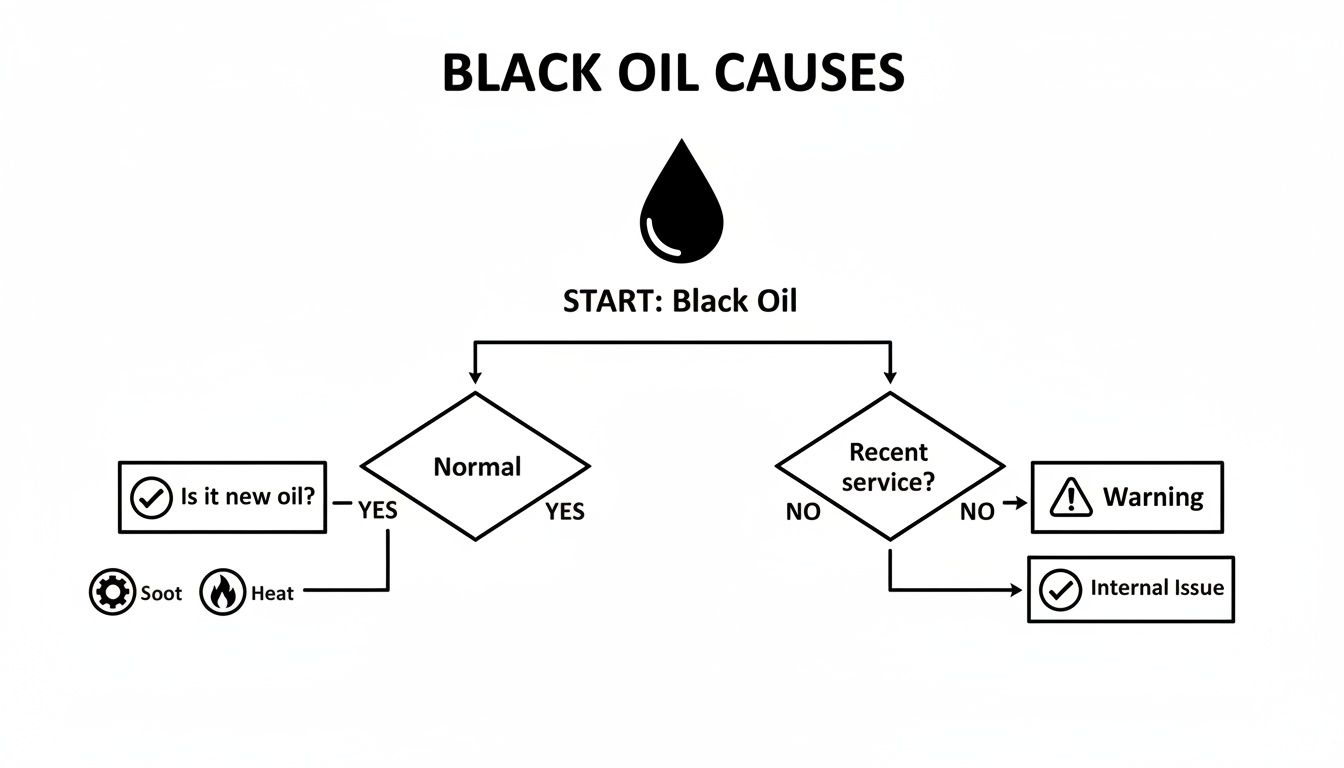
As you can see, there’s a clear line between normal causes like heat and soot, and the more serious issues that need immediate attention. If your oil’s condition points you toward the "Warning" side, it's time to play detective.
When to Suspect a Blown Head Gasket
One of the worst-case scenarios is coolant getting into your oil. This happens when a head gasket fails, allowing antifreeze to mix directly with your engine oil. This doesn’t just make the oil dark; it creates a very distinct milky or frothy substance. Most people say it looks like creamy coffee.
You'll see this gunk on the dipstick or clinging to the underside of the oil filler cap. That milky, dark sludge is a five-alarm fire for your engine. It completely ruins the oil’s ability to lubricate, and running the engine for even a short time can cause massive, irreversible damage.
The Telltale Smell of Fuel Dilution
Another big red flag is the unmistakable smell of gasoline on the dipstick. This points straight to fuel dilution, a problem where raw gas leaks past the piston rings and down into the oil pan. This is often caused by a faulty fuel injector or other combustion problems.
Fuel dilution is a sneaky danger. It thins out your oil dramatically, wrecking its viscosity and wiping out its ability to protect engine parts. The oil will look dark, but it will also be noticeably thinner than usual. If you've also been noticing your car is burning through oil faster than normal, it's definitely time for a professional diagnosis. You can learn about the causes of excessive oil consumption in our detailed guide to understand this better.
A sudden drop in oil pressure on your dashboard gauge, combined with dark oil, is a critical symptom. This indicates the oil is too thin, has been contaminated, or there's a serious internal problem. Turn off the engine immediately and have it inspected.
"Cooked" Oil from Severe Overheating
If your engine has seriously overheated, it can literally cook the oil. This kind of extreme heat breaks the oil down on a molecular level, turning it into a thick, tar-like sludge. This gunk is far too thick to circulate properly and will clog up vital oil passages, starving the engine of lubrication.
When you pull the dipstick and find a substance that looks more like roofing tar than oil, it’s a clear sign your engine has gone through a major overheating event. This isn't something you can ignore—it requires immediate, professional service at a trusted shop like Kwik Kar.
How to Properly Read Your Dipstick
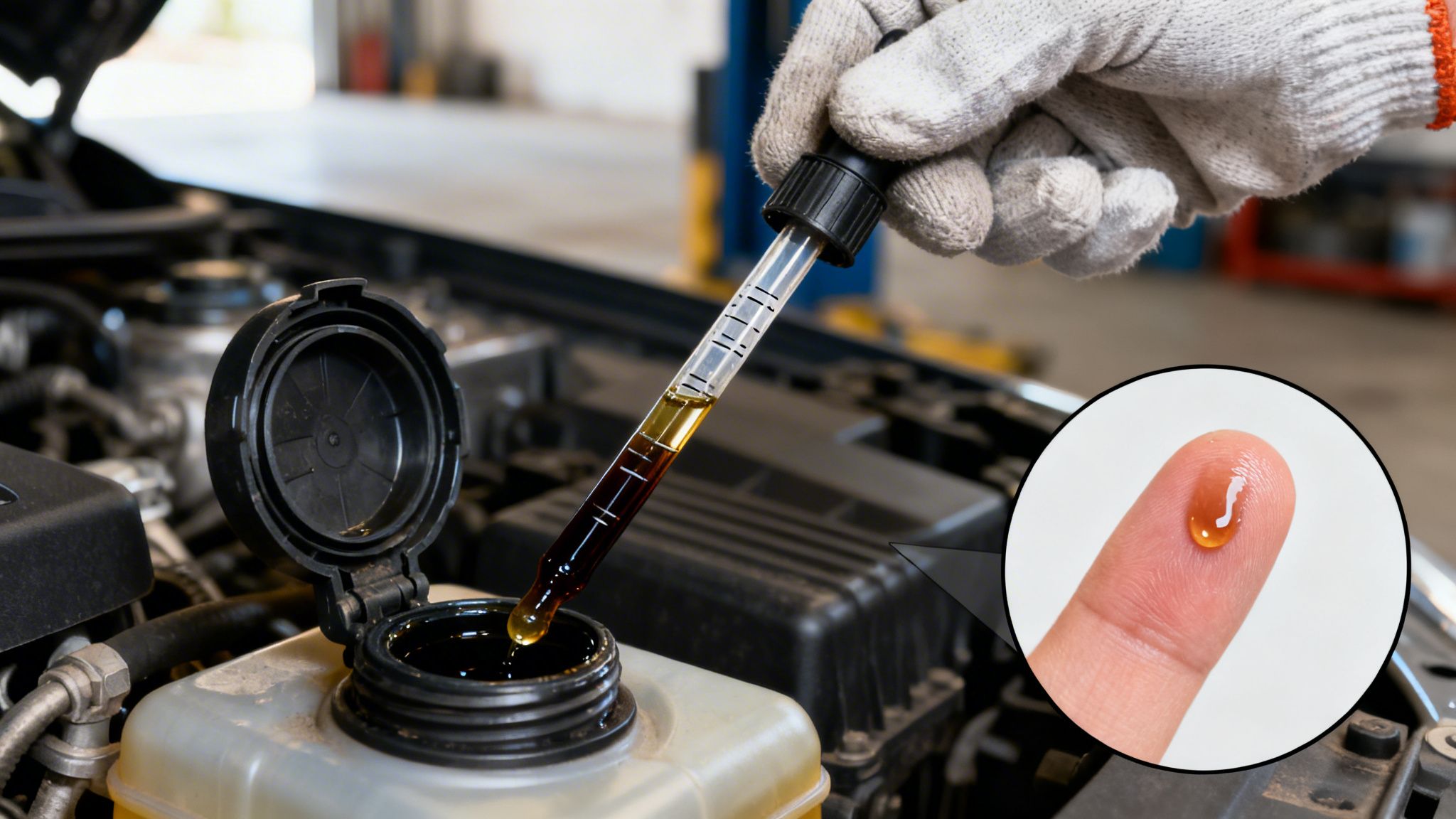
That little dipstick is more than just a tool for checking your oil level; it’s a window into the health of your engine. With a little practice, you can learn to read it like a seasoned pro, turning a simple maintenance task into a powerful diagnostic check.
Getting a good reading is easy. Just make sure your car is parked on a flat, level surface. It's best to check the oil when the engine is cool to get the most accurate level. We have a whole guide if you want to learn more about the pros and cons of checking oil hot or cold.
Simply pull out the dipstick, wipe it clean with a paper towel or a lint-free rag, and slide it all the way back in. Pull it out one more time, and you're ready to inspect.
Assess the Oil Color and Texture
First, take a look at the color. When you get a fresh oil change, the oil is a clean, honey-gold color. As it circulates through your engine, it will naturally darken, moving from medium brown to dark brown and, eventually, black. Don’t panic if it’s dark; that’s normal after a few thousand miles.
What’s more important is the texture. Rub a drop of oil between your thumb and index finger. It should feel perfectly smooth.
If you feel any gritty material or see tiny, shimmering metal flecks, that’s a serious red flag. It’s a sign that internal engine parts could be grinding against each other and wearing out. This is not something to ignore—it needs a professional inspection right away.
Pro-Tip: If the oil on your dipstick looks milky, foamy, or like a creamy coffee, you have a problem. This is the classic sign of coolant leaking into the oil, often from a blown head gasket. This is a critical issue that can destroy your engine if you don't get it fixed immediately.
The Smell Test: What to Sniff For
Your nose can be an excellent diagnostic tool. Healthy, working engine oil has a fairly neutral, oily scent. If you pick up on something else, pay attention.
A strong gasoline smell on the dipstick points to fuel getting into your oil pan, a problem we call fuel dilution. This thins out the oil, drastically reducing its ability to protect your engine’s moving parts.
Another warning sign is a sharp, burnt, or acrid smell. This usually means your engine has been overheating or the oil itself is old and has broken down completely from extreme heat.
Here’s a quick rundown of what you might find:
- Smooth and Dark: This is perfectly normal. It just means the oil is doing its job and cleaning out contaminants.
- Gritty or Metallic: Indicates internal engine wear. Time to see a mechanic.
- Milky or Frothy: This is a sign of coolant contamination and requires immediate professional service.
- Smells Like Gas: Points to fuel dilution, which is seriously compromising your oil's protective qualities.
By using your eyes, fingers, and nose, you can get a much clearer picture of your engine's health. You'll know whether that black oil is just a sign of a job well done or a symptom of a much deeper problem.
Smart Maintenance to Protect Your Engine
Knowing why your engine oil turns black is only the first step. The real trick is using that knowledge to protect your engine with smart, proactive maintenance. This is your best defense against the issues that can turn normal, dark oil into a red flag for a serious problem.
It all starts with something simple: following your vehicle manufacturer’s recommended service schedule. That schedule isn't just a suggestion from the factory; it's a carefully calculated timeline designed to get old, contaminated oil out of your engine before it has a chance to cause real damage.
If you do a lot of driving in demanding conditions, like constant stop-and-go city traffic or dealing with extreme Texas heat, your engine is under extra stress. In these cases, you’ll likely need to change your oil more often than the standard recommendation. For more specific advice, you can check out our guide on when to change your car's oil.
Choose High-Quality Oil and Filters
One of the most effective things you can do for your engine is to use high-quality synthetic oils and premium filters. Think of it like hiring a more experienced, efficient cleaning crew for the inside of your engine. Synthetics are engineered to resist breaking down under high heat and oxidation far better than conventional oils.
This means they hold onto their protective qualities for longer, even when the engine is working hard. They also come packed with advanced detergents that are better at neutralizing contaminants and stopping sludge in its tracks. A premium oil filter is the perfect partner, built to trap smaller particles and hold more gunk without getting clogged. This one-two punch is your engine's best defense against premature wear and tear.
Address Small Issues Promptly
Seemingly minor engine issues can quickly contaminate your oil, and if left alone, they can snowball into much bigger, more expensive problems. Catching them early is absolutely crucial.
- Fix Minor Leaks: Even a small drip can lead to low oil levels. This forces the remaining oil to work harder, heat up faster, and break down prematurely.
- Correct Rich-Running Conditions: If your engine is running "rich" (using too much fuel), that unburned gasoline can wash past the piston rings and dilute your oil, completely ruining its ability to lubricate properly.
- Maintain the Cooling System: An engine that constantly runs too hot will literally "cook" the oil, causing it to thicken into sludge. Keeping your cooling system in top shape protects both your engine and your oil.
While modern synthetic oil technology allows for extended change intervals of 10,000 miles or more, that oil still darkens as it traps billions of tiny soot particles and its additives are used up. Poor maintenance habits just speed up this process, with low-quality oils degrading twice as fast and dirty filters allowing up to 30% more contaminants to circulate through your engine.
Beyond just checking your oil, keeping a clean engine compartment can help you spot potential problems like leaks much earlier. For a great tutorial on doing this yourself, you can learn how to safely clean your engine bay with some expert tips. This kind of proactive approach is the key to ensuring your car stays reliable for the long haul.
Common Questions About Engine Oil Color
It's one of the things we get asked about all the time: "My oil is dark, is that bad?" It’s a great question, and the answer isn't always what you'd expect. To clear things up, we've put together answers to some of the most common questions we hear from drivers just like you.
How Quickly Should New Oil Turn Black?
You might be surprised to hear that it can happen within just a few hundred miles, and it’s usually not a cause for alarm. This is especially true in modern engines like gasoline direct injection (GDI) and, of course, diesels, which naturally produce more soot.
The moment we pour fresh, clean oil into your engine, it starts doing its job. That job is cleaning. It immediately begins scooping up any leftover gunk and deposits from the last oil cycle, which is what causes that color to change. Seeing that oil darken is actually proof that its detergents are working hard to protect your engine.
Key Insight: Don’t judge your oil by its color right after a change. If it’s doing its job right, it won’t stay that honey-gold color for long.
Does Synthetic Oil Turn Black Slower?
Not always. While synthetic oil is far better at resisting heat and oxidation, its number one job is still to keep your engine clean. Top-tier synthetic oils are packed with powerful detergents that are fantastic at trapping soot and other nasty particles.
Because they clean so effectively, synthetics can sometimes look just as dark as conventional oil, just as fast. The real magic of synthetic oil is that it keeps its protective qualities and proper thickness for much, much longer, even when it looks dark. It’s still fighting for your engine long after a conventional oil would have given up.
Can You Switch Between Synthetic and Conventional Oil?
Absolutely. For almost any modern car on the road today, switching between synthetic, a synthetic blend, and conventional oil is perfectly safe. There are old myths floating around about switching oils causing leaks or other engine damage, but those are based on outdated oil formulas and engine technology.
In fact, upgrading an older, higher-mileage engine to a synthetic oil is one of the best things you can do to give it an extra layer of protection and maybe even extend its life.
At Kwik Kar Oil Change and Auto Care, our technicians are experts in all things oil. We can help you pick the perfect type for your car, your truck, and your driving style. Schedule your next service with us today and drive with confidence.