


Your engine sputters. You press the gas, but the car feels like it’s barely moving. Or maybe it takes forever to start in the morning. These are all classic signs your car is trying to tell you something—it’s likely starving for fuel because of a dirty fuel filter.
Think of the fuel filter as the last line of defense for your engine's fuel supply. When it gets clogged with dirt, rust, and other gunk from the gas tank, your engine’s performance takes an immediate hit.
How to Tell If Your Fuel Filter Is Clogged
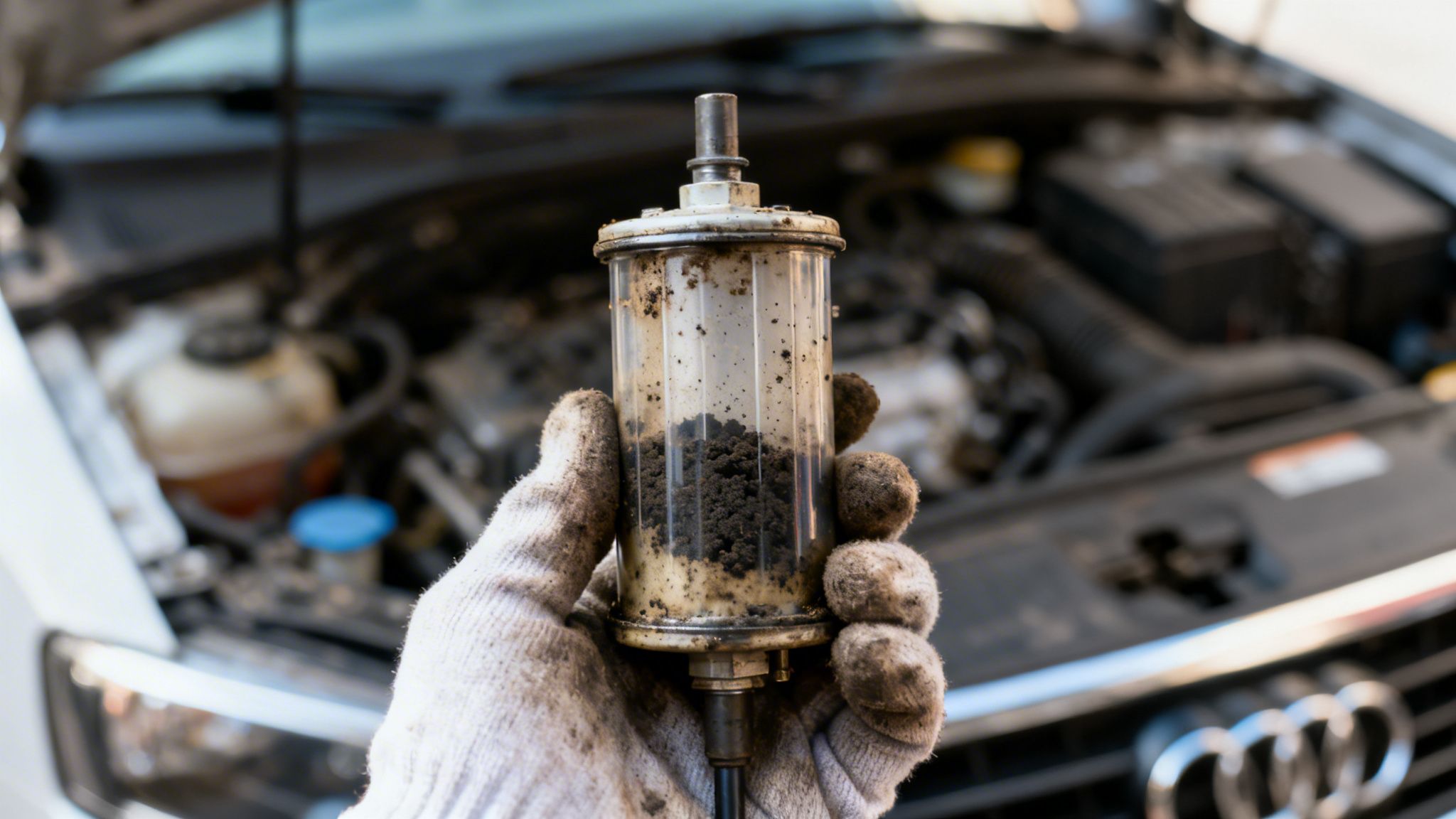
It’s easy to ignore the little hiccups and hesitations your car develops over time, but these subtle warnings can lead to much bigger, more expensive problems. A clogged fuel filter doesn’t just hurt performance; it puts a massive strain on your entire fuel system.
Learning to recognize these symptoms is the first step in getting ahead of the problem. It could be the difference between a simple filter swap and a catastrophic fuel pump failure.
Translating What You Feel Behind the Wheel
Your car communicates with you through sounds and sensations. That sputter isn't just a weird noise; it's a cry for help. A car that feels sluggish and can't get up to highway speed is showing a clear sign of fuel starvation.
Let's break down what these symptoms really mean for your engine.
A Mechanic's Tip: A restricted fuel filter makes the fuel pump work overtime just to keep the engine running. This extra strain can burn out the pump, a repair that can easily cost upwards of $1,000, all for a part that should have been a routine replacement.
The symptoms almost always start small. You might first notice a slight hesitation when you accelerate from a stop sign. Over time, that hesitation can turn into major power loss or even cause the engine to stall completely. The shaking or vibrating you feel could also be related; you can learn more about what causes a car to shake in our detailed article.
To help you connect the dots, we've put together a quick-reference table. It links what you're feeling as a driver to what’s actually happening under the hood.
Common Signs Your Fuel Filter Is Clogged
This table should help you diagnose what's going on when your car starts acting up.
| Symptom | What It Feels Like as a Driver | Why It's Happening |
|---|---|---|
| Engine Sputtering or Hesitation | The car stumbles or jerks when you accelerate, especially under load like going uphill. | The filter is so clogged that it's delivering an inconsistent, sporadic flow of fuel to the engine. |
| Difficulty Starting the Engine | The engine cranks for a long time before finally turning over, or it might not start at all. | The filter is restricting fuel flow, preventing the engine from getting the initial burst of gasoline needed to ignite. |
| Poor Acceleration and Power Loss | The car feels sluggish and weak, struggling to get up to speed or pass other vehicles. | The engine is starved for fuel. It can't produce its full power because the filter is blocking the necessary volume of gasoline. |
| Check Engine Light On | The dreaded light illuminates on your dashboard, sometimes with a "lean" condition error code. | The car's sensors detect an incorrect air-to-fuel ratio because the dirty filter is limiting fuel delivery. |
| Rough Idle or Stalling | The car idles unevenly, shakes, or even shuts off completely when stopped at a traffic light. | Fuel flow is so inconsistent that the engine can't maintain a stable speed, leading it to run erratically or stall out. |
Recognizing these signs early is the key. A simple fuel filter replacement is a quick, inexpensive service that can save you from a major headache and a much larger repair bill down the road.
What Really Clogs a Fuel Filter
So, how does this critical part get so gunked up in the first place? A fuel filter’s job is a tough one, fighting off contaminants from all sorts of places. It's not just about how many miles you've driven; the quality of your fuel and even where you fill up play a massive role in how fast that dirty fuel filter becomes a real headache.
The main offenders are the sediment and junk that build up in your gas tank over the years. Think of it like the sludge at the bottom of an old coffee pot. Tiny particles of rust from an aging steel tank, dirt, and even paint flakes can settle at the very bottom.
When you let your tank run on fumes, the fuel pump is far more likely to suck up that concentrated layer of muck.
Car care experts recommend keeping your fuel level above a quarter tank. This practice helps ensure the fuel pump remains submerged and cool, and it minimizes the risk of pulling in the settled debris from the bottom of the tank, which is a primary cause of a clogged filter.
All that sediment-heavy fuel gets shot straight into the filter, forcing it to work overtime to trap the grime before it can damage your sensitive engine parts.
Contaminants Hiding in Plain Sight
Beyond what's already in your tank, the fuel itself can be a major source of contamination. Let's be honest, low-quality gasoline from stations that cut corners often has more impurities your filter is forced to catch. Water is another big enemy here.
Condensation can naturally form inside your fuel tank from simple temperature swings. Since water is heavier than gasoline, it sinks to the bottom where it can start causing rust and will eventually get pulled into your fuel lines.
Here’s a quick rundown of the most common culprits that will clog a fuel filter:
- Rust Particles: These tiny flakes break loose from the inside of older metal fuel tanks or even from the huge underground storage tanks at gas stations.
- Sediment and Dirt: Small particles can get into your tank during refueling, especially if you're in a dusty or dirty environment.
- Water Condensation: Temperature changes cause moisture to build up in the tank. If it gets into your engine, it can lead to rust and poor performance.
A classic real-world scenario we see is when someone fills up right after the tanker truck has refilled the station's underground tanks. That process stirs up all the gunk that has settled at the bottom of their massive storage tanks, which then gets pumped right into your car. When trying to figure out what's wrong, it's important to separate these issues from broader fuel contamination symptoms that also hurt performance. Your fuel filter is the last line of defense, working tirelessly to protect your engine’s fuel injectors from all this microscopic junk.
How To Diagnose a Clogged Fuel Filter Yourself
Before you even think about booking a visit to the shop, you can play detective right in your own driveway. These aren't complicated repairs; they're simple checks that can give you a pretty strong idea if a dirty fuel filter is what’s causing all your headaches. Think of it as gathering clues so you can make an informed decision.
Your first clue often comes from just listening. Find a quiet spot, start your car, and walk toward the back, near the fuel tank. Can you hear a distinct, high-pitched whining or humming sound? That's a classic sign of a fuel pump working overtime, straining to force gasoline through a blockage. It's one of the most common red flags for a severely clogged filter.
Putting Your Car To The Test
Next, it’s time to pay attention to how your car behaves when you ask for a little more power. A dirty fuel filter loves to make its presence known when the engine is demanding more fuel than it can deliver.
You can safely check this in a couple of everyday driving situations:
- Highway Merging: As you step on the gas to merge with traffic, does the car hesitate or feel like it's being held back?
- Driving Uphill: On a steep hill, does the engine start to sputter or lose power, making it a struggle to keep your speed?
If you're nodding your head to either of those, you're likely dealing with fuel starvation. The engine is crying out for a high volume of fuel for those tasks, but a clogged filter is choking the supply line. That's the sputtering and power loss you're feeling.
This diagram shows exactly what your fuel filter is up against every single day.
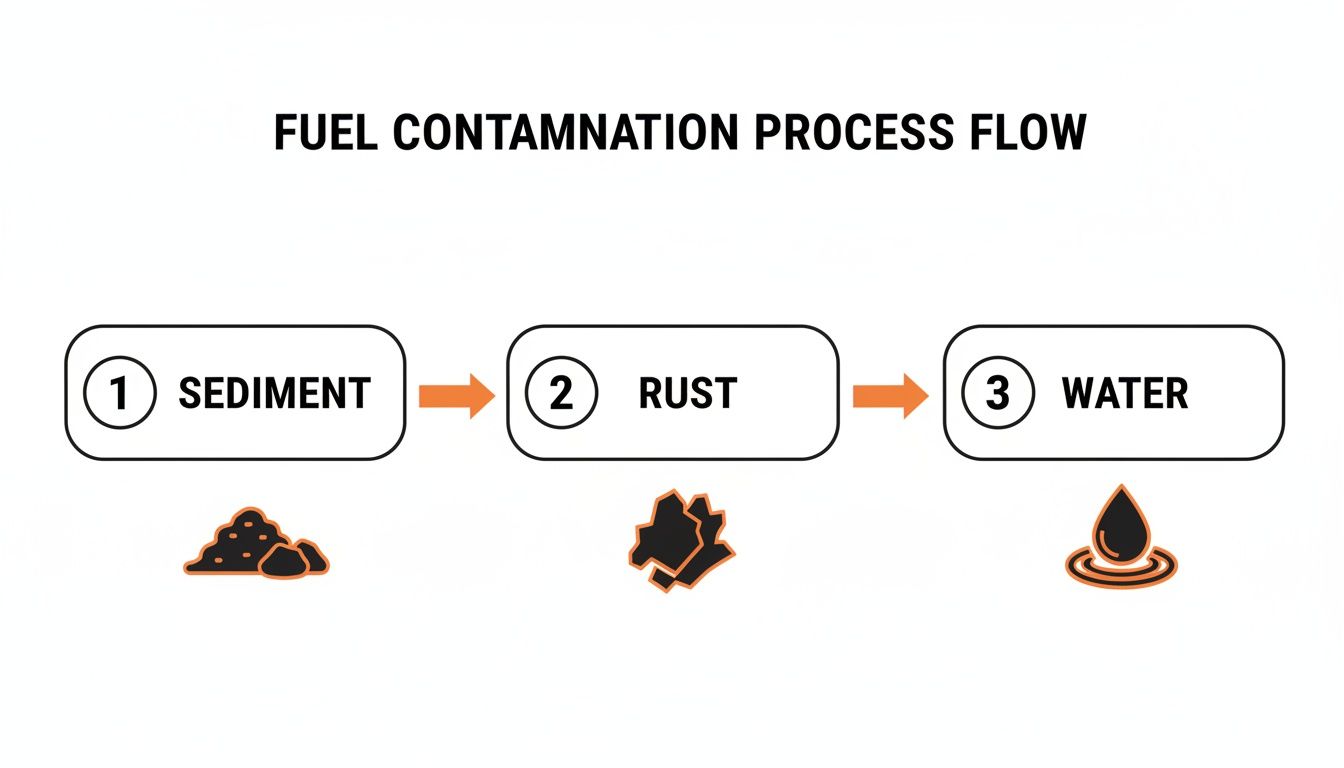
As you can see, that little filter is your engine's last line of defense against all the sediment, rust, and even water that can contaminate the fuel supply.
Locating and Inspecting the Filter
If you feel comfortable popping the hood or looking underneath your car, a quick visual check can offer more clues. But let's be clear: safety is paramount when you're anywhere near the fuel system. Always work in a well-ventilated space, wear safety glasses, and never, ever have any sparks or flames nearby.
First, you’ll have to find the fuel filter, and its hiding spot can vary quite a bit depending on your vehicle.
- In-Line Filter: Many older cars have this. It’s a small canister you can see along the fuel line, typically on the vehicle's frame rail under the driver's side.
- In-Tank Filter: Most modern cars integrate the filter with the fuel pump assembly, which sits inside the fuel tank.
If your car has an in-line filter, you might be able to see it. While you can’t look inside it, you can check the housing for obvious leaks, cracks, or other damage.
For in-tank filters, a DIY inspection or replacement is a job we strongly advise against. Getting to it means removing back seats and opening up the fuel tank, which is a task that carries significant safety risks and requires specialized tools. It’s best left to the pros.
By listening for the pump, testing performance under load, and safely trying to locate the filter, you can build a strong case. If all the signs are pointing to a dirty fuel filter, you'll know it's time to bring your vehicle to Kwik Kar for a professional fix.
Fuel Filter Replacement Schedules and Costs
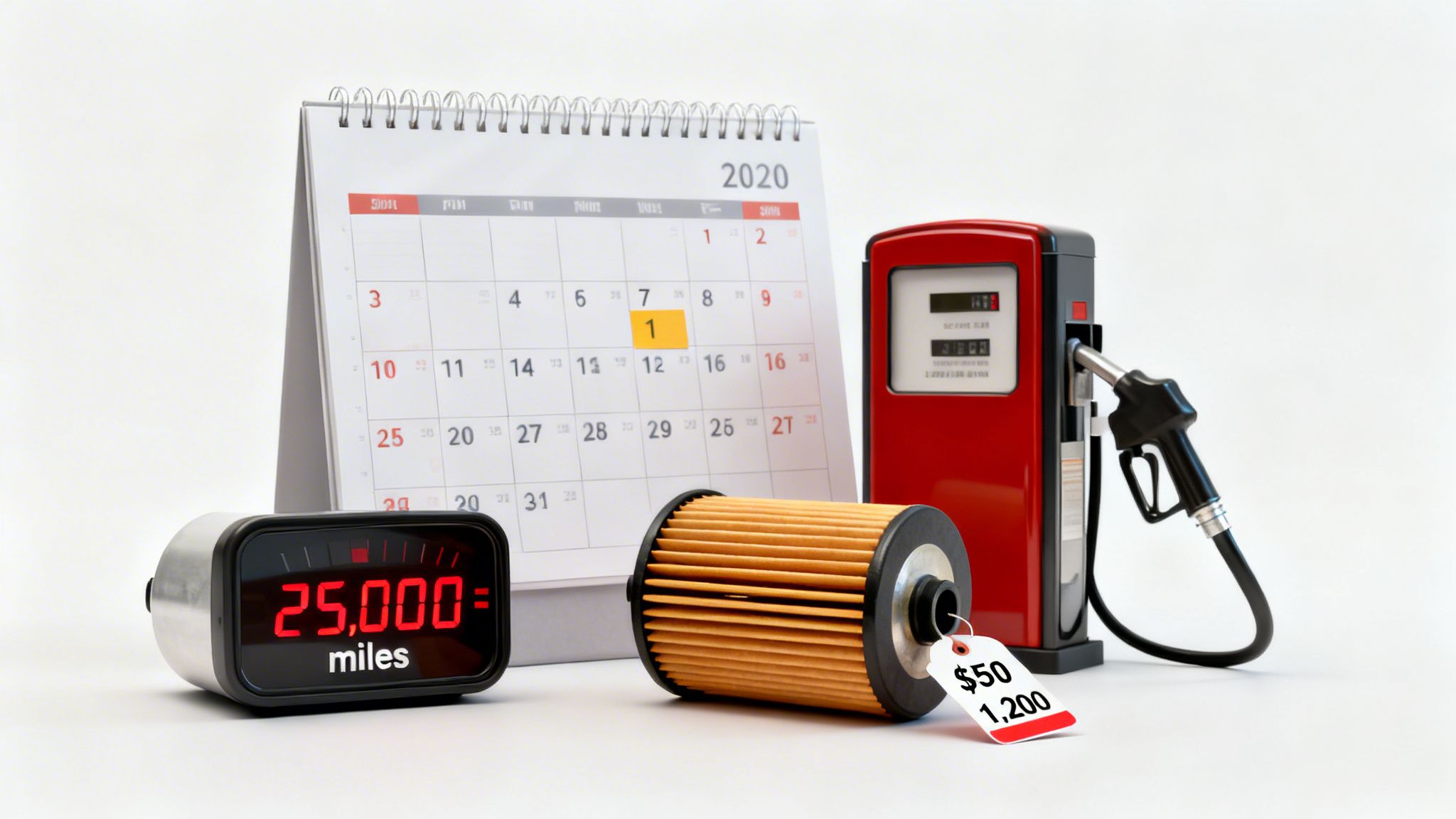
When it comes to your car's fuel system, an ounce of prevention is truly worth a pound of cure. Sticking to a regular fuel filter replacement schedule isn't just a "good idea"—it's one of the simplest and most effective ways to protect your engine's long-term health. Think of it as cheap insurance against some seriously expensive problems down the road.
Most car manufacturers are pretty clear on their recommendations. For a standard gasoline engine, you're looking at a new filter every 20,000 to 30,000 miles. If you drive a diesel truck, that interval gets shorter, usually every 10,000 to 15,000 miles, because diesels are far more sensitive to fuel contamination. Following these guidelines is one of the smartest moves you can make for your vehicle.
The Real Cost of Kicking This Can Down the Road
What happens when you let that filter get clogged? Your fuel pump is forced to work much, much harder to shove gasoline through the gunk. This extra strain is no joke—a dirty fuel filter can make your pump work 30-40% harder than it was ever designed to.
Eventually, that overworked pump is going to give out. We've seen it happen time and time again. What could have been a quick, inexpensive filter swap turns into an emergency fuel pump replacement, with repair bills ranging from $500 to over $2,000. That’s a massive, unexpected expense that can leave you stranded.
A routine fuel filter replacement is one of the most cost-effective maintenance services you can perform. The relatively low cost directly prevents the high cost and inconvenience of a failed fuel pump, which can leave you stranded without warning.
Let's break down the numbers so you can see the difference for yourself.
Cost Comparison: Proactive vs. Reactive Maintenance
| Service | Average Cost | Description |
|---|---|---|
| Routine Fuel Filter Replacement | $75 – $250 | A quick, preventative service performed at recommended mileage intervals. It protects the entire fuel system. |
| Emergency Fuel Pump Replacement | $500 – $2,000+ | A major, labor-intensive repair often caused by a neglected filter. Includes the high cost of the pump itself and extensive labor. |
The math is pretty straightforward. You can prevent a repair bill that could wreck your budget for less than the cost of a nice dinner out. For a deeper look at how these two parts are connected, check out our guide on the relationship between the fuel pump and filter.
Long-Term Financial Planning for Your Vehicle
Factoring in these routine maintenance costs is just part of smart car ownership. It’s always interesting to see how these expenses stack up against other options. If you're curious about the bigger picture, you might find it insightful to compare these upkeep costs with the real cost of owning an EV compared to petrol cars, which gives a different perspective on vehicle expenses.
Ultimately, setting aside a small amount for scheduled maintenance like a fuel filter change is what keeps your car dependable, efficient, and safe for years to come.
When to Trust the Experts for Fuel System Service
There's a lot of satisfaction in figuring out what's wrong with your car, but every smart owner knows when it's time to call in a pro. While you might be able to narrow down a few possibilities on your own, some signs are a hard stop.
If your own diagnostic checks are hitting a dead end, or—and this is a big one—you ever smell a strong, persistent odor of gasoline around your car, that’s your non-negotiable cue. It's time to step away and call for expert help, immediately.
Another major factor is simply where the fuel filter is located. Many cars built in the last 20 years have an in-tank fuel filter. This isn't a job for the weekend mechanic. Getting to it means pulling out the rear seats and the entire fuel pump assembly from the tank. It’s a job that comes with serious safety risks from fuel vapors and requires specialized tools to do right.
A strong, persistent fuel smell is a serious safety hazard. It points to a leak somewhere in the system that needs immediate, professional attention. Never ignore this warning sign—it’s a significant fire risk.
At Kwik Kar, our shop is equipped with advanced diagnostic systems that go miles beyond a home toolkit. These tools let our technicians run precise fuel pressure and flow tests, allowing us to pinpoint the exact source of the problem. This means no more guessing games and no more replacing parts that weren't broken in the first place.
Why Professional Service Matters
Bringing your car into a professional shop like Kwik Kar just eliminates all the guesswork. Our technicians can tell you with certainty if you're dealing with a simple dirty fuel filter or a more complex issue like a failing fuel pump or clogged injectors.
Having that professional diagnosis saves you time, money, and the headache of a wrong call. If you're curious about what a real diagnostic check involves, you can learn more about how a professional car diagnostic test helps us get to the bottom of these exact kinds of issues.
For business owners with a fleet of vehicles, this level of professional care isn't just important—it's essential.
Fleet Maintenance and State Inspections
Keeping a commercial fleet on the road is all about maximizing uptime and keeping costs predictable. One of the most effective ways to do this is by making regular fuel system service, including filter replacements, a standard part of your maintenance schedule.
Key benefits for fleets include:
- Reduced Vehicle Downtime: Proactive filter changes are the best way to prevent a vehicle from breaking down on the job. This keeps your fleet on the road earning revenue, not sitting in a repair bay.
- Lower Operating Costs: A clean, efficient fuel system directly translates to better gas mileage. More importantly, it helps you avoid the massive, unplanned expense of a catastrophic fuel pump failure.
- Compliance and Safety: A well-maintained fuel system is critical for passing state emissions inspections. A failed inspection can take a vehicle out of service, throw your schedules into chaos, and lead to fines.
By trusting your fleet’s fuel system service to the experts at Kwik Kar, you’re protecting your bottom line, ensuring your vehicles are compliant, and keeping your business moving forward without any costly interruptions.
Common Questions About Fuel Filter Maintenance
Even when you know the signs of a failing fuel filter, a few practical questions always pop up. We hear them all the time from drivers in our shop, so let's get you some straight answers to the most common concerns.
Can I Still Drive with a Dirty Fuel Filter?
Technically, your car will probably still start and move with a dirty fuel filter. But should you keep driving it? Absolutely not.
You’re not just dealing with sluggish performance and terrible gas mileage. You’re also running the very real risk of the engine stalling out, maybe when you're merging onto the highway or sitting in a busy intersection.
The real danger, though, is the immense strain you're putting on the fuel pump. It has to work incredibly hard to force gasoline through the clog, which is a fast track to premature and expensive pump failure.
Think of it like this: Ignoring a clogged filter is like trying to run a marathon while breathing through a straw. You might make it a short distance, but you're putting immense strain on your body—or in this case, your fuel pump—and failure is inevitable.
Does a Dirty Filter Hurt My Gas Mileage?
Yes, a clogged fuel filter will absolutely destroy your fuel efficiency. When the engine isn't getting enough fuel, its sensors try to compensate by telling the injectors to spray even more.
Your engine ends up burning way more gas than it needs just to keep running, and you'll see your miles per gallon (MPG) take a noticeable nosedive.
Will It Trigger the Check Engine Light?
It certainly can. A severely clogged filter creates what we call a "lean" fuel condition in the shop—too much air and not enough gas making it to the engine.
Your car’s onboard computer is smart enough to detect this imbalance and will flip on the Check Engine Light to warn you. When we run a diagnostic scan, we often find specific error codes like:
- P0171 (System Too Lean Bank 1)
- P0174 (System Too Lean Bank 2)
A quick professional scan can confirm if a clogged filter is the culprit behind the light.
Is Fuel Filter Replacement a DIY Job?
This is a classic "it depends" situation. On some older cars, the filter is an external, in-line unit mounted on the vehicle's frame. A skilled DIYer with the proper tools can often tackle this job in their garage.
However, most cars built in the last 15-20 years have the fuel filter inside the gas tank as part of the fuel pump assembly. This is a much more involved and potentially dangerous job that's best left to a professional. Working with the fuel tank requires special precautions to avoid fire hazards and other safety risks.
When in doubt, trust the experts at Kwik Kar to handle your fuel system needs safely and correctly. Schedule your service today at https://www.kwikkarspringvalley.com.