



Your SUV still starts every morning, so it is easy to assume everything is fine. Then you notice a few small changes. It takes a little longer to get up to speed on Central Expressway, the idle feels shaky at a red light, or the gas tank seems to empty faster than it used to.
That is usually when people ask a simple question with a surprisingly fuzzy answer. What is included in a tune up service? A lot of Dallas drivers grew up hearing the term, but modern cars do not get the same kind of tune-up your parents’ sedan got years ago.
A tune-up today is less about swapping a standard set of old-school parts and more about checking how the engine is breathing, fueling, firing, and responding to computer controls. Consider it preventive care for your vehicle. You bring the car in while the symptoms are still small, and a technician checks the systems most likely to affect power, fuel economy, drivability, and reliability.
That matters in Dallas. Stop-and-go traffic, long commutes, heat, and high annual mileage can expose maintenance gaps quickly. For work trucks and commercial fleets, small drivability issues can also turn into lost time and scheduling headaches.
Introduction Why Your Car Needs More Than Just Oil Changes
An oil change is important, but it only covers one slice of vehicle health. If your engine hesitates, idles rough, or feels sluggish, fresh oil alone will not fix the root problem.
A tune-up looks at the parts and systems that help your engine do its basic job correctly. The engine needs the right mix of air, fuel, and spark. When one part of that equation drifts out of spec, the car may still run, just not well.
Years ago, a tune-up meant replacing a familiar list of ignition parts on a regular schedule. Modern vehicles are different. Many old components are gone, and newer parts last much longer. That is good news for drivers, but it also creates confusion. People expect a tune-up to be one fixed package, when in reality it depends on the car, the mileage, and what the vehicle is telling the technician.
A Dallas driver might come in thinking they need “just spark plugs,” then find out the issue is a dirty air filter, an ignition coil problem, or a sensor reading that needs diagnosis. Another customer may feel no obvious symptoms at all, but the owner’s manual says the vehicle has reached a scheduled maintenance interval.
Tip: If your car feels “off” but you cannot describe it well, that is still useful information. A good technician can match those driving symptoms to the systems a tune-up checks.
For everyday drivers, the goal is simple. Keep the car dependable and efficient. For fleet vehicles, the goal expands to reducing downtime and staying on schedule. In both cases, a tune-up is one of the clearest ways to catch small issues before they turn into expensive repairs or a roadside breakdown.
The Core Components of a Modern Tune Up Service
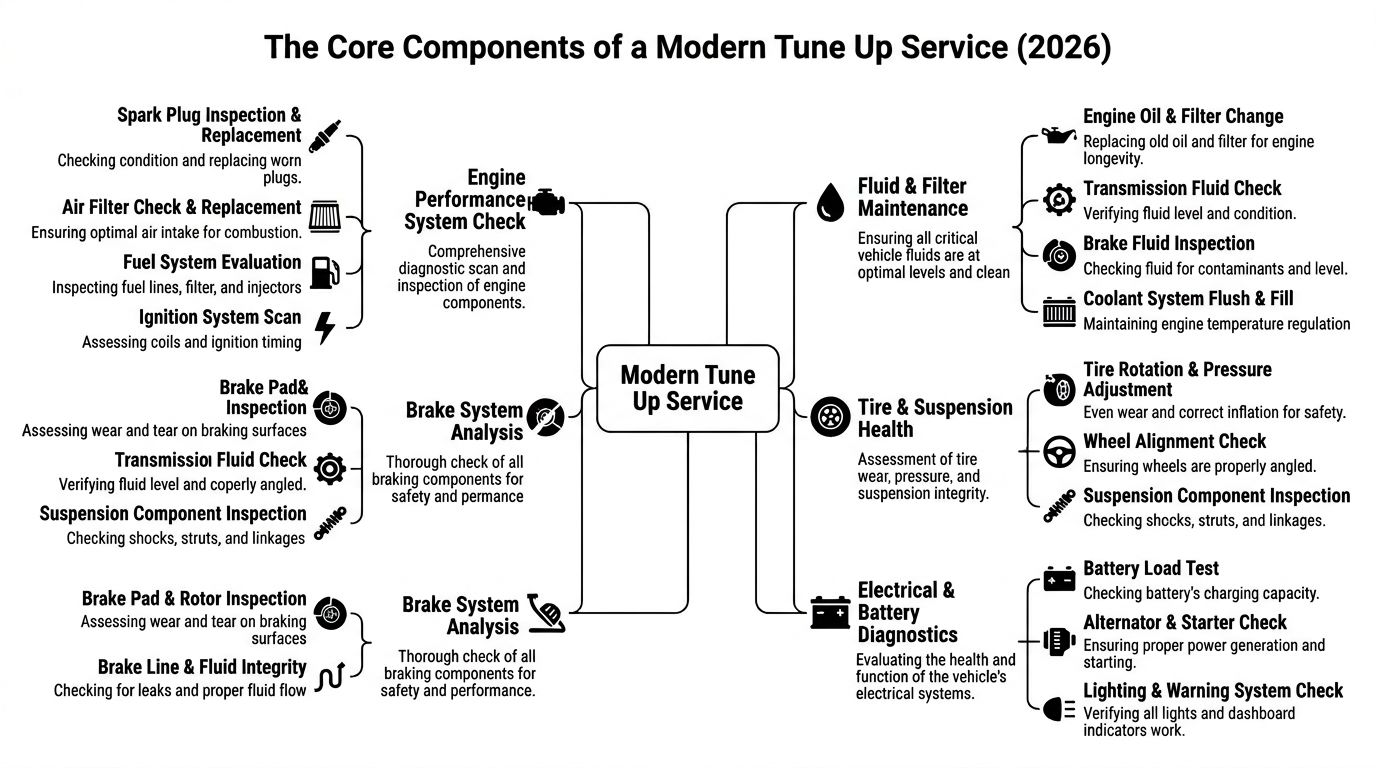
A modern tune-up checks whether the engine is breathing, fueling, and firing the way it should. For a Dallas driver, that matters for more than smooth acceleration. It can affect fuel economy, hot-weather reliability, emissions performance, and whether a vehicle is ready for the state inspection process that often brings maintenance issues to light.
Ignition parts that create the spark
Spark plugs still do one of the engine’s most important jobs. They fire the air-fuel mixture inside each cylinder. If that spark gets weak or inconsistent, the engine may idle rough, hesitate leaving a stoplight, or feel flat during acceleration.
Ignition coils are part of that same chain. On newer vehicles, coils have taken over the work older distributor systems used to handle. If a technician sees misfire symptoms, poor combustion, or trouble codes, plugs and coils both need attention.
Removal matters too. A plug that is overdue for replacement can seize in the cylinder head or break during service. If you want to see why technicians handle that carefully, this guide on a broken spark plug removal problem explains what can happen.
Air flow and filtration
An engine works a lot like a person trying to exercise with a blocked nose. It can still function, but not efficiently. The engine air filter keeps dirt out while allowing enough clean air into the intake system.
A clogged filter can restrict that airflow. According to Tires Plus on what is included in a tune up, a clogged air filter can reduce fuel efficiency by 10 to 25 percent, and worn spark plugs can contribute to misfires that cause up to 4 percent power loss and increased emissions.
Cabin air filters are different. They affect the air your passengers breathe through the vents, not the combustion process under the hood. That distinction matters because many Dallas drivers hear “filter” and assume every filter affects engine performance the same way.
Fuel delivery and injector performance
Fuel delivery has to be even and timed correctly. If an injector is dirty or the system is not metering fuel well, the car may stumble at idle, surge under load, or feel inconsistent from one drive to the next.
That is why a tune-up often includes a fuel system check instead of an automatic injector cleaning. Some vehicles need cleaning service. Others need diagnosis first, especially if the underlying cause is ignition trouble, sensor input, or low fuel pressure.
This matters for passenger cars and for commercial fleets. A single rough-running work truck can disrupt a route, delay a crew, or create unnecessary downtime across the day.
Fluids and condition checks
Fluid checks are often part of a tune-up because they help explain drivability complaints and reveal wear that is easy to miss from the driver’s seat.
A technician may review:
- Engine oil level and condition, especially if dirty oil or low oil could be affecting engine operation
- Coolant condition and level, which is especially important in Dallas heat where cooling problems can get worse fast
- Brake fluid condition, because safety inspections and routine maintenance often overlap in the same visit
- Transmission fluid condition, to help rule out shifting or drivability complaints that feel like engine trouble
For fleet vehicles, these checks also support scheduling. Catching a fluid issue in the shop is much easier than dealing with an overheating van or slipping transmission during a service call.
Belts hoses and visual inspection
A tune-up should also include a careful under-hood inspection. Belts, hoses, battery connections, and visible signs of leakage all tell part of the story.
This is often where small problems show up first. A cracked hose, an aging serpentine belt, corrosion at the battery terminals, or heat damage near wiring may not trigger an immediate warning light. It can still leave a driver stranded on a hot Dallas afternoon.
Diagnostic scanning and sensor checks
The scan tool is one of the biggest reasons modern tune-ups are more precise than the old replace-parts-by-mileage approach. Technicians can read stored trouble codes and watch live engine data while the vehicle is running.
That data helps verify how the engine is performing. Misfire counts, oxygen sensor activity, mass airflow readings, fuel trim data, and other inputs can point a technician toward the precise fault instead of a likely guess.
For Dallas owners preparing for inspection, this step can be especially useful. If the check engine light is on, or if a readiness monitor has not completed, a tune-up visit may uncover the problem before inspection time becomes a last-minute hassle.
Key takeaway: A modern tune-up is a targeted service built around spark, airflow, fuel delivery, system checks, and diagnostic data. The exact checklist depends on the vehicle, mileage, symptoms, and whether the car is a daily commuter, a family SUV, or part of a Dallas commercial fleet.
How the Tune Up Has Evolved with Vehicle Technology
A Dallas driver with a 1995 pickup and another with a 2022 SUV can both ask for a tune-up and mean very different things. The older truck may have needed regular ignition part replacement and manual adjustment. The newer SUV is more likely to need scheduled spark plug service, computer-guided testing, and a check that all systems are ready to support smooth driving and, if required, state inspection.
What drivers used to expect
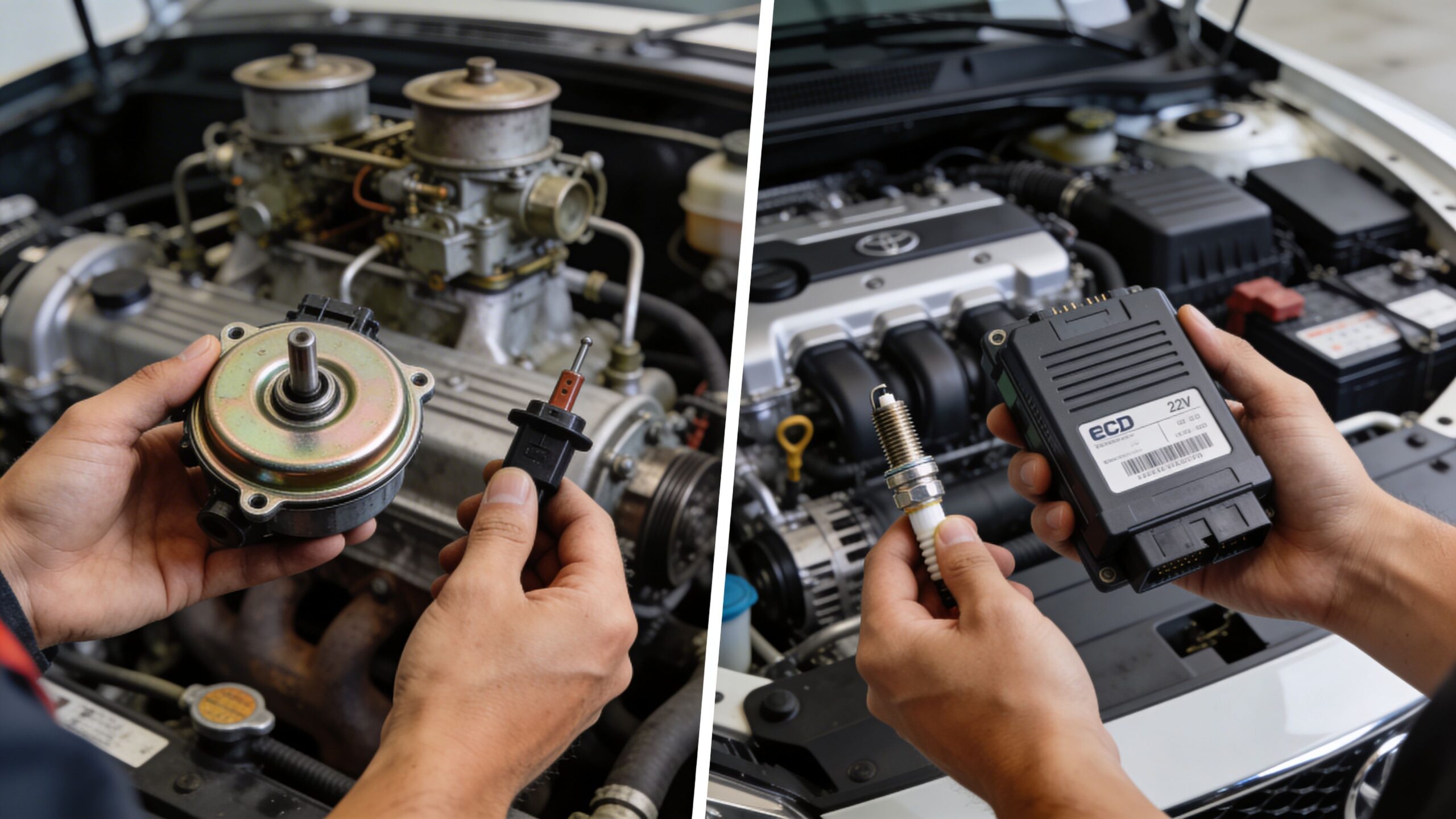
Years ago, a tune-up usually meant replacing a familiar set of ignition parts on a routine basis. Older engines often used distributor caps, rotors, plug wires, and spark plugs that wore out faster and needed more hands-on adjustment.
That older style of service shaped how many drivers still define the term today.
The difference is simple. Older vehicles needed more mechanical correction. Newer vehicles need more precise verification.
What changed under the hood
Modern engines manage spark timing, fuel delivery, and many performance adjustments electronically. Long-life spark plugs last much longer than the parts used in older engines, and many vehicles no longer have the distributor-based components that used to be standard. As the National Institute for Automotive Service Excellence explains, modern tune-up needs depend heavily on the vehicle design, mileage, and manufacturer service schedule rather than a one-size-fits-all parts list (ASE on tune-ups and preventive maintenance).
A good comparison is a thermostat versus a smart home system. Older tune-ups were more manual and more repetitive. Modern tune-ups involve checking whether several connected systems are working together the way the manufacturer intended.
That is why the service can feel less visible. A customer may not see a pile of replaced parts, but the technician may be confirming ignition performance, reviewing computer data, and deciding whether any scheduled components are due now or can wait.
Classic vs modern tune-up services
| Service Area | Classic Tune-Up (Pre-2000s) | Modern Tune-Up (2026) |
|---|---|---|
| Ignition system | Distributor cap, rotor, wires, spark plugs replaced regularly | Spark plugs inspected or replaced by schedule, ignition coils and related performance checked |
| Timing adjustment | Often adjusted manually | Controlled electronically and verified through testing |
| Fuel system | More mechanical adjustment | Injector and fuel delivery performance checked through inspection and diagnostic results |
| Service interval | Frequent routine replacement | Longer intervals based on manufacturer guidance |
| Technician approach | Mechanical replacement and adjustment | Diagnostic testing plus scheduled maintenance |
Why this matters to Dallas drivers
Dallas heat, stop-and-go traffic, and long highway runs put modern systems under steady stress. For a personal vehicle, that may show up as rough starts, reduced fuel economy, or a check engine light at the worst time. For a commercial fleet, it can mean lost route time, missed service calls, and more vehicles sidelined at once if maintenance gets delayed.
There is also the inspection angle. Texas emissions-related checks, where applicable, depend on the vehicle's onboard systems working properly and reporting no active problems. A modern tune-up helps catch performance issues before they turn into an inspection headache or a breakdown during a busy workweek.
Practical takeaway: The modern tune-up still matters. The job has shifted from frequent replacement of old ignition parts to scheduled service and careful testing of the systems that keep Dallas passenger vehicles and commercial fleets running reliably.
Warning Signs Your Car Is Asking for a Tune Up
Most cars do not fail all at once. They give hints.
One day the engine cranks a little longer before starting. Another day the idle feels shaky at a stoplight. Then you press the gas to merge, and the car responds with a delay that was not there a month ago.

Signs you can feel while driving
A tune-up is often triggered by drivability complaints, not by a dramatic breakdown. Watch for symptoms like these:
- Rough idle: The engine feels shaky or uneven while you are stopped.
- Slow acceleration: You press the pedal, but the car hesitates before moving with confidence.
- Hard starting: The engine takes longer to fire up than normal.
- Loss of smoothness: The vehicle may surge, stumble, or feel less refined than it used to.
If your car is sluggish off the line, this article on car accelerating slowly can help you understand whether the cause is related to spark, airflow, fuel delivery, or something else entirely.
Signs you can hear or smell
Drivers often ignore sensory clues because they are hard to describe. Still, they matter.
Knocking, pinging, or a change in engine sound can point to combustion problems. A fuel smell after startup can also signal that the engine is not burning fuel as cleanly as it should.
What matters most is the change. If your vehicle sounds or smells different than it did before, that is a useful maintenance clue.
Dashboard alerts and visible symptoms
A check engine light does not automatically mean you need a tune-up, but it does mean the car wants attention. The onboard computer has detected something outside normal operation.
That could be a misfire, a sensor issue, or another fault that overlaps with tune-up service. The scan tool tells the technician where to begin.
A quick visual overview of these warning signs can help:
When to stop waiting
Some drivers wait until a symptom becomes constant. That usually makes the repair process harder, not easier.
A good rule is simple:
- If the symptom is new, get it checked
- If the symptom is getting worse, do not delay
- If the check engine light is flashing, stop driving and have the vehicle inspected promptly
Tip: The best time for a tune-up is often when the problem is still mild. Small drivability issues are easier to diagnose before they create larger failures or damage related parts.
Typical Tune Up Costs and Timelines in the Dallas Area
A Dallas driver usually asks two practical questions first: how much will this cost, and how long will my car be tied up in the bay?
The honest answer is that a tune-up is more like ordering the right repair plan than buying a one-size-fits-all package. A four-cylinder commuter car with easy spark plug access will usually cost less than a work truck, a higher-mileage SUV, or a commercial fleet vehicle that needs a wider inspection to stay reliable on the road.
What changes the price
Price usually comes down to labor, parts, and how much the technician finds once the inspection starts.
- Engine layout: On some vehicles, spark plugs are easy to reach. On others, components have to be removed first, which adds labor time.
- Parts required: Many newer vehicles use specific spark plug types, ignition components, and filters that cost more than older standard parts.
- Vehicle history: A car that has stayed on schedule is usually simpler than one with long gaps between services.
- Use case: Dallas commercial vehicles often need closer attention because stop-and-go driving, long idle time, and heavy daily mileage wear parts differently than weekend personal driving.
- Related findings: A tune-up visit may reveal worn coils, a dirty throttle body, or intake issues that affect performance but are billed separately from the core service.
If you are comparing local estimates, this guide to Firestone tune-up prices and service package differences can help you see why two quotes with the same label may include different work.
How long it usually takes
Most tune-ups are not all-day jobs, but they are not instant either. Tires Plus notes that tune-up service often takes about 2 to 4 hours, depending on the vehicle and the work involved.
That time can increase if spark plugs are difficult to access, if connectors are brittle from heat, or if the technician finds another issue that should be handled at the same visit. Fleet managers in Dallas should plan even more carefully, since downtime affects route schedules, delivery windows, and driver availability.
Dallas planning advice
Texas drivers also have a practical timing issue to consider. If your vehicle still goes through a state safety inspection, it helps to handle tune-up related drivability concerns before inspection time, especially if a check engine light or emissions-related problem is already on your radar.
For everyday drivers, the easiest plan is to book service on a day with some cushion. For fleet vehicles, ask for an initial inspection and approval call before replacement work begins. That keeps the process clear, helps control downtime, and gives you a better sense of what needs attention now versus what can be scheduled next.
What a Tune Up Does Not Include Common Add Ons
One of the biggest causes of frustration in auto service is the gap between what a customer thinks is included and what the technician is looking at. A tune-up helps restore engine performance. It does not automatically include every maintenance item on the vehicle.
Items usually outside a standard tune-up
A standard tune-up generally does not mean full brake work, tire replacement, suspension repair, air conditioning repair, or major engine repair. Those may be inspected visually if symptoms point in that direction, but they are separate services.
It also does not mean every fluid is automatically flushed or every worn part is replaced. A technician may recommend added work because the inspection found an issue, not because the tune-up somehow failed to cover it.
Here is where customers often get tripped up:
- Cabin comfort items: A weak AC system or poor vent temperature is usually separate from tune-up service.
- Brake repairs: Brake pads, rotors, and hydraulic repairs are safety services, not tune-up basics.
- Tire concerns: Low tread, punctures, and alignment issues may affect drivability, but they are their own category.
- Major leaks or internal engine damage: A tune-up cannot solve a mechanical failure inside the engine.
Why add-on recommendations can still be important
Not every recommendation is an upsell. Sometimes the tune-up inspection identifies something that can cause much bigger trouble if ignored.
The clearest example is the timing belt. According to Kelley Blue Book’s explanation of tune-up-related maintenance, timing belt replacement is commonly required every 60,000 to 100,000 miles, and a failed timing belt can cause engine damage costing over $2,000.
That is why a technician may bring it up during a tune-up visit even though it is not part of a standard spark-and-filter service. It is connected to preventive maintenance and engine survival.
A simple way to read your estimate
When you review a repair order, separate it into three buckets:
| Category | What it means |
|---|---|
| Included tune-up work | The core inspection and replacement items that address engine performance |
| Recommended maintenance | Preventive services due by mileage, age, or visible wear |
| Separate repairs | Problems that need their own diagnosis or labor outside tune-up scope |
Key takeaway: A good tune-up estimate should be clear about what is included, what is recommended next, and what is a separate repair. If those three categories are not obvious, ask for them in plain language.
The Kwik Kar Tune Up Experience in Dallas
For many Dallas drivers, the service experience matters almost as much as the mechanical work. People want to know what the technician found, what needs attention now, and what can wait.
What happens when you bring the car in
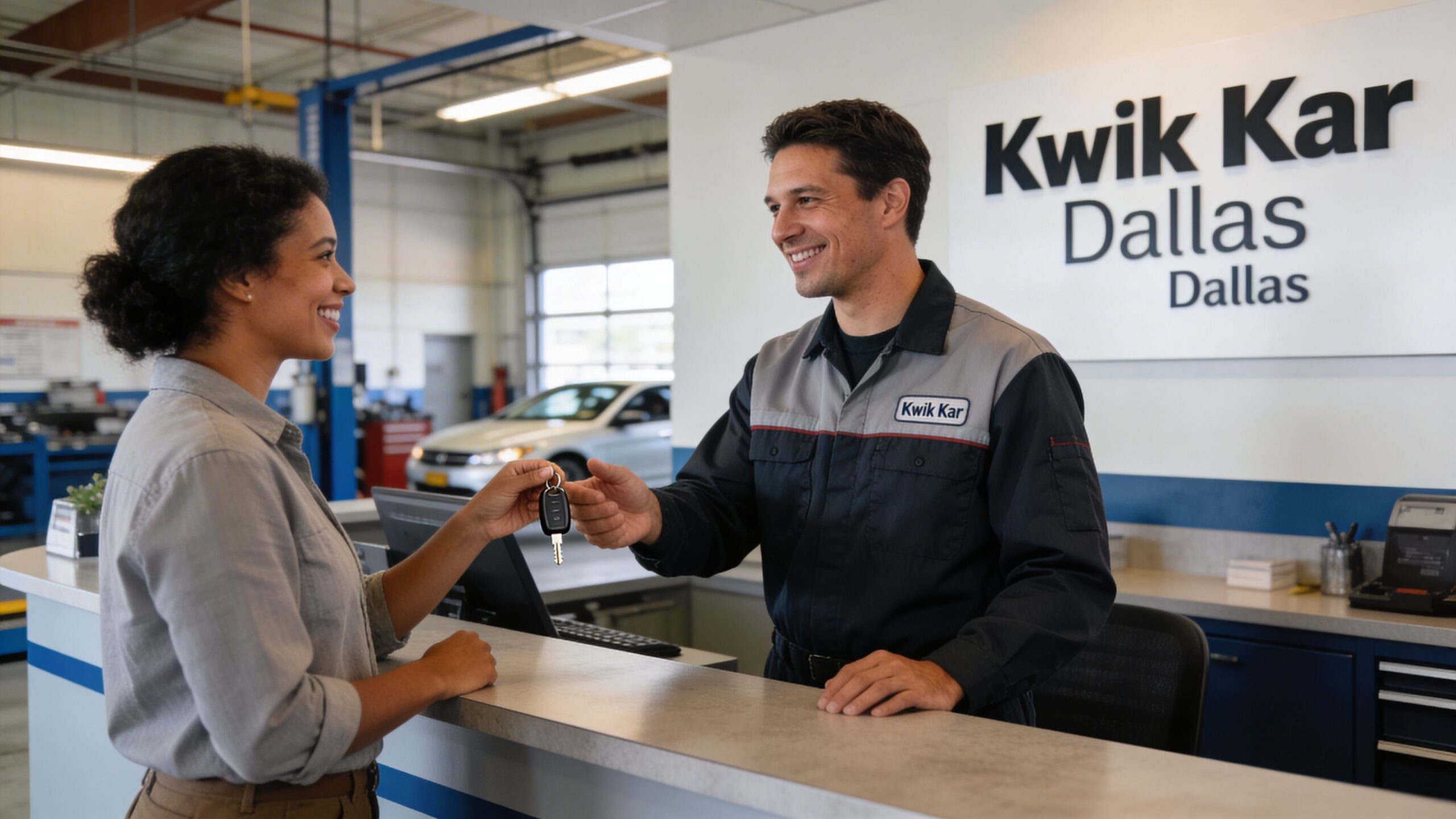
The visit usually starts with a conversation. The advisor asks what you are feeling, hearing, or noticing. Even a vague complaint like “it feels lazy” or “it shakes at lights” helps narrow the diagnostic path.
Then the technician checks the vehicle based on mileage, symptoms, and maintenance history. That may include spark plug condition, air filtration, ignition performance, fuel system behavior, belt and hose inspection, and computer scan data.
The point is to match the service to the vehicle in front of the technician, not to force every car into the same package.
Why Dallas drivers and fleets need a slightly different approach
Dallas driving puts a premium on convenience and uptime. People often need maintenance, diagnostics, and inspection planning handled together because the car is part of daily work and family logistics.
That is even more important for commercial vehicles. Fleet managers are not just trying to keep one engine smooth. They are trying to keep routes moving, drivers working, and annual compliance tasks organized.
One practical gap in the market is combining tune-up work with state-required inspection needs. As noted in this discussion of tune-up service gaps, a key issue for Dallas fleets is bundling tune-ups with annual Texas DPS safety inspections, and 40 percent of light truck owners require both services. The same source notes that Kwik Kar’s 7-day service addresses that need.
What clear communication should look like
Drivers should expect a simple explanation, not a pile of jargon. A useful write-up tells you:
- What was inspected
- What was found
- What is due now
- What can be planned later
That is especially helpful when the car came in for one symptom but the technician found several overlapping maintenance needs. Good communication keeps the visit from feeling like guesswork.
One-stop practical value
For a Dallas customer, the value is not just “getting a tune-up.” It is handling preventive maintenance in a way that fits real life.
That may mean lining up a state inspection with scheduled service. It may mean helping a work truck avoid downtime. It may mean catching a drivability issue before it turns into a tow. For customers comparing options, Kwik Kar Oil Change and Auto Care is one local provider that offers tune-ups, diagnostics, state inspections, and fleet maintenance within the same service model.
Tip: Before authorizing work, ask the advisor to separate immediate drivability fixes from longer-term maintenance planning. That makes the decision easier and keeps the visit budget-friendly.
Frequently Asked Questions About Tune Up Services
How often do I really need a tune-up
Follow your owner’s manual. Modern cars typically need tune-ups at manufacturer-specified intervals ranging from 30,000 to 100,000 miles, and many engines use iridium spark plugs designed to last up to 100,000 miles, according to AutoZone’s tune-up guide.
Is a tune-up the same as an oil change
No. An oil change replaces engine oil and the oil filter. A tune-up focuses on engine performance items such as spark plugs, filters, ignition-related checks, and diagnostic inspection.
Can a tune-up fix my check engine light
Sometimes. If the light is caused by worn spark plugs, misfires, or another issue related to tune-up service, it may. If the cause is a different sensor or repair need, the tune-up inspection helps identify that.
Does a tune-up include a Texas state inspection
Not always. In Dallas, that is worth asking about directly, especially for light trucks and fleet vehicles. Some shops handle both, but many customers assume they are bundled when they are not.
If your car feels rough, slow, or just not like itself, schedule a visit with Kwik Kar Oil Change and Auto Care. The team can inspect what your vehicle needs, explain the findings in plain language, and help you handle tune-up service, diagnostics, and state inspection needs without the usual confusion.