



Your oil light usually doesn’t come on at a convenient time. It happens on the way down FM 157, in school pickup traffic, or halfway through Saturday errands near Debbie Lane when you already have a full day. Most drivers in Mansfield aren’t asking for a lecture about motor oil. They want to know three things fast. How urgent is it, what will it cost, and how long will it take?
That’s where a local plan matters more than generic advice. Mansfield driving isn’t the same as easy highway cruising in mild weather. Heat, short trips, stop-and-go traffic, and long commuter stretches all change how oil holds up. The right answer for one vehicle can be the wrong answer for the next one parked beside it.
If you’re searching for oil change mansfield tx, you probably want straightforward help, not fluff. Here’s how to think about oil changes in Mansfield, what gets checked during service, how to choose the right oil for Texas conditions, and what fleet operators should pay attention to if downtime costs them money.
Your Guide to a Quick and Easy Oil Change in Mansfield
A common Mansfield scenario goes like this. You start the car, glance at the dash, and see the maintenance reminder staring back at you. The vehicle still feels fine. No strange noise, no smoke, no obvious problem. That’s exactly why people put it off.
The trouble is that oil problems usually start without obvious signs. By the time the engine sounds rough or starts running hot, you’re past simple maintenance and into repair territory. For local drivers, that risk goes up because Texas heat and everyday traffic put more stress on oil than people expect.

Why local driving changes the answer
A lot of online oil change advice assumes ideal conditions. Mansfield drivers rarely get ideal conditions. You’ve got quick in-town trips, idling in lines, hot pavement, and plenty of days where the engine works hard before it ever settles into an easy rhythm.
That’s why a local oil change plan should answer practical questions like:
- What oil fits your use: Short-trip family SUV, work truck, commuter sedan, and light fleet vehicle don’t all need the same approach.
- What service should include: A real oil change should check the systems around the oil service, not just swap fluid and send you out.
- What your visit will feel like: Drivers want clear pricing, clear recommendations, and no mystery.
Mansfield drivers usually don’t need more maintenance. They need maintenance timed to the way they actually use the vehicle.
What works and what doesn’t
What works is staying ahead of the reminder light and choosing oil based on real driving conditions. What doesn’t work is following old myths blindly or stretching intervals just because the engine hasn’t complained yet.
If you want your vehicle to stay dependable, treat the oil change as routine protection, not a last-minute rescue.
More Than Just Oil What Our 20-Point Service Covers
An oil change should be more like a physical exam than a simple refill. Draining old oil matters, but the bigger value is catching small wear issues before they become expensive ones.
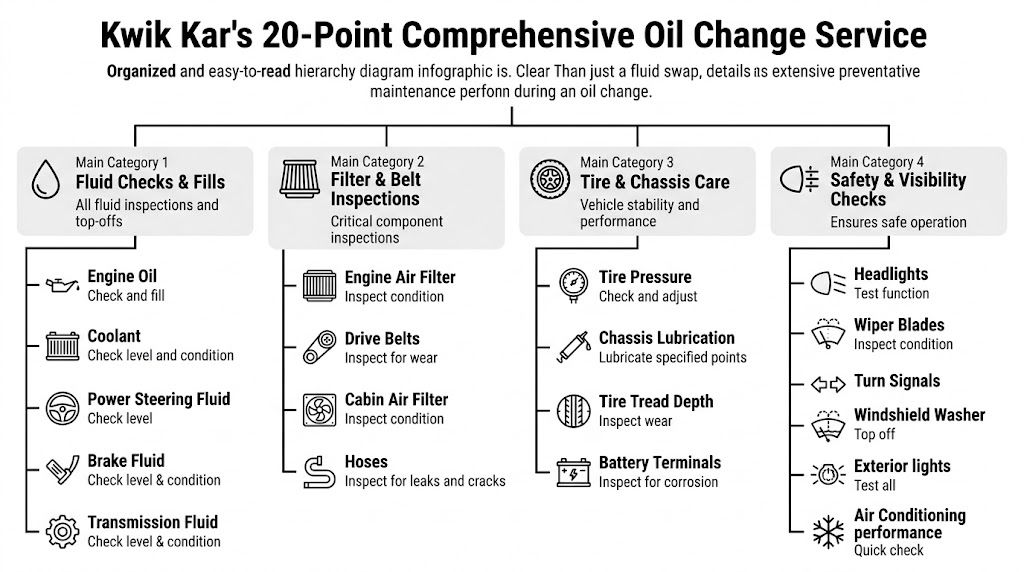
At the Mansfield location, the 20-Point Oil Change service includes up to 5 quarts of oil, a new filter, chassis lubrication on select models, and checks of vital fluids, and it’s recommended every 3,000 miles or 3 months for severe driving conditions. The service is built around high heat and traffic stress, and the same source notes that this interval can help prevent up to 15% increased engine friction in those conditions (Kwik Kar Lube & Tune Mansfield service details).
What gets checked
Here’s what drivers often miss. Engine oil is only one part of the visit. A proper inspection looks at the systems that support cooling, steering, braking, airflow, and visibility.
The 20-point service includes checks such as:
- Oil and filter replacement: Fresh oil and a new filter are the foundation.
- Chassis lubrication: On select vehicles, this helps protect moving suspension or steering points.
- Fluid inspections: Differential, power steering, anti-freeze or radiator, transmission, and transfer case fluids are checked where equipped.
- Airflow items: Air filter inspection, breather element verification, and review of the throttle body and air induction system for buildup or restriction.
- Under-hood wear items: Belt inspection and visual battery assessment.
- Driver visibility and cabin basics: Wiper blade evaluation, washer fluid top-off, A/C or cabin air filter check, and front interior vacuuming.
- Tire and brake basics: Tire pressure adjustment to manufacturer specs and brake fluid level confirmation.
Why this matters in Mansfield
A quick oil drain with no inspection can miss the stuff that strands people later. Low coolant, a weak belt, poor tire pressure, or a dirty filter won’t always trigger a warning light right away.
That’s the reason experienced drivers ask for more than “just the cheapest oil change.” They want a service visit that catches trends early.
Practical rule: If your driving includes heat, traffic, short trips, or frequent idling, your oil service interval should be more conservative than the most optimistic number in the owner’s manual.
What customers should look for
If you’re comparing shops, don’t just ask what oil they pour in. Ask what they inspect, whether they explain findings clearly, and whether they check basic wear items without turning the visit into a hard sell.
For a related look at how multi-point oil services are structured, this overview of a 17-point oil change gives helpful context on what a more complete visit should include.
A useful oil change visit should leave you knowing three things. What was done, what looks healthy, and what may need attention later. That’s what prevents surprises.
Conventional vs Synthetic Selecting the Best Oil in Texas
Most oil decisions in Mansfield come down to habits, not hype. If your vehicle mostly sees short local trips and moderate use, one choice may fit well. If you drive in heavy traffic, commute long distances, tow, idle, or deal with hard summer heat, the right answer often shifts.
Many modern vehicles list longer oil intervals, often 7,500-10,000 miles, but Mansfield’s 95°F+ summer averages can accelerate oil degradation by 20-25%, which is why oil choice and interval need to match local conditions, not just generic handbook assumptions (Mansfield oil interval guidance).
A simple way to think about it
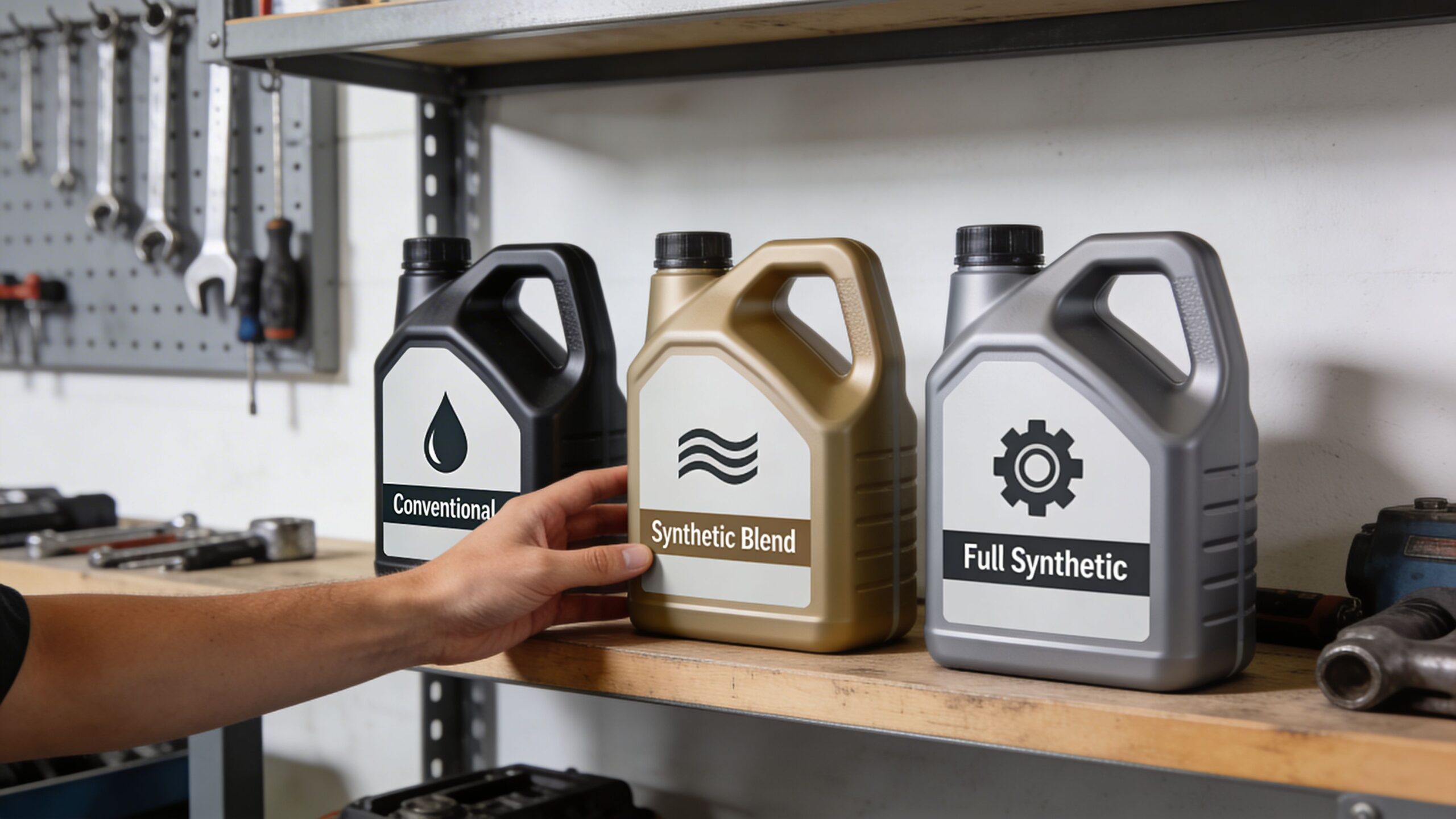
Conventional oil is like a solid everyday work shoe. It handles normal use well when the conditions are reasonable and the interval stays disciplined.
Synthetic blend sits in the middle. It gives you more margin against heat and stress without always jumping to the highest price point.
Full synthetic is closer to performance footwear built for long, demanding use. It’s a smart fit for tougher routines, newer engines with tighter tolerances, and drivers who put their vehicles through more stress.
Oil Type Comparison for Mansfield Drivers
| Oil Type | Best For | Change Interval (Texas Conditions) | Relative Cost |
|---|---|---|---|
| Conventional | Older vehicles, lighter duty use, shorter local driving | More conservative interval | Lower |
| Synthetic Blend | Mixed driving, family SUVs, drivers who want added heat protection | Moderate interval based on vehicle use | Mid-range |
| Full Synthetic | Newer engines, long commutes, traffic-heavy use, high-stress conditions | Longer potential interval, adjusted for Texas heat and driving pattern | Higher |
What usually works best
The wrong way to choose oil is to chase the cheapest bottle or copy what worked in your last vehicle. Engines differ. Driving patterns differ. Texas conditions matter.
The better approach is to match oil type to how the vehicle lives:
- Mostly short trips around town: Oil can age from time and repeated heat cycles even if mileage stays low.
- Daily commuting into heavier traffic: Synthetic or synthetic blend often makes more sense because stress stays high.
- SUVs and light trucks carrying people or gear: These vehicles often benefit from the extra protection of a higher-grade oil.
- Vehicles with manufacturer-specific requirements: Follow the viscosity and specification your engine calls for first.
Generic interval advice breaks down fast in a Texas summer. Your engine doesn’t care what a national article says if your real driving is all heat and stop-and-go traffic.
If you want a plain-English breakdown of the categories, this guide to oil change types is a good companion read.
The main trade-off is simple. Conventional oil may cost less upfront. Synthetic options can make more sense when your engine works harder, your intervals need flexibility, or your vehicle manufacturer calls for it. Cheap oil that doesn’t fit the use case isn’t really the cheaper option.
How Much Does an Oil Change Cost in Mansfield?
Customers asking about an oil change aren’t really asking for one price. They’re asking why one car is on the lower end and another lands higher. That’s a fair question.
In Mansfield, an oil change at Kwik Kar typically runs $40 to $120, depending on the oil type, and average service time is 15-20 minutes. Online specials can reduce the price by 10-20% during promotions (Mansfield FM 157 pricing and timing).
What changes the final price
The biggest variable is the oil itself. Conventional oil usually costs less than synthetic blend, and full synthetic typically costs more because the product is different.
Vehicle requirements matter too. A sedan with straightforward service needs isn’t always priced the same as an SUV or light truck. Some engines call for specific oil grades or service details that affect the final ticket.
Where the value really shows up
A cheap oil change isn’t automatically a good value if it skips inspection points or uses the wrong oil for the vehicle. Good value is a fair price, the right product, and enough inspection to help prevent the next problem.
Here’s the practical breakdown:
- Lower end of the range: Often fits basic oil service with more economical oil choices.
- Middle of the range: Usually reflects synthetic blend or vehicles with moderate service needs.
- Upper end of the range: More likely with full synthetic or vehicles with more demanding requirements.
Time matters too
For busy drivers, cost isn’t just money. It’s also time away from work, errands, and family plans. A service that averages 15-20 minutes changes the equation because you’re not giving up half the day for routine maintenance.
If you want a broader primer on pricing factors, this complete guide on how much an oil change costs adds useful context.
The smartest move is to ask two questions before you approve service. What oil does my vehicle need, and what specials are available today? That’s usually where drivers find the balance between protecting the engine and keeping the visit affordable.
What to Expect During Your Kwik Kar Service Visit
A lot of drivers delay service because they don’t want friction. They don’t want confusion at the counter, vague recommendations, or a long wait with no updates. A good visit should feel simple from the minute you pull in.
At the Mansfield shop, CARFAX shows a 4.7/5 rating across 521 reviews, with customers often mentioning waits under 30 minutes and 15-20 minute service cycles, reflecting 90%+ positive feedback on efficiency (CARFAX reviews for Kwik Kar Lube and Tune of Mansfield).
From arrival to write-up
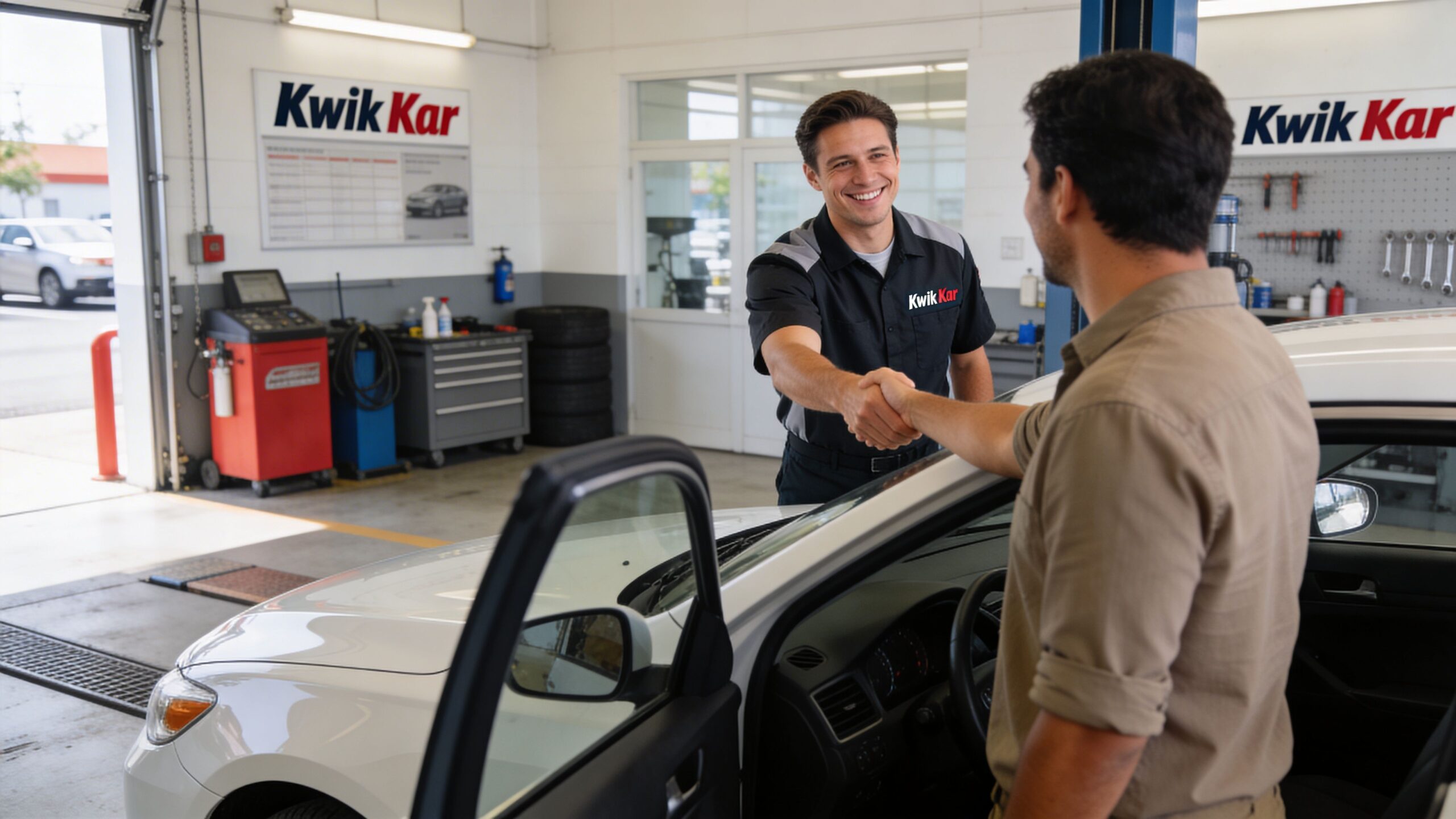
You pull in and a service advisor starts with the basics. What are you driving, what oil does it take, and are there any concerns you’ve noticed lately. If you’ve been smelling something odd, hearing startup noise, or noticing the reminder came on early, say it up front. That helps the technician look with purpose.
The best service advisors keep it plain. They explain what’s included, what may need a closer look, and what’s optional.
During the inspection
Once the vehicle is in service, the process should stay transparent. If something needs attention, the technician or advisor should be able to show you what they’re seeing. A dark air filter, low fluid, or worn belt is easier to understand when someone points it out instead of tossing jargon at you.
That’s one of the biggest differences between a smooth visit and a frustrating one. Clear communication builds trust faster than sales talk ever will.
If a shop can’t explain a recommendation in simple language, ask more questions before approving anything extra.
Before you leave
A strong service visit ends with clarity:
- What was completed: Oil type, filter replacement, and included inspection items.
- What to monitor: Anything that isn’t urgent today but may need attention later.
- What the next interval should be: Based on your vehicle and how you drive it.
Drivers usually don’t mind maintenance. They mind uncertainty. When the process is organized and the recommendations make sense, routine service feels easy.
Why Choose Kwik Kar for Your Mansfield Auto Care
Drivers in Mansfield usually need more than a place that can swap oil fast. They need a shop that fits real life. That means weekday convenience, weekend availability, practical maintenance, and the ability to handle more than one item in a visit when timing matters.
For everyday drivers, that may mean pairing an oil change with a state inspection or asking for a quick look at a filter, belt, or fluid concern. For business owners, it often means something bigger. Keeping several vehicles legal, serviced, and on the road without constant scheduling headaches.
Why local convenience matters
Seven-day availability and flexible scheduling help because vehicle problems don’t line up neatly with work calendars. Walk-ins matter. So do online scheduling options. A useful local shop should make routine maintenance easier to keep up with, not harder.
This is one place where Kwik Kar Oil Change and Auto Care fits the job. The business offers oil changes, state inspections, preventive maintenance, diagnostics, and repair support with service designed for sedans, SUVs, and light trucks.
Fleet needs are different
Fleet service is the part most local oil change articles ignore. That’s a mistake, especially in a market with a lot of commercial driving.
A key differentiator in Mansfield is that customized fleet programs address a 15% rise in local fleet registrations and can integrate oil changes with required Texas state inspections to support uptime and help control operating costs (Mansfield fleet program overview).com/mansfield-broad-st/)).
For a fleet manager, the trade-offs look different than they do for a family driver:
- Downtime is expensive: A vehicle waiting on service isn’t earning.
- Scheduling has to scale: One truck is simple. Several vehicles across different routes is not.
- Inspections can’t be an afterthought: State compliance has to happen on schedule.
- Preventive service beats reactive repair: Catching issues early keeps disruptions smaller.
A fleet program works when it reduces chaos. The oil change is only one piece. The scheduling, inspection coordination, and recordkeeping matter just as much.
If you manage multiple vehicles, it also helps to keep a standardized process in writing. This fleet vehicle maintenance checklist is a useful outside resource for organizing service routines, inspection habits, and follow-up across a working fleet.
What works better than bargain hunting
The wrong strategy is bouncing from shop to shop based only on coupon pricing. That can work for a one-time errand. It doesn’t work well for long-term vehicle care or fleet consistency.
The better strategy is finding a shop that can handle the routine work, flag developing issues early, and keep service records organized enough that you’re not guessing what happened last visit.
Your Oil Change Questions Answered
Do I need an appointment or can I just drive in
Many drivers prefer the flexibility of driving in. If your schedule is tight, an appointment can make the day easier. Either way, it helps to know your vehicle’s oil requirements before arrival so the visit goes more smoothly.
What happens if you find another problem during the inspection
A good shop should explain the issue in plain language, tell you whether it’s urgent, and separate immediate needs from items you can plan for later. You should know what’s recommended before any additional work is approved.
Can you handle special oil requirements for diesel trucks or European cars
Some vehicles need specific viscosity grades or manufacturer-approved oil standards. The right first step is always checking the vehicle requirement, not assuming one oil fits everything. That matters even more for diesel applications, turbocharged engines, and import models.
Will using an independent oil change shop void my warranty
Routine maintenance from a qualified service provider doesn’t automatically void a manufacturer’s warranty. The key is using the correct oil, the correct filter, and keeping records of the service performed.
What if I’m also comparing other repair options
If your visit uncovers something beyond maintenance, it helps to understand the range of auto repair services so you can compare repair categor…net/services/auto-repair/) so you can compare repair categories and ask better questions before approving more involved work.
If you’re due for an oil change and want a straightforward service experience, Kwik Kar Oil Change and Auto Care is a practical place to start. Check your vehicle’s oil needs, look for current specials, and schedule the visit before a simple maintenance item turns into a repair problem.