



You’re driving through Dallas traffic, the AC is on, brake lights are everywhere, and then you catch a red battery symbol flashing on the dash. The car still runs, so it’s tempting to hope it’s a glitch and keep going.
That’s usually the wrong move.
A battery light flashing doesn’t just mean “the battery might be weak.” It usually means the car’s charging system is cutting in and out while you drive. That can turn into a no-start, a stall, or a dead vehicle at the next light if the problem gets worse fast enough. In Dallas heat and stop-and-go traffic, charging problems don’t get gentler with time.
That Flashing Red Light on Your Dashboard
Most drivers notice the light in the worst possible moment. You’re already on Central Expressway, I-635, or waiting through another long light cycle, and suddenly a warning that looked small a minute ago feels urgent.

That reaction is reasonable. A flashing red light gets attention because it should. The good news is that this warning usually follows a pattern. Once you understand what the light is telling you, the next decision gets a lot simpler.
What the warning usually means
When that symbol flickers instead of staying on solid, the car is often dealing with an intermittent charging problem. The engine may still be running normally, but power generation and battery charging aren’t staying consistent. That’s why some drivers also notice dim lights, weak accessories, or odd electrical behavior at the same time.
Practical rule: If the battery light is flashing while you’re driving, treat it like a charging-system problem first, not just a battery problem.
Why Dallas drivers feel this more acutely
Local driving conditions matter. Heavy traffic, long idling periods, short errand runs, hot weather, and high accessory use all put stress on the charging system. If a belt is slipping, a cable is loose, or an alternator is fading, those conditions tend to expose it.
For fleet managers, this matters even more. One warning light on one vehicle can be an isolated repair. The same pattern across several units usually points to missed preventive checks, battery terminal buildup, belt wear, or repeated short-trip use.
A flashing battery light doesn’t always mean the repair will be expensive. Sometimes the problem is as simple as a bad connection. What matters is not guessing and not waiting too long.
Understanding Your Car's Charging System
The battery symbol on the dash is a little misleading. In practice, it’s often a charging system warning light.
Think of it this way. The battery is stored power. The alternator is the device that keeps that power supplied while the engine runs. The voltage regulator helps control that supply so the system doesn’t get too little or too much.
According to this charging system explanation from Toole’s Garage, a flashing battery light signals an intermittent failure in the charging system, most commonly caused by a failing alternator. The same source notes that alternator issues account for approximately 40-50% of battery light-related service calls in major U.S. markets like Dallas, and that flickering points to inconsistent voltage output, typically dropping below the normal 13.5-14.5 volts during engine operation.
Battery versus alternator
A lot of people assume the battery is always the main culprit. Sometimes it is. But if the engine is running and the light starts flashing, the more important question is whether the car is still producing enough electrical power to support ignition, fuel delivery, lighting, electronics, and battery charging all at once.
Here’s the simple comparison:
| Component | What it does |
|---|---|
| Battery | Stores power for starting and supports electrical loads when needed |
| Alternator | Generates electrical power while the engine runs |
| Voltage regulator | Controls charging output so voltage stays in the proper range |
If you want a clearer primer on how those parts work together, this battery and charging basics guide is a useful starting point.
Why flashing is different from dead
A dead battery after the car sat overnight is one kind of problem. A battery light flashing while the engine is already running is a different one. That usually means the charging system is dropping in and out, not that the battery started weak that morning.
When the charging system stops doing its job, the car starts living off stored battery power. That reserve doesn’t last forever.
That’s why drivers sometimes make a common mistake. They replace the battery first, the car starts, and then the same warning comes back because the actual fault was the alternator, belt, regulator, or wiring.
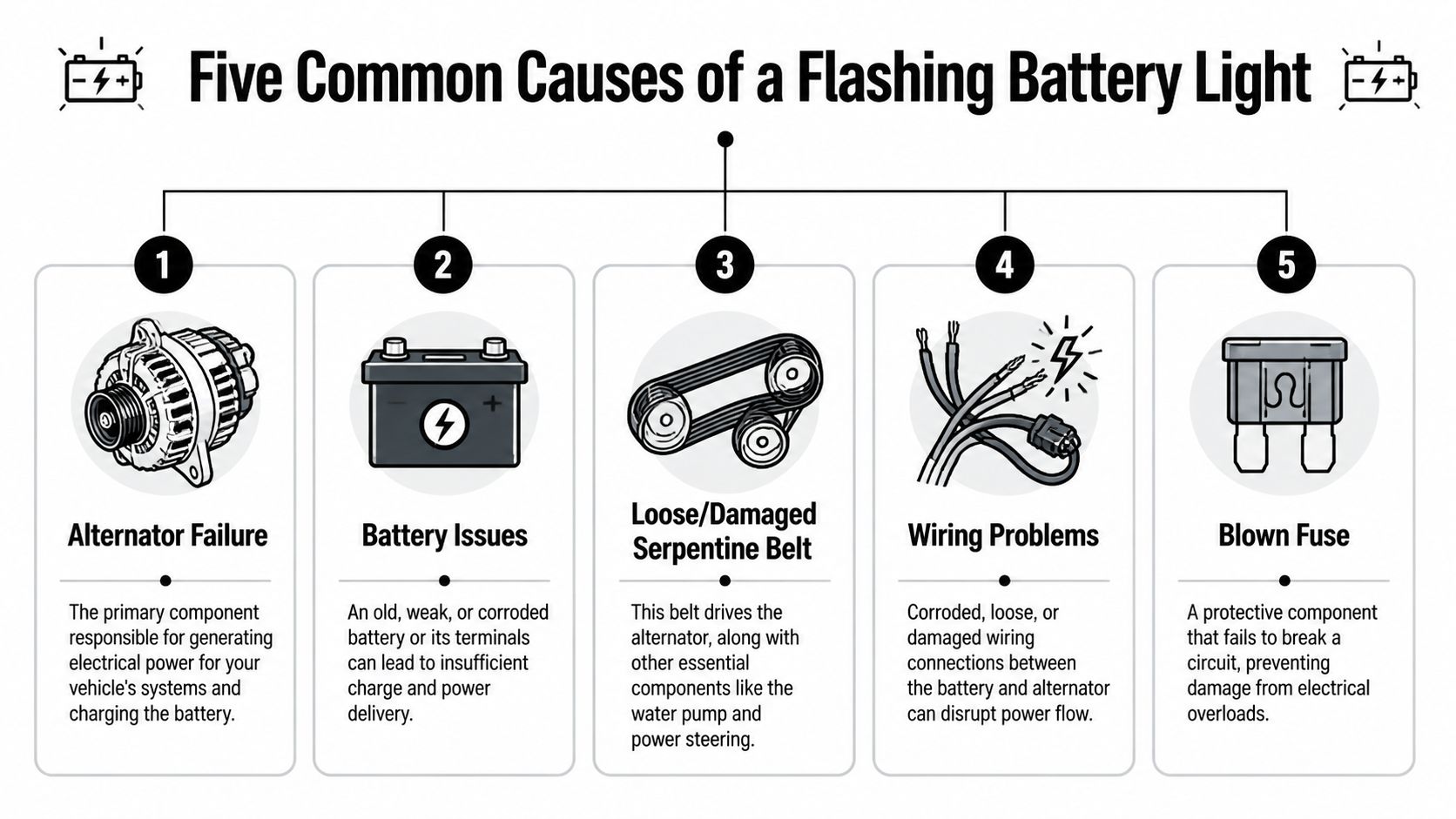
Five Common Causes of a Flashing Battery Light
A flashing battery light usually starts with one part of the charging system dropping out for a moment, then coming back. In Dallas, I see that happen more often in heavy traffic, high heat, and stop-and-go driving, where the alternator, belt, and battery are all working harder than usual. For fleet vehicles, the pattern matters even more because one intermittent charging fault can turn into a roadside breakdown on a delivery route or service call.
Alternator trouble
This is one of the most common causes. If the alternator output drops below what the vehicle needs, the battery light may flicker first, then stay on longer as the problem gets worse.
Drivers often notice dim headlights at idle, a blower motor that slows down, or electronics that act inconsistent at red lights. Heat can make this worse. Underhood temperatures in North Texas put extra stress on alternators, especially in older vehicles or work trucks that spend hours idling with the AC running.
Battery corrosion or a weak battery
A weak battery can make the whole system less stable, even when the alternator is still charging. Corrosion at the terminals creates resistance, and resistance limits how well current moves in and out of the battery.
That can show up as slow starts, crusty white or green buildup, or a warning light that seems to come and go. If you want to understand what battery condition looks like before it turns into a charging complaint, this guide to checking car battery health is a good reference.
Analysts at Tires Plus note that corrosion is common on older vehicles, battery replacement is routine every few years, and loose alternator belts are also a frequent contributor to flashing battery light complaints. They also point out that excessive belt deflection is a warning sign worth checking during inspection: Tires Plus battery warning analysis.
Worn or slipping serpentine belt
The alternator has to be driven by the engine. If the serpentine belt is worn, glazed, stretched, or slipping, alternator speed drops and charging voltage can fall with it.
This problem often shows up when electrical demand rises. The light may flash with the AC on, during low-speed driving, or while sitting in traffic with lights, fans, and accessories pulling power at the same time.
From the driver’s seat, a slipping belt can look a lot like a bad alternator.
Wiring and cable resistance
Good parts cannot charge properly through poor connections. Corrosion inside a cable, a loose terminal, or damage in the wiring harness can interrupt charging even if the battery and alternator test well.
Intermittent wiring faults are frustrating because they may only show up with vibration, heat soak, or rough pavement. That matches what many Dallas drivers describe. The light comes on over bumps, then disappears before they reach the shop.
Fuse or control-side electrical fault
Some charging problems start on the control side of the circuit, not at the battery or alternator itself. A blown fuse, failed fusible link, bad connector, or fault in the voltage control circuit can trigger the light and create charging symptoms that mimic bigger component failures.
Guessing can be expensive. Replacing the battery first, then the alternator, still will not fix a broken connection or control fault.
A quick symptom guide
| If you notice this | A likely place to look |
|---|---|
| Light flickers with AC or headlights on | Belt slip or weak alternator output |
| Crusty terminal buildup | Battery corrosion or poor connection |
| Light appears over bumps | Wiring or cable connection problem |
| Repeated weak starts | Battery condition, charging issue, or both |
| Electrical accessories act erratically | Unstable system voltage |
Immediate Safety Steps and At-Home Checks
If the battery light starts flashing while you’re driving, your first job isn’t diagnosis. It’s getting the car and everyone in it to a safer place without making the situation worse.
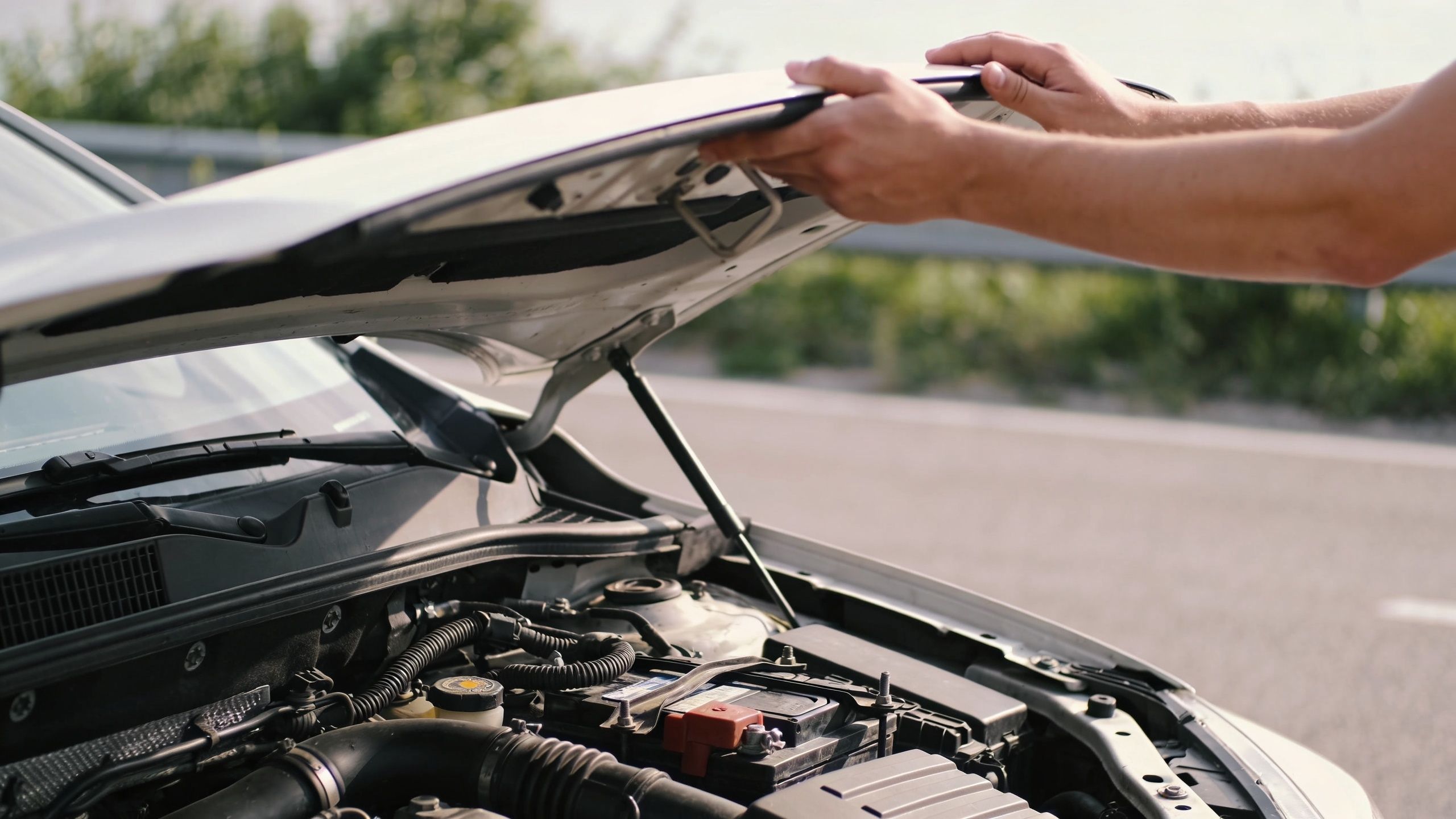
What to do right away
Use this order:
- Turn off non-essential electrical loads. Shut off the radio, seat heaters, phone chargers, and anything else you don’t need.
- Reduce AC use if conditions allow. In Dallas heat, that’s not always comfortable, but reducing load can help buy a little time.
- Avoid shutting the engine off in traffic. If the car still runs, restarting may be harder or impossible once you stop.
- Head for a safe shoulder, parking lot, or service location. Don’t keep driving casually to “see if it clears up.”
- Watch for stronger symptoms. If headlights dim badly, the steering feel changes, or the engine starts stumbling, stop as soon as it’s safe.
If the light is flashing and other electrical problems show up at the same time, assume the vehicle may not stay running much longer.
What you can check under the hood
Once you’re parked safely and the engine is off, a few visual checks can help.
Look at the battery terminals first. White or greenish buildup is a clue that corrosion is interfering with current flow. Check whether the cables look loose, damaged, or obviously frayed.
Then look for the belt. If it appears cracked, shiny, frayed, or loose, that’s a strong lead. You’re not trying to do a roadside repair here. You’re only checking for something obvious that changes the next decision.
This short video gives a general overview of battery and charging warning signs:
One overlooked clue
According to this wiring and alternator troubleshooting article from Applewood Auto Service, electrical resistance in charging system wiring and connectors is an overlooked cause of battery light flickering. The same source notes that cracked, frayed, or partially broken power cables can cause the light to appear when driving over bumps or rough roads, and technicians verify this by inspecting for visible white or greenish corrosion powder and testing cable resistance.
If you’ve also noticed intermittent starting issues, this guide to checking car battery health can help you understand what to look for before scheduling service.
When to See a Kwik Kar Professional in Dallas
A flashing battery light that keeps coming back in Dallas traffic is the point to stop guessing. Heat, long idling, and heavy electrical load from the A/C can push a weak charging system over the edge fast. If the light shows up on Central Expressway or while sitting through stop-and-go traffic on I-635, the goal is to get the car checked before it turns into a no-start in a parking lot or a stall on the shoulder.
Signs you should schedule professional service
Certain symptoms indicate an immediate need for professional service:
- The light still flashes after a restart
- The car needs a jump, then the warning comes back
- Headlights dim, the radio cuts out, or dash electronics reset
- The problem gets worse with the A/C running or after the engine bay gets hot
- You found corrosion, belt wear, or cable damage, but the cause is still unclear
- You manage several vehicles and more than one is showing charging warnings
For fleet managers, waiting usually costs more than testing. One vehicle with an intermittent charging fault can miss a route, tie up a driver, and create a same-day scheduling problem for the rest of the fleet.
What professional testing adds
A shop test answers the question a driveway check cannot. It shows whether the alternator is charging correctly under load, whether the battery can hold up under stress, and whether voltage is dropping through a cable, connection, or fuse path once the system heats up.
That matters because charging faults can overlap. A battery can test weak because it has been undercharged. An alternator can appear weak when the actual problem is resistance in a cable or connection. If you want a baseline for battery condition before your visit, this battery voltage chart for resting battery readings helps explain what normal voltage should look like with the engine off.
Kwik Kar Oil Change and Auto Care handles battery testing, charging system diagnostics, repair work, and fleet maintenance support. For Dallas drivers, that means finding the actual fault before the vehicle leaves you stranded after work, during school pickup, or in afternoon traffic.
The cheaper repair is often the one you make before the car quits somewhere inconvenient.
Frequently Asked Questions About Charging Issues
How far can I drive with the battery light flashing
There isn’t a safe fixed distance to rely on. If the charging system drops out, the car may continue on battery power for a while, then lose critical electrical support. The answer depends on what failed, how much battery reserve is left, how many accessories are running, and how severe the voltage drop is. If you need a reference point for battery condition, this battery voltage chart helps explain what healthy resting voltage looks like.
Will buying a new battery fix the flashing light
Not necessarily. If the actual problem is the alternator, regulator, belt, wiring, or a poor connection, a new battery may only mask the issue briefly. This is one of the most common ways people spend money and still end up with the same warning light.
Is a steady battery light different from a flashing one
Yes. In general, a steady light points to a charging problem that’s present continuously. A flashing light usually suggests the fault is intermittent. That often means something is cutting in and out because of heat, load changes, vibration, connection problems, or a component that’s starting to fail but hasn’t failed completely.
Should fleet vehicles be handled differently
Yes. A fleet shouldn’t wait for a roadside failure pattern to form. If one driver reports a battery light flashing, check service history, battery age, terminal condition, trip type, and belt condition across similar vehicles. Small charging faults become scheduling problems fast when several units operate under the same conditions.
If your battery light is flashing and you want a clear diagnosis before it turns into a tow, schedule service with Kwik Kar Oil Change and Auto Care. The shop handles battery testing, charging system diagnostics, routine maintenance, and fleet service for Dallas drivers who need practical repairs and straightforward answers.