


You’re sitting in the finance office, keys almost in hand, and then the stack of add-ons hits the desk. Gap coverage. Tire protection. Extended warranty. Then the maintenance plan.
The pitch sounds smart. Lock in service pricing. Protect yourself from rising costs. Keep your car in top shape. One payment now, fewer worries later.
Sometimes that’s true. A lot of the time, it isn’t.
If you’re asking are car maintenance plans worth it, the answer is simple: only if the math works for your driving habits, your car, and where you plan to get service. If you compare a dealer plan only to full-price dealer service, the plan can look decent. If you compare it to a reliable independent shop, the picture changes fast.
The Hard Sell at the Dealership
You’ve already agreed on the car, signed half the paperwork, and you’re ready to leave. Then the finance office starts selling peace of mind. The maintenance plan gets framed like the responsible choice, especially if you plan to keep the vehicle for a while.

That sales pitch works because the timing works. Buyers are worn out, focused on the monthly payment, and less likely to stop the process over a service product. The dealership knows that.
What the plan really is
A prepaid maintenance plan is a bundle of routine service sold in advance, usually tied to that dealer or brand. It typically covers scheduled visits like oil changes, tire rotations, and inspections. It does not turn future car ownership into a fixed-cost experience.
That matters because the sales language often blursthe line between maintenance and repair protection. Those are two different things. If you want to understand what routine service includes outside the dealership script, look at what is included in a tune-up service.
Here’s the part dealers don’t push very hard. Prepaying at a dealership only makes sense if you plan to keep returning to that dealership, on their schedule, at their pricing. For Dallas drivers, that is a big if. Traffic, work hours, distance, and simple convenience push a lot of people toward a trusted local shop once the sale is over.
Why buyers get pressured into a fast yes
The finance office is built for add-ons. The plan gets presented with just enough fear to make saying no feel risky. Expensive repairs get mentioned. Rising service costs get mentioned. The fact that you may be locking yourself into higher-cost dealer maintenance usually does not.
That’s why I give a simple recommendation. Never buy a maintenance plan because you feel cornered at signing.
Go home. Read the service schedule. Compare the plan price to what the same routine work would cost at a reputable independent shop like Kwik Kar. For many Dallas-area drivers and fleet operators, that comparison is where the dealership pitch falls apart. You can often get the same routine maintenance with more flexibility, better convenience, and a lower total cost without paying upfront for years of dealer visits.
If someone needs to rush the decision, the deal probably favors the seller.
What Maintenance Plans Actually Cover and What They Don’t
Here’s what buyers miss. A prepaid maintenance plan usually covers the cheap, predictable stuff and skips the parts that sting when the bill shows up.
That does not make the plan useless. It does mean you need to read it like a repair order, not like a sales brochure.
What’s usually included
Most plans are built around routine factory service visits. For a typical daily driver, that usually means:
- Oil changes
- Tire rotations
- Basic inspections
- Scheduled maintenance tied to mileage intervals
That is fine as far as it goes. If you want a simple refresher on what routine service can include beyond an oil change, this guide to what’s included in a tune-up service lays it out clearly.
The problem is price. Dealers package ordinary maintenance and make it sound bigger than it is.
What’s usually not included
Drivers experience frustration because most prepaid plans do not include the wear items and repair work that create the bigger ownership costs, such as:
- Brake pads and brake work
- Batteries
- Tires
- Suspension repairs
- Air conditioning repairs
- Check engine light diagnostics and most repairs
Those are the bills people remember. They are also the bills many customers assume they covered when they prepaid at signing.
A maintenance plan is not a repair plan. It is a budgeted schedule for routine service.
Why that matters more in Dallas
Dallas driving is hard on vehicles. Heat, stop and go traffic, short trips, long commutes, and fleet mileage all change how fast consumable parts wear out. If you run a work truck, delivery vehicle, or family SUV all over the Metroplex, the expensive stuff often shows up outside the plan.
That is why dealer prepaid plans can disappoint local drivers. You prepaid for convenience, then still pay extra when brakes, batteries, tires, or diagnosis come up.
Independent shops usually give you more flexibility here. At Kwik Kar, you can handle the routine maintenance and everyday wear items in one place without being locked into a dealer-only menu.
Read the fine print like it matters
Some plans also tie coverage to a narrow service schedule. If your driving falls under severe use, and plenty of Dallas driving does, your vehicle may need attention sooner than the prepaid plan assumes.
Check these three items side by side before you sign:
| What to compare | Why it matters |
|---|---|
| Owner’s manual schedule | Shows what your vehicle actually needs |
| Plan inclusions and exclusions | Shows what you are prepaying for, and what you are not |
| Local independent shop pricing | Shows whether the dealer plan saves money or just prepays higher service rates |
If you want to compare those costs cleanly, a simple spending tracker Google Sheets setup can help you stack dealer plan pricing against what you would spend at a trusted local shop.
My advice is simple. Buy a maintenance plan only if the covered services match your real schedule and the total beats what you would pay at a reputable independent shop like Kwik Kar. If it only beats dealer pricing, keep looking.
The Real Math Behind a Maintenance Plan
Forget the brochure language. The only useful question is this one: Will you spend less with the plan than you would without it?

When dealer plans can make sense
There are cases where a prepaid plan beats paying retail at the dealership. According to Consumer Reports coverage summarized by 6abc, prepaid maintenance plans can offer savings of 20-50% compared to paying for individual services at dealership rates. That same reporting also notes one documented Audi Q5 example where a plan priced at $869 covered services that would have cost $1,910 out of pocket, creating approximately $1,500 or 78% in potential savings.
That sounds great. But don’t stop there.
The same source says dealer profit margins on these plans also range from 20-50%. That tells you exactly what’s going on. A plan can still save you money compared with dealer menu pricing while remaining highly profitable for the dealership.
The comparison most buyers skip
The trap is comparing only two options:
- Buy the plan
- Pay dealership prices later
That’s incomplete. There’s a third option that usually matters more.
- Pay as you go at a trusted independent shop
If you never intend to return to the dealership for routine service, the prepaid plan has no practical value. If you drive fewer miles than expected, you may not use everything you prepaid for. If you sell the vehicle early, the value gets even shakier.
Practical rule: Don’t compare a maintenance plan to the most expensive service path available. Compare it to the service path you’ll actually use.
A simple way to check your own numbers
Build a short maintenance budget before you sign anything. List the services required in your owner’s manual, price them at the dealer, then price the same routine work at a reputable independent shop. If you want an easy format, a spending tracker Google Sheets template can help you map those service costs without overthinking it.
Use this checklist:
- List required services: Pull them directly from the manual, not from the sales brochure.
- Verify service intervals: Make sure the plan matches your actual maintenance schedule.
- Check where you’ll go: If you won’t use that dealer, don’t prepay that dealer.
- Look for dead value: Unused visits aren’t savings. They’re prepaid services you never collected.
My take is blunt. A maintenance plan is only worth buying if it beats your real-world pay-as-you-go cost. Not the fantasy cost. Your actual cost.
Key Factors for Your Personal Decision
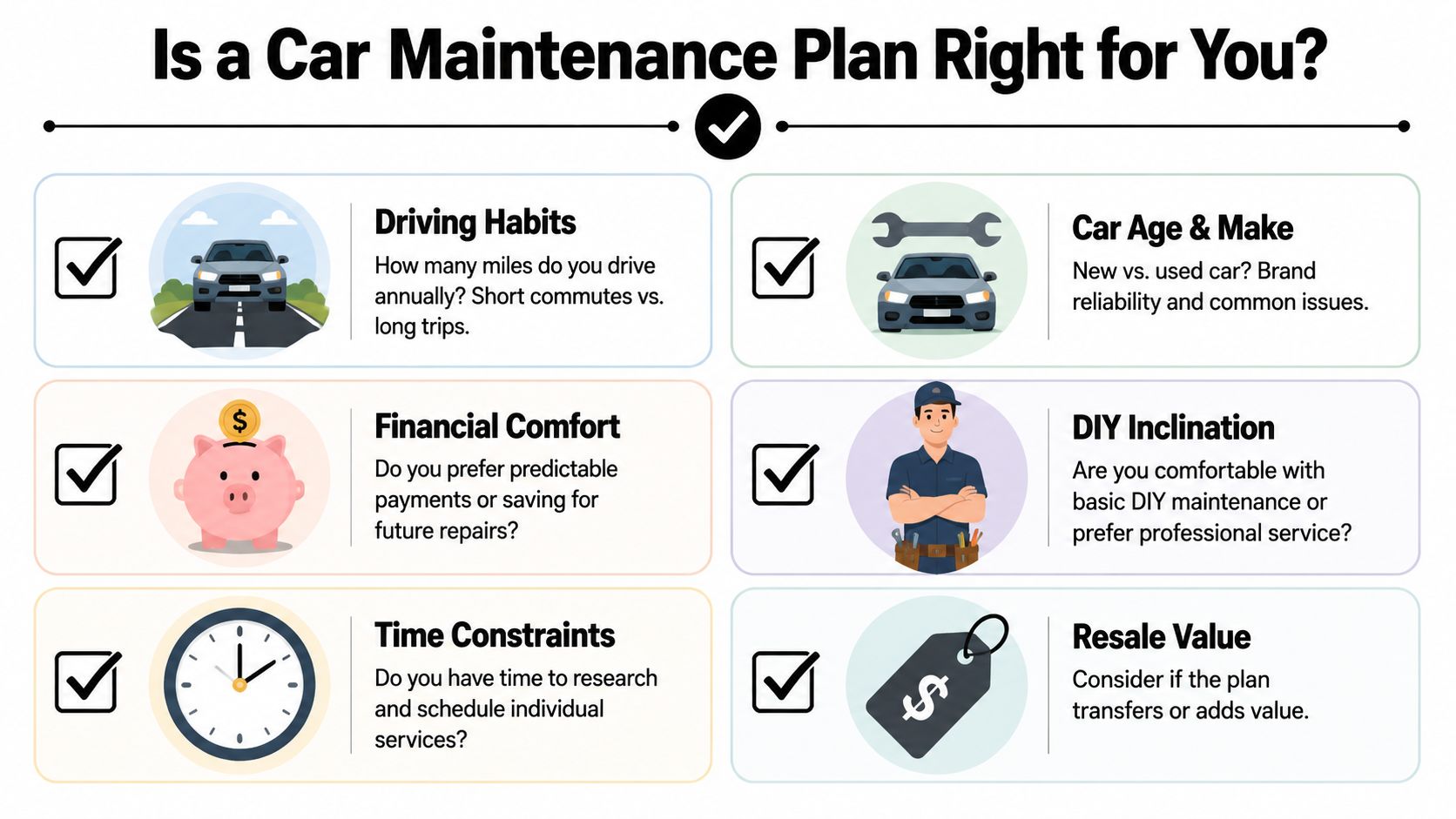
Some drivers should skip maintenance plans without a second thought. Others may like them for budgeting. The right answer depends less on the dealership pitch and more on how you use your vehicle.
Start with how you drive
If you pile on miles fast, routine service comes around quicker, so prepaying may feel easier to manage. If you barely drive, a plan gets harder to justify because you may not use all the included visits before the time limit matters.
City driving is also harder on vehicles than steady highway driving. Short trips, stop-and-go traffic, and long idle times can all make routine service more important. That doesn’t automatically make a prepaid plan a good deal, but it does mean you shouldn’t underestimate maintenance needs.
Think about the car itself
A newer vehicle with a straightforward maintenance schedule is easier to budget for. An older vehicle or one with a sketchy service history is different. In that case, routine maintenance is still important, but a prepaid plan for basic services won’t solve bigger repair risks.
Luxury brands complicate the picture because dealership service pricing tends to be high. That can make a plan look more attractive on paper. Still, you need to separate routine maintenance from repair exposure. A plan that covers basic service doesn’t suddenly make ownership cheap.
Decide how you handle money
This factor matters more than people admit.
Some drivers hate surprise expenses and would rather prepay if it helps them stay organized. Others would rather keep their cash, pay only when service is due, and avoid getting locked into one provider.
Here’s the honest version:
- You prefer fixed costs: A plan may help with discipline and budgeting.
- You value flexibility: Pay as you go usually fits better.
- You’re likely to change shops: Avoid locking yourself into a prepaid agreement.
- You tend to forget maintenance: A prepaid plan can create accountability, but so can reminders and a service app.
If you need structure, buy structure. If you need value, verify value first.
Consider ownership plans
Selling or trading in the car early can make a maintenance plan weak value. Some plans may transfer, some may refund partially, and some become an administrative headache.
If you plan to keep the car for years and know exactly where you want it serviced, a plan has a better chance of fitting your life. If your timeline is uncertain, flexibility matters more.
Use this quick self-check:
| If this sounds like you | A plan is usually |
|---|---|
| Low annual mileage, flexible schedule, open to independent shops | Less attractive |
| High annual mileage, strong preference for prepaid budgeting | More attractive |
| You may sell soon or move | Less attractive |
| You want freedom to shop prices each visit | Less attractive |
Comparing Plan Types and Smart Alternatives
Most buyers treat this as a yes-or-no question about the dealership plan sitting in front of them. That’s too narrow. You have three lanes to choose from.
Option one, dealership prepaid plans
These are the most convenient to buy because they’re offered when you purchase the car. They’re also the easiest to overpay for because you’re deciding under pressure.
The upside is simplicity. The downside is lock-in. You prepay now, then usually return to that dealer network to collect the value.
Option two, third-party maintenance products
Third-party plans exist, but they can get messy fast. The paperwork may be more confusing, the approved service locations may be limited, and the claims process can add friction where basic maintenance should be simple.
Routine service shouldn’t require contract interpretation every time your car is due for work.
Option three, no plan at all
For many Dallas drivers, this is the smartest route. According to Consumer Reports guidance on prepaid maintenance plan value, a 5-year Toyota plan might cost $1,000-$2,000 upfront, while Dallas-area independents like Kwik Kar can provide the same services on a pay-as-you-go basis for an estimated $300-$500 over the same period for an average driver, which represents potential savings of up to 70%.
That’s the comparison that matters.
Why independents often win
A good independent shop gives you flexibility that prepaid plans don’t:
- No upfront lock-in: You keep your cash until service is due.
- Clear pricing: You can compare costs visit by visit.
- Practical convenience: You choose the location that fits your week.
- No unused value: If you drive less than expected, you haven’t prepaid for work you never needed.
If you manage work vehicles, this flexibility matters even more. A useful outside reference is The Mobile Buff fleet solutions checklist, which shows how organized fleet maintenance depends on repeatable service habits, not just contract paperwork. For day-to-day tracking, these best car maintenance apps can also help you stay ahead of intervals without buying a plan.
A prepaid plan sells convenience. A strong independent service routine gives you convenience without the lock-in.
My recommendation for most budget-conscious drivers is straightforward. Skip the prepaid maintenance plan, keep your service records, and pay for maintenance as needed at a shop you trust.
The Dallas Driver’s Guide to Smart Maintenance
Dallas drivers don’t need generic car care advice. Local driving conditions are rough on vehicles in ways that make flexible maintenance more useful than prepaid paperwork.

What matters around Dallas
Heat is hard on batteries, fluids, and cooling systems. Heavy traffic means plenty of stop-and-go use. Texas state inspection requirements add one more recurring task that has to fit into your schedule.
That’s why rigid dealership plans often miss the actual-world needs of local drivers. A plan may cover basic scheduled service, but local ownership includes a lot more than checking boxes on a manufacturer menu.
If you’re trying to stay ahead of basic service without overpaying, it helps to watch local oil change deals and match service timing to what your vehicle needs.
Why fleets should be even more skeptical
Fleet managers should be especially careful with prepaid dealer plans. According to this analysis of prepaid maintenance for high-mileage users and fleets, dealer plans with mileage caps, including examples like Nissan’s 24,000 miles over 2 years, lose value quickly for high-use vehicles. The same source says independents like Kwik Kar can offer customized fleet programs with bulk discounts and flexible service, potentially cutting maintenance costs 30-50% compared to dealer plans while also handling local needs like Texas state inspections.
For a fleet, downtime matters as much as price. A plan that looks neat on paper can become a problem if it forces vehicles into a narrow service channel, creates scheduling bottlenecks, or fails to match actual usage.
My advice for Dallas owners
If you drive a personal vehicle around DFW, use a simple maintenance strategy that matches your real mileage, the local climate, and your schedule. Don’t buy a long-term prepaid contract just because someone bundled it into the sale.
If you run a fleet, focus on uptime, repeatable service intervals, and a provider that can handle preventive maintenance, inspections, and diagnostics without slowing your operation down.
Local conditions reward flexibility. Dealer plans usually don’t.
Questions to Ask Before You Sign Anything
Before you agree to any maintenance plan, ask better questions. Not polite questions. Useful ones.
Ask for direct answers in writing
Use this list and don’t let anyone wave it away:
- What exact services are included? Ask them to list every covered service and every mileage or time interval.
- What is excluded? Specifically ask about brake pads, batteries, tires, wiper blades, alignments, diagnostics, and fluid services.
- Where can I use it? If the answer is one dealership group, you need to treat that as a major restriction.
- Can I buy this later? If yes, there’s no reason to decide under pressure today.
- What happens if I sell the car? Ask whether the plan transfers, cancels, or refunds.
- What if I don’t use all of it? Unused service value matters.
- Does the schedule match my owner’s manual? Don’t assume it does.
- Am I financing this plan? If it’s rolled into the car loan, you may be paying interest on routine maintenance.
Ask the same questions you’d ask on any vehicle purchase
A rushed buyer misses expensive details. The same habit that helps when reviewing a maintenance plan also helps when shopping for a used vehicle. This checklist of essential inquiries for used car shoppers is worth reviewing because it trains you to slow down and verify the deal instead of trusting the pitch.
If a seller can’t explain the exclusions clearly, don’t buy the plan.
My bottom line is simple. If the numbers are vague, the coverage is narrow, and the usage rules are restrictive, walk away.
If you want straightforward maintenance without dealership pressure, Kwik Kar Oil Change and Auto Care is the practical choice for Dallas drivers and fleet operators. You’ll get transparent pricing, seven-day service, preventive maintenance, inspections, diagnostics, and flexible care that fits how you drive, instead of locking you into a prepaid plan that may never pay off.