
A reliable auto repair shop is defined by four measurable qualities: certified technicians, written estimates, solid warranties, and consistent customer communication. Knowing how to choose a reliable auto shop protects your vehicle, your wallet, and your time. Too many car owners pick a shop based on location alone, then discover problems only after an unexpected charge or a repeat breakdown. This guide walks you through every trust signal worth checking, from ASE credentials to documentation rights, so you can make a smart decision with confidence.
What certifications and credentials indicate a trustworthy auto shop?
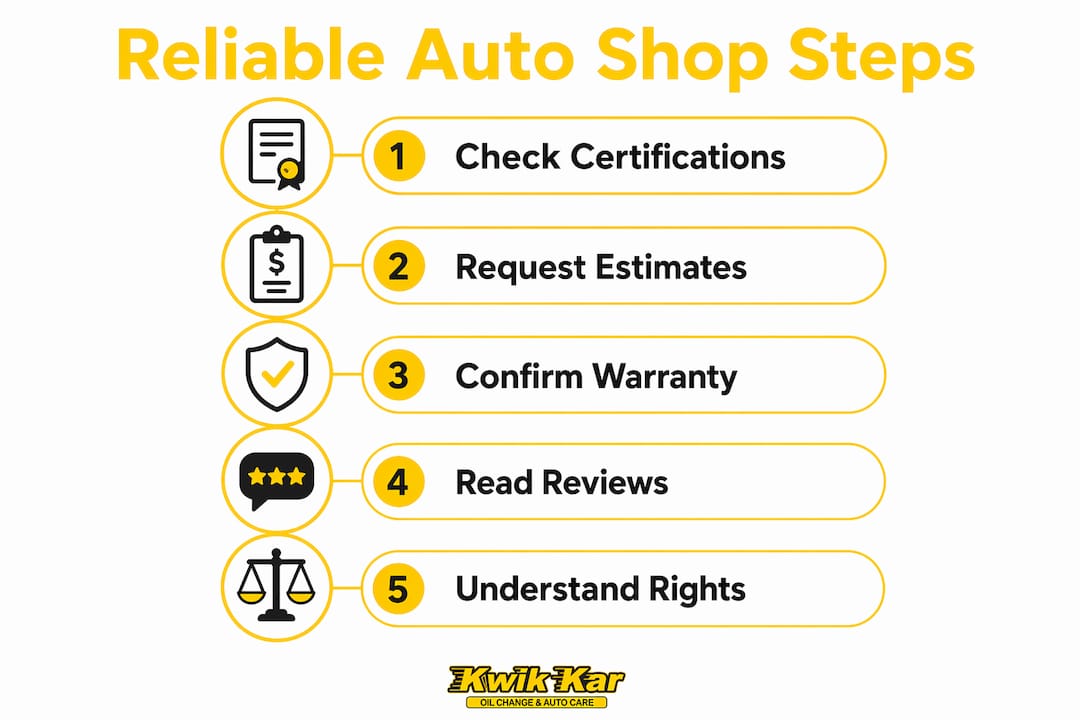
Certifications are the fastest filter when evaluating any shop. They tell you whether the technicians working on your car have passed standardized industry tests and stayed current with training. Without them, you are relying entirely on a shop’s word.
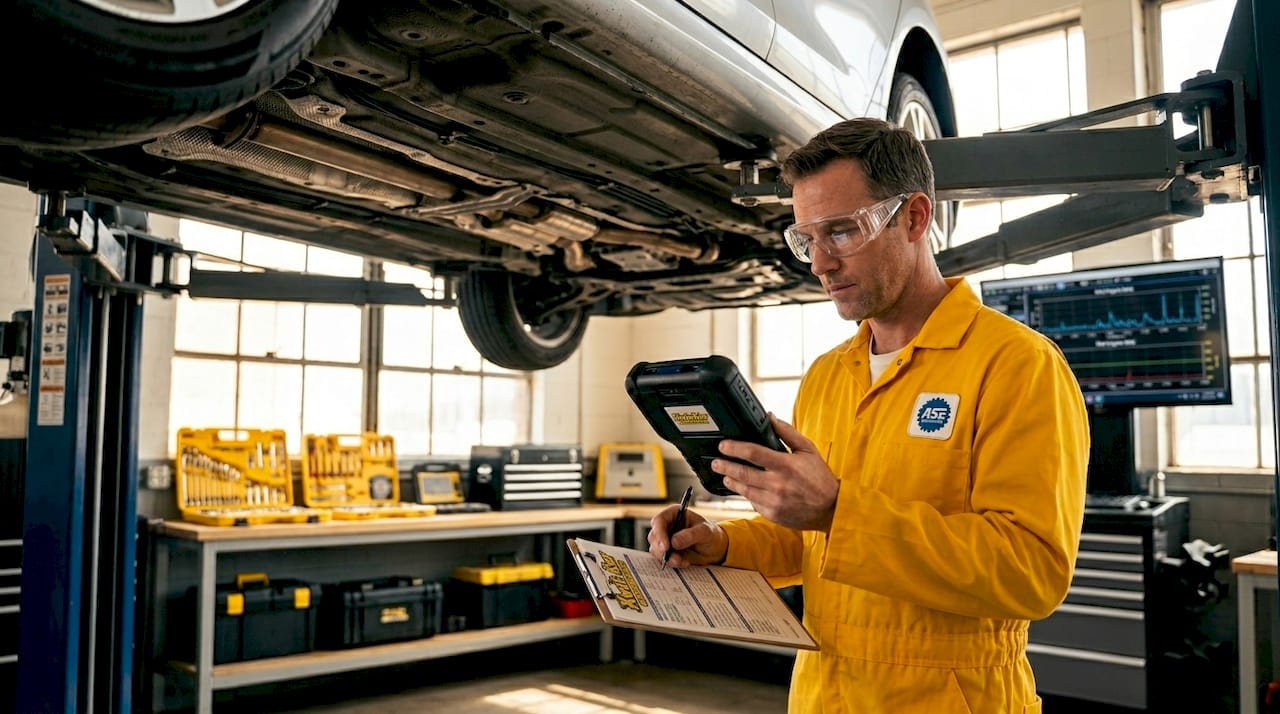
ASE certification is the industry’s primary benchmark. The National Institute for Automotive Service Excellence issues it after technicians pass rigorous written exams covering specific vehicle systems. Critically, ASE certification requires renewal every five years, meaning a certified tech is not coasting on a one-time test. That renewal requirement is what separates ASE from a simple trade license.
Beyond ASE, look for these credentials when selecting a good mechanic:
- AAA-approved status: AAA-approved shops undergo annual re-evaluation and customer satisfaction surveys, not just a one-time badge review. This prevents shops from earning approval and then letting standards slip.
- RepairPal certification: RepairPal independently verifies shop quality and pricing fairness, making it a useful third-party signal.
- BBB accreditation: A strong Better Business Bureau rating reflects a shop’s track record of resolving customer complaints.
- State licensing: In California, the Bureau of Automotive Repair (BAR) licenses shops and enforces consumer protection rules. Most states have equivalent regulatory bodies. Confirm your shop holds a current, valid license.
The combination of ASE-certified technicians and a recognized program like AAA or RepairPal gives you two independent layers of verification. One credential alone is a starting point. Two or more together signal a shop that takes professional accountability seriously. You can learn more about what ASE and RepairPal certification actually covers before your next visit.
How to assess pricing transparency and estimates at auto repair shops?
Pricing transparency is where many shops reveal their true character. A shop that hesitates to provide a written estimate before starting work is a shop worth avoiding. Clear, upfront communication about costs is not just good practice. In many states, it is the law.
Here is a step-by-step approach to evaluating any shop’s pricing practices:
- Request a written estimate before authorizing any work. California’s BAR program called “Write It Right” requires shops to provide a detailed estimate listing parts and labor costs and to obtain your authorization before repairs begin. Even if you live outside California, this is the standard you should demand.
- Break down the estimate by parts and labor. A trustworthy shop separates these costs clearly. Vague line items like “miscellaneous fees” or “shop supplies” without explanation are red flags.
- Compare estimates from two or three shops. Focus on the specific parts listed, not just the total price. A lower total that uses aftermarket parts where OEM is appropriate may cost you more in the long run.
- Confirm authorization requirements in writing. If the shop discovers additional problems mid-repair, they must contact you for approval before proceeding. Any shop that performs work beyond the agreed scope without your sign-off is violating both trust and, in many states, the law.
- Review the final invoice against the original estimate. Discrepancies between what was quoted and what was charged are a serious warning sign. Refer to the auto repair pricing guide for a full breakdown of what legitimate charges look like.
Pro Tip: Ask the shop directly: “Will you contact me before doing any work beyond this estimate?” A shop that answers confidently and without hesitation is one that respects your authorization rights.
What warranty and guarantees should you expect from a reliable auto repair shop?
Warranties are one of the clearest indicators of a shop’s confidence in its own work. A shop that backs repairs with a strong guarantee has skin in the game. One that offers vague or minimal coverage is signaling uncertainty about its own quality.
The table below compares common warranty tiers so you can benchmark any shop you are evaluating:
| Warranty tier | Coverage | What it signals |
|---|---|---|
| Basic (12 months / 12,000 miles) | Parts and labor on most repairs | Meets the Consumer Reports minimum standard for reliability |
| Strong (24 months / 24,000 miles) | Parts, labor, and customer satisfaction follow-up | Meets AAA-approved shop warranty requirements |
| Premium (36+ months or unlimited miles) | Comprehensive parts and labor with roadside support | Indicates high shop confidence and premium workmanship |
| No written warranty | Verbal assurances only | A significant red flag regardless of other credentials |
Do not accept general promises like “we stand behind our work.” Instead, ask about warranty coverage on a specific repair, such as a brake job or alternator replacement. Benchmarking warranties on specific repairs is a proven method for gauging shop confidence. A shop that gives you a clear, confident answer on a specific job is far more trustworthy than one that deflects with generalities. For context on how warranty standards apply beyond auto shops, RV repair warranty standards follow the same reliability logic.
How to use customer reviews and personal experience to vet an auto repair shop?
Credentials confirm competence. Reviews and personal experience confirm character. Both matter when you are trusting someone with a vehicle worth thousands of dollars.
Start your search by collecting recommendations from people you trust. Friends, family, and coworkers who drive similar vehicles are especially useful because their experience is directly relevant to your situation. Online community groups on platforms like Nextdoor or neighborhood Facebook groups often surface shops with strong local reputations that do not show up prominently in Google searches.
When analyzing online reviews on Yelp, Google, or the BBB, look for patterns rather than individual ratings. A shop with 200 reviews averaging 4.6 stars is more reliable than one with 12 reviews averaging 5.0. Pay specific attention to how the shop responds to negative reviews. A professional, solution-focused response to a complaint tells you more about a shop’s values than a dozen five-star ratings.
- Look for reviews that mention communication. Did the shop call when the repair took longer than expected? Did they explain what they found before proceeding? These details reveal how a shop treats customers when things do not go perfectly.
- Check for repeat customers. Reviews that mention returning for multiple services over several years are a strong trust signal.
- Note any mentions of surprise charges. Even one or two reviews describing unauthorized work or unexpected fees deserve serious weight.
- Visit the shop in person before committing. A clean, organized facility where staff greet you professionally and answer questions directly is a positive indicator. A disorganized shop with dismissive staff is not.
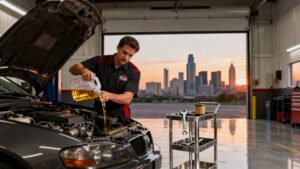
Pro Tip: Use a trial run on small services like an oil change or tire rotation to evaluate a shop’s communication and care before bringing in a major repair. This low-stakes test reveals how the shop handles your vehicle and whether they communicate proactively.
What legal protections and documentation practices protect you?
Your rights as a consumer in an auto repair transaction are more substantial than most people realize. Understanding them before you walk into a shop puts you in a much stronger position.
California’s BAR mandates written authorization before any repair work begins, based on a detailed estimate. Most states have similar consumer protection statutes. These laws exist because unauthorized repairs and inflated invoices are among the most common consumer complaints in the automotive industry.
Here is what you should document and retain for every repair:
- The original written estimate, signed and dated, with a full parts and labor breakdown.
- Your written or electronic authorization for the specific work agreed upon.
- Any change orders, meaning written approval for additional work discovered mid-repair.
- The final itemized invoice, which you should compare line by line against the original estimate.
- All communication records, including texts or emails where the shop described findings or requested approval.
Keeping written estimates and itemized invoices is the primary defense against billing disputes. If a charge appears on your invoice that was not on the estimate and you never authorized it, you have documented grounds to dispute it. The Motor Ombudsman recommends reconciling every invoice against initial records before paying. If a dispute escalates, your state’s consumer protection office or the BBB can assist with formal complaints. Shops that comply with documentation requirements consistently are far less likely to generate disputes in the first place, which is why documentation and authorization compliance is itself a trust signal worth noting.
Key takeaways
Choosing a reliable auto shop requires verifying certifications, demanding written estimates, confirming warranty terms, and testing a shop with a small job before committing to major repairs.
| Point | Details |
|---|---|
| Verify certifications first | Look for ASE certification, AAA approval, and RepairPal verification as independent quality signals. |
| Demand written estimates | Require a detailed parts-and-labor breakdown before authorizing any work, regardless of repair size. |
| Benchmark warranties specifically | Ask about warranty coverage on a named repair, not general promises, to gauge shop confidence. |
| Use trial runs to confirm trust | Start with an oil change or small service to evaluate communication and care before major work. |
| Document everything | Keep estimates, authorizations, and invoices to protect yourself against unauthorized charges. |
What we have learned from years of vetting auto shops
The biggest mistake car owners make is treating certification as the finish line rather than the starting point. Credentials tell you a shop is qualified. They do not tell you whether that shop will call you before replacing a part you did not ask for, or whether they will stand behind a repair that fails at 13,000 miles.
At Kwik Kar Oil Change & Auto Care, we have seen customers arrive frustrated after experiences at shops that had impressive credentials on the wall but poor communication in practice. The shops that consistently earn long-term customer loyalty are the ones that treat every estimate as a conversation, not a formality. They explain what they found, why it matters, and what happens if you choose to wait. That kind of proactive engagement is what Consumer Reports describes when it notes that quality shops actively engage customers to establish thorough service understanding.
The two-stage vetting process is the most practical framework we recommend. Filter by credentials first. Then confirm with a small job. Most shops that have problems with communication or unauthorized work reveal those problems within the first visit. A trial oil change costs you very little. Discovering a shop’s character on a transmission repair costs you a great deal more.
One more thing: do not let price be the primary filter. The shop quoting $50 less on a brake job but offering no written warranty and vague authorization practices is not a better value. It is a higher risk. The smart decision is the one that accounts for the full picture, not just the upfront number.
— Kwik Kar
See certified, transparent auto repair at Kwik Kar Oil Change & Auto Care
Every standard covered in this article is one Kwik Kar Oil Change & Auto Care meets by design, not by accident.
Kwik Kar’s technicians hold ASE Master certification and RepairPal verification, two of the most respected independent credentials in the industry. Every repair starts with a written estimate and your explicit authorization. Warranties are clearly stated, not vaguely promised. Whether you need a routine oil change to test the waters or a full diagnostic on a complex problem, you get the same transparent process and the same certified expertise. Explore the full range of auto repair services available, or review what certified technician credentials actually mean for your vehicle’s care.
FAQ
What does ASE certification mean for a mechanic?
ASE certification means a technician has passed standardized exams on specific vehicle systems and must retest every five years to maintain the credential. It is the most widely recognized competency benchmark in the U.S. auto repair industry.
How do I know if a repair estimate is fair?
A fair estimate lists parts and labor as separate line items with specific part names and costs. Compare estimates from two or three shops on the same repair, and use resources like RepairPal to check whether the quoted price falls within the typical range for your area.
What warranty should I expect from a good auto shop?
Consumer Reports identifies a minimum of 12 months or 12,000 miles as the baseline for a reliable shop. AAA-approved shops offer 24 months or 24,000 miles. Any shop that cannot provide a written warranty on parts and labor is a shop worth reconsidering.
Can I dispute a charge for work I did not authorize?
Yes. If a shop performed repairs beyond the agreed estimate without your written or verbal authorization, you have grounds to dispute the charge. Keep your original estimate and compare it to the final invoice, then contact your state’s consumer protection office or the BBB if the shop does not resolve the issue.
What is the best way to test a new auto shop?
Start with a low-cost service like an oil change or tire rotation. This trial run lets you evaluate how the shop communicates, whether they return your vehicle in good condition, and whether the final invoice matches the estimate, all before trusting them with a major repair.