


A brake booster multiplies the force your foot applies to the pedal, sending amplified pressure to the master cylinder so your car stops with far less effort. Without it, your brakes still work, but you’ll need significantly more leg force to achieve the same stopping power. Losing boost suddenly while driving can cause panic, especially at highway speeds.
Here’s what the booster directly affects:
- Pedal effort: How hard you have to push to achieve full braking force
- Stopping distance: Reduced assist means longer distances if you can’t compensate with extra force
- System compatibility: Hybrids and EVs often use electronic boosters because they don’t generate engine vacuum
Pro Tip: If you lose brake assist while driving, stay calm. Press the pedal firmly and steadily, allow much more stopping distance than usual, and pull off the road as soon as it’s safe to do so.
Table of Contents
- How does a brake booster work?
- What are the main types of brake boosters?
- Should you repair or replace a brake booster yourself?
- How do you keep a brake booster in good condition?
- Key Takeaways
- Why brake boosters deserve more respect than they get
- Brake booster inspection and repair at Kwik Kar Oil Change & Auto Care
- Useful sources for further reading
- FAQ
How does a brake booster work?
The booster generates assist by using a pressure difference, either from engine vacuum or a hydraulic pump, to push the master cylinder piston with more force than your foot alone can produce.
Here’s the sequence, step by step:
- You press the brake pedal, which pushes a control rod into the booster.
- A valve inside the booster opens, admitting atmospheric air to one side of a rubber diaphragm.
- The other side of the diaphragm stays connected to engine vacuum (or a pump), creating a pressure differential.
- That pressure difference pushes the diaphragm and a pushrod forward.
- The pushrod moves the master cylinder piston, generating hydraulic pressure.
- That hydraulic pressure travels through brake lines to the calipers or wheel cylinders, clamping the pads against the rotors.
The check valve is a small but critical component. It sits between the engine intake manifold and the booster, allowing vacuum to flow in but not back out. This means the booster stores enough vacuum to provide several assisted stops even if the engine stalls. Once that stored vacuum is exhausted, though, assist disappears entirely.
Key insight: The check valve is your safety buffer. If your engine dies unexpectedly, you typically have two to three assisted stops before the pedal goes hard. Use them wisely and pull over.
On gasoline engines, the intake manifold naturally produces vacuum. Diesel engines generate very little intake vacuum, so they rely on a dedicated vacuum pump to supply the booster. Fully electric vehicles and many hybrids use an electric vacuum pump or an entirely electronic booster, since neither has a traditional intake manifold.
Pro Tip: A simple labeled diagram showing the diaphragm, pushrod, check valve, and vacuum chamber is the clearest way to visualize this. The Wikipedia vacuum servo article includes component-level descriptions that match what your mechanic sees when they open the system.
What are the main types of brake boosters?
Three types of brake boosters cover the vast majority of vehicles on the road: vacuum boosters, hydro-boost boosters, and electro-hydraulic boosters. Each draws power from a different source, which is why the right type depends on what’s under your hood.
| Type | Power Source | Common Vehicles | Key Advantage | Maintenance Note |
|---|---|---|---|---|
| Vacuum (servo) | Engine intake vacuum or vacuum pump | Most gasoline cars and light trucks | Simple, reliable, low cost | Inspect hoses and check valve regularly |
| Hydro-boost | Power steering pump pressure | Diesel trucks, heavy-duty vehicles | Works without engine vacuum | Tied to power steering system health |
| Electro-hydraulic | Electric motor/pump | Hybrids, EVs, some modern gas cars | No vacuum needed | Software and sensor diagnostics required |
Vacuum boosters are the most common type you’ll find on everyday gasoline-powered cars and light trucks. Hydro-boost systems tap into the power steering pump, making them a natural fit for diesel trucks and heavy-duty vehicles that don’t produce enough intake vacuum. Electro-hydraulic boosters are increasingly standard on hybrids and EVs, where regenerative braking and the absence of a running engine make a traditional vacuum source impractical.
The trend toward electronic boosters is accelerating. As more vehicles shift to hybrid and electric platforms, vacuum-based systems will gradually become the older technology rather than the default.
Should you repair or replace a brake booster yourself?
Replacement is a common repair, but it’s one that’s better left to a professional in most cases. The job requires precise master cylinder alignment, a full brake system bleed, and a road test to confirm pedal feel before the vehicle goes back on the road.
A professional inspection and replacement typically includes:
- Vacuum test to confirm booster failure vs. check valve or hose fault
- Inspection of the check valve, vacuum hoses, and all connections
- Removal and replacement of the booster unit
- Careful mating of the master cylinder to the new booster
- Full brake system bleed to remove any air introduced during the job
- Road test to verify pedal firmness and consistent stopping
DIY replacement is possible for experienced home mechanics, but the risks are real. Trapped air in the brake lines after an incomplete bleed can leave the pedal soft or unresponsive, which recreates the exact problem you were trying to fix. Misalignment between the master cylinder and the new booster can cause uneven pedal travel. These aren’t cosmetic errors; they’re safety failures.
Cost varies by vehicle make, model, and region. Parts alone can range from modest to several hundred dollars for the booster unit, and labor adds to that depending on accessibility and shop rates. The OARDS brake booster guide provides a useful cost reference, though your best move is always to get an upfront written estimate before any work begins.
Pro Tip: Ask your shop to show you the vacuum test results before approving the repair. A good technician will confirm whether the booster itself has failed or whether a $20 check valve is the actual problem.
How do you keep a brake booster in good condition?
Routine inspection of the vacuum hose and check valve during regular service intervals is the most practical way to extend booster life and catch problems early.
Add these to your maintenance checklist:
- Inspect the vacuum hose at every oil change for cracks, softness, or loose connections
- Test the check valve annually or whenever brake feel changes; a faulty valve is inexpensive to replace
- Monitor pedal feel between services; a gradual increase in effort is an early warning sign
- Follow manufacturer brake system service intervals, typically every 2 years or 30,000 miles for fluid, which keeps the master cylinder and booster interface clean
- Schedule a brake inspection any time you notice a hard pedal, hissing, a dashboard brake warning, or after significant engine repairs that involved the intake manifold
Catching a cracked vacuum hose early costs very little. Ignoring it until the diaphragm fails costs considerably more, and the safety risk in between is not worth the delay.
Key Takeaways
A brake booster multiplies pedal force using vacuum or hydraulic pressure, and a failing one demands prompt professional attention because the transition to unassisted braking can be sudden and dangerous.
| Point | Details |
|---|---|
| Core function | The booster multiplies your pedal force and sends amplified pressure to the master cylinder. |
| Top warning signs | Hard pedal, hissing noise, and longer stopping distances are the three most urgent symptoms. |
| Emergency action | If assist fails while driving, press firmly and steadily, increase following distance, and pull over safely. |
| DIY risk | Improper bleeding or master cylinder misalignment after DIY replacement can recreate braking failure. |
| Professional service | Kwik Kar Oil Change & Auto Care performs brake booster inspections and replacements with ASE-certified technicians and upfront estimates. |
Why brake boosters deserve more respect than they get
Most drivers never think about the brake booster until the pedal suddenly feels like pressing against concrete. That’s understandable. When everything works, the booster is invisible. But that invisibility is exactly what makes it worth understanding before something goes wrong.
The piece of conventional wisdom worth questioning here is the idea that “brakes still work without a booster, so it’s not urgent.” Technically true. Practically dangerous. The problem isn’t whether the car can stop; it’s whether the driver can generate enough force, quickly enough, in a panic situation. Most people have never braked without power assist. The first time they experience it at 60 mph is not the moment to discover how much force is actually required.
There’s also a diagnostic trap worth avoiding. A hard pedal gets blamed on the booster almost reflexively, but a failing master cylinder, a collapsed brake hose, or even a sticking caliper can produce similar symptoms. Treating the booster as the default answer without a vacuum test wastes money and leaves the real problem in place. A thorough diagnosis, not a parts swap, is what actually fixes the car.
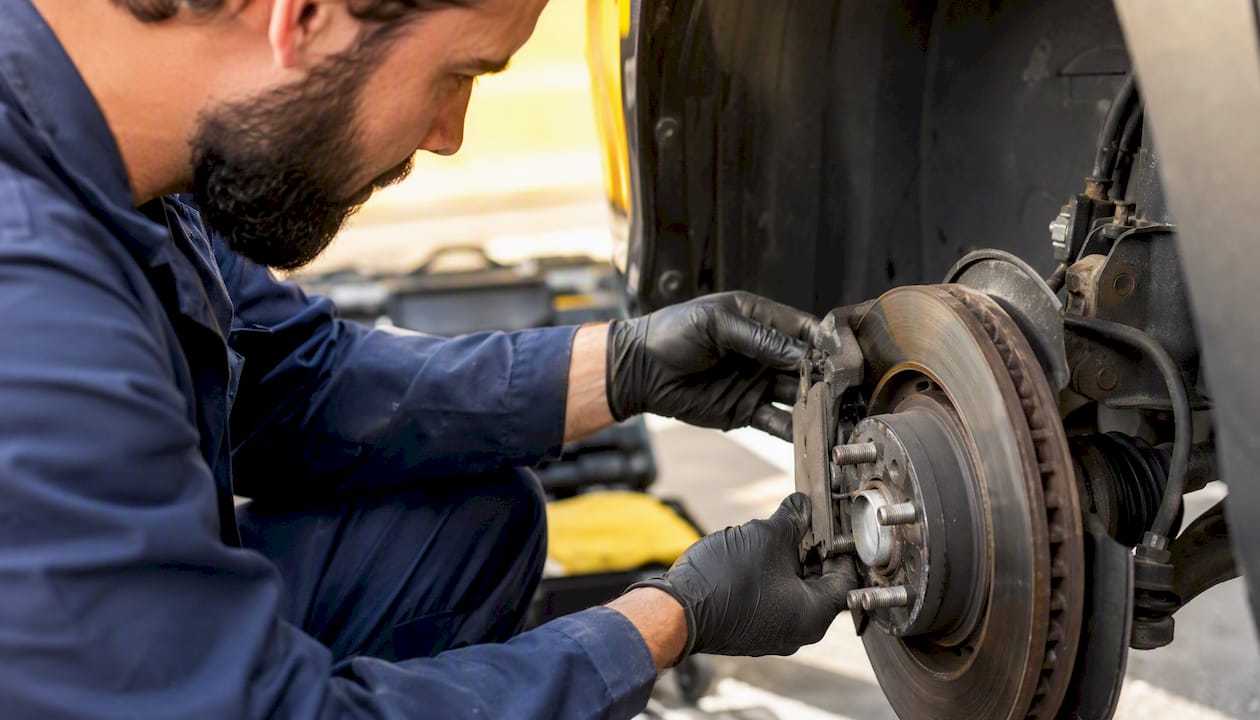
The check valve is the most underappreciated component in the system. It costs almost nothing, takes minutes to replace, and is responsible for giving you those two or three assisted stops after the engine dies. Replacing it on schedule is one of the highest-value, lowest-cost maintenance moves available.
Brake booster inspection and repair at Kwik Kar Oil Change & Auto Care
When your pedal feels harder than it should, Kwik Kar Oil Change & Auto Care gives you a clear answer fast. Our ASE-certified technicians perform a full vacuum diagnostic before recommending any repair, so you’re never paying for a booster replacement when a $20 check valve is the actual problem.
Every brake booster service at Kwik Kar includes a vacuum test, check valve and hose inspection, master cylinder mating verification, a complete brake bleed, and a road test to confirm pedal feel. You get a written estimate before any work starts, and our repairs come backed by warranty coverage. Current brake service discounts are available, so ask about coupons when you schedule.
Ready to get your brakes checked? Book your inspection at Kwik Kar Oil Change & Auto Care today.
Useful sources for further reading
These sources offer reliable diagrams, technical explanations, and cost context for drivers who want to go deeper:
- Bad Brake Booster Symptoms – In The Garage with CarParts.com
- How power brakes work | HowStuffWorks
- How do power brake boosters work? | Cardone
- What are brake boosters and how do they work? | JB Tools
- Can you drive without a brake booster? | Cars Bibles
- 6 Signs of a Bad Brake Booster (Replacement Cost in 2026) | OARDS
- Vacuum servo — Wikipedia
For diagrams and under-hood photos, Wikimedia Commons hosts public-domain vacuum servo images that clearly label the diaphragm, check valve, and pushrod. Use those alongside the HowStuffWorks animations for the clearest visual understanding.
FAQ
What happens when the brake booster goes bad?
The brake pedal becomes noticeably harder to press, stopping distances increase, and you may hear a hissing sound from under the dash. In severe cases, the engine may stall or stumble when you apply the brakes, because a leaking diaphragm pulls unmetered air into the intake manifold.
How do you know when you need a brake booster?
The clearest sign is a pedal that requires much more force than usual, especially if it feels normal for the first press after starting the engine and then stiffens. A hissing noise under the dash while braking and a dashboard brake warning light are additional indicators worth taking seriously.
Is it hard to replace a brake booster?
The replacement itself is manageable for experienced mechanics, but the brake system bleed and precise master cylinder alignment required afterward make it more complex than it appears. Improper installation can leave the pedal soft or unresponsive, so professional service is the safer choice for most drivers.
Can you still drive without a brake booster?
Yes, but with significantly more pedal effort and longer stopping distances. The hydraulic brake system still functions, but the assist is gone. ASE-certified technicians recommend against driving with a known booster failure because the sudden transition to unassisted braking can cause panic and delayed response in an emergency.