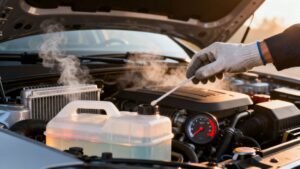
When you hear a mechanic mention a "bad head gasket," it’s shorthand for a serious engine problem. The seal separating the cylinder head from the engine block has failed, which can let vital fluids like coolant and oil mix together or leak into the engine’s combustion chambers. This failure is almost always a result of severe engine overheating, which can warp the metal components and destroy the gasket's seal.
What Is a Head Gasket and Why Does It Fail

Think of your engine's head gasket as the ultimate peacemaker. It’s a thin but incredibly tough layer sandwiched right between two of the engine's biggest powerhouses: the engine block (home to the pistons) and the cylinder head (where the valves operate). Its one job is to keep the peace by making sure high-pressure gases, engine oil, and coolant all stay in their own separate channels and never cross paths.
This multi-layered steel gasket is engineered to handle incredible stress. It withstands thousands of tiny, controlled explosions every minute inside the combustion chambers, all while keeping essential fluids from mixing. It’s the part that ensures oil doesn't get into your coolant and coolant doesn't flood your cylinders.
The Main Culprit: Overheating
So, what turns this durable seal into a bad head gasket? The answer nearly always comes down to just two things: extreme heat and old age. Every time you drive, your engine goes through a cycle of heating up and cooling down. This constant expansion and contraction puts immense stress on the gasket over tens of thousands of miles.
But the number one enemy of a head gasket is engine overheating. When an engine runs too hot, the aluminum cylinder head can warp, creating microscopic gaps that the gasket can no longer seal. This is where all the trouble begins.
A warped cylinder head is like trying to put a lid on a slightly bent pot—no matter how good the seal is, it will never fit perfectly again. This imperfection is what allows fluids and gases to escape, leading to catastrophic engine damage if ignored.
This is a problem we're seeing more often as people keep their cars on the road longer. With the average vehicle age in the U.S. now at 12.5 years, older engines have gone through far more heat cycles, making them prime candidates for gasket failure. This trend is part of why the global automotive head gasket market has grown to USD 2.3 billion and is still climbing, a trend you can read more about on gminsights.com.
How Age and Pressure Play a Role
Even if your car never has a major overheating episode, simple aging will make the gasket's material brittle and less pliable over time. After a decade or more of service, the seal just isn't as robust and can fail under normal operating pressures.
To give you a quick overview, here’s a table that breaks down the head gasket's essential jobs and what causes it to fail.
Head Gasket Failure Quick Facts
| Key Function | Common Cause of Failure |
|---|---|
| Seals the combustion chamber | Extreme pressure from overheating warps the cylinder head. |
| Separates coolant and oil passages | Age-related brittleness causes the gasket to crack. |
| Withstands extreme temperatures | A faulty cooling system (e.g., bad thermostat) leads to overheating. |
| Maintains engine compression | Improper installation or "detonation" (engine knock) damages the seal. |
As you can see, the common theme is a breakdown in the gasket’s ability to keep things separate. A bad head gasket isn't just another worn-out part; it’s a fundamental breach in your engine’s sealed system. Knowing this is the first step to recognizing the classic symptoms your car will show, which we'll get into next.
The Top 5 Signs of a Bad Head Gasket
A bad head gasket rarely fails in silence. Instead, your car will send out distress signals, often starting as subtle whispers before escalating into loud, unmistakable alarms. Catching these signs early can be the difference between a manageable repair bill and catastrophic engine failure.
Let's break down the top five indicators that the critical seal between your engine block and cylinder head has been compromised.
1. Mysterious Coolant Loss
Are you constantly topping off your coolant reservoir, yet you never see a puddle under your car? This is one of the first and most common signs of a failing head gasket. When the gasket fails, it can create a tiny internal leak, allowing coolant to seep directly into the combustion chambers where it gets burned away with the fuel.
This slow but steady loss is easy to overlook. You might just write it off as evaporation, but it’s a significant warning sign that shouldn’t be ignored. Learning how to properly check for coolant leaks can help you figure out if the fluid is escaping externally or being secretly consumed by the engine.
2. White Smoke from the Exhaust
If you see thick, white, sweet-smelling smoke billowing from your exhaust pipe—especially after the engine is fully warmed up—that’s a major red flag. This isn't the normal, thin vapor you see on a cold morning; this is dense smoke caused by coolant being vaporized inside the engine's cylinders.
Think of it like flicking water onto a hot skillet; it instantly turns to steam. The same thing happens when a bad head gasket lets coolant into the fiery hot combustion chamber. The intense heat of combustion turns it into steam, which is then pushed out the exhaust. It's a definitive sign that fluids are crossing boundaries where they absolutely don't belong.
3. Frequent Engine Overheating
Your cooling system is a closed, pressurized circuit designed to circulate coolant and pull heat away from the engine. A bad head gasket can breach this system in two ways, and both lead to overheating. First, if coolant is leaking out, there simply won't be enough fluid to properly manage engine temperatures. Find out more in our guide on low coolant in car symptoms.
Second, the gasket can fail in a way that allows high-pressure combustion gases to be forced into the cooling system. This displaces coolant, creates large air pockets, and stops the system from working correctly, causing your temperature gauge to spike into the red. If your car is constantly running hot even with a full coolant reservoir, a compromised head gasket is a very likely culprit.
When exhaust gas gets into the coolant, it's like blowing bubbles through a straw into a glass of water. Those "bubbles" are pockets of hot gas that keep the coolant from touching the engine's metal surfaces, leading to rapid and dangerous overheating.
4. Milky, Foamy Engine Oil
Have you pulled your oil dipstick recently only to find a creamy, milkshake-like substance instead of clean, dark oil? That "milky" sludge is the unmistakable sign that coolant has contaminated your engine oil. This happens when the head gasket fails between an oil passage and a coolant passage.
This contamination is absolutely disastrous for your engine. Oil's main job is to lubricate moving parts, but when it’s mixed with coolant, it loses its lubricating properties entirely. This frothy mixture can’t protect bearings, pistons, and other critical components from intense friction, leading to rapid and severe engine damage. You’ll often find this same milky residue clinging to the underside of the oil filler cap.
5. Noticeable Loss of Engine Performance
A head gasket is also responsible for sealing the immense pressure created inside the combustion chambers. When it fails, that pressure escapes, leading to a direct loss of engine compression. The symptoms of this can be varied but are always noticeable.
- Engine Misfires: Losing compression in one or more cylinders will cause the engine to run rough, shake, or feel unbalanced, especially at idle.
- Reduced Power: Your car may feel sluggish and struggle to accelerate because the engine simply isn't able to generate its full power.
- Poor Fuel Economy: When the engine has to work harder to make up for lost compression, it ends up burning more fuel just to maintain speed.
This drop in performance happens because the engine can no longer complete its combustion cycle efficiently. If you notice any of these five signs—especially more than one at the same time—it’s crucial to have your vehicle inspected by a professional right away to prevent even more serious and expensive damage.
How Professionals Diagnose a Blown Head Gasket
While tell-tale signs like plumes of white exhaust smoke and milky, contaminated oil are strong clues, they aren't definitive proof of a bad head gasket. To avoid a costly and unnecessary repair, our technicians use a specific series of diagnostic tests to confirm the failure with near certainty. This process is all about gathering concrete evidence, not just making an educated guess.
These tests go far beyond what you can see or hear from the outside. Using specialized tools, we uncover the hidden leaks and pressure breaches that define a blown gasket. Think of it like a doctor ordering an X-ray or a blood test instead of just relying on visible symptoms. It’s an absolutely crucial step to ensure the diagnosis is 100% correct before we even think about tearing down an engine.
The symptoms below are the classic red flags that prompt a professional diagnosis.

The flow from white smoke and overheating to that dreaded milky oil shows how a failing head gasket can escalate, with one problem often leading directly to another.
Coolant System Pressure Test
The first—and most common—diagnostic we perform is the coolant system pressure test. A technician attaches a special pump to the radiator or coolant reservoir and pressurizes the cooling system to its normal operating pressure, usually around 15-18 PSI.
If the pressure holds steady, we know the system is sealed up tight. If the gauge shows a steady drop in pressure, however, it confirms a leak somewhere in the system. To specifically pinpoint a bad head gasket, the tech will then pull the spark plugs and look for any signs of coolant inside the cylinders. This test is fantastic at revealing internal leaks that are completely invisible from the outside.
Chemical Combustion Leak Test
The chemical test is a clever and highly effective method for "sniffing" out a problem. This test checks for the presence of combustion gases—your car's exhaust—in the coolant, where they absolutely don't belong. A technician uses a device called a block tester, which contains a special blue fluid.
The tester is placed over the open radiator or coolant reservoir while the engine is running. If exhaust gases are leaking from a cylinder into the cooling system, they'll bubble up through the fluid. The CO2 in the exhaust reacts with the blue chemical, turning it yellow or green. Any color change is definitive proof of a compromised head gasket.
This test is like a smoke detector for your engine's cooling system. It detects the presence of something—in this case, exhaust gas—that absolutely should not be there, signaling a serious breach.
Cylinder Leak-Down and Compression Tests
For a deeper dive into the engine's internal health, technicians perform compression and leak-down tests. These diagnostics measure how well each individual cylinder can hold pressure, which directly reflects the integrity of the head gasket's seal.
A compression test measures the peak pressure each cylinder generates during the compression stroke. A leak-down test takes it a step further by pumping compressed air into the cylinder and measuring how much of it escapes and where it goes.
If two adjacent cylinders show low compression, it’s a classic sign of a head gasket failure between them. If we hear air hissing into the cooling system during a leak-down test, it's game over—the breach is confirmed. You can see how these fit into a larger inspection in our guide to the full car diagnostic test process.
Early signs of head gasket failure can be tricky to spot. What starts as a small, invisible amount of coolant being burned can quickly escalate to engine misfires, especially under load. This is precisely why professional diagnostics are so critical.
Understanding Head Gasket Repair Costs
Facing a potential head gasket failure always leads to one big, unavoidable question: "What's this going to cost me?" Let's be upfront—this is one of the more expensive jobs in auto repair. It’s not because the gasket itself is pricey, but because of the sheer amount of skilled labor it takes to get to it.
Think of your engine as a complex, multi-layered puzzle. The head gasket is buried deep inside, sandwiched right between the massive engine block and the cylinder head. To replace it, a technician has to painstakingly dismantle the entire top half of the engine. Hoses, wires, intake and exhaust manifolds—it all has to come off just to lift the cylinder head away. This detailed disassembly and reassembly process is what really drives up the final bill.
Breaking Down the Major Cost Factors
The total cost of a head gasket repair is a mix of three things: parts, labor, and any machine shop work that might be needed. Understanding these helps you see exactly where your money is going. The overwhelming majority of the expense, often over 80%, is pure labor.
Repairing a blown head gasket is a significant investment. For most standard cars, you can expect the cost to land somewhere between $1,000 to $3,000. If you drive a luxury or high-performance vehicle, that figure can easily climb to $5,000 or more.
The reason for the high price is the labor-intensive nature of the job, which can take anywhere from 6 to 12 hours at a typical shop rate of $75 to $200 per hour. The parts themselves might only be a few hundred dollars. This is exactly why a professional, accurate diagnosis is so critical before you commit to such a major repair. You can find more details on the gasket market at marketreportanalytics.com.
Permanent Fix vs. Temporary Patches
When you're dealing with a bad head gasket, you have a few paths you can take, but only one is a genuine, long-term solution. It’s vital to know the difference.
- Full Head Gasket Replacement: This is the only correct and permanent repair. It involves removing the cylinder head, swapping the failed gasket for a new one, and meticulously reassembling the engine to factory specifications. This is the professional standard and the only way to do it right.
- Cylinder Head Resurfacing: This isn't just an optional add-on; it's a critical part of a proper repair. When an engine overheats, the aluminum cylinder head can warp—even just a tiny, imperceptible amount. Putting a brand-new gasket on a warped surface is a surefire way to have it fail again almost immediately. Resurfacing (also called "decking") the head at a machine shop grinds it down to create a perfectly flat, clean surface for the new gasket to seal tightly against.
- Temporary Sealant Fixes: You’ve probably seen products advertised as "head gasket repair in a bottle." These are chemical sealants you pour into your coolant, designed to temporarily plug small leaks. While they might just get you home in an emergency, they are not a real fix.
Using a liquid sealant on a blown head gasket is like putting a small bandage on a major wound. It might stop the bleeding for a moment, but it does nothing to address the underlying injury and can often create more problems by clogging your radiator and heater core.
These sealants are a short-term patch at best. Worse, they can make the eventual professional repair more complicated and even more expensive.
Head Gasket Repair Cost Breakdown (Estimates)
To give you a clearer picture of what a full, professional repair might cost, we've put together this table. It breaks down the estimated costs for different types of vehicles, so you can better manage your expectations.
| Vehicle Type | Estimated Parts Cost | Estimated Labor Hours | Total Estimated Cost Range |
|---|---|---|---|
| 4-Cylinder Sedan | $150 – $400 | 6 – 9 Hours | $1,200 – $2,500 |
| 6-Cylinder SUV/Truck | $250 – $600 | 8 – 12 Hours | $1,800 – $3,500 |
| 8-Cylinder Performance/Luxury | $400 – $800+ | 10 – 15+ Hours | $2,500 – $5,000+ |
As you can see, the more complex the engine is, the more labor time it requires and the higher the overall cost. A V-shaped engine (like a V6 or V8) often takes more work because it has two separate cylinder heads. If gaskets on both sides have failed, the effort and cost could potentially double. Remember, these are just estimates, and the final price will depend on your specific vehicle and the extent of the damage.
How to Prevent Head Gasket Failure

While it's good to know the signs and costs of a blown head gasket, let's be honest: the best repair is the one you never have to make. Moving from a reactive mindset to proactive care is what truly protects your engine and your wallet. Preventing head gasket failure isn't about luck; it's about consistent, smart maintenance.
The single biggest enemy of your head gasket is heat. As we've covered, overheating is the number one cause of failure. When your engine gets too hot, the metal cylinder head can expand and warp, destroying that all-important seal. So, the most important thing you can do to avoid a multi-thousand-dollar repair is to keep your engine's cooling system in top-notch condition.
Maintain Your Cooling System Diligently
Think of your car's cooling system as an insurance policy against a blown head gasket. A small investment in upkeep here pays massive dividends by preventing the extreme heat that kills gaskets. These aren't just shop chores; they are strategic moves to preserve your engine's health.
A few key tasks are essential for keeping engine temperatures right where they should be:
- Regular Coolant Flushes: Coolant does more than just cool. It’s loaded with anti-corrosion additives that protect the inside of your engine. Over time, these additives wear out, and the fluid can become acidic. A coolant flush, typically every 30,000 to 50,000 miles, gets rid of that old, depleted fluid and puts in a fresh batch that properly protects your engine.
- Keep an Eye on Coolant Levels: This simple check takes just a few seconds but is incredibly powerful. A low coolant level is often the very first sign of a leak or another brewing issue. Make it a habit to peek at your coolant reservoir at least once a month.
- Replace the Thermostat and Radiator Cap: The thermostat is the gatekeeper of your engine’s temperature, and the radiator cap maintains the right pressure in the system. These parts are cheap, but if they fail, they can cause a major overheating event. Replacing them as part of your regular maintenance (say, every 60,000 to 80,000 miles) is a low-cost, high-impact preventative step.
On most engines, head gasket failure is actually quite rare on vehicles that have never been allowed to overheat. This simple fact shows a direct link between an owner's diligence with the cooling system and the gasket's lifespan.
Listen to Your Engine and Act Quickly
Beyond scheduled maintenance, just being an attentive driver is one of your best defenses. Your car will almost always give you a warning before a serious overheating problem occurs.
If you ever see that temperature gauge start climbing into the red, do not ignore it. Pull over safely as soon as you can and shut the engine off. Trying to "limp it home" is often the exact decision that warps a cylinder head and turns a minor problem, like a bad thermostat, into a devastatingly expensive head gasket job. Addressing small cooling system issues right away is the key to avoiding a much bigger one.
Your Dallas Experts for Head Gasket Repair
A bad head gasket isn't just another repair—it's one of those serious issues that requires real trust in your mechanic. For anyone driving around Dallas, ignoring the symptoms is a high-stakes gamble. Small problems can quickly snowball into catastrophic engine failure, leaving you stranded and facing a much bigger bill. You need a local team with the right tools, honest practices, and deep-seated expertise to get you back on the road safely.
Here at Kwik Kar, we know exactly how stressful a major engine problem can be. That's why we've built our service around being professional and, most importantly, clear. We don't play guessing games; we diagnose. Our shop is equipped with advanced diagnostic tools that allow our technicians to confirm a head gasket failure with pinpoint accuracy, so you never pay for a repair you don't actually need.
Why Choose Kwik Kar for Your Repair
Our commitment goes beyond just fixing the part. We aim to provide a service experience that builds confidence from the moment you walk through our doors. We take the time to give clear explanations and straightforward pricing, eliminating the nasty surprises that often come with complex auto repairs.
- Skilled Technicians: Our team has years of hands-on experience with the intricate process of head gasket replacement on all kinds of sedans, SUVs, and trucks.
- Transparent Pricing: We provide detailed, easy-to-understand estimates before a single wrench is turned, so you know exactly what the costs are and can make an informed choice.
- Convenient Service: We know you have a life to live. That's why we offer appointments seven days a week to work around your busy schedule.
When your engine's health is on the line, choosing the right mechanic is everything. A proper head gasket repair is a meticulous process that restores your vehicle's reliability and protects your investment for years to come.
Ignoring a bad head gasket won't make it magically disappear—it will only lead to more extensive and costly damage down the road. To get a full picture of what a professional fix entails, you can learn more about our comprehensive engine repair services.
Don't wait for a complete breakdown. If you even suspect your vehicle has a bad head gasket, schedule a diagnostic appointment with our Dallas team today. You can book your visit online or give us a call to speak with one of our friendly service advisors. Let us provide the professional, reliable solution your car deserves.
Frequently Asked Questions About Head Gaskets
Even after you understand the signs and causes, you probably still have a few questions. That’s normal. A bad head gasket is a major repair, and you need to look at it from every angle before making a decision.
We’ve put together the most common questions our technicians hear every day and answered them as clearly as possible to help you figure out what to do next.
Can I Drive My Car with a Bad Head Gasket?
The short answer is a firm no. You absolutely shouldn’t. Continuing to drive with a blown head gasket, even for just a few miles, can turn a very expensive repair into a catastrophic one requiring a complete engine replacement.
If coolant is mixing with your oil, it’s ruining the oil's ability to lubricate your engine's moving parts. This leads to massive friction damage. On the other hand, if exhaust is getting into your cooling system, you're risking a severe overheating event that can crack the cylinder head or even the engine block. The moment you suspect a head gasket failure, the safest and cheapest thing to do is to pull over and get your vehicle towed to a trusted shop.
How Long Does a New Head Gasket Last?
When a professional does the job right, a new head gasket should last for the rest of the engine's life—often another 100,000 miles or more. The key is that it has to be done professionally. A successful, long-lasting repair is about far more than just swapping out the old part.
It involves several critical steps:
- Thorough Inspection: Checking the cylinder head and engine block for warping, cracks, or other damage.
- Proper Resurfacing: Machining the head to ensure it's perfectly flat for the new gasket to create a perfect seal.
- Quality Parts: Using a high-quality, multi-layered steel (MLS) gasket designed for durability.
- Exact Torque Sequence: Tightening the head bolts in a specific pattern and to precise torque specifications.
Skipping any one of these steps is just asking for the new gasket to fail prematurely. In fact, on engines that have never been allowed to overheat, the original head gasket rarely fails at all.
Is Repairing the Head Gasket Worth the Cost?
This is always the toughest question, and the honest answer is: it depends. The decision really comes down to your vehicle's age, its overall condition, and its current value. You need to weigh the cost of the repair against what it would cost to get into another car.
A good rule of thumb is to use this simple formula:
(Value of Car After Repair) – (Cost of Repair) = Net Value
If the repair bill starts creeping up to 50-75% of what the car is worth, many owners decide it's time to move on. However, if your car is otherwise in great shape and you aren't ready to take on a new car payment, investing in the repair can give you several more years of reliable driving. It often makes more sense to fix the car you know than to take a gamble on a used car with a history you don't. The most important step is to get a firm quote so you can make a clear-headed financial decision.
Don't let a bad head gasket diagnosis leave you guessing. If you're in the Dallas area and need clear answers and reliable service, bring your vehicle to Kwik Kar Oil Change and Auto Care. Our expert technicians will perform a thorough diagnostic and give you a transparent, no-pressure recommendation. Schedule your appointment today at https://www.kwikkarspringvalley.com.