
A lot of Dallas drivers make the same choice at the oil counter. They look at the price, pick conventional oil, and move on. That feels sensible in the moment.
Then summer traffic hits, the engine spends its life idling and reheating, and the same car comes back needing more attention than expected. For a commuter, that means more maintenance stops. For a fleet manager, it means vehicles off the road when they should be earning.
That is why the benefits of full synthetic oil matter. This is not just about buying a premium fluid. It is about choosing an oil that holds up better in heat, flows better when the engine first starts, stays cleaner longer, and can reduce how often you need service. If you drive across Dallas every day, or manage work trucks that rack up miles fast, those are practical advantages.
Your Engine's Best Defense in Dallas Traffic and Heat
On a typical Dallas afternoon, your engine deals with more stress than many drivers realize. You may be creeping through stop-and-go traffic, idling at long lights, then jumping onto the freeway and asking the engine to work hard again.
That pattern is rough on oil. Heat builds. Parts move fast. The oil has to lubricate, cool, and clean at the same time.
For everyday drivers, the warning signs usually show up slowly. The engine feels a little less smooth. Oil gets dark sooner. Service appointments seem to come around faster than expected.
For commercial vehicles, the pain is more obvious. A light truck that misses time for maintenance is not making deliveries, reaching job sites, or carrying crews. Lost time is the primary cost.
Why Dallas driving changes the oil conversation
Dallas driving is not just highway cruising. It often means:
- Frequent idling: Oil stays under heat stress even when the vehicle is not covering much ground.
- Stop-and-go acceleration: Moving parts repeatedly load and unload, which increases friction.
- Wide weather swings: Hot summers are the main challenge, but cold starts still matter on winter mornings.
- Long service days for fleets: Work vehicles may spend many hours on the road in one shift.
Full synthetic oil fits this kind of use because it is built for harder conditions. It is not magic, and it does not replace proper maintenance. But it gives the engine a stronger layer of protection when traffic, heat, and mileage stack up.
Tip: If your driving day includes short trips, freeway merges, long idle times, or heavy loads, oil quality matters more than many drivers think.
Many drivers do not need a chemistry lesson. They need a simple answer to one question. Does paying more for synthetic oil help in real life?
Yes, especially when you care about fewer service interruptions, cleaner engine operation, and better day-to-day durability.
Understanding What Makes Full Synthetic Oil Different
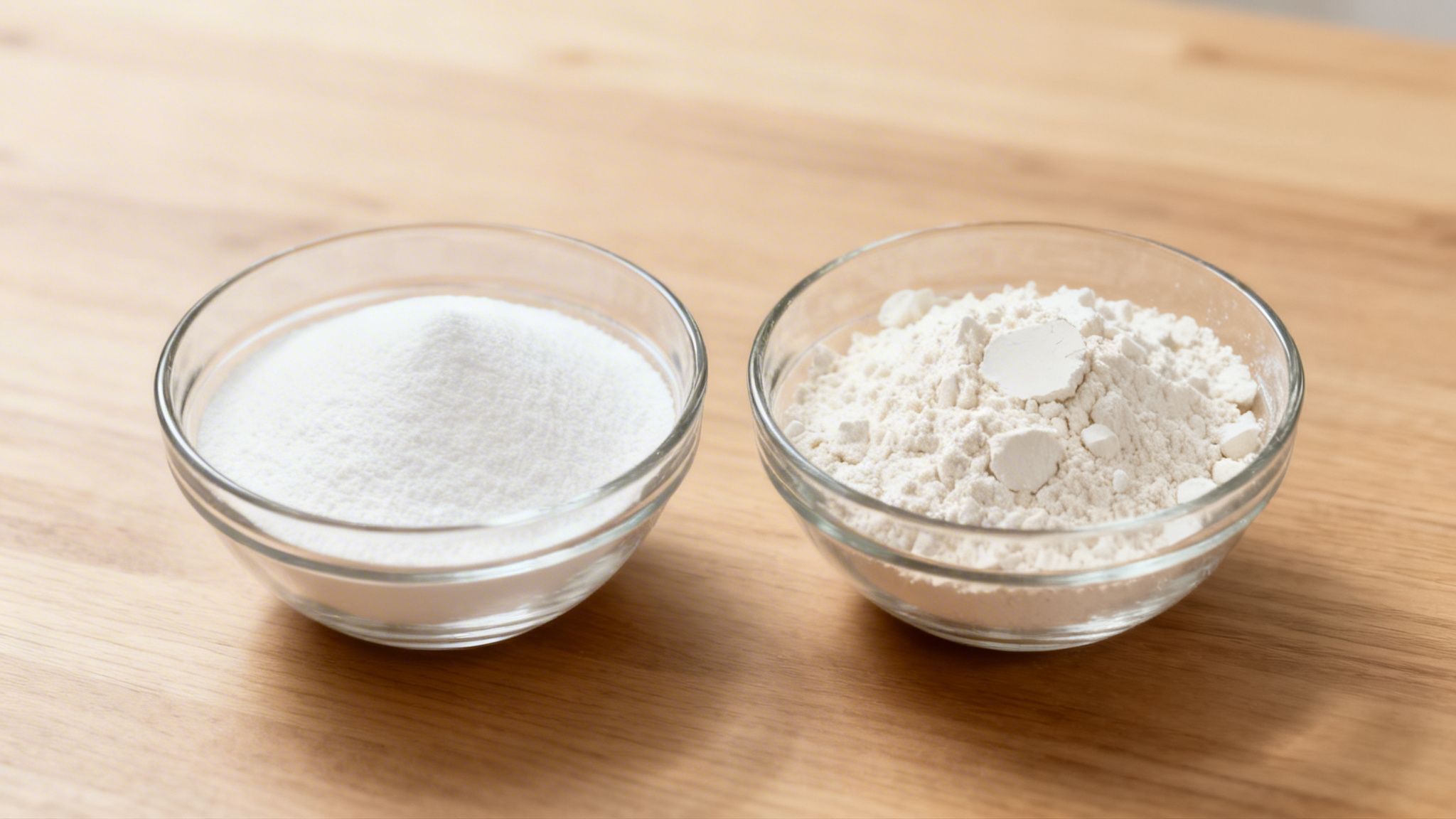
The easiest way to understand full synthetic oil is to think about baking ingredients. If you pour one bowl of finely sifted flour and one bowl of clumpy, uneven flour, they will not behave the same in a recipe.
That same idea helps with motor oil.
Uniform molecules matter
Full synthetic oil is engineered to be more uniform and purer than conventional oil. Conventional oil starts from crude petroleum and contains a wider mix of molecules. Full synthetic oil is built to be more consistent.
That consistency matters inside an engine. Oil has to move through narrow passages, coat metal parts, and keep doing its job when temperatures change. When the oil is more uniform, it tends to flow more predictably and resist breakdown better.
A driver usually feels the result, not the chemistry. The engine starts cleaner, sounds smoother, and handles stress better over time.
Why cold starts cause confusion
Many people in Dallas hear “cold-start protection” and assume it only matters in northern winters. It still matters here. Any time the engine has been sitting, the oil needs to move quickly at startup.
Full synthetic oils have a wax-free molecular structure, which helps them flow faster in low temperatures. Standardized tests showed synthetics can reach vital parts up to 47% faster than conventional oils in cold-weather flow conditions, according to Machinery Lubrication’s explanation of synthetic oil pumpability.
That matters because startup is one of the moments when metal parts are most vulnerable. Faster oil flow means the engine gets protection sooner.
What that means in daily driving
You do not have to be facing a freeze for this to matter. Better flow helps when:
- Your car sits overnight: Oil needs to circulate quickly the next morning.
- You drive short trips: The engine repeats that startup cycle often.
- Your vehicle uses modern systems: Turbochargers and variable valve timing depend on clean, stable oil flow.
The short version is simple. Conventional oil can do the job. Full synthetic oil does it with more consistency, especially when the engine is under stress.
Synthetic vs Conventional Oil A Head-to-Head Comparison
If you are standing at the service counter deciding between oil types, a side-by-side view helps more than a sales pitch.
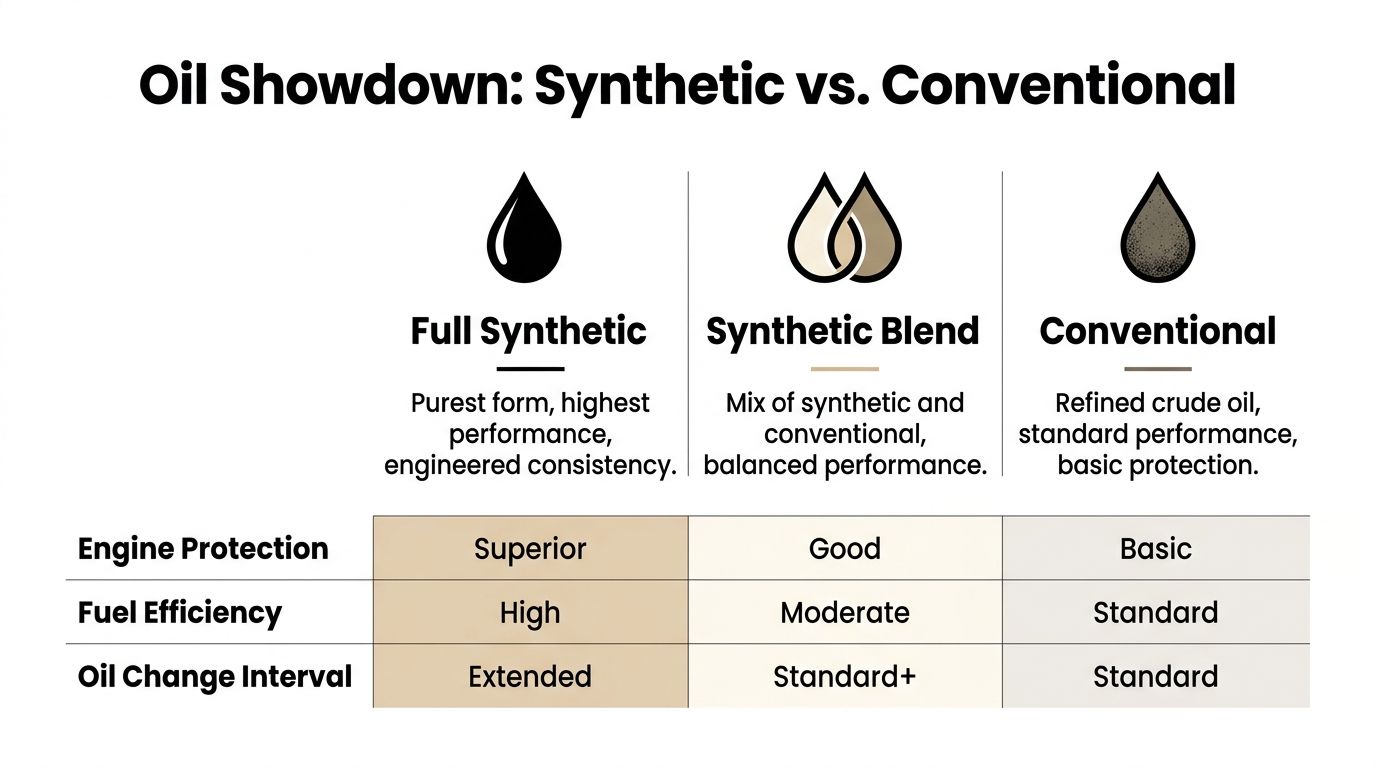
Oil type comparison at a glance
| Feature | Conventional Oil | Synthetic Blend | Full Synthetic Oil |
|---|---|---|---|
| Base makeup | Refined crude oil | Mix of conventional and synthetic oils | Fully engineered synthetic base oils |
| Engine protection | Basic | Better than conventional | Strongest overall protection |
| Heat resistance | Lower | Moderate | High |
| Cold-flow behavior | Thickens more easily | Better than conventional | Best cold-flow performance |
| Oil change interval | 3,000 to 5,000 miles | Varies by product and vehicle | 7,500 to 15,000 miles |
| Deposit control | Basic | Moderate | Strong |
| Upfront cost | Lower | Mid-range | Higher |
| Best fit | Older habits, lower upfront spend | Middle-ground choice | Drivers focused on durability, efficiency, and fewer changes |
One quick explainer is worth watching if you want the simple visual version.
Where full synthetic clearly pulls ahead
The biggest practical difference is service life. Full synthetic oil can last 7,500 to 15,000 miles, while conventional oil typically lasts 3,000 to 5,000 miles, based on the comparison published by Dyer Chevrolet Fort Pierce on full synthetic oil intervals.
That same source also cites a 2017 AAA study where synthetics performed 47% better on average across critical tests, including thermal stability and deposit control. Those are not abstract lab wins. They are the reasons synthetic oil can stay useful longer.
What about synthetic blend
Synthetic blend sits in the middle. It gives you some of the improved behavior of synthetic oil without fully stepping up to the top tier.
For some drivers, that is a fair compromise. If your vehicle sees moderate use and you want to spend less upfront than full synthetic, a blend can make sense. But if your engine runs hot, you drive a lot, or downtime is expensive, blend oil usually gives up the very advantages people care about most.
A practical way to choose
Use this rule of thumb:
- Choose conventional oil if your main goal is the lowest immediate cost and your vehicle use is light.
- Choose a synthetic blend if you want a middle option and your service schedule is still fairly traditional.
- Choose full synthetic oil if you want longer intervals, stronger protection in heat, and better all-around performance.
If you want a deeper local comparison, this guide on synthetic vs conventional oil breaks down the tradeoffs in plain language.
Key takeaway: The higher price of full synthetic oil buys two things conventional oil does not match well. Better durability under stress and more time between oil changes.
For a daily commuter, that means fewer interruptions. For a fleet, that means fewer scheduled stops pulling vehicles out of service.
How Synthetic Oil Delivers Superior Engine Protection
Heat is where weak oil gets exposed. It thins out, evaporates faster, and leaves behind deposits that make the engine work harder than it should.
Full synthetic oil holds up better when temperatures rise. That is one reason mechanics often recommend it for hard-driven vehicles, turbocharged engines, and work trucks that spend long hours moving through traffic.
It resists breakdown when engines run hot
In high-temperature stability testing, full synthetic oils showed much better resistance to evaporation and oxidation. They can deliver up to 76% less oil consumption than required by API standards and keep pistons up to 40% cleaner than industry benchmarks, according to AMSOIL’s guide to synthetic vs conventional oil.
Those two points connect directly.
Less evaporation means the oil stays in serviceable condition longer. Cleaner pistons mean fewer deposits and less sludge building up where you do not want it.
Cleaner oil supports cleaner engines
A lot of drivers think engine wear only comes from old age or high mileage. In reality, dirty oil and deposit buildup can create problems much earlier.
When sludge and carbon collect inside the engine, they interfere with oil flow and add resistance. That can affect:
- Turbochargers: They depend on clean, stable lubrication.
- Valve timing systems: These systems use oil pressure to work correctly.
- Pistons and rings: Deposits can reduce smooth movement and efficient sealing.
This is why the benefits of full synthetic oil are not just about today’s oil change. They are about protecting the engine from the slow kind of damage that builds over years.
Consider it a flexible shield
Conventional oil can protect well enough in basic use, but under heavy heat it tends to lose its edge sooner. Full synthetic behaves more like a flexible shield. It keeps its protective film better when the engine is hot and busy.
That matters in Dallas, where long summer drives and long idle times are normal.
Mechanic’s view: A cleaner engine usually gives you fewer surprises. Better oil does not guarantee zero repairs, but it can reduce the conditions that lead to wear-related problems.
If you plan to keep your vehicle for the long haul, engine cleanliness is not a minor detail. It is part of preserving reliability.
Boosting Fuel Economy and All-Weather Performance
Some benefits show up in the long term. Others show up every week when you fill the tank and start the engine.
Fuel economy is one of them.
Full synthetic oil reduces internal friction because its molecular structure is more uniform. That lower drag helps moving parts work with less resistance.

How lower friction helps your wallet
Pennzoil Platinum Full Synthetic data shows drivers can gain an average of 550 extra miles per year compared with a dirty engine, as summarized in this overview of synthetic oil fuel economy benefits.
The important point is not just the mileage number. It is why that improvement happens. When oil creates less drag on moving parts, the engine does not have to waste as much energy overcoming friction.
For a commuter, that can mean more distance from the same fuel. For a company with multiple vehicles, small efficiency gains across the fleet can add up in a meaningful way.
Dallas weather tests oil in two directions
Many drivers focus on summer, and they should. High heat pushes oil hard. The oil has to stay stable enough to lubricate without thinning out too quickly or burning off.
But winter mornings still matter. Even in North Texas, an engine that sat overnight needs fast oil circulation at startup. Full synthetic handles those temperature swings better than conventional oil because it stays more consistent across conditions.
Real-world benefits drivers notice
Drivers usually do not say, “My oil has better molecular uniformity.”
They say things like:
- The engine feels smoother on startup
- The vehicle responds better in traffic
- I am not thinking about oil service as often
- The car seems happier in extreme weather
That is the practical side of the benefits of full synthetic oil. Better flow when cold. Better stability when hot. Less wasted energy inside the engine.
Why this matters even more for work vehicles
A fleet truck that starts early, idles at stops, runs in midday heat, and repeats that cycle all week needs reliable lubrication in every phase of the day. Fuel use matters, but so does predictable performance.
When a vehicle works for a living, efficiency and consistency are part of the same conversation. Oil that stays stable helps both.
The Financial Case for Upgrading Your Oil
The biggest objection to full synthetic oil is simple. It costs more upfront.
That part is true. Full synthetic oil can cost about 30% more initially, based on the figures summarized by the source used for extended interval guidance earlier. But focusing only on ticket price misses the larger math.
Fewer changes can offset the higher price
When oil lasts longer, you buy fewer oil changes over the same stretch of driving. That is the first part of the value equation.
For commercial fleets, switching to full synthetic oil can cut the number of required oil changes by 50% or more because of extended 7,500 to 15,000 mile intervals, according to GOS Energy’s summary of fleet synthetic oil benefits.
For a fleet manager, this changes more than the maintenance line item. It lowers labor time, reduces scheduling interruptions, and keeps trucks available for work.
Downtime is often the primary expense
A personal vehicle owner may mainly care about convenience and long-term vehicle health. A business owner usually thinks in cost per mile and hours lost.
Every maintenance stop has a ripple effect:
- Driver time: Someone has to bring the vehicle in.
- Scheduling friction: Service appointments interrupt routes or jobs.
- Vehicle availability: A truck in the bay is not producing revenue.
In this context, synthetic oil presents a strong ROI case. Not because it is cheap, but because it can reduce how often you have to stop and service the vehicle.
For everyday drivers, value looks different
For a household budget, the equation is usually:
- Pay more at the oil change.
- Change oil less often.
- Get added value from better efficiency and stronger protection.
That does not mean every driver saves the same amount. Driving habits, mileage, and vehicle type matter. But the logic is solid. A higher-quality oil can be the less expensive choice over time when it reduces service frequency and supports better engine operation.
If you want to compare current maintenance offers before deciding, take a look at these oil change deals and service specials.
Bottom line: Conventional oil can win on purchase price. Full synthetic oil often wins on total ownership value.
When to Switch to Synthetic Oil and How Kwik Kar Can Help
Some drivers wait until they buy a new car to switch. You do not have to.
Older vehicles, newer vehicles, family SUVs, and work trucks can all benefit if the engine is a good candidate and the oil matches manufacturer requirements. One common myth is that synthetic oil is “too slippery” for older engines. In practice, many older engines do well with it, especially when the goal is cleaner operation and better stability.
Good times to consider the switch
You should ask about full synthetic oil if any of these sound familiar:
- You drive in heavy traffic: Repeated heat cycles are hard on oil.
- You keep vehicles a long time: Better protection matters more when you plan to hold onto the car.
- You manage service vehicles: Reduced downtime can be worth more than the added fluid cost.
- You want fewer oil changes: Longer intervals are one of the clearest practical benefits.
Keep the decision simple
Check your owner’s manual first. The right viscosity and service category always matter.
If you want help deciding, a shop can match your vehicle, mileage, and driving pattern to the right oil type. Kwik Kar Oil Change and Auto Care is one local option for that kind of routine service, along with inspections and preventive maintenance. If you are unsure how often a synthetic-filled vehicle should come in, this guide on synthetic oil change interval basics is a useful starting point.
The best choice is not the most expensive bottle on the shelf. It is the oil that fits how you drive and how much downtime you can afford.
If your car spends its days in Dallas traffic, or your business depends on light trucks and SUVs staying on the road, it makes sense to talk through the practical benefits of full synthetic oil with a technician. You can schedule service or learn more at Kwik Kar Oil Change and Auto Care.