

Most manufacturers call for a brake fluid change every 2 to 3 years, regardless of mileage, though some tie it to 20,000 to 30,000 miles instead. Your owner’s manual has the final word for your specific vehicle. If you tow, drive mountain roads, or sit in stop-and-go traffic often, plan on the shorter end of that range, and consider a shop test if you’re unsure whether it’s time yet.
TL;DR:
- Brake fluid should be tested regularly for moisture content and boiling point, especially if driving under severe conditions like towing or mountain driving.
- Manufacturer recommendations vary from two years to 30,000 miles, with stricter European guidelines favoring a two-year replacement regardless of use.
- Visual signs such as dark fluid, burnt smell, or a soft pedal can indicate degraded brake fluid, but objective testing provides the most reliable assessment.
- Failing to replace moisture-saturated fluid risks brake fade, internal component corrosion, and costly repairs, especially in severe-use vehicles.
- Professional brake fluid services include inspection, testing, complete flushing, and system check for safety and performance assurance.
Table of Contents
- Brake Fluid Change Interval: What Manufacturers Actually Recommend
- Driving Habits That Shorten a Safe Brake Fluid Interval
- Signs of Low or Degraded Brake Fluid You Can Check Yourself
- What Happens When You Skip a Brake Fluid Change
- How Kwik Kar Handles a Brake Fluid Change
- The Simple Decision Rule for Brake Fluid Service
- Kwik Kar’s Take on Brake Fluid Neglect
- Book Your Brake Fluid Service in Spring Valley
- Sources
- FAQ
Brake Fluid Change Interval: What Manufacturers Actually Recommend
Owner’s manuals rarely agree on an exact number, and that’s by design, not confusion. Brake systems, fluid formulations, and expected use vary enough between manufacturers that a single universal number would be wrong for someone.
Honda’s technical guidance calls for a brake fluid replacement every 2 years or 30,000 miles, whichever comes first. That’s a common pattern across mainstream brands. Some European manufacturers lean toward a strict 2-year calendar interval regardless of mileage, treating brake fluid more like a safety component with a hard expiration date than a wear item tied to driving distance.
Here’s what tends to show up across most manuals:
- 2 years flat, common among European performance brands that prioritize a conservative safety margin
- 2 to 3 years or 20,000 to 30,000 miles, the pattern for many mainstream domestic and Asian models
- Condition-based schedules on some newer vehicles that rely on inspection rather than a fixed calendar
The reason behind all of it comes down to chemistry. Standard glycol-based brake fluid is hygroscopic, meaning it absorbs moisture from the air over time. Professional Motor Mechanic notes that this moisture absorption gradually lowers the fluid’s wet boiling point, which is the temperature at which fluid starts to boil under hard braking. Manufacturers set intervals around how fast that decline typically happens in their specific brake systems, which is exactly why your owner’s manual, not a general rule, should guide your specific vehicle.
Driving Habits That Shorten a Safe Brake Fluid Interval
Manufacturer intervals assume typical driving. Push your vehicle harder than that, and the clock moves faster.
Ford’s owner guidance specifically flags that severe driving conditions accelerate brake fluid degradation, and several driving patterns push a vehicle into that category:
- Towing a trailer or heavy load, which raises brake temperatures on every stop
- Mountain or hill driving, where sustained braking on descents generates extended heat buildup
- Heavy stop-and-go traffic, common for Dallas commuters, which keeps brakes working harder and hotter than highway driving
- Track days or spirited driving, which pushes brake temperatures well beyond normal street use
Heat and moisture work together against your brake fluid. Higher operating temperatures push fluid closer to its wet boiling point faster, while more frequent heat cycles can accelerate moisture absorption through seals and hoses. If your driving fits any category above, treat the manufacturer’s stated interval as a maximum, not a target.
Pro Tip: Fleet vehicles and daily commuters logging heavy city miles often benefit from a fluid check every year, even if the manual says two, simply because stop-and-go braking adds up faster than owners expect.
Signs of Low or Degraded Brake Fluid You Can Check Yourself
You don’t need a lab to get a first read on your brake fluid’s condition. A few checks will tell you whether it’s time to dig deeper.
- Look at the color. Fresh brake fluid runs clear to light amber. Fluid that’s turned dark brown or black has likely absorbed contaminants and needs professional evaluation.
- Check for an odd smell. A sharp, oily, or burnt smell can indicate petroleum contamination, which compromises the fluid’s ability to handle heat and requires immediate service.
- Watch the pedal feel. A brake pedal that feels soft, spongy, or sinks slightly under sustained pressure often points to air or moisture in the system.
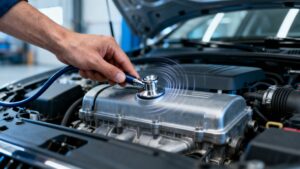
- Request a moisture test. Shops use handheld moisture meters that read fluid water content as a percentage, giving an objective number instead of a guess.
- Ask for a boiling-point test. This measures the fluid’s actual wet boiling point against safety thresholds set by SAE J1703/J1704 recommended practice, giving the clearest picture of remaining service life.
Technical data on DOT brake fluid grades shows that reaching roughly 3.7% water content can substantially reduce wet boiling points, which is a big part of why so many manufacturer schedules cluster around that 2 to 3 year mark. A visual check alone won’t catch this. If your fluid looks fine but you’re past your interval or logging severe-use miles, a shop test is worth the trip.
What Happens When You Skip a Brake Fluid Change
Old, moisture-saturated brake fluid puts your braking system at real risk, not just theoretical wear. As wet boiling point drops, hard or repeated braking can cause the fluid to vaporize inside the lines, creating compressible gas bubbles instead of solid hydraulic pressure. That’s brake fade, and it shows up as a pedal that feels fine at first, then sinks toward the floor during a long descent or panic stop.
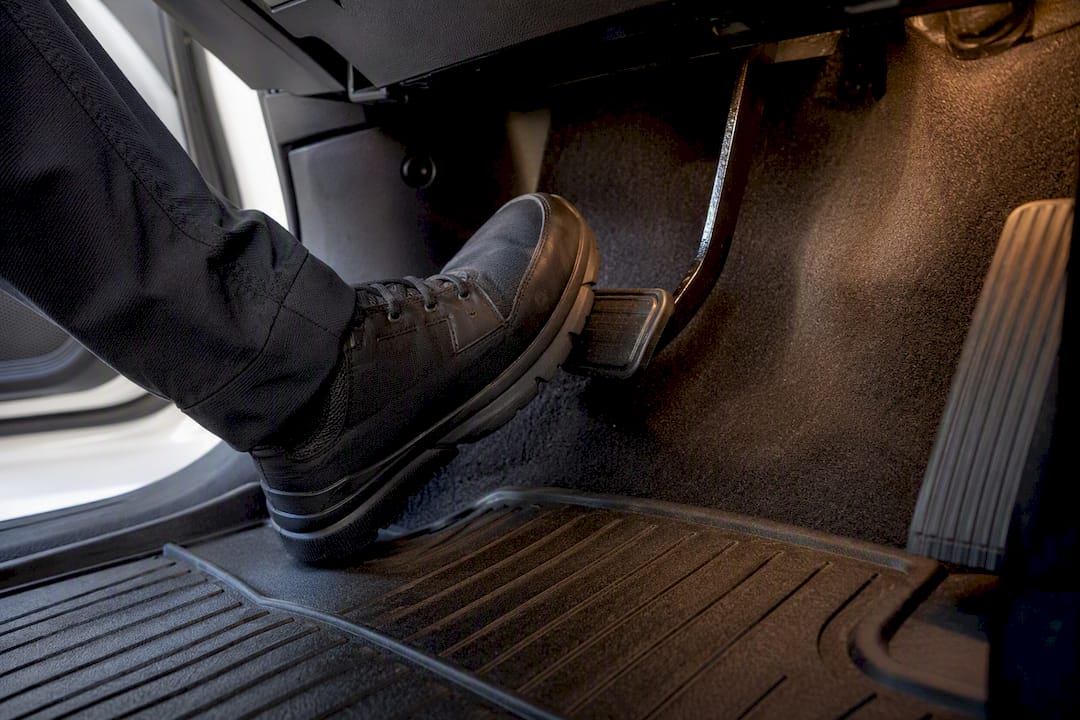
Moisture also corrodes internal components over time. Left unchecked, it can seize calipers, damage ABS modules, and pit the metal surfaces inside the master cylinder, turning a routine fluid change into an expensive repair. Watch for common brake problems like a spongy pedal that improves once the system cools, a common warning sign of moisture-related vapor formation. Any oily smell or sudden pedal softness means it’s time to stop driving on it and get the system checked.
How Kwik Kar Handles a Brake Fluid Change
A proper brake fluid service is more than draining and refilling a reservoir. It’s a system check with the fluid change built in.
Here’s what that process typically looks like at a full-service shop:
- Initial inspection of fluid color, reservoir level, and visible line condition
- Optional moisture or boiling-point test to confirm whether a full flush is actually needed
- Complete flush and bleed of all four brake lines, removing old fluid and air pockets
- Inspection of hoses, seals, and the ABS unit for wear or contamination damage
- Test drive to confirm firm pedal feel and proper braking response
- Documented service record noting fluid condition, work performed, and mileage
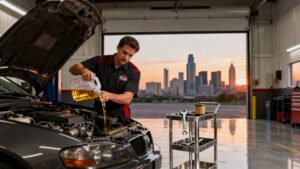
Kwik Kar Oil Change & Auto Care’s technicians are ASE-certified, and every estimate is presented before work begins, so you know what’s needed and why. Professional service makes the most sense when a test comes back near the safety threshold, when you’re noticing pedal symptoms, or when your vehicle regularly sees severe-use driving.
Pro Tip: Keep a copy of every brake service record. If a shop tests your fluid and it passes, that documented result is worth more than guessing based on the calendar alone.
The Simple Decision Rule for Brake Fluid Service
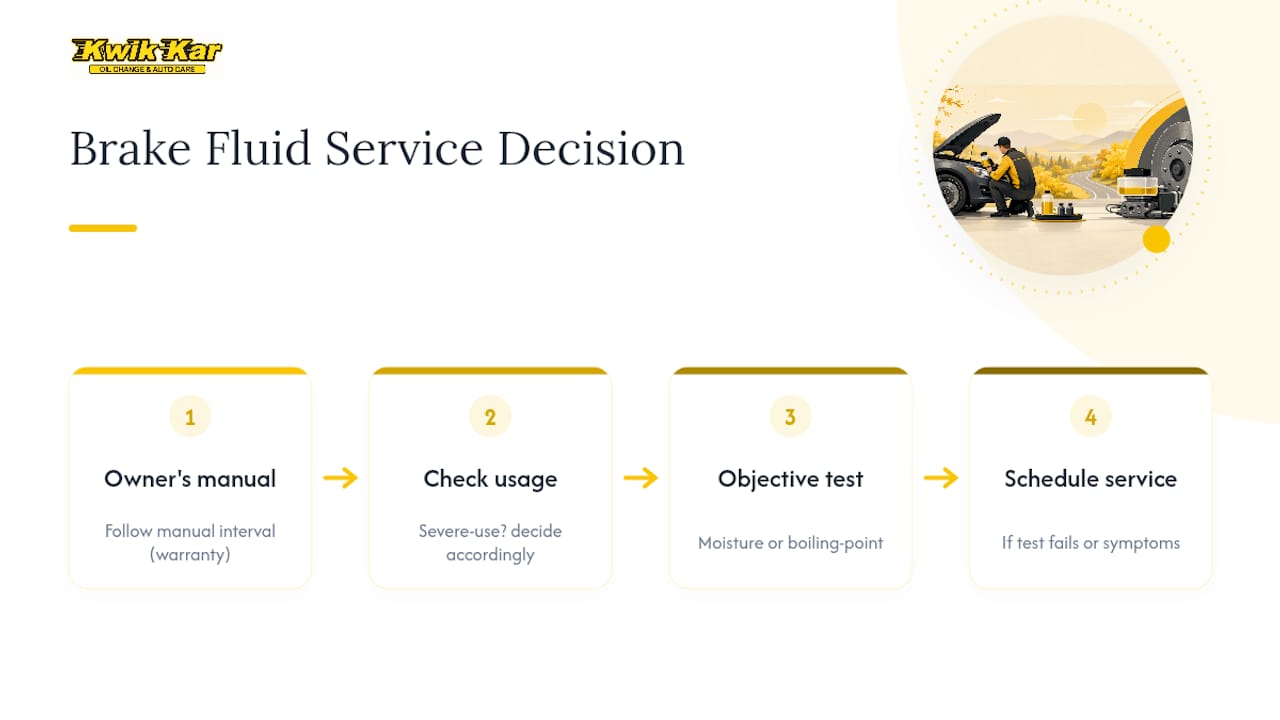
Start with your owner’s manual. It sets the specific interval for your vehicle and matters for warranty compliance, so it’s controlling above any general rule.
From there, the flow is simple: check your usage pattern against severe-use categories, get a moisture or boiling-point test if you’re unsure whether you’re due, and schedule service immediately if that test fails or you notice pedal symptoms. Objective testing works as a practical middle ground here. It can justify extending an interval for a gently driven vehicle, or catch a problem earlier when conditions call for it. Never delay service once symptoms show up.
Kwik Kar’s Take on Brake Fluid Neglect
Brake fluid problems rarely announce themselves loudly until they’re serious. In our experience, the most common failure pattern isn’t a sudden fluid leak. It’s years of quiet moisture absorption that nobody caught because nobody tested for it. A calendar reminder helps, but an objective moisture or boiling-point reading tells you the truth about your specific vehicle. Keep your service records. Ask for the numbers, not just the top-off.
— Kwik Kar
Book Your Brake Fluid Service in Spring Valley
Kwik Kar Oil Change & Auto Care gives Spring Valley Road drivers something a lot of quick-service chains skip: ASE-certified technicians who test before they recommend, and a written estimate before any work starts. That means no guessing about whether your fluid actually needs replacing, and no surprise charges when you pick up your keys.
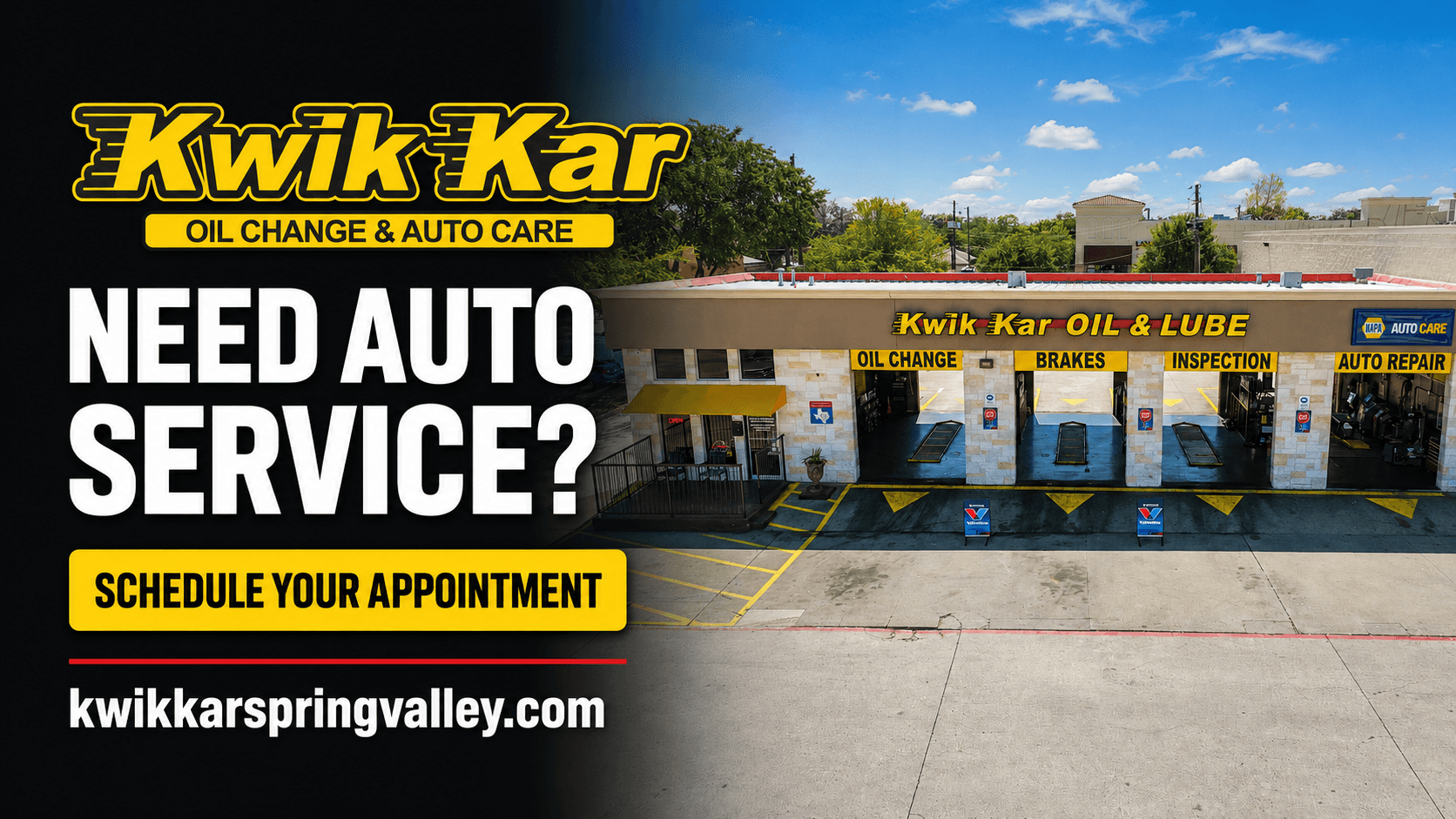
Our team handles everything from a straightforward brake fluid flush to full brake system service, backed by the same ASE and RepairPal-certified standards behind every job we do. Dallas commuters, families, and local fleets can count on transparent pricing and a technician who explains exactly what your fluid test showed. Ask about current service coupons when you call, and visit our full auto repair services page to schedule your brake fluid check today.
Sources
- SAE J1703 / J1704 recommended practice for brake fluids and service handling
- Ford owner manual guidance — severe driving conditions shorten brake fluid life
- Honda owner/technical information on brake fluid replacement intervals
- A guide to brake fluid maintenance — Professional Motor Mechanic
- Brake fluid flush importance and testing — CarID
FAQ
How Often Does Brake Fluid Really Need to Be Changed?
Most manufacturers recommend replacing brake fluid every 2 to 3 years, or around 20,000 to 30,000 miles for some models, though your owner’s manual sets the exact figure for your vehicle.
Is It Necessary to Change Brake Fluid Every 2 Years?
For many vehicles, yes. Honda specifically calls for a change every 2 years or 30,000 miles, and some European brands set an even stricter 2-year calendar rule regardless of mileage.
What Happens if I Don’t Change Brake Fluid?
Old fluid absorbs moisture, which lowers its boiling point and can cause brake fade under hard braking, along with long-term corrosion of calipers, seals, and ABS components.
Can Brake Fluid Last 5 Years?
It’s possible for a lightly driven vehicle stored in a dry climate, but that’s the exception rather than the rule. A moisture or boiling-point test is the only reliable way to confirm fluid at that age is still safe, and most manufacturer schedules assume replacement well before then.
What Are the Warning Signs of Low or Bad Brake Fluid?
A soft or spongy pedal, an oily or burnt smell near the fluid reservoir, and dark or cloudy fluid color are the clearest signs your brake fluid needs professional evaluation.