



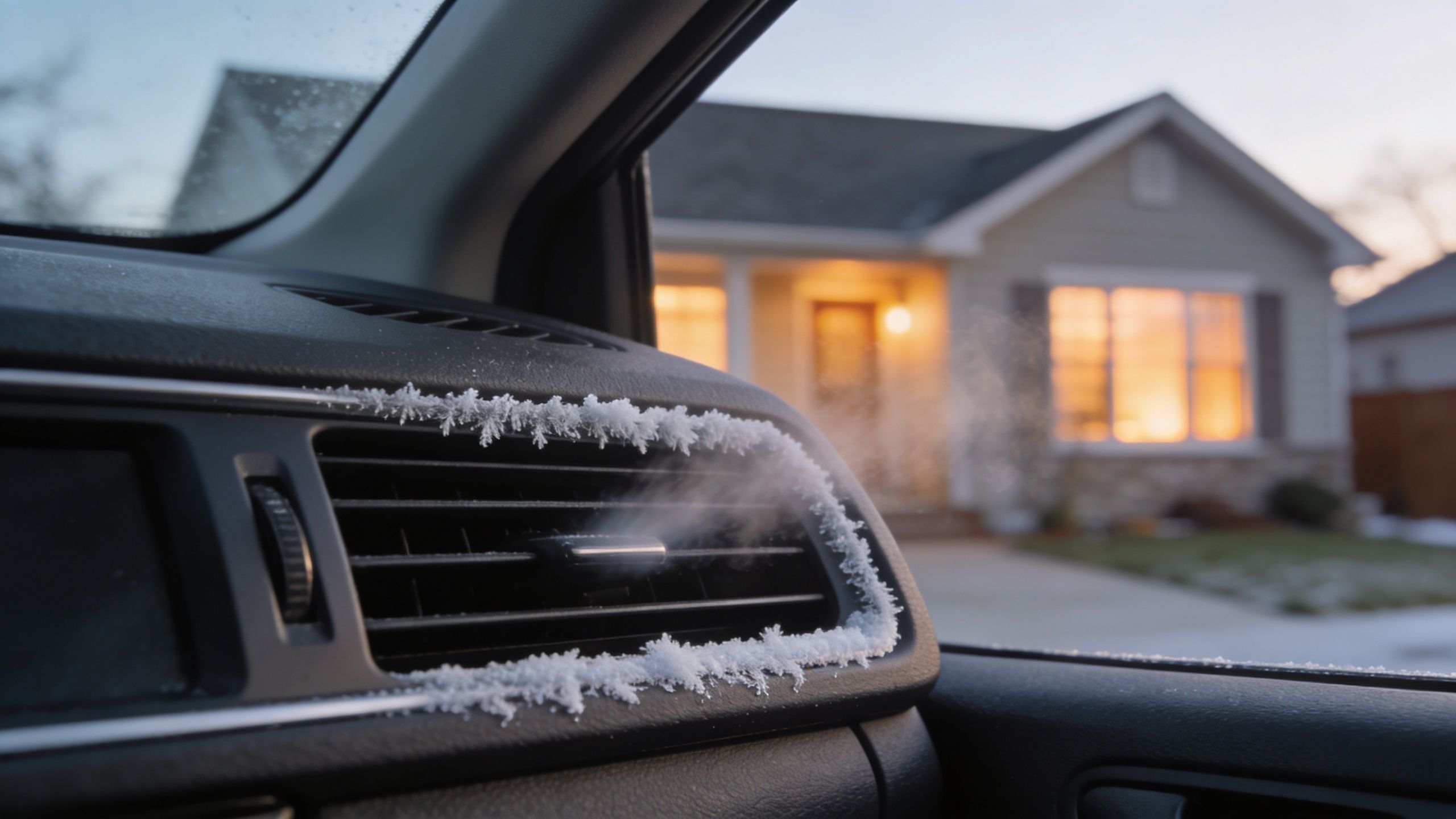
You turn the temperature knob all the way to hot, the blower is working, and the vents still push cold air into the cabin. That's frustrating on a winter commute, and it can also be an early sign that your cooling system needs attention.
The good news is that a car heater not getting hot usually comes back to a short list of causes. The expensive mistake is jumping straight to the hardest repair, like a heater core replacement, before checking the simple stuff first. A better approach is to diagnose it in order, the same way a technician would. Start with what's easy to verify, then move toward the parts that are harder to access or more expensive to replace.
Why Your Car Is Blowing Cold Air
On a cold morning, most drivers think of the heater as its own separate system. It isn't. Your cabin heat is really a side job handled by the engine's cooling system.
Historically, automotive heating became standard once vehicles started using engine waste heat through a heater core and coolant loop, and that same basic design still drives modern diagnosis, as noted by Lancer Service's heater system overview. The simplest way to picture it is a small home radiator tucked behind your dashboard. Hot coolant leaves the engine, flows through that small radiator-like heater core, and the blower motor pushes air across it into the cabin.
Heat generation versus heat delivery
This is the split that saves time during diagnosis.
If the engine never gets properly warm, there's no real heat to deliver. That points you toward coolant level, thermostat behavior, coolant flow, or trapped air. If the engine is fully warm but the cabin still stays cold, the problem may be in how the system delivers heat, such as the blower, the blend door, or the controls that direct air through the dash.
That distinction matters because people often replace the wrong part. A loud blower fan doesn't mean you have heat. It only means air is moving.
Practical rule: A heater problem is usually either a hot-coolant problem or an airflow-control problem. Diagnose those as separate paths.
What one symptom can tell you
One symptom is especially useful. If the heater gets warm while driving but turns cold when you stop at a light, that often points to coolant flow issues, air pockets, or a partially restricted heater core, not just a bad temperature knob or vent setting, according to this service explanation of heater operation and symptoms.
Use that as a clue, not a final verdict. It tells you to think about circulation first.
A heater that won't warm the cabin is inconvenient, but it can also help you catch a cooling-system issue before it turns into something bigger. That's why the right first question isn't “Which part should I replace?” It's “Where is the heat being lost?”
The Most Common Reasons Your Heater Is Cold
Most no-heat complaints come from the same handful of faults. When I see a car heater not getting hot, I don't start by assuming the heater core is bad. I start by matching the symptom pattern to the most likely cause.
A stuck-open thermostat is one of the classic examples. Repair guidance consistently notes that when the thermostat stays open, the engine may never reach normal operating temperature, which means the heater core never gets coolant hot enough to produce strong cabin heat. That often shows up as a temperature gauge that stays low and heat that only improves after extended driving, as described in this heater troubleshooting guide.
The usual suspects
Here's how the common problems tend to show themselves:
- Low coolant: The heater core depends on hot coolant flow. If the system is low, cabin heat often gets weak or disappears first.
- Stuck-open thermostat: The engine runs too cool, and the vents never get hot.
- Air trapped in the cooling system: Heat may come and go, especially after recent cooling-system work.
- Restricted heater core: One side of the heater core stays cooler because coolant isn't moving through it the way it should.
- Blend door or actuator trouble: The engine may be hot, but the HVAC box isn't routing air through the hot side.
Common Heater Problems at a Glance
| Problem | Common Symptoms | DIY Difficulty | Est. Pro Repair Cost (2026) |
|---|---|---|---|
| Low coolant | Weak heat, inconsistent heat, possible warning signs from cooling system | Easy | Varies by cause |
| Stuck-open thermostat | Temperature gauge stays low, heat improves only after longer driving | Moderate | Varies by vehicle |
| Air pockets | Heat comes and goes, especially after cooling-system service | Moderate | Varies by severity |
| Restricted heater core | Little heat, one heater hose hotter than the other | Moderate to hard | Varies by access and condition |
| Blend door or actuator issue | Good engine temp but wrong vent temperature | Hard | Varies by dash design |
That last column stays qualitative for a reason. The actual cost depends heavily on vehicle design, labor access, and whether the problem is isolated or part of a larger cooling-system repair.
A cold heater can be the first symptom you notice before the engine shows a more serious cooling problem.
What works and what wastes money
The cheapest successful repair usually comes from checking the cooling system before touching dash parts. If you're trying to prevent engine overheating as well as restore cabin heat, that order matters. A low coolant level or bad thermostat can affect both comfort and engine temperature.
What doesn't work is guessing. Replacing the blower motor because airflow feels weak, when low coolant is the issue, won't bring the heat back. Replacing a thermostat because the cabin is cold, when the engine is warming up normally and the blend door is stuck, won't fix it either.
The pattern your car shows is usually honest. You just have to read it in the right order.
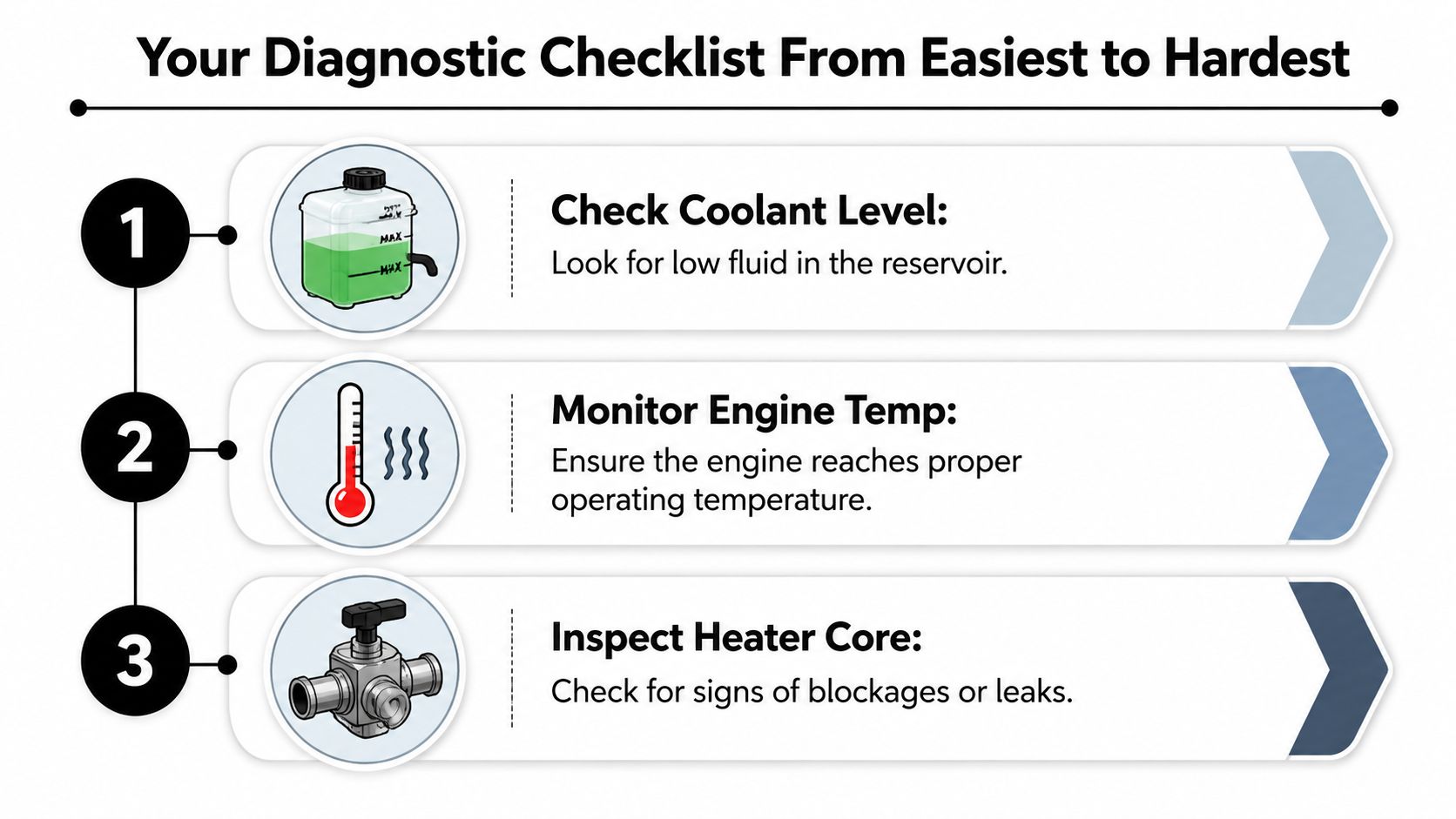
Your Diagnostic Checklist From Easiest to Hardest
If you want to diagnose a car heater not getting hot without wasting a Saturday and a pile of parts money, use a sequence. Start with checks that require no tools. Move to checks that require touch, observation, and a little patience. Leave disassembly for last.
AutoZone's diagnostic guidance puts the first two checks in the right order: verify coolant level first, then inspect heater-hose temperatures with the engine at operating temperature. If one hose is hot and the other is cool, the fault is more likely a restricted heater core or a failed heater control valve than a blower issue, as explained in their heater diagnostic article.
Step one checks with the engine off
Start simple before you open a toolbox.
Confirm the HVAC settings
Make sure the temperature is set to hot, the mode is on floor, dash, or defrost as needed, and the blower changes speed normally.Check the coolant reservoir when the engine is cold
Don't remove a hot radiator cap. Look at the reservoir level against the markings and see if it's obviously low.Look for clues around the vehicle
Wet spots under the car, dried coolant residue around hose connections, or a coolant smell under the hood all matter.
If you want a broader overview of how technicians approach problem-solving before replacing parts, this guide to a vehicle diagnostic test process is useful background.
What to watch during warm-up
The next part is a road test, not a parts test.
Drive the car normally and watch the temperature gauge. If the gauge stays unusually low for the whole trip and the heater never gets very warm, the engine may not be reaching proper operating temperature. That pushes the thermostat much higher on the suspect list.
If the gauge behaves normally and the cabin still stays cold, your focus shifts away from engine warm-up and toward coolant flow through the heater core or an HVAC air-routing issue.
If the engine isn't warming up properly, the heater can't outperform that problem. The cabin only gets the heat the engine produces.
The under-hood check that narrows it down fast
Once the engine is fully warm, shut it off if needed for safety, then carefully check the two heater hoses at the firewall.
Here's what you're looking for:
- Both hoses warm to hot: Coolant is likely moving through the heater core. If the cabin is still cold, think blend door, actuator, or air-mix issue.
- One hot and one much cooler: Coolant isn't flowing through the heater core properly. That suggests restriction or a heater control valve issue on vehicles that use one.
- Both cool when the engine should be warm: The engine may not be getting up to temperature, or coolant level may be too low for proper circulation.
This is one of the highest-value checks in the whole process because it separates flow problems from air-distribution problems before you start replacing parts.
Listen before you take anything apart
The dash can tell on itself.
Turn the temperature control from cold to hot and listen. If you hear clicking, skipping, or no change in airflow character, the blend door actuator may not be moving correctly. If the blower doesn't change speeds or barely moves air even when set high, you may have an airflow issue layered on top of the heating complaint.
That matters because weak airflow can feel like weak heat. They aren't always the same failure.
What to avoid during diagnosis
A lot of home mechanics create extra work by doing these too early:
- Topping off coolant without asking why it got low
- Replacing a thermostat before checking heater-hose temperatures
- Condemning the heater core without confirming a temperature difference
- Pulling dash panels because the vents are cold when the engine itself isn't warming up
Use the evidence to earn the next step. That's how a pro avoids misdiagnosis.
DIY Heater Fixes You Can Tackle at Home
Once the checks point you in a direction, some heater repairs are realistic in a home garage. Others are not. The jobs below are the ones most owners can handle if they work carefully and stop when the diagnosis gets muddy.
Top off coolant and bleed trapped air
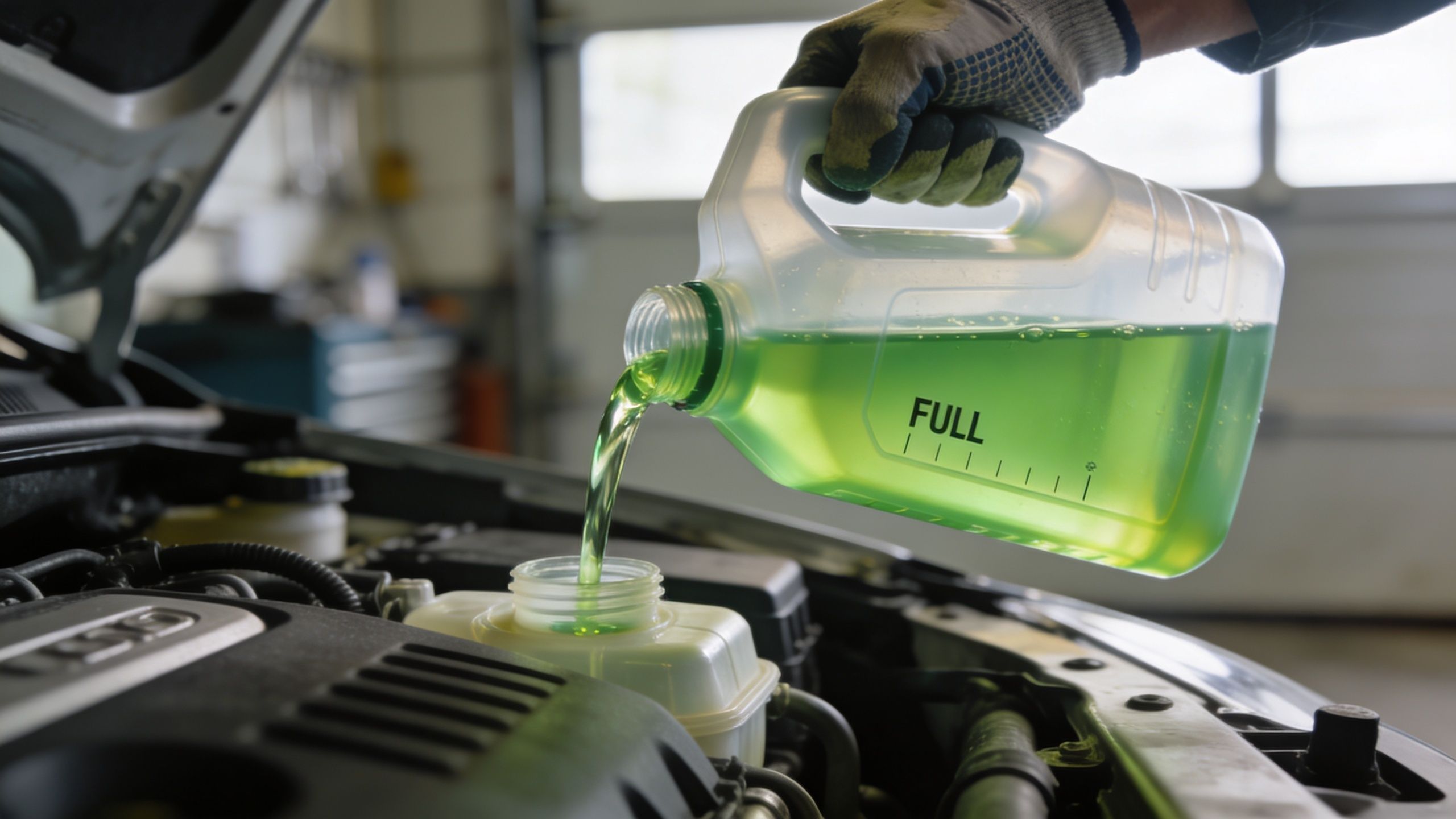
If the reservoir is low and you don't see major leakage, topping off the system with the correct coolant type for your vehicle is a sensible first move. Do it only with the engine completely cool.
Typical tools are basic. A funnel, gloves, shop rags, and the right coolant are enough for many vehicles. After topping off, some cars need a bleeding procedure to purge trapped air. That may involve running the engine with the heater on high and following the vehicle's service method for bleeding.
What works is restoring proper coolant volume and removing air pockets. What doesn't work is repeatedly adding coolant while ignoring a leak.
Replace a thermostat if the engine runs too cool
A thermostat swap is still a reasonable driveway repair on many vehicles, though access varies a lot.
You'll usually need:
- Hand tools: Socket set, ratchet, pliers
- Service items: New thermostat, gasket or seal, fresh coolant
- Clean-up supplies: Drain pan and brake cleaner or shop towels
If your temperature gauge stays low and the engine takes forever to warm up, this repair can make sense after the earlier checks point that way. The catch is simple. Some thermostat housings are easy to reach. Others are buried under intake plumbing or mounted in awkward spots that make a quick job turn into a frustrating one.
Shop-floor advice: If access is poor and you're already second-guessing the diagnosis, stop before you turn a small repair into a coolant leak and a tow bill.
Try a heater core flush when flow is restricted
When a clogged heater core is suspected, one of the most common corrective actions is a reverse flush. The key benchmark is hose temperature symmetry. If the inlet and outlet hoses show a significant difference once the engine is fully warm, that indicates inadequate flow through the core, and reverse-flushing is a common next step because sediment can restrict the small passages inside it, as covered in this heater-core diagnostic video and repair guidance.
A basic flush usually means disconnecting the heater hoses and gently pushing water through the core in the reverse direction of normal flow. This is not a brute-force job. Too much pressure can create a leak in an already weak core.
For a broader walkthrough on common home-garage fixes, this guide on how to fix a car heater blowing cold air is a helpful companion.
Here's the video referenced above if you want to see the heater-core diagnostic logic in action:
Jobs that are DIY only if everything is straightforward
Some repairs are possible at home, but only if the vehicle makes access easy and your diagnosis is already solid:
- Heater control valve replacement: Usually manageable if it's visible and hose routing is simple.
- Cabin air filter replacement: Worth doing if airflow is weak, though this won't fix a true coolant-heat problem.
- Fuse checks for blower operation: Fine for basic troubleshooting, but repeated fuse failure means a deeper electrical fault.
If you want a one-stop option for cooling-system maintenance without taking on the whole job yourself, Kwik Kar Oil Change and Auto Care also handles diagnostic and cooling-system service work such as thermostat and coolant-related repairs.
When to Stop and Call a Professional Mechanic
Some heater problems stop being good DIY candidates once the diagnosis points past simple coolant and flow issues.
A heater core replacement is the biggest example. On many vehicles, that job means major dash disassembly, tight working space, and a lot of opportunities to break brittle trim, misroute wiring, or create new rattles. Even when the part itself isn't exotic, the labor can be a headache.
Electrical and HVAC control faults also cross that line quickly. If the blend door actuator isn't responding, or the climate control system is acting erratically, you may need scan-tool data, wiring tests, and manufacturer-specific procedures. That's not guesswork territory.
Good reasons to hand it off
- Coolant keeps dropping: A leak needs to be found, not just covered up.
- The engine temperature is acting strangely: Heater complaints can be tied to larger cooling-system problems.
- The heater core appears restricted or leaking badly: Diagnosis is one thing. Full replacement is another.
- The repair requires repeated bleeding or deeper cooling-system service: A professional coolant flush service may be the smarter move.
- Dash removal looks likely: That's the point where many DIY jobs get expensive.
Sometimes the money-saving move is not doing the repair yourself. It's stopping before a manageable problem turns into a larger one.
There's no shame in that. Good diagnosis includes knowing when the next step needs better equipment, more access, or more experience.
Warm Up Your Ride with Kwik Kar Dallas
If you've gone through the logical checks and your car heater not getting hot still doesn't make sense, the problem has probably moved past the quick fixes. At that stage, a proper diagnosis matters more than more parts.
Dallas drivers deal with plenty of mornings when a working defroster and strong cabin heat aren't optional. A cold heater can point to coolant flow issues, thermostat trouble, heater-core restriction, or an HVAC control problem inside the dash. Those all feel similar from the driver's seat, but they don't get repaired the same way.
A shop that follows the right order can save you time and avoid unnecessary parts replacement. That means checking the cooling system first, confirming engine warm-up behavior, comparing heater-hose temperatures, and only then deciding whether the fault is in coolant flow or the HVAC box. That's the difference between a clean repair and a guessing game.
If you're in Dallas and don't want to spend another cold drive troubleshooting in the driveway, getting a technician to verify the fault is often the fastest path back to normal heat and reliable defrost performance.
If your heater is blowing cold air, Kwik Kar Oil Change and Auto Care can help diagnose the cause and recommend the right repair path, whether that's a coolant issue, thermostat problem, heater-core restriction, or a deeper HVAC fault.