
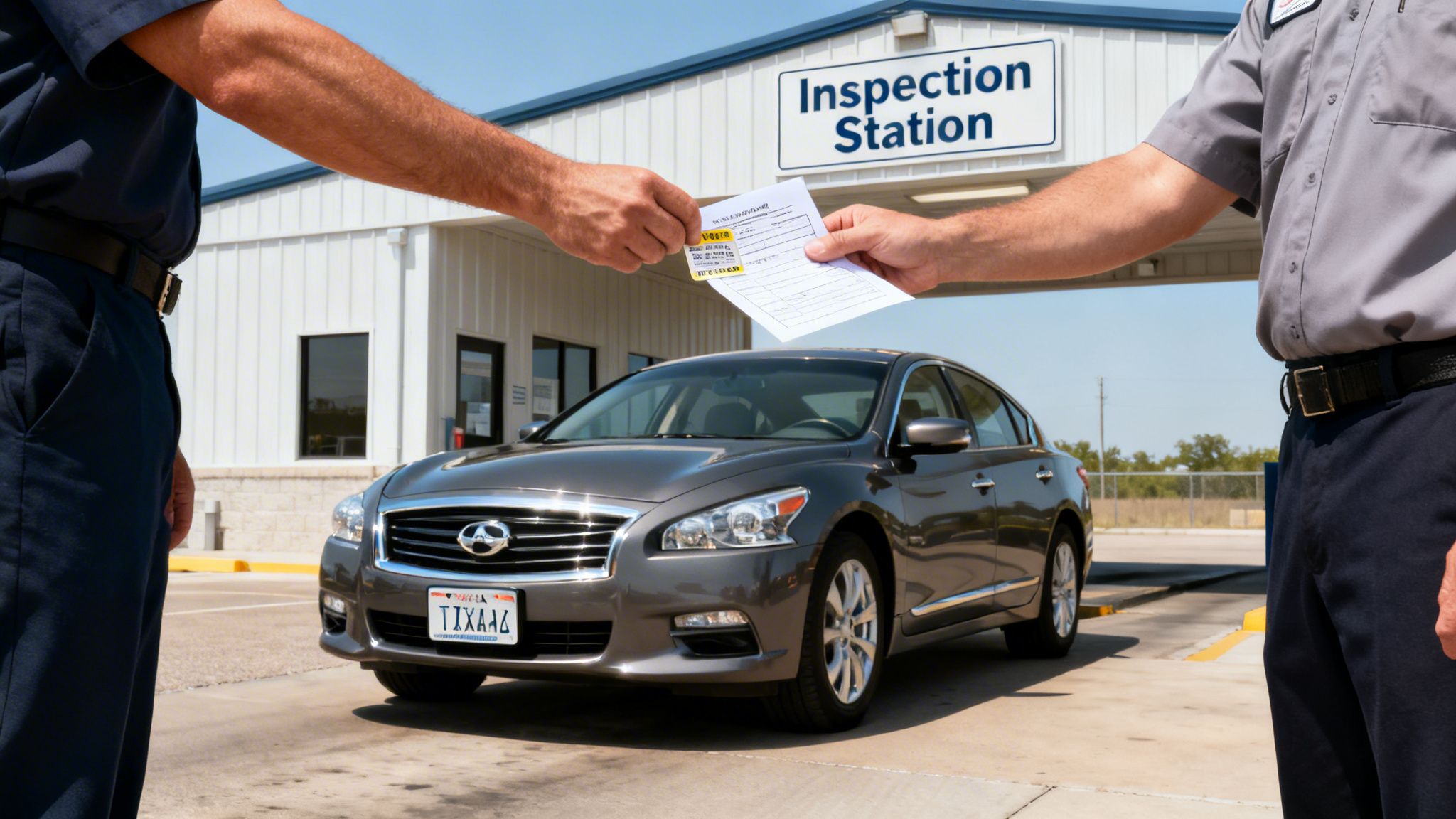
Before you can even think about renewing your vehicle registration in Texas, there's one mandatory pit stop you have to make: the state inspection. The whole system is called the "Two-Step, One Sticker" program, and it's designed to make sure your car meets state safety standards—and in some counties, emissions standards, too. Bottom line: no passing inspection, no new registration sticker. You can't legally drive on Texas roads without it.
Understanding the Texas Two-Step Program
Getting your car inspected in the Lone Star State can feel a little confusing, but it’s actually built around a pretty simple idea. Just think of it like this: your vehicle inspection is the ticket you need to buy your registration sticker. The state bundled these two things together to keep unsafe or high-polluting vehicles off the road.
It's all about protecting drivers and keeping our air clean, especially in the bigger cities. This guide will walk you through every part of it, so you know exactly what to expect.
Why the Inspection Program Matters
You might wonder if these inspections really make a difference, and the data says they absolutely do. In the Dallas-Fort Worth area, the participation rate was a huge 94.0% back in 2021. Statewide, technicians performed over 18.8 million On-Board Diagnostics (OBD) tests on newer cars. These programs are a crucial part of keeping our roads safe and our air breathable. If you want to dive deeper into the numbers, the Texas Commission on Environmental Quality website has all the findings.
For Dallas drivers, knowing how this works is the key to a stress-free renewal. A state-licensed station like Kwik Kar can make the whole thing feel seamless.
Key Takeaway: Your vehicle must pass inspection before you can renew its registration. This is a non-negotiable step in the state's "Two-Step, One Sticker" system.
A lot of drivers find it easiest to knock out their inspection and routine maintenance, like an oil change, in a single visit. Let's demystify the rules so you can get back on the road with confidence, knowing your vehicle is both safe and compliant. A little planning now saves you the headache of a last-minute scramble or, even worse, potential fines.
Safety Checks vs. Emissions Testing Explained
Not every Texas vehicle inspection is the same. The best way to think about it is like this: there's a basic health checkup every car needs, and then there's a more specialized lung exam required only if you live in certain areas. Getting this distinction down is the key to knowing exactly what your car inspection in Texas will actually look forward to.
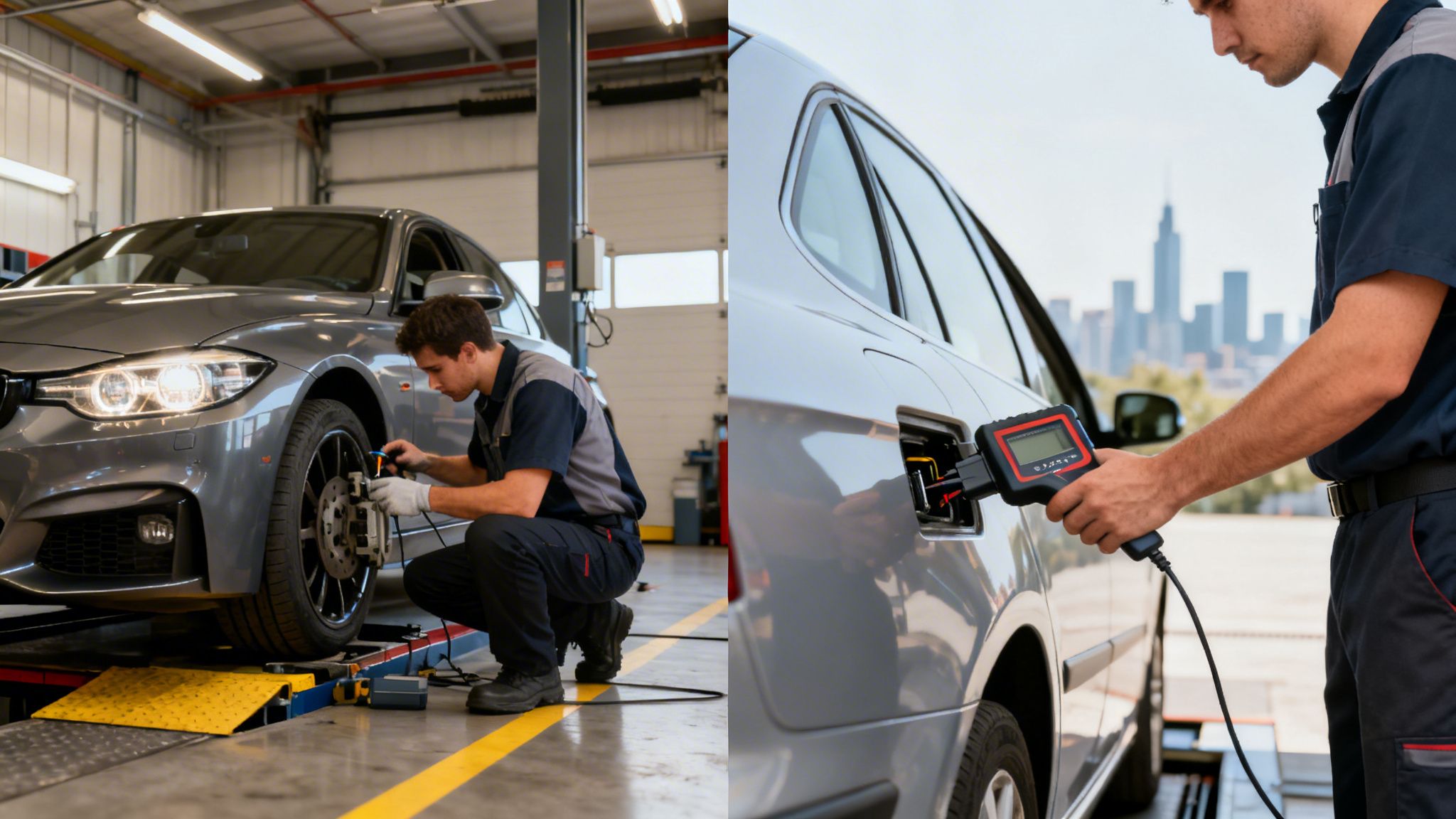
Every single vehicle registered in the state has to pass the basic Safety Inspection. This is a hands-on, thorough look at your car's most important safety gear. A certified mechanic will go through a checklist covering everything from your brakes and tire tread to your headlights, taillights, and even your windshield wipers. The goal is straightforward: make sure your car is safe enough for public roads, protecting both you and everyone else out there.
The Universal Safety Inspection
This is the one nobody gets to skip. It covers all the essential systems that keep your vehicle under your control and visible to other drivers. A problem in any of these areas is a direct safety risk on the road.
Here's a quick look at what they check:
- Braking System: Pads, rotors, and the function of your emergency brake.
- Lights and Signals: Headlights, brake lights, turn signals, and hazard lights must all work.
- Steering and Suspension: They check for proper alignment and solid control.
- Tires: You need adequate tread depth and no obvious damage.
- Windshield and Wipers: No big cracks in the driver's line of sight and wipers that actually clear the glass.
- Horn: It has to be loud enough to be heard from a safe distance.
Making sure all these features are in good working order is crucial. It can even help to understand how components like seat belt sensors work and what can go wrong with them before your inspection.
The Location-Specific Emissions Test
Now for part two, which only affects folks in and around the state's major urban centers. The Emissions Inspection, also called an On-Board Diagnostics (OBDII) test, isn't a physical check. Instead, it’s an electronic scan of your vehicle's computer. The test looks for any codes or issues that might cause your car to pump out too much pollution.
This test is mandatory only for vehicles registered in 17 specific Texas counties that are working to meet federal air quality standards. For anyone driving in the Dallas-Fort Worth Metroplex, this is a really important detail.
Key Insight: If your vehicle is registered in Dallas, Tarrant, Collin, or Denton county, you're on the hook for both the safety inspection and the emissions test. If you're outside these designated areas, you just need the safety check.
For a quick reference, here are the counties where you'll need that extra emissions test.
Texas Counties Requiring Emissions Testing
This table lists the 17 Texas counties where vehicles must get an annual emissions test in addition to the statewide safety inspection. If you live in one of these areas, you'll need both to keep your registration current.
| County | Major Cities |
|---|---|
| Brazoria | Pearland, Lake Jackson |
| Collin | Plano, McKinney |
| Dallas | Dallas, Irving |
| Denton | Denton, Frisco |
| El Paso | El Paso |
| Fort Bend | Sugar Land, Richmond |
| Galveston | Galveston, League City |
| Harris | Houston, Pasadena |
| Johnson | Cleburne, Burleson |
| Kaufman | Terrell, Forney |
| Montgomery | The Woodlands, Conroe |
| Parker | Weatherford, Springtown |
| Rockwall | Rockwall, Royse City |
| Tarrant | Fort Worth, Arlington |
| Travis | Austin |
| Williamson | Round Rock, Georgetown |
| Ellis | Waxahachie, Ennis |
So, before you head to the inspection station, just double-check which county your car is registered in. It’ll save you a lot of time and potential confusion.
How to Prepare for a Flawless Inspection
Nothing's more frustrating than failing your vehicle inspection and having to make a second trip. The good news is that you can dramatically increase your chances of passing on the first try with just a few minutes of prep work. Think of it as a quick pre-flight check before heading to the inspection station.
Believe it or not, failing an inspection is more common than you’d think. One study found that while 37% of Texas drivers have never failed, a whopping 63% have failed at least once. Many of these failures boil down to simple, easy-to-fix issues with things like tires, brakes, and lights. You can see the full breakdown in this in-depth Texas safety inspection report. This just goes to show how a quick check at home can save you a major headache.
Your At-Home Pre-Inspection Checklist
You don’t need to be a mechanic to spot the most common reasons for failure. Before you head out, run through these simple checks.
- Test All Your Lights: This is an easy one. Have a friend help you, or just use a reflective surface like a garage door at night. Check your headlights (both high and low beams), brake lights, turn signals, and reverse lights. A single burnt-out bulb is an automatic fail.
- Check Your Horn: Give it a quick honk. It needs to be loud enough for other drivers to hear in normal traffic.
- Inspect Your Windshield: Look for any big cracks or chips right in your line of sight. State law is pretty strict about anything that obstructs the driver's view. While you're at it, make sure your wipers are in good shape and can clear the glass without leaving streaks.
- Perform the Penny Test: Grab a penny and check your tire tread. Stick the penny into the grooves with Lincoln's head pointed down. If you can see his entire head, your tires are probably too worn to pass.
For an even more detailed guide you can use at home, check out our guide on creating your own vehicle inspection checklist.
Gather Your Essential Documents
Showing up without the right paperwork can end your inspection before it even begins. Keep these items handy in your glove compartment to make the process smooth and quick.
Crucial Tip: Always bring current, valid proof of liability insurance. An expired insurance card is one of the most common—and most avoidable—reasons drivers get turned away at the station.
You'll need to show your valid driver's license and proof that your vehicle is currently insured. Having these ready to go will get you in and out much faster.
For fleet managers, this is especially important. Making sure every driver has updated documents in their vehicle is key to preventing unnecessary downtime and keeping the whole fleet compliant. A few proactive checks can prevent a lot of costly delays down the road.
Navigating a Failed Car Inspection in Texas
Seeing that 'failed' notice on your inspection report can feel like a major roadblock. It’s frustrating, but it’s not the end of the world. Think of it as your car sending up a flare—it's a critical alert pointing out a safety or emissions issue that needs attention before it spirals into a bigger, more expensive problem.
Getting back on track is actually pretty straightforward. Your technician will hand you a Vehicle Inspection Report (or VIR). This document is your roadmap to getting a passing sticker. It takes all the guesswork out of the equation by detailing exactly which parts of your car didn't meet the state's standards.
Understanding Your Next Steps
Once you have that VIR in hand, the clock starts ticking. You have 15 days from the date of the first inspection to get the required repairs done and bring your vehicle back to the exact same inspection station. If you do, you'll get one free re-inspection.
This is where finding a full-service auto shop really pays off. Instead of failing at one place and then scrambling to find a mechanic somewhere else, you can handle everything under one roof. Here at Kwik Kar, our technicians can perform the initial car inspection in Texas, figure out why it failed, and then fix the problem—whether it's a simple brake service or a complex engine issue.
For instance, if your 'Check Engine' light was the culprit, our team can pinpoint the exact cause. You can learn more about how we diagnose those pesky lights by reading about our car diagnostic test.
You can actually prevent some of the most common failures by doing a quick check yourself before you even head to the shop.
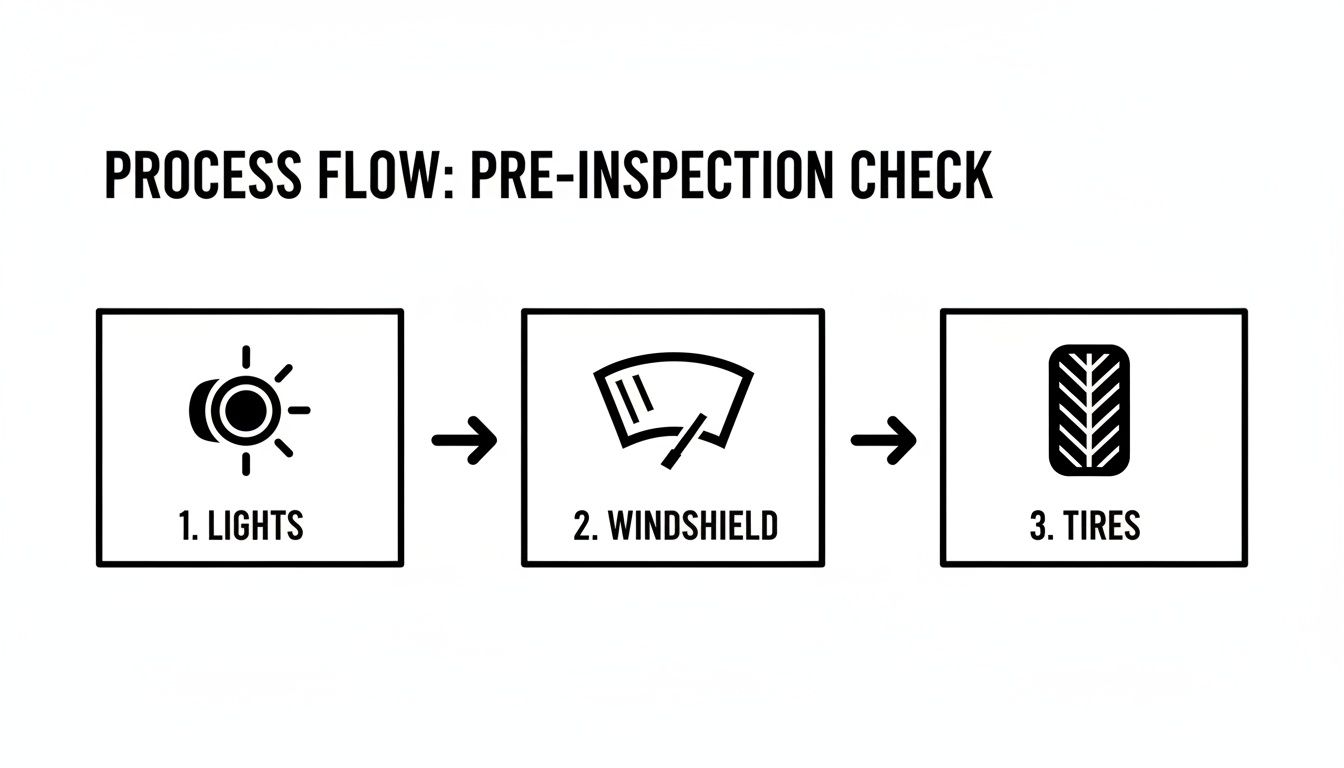
This simple process highlights how checking your lights, windshield, and tires can help you sail through the inspection without a hitch.
Common Reasons for Failure
Most cars don't fail inspection because of some catastrophic mechanical disaster. More often than not, it's the simple maintenance items that are easy to forget about.
Here are some of the most frequent culprits we see:
- Worn Brake Pads: If your brake pads are worn too thin, that’s an immediate safety failure. No question.
- Check Engine Light: In emissions counties like Dallas, an illuminated 'Check Engine' light is an automatic fail.
- Burned-Out Bulbs: Something as small as a dead headlight, taillight, or turn signal will stop you from passing.
- Bald Tires: If your tires don't have enough tread depth, it's considered a serious safety hazard.
- Cracked Windshield: A large crack, especially if it's in the driver's line of sight, is a guaranteed fail.
Staying on top of these basic items makes the path to a passing sticker smooth and completely stress-free.
Inspection Costs and Finding a Certified Station
So, let's talk about the brass tacks: how much is this going to cost, and where should you go? The good news is that the fees are set by the state of Texas, so you won't see wild price swings between certified inspection stations. It keeps things fair and predictable for drivers.
The total cost you pay is actually a combination of the inspection station's fee and the state's portion. It’s a massive operation, pulling in around $307 million a year from fees and time costs, which averages out to about $16 per vehicle. With over 19 million vehicles inspected annually, you can see just how big this program really is.
Texas State Inspection Fee Breakdown
To give you a clearer picture of what to expect when you pull up to the inspection bay, we've broken down the maximum fees for the most common inspection types here in the Dallas area.
| Inspection Type | Applicable Counties | Maximum Fee |
|---|---|---|
| Safety Only | All counties without emissions testing | $7.00 |
| Safety & Emissions (OBDII) | Dallas, Collin, Denton, Tarrant & 13 others | $25.50 |
| Commercial Vehicles | All counties | $40.00 |
As you can see, because we're in an emissions testing county like Dallas, our fee is higher to include that extra OBDII test. It’s all part of the state's effort to keep our air cleaner.
Finding a Convenient and Reliable Station
Once you're ready, the next step is finding a licensed station you can trust to do the job right and respect your time. Having a basic understanding of the automotive industry can help you spot the difference between a place that just checks boxes and one that offers real expertise.
Pro Tip: My advice? Always look for a full-service auto shop. If your car happens to fail the inspection, you can often get the necessary repairs done right there on the spot. It'll save you a ton of hassle and a second trip.
Here at Kwik Kar, we're a certified inspection station with several locations across Dallas, and we’re open seven days a week to work with your schedule. We pride ourselves on making the process painless for everyday drivers and fleet managers alike.
You can learn more about how we handle a state inspection and get you back on the road with confidence. No runaround, just professional service.
Keeping Your Fleet on the Road and in the Clear
When you’re managing a fleet of commercial vehicles, Texas inspection laws add a whole new layer of complexity. For a business, every minute a vehicle is sidelined because of a failed test or an expired sticker is a minute you're losing revenue.
Keeping every car and truck compliant isn’t just about following the rules; it’s a mission-critical part of your operation. The only way to win is to get ahead of the game.
That means setting up a routine maintenance schedule that catches the common failure points before they become a problem during an official car inspection in Texas. This is where finding a reliable auto care partner becomes absolutely essential to avoid costly downtime.
Build a Bulletproof Fleet Program
A truly successful fleet program is built on two things: efficiency and prevention. It’s about more than just checking off inspections on a calendar. It's about creating a system that ensures your vehicles are always ready to roll.
Here are a few key strategies that make a world of difference:
- Centralized Scheduling: Manage all inspections and maintenance through a single point of contact. No more crossed wires or missed appointments.
- Pre-Inspection Checks: Implement quick, regular checks of the basics—tires, lights, brakes—to spot trouble early.
- Detailed Record-Keeping: Keep a clear history for every single vehicle. This helps track repairs and even anticipate what might be needed next.
For fleet managers, the stakes are just higher. Commercial vehicles often get a closer look during inspections, which really underscores the need for a solid, proactive maintenance plan to stay compliant and keep those wheels turning.
Think about it this way: a study of Houston taxis found they received much more detailed failure reports compared to regular passenger cars. This just goes to show the heightened focus on commercial vehicle safety. A proactive schedule is your single best defense against surprise repairs and unplanned downtime. You can dig into the data yourself in the Auto Care Association’s comprehensive report.
At Kwik Kar, our specialized fleet programs are designed to handle it all. From the routine checks to complex diagnostics and repairs, we’re here to maximize your fleet’s uptime and keep your business moving forward.
Common Questions About Texas Car Inspections
Alright, let's wrap this up by hitting some of the most common questions we hear from Dallas drivers about the Texas car inspection. Getting straight answers can take a lot of the stress out of the process, so we've put together the top queries to clear up any lingering confusion before you head to the shop.
How Long Does a Texas State Inspection Usually Take?
We know your time is valuable. The good news is that the inspection itself is usually pretty quick.
For a standard safety-only inspection, you're typically looking at just 15 to 20 minutes. If your car is registered here in Dallas County (or another emissions county) and needs the OBDII test, the whole thing usually takes between 25 to 45 minutes.
At a well-run shop, the technicians are efficient and know how to keep things moving. A lot of our customers like to knock out their inspection and an oil change in the same visit, which is a great way to save a trip.
Will a Check Engine Light Cause My Car to Fail?
This is a big one for anyone in the DFW metroplex, and the answer is a hard yes. If you live in an emissions testing county—like Dallas, Collin, or Tarrant—an illuminated "Check Engine" light is an automatic fail for the OBDII emissions test.
Think of that little light as your car's way of telling you something is off with its emissions system. Before you spend money on an inspection you already know won't pass, it’s always smarter to have a diagnostic check run to figure out what's wrong and get it fixed first.
Can I Get My Car Inspected with an Expired Registration?
Yes, you can—and you absolutely should. In fact, you have to get a passing inspection report before Texas will even let you renew your registration.
Once you pass and have that Vehicle Inspection Report (VIR) in hand, you can hop online or go in person to get your registration squared away. Driving around on an expired sticker is an easy way to get a ticket, so getting the inspection done is always the right first move.
Did You Know? That annual inspection does more than just check boxes; it makes our roads safer. While people used to debate how effective they were, recent Texas data shows that crashes caused by vehicle defects have fallen to just 1.0%. When you consider that over 19 million vehicles are inspected each year, it's clear the program is working. You can explore more about these findings and their implications for vehicle safety.
What if I Just Moved to Texas?
First off, welcome to the Lone Star State! As a new resident, you get a 30-day grace period to get your vehicle registered. Your first official stop before you can do that is a certified inspection station.
You'll need to show your passing Vehicle Inspection Report (VIR) to the county tax office clerk when you go to apply for your Texas title and registration. It's a non-negotiable first step to getting legally on the road here.
For a no-hassle inspection experience in Dallas, trust the certified pros at Kwik Kar Oil Change and Auto Care. We’re open seven days a week to make it easy on your schedule. Schedule your appointment or just stop by today