



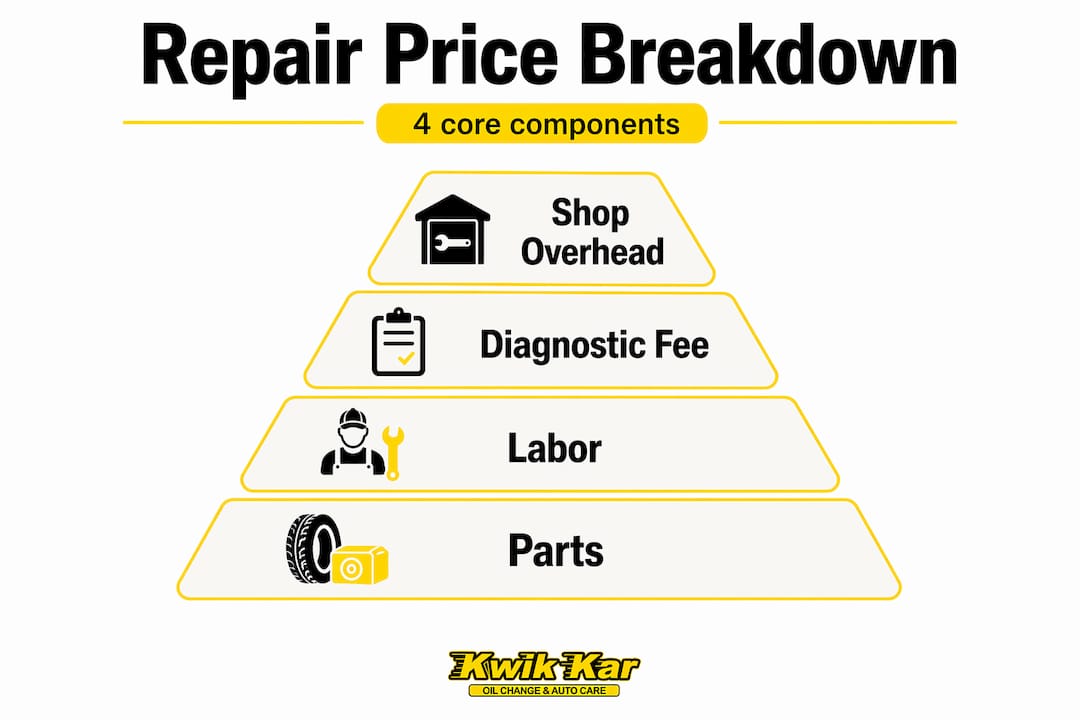
When your check engine light comes on, the anxiety usually starts before the repair. You hand over your keys, then wait for a number that feels like it came out of thin air. Understanding how auto repair pricing works takes the mystery out of that process. Prices are built from multiple components, including parts, labor, diagnostics, and shop overhead, and each one behaves differently depending on where you go and what you drive. This guide breaks it all down so you walk into any shop prepared.
Table of Contents
- Key takeaways
- How auto repair pricing works: the core components
- Why prices differ between shops and regions
- Reading and evaluating a repair estimate
- Budgeting for auto repairs throughout the year
- My perspective on auto repair pricing
- Get transparent pricing from certified experts
- FAQ
Key takeaways
| Point | Details |
|---|---|
| Pricing has four main components | Parts, labor, diagnostic fees, and shop overhead each add to your final bill in distinct ways. |
| Labor rates vary by shop type | Independent shops charge $80 to $130 per hour, while dealerships can reach $180 per hour. |
| Parts markup is tiered, not flat | Cheap parts carry higher markup percentages than expensive parts, affecting your auto repair price breakdown. |
| Written estimates are your legal right | Most states require shops to provide written estimates and get your approval before proceeding. |
| Budgeting by cost per mile works | Tracking roughly 11 cents per mile helps you plan for average auto repair expenses throughout the year. |
How auto repair pricing works: the core components
Most drivers assume auto repair pricing is simple. Parts cost X, labor costs Y, and you pay the total. The reality is more layered, and knowing each component helps you understand any estimate you receive.
Parts pricing
Shops buy parts and resell them to you at a markup. The markup is not a flat percentage applied evenly across every part. According to a tiered markup approach, cheap parts in the $2 to $8 range often carry markups of 100% or more, while mid-range parts in the $30 to $300 range carry roughly 30%, and high-cost parts over $300 carry 10 to 20%. This structure exists because low-cost parts take the same administrative effort to order, stock, and install as expensive ones.
Parts also come in three tiers: OEM (original equipment manufacturer), aftermarket, and remanufactured. OEM parts match factory specifications and typically carry longer warranties but cost more. Quality aftermarket parts can offer comparable performance at a lower price point. Remanufactured parts, like rebuilt alternators, fall somewhere between the two. The brand and warranty attached to the part you choose directly affects your total bill.
Labor pricing
Labor rates vary significantly depending on the shop type and geographic location. Independent shops typically charge $80 to $130 per hour. National chain shops run $90 to $140 per hour. Dealerships charge $120 to $180 per hour. Location plays a major role too, since a shop in a high-cost city like Dallas carries different overhead than one in a rural area.
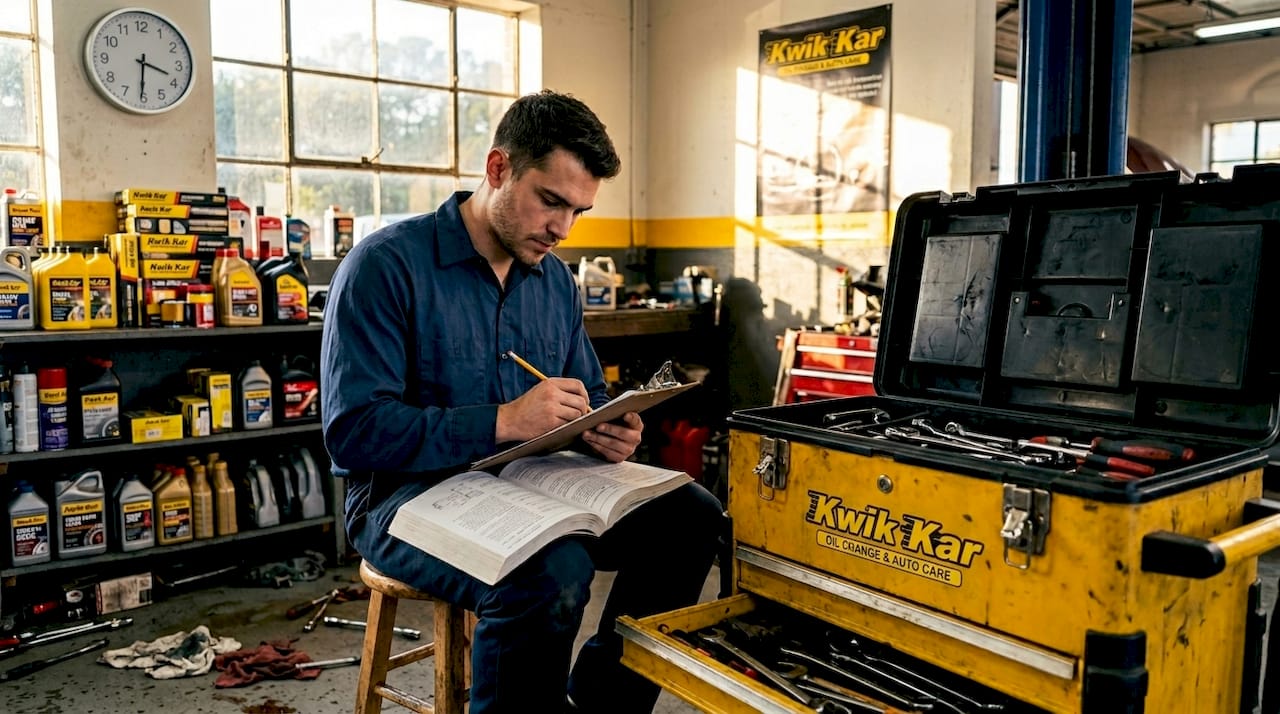
What you may not realize is how those rates are calculated internally. A posted labor rate of $150 per hour typically reflects a technician’s loaded cost of around $50 per hour. The remaining $100 covers payroll taxes, benefits, facility costs, equipment, insurance, and profit. Shops also use flat-rate billing, meaning they charge you based on a standardized time guide rather than actual clock time. A brake caliper replacement listed at 1.4 hours gets billed as 1.4 hours whether the technician completes it in 50 minutes or 90 minutes.
Pro Tip: Ask the shop which labor time guide they use (Mitchell1, Chilton, or All Data are the most common). Knowing this helps you verify the hours listed on your estimate are standard, not inflated.
Diagnostic fees and additional charges
Many drivers are surprised to see a diagnostic charge before any repair work begins. This fee covers the technician’s time to run scan codes, perform actuator tests, and isolate the root cause of a problem. Diagnostic fees typically range from $75 to $200, and most shops apply that charge toward the repair cost if you approve the work. If you decline the repair, you still pay for the diagnosis.
Beyond diagnostics, you will also see line items for shop supplies (rags, cleaners, disposal materials), environmental fees (for fluids and batteries), and sales tax on parts. These charges are small individually but can add $30 to $80 to your bill.
| Cost component | Typical range | What it covers |
|---|---|---|
| Parts (OEM) | Market price + 10–30% markup | Factory-spec replacement components |
| Parts (aftermarket) | Market price + 30–100% markup | Compatible non-OEM components |
| Labor | $80–$180 per flat-rate hour | Technician time per standardized guide |
| Diagnostic fee | $75–$200 | Scanning, testing, root cause analysis |
| Shop supplies and fees | $20–$80 | Consumables, disposal, environmental |
Why prices differ between shops and regions
Understanding auto repair costs means understanding why two shops can quote you very different numbers for the same job. Several factors drive that gap.
Certifications and reputation carry a price premium. Shops staffed by ASE-certified technicians or recognized by bodies like RepairPal or NAPA AutoCare invest more in training and tools. That investment gets reflected in their labor rates. You pay more per hour, but you also reduce the risk of a misdiagnosis or a comeback repair. Transparent pricing and consistent communication from a trusted shop significantly reduces the anxiety car owners feel during the repair process.
Legal protections also factor into this picture. Many states require shops to provide written estimates before starting work, and some take it further. Washington state treats the failure to provide a written estimate as a legal violation. Most states require a shop to contact you for approval if the repair cost is going to exceed the estimate by a set dollar amount. Knowing your rights prevents you from being blindsided.
Unexpected complications also cause final bills to exceed estimates. Seized bolts or corroded hardware can add hours of labor to a job that looked straightforward on paper. These situations are not always the shop’s fault, but a reputable shop will call you before proceeding rather than absorbing the extra cost silently and then presenting a larger bill.
- Ask upfront whether the quoted labor time accounts for potential complications on older vehicles.
- Confirm the shop’s policy on notifying you before exceeding the estimate.
- Request an itemized written estimate, not just a verbal price.
- Know your state’s specific rules around consumer authorization for auto repairs.
Pro Tip: Request the itemized receipt after every repair, not just the total. You can review overpriced car repair services to avoid common billing issues that appear when charges are bundled rather than broken out.
Reading and evaluating a repair estimate
Once you have an estimate in hand, knowing how to read it gives you real power in the conversation. A well-structured estimate lists parts, labor hours, diagnostic charges, and any fees as separate line items. If yours arrives as a single total, ask for the breakdown before you approve anything.
Here is a practical process for evaluating what you are looking at:
- Verify the labor hours. Check the listed hours against a public labor guide or ask the service advisor to explain the source. A brake job should not list six hours of labor when the standard guide time is two.
- Identify the parts brand and warranty. Ask whether the quoted parts are OEM, aftermarket, or remanufactured, and ask how long the warranty lasts. A part with a 12-month warranty versus a 24-month warranty is a real difference in value.
- Clarify what the diagnostic fee covers. Ask whether the fee applies toward the repair if you approve the work.
- Separate urgent from non-urgent repairs. Shops often present a list of recommended services. Not every item on that list needs to happen today. Ask your service advisor which repairs affect safety or reliability immediately and which can wait 60 to 90 days.
- Watch for red flags. These include vague descriptions like “electrical work,” large bundled labor charges with no time breakdown, and any written caveat that the final price could change without notice.
| Estimate element | What to ask | What good looks like |
|---|---|---|
| Labor hours | “What guide time are you using?” | A specific number tied to a named guide |
| Parts brand | “Are these OEM or aftermarket?” | Clear answer with warranty information |
| Diagnostic charge | “Does this apply toward the repair?” | Yes, with the amount specified |
| Additional fees | “What are these line items for?” | Named items with individual costs |
| Authorization policy | “Will you call me before exceeding this?” | Clear yes with a dollar threshold |
Pro Tip: A repair estimate breakdown that is clear and itemized tells you a great deal about a shop’s integrity before any work begins.
Budgeting for auto repairs throughout the year
Most drivers think about repair costs only when something breaks. Building a proactive budget changes your relationship with maintenance entirely and protects you from financial surprises.
Average annual maintenance and repair costs run approximately 11 cents per mile, though the range is dramatic depending on what you drive. A Honda owner might spend around $583 per year. A Porsche owner might spend $1,623 or more. That gap reflects parts availability, labor specialization, and the cost of manufacturer-specific components.
| Vehicle type | Estimated annual repair cost | Key cost drivers |
|---|---|---|
| Reliable economy sedan (Honda, Toyota) | $500–$700 | Affordable parts, wide technician familiarity |
| Midsize domestic truck or SUV | $700–$1,000 | Higher parts cost, occasional drivetrain service |
| Luxury or European import | $1,200–$2,000+ | OEM part premiums, specialized labor |
Using a cost-per-mile approach means you can calculate how to estimate car repair costs as part of your monthly budget. Drive 15,000 miles per year, multiply by $0.11, and you get roughly $1,650 to set aside annually. That is about $138 per month. Setting this money aside in a dedicated savings account smooths out the impact when a larger repair comes up.
- Pair that monthly savings habit with car maintenance cost tracking to see whether your vehicle is trending toward higher annual costs.
- Stay current with scheduled maintenance. Skipping oil changes or tire rotations accelerates component wear and creates far larger repair bills later.
- Build a relationship with a local shop you trust. Documented, consistent pricing is a marker of a professionally run shop, not just a nice-to-have.
My perspective on auto repair pricing
I have worked with enough drivers to know that the anxiety around auto repair prices rarely comes from the price itself. It comes from feeling like you have no idea whether the number you are looking at is fair. That information gap is where the frustration lives.
In my experience, the drivers who handle repair costs most confidently are the ones who ask questions early, not after they have already approved the work. They ask about parts brands. They ask how labor time is calculated. They ask what happens if the job gets complicated. That habit alone changes the dynamic with any shop, because a shop that struggles to answer those questions clearly is telling you something.
I have also seen firsthand what happens when someone chases the lowest quote without context. They save $80 upfront and spend $400 fixing a botched job three months later. Price is a data point, not a verdict. A shop with certified technicians and transparent billing may quote you more per hour, but the final bill often ends up lower because the diagnosis was correct the first time.
The practical wisdom I would share is this: build your budget around average costs per mile, ask for itemized estimates every time, and find a shop where the service advisor can explain every line item without hesitation. That shop is worth the labor rate.
— Kwik Kar
Get transparent pricing from certified experts
If this guide has made one thing clear, it is that the quality of your auto repair experience depends heavily on who you trust with your vehicle.

At Kwik Kar Oil Change & Auto Care, our ASE and RepairPal certified technicians provide written estimates before any work begins and walk you through each line item so nothing surprises you at checkout. Whether you need routine maintenance or a complex mechanical repair, our team at Kwik Kar Oil Change & Auto Care delivers honest diagnostics and pricing you can verify. Check out our full auto repair services or take advantage of our current maintenance service special to save $30 on your next visit. Certified care, transparent pricing, no surprises.
FAQ
How does flat-rate labor billing work?
Shops charge you based on a standardized time guide for each repair, not actual clock time. A job listed at 1.4 hours gets billed at 1.4 hours regardless of whether the technician finishes faster or slower.
Why do repair estimates sometimes increase after approval?
Unexpected complications like seized bolts or corroded components can add labor hours to a job after teardown begins. Most states require shops to contact you for authorization before exceeding the original estimate by a set amount.
What is a fair markup on auto parts?
Markup varies by part cost. Inexpensive parts often carry 100% or higher markup, while parts over $300 typically carry a 10 to 20% markup. Always ask whether OEM or aftermarket parts are being used and confirm the warranty length.
Do I have to pay a diagnostic fee if I decline the repair?
Yes, in most cases. Diagnostic fees cover the technician’s time to identify the problem, and that time is billable whether or not you proceed. Many shops credit the fee toward your repair if you approve the work.
How much should I budget annually for car repairs?
A practical starting point is 11 cents per mile driven. For someone driving 15,000 miles per year, that works out to roughly $1,650 per year, or about $138 per month set aside for maintenance and repairs.