

Getting hit with a car repair bill you didn’t expect is frustrating enough. Getting hit with one you could have avoided by simply knowing how to compare auto repair estimates? That’s worse. The truth is, two shops can quote the same repair and differ by hundreds of dollars, and the cheaper one isn’t always the better deal. This guide walks you through exactly what to look for in an estimate, how to use online tools as a starting point, and how to make a confident, informed decision without second-guessing yourself at the counter.
Table of Contents
- Key takeaways
- How to compare auto repair estimates the right way
- Using online tools to estimate auto repair prices
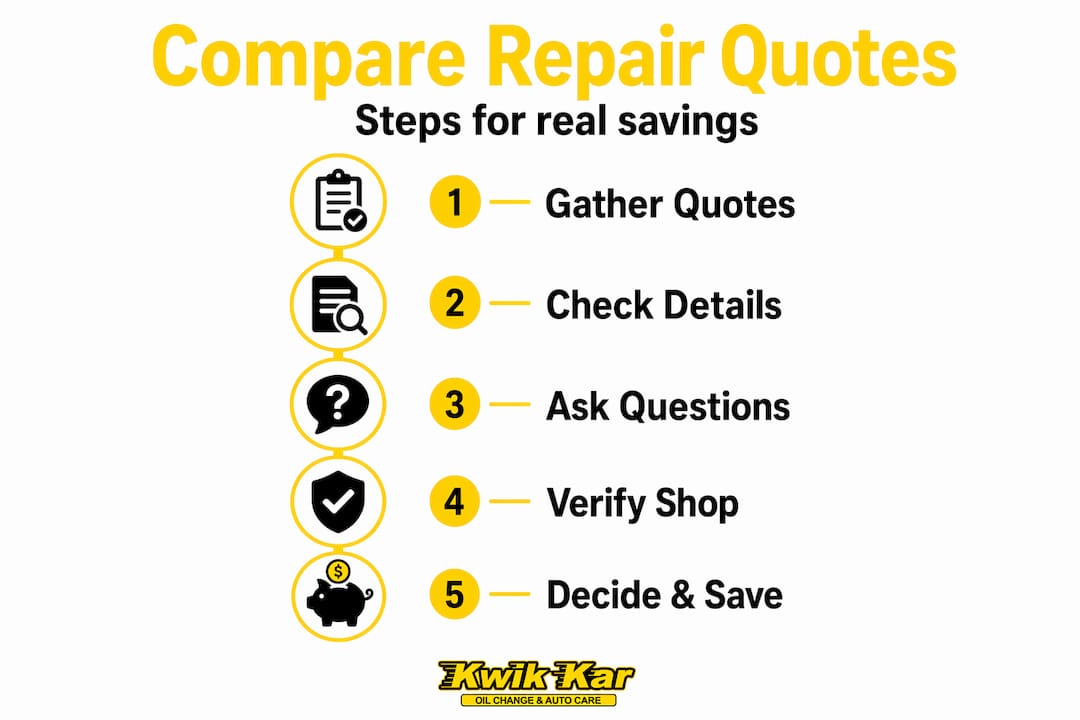
- A step-by-step approach to comparing in-person quotes
- Common traps when comparing repair estimates
- How to finalize your decision before approving work
- My take on what really separates a fair quote from a bad one
- Why Kwik Kar Oil Change & Auto Care makes estimates easy
- FAQ
Key takeaways
| Point | Details |
|---|---|
| Know what’s in an estimate | A solid estimate includes itemized parts, labor hours and rate, fees, and warranty terms. |
| Use online tools as a baseline | Online estimators give a reliable price range for standard repairs but carry a ±15–20% variance for complex jobs. |
| Get multiple quotes | Pull at least two in-person quotes plus an online baseline to build a fair auto repair cost comparison. |
| Watch for red flags | Vague descriptions, unlisted labor rates, and missing part numbers are signs of an estimate you should question. |
| Cheapest is not always best | Price differences often reflect parts quality, labor expertise, and what’s actually included in the scope of work. |
How to compare auto repair estimates the right way
Before you can compare anything, you need to understand what a legitimate estimate actually looks like. A complete, trustworthy estimate is not just a dollar total. It breaks down every charge so you can see exactly where your money goes.
Here’s what a proper estimate should always include:
- Labor hours and hourly rate: Labor rates vary widely depending on shop type. Dealerships typically charge $120 to $180 per hour, independent shops $80 to $130 per hour, and national chains $90 to $140 per hour. If a shop won’t tell you their rate upfront, that’s a problem.
- Parts itemization with part numbers: Every part being replaced should be listed by name, part number, and price. This makes it possible to verify what you’re getting.
- OEM vs. aftermarket distinction: Parts pricing varies significantly: OEM parts are the most expensive but guaranteed to fit your vehicle, aftermarket parts can run 20 to 50% cheaper but quality varies, and remanufactured parts fall in the middle with tested reliability. You deserve to know which category each part falls into.
- Shop fees and taxes: Supply fees, disposal charges, and taxes should be listed separately, not buried in the total.
- Warranty information: A reputable shop will note whether parts and labor carry a warranty and for how long.
Common red flags to watch for include vague descriptions and undisclosed rates, such as a line item that just says “electrical repair” with no labor hours listed, or a parts charge with no part number. Disproportionately high shop supply fees, sometimes 10 to 15% of the total bill, are another warning sign. Learning to read an estimate breakdown in detail protects you before you ever hand over your keys.
Pro Tip: Ask every shop to give you the estimate in writing before any work begins. Verbal quotes are easy to dispute; written estimates are not.
Using online tools to estimate auto repair prices
Online repair estimators are genuinely useful, but only when you know what they can and can’t do. Think of them as your opening research, not your final answer.
Here’s how to use them effectively:
- Identify the repair first. Online tools only work if you already know what needs to be fixed. A diagnostic code, a mechanic’s note, or a clear symptom you’ve researched is your starting point.
- Enter your vehicle details accurately. Year, make, model, trim level, and engine size all affect pricing. A 2019 Honda Accord 1.5T and a 2019 Honda Accord 2.0T can have different parts costs for the same job.
- Check the labor time estimate. Most online estimators show you how many labor hours a job typically takes. This number is gold when you’re comparing in-person quotes later.
- Note the price range, not just the midpoint. Online estimators are best used as a budgeting tool and baseline, not a guaranteed contract price.
- Add a 10 to 15% financial buffer. Experts recommend building in this cushion because online estimate accuracy drops to ±15 to 20% for complex repairs where hidden vehicle conditions may add to the final cost.
The key limitation of any online tool is that it cannot see your car. It doesn’t know that your brake caliper is seized, that a previous repair used an incorrect bolt, or that your vehicle has aftermarket modifications that affect the job. That’s why the online number gives you a reference point for your auto repair cost comparison, not a ceiling you can hold a shop to.
A step-by-step approach to comparing in-person quotes
With your online baseline in hand, you’re ready to get real quotes. Here’s the process that actually works:
- Get at least two independent shop quotes. Consumer research recommends using an online estimator first, then two in-person quotes from independent shops for the most useful cost comparison. This gives you enough data to spot outliers.
- Ask the same questions at every shop. What’s your hourly labor rate? Are these OEM or aftermarket parts? Does the repair carry a warranty? Are there any additional fees not listed here? Consistent questions make comparison straightforward.
- Evaluate labor time differences closely. Two shops might charge a similar hourly rate but quote wildly different hours for the same job. Pricing differences often come down to labor time estimates, parts sourcing, and shop overhead. Ask any shop quoting significantly more or fewer hours to explain their reasoning.
- Look for quality indicators. ASE certification, RepairPal verification, and transparent pricing practices are markers of a shop that prioritizes honest service over just low prices. These credentials mean technicians have passed standardized competency tests.
- Know when to use a dealer. Independent shops offer better value for most routine and major repairs, but dealerships are worth the premium for warranty-covered work, brand-specific software recalibrations, or repairs that require proprietary tools.
Here’s a quick comparison to help you evaluate the three main quote sources side by side:
| Shop type | Typical labor rate | Best for | Potential downside |
|---|---|---|---|
| Independent shop | $80 to $130/hr | Routine and major repairs | Varies widely in quality |
| Dealership | $120 to $180/hr | Warranty work, brand-specific repairs | Higher cost |
| National chain | $90 to $140/hr | Oil changes, tires, brakes | Less personalized service |
Pro Tip: When you get a quote that’s significantly lower than the others, ask the shop to walk you through it line by line. The gap is usually in the parts category, which tells you exactly what trade-off you’d be making.
Common traps when comparing repair estimates
Knowing how to find reliable auto repair estimates is only half the challenge. The other half is recognizing when an estimate is leading you toward a bad decision.
The most common trap is the low-ball quote. A shop that comes in $300 cheaper might be quoting aftermarket parts of unknown quality, skipping a step in the repair process, or leaving out labor for a related component that will fail soon after. Fear of being overcharged stops many car owners from asking the questions that would expose exactly what’s included or left out of a quote. Ask anyway.
Another trap is misunderstanding supplemental estimates. If your car has collision damage or a complex mechanical failure, the initial estimate may not be the final number. Supplemental estimates are common in collision repair because hidden structural damage often isn’t visible until the shop starts disassembly. This is normal and not a sign of dishonesty, but you should ask upfront whether the shop anticipates any supplemental charges and how they handle communication if the scope changes.
“A legitimate shop will contact you before exceeding the approved estimate. If they don’t, that’s not a billing surprise — that’s a red flag.”
Vehicle age and location also affect pricing in ways that aren’t always obvious. Parts for older vehicles or less common models may require sourcing from specialty suppliers, which adds cost and time. Regional labor rates vary too, and annual vehicle maintenance averages around $936 nationally, but your location can push that number higher or lower. Factor this context in when you’re deciding whether a quote feels fair.
How to finalize your decision before approving work
Once you’ve gathered your estimates and done your research, here’s how to close the loop before you sign off on any repair:
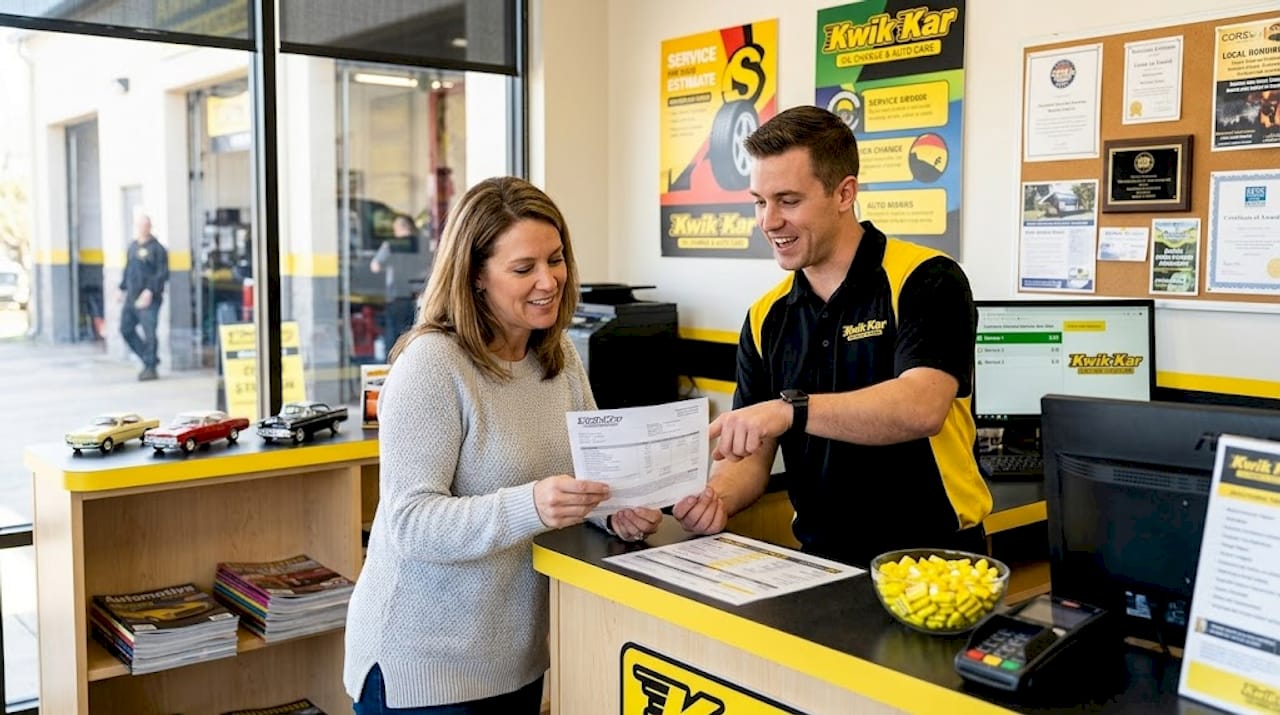
- Confirm the estimate is written and itemized. Before approving work, the estimate should list every part, every labor hour, the rate per hour, and all fees. No line item should say just “misc. parts.”
- Check the shop’s communication style. A shop that explains things clearly, answers your questions without impatience, and proactively mentions what they found during inspection is demonstrating the behavior you want when a problem arises mid-repair.
- Cross-reference against your online baseline and labor rate benchmarks. If the in-person quote is 30% above your online estimate and the shop can’t explain why, that’s worth pressing on. If they can explain it, that explanation tells you something valuable about the repair.
- Keep copies of every document. The written estimate, the final invoice, and any warranty paperwork should all go into a folder you keep with your vehicle records. These documents matter if a repair fails or a dispute arises.
- Clarify payment terms and timing upfront. Ask whether a deposit is required, when payment is due, and whether they offer any financing options. Good shops are transparent about this before the work starts, not after.
My take on what really separates a fair quote from a bad one
I’ve worked with thousands of car owners navigating repair decisions, and the pattern I see most often is this: people focus almost entirely on the final number and ignore everything else on the estimate. That’s exactly backwards.
In my experience, the shops that quote the most transparently, with itemized parts, disclosed labor rates, and clear warranty terms, almost never end up being the most expensive over time. They’re also the ones who call you before doing additional work, explain what they found without condescending, and hand you a repair that actually holds. Trustworthy shops focus on transparent pricing and verified technician training as their baseline, not just friendly customer service.
What I wish more car owners knew is that asking questions during the estimate process is not rude or combative. It’s exactly what a shop with nothing to hide expects. The shops that get defensive when you ask about labor hours or part sourcing are telling you something important about how they’ll behave when a problem comes up after the repair.
The best auto repair quotes are not always the lowest. They’re the ones where you understand every line before you sign.
— Kwik Kar
Why Kwik Kar Oil Change & Auto Care makes estimates easy
At Kwik Kar Oil Change & Auto Care, transparent estimates are built into the process, not an afterthought. Before any work begins, you receive a clear, itemized quote from ASE Certified Master technicians who explain what they found and why a repair is needed. The shop holds both RepairPal and NAPA AutoCare certifications, so you’re not taking anyone’s word for it. Whether you need a quick inspection or a full mechanical repair, explore the full range of services available at Kwik Kar Oil Change & Auto Care and get a repair experience where the estimate you receive at the start is one you actually understand.
FAQ
What should every auto repair estimate include?
A complete estimate should list labor hours, the hourly rate, itemized parts with part numbers, all fees, taxes, and warranty information. Vague line items or missing labor rates are red flags.
How accurate are online auto repair cost estimates?
Online estimators are reliable for standard repairs but carry a ±15 to 20% variance for complex jobs. Always add a 10 to 15% financial buffer and treat the number as a baseline, not a final price.
How many quotes should I get before approving a repair?
Getting at least two in-person quotes plus an online baseline gives you enough data for a solid auto repair cost comparison and helps you spot outliers in pricing or scope.
Why do two shops quote such different prices for the same repair?
Price differences typically come down to labor time estimates, whether OEM or aftermarket parts are being used, and each shop’s overhead reflected in their hourly rate. Ask each shop to explain their line items when quotes differ significantly.
When is a dealership worth paying more than an independent shop?
Dealerships are the better choice for warranty-covered repairs, brand-specific software recalibrations, and jobs requiring proprietary tools. For most routine and major repairs, independent shops offer better value at a lower cost.