
Choosing who works on your car is one of the most financially consequential decisions you make as a vehicle owner, yet most people approach it with almost no system. The stress of finding a trustworthy auto mechanic is real: a wrong choice can cost hundreds in unnecessary repairs, compromise your vehicle’s safety, or leave you stranded with the same problem you paid to fix. The good news is that trustworthy mechanics are out there, and there’s a repeatable process for finding them. This guide gives you the specific tools, questions, and red flags you need to make a smart decision with confidence.
Table of Contents
- Key Takeaways
- How to find a trustworthy auto mechanic: credentials that matter
- Vetting mechanics with reviews and trusted platforms
- Testing a mechanic before you need major repairs
- Communicating clearly with your mechanic
- Building a long-term relationship with your mechanic
- What I’ve learned about trust and mechanics over the years
- Why Kwik Kar Oil Change & Auto Care is worth your first visit
- FAQ
Key Takeaways
| Point | Details |
|---|---|
| Verify ASE certification | ASE-certified shops meet industry standards for competency and ethics, giving you a reliable baseline for trust. |
| Use 3-star reviews strategically | Middle-tier reviews reveal honest patterns in communication and pricing that extreme reviews hide. |
| Trial with small services first | Start with an oil change or tire rotation to evaluate transparency and workmanship before committing to major repairs. |
| Ask for written, itemized estimates | Written estimates protect you from surprise charges and confirm the shop’s commitment to transparent pricing. |
| Build a long-term relationship | A mechanic who knows your vehicle’s history can diagnose problems faster and catch issues before they become expensive. |
How to find a trustworthy auto mechanic: credentials that matter
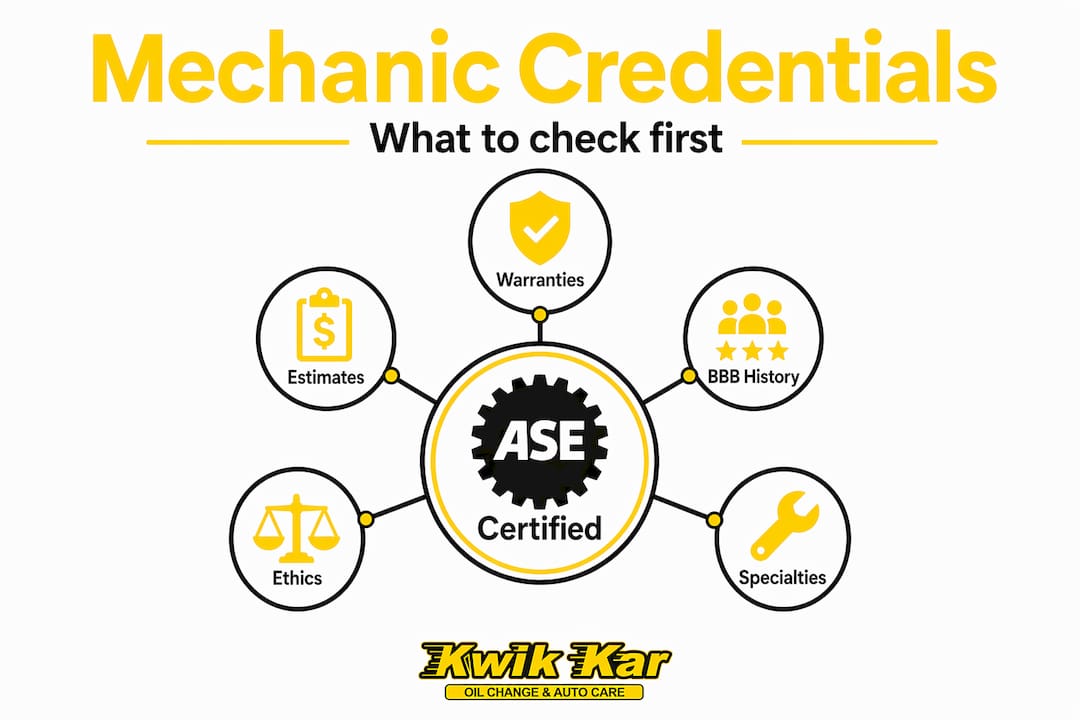
When you walk into a shop for the first time, you can learn a lot before anyone says a word. The most reliable indicator of technical competency is ASE (Automotive Service Excellence) certification. ASE certification requires passing between 1 and 52 specialized tests depending on the technician’s focus area, with mandatory retesting every 5 years. That’s not a rubber stamp. It means the mechanic has demonstrated current, tested knowledge across specific systems, whether that’s brakes, engine performance, or electrical components.
Beyond the technical side, ASE-certified shops adhere to a code of ethics covering fair pricing and consumer protection. Certification doesn’t just tell you the mechanic can do the work. It tells you they’ve committed to doing it honestly. Look for the ASE blue seal displayed in the shop or on the website, and check whether the shop is also recognized by organizations like RepairPal or NAPA AutoCare, both of which impose their own quality standards on member shops.
Warranties are another credential worth scrutinizing. Reputable shops typically offer warranties ranging from 12 months and 12,000 miles on the low end to 4 years and 50,000 miles on the high end, covering both parts and labor. A shop that stands behind its work with a strong warranty is a shop that expects to get it right the first time. If a shop can’t clearly explain its warranty terms, that’s a signal worth noting.
Also check BBB complaint history for any shop you’re seriously considering. The Better Business Bureau tracks complaint patterns, not just individual incidents, which gives you a much clearer picture of how a shop handles problems over time. Kwik Kar Oil Change & Auto Care maintains both ASE and RepairPal certification, which is the combination worth looking for when vetting any shop.
Pro Tip: Ask the shop specifically which technicians are ASE certified and in which categories. A shop can advertise “ASE-certified staff” with one certified employee. You want the technician working on your car to hold the relevant certification for your specific repair.
Vetting mechanics with reviews and trusted platforms
Word of mouth remains the most reliable way to find local mechanics, but only if you ask the right questions. Don’t just ask a friend, “Do you like your mechanic?” Ask: “Have they ever made a mistake, and how did they handle it?” A shop’s response to a problem tells you far more than a smooth repair ever will.
When you move to online research, most car owners make the mistake of reading the best and worst reviews. Ignore the extreme outliers on both ends and focus on 3-star reviews instead. These are the reviews written by customers who experienced something real, not rage or loyalty. Look for repeated patterns: do multiple reviewers mention surprise charges? Do several praise the staff for clear explanations? Patterns in the middle tier are far more predictive than the 1-star rant or the 5-star cheerleading.
For platform-based vetting, a few sources stand above the rest:
- Google Maps organic listings show shops with sustained, verified reviews over time and are generally harder to game than pay-per-click directories
- AAA-approved shop lists reflect inspections and ongoing quality benchmarks, not just self-reported claims
- Car Talk’s Mechanic Files is a community-driven database where car owners submit recommendations, making it an excellent source for finding local mechanics with real-world track records
- Community Facebook groups and brand-specific car clubs are underused gold mines, especially for import or specialty vehicles where technician knowledge varies widely
One critical note on paid search results: the top ads that appear when you search for “mechanic recommendations near me” are not vetted by quality. They’re ranked by budget. Many genuinely top rated auto mechanics don’t advertise heavily because they don’t need to. Their reputation fills their bays. If a shop’s only visible presence is paid advertising, dig deeper before you commit. You can get a good head start by checking resources like this guide to auto repair shops to understand what a quality shop actually looks like.
Pro Tip: Search the shop’s name alongside the word “complaint” or “review” in quotes on Google. This surfaces forum posts, Yelp threads, and local community discussions that don’t appear in the shop’s own Google Business profile.
Testing a mechanic before you need major repairs
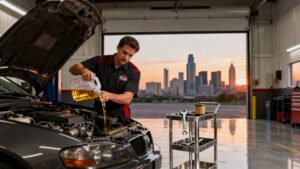
The smartest thing you can do before you need an expensive repair is to already have a mechanic you trust. That means building that relationship during low-stakes visits. Starting with a small service like an oil change or tire rotation gives you a no-pressure window to evaluate how the shop actually operates.
Here’s a practical sequence for trialing a new shop:
- Schedule a routine service. Book an oil change or inspection. Watch how you’re greeted, whether the waiting area is clean and organized, and how staff talks to other customers.
- Ask a direct question about your vehicle. Mention a sound you’ve noticed or a dashboard light that came on. A trustworthy mechanic engages with your question and gives you a real answer, even if it’s “I’d need to look at it more closely.”
- Review the invoice in detail. Does it clearly separate parts from labor? Are the parts listed by brand and quality tier? Vague line items on a routine invoice are a red flag for what you’ll see on a complex one.
- Note how they handle the handoff. Did someone walk you through what was done and why? Did they mention anything they observed while they had the car? A proactive mention of a worn wiper blade or a low coolant level signals attentiveness, not upselling, when it’s delivered without pressure.
- Follow up if needed. If something seems off after the service, contact the shop. How quickly they respond and how seriously they take your concern tells you everything about how they’d handle a real problem.
Red flags to watch during trial visits: pressure to approve additional repairs on the spot, vague explanations of what was found, an unwillingness to show you the old parts, and any resistance to giving you a written estimate before work begins.
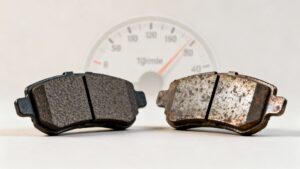
Pro Tip: Bring your car to the trial visit with a recently serviced item you know is fine, like fresh brake pads, and see if the shop mentions needing to replace them. This is an old but effective trust test.
Communicating clearly with your mechanic
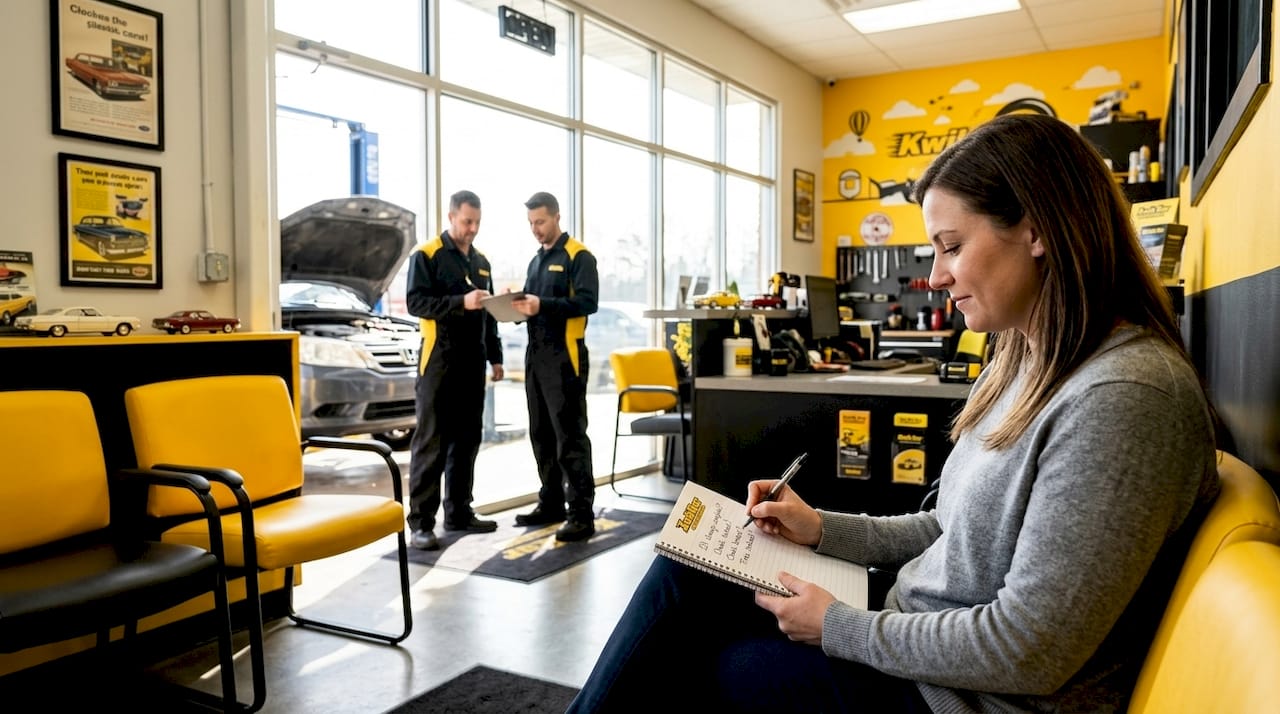
Most car owners make the mistake of walking in and saying “my car is making a weird noise.” That’s not a diagnosis, and it doesn’t help your mechanic help you. Describe what you hear or feel in specific terms: when does it happen, at what speed, under what conditions, and for how long. You’re not expected to know what’s wrong. You’re expected to describe what you experience.
Once the mechanic has assessed your vehicle, push for clarity on these points:
- What exactly is the problem, and what causes it? A trustworthy mechanic explains this in plain language. If they can’t, or won’t, that’s a concern.
- What happens if I don’t fix it now? This tells you whether the repair is urgent or something you can plan for. Honest shops distinguish between safety-critical repairs and maintenance items.
- Can you show me? Transparency in the diagnostic process, including photos, video, or a physical demonstration, is a strong signal of shop integrity. Many reputable shops now photograph worn components before replacing them.
- What is the written estimate, broken down by labor and parts? Labor costs vary significantly from under $100 to over $200 per hour depending on location and shop type, so knowing the rate and estimated hours protects you from overcharges.
A mechanic who admits uncertainty rather than rushing to an expensive assumption is actually the more trustworthy choice. A shop that explains repairs clearly and refers you to a specialist when the scope exceeds their capability is demonstrating exactly the kind of intellectual honesty that defines reliable car repair.
Pro Tip: Always ask for your old parts back after a replacement. Most reputable shops will hand them over without hesitation. If a shop refuses without a clear reason, question whether the part was actually replaced.
Building a long-term relationship with your mechanic
There’s a reason the best repair shops often have waiting lists: people who find a truly trustworthy mechanic don’t leave. And the longer you stay, the more value you get. A mechanic who has serviced your car for three years knows its quirks, its history, and what’s been replaced. That context means faster, more accurate diagnostics and fewer expensive exploratory repairs.
Trusted auto repair shops reduce the psychological stress of car ownership in ways that are genuinely underappreciated. When you know you have a mechanic you can call, unexpected car trouble stops being a crisis and becomes a manageable inconvenience.
“Treat your mechanic as a long-term partner starting with routine maintenance. That relationship pays dividends every single time something unexpected happens with your car.”
That said, even a trusted shop has limits. A good mechanic will tell you when your vehicle needs a specialist, whether that’s a transmission rebuilder, a dealership for a software update, or a body shop for structural work. A shop that claims to handle everything with equal expertise is worth scrutinizing. Balance your loyalty with the judgment to seek a second opinion when a repair seems unusually expensive or the diagnosis feels uncertain. For ongoing car maintenance tips that help you stay ahead of costly surprises, a little proactive planning goes a long way.
What I’ve learned about trust and mechanics over the years
I’ve seen car owners make the same mistakes repeatedly. They rush to the nearest shop in a stressful moment, skip the vetting process entirely, and end up paying twice to fix the same problem. Then they overcorrect by becoming so skeptical of every mechanic that they delay necessary repairs until they face a much larger bill.
The shops I trust most aren’t always the cheapest or the closest. They’re the ones where the service advisor can say “we’re not sure yet” without flinching. Intellectual honesty in a repair shop is rare and worth driving across town for. I’ve also found that community-trusted independent mechanics with decades of documented loyalty from local customers can be just as reliable as a fully certified shop, sometimes more so, because their reputation is everything they have.
What I’d tell any car owner starting this search: slow down, run the trial process, and pay attention to how a shop communicates, not just what they charge. The price difference between a trustworthy shop and a mediocre one is almost always smaller than what you’ll spend correcting a bad repair.
— Kwik Kar
Why Kwik Kar Oil Change & Auto Care is worth your first visit
If you’re ready to put this process into practice, Kwik Kar Oil Change & Auto Care in Dallas, TX makes that first trial visit straightforward. Their technicians hold ASE Master Certification and RepairPal accreditation, which means they meet independently verified standards for both technical competency and fair pricing. You get a written estimate before any work begins, and their parts and labor warranties back up every repair they complete.
Kwik Kar’s full auto repair services cover everything from routine oil changes to complex diagnostics for both domestic and import vehicles. Starting with something simple like an oil change lets you experience their communication process and transparency firsthand, with no pressure and no commitment to anything beyond that first visit. That’s exactly the kind of low-stakes entry point this guide recommends. Schedule your visit at Kwik Kar Spring Valley and see for yourself why a certified, transparent shop makes all the difference.
FAQ
What does ASE certification mean for a mechanic?
ASE certification means a technician has passed rigorous, standardized tests in their specialty area and must retest every 5 years to maintain their credential. It’s the industry’s most recognized benchmark for verified competency and ethical practice.
How do I use online reviews to find a reliable mechanic?
Skip the 1-star and 5-star reviews and focus on the 3-star ratings instead. These reveal real patterns in how a shop handles communication, pricing, and problem resolution, giving you a more accurate picture of the typical customer experience.
What should I ask for before a mechanic starts any repair?
Always request a written, itemized estimate that separates labor costs from parts costs before approving any work. This protects you from unexpected charges and confirms the shop’s commitment to transparent pricing.
Is it worth driving farther to find a better mechanic?
Yes. The best repair shops often have waiting lists precisely because quality customers won’t settle for less. The extra distance is almost always cheaper than paying to redo a repair done poorly by a closer but less trustworthy shop.
What’s the fastest way to test a new mechanic’s trustworthiness?
Book a low-stakes service like an oil change, ask a specific question about a symptom your car has, and closely review the final invoice. How they answer your question and how clearly they document the work tells you what you need to know before committing to anything major.