

To pass your emissions test, make sure the Check Engine Light is off and all OBD‑II readiness monitors show “Ready” before you drive to the station. For most vehicles built in 1996 or later, that combination is the baseline your car needs to clear inspection, according to EPA guidance on OBD readiness monitors.
Here’s your fast pre-departure checklist:
- Confirm no warning lights are on, especially the Check Engine Light.
- Drive the car normally for a few days first. Monitors need real-world driving to finish their internal checks.
- Warm the engine to full operating temperature before heading to the station.
- Tighten or replace a loose, cracked, or missing gas cap.
- Check that oil, air filter, and spark plugs aren’t overdue for service.
Pro Tip: Do not clear trouble codes or disconnect the battery right before your appointment. That wipes your readiness monitors back to “Not Ready,” and an incomplete monitor count fails the test just as fast as a lit warning light.
Key Takeaways
Passing emissions comes down to one core requirement: a clear Check Engine Light and fully “Ready” OBD‑II monitors, backed by basic maintenance and enough drive time to prove it.
| Point | Details |
|---|---|
| Baseline requirement | Check Engine Light off and OBD‑II monitors “Ready” are required to pass most 1996+ vehicle tests. |
| Never clear codes pre-test | Clearing codes or disconnecting the battery resets monitors to “Not Ready” and guarantees a failed retest. |
| Complete a drive cycle | Drive 50 to 100 miles of mixed conditions, including a cold start and highway time, to set monitors. |
| Cheap fixes come first | Gas caps ($10 to $30) and sensor repairs ($50 to $200) resolve many failures before expensive parts are needed. |
| Get a professional diagnosis | Kwik Kar Oil Change & Auto Care runs full diagnostics and readiness verification to avoid repeat inspection trips. |
Where to verify state rules and drive-cycle details
- EPA OBD Readiness Monitors fact sheet: official federal explanation of monitor requirements.
- Texas DPS emissions testing FAQ: state-specific pass/fail criteria and allowed monitor counts.
- Texas emissions test guide: practical breakdown of state inspection expectations.
Table of Contents
- How to Pass Emissions Prep in the Two Weeks Before Your Appointment
- What Happens During the Inspection Itself
- Fast Troubleshooting if You Fail or Get “Not Ready”
- Why OBD Readiness and the Check Engine Light Decide Everything
- What a Professional Shop Does That a Home Scan Can’t
- Let Kwik Kar Oil Change & Auto Care Handle the Diagnosis
- Sources
- FAQ
How to Pass Emissions Prep in the Two Weeks Before Your Appointment
The two weeks before your test date matter more than the morning of it. Most emissions failures trace back to something fixable that got ignored for months, not a catastrophic mechanical problem.
Work through this list starting 10 to 14 days out:
- Verify the Check Engine Light stays off during normal driving, not just at a stoplight.
- Replace spark plugs or the air filter if they’re overdue. Old plugs cause misfires that trip emissions monitors.
- Skip an oil change the day before the test. Fresh oil is fine, but do it early enough that nothing else changes at the last minute.
- Inspect the exhaust system for visible leaks or rust holes near joints and the muffler.
- Check the gas cap for cracks in the rubber seal. A bad seal alone can trigger an EVAP system fault.
If you recently had a repair, cleared a code, or disconnected the battery, your readiness monitors reset to “Not Ready.” You’ll need to complete a drive cycle of roughly 50 to 100 miles of mixed driving, including highway cruising, stop-and-go traffic, and at least one cold start, to let the computer finish its checks.
Pro Tip: Run a bottle of fuel system cleaner through one full tank about a week before your test, not the morning of. It needs time to work through the system, and showing up with a fuel level between 25% and 75% full gives the evaporative system enough vapor to test properly.
What Happens During the Inspection Itself
Plan a short warm-up drive of 10 to 20 minutes before you arrive, ideally including some highway speed. A cold engine that hasn’t cycled through its full range can leave monitors incomplete even if everything else checks out.
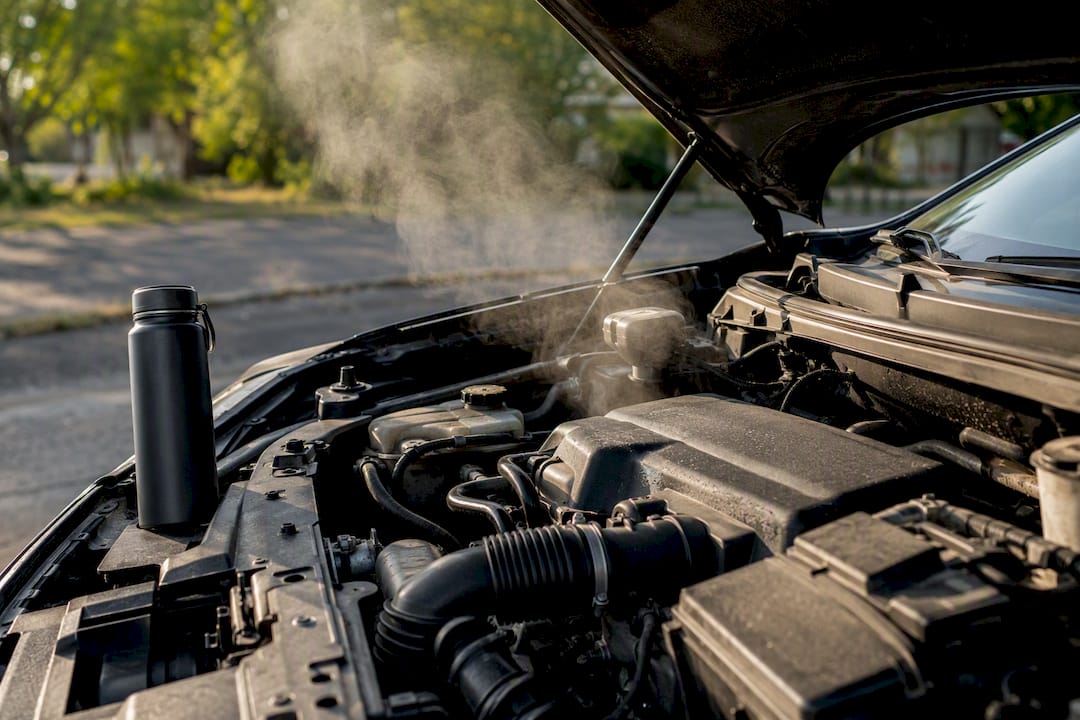
Once you’re at the station, the technician plugs into your OBD‑II port and reads two things: whether the Malfunction Indicator Lamp is commanded on, and how many readiness monitors report “Not Ready.” Most programs allow one incomplete monitor on 2001 and newer vehicles, but Texas’s inspection rules and other state programs vary, so check your local requirement if your car is a borderline model year. Some stations also run a quick visual check for a missing gas cap, an obviously modified exhaust, or signs of a removed catalytic converter.
Before you go, gather:
- Vehicle registration and inspection appointment confirmation
- Recent repair receipts, if you’ve had emissions-related work done
- A printout or screenshot of a readiness scan, if you ran one at home
Turn off the air conditioning and remove anything heavy from the trunk. Neither is usually required, but a lighter, less-loaded engine gives you one less variable to worry about.
Fast Troubleshooting if You Fail or Get “Not Ready”
A failed test or an incomplete “Not Ready” result isn’t the end of the story; it’s a diagnostic clue. Start with a code read, either with your own OBD‑II scanner or a free scan at most auto parts stores, to see exactly what triggered the fault.
Common, cheap culprits include a loose or cracked gas cap, worn spark plugs causing a misfire, a small exhaust leak, or early signs of O2 sensor trouble. Fixing these often costs far less than people expect: a replacement gas cap runs $10 to $30, a sensor or small exhaust pipe repair typically lands between $50 and $200, and a full catalytic converter replacement can run $500 or more.
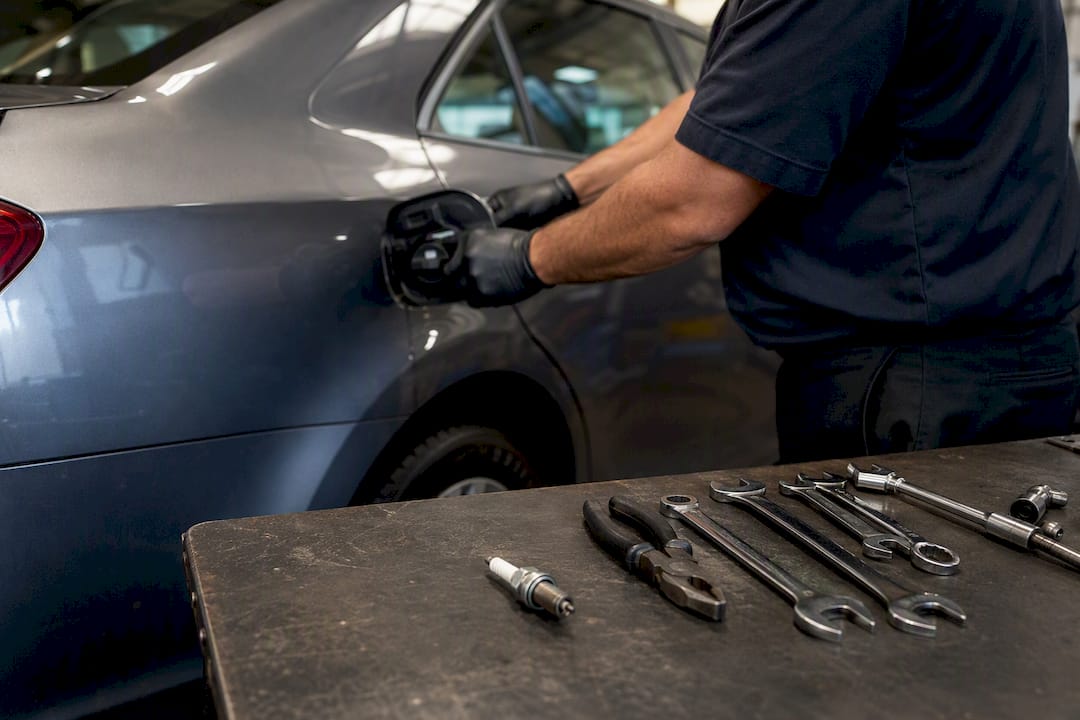
Pro Tip: Never clear the code and retest the same day. The system needs a completed drive cycle to reset readiness monitors, so clearing codes right before a retest guarantees a “Not Ready” result even if the actual problem is fixed.
After any repair, drive the recommended distance, then confirm readiness with a scan before you go back. One overlooked truth: incomplete readiness monitors, not outright emissions failures, are among the most common reasons cars get turned away at the station.
Why OBD Readiness and the Check Engine Light Decide Everything
OBD‑II systems run continuous background checks on your catalytic converter, oxygen sensors, evaporative emissions (EVAP) system, and misfire detection. Each check is called a “monitor,” and it needs to complete a full cycle of driving conditions before it reports “Ready.” The inspection station’s scan tool simply asks your car’s computer two questions: is the warning light commanded on, and how many monitors haven’t finished yet?
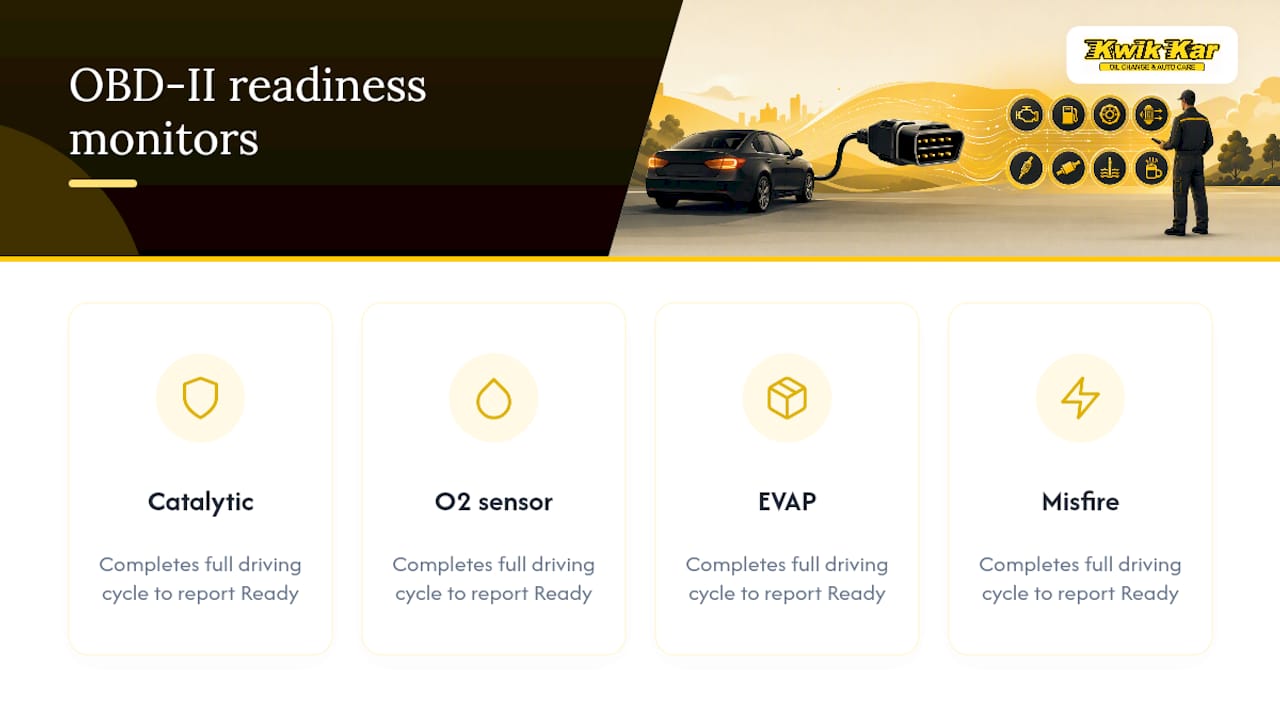
A lit Check Engine Light is an automatic fail in most OBD‑II programs, no exceptions for a “minor” code. Too many incomplete monitors fail you too, since inspectors have no way to confirm those systems are actually working.
This is exactly why clearing codes backfires. Resetting the computer wipes every monitor back to “Not Ready,” and you’re starting from zero. Standard guidance calls for roughly 50 to 100 miles of mixed driving, including highway time and at least one cold start, to let the monitors finish and report back correctly.
Pro Tip: If your car has had its battery replaced or codes cleared recently, don’t schedule your test the same week. Give the monitors time to complete a full cycle first, or you’re paying for a test you’re likely to fail on a technicality.
What a Professional Shop Does That a Home Scan Can’t
A parts-store code reader tells you what’s wrong. An ASE-certified shop tells you why, and fixes it correctly the first time. The typical shop workflow looks like this:
- Pull codes and verify exactly which readiness monitors are incomplete.
- Run targeted diagnostics: a smoke test for EVAP leaks, O2 sensor performance checks, or catalytic converter efficiency testing.
- Provide a written estimate before starting any repair work.
- Complete the fix, then drive the required cycle and confirm monitors report “Ready” before you head back for a retest.
Bring your car to a shop when failures repeat, when codes point to the catalytic converter or exhaust system, or when a repair estimate is high enough that you want a second opinion before committing.
A cost-conscious take on chasing emissions failures
Fix whatever’s triggering the Check Engine Light first, and let the readiness monitors complete, before you authorize anything expensive. Too many owners replace a catalytic converter on a guess when the real problem was a $15 gas cap. Get an actual diagnosis, compare the repair estimate against what the car is worth, and only then decide how much you’re willing to spend.
Let Kwik Kar Oil Change & Auto Care Handle the Diagnosis
Chasing a mystery code with a $20 code reader only gets you so far. When the fix isn’t obvious, or you’ve failed once already and don’t want to burn another appointment slot, Kwik Kar Oil Change & Auto Care’s ASE-certified technicians run full engine diagnostics to pinpoint exactly what’s tripping your Check Engine Light or holding a monitor at “Not Ready.”
You get a written estimate before any work starts, a documented diagnostic report you can bring to the retest, and repairs covering everything from EVAP leaks and exhaust issues to O2 sensor replacement, all backed by warranty. That means fewer wasted trips to the inspection station and less guessing about what’s actually wrong. Schedule a diagnostic appointment with Kwik Kar Oil Change & Auto Care and get your car test-ready without the trial and error.
Sources
- On‑Board Diagnostics (OBD) Readiness Monitors fact sheet — EPA
- Emissions Testing – Texas Department of Public Safety
- How to Pass Your Emissions Test (12 tips that actually work) — Is My Car Cooked?
- How to pass an emissions test: 6 pro tips for drivers — OBDeleven
FAQ
What tricks help you pass an emissions test?
Drive the car for several days before the test to complete readiness monitors, keep the Check Engine Light off, warm the engine fully beforehand, and avoid clearing codes right before your appointment.
Is there a legitimate way to guarantee you pass?
There’s no guaranteed shortcut, but confirming the Check Engine Light is off and all readiness monitors show “Ready” through a home scan before you go gives you the best odds of passing on the first try.
What can you put in your car to help it pass?
A fuel system cleaner run through a full tank about a week before the test can help clear minor deposits affecting fuel trim and sensor readings, but it won’t fix a real mechanical fault or a lit warning light.
What will cause you to fail an emissions test?
A lit Check Engine Light, too many “Not Ready” readiness monitors, a damaged gas cap, exhaust leaks, worn spark plugs, or a failing catalytic converter are the most common causes of failure. If you’ve failed and aren’t sure why, Kwik Kar Oil Change & Auto Care can run a full diagnostic scan to identify the exact cause before you spend money guessing.