


Your oil change sticker has passed, the maintenance light just came on, or you’ve started hearing that faint engine sound that tells you it’s time to stop putting it off. That’s a familiar spot for a lot of drivers in Pearland. You need service that’s quick, clear, and done right, without spending half your day wondering if the shop is upselling you or skipping steps.
That’s also where a lot of fleet managers get stuck. One van is due today, two pickups are close behind, and nobody wants surprise downtime because routine maintenance got pushed back one week too long. The challenge isn’t finding a shop in Pearland. The challenge is figuring out which one gives you straight answers on service, pricing, and what your vehicle needs.
Your Guide to a Fast and Reliable Oil Change in Pearland
It usually starts the same way. A driver pulls in before work because the maintenance light came on overnight, or a fleet manager calls because one truck is overdue and two more are close behind. The first questions at the counter are almost always practical ones. What will this cost, how long will it take, what oil does this engine call for, what else are you checking, and can you set up a fleet plan that is clear.
Those questions matter because an oil change is not just a box to check. The service has to fit your day, match the vehicle, and catch small problems before they turn into repairs that cost real money. That is true for a family SUV that spends its week in school pickup lines and just as true for work vans that idle, haul tools, and rack up miles around Pearland.
At Kwik Kar Oil Change and Auto Care, 2610 Broadway St, that is the part we focus on. Drivers want a straight answer, not a vague estimate. Fleet managers want repeatable service, documented intervals, and pricing they can plan around. Pearland gives you plenty of options for oil service, so the shops that earn repeat business are the ones that explain what they are doing, use the right oil and filter, and keep the visit efficient without cutting corners.
A good visit should answer five things before the keys come back:
- Price: what the service includes and what would change the total
- Time: whether you can wait or need to schedule around a heavier service
- Oil type: conventional, synthetic blend, full synthetic, or high-mileage based on the vehicle and use
- Inspection scope: what gets checked beyond the drain and refill
- Fleet support: whether the shop offers usable tracking, approval steps, and service records
For individual drivers, the trade-off is usually time versus long-term cost. Cheaper oil that does not match the vehicle or driving conditions can shorten service intervals and increase wear. For fleets, the trade-off is usually speed versus consistency. Fast service only helps if every unit gets the correct oil, filter, documentation, and next due date.
That is why this guide is built for both groups. Pearland drivers need clear maintenance decisions without the guesswork. Pearland businesses need service programs and state inspection support that are spelled out, not buried in fine print.
Why Regular Oil Changes Are Non-Negotiable for Your Vehicle
A lot of Pearland drivers come in after the first warning signs show up. The engine sounds a little louder at idle. Fuel economy slips. The oil life light has been on for a while, but the vehicle still seems to run. By that point, the oil has usually been doing less work than the engine needs.
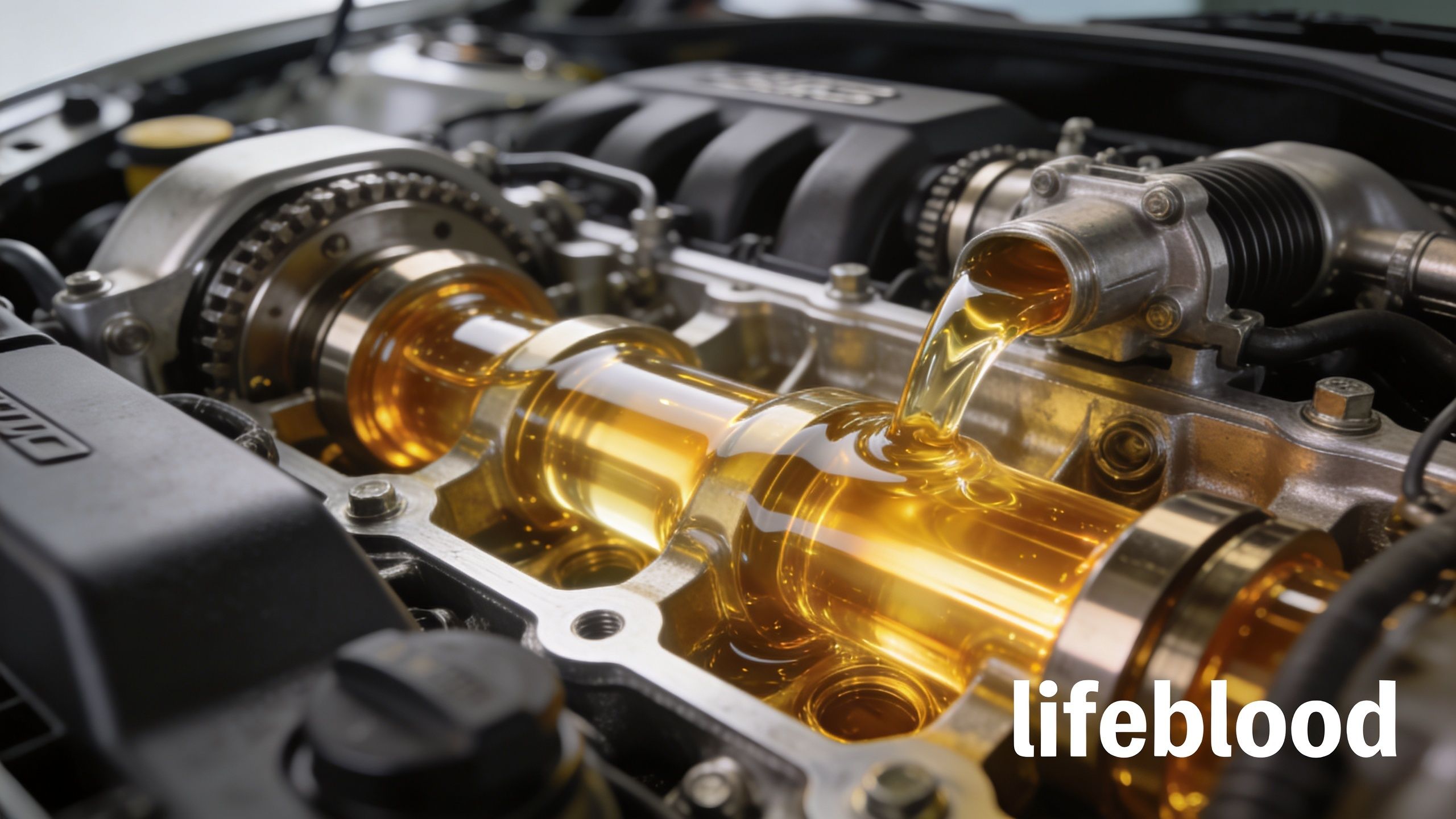
Motor oil protects parts that are moving fast under heat and pressure. It keeps metal surfaces separated, carries heat away from critical areas, and suspends dirt and combustion byproducts so the filter can trap them. Once the oil breaks down, all three jobs suffer.
That matters even more in Southeast Texas. Short trips, stop and go traffic, long idle time, and heavy A/C use all put extra heat into the engine and extra stress on the oil. For fleet vehicles, those conditions add up faster because service intervals have to match actual use, not just a sticker reminder.
What oil is doing every mile
Your engine oil handles three jobs every time the vehicle runs:
- Lubricates moving parts so friction and wear stay under control
- Helps manage heat so internal components are not constantly operating at higher temperatures
- Carries contaminants to the filter so debris is removed instead of circulating through the engine
When oil gets old, it can thicken, oxidize, and leave behind deposits. That restricts oil flow, especially in tight passages where modern engines need steady pressure. The result is gradual wear that usually starts long before a breakdown.
Oil choice also affects how well the engine is protected between visits. Drivers who want a clearer breakdown of synthetic vs conventional oil for different driving habits should match the oil to the vehicle, mileage, and use pattern, not just the lowest upfront price.
A quick visual refresher can help if you want to see how oil protects internal engine parts during service.
What neglect actually costs you
Missed oil changes usually do not cause one dramatic failure the next day. The more common problem is steady internal wear that turns into sludge buildup, timing component wear, rough running, oil consumption, leaks, and expensive repair work later.
Clean oil costs far less than engine repair.
That’s the practical budget math. For individual drivers, regular oil service helps avoid repairs that hit all at once. For fleet managers, it helps prevent downtime, missed routes, and uneven maintenance records across vehicles. Shops often talk about interval recommendations but stay vague about what those intervals mean for operating cost. The smarter approach is to tie service timing to actual vehicle use, document it clearly, and make pricing easy to follow.
Regular oil changes are not optional maintenance if you want a vehicle to stay dependable for the long haul. They are one of the simplest ways to protect engine life, control repair costs, and keep both personal vehicles and work fleets reliable on Pearland roads.
Conventional vs Synthetic Which Oil Is Right for You
A driver in Pearland might use one car for short school runs, grocery stops, and weekend errands. A fleet manager might have vans idling in traffic, making repeated stops, and stacking miles fast. Those vehicles do not need the same oil strategy, even if they pull into the same shop.
The right choice depends on engine design, mileage, driving habits, and how long you plan to keep the vehicle. Cost matters, but so does how the engine is used between services. At Kwik Kar Pearland, we try to make that decision plain. Drivers should know what they are paying for, and fleet managers should know how oil choice affects service schedules, operating cost, and downtime.
The three main choices
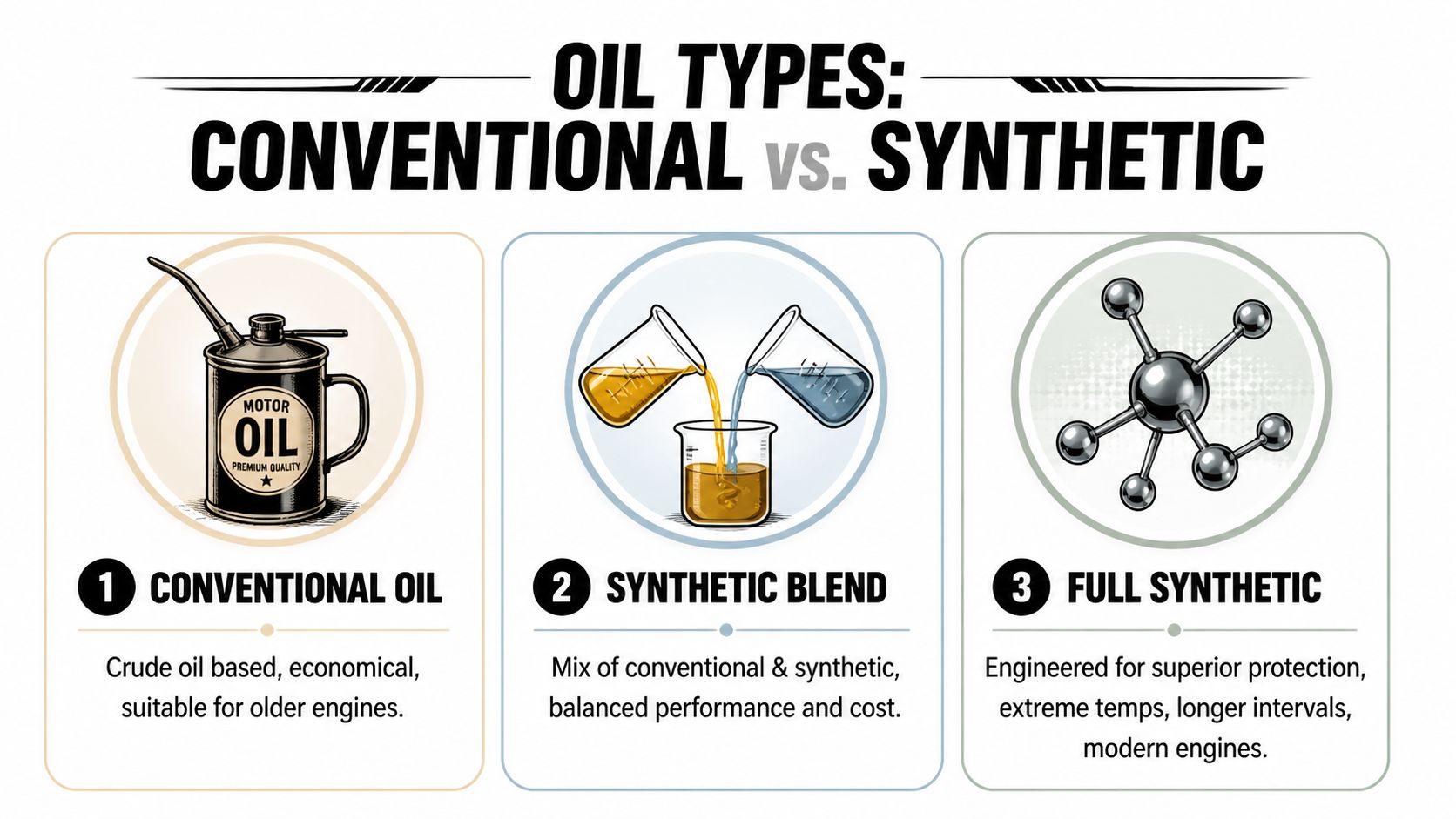
Conventional oil works well for some older engines with straightforward service needs, especially if the vehicle is driven lightly and serviced on time. It usually carries the lowest upfront price, which can make sense for a car with lower annual mileage or one nearing the end of its service life. The trade-off is shorter resistance to heat breakdown and sludge compared with synthetic options.
Synthetic blend gives drivers a middle ground. It improves heat protection and stability over conventional oil without pushing the price as high as full synthetic. For many Pearland drivers, especially those dealing with stop-and-go traffic, summer heat, and mixed city-highway use, a blend can be a sensible budget choice.
Full synthetic oil is usually the better fit for newer engines, turbocharged vehicles, and high-use daily drivers. It holds up better under heat, flows better on cold starts, and helps keep internal engine parts cleaner over time. That matters for personal vehicles you plan to keep for years, and it matters just as much for work vehicles that cannot afford unplanned downtime.
High-mileage oil has a specific purpose
High-mileage oil is built for older engines that have more wear on seals and internal components. Once a vehicle gets past 75,000 miles, small leaks, light seepage, and gradual oil consumption become more common. High-mileage formulas use additives designed to help condition seals and support aging engines that still run well but need a little more help.
It is not a cure for a mechanical failure. If an engine has a major leak or internal wear problem, oil alone will not fix it.
But for the right vehicle, it can slow minor seepage, help the engine run cleaner, and make routine service more productive. If you want a broader explanation of how each option performs, this guide on synthetic vs conventional oil covers the differences clearly.
Oil Type Comparison at a Glance
| Oil Type | Key Benefit | Typical Change Interval | Best For |
|---|---|---|---|
| Conventional | Lower upfront cost | Follow manufacturer recommendation | Older vehicles and lighter-use driving |
| Synthetic Blend | Balanced value and protection | Follow manufacturer recommendation | Drivers who want more heat resistance without full synthetic pricing |
| Full Synthetic | Stronger protection in heat and stress | Follow manufacturer recommendation | Newer engines, heavier use, Texas heat, stop-and-go driving |
| High-Mileage | Helps condition seals in older engines | Follow manufacturer recommendation | Vehicles over 75,000 miles |
What works and what does not
Here is the advice we give at the counter every day.
- Choose conventional oil only when the engine and driving pattern support it. It can save money up front, but it is usually not the best answer for heavy traffic, long commutes, towing, or high-heat operation.
- Use synthetic blend when you want better protection without a full jump in cost. This is a practical fit for many everyday drivers in Pearland.
- Use full synthetic when the manufacturer calls for it or the vehicle works hard. That includes many newer cars, turbo engines, and fleet vehicles that idle, haul, or run long routes.
- Consider high-mileage oil when an older engine is still sound but starting to show age. It can be a smart maintenance choice before minor seepage turns into a bigger repair.
- Match the oil grade and specification to the vehicle. The wrong viscosity can create wear, poor performance, and warranty problems.
If the owner's manual requires synthetic, that is a requirement, not an upgrade. For fleet accounts, that point matters even more. Standardizing the correct oil across similar vehicles keeps records cleaner, reduces guesswork, and makes pricing easier to track from one service visit to the next.
More Than an Oil Change The Kwik Kar Multi-Point Inspection
A proper oil service should do more than swap fluid and send you out. The hidden value is the inspection that happens around it. That’s where technicians catch wear items early, before you’re dealing with a breakdown, a no-start, or a safety issue that could have been handled during a routine stop.

What a multi-point inspection should catch
During an oil change, a technician has an ideal opportunity to look at systems that affect everyday reliability. According to Christian Brothers Automotive oil filter change guidance, multi-point inspections during oil changes can avert 70% of roadside failures by identifying issues such as brake pad thickness below 3mm or a clogged air filter, which can increase fuel consumption by 10% to 15%.
That’s a strong reminder that preventive maintenance isn’t separate from an oil change. It’s built into the smartest version of the service.
A thorough inspection usually focuses on items like these:
- Brake condition because worn pads don’t stay “good enough” for long
- Battery health because weak batteries often fail without much warning
- Belts and hoses because cracks and swelling are easier to fix in the shop than on the roadside
- Fluid levels so low coolant, brake fluid, or other shortages don’t go unnoticed
- Air filter condition because restricted airflow can hurt drivability and fuel use
- Tire condition and pressure because handling, braking, and tire wear all depend on them
Why this saves money later
A lot of expensive repairs start as small missed signs. The oil service visit creates a routine checkpoint. If a technician notices a battery weakening, a belt starting to fray, or a filter getting heavily loaded, you can fix it on your schedule instead of reacting when the vehicle forces the issue.
That matters for families and for business vehicles. A personal car that won’t start can ruin a day. A work truck that goes down can interrupt jobs, deliveries, and employee schedules.
If you want a clear example of what a shop-level inspection can include during routine service, this overview of a 17-point oil change is a useful reference.
What drivers should ask before approving service
Not every shop handles the inspection side with the same care. Before you agree to an oil change in Pearland, ask a few direct questions.
What do you inspect during the visit
If the answer is vague, that’s a red flag.Will you show me anything that needs attention
Good shops explain findings clearly instead of pressuring you.Are recommendations urgent, or can some wait
Honest service separates safety concerns from future planning.Will you top off fluids and reset service reminders
Those details help the visit feel complete.
A multi-point inspection is where routine maintenance becomes preventive maintenance.
One practical option in Pearland is Kwik Kar Oil Change and Auto Care, which offers oil changes alongside inspections, preventive maintenance, and repair services for sedans, SUVs, and light trucks through its local service model.
How to Choose a Trusted Auto Shop in Pearland
A low oil change price can get your attention, but it shouldn’t make the whole decision. The better question is whether the shop is careful, consistent, and willing to explain what your vehicle needs without turning the visit into a sales pitch.
What matters more than the headline price
Start with technician competence and process. You want a shop that follows manufacturer requirements, uses the correct oil and filter, and checks the vehicle instead of treating every car the same. Clear communication matters just as much. A reliable shop explains what it found, what needs attention now, and what can reasonably wait.
Warranty coverage is another useful filter. When a provider stands behind the work, that usually tells you something about process discipline. Reviews also matter, but read them for patterns rather than perfection. Look for comments about consistency, honesty, wait time, and whether the final invoice matched the conversation.
A simple checklist for comparing shops
- Ask about service transparency. Can the staff explain oil options and why one fits your vehicle better than another?
- Check convenience. Hours, scheduling, and turnaround all matter when maintenance competes with work and family.
- Look for inspection habits. A shop that only drains oil and replaces a filter is doing the minimum.
- Watch how they handle recommendations. Good advisors prioritize. They don’t blur urgent repairs and optional items.
Trust usually shows up in the small moments. The advisor answers directly, the estimate is clear, and the technician’s findings make sense.
It also helps to compare how businesses present customer feedback. If you want a sense of how testimonial platforms can show service experiences in a more organized format, these 2brosautorepair testimonials are a useful example of what transparent customer feedback can look like.
What doesn’t work
Choosing purely on the cheapest advertised special often backfires. So does assuming every quick-service location follows the same standards. Some shops are efficient because their process is tight. Others are fast because they skip explanation, inspection, or detail work. Those aren’t the same thing.
For most drivers, the right shop feels predictable. You know what you’re paying for, you know what was checked, and you leave with a plan for the next visit instead of a vague sticker and unanswered questions.
Fleet Maintenance and State Inspections for Pearland Businesses
Fleet service has a different pressure than personal car care. One missed maintenance window doesn’t affect one person. It can affect routes, jobs, deliveries, and payroll hours. That’s why fleet managers usually care less about a one-time coupon and more about consistency, scheduling, documentation, and avoiding downtime.

Pearland has a real information gap here. According to Kwik Kar’s Pearland location page, major providers generally don’t publish specific fleet pricing or volume discounts, which makes apples-to-apples comparison difficult. The same source notes that customized programs matter for businesses trying to reach the typical 15% to 30% cost reduction from preventive maintenance.
What fleet managers should ask for
If you manage multiple vehicles, don’t settle for “we handle fleets” as the whole answer. Ask for practical details:
- Service scheduling that fits vehicle availability
- Approval workflow so drivers and managers know who authorizes what
- Maintenance tracking to keep intervals from slipping
- Inspection reporting that flags problems before breakdowns
- State inspection coordination so compliance doesn’t become a separate errand
A customized maintenance plan is often more useful than a generic public price sheet because fleets don’t all operate the same way. Some vehicles idle heavily. Others run long routes. Some are lightly loaded. Others work every day.
For businesses that want a framework for building that kind of system, this guide to a fleet preventive maintenance program lays out the basics clearly.
Bundling routine oil service with state inspections can also save time. For a busy business owner, combining maintenance and compliance into fewer visits is often the difference between staying ahead and constantly catching up.
Your Kwik Kar Oil Change Questions Answered
How long will my oil change take
It depends on the vehicle, the oil type, and whether anything needs attention during inspection. Quick-service shops in Pearland often advertise short turnaround times, but the better way to think about it is this: speed matters, but accuracy matters more. If your vehicle needs a specific oil, filter, or an inspection finding explained, a few extra minutes are well spent.
Do I need an appointment
Calling ahead is smart if your schedule is tight or if your vehicle uses a less common oil specification. Walk-in service may be available depending on shop flow, but a quick call can help you avoid waiting and confirm what your vehicle needs before you arrive.
What if my car needs a special oil or filter
That’s normal on many newer vehicles. The important thing is giving the shop your year, make, model, and engine details so they can verify the proper service. Don’t assume every car takes the same oil just because the capacity looks similar.
Are there specials or coupons I can use
Many shops offer online specials or rotating local promotions. Check before you come in, but don’t let a discount be the only factor. A lower price doesn’t help if the wrong oil goes in the engine or the inspection side gets skipped.
What should I bring if I manage a business fleet
Bring your vehicle list, service history if you have it, and any internal approval process your company uses. That makes it easier to build a maintenance routine that works effectively. For small business owners trying to streamline customer communication and internal follow-up on service-related questions, resources like Clepher for small business support and sales can be useful for organizing conversations outside the shop too.
If you’re unsure what oil your vehicle needs, ask before service starts. That one question prevents a lot of avoidable mistakes.
When you need an oil change and auto care service from Kwik Kar Oil Change and Auto Care, the smartest next step is simple. Call ahead or schedule online, bring your vehicle details, and ask for a clear recommendation based on your engine, mileage, and driving habits. Good maintenance isn’t complicated when the service process is honest, practical, and built around keeping your vehicle on the road.