
You open the DMV renewal notice, see “Smog Certification Required,” and immediately start doing mental math. How long will it take? Will the car pass? Do you need a special station? If you live in Turlock, that stress usually shows up right around the same time the valley haze does, which makes the whole thing feel more complicated than it needs to be.
It doesn't have to be.
Smog in Turlock CA is part air-quality issue, part vehicle-compliance issue, and part maintenance issue. If you understand those three pieces, the process gets a lot easier. Most problems that cause a failed smog check leave clues before test day. Most confusion about where to go comes from directory sites that list shops without explaining what kind of station you need.
Your Guide to Turlock Smog Checks
If you've driven across Turlock on a hazy morning and then checked your registration notice later that week, you've already seen the connection. What hangs in the valley air isn't just an environmental headline. It affects how California regulates vehicle emissions and why your car may need to be tested before the DMV will renew registration.
Local drivers face practical concerns. Do you need a smog check now? Does your notice require a STAR-certified station? What can you do before the test so you don't waste time on a preventable failure?
This guide answers those questions in plain language.
You'll see what smog means in a Central Valley setting, how California's rules apply to a Turlock driver, how STAR stations fit into the process, and what to do if your vehicle doesn't pass the first time. The point isn't to make the subject sound technical. It's to make it manageable.
Practical rule: Smog checks go more smoothly when you treat them as part of routine maintenance, not as a last-minute DMV problem.
That mindset alone saves a lot of headaches.
What Smog Means for the Central Valley
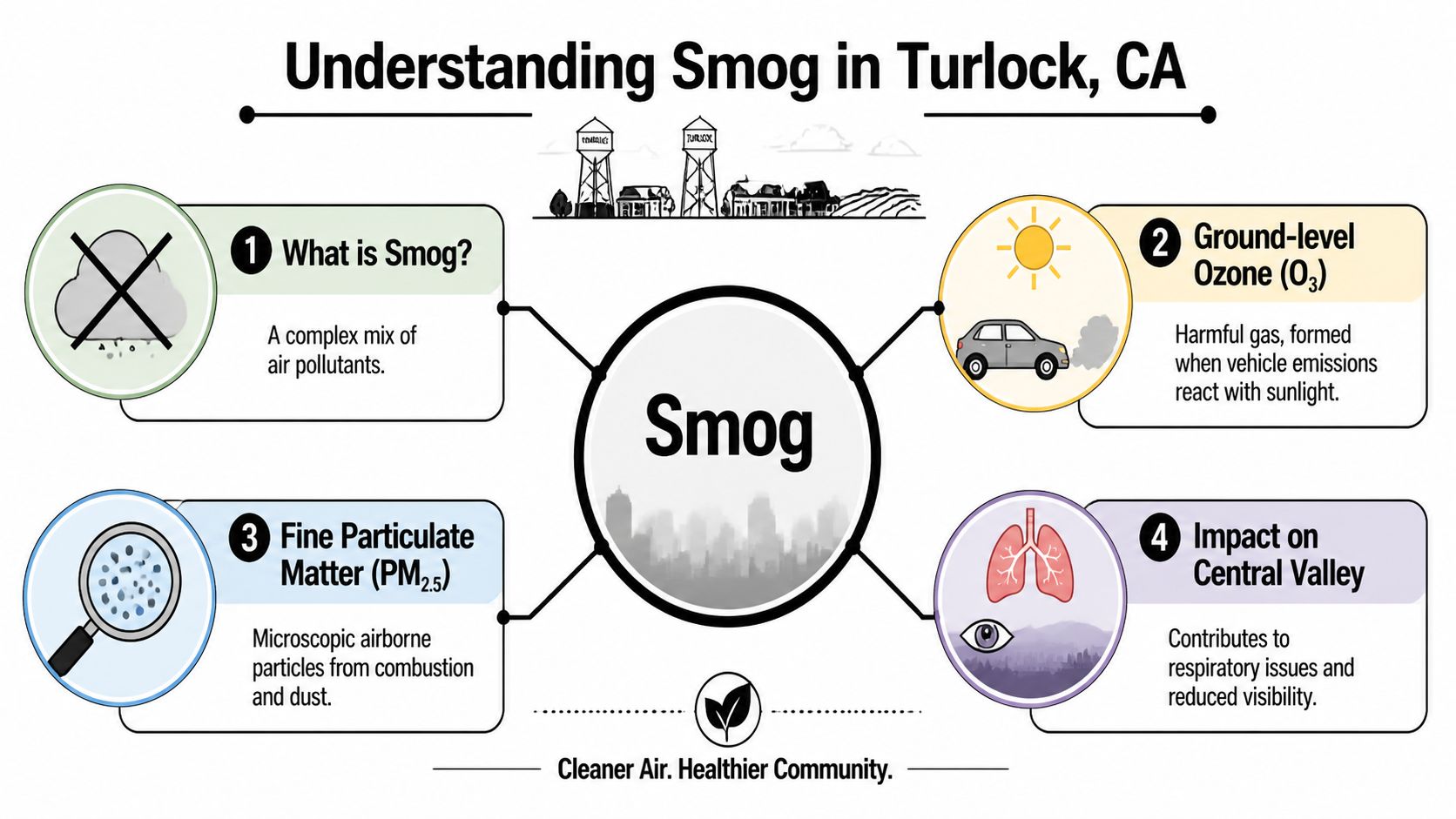
Turlock's smog problem makes more sense when you think of the Central Valley like a bowl with a lid on it. In winter, air stagnation can trap emissions close to the ground. In the San Joaquin Valley, inversion layers and weak winds can hold pollutants in place instead of letting them disperse.
That trapped pollution is why smog in Turlock CA isn't just a big-city issue from somewhere else. It's part of the broader Central Valley air story.
It isn't just smoke
A lot of drivers still picture smog as visible smoke. Modern smog works differently. California air-pollution history explains that researchers identified airborne hydrocarbons from gasoline and oxides of nitrogen, or NOx, from internal combustion engines as two chief exhaust constituents behind smog, as described in the South Coast AQMD history of air pollution control.
That matters on test day because a failed smog check often points back to one of those two emissions categories. In other words, the test isn't looking for a dirty tailpipe in the old-fashioned sense. It's checking whether the systems that control fuel mixture, combustion, and exhaust cleanup are doing their job.
Why California got strict about it
California didn't build its smog rules overnight. The state's official air-quality history notes that Los Angeles experienced the first recognized smog episodes in 1943, when visibility dropped to only three blocks, and that crisis later led to major state action including the creation of the State Air Resources Board on August 30, 1967, along with the nation's first tailpipe emissions standards in 1966, according to the California Air Resources Board history page.
For Turlock drivers, that history explains why the rules can feel detailed. California learned early that inland air pollution isn't solved by wishful thinking. It takes ongoing emissions control, vehicle standards, and enforcement.
What that means for your car
Smog control isn't only about the environment in the abstract. It's also about whether your vehicle's emissions systems are healthy enough to stay compliant.
A car with an engine-management problem may still run pretty well. It may start every morning, idle okay, and get you to work. But if it has an emissions fault, incomplete readiness monitors, or a malfunctioning exhaust-control component, the smog check will catch what everyday driving doesn't.
Valley haze and vehicle compliance are connected. The air issue is local. The fix starts one car at a time.
Turlock Smog Check Requirements Explained
Most drivers don't need a long lecture on state policy. They need to know whether the DMV is going to hold up registration unless they get a passing inspection.
For Turlock residents, the California Smog Check Program is administered by the Bureau of Automotive Repair, usually called BAR.
What a STAR requirement actually means
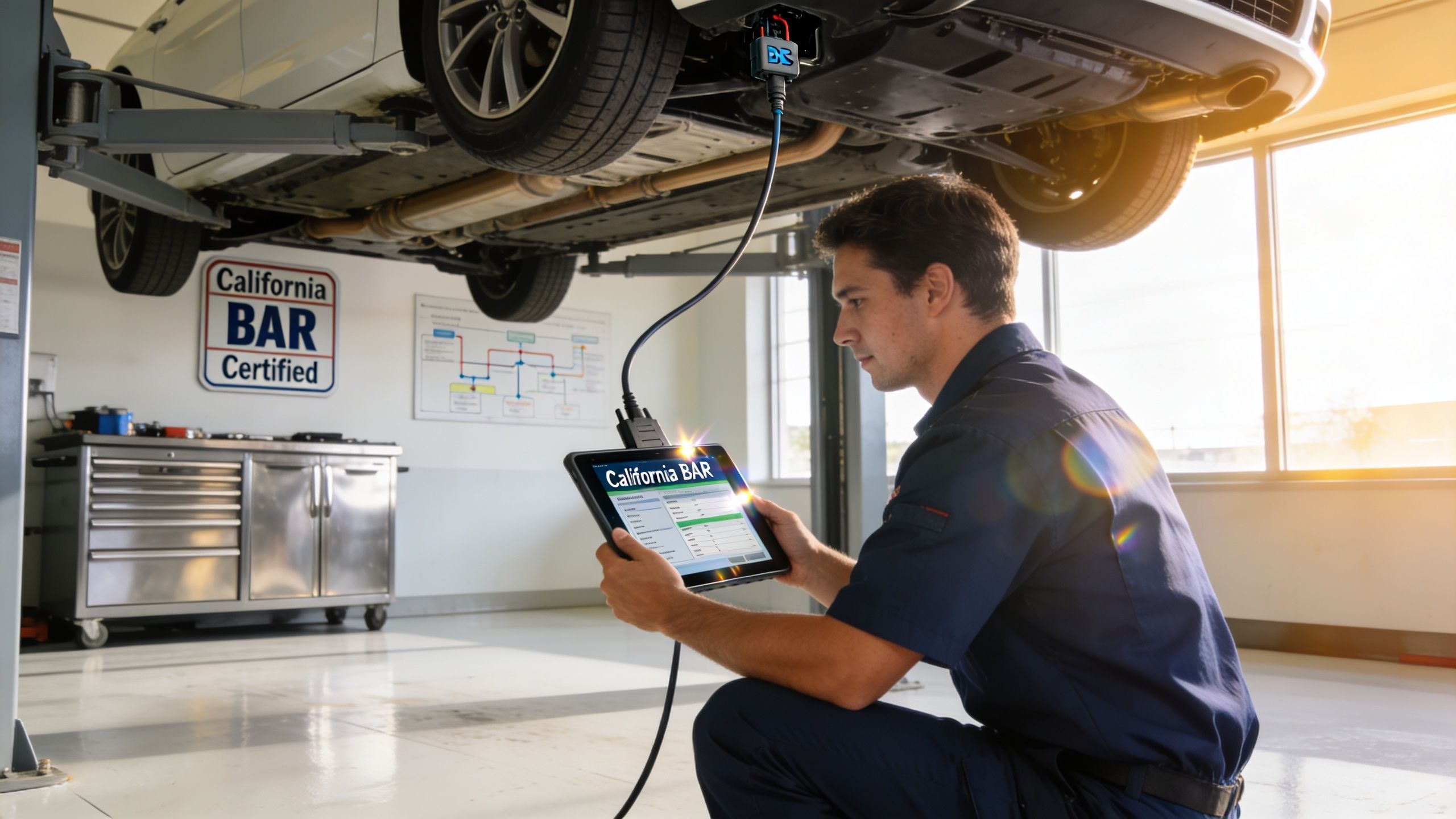
Some DMV notices send drivers to a STAR-certified station. That's not just a marketing label. BAR requires that 20% of vehicle inspections be performed at STAR-certified stations, and those stations have to meet stricter performance standards, as described by Smog Check Turlock's explanation of STAR testing and OBD-II process.
These stations use BAR-approved OBD-II testers that connect to the vehicle's Engine Control Module, or ECM, to read readiness monitors and fault information. The test checks whether the required emissions monitors are “Ready.” If they aren't, or if current or pending faults are present for fuel, ignition, or emissions systems, the vehicle can be referred for diagnosis and repair.
That's one reason drivers get into trouble after clearing codes right before a test. The warning light may be off, but the monitors often aren't ready yet.
Station type matters
A lot of local confusion comes from mixing up test-only and test-and-repair stations. Those labels matter.
- Test-only station means the shop performs the inspection but doesn't handle the repair side.
- Test-and-repair station means the shop can inspect, diagnose, and fix emissions-related issues if the car doesn't pass.
- STAR-certified station means the location meets higher program standards and may be required by your notice.
If you're trying to sort through California rules in another market, this overview of how smog program requirements work in another California city can help you see how the logic carries across locations, even though your actual station choice in Turlock should always match your own DMV notice.
Before you go, it helps to see the testing process in action:
What drivers should do before scheduling
Use this quick filter:
- Read the DMV notice carefully. If it specifies STAR, don't assume any nearby smog shop will work.
- Confirm the station type before leaving home. Test-only and test-and-repair serve different needs.
- Avoid last-minute code clearing. If the car recently had battery disconnect work or code resets, the monitors may not be ready.
- Treat warning lights seriously. The OBD-II side of the test is built to catch unresolved system problems.
Where to Get a Smog Check in Turlock
When drivers search for smog in Turlock CA, they usually land on a list of businesses. That's useful up to a point, but it doesn't answer the question that matters. Is the station the right type for your vehicle and DMV notice today?
That's why I always recommend starting with verification, not convenience.
Don't trust directories by themselves
Directory pages can tell you who's nearby. They often don't tell you whether the shop is currently STAR-certified, whether it's test-only or test-and-repair, or whether the listing is still accurate.
The official BAR lookup is the safer move. A local example makes the point clearly. The BAR lookup confirms All Valley Smog at 415 Lander Avenue as a STAR-certified test-and-repair station, as noted by SmogCheck.org's Turlock STAR station page.
That doesn't mean it's the only option you might consider. It means certification status is something to verify, not assume.
How to choose the right station
Different situations call for different choices.
| Driver situation | Best station type to look for | Why it helps |
|---|---|---|
| DMV notice specifies STAR | STAR-certified station | The notice requirement needs to match the station |
| You think the car may fail | Test-and-repair | You can move from diagnosis to repair without starting over elsewhere |
| You want inspection only | Test-only | Useful if you already have a repair plan |
| You recently had emissions work done | Confirm current status before going | You want the right shop and current certification |
What works and what wastes time
What works is calling ahead, confirming the station type, and asking one simple question: “Can you handle my exact smog-check requirement shown on the DMV notice?”
What doesn't work is showing up at the nearest listing and hoping the paperwork sorts itself out. Drivers lose time that way, especially when the notice calls for STAR service or when the car has already had a recent failure.
A five-minute status check before you drive over is better than finding out in the parking lot that you're at the wrong station type.
If your vehicle has a repair history, an out-of-area registration issue, or a recent failed inspection, station type matters even more than price or distance.
How to Prepare Your Vehicle to Pass
Most failed smog checks aren't random. The car usually gives warning signs first. The best preparation is simple, mechanical, and boring. That's good news, because boring maintenance is cheaper than surprise repairs under DMV pressure.
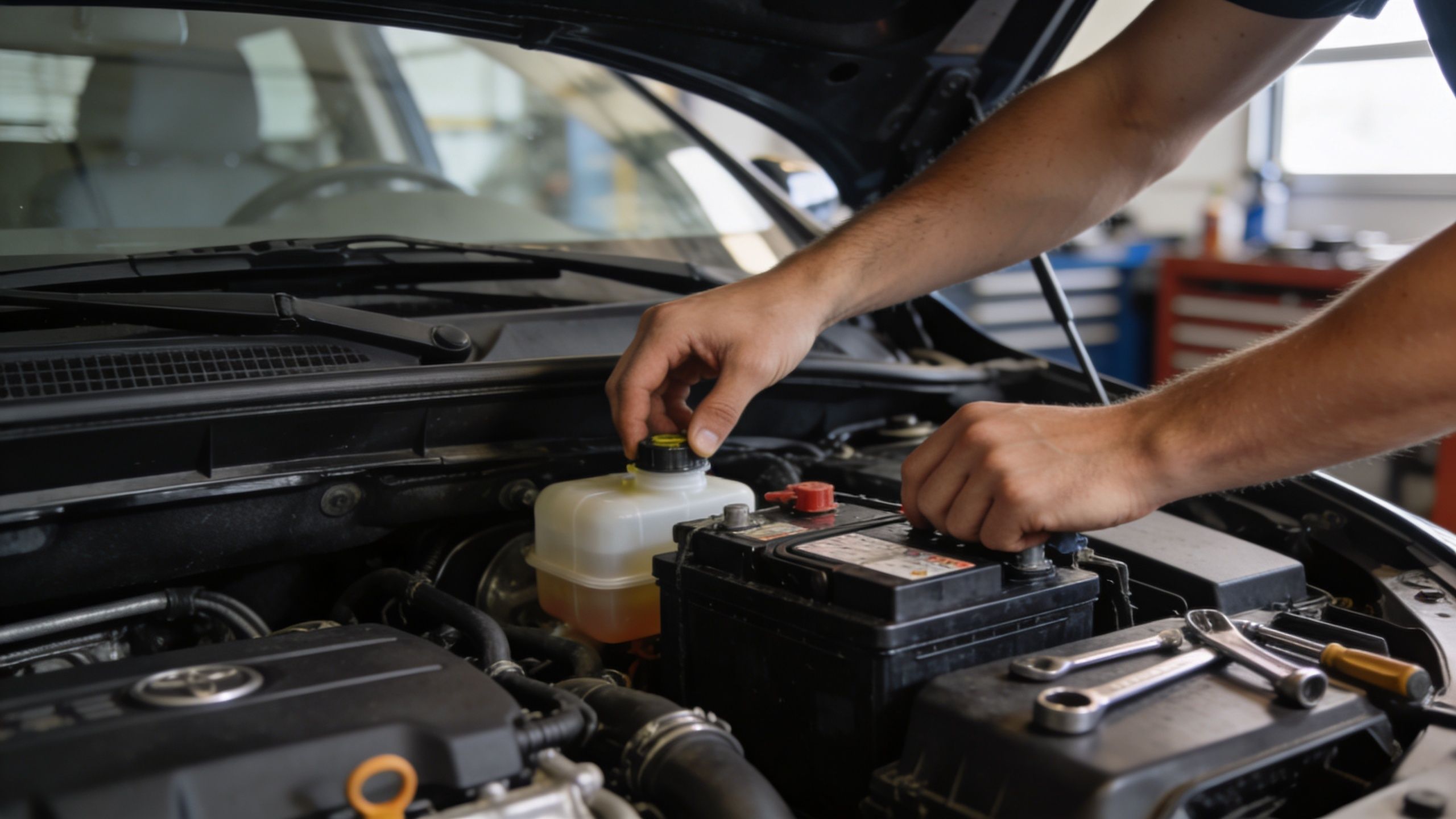
The checklist that helps most
Start with the obvious one. If the Check Engine light is on, deal with that first. A smog test is not the place to “see what happens.”
Then work through the basics:
- Drive the car before the test: A normal drive helps the engine and exhaust systems reach stable operating temperature.
- Don't disconnect the battery right before inspection: That can reset readiness monitors and leave the vehicle unprepared for OBD-II testing.
- Handle overdue maintenance: Old spark plugs, neglected filters, or unresolved drivability issues can contribute to emissions problems.
- Pay attention to how it runs: Rough idle, hesitation, fuel smell, or poor acceleration often point to a problem worth checking before the appointment.
What drivers often get wrong
A common mistake is fixing the symptom instead of the cause. Someone sees a warning light, clears the code, and heads straight to the station. The light may stay off for a little while, but the readiness monitors often won't be complete. That's a setup for frustration.
Another mistake is waiting until registration is almost due. If the car needs diagnosis, parts, or follow-up driving to reset monitors, the clock starts to matter fast.
For a broader maintenance mindset before any inspection appointment, this guide on how to pass vehicle inspection lines up well with what experienced shops see every day.
A practical pre-test routine
If the car has been running normally and no warning lights are on, keep it simple:
- Check the dashboard first thing. No active warning lights should be ignored.
- Drive it normally before the appointment. Short cold trips right before testing aren't ideal.
- Bring the DMV paperwork. It avoids front-counter confusion.
- Ask questions before the test starts. If you recently had repairs or battery work, say so.
If your car only makes short local trips, give it some normal road time before inspection. Emissions systems tend to behave better when the vehicle has been fully warmed up and driven steadily.
Preparation doesn't guarantee a pass, but it does remove the most avoidable reasons people fail.
Common Failures and Your Next Steps
You leave the station expecting a quick pass, then the report says your car failed. That usually means one thing. The test found a specific emissions problem that can be diagnosed and repaired.
In Turlock, the failures I see most often come down to a short list. A check engine light is on or recently cleared. Readiness monitors are not set after battery work or code clearing. The engine has a misfire, fuel-control problem, bad oxygen sensor, or a catalytic converter issue that needs confirmation before anyone starts replacing parts.
The failure points shops see most
A smog failure report usually gives you a good starting point. Here are the patterns that come up most often and what they usually lead to:
| Component/Issue | Symptom | Typical Solution |
|---|---|---|
| Check Engine light or stored fault | Warning light on, pending or active code | Diagnose the code and repair the underlying fault |
| Oxygen sensor problem | Poor fuel control, possible mileage drop, emissions fault | Test sensor operation and replace if faulty |
| Catalytic converter issue | Emissions remain high after combustion | Inspect converter efficiency and repair related causes |
| Readiness monitors not complete | Recent code clearing or battery disconnect | Complete proper drive cycle before retesting |
| Fuel or ignition system problem | Rough running, hesitation, incomplete combustion | Diagnose misfire or fuel-control issue and repair |
One caution from the repair side. A failed test does not automatically mean the catalytic converter is bad. Many converters get blamed for problems caused by a misfire, vacuum leak, or fuel-trim issue upstream. Good diagnosis matters because the expensive part is not always the failed part.
What happens after a fail
The technician will hand you a Vehicle Inspection Report, or VIR. Start there. It tells you whether the car failed because of fault codes, incomplete monitors, or another emissions-related problem.
Then take these steps:
- Read the VIR before approving repairs. The report usually narrows the issue faster than guesswork.
- Ask whether the shop does diagnosis and repair. A test-and-repair station can save time when the cause is not obvious.
- Fix the actual fault. Clearing codes without repair often leads to another failure and more delay.
- Plan for drive time before the retest. Some vehicles need normal driving after repairs before the monitors return to ready.
If you want a plain-English walkthrough, this guide on what to do after a failed emission test covers the repair and retest process well.
What not to do after failing
Do not buy parts based on a quick internet search. Do not assume one code gives the full answer. And do not wait until your registration deadline is right on top of you.
A lot of emissions failures are connected. A misfire can overheat and damage a catalytic converter. An intake leak can throw off fuel trims and trigger sensor-related codes. That chain reaction is why experienced shops test before replacing parts.
Most smog failures are repair problems, not car-replacement problems.
That is the part many drivers need to hear. A fail result is frustrating, but it is usually manageable. Read the VIR, get the problem diagnosed correctly, make the repair, and come back for the retest with enough time for the monitors to reset if needed.
If the car has had recurring warning lights, rough running, recent battery replacement, or recent emissions work, tell the shop up front. Those details can shorten diagnosis time and help avoid paying twice for the same path.