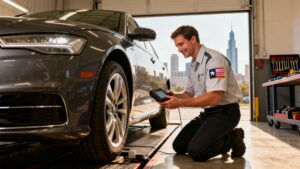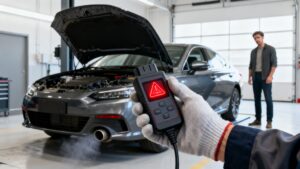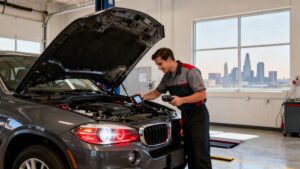
If you’ve been driving in Texas for a while, you know the old routine: the annual trip to get your vehicle inspected and slap a new sticker on the windshield. Well, that whole system is changing. As of January 1, 2025, those mandatory annual safety inspections are a thing of the past for most cars.
Instead, the state is rolling out an inspection program replacement fee that you'll pay when you register your vehicle. The one big exception? Emissions testing is still required in 17 specific counties, and yes, that includes us here in Dallas.
The New Era of Texas Vehicle Inspections

This major shift in Texas car inspection laws has left a lot of drivers wondering what they need to do to stay legal on the road. The single-sticker system that bundled your safety inspection and registration is gone for most of us driving non-commercial vehicles. While this change definitely simplifies things, it also puts more responsibility right back on you, the owner.
Think of it this way: the old system was like a required annual physical for every car in the state. The new approach is more like a specialized lung function test, but only for those living in specific areas (the counties with emissions testing) where air quality is a top concern. For everyone else, that "physical" is now optional, even though it's still a very good idea.
How The Law Changed
This all comes from a decision made by the Texas Legislature back in 2023. House Bill 3297, signed into law by Governor Greg Abbott, is what officially got rid of the mandatory annual safety checks for most non-commercial vehicles starting January 1, 2025.
With the Texas Transportation Department reporting a mind-boggling $51.4 billion in economic losses from car crashes in 2021 alone, it’s clear why the state is emphasizing that drivers are responsible for their own vehicle's safety. This new setup means that even though the state isn't forcing you to get a safety check, keeping your car in roadworthy condition is more important than ever.
Here at Kwik Kar in Dallas, this change means we're doubling down on what we do best: providing thorough, voluntary safety checks alongside your regular oil changes and repairs.
Key Takeaway: Just because mandatory safety inspections are gone doesn't mean safety is any less critical. It simply means the responsibility to check your brakes, tires, lights, and other vital components now rests squarely on your shoulders.
Comparing The Old And New Systems
To help you get a clear picture of what’s changing, let's break down the differences between the old rules and the new ones. This table lays out what's been removed, what's staying, and what's new for Texas drivers.
Texas Inspection Laws Before and After The Change
| Inspection Aspect | Law Before The Change | Law From 2026 Onward |
|---|---|---|
| Annual Safety Inspection | Mandatory for nearly all vehicles | Eliminated for most non-commercial vehicles |
| Emissions Testing | Required in 17 designated counties | Still required in the same 17 counties |
| Registration Fee | Standard registration fee + inspection fee | Standard registration fee + a $7.50 replacement fee |
| Windshield Sticker | Two stickers (registration & inspection) or one combined sticker | Only the registration sticker is required |
Beyond these updated state rules, it's a good reminder that every car owner must still carry proper personal auto insurance to stay legal and protect themselves from the unexpected. In this new era, being diligent about both your car's maintenance and your insurance coverage is absolutely key.
Safety Checks Versus Emissions Testing
To get a handle on the Texas car inspection laws, you first need to understand one crucial difference: the safety check versus the emissions test. While the state's mandatory annual safety inspection is going away for most of us in 2025, the emissions test is sticking around—and it’s a must-pass for registering your vehicle in certain counties, including Dallas. Mixing these two up is an easy way to cause registration headaches and a lot of unnecessary stress.
Think of it this way: a safety check is like your car’s annual physical. A mechanic does a hands-on, walk-around look at all the essential gear that keeps you safe on the road. They’re checking things like your brakes, tires, lights, horn, and wipers to make sure everything is in good working order.
An emissions test, however, is more like a digital health scan for your engine. It has nothing to do with your tire tread or whether a blinker is out. Instead, a certified technician plugs a scanner right into your car’s On-Board Diagnostics (OBD-II) port to see how well its pollution control systems are doing their job.
The Purpose Of A Safety Inspection
The whole point of the traditional safety inspection was to spot obvious mechanical problems before they could turn into an accident. Inspectors were looking for those visible issues that might affect your ability to control the car or be seen by other drivers.
A typical safety checklist zeroes in on a few key areas:
- Braking System: Making sure your brakes have the power to stop your vehicle when you need them to.
- Tires: Checking for decent tread depth (at least 2/32 of an inch) and no major damage.
- Lights: Verifying that all your headlights, tail lights, brake lights, and turn signals work correctly.
- Horn: A quick press to confirm it’s loud and clear for alerting others.
- Wipers: Ensuring they can effectively clear your windshield in a downpour.
Even with the state mandate going away, these checks are still the bedrock of responsible car ownership. If you're curious about what a full, professional check-up should cover, you'll find our detailed vehicle inspection checklist very helpful.
With the new Texas car inspection laws, the responsibility for keeping these safety items in good shape now falls squarely on you, the owner. It’s not about passing a test anymore; it's about being proactive to keep your car safe and prevent accidents.
How An Emissions Test Is Different
While a safety check is a visual, mechanical process, an emissions test is almost completely digital. This test is mandatory for gasoline-powered vehicles between 2 and 24 years old that are registered in one of the 17 designated counties struggling with air quality.
During this test, the technician isn't concerned with your car's physical parts. They are tapping into its computer to read data from different sensors and systems.
The scanner is looking for two main things:
- Diagnostic Trouble Codes (DTCs): These are basically error codes. Your car's computer logs a DTC when it finds a problem with a part related to emissions. If your "Check Engine" light is on, you’re almost guaranteed to fail.
- Readiness Monitors: The OBD-II system runs its own routine self-checks on various emissions components. The test confirms that these self-checks have been completed, which signals to the state that your car’s systems are reporting in and working as designed.
The process is fast, usually over in just a few minutes. It’s a simple way to confirm that your vehicle's pollution-fighting gear—like the catalytic converter and oxygen sensors—are doing their part. That's precisely why it's still required in populated areas like Dallas County; it’s a vital tool for keeping our air cleaner.
Which Texas Counties Still Require Inspections
So, the old statewide safety inspection is gone for most of us, but don't assume you're completely off the hook. The new Texas car inspection laws kept a very important rule in place for vehicles in certain urban and suburban areas: the annual emissions test. This is where your home address really matters.
If your car is registered in one of 17 specific Texas counties, you still have to pass an annual emissions test before you can renew your registration. This rule is all about tackling air pollution where it's most concentrated, making sure vehicles in densely populated areas aren't pumping out excessive smog.
The 17 Affected Counties
The state didn't just pick these counties out of a hat. The list targets major metropolitan areas where air quality is a top priority for meeting federal clean air standards.
To make it simple, here’s a quick-reference table of the counties where annual emissions inspections are still mandatory.
| County Name | Emissions Test Required? | Applies To |
|---|---|---|
| Brazoria | Yes | Gasoline vehicles 2-24 years old |
| Collin | Yes | Gasoline vehicles 2-24 years old |
| Dallas | Yes | Gasoline vehicles 2-24 years old |
| Denton | Yes | Gasoline vehicles 2-24 years old |
| El Paso | Yes | Gasoline vehicles 2-24 years old |
| Ellis | Yes | Gasoline vehicles 2-24 years old |
| Fort Bend | Yes | Gasoline vehicles 2-24 years old |
| Galveston | Yes | Gasoline vehicles 2-24 years old |
| Harris | Yes | Gasoline vehicles 2-24 years old |
| Johnson | Yes | Gasoline vehicles 2-24 years old |
| Kaufman | Yes | Gasoline vehicles 2-24 years old |
| Montgomery | Yes | Gasoline vehicles 2-24 years old |
| Parker | Yes | Gasoline vehicles 2-24 years old |
| Rockwall | Yes | Gasoline vehicles 2-24 years old |
| Tarrant | Yes | Gasoline vehicles 2-24 years old |
| Travis | Yes | Gasoline vehicles 2-24 years old |
| Williamson | Yes | Gasoline vehicles 2-24 years old |
If you live in Dallas, Collin, Denton, Tarrant, or any of the other counties on this list, getting that "pass" on your emissions test is a must-do for renewing your registration.
This requirement was specifically kept in place when HB 3297 was passed in 2023. The law eliminated most safety-only inspections but preserved these critical emissions tests. If you're curious about the legislative history, you can explore why these counties were singled out for continued testing.
Vehicles Subject to Emissions Testing
Now, not every single car in these 17 counties needs an emissions test. The rules are specific, targeting the most common gasoline-powered passenger vehicles you see on the road every day.
Your vehicle needs an annual emissions test if it checks these boxes:
- It's a gasoline-powered vehicle.
- It's between 2 and 24 years old.
- It is registered in one of the 17 designated counties.
So, if you drive a 10-year-old SUV in Dallas County, you definitely need an emissions test. But if you have a brand-new car, a classic that’s 25 years or older, or a diesel truck, you're exempt from this particular test.
This flowchart breaks it down nicely, showing how the new Texas car inspection laws work.

As you can see, the very first question is where your car is registered. Geography is now the key factor for millions of Texas drivers.
Exemptions And Special Cases
While the rules for most passenger cars are pretty clear, there are always some exceptions. It's good to know these to avoid any confusion at inspection time.
Important Note: Even if your vehicle is exempt from an emissions test, you will still have to pay the statewide $7.50 inspection program replacement fee when you renew your registration. This fee applies to almost every vehicle on the road.
The following vehicles are generally exempt from the annual emissions test, even if they live in one of the 17 counties:
- Brand-New Vehicles: Your car is exempt for its first two years on the road.
- Older Vehicles: Any car or light truck that is 25 years old or older gets a pass.
- Diesel-Powered Vehicles: These engines have their own standards and aren't subject to the typical OBD-II emissions test.
- Motorcycles: All motorcycles are completely exempt from emissions testing.
- Commercial Vehicles: This is a big one. Commercial vehicles are not exempt from inspections. They are still required to get an annual comprehensive safety inspection, which might also include an emissions test depending on the vehicle and location.
For the vast majority of us driving around places like Dallas County, it really just boils down to the age of our gasoline-powered car and that required annual emissions test.
Understanding The New Fees And Penalties
With the new Texas car inspection laws, there are some new fees and potential penalties to know about. Getting a handle on them is the key to a stress-free registration renewal. The single biggest change is a new statewide fee every driver now pays, even if their vehicle doesn't need an emissions test.
This new cost is the $7.50 inspection program replacement fee, and it’s tacked right onto your annual registration. It's easy to think of this as an inspection charge, but it’s actually the state's way of replacing the money it used to collect from the old inspection system.
Even though mandatory safety checks are a thing of the past for most of us, this fee keeps funding in place for state mobility projects and air quality programs. Before this change, every non-commercial vehicle needed a yearly safety check to get a registration sticker. That requirement disappears for most on January 1, 2025, but the $7.50 "inspection program replacement fee" affects every driver at renewal time. As one analysis notes, these funds are redirected without replacing the old $7 fee you paid at the shop; you can see more on how these funds are allocated on YouTube.
Costs for Emissions Testing Counties
If you live in Dallas, Collin, or one of the other 17 emissions-testing counties, you have one more cost to factor in: the price of the emissions test itself. This fee is paid directly to the inspection station, like Kwik Kar, that runs the test.
The cost for an emissions test can vary by county and shop, but it’s a completely separate charge from the statewide $7.50 replacement fee. It's crucial to understand the difference:
- $7.50 Replacement Fee: Everyone pays this to the state when they renew their registration.
- Emissions Test Fee: Only drivers in the 17 affected counties pay this, and it goes directly to the inspection station.
Once you pass, your results are zapped electronically to the Texas Department of Motor Vehicles. This is all part of the "Two Steps, One Sticker" system, tying your passed test directly to your ability to renew your registration. Without that electronic "pass," your renewal is blocked.
Penalties for Non-Compliance
Ignoring these rules will absolutely cause you a headache. The main penalty comes from driving with an expired registration, which is now directly linked to your emissions test status if you're in an affected county.
If your vehicle is registered in an emissions county and you don’t get a passing test, you simply cannot renew your registration. Driving with an expired sticker is a traffic violation that can lead to fines and a lot more trouble.
The penalties for an expired registration aren't fun and can include:
- Fines: A ticket for an expired registration can set you back up to $200, plus court fees.
- Impoundment: In some situations, law enforcement can even have your vehicle towed and impounded for a major lapse in registration.
- Registration Holds: You won't be able to complete your renewal until you fix the problem—which means getting a passing emissions test.
The bottom line is simple: for drivers in Dallas and other designated areas, passing your emissions test is not optional. It’s a required step in the registration process, and skipping it is a surefire way to end up with fines and a major inconvenience.
Your Guide To Passing The Emissions Test

Failing your emissions test can be a real headache. It's frustrating, time-consuming, and throws a huge wrench in your plans to get your registration renewed. But you can seriously boost your chances of passing the first time with just a little prep work.
The trick is to tackle potential problems before you ever pull into the inspection station. Think of it like studying for a test—you wouldn’t just walk in cold and hope for the best. Taking a few simple steps can be the difference between a quick pass and a stressful failure.
A Simple Pre-Test Checklist
Before you make your appointment, it’s a good idea to run through this quick checklist. These pointers directly address the most common reasons cars fail the On-Board Diagnostics (OBD-II) test.
- Address Your Check Engine Light: This one is a big deal. If your "Check Engine" light is on, it's an automatic fail. That light is your car's computer telling you it has found a problem, and that problem needs to be diagnosed and fixed by a qualified technician first.
- Warm Up Your Vehicle: Make sure you drive your car for at least 15-20 minutes right before you get to the station. This gives your catalytic converter—a critical emissions control part—time to heat up to its ideal temperature where it works most efficiently.
- Avoid Disconnecting Your Battery: If you’ve recently disconnected your battery or it died, hold off on the test. Unhooking the battery resets your car's computer and clears its "readiness monitors." The emissions test needs to see that these monitors have run their self-checks, which only happens after a period of normal driving.
Following these tips gives your car its best shot at passing, allowing the testing equipment to get a clean, accurate reading from all its systems.
Crucial Tip: Never just clear a "Check Engine" light code without actually fixing the underlying issue. The code will almost always come back, and you'll be right back at square one with a failed inspection.
What To Do If You Fail
Even with the best preparation, a failed test can happen. If you get a failed Vehicle Inspection Report (VIR), don’t panic. The report isn’t a punishment; it’s a roadmap for the repair. It will list specific Diagnostic Trouble Codes (DTCs) that tell a technician exactly what went wrong.
For a deeper look at what these codes mean, you can check out our guide on the Texas emissions test.
Your next move should be to bring your vehicle and the VIR to a repair shop you trust, like Kwik Kar. Our ASE-certified technicians can read the codes, make the right repairs, and make sure the problem is solved for good.
Once the work is done, you can have the vehicle re-tested. The Texas car inspection laws are there to pinpoint vehicles that are polluting, so a failed test is just your car’s way of asking for a little help. By taking these clear, manageable steps, you can turn a failure from a major headache into a straightforward fix.
Your Trusted Dallas Partner For Safety And Compliance
Texas car inspection laws have changed, and it’s understandable if you’re feeling a bit confused about the big shift away from mandatory safety inspections. While the state’s rules are different now, one thing hasn't changed a bit: the need to keep your vehicle safe on Dallas roads. This is where Kwik Kar Oil Change and Auto Care comes in as your local partner for both safety and compliance.
We know that even though a state-mandated safety check is no longer required for most cars, real peace of mind is priceless. That’s exactly why we offer thorough, voluntary safety checks to give you a clear, honest picture of your vehicle's health. You can easily get this done with your regular oil change for total convenience, ensuring your car isn't just compliant, but truly roadworthy.
Your Go-To For Dallas Emissions Testing
If you’re a driver in Dallas County, passing an annual emissions test is still a non-negotiable part of renewing your registration. Our ASE-certified technicians are fully equipped and certified by the state to perform these mandatory OBD-II emissions inspections quickly and correctly.
We'll make sure you meet all the local requirements so you can get your registration renewed without a single headache. We see ourselves as more than just an inspection station; we're your proactive partner in keeping your car safe, compliant, and reliable.
Our goal is simple: to make car care straightforward and stress-free. From transparent pricing to our commitment to explaining things clearly, we want you to feel in control. Our team will walk you through any issues we find in plain language and suggest practical fixes, never pressuring you into repairs you don't need. To get a better handle on the process itself, take a look at our helpful guide to car inspection in Texas.
More Than Just An Inspection
Your vehicle is a complex machine, and its safety depends on more than passing one test. Our approach combines the required compliance checks with a genuine focus on preventive maintenance to keep you ahead of any potential problems.
Here’s how we help you stay on the road safely:
- Convenient Service: We're open seven days a week to work around your busy schedule.
- Expert Technicians: Our team has the training and modern tools to service all makes and models.
- Transparent Communication: We always explain the "what" and the "why" behind every service we recommend.
Choosing Kwik Kar in Dallas means picking a team that truly cares about your safety. Let us handle your emissions test and give your car a thorough safety check-up, so all you have to worry about is the road ahead.
Frequently Asked Questions
Even with the new "Two Steps, One Sticker" system, we know there can be some confusion. It's a big change, and it's totally normal to have questions. Here are a few of the most common ones we hear from Dallas drivers, with some quick, straightforward answers.
What Happens To My Old Inspection Sticker?
This is probably the number one question we get. With the new system, that separate inspection sticker is a thing of the past. Once you pass your emissions test and your registration is renewed, your single registration sticker is all you need on your windshield.
So, what should you do with the old one? You can just peel it right off. There’s no reason to keep it, and removing it cleans up your windshield and gets rid of unnecessary clutter.
Can I Still Get A Safety Check At Kwik Kar?
Absolutely. While the state has done away with the mandatory annual safety inspection for most cars, we still firmly believe these checks are crucial for keeping you and your family safe on the road.
You can always swing by Kwik Kar for a voluntary, comprehensive safety inspection. A lot of our customers find it easiest to just add it on during their regular oil change. It's a simple way to get a professional set of eyes on your brakes, tires, lights, and other critical parts for total peace of mind.
What If My Check Engine Light Is On?
This is a big one. If your "Check Engine" light is on, your vehicle will automatically fail the emissions test. There are no ifs, ands, or buts about it.
The "Check Engine" light is your car's way of telling you its On-Board Diagnostics (OBD) system has found a problem, which is very often related to the emissions system. You have to get the root cause diagnosed and fixed by a qualified technician before you try to get your car tested. Just clearing the code won't solve it; the light will almost certainly come back on, and you'll just fail again.
How Soon Before Registration Should I Get My Test?
The state gives you a generous window: you can get your emissions test done up to 90 days before your registration is set to expire. This gives you a nice cushion to deal with any repairs if your car happens to fail the first time around.
Don't wait until the last week. If you fail and need a repair, you could be stuck with an expired registration while you're waiting on parts or an appointment. We always recommend getting the test done about a month before your renewal date. It's the smartest way to ensure a smooth, stress-free process.
Don't let vehicle maintenance and state requirements become a headache. The ASE-certified technicians at Kwik Kar Oil Change and Auto Care are here to handle your emissions testing, voluntary safety checks, and any other services you need to drive with confidence. Schedule your appointment online today and let our team take care of the rest.