It’s a feeling no car owner wants: you open the door after a rainstorm and find a puddle on your floor mat. Or maybe you notice a strange dampness on the passenger side, even on a perfectly sunny day.
Finding water in a car is an unwelcome surprise, and your mind immediately jumps to the worst-case scenarios—mold, rust, and costly electrical problems.
Why Is There Water in My Car
Discovering water inside your vehicle is definitely frustrating, but before you panic, it’s important to know that the cause is often simpler than you might think. The key is figuring out where the water is coming from, and that’s the first step toward a real solution.
Think of your car's seals and drains like the gutters and weatherstripping on your house. They're designed to channel water away, but over time, exposure to the elements, temperature swings, and simple wear and tear can cause them to fail. When they do, water finds a way in.
The Most Common Entry Points for Water
Most of the time, water inside a car can be traced back to just a handful of common issues. Once you know what to look for, you can start playing detective and narrow down the possibilities.
Here are the most frequent culprits we see at the shop:
- Clogged AC Drain Tube: Your car's air conditioning system is great at pulling humidity out of the air. That moisture has to go somewhere, and it's supposed to drip harmlessly out of a tube underneath your car. If that tube gets clogged with leaves or road grime, the water backs up and spills right onto your passenger-side floor.
- Failing Door and Window Seals: Those rubber gaskets around your doors and windows get brittle and crack with age and sun exposure. This lets rainwater sneak past the seal, trickling down into the door panels or onto your floor mats.
- Sunroof Drain Issues: Your sunroof has tiny drainage channels designed to carry rainwater away. When these tubes get clogged with debris, the water has nowhere to go but overflow into your car, soaking your headliner, pillars, and seats.
- Compromised Windshield Seal: A windshield that was poorly installed or has an old, decaying seal can develop small gaps. During a heavy rain, water can leak through these gaps, run behind the dashboard, and pool in the front footwells.
A damp carpet might not seem like a big deal, but it can quickly escalate. In just 24-48 hours, mold and mildew can start growing in the carpet and padding, leading to musty smells and potential health issues.
Knowing these potential entry points helps you move from feeling overwhelmed to methodically tracking down the problem. Does the water only show up after it rains? Is the passenger floor wet even on dry days when you’ve been running the AC? Each clue brings you closer to the source and puts you on the right path to a dry, healthy vehicle.
To make diagnosis even easier, here’s a quick reference table.
Quick Guide to Common Car Water Leaks
Use this table to quickly identify the potential source of the leak based on where you're finding water and other key signs.
| Leak Source | Where You'll Find Water | Telltale Symptoms |
|---|---|---|
| Clogged AC Drain | Passenger-side floor, usually near the front. | Water appears on dry days, especially when you've been using the air conditioner. |
| Door/Window Seals | Floor mats, along the door sills, or inside door panels. | Dampness appears after rain or a car wash. You may see cracked or brittle rubber. |
| Sunroof Drains | Headliner (often stained), front or rear seats, floor. | Wet spots on the ceiling after rain. Water may drip from the overhead console. |
| Windshield Seal | Front driver or passenger footwells, top of the dashboard. | Water appears after heavy rain, especially when driving or parked facing downhill. |
| Clogged Cowl Drains | Front footwells, under the dashboard. | Water appears after rain. You may notice leaves/debris in the area below the wipers. |
| Trunk/Taillight Seal | Inside the trunk, specifically in the spare tire well. | Puddles in the trunk after rain. The trunk carpet feels damp or smells musty. |
By matching your car's symptoms to this chart, you can get a much clearer idea of what you're dealing with, making the conversation with your mechanic more productive.
How to Trace a Car Water Leak Like a Pro
Finding water in your car is the easy part. The real trick is playing detective to figure out how it got there. Tracing a leak is all about elimination, and by working through the possibilities one by one, you can often find the culprit yourself. This can save you a good bit of time and money on diagnostics at the shop.
Water always plays by the rules of gravity, so the number one rule of leak hunting is to start high and work your way down.
Before you begin your investigation, grab a few simple tools: a bright flashlight, a roll of paper towels, and a water source like a garden hose or even just a bottle of water. Your mission is to recreate the leak in a controlled way, making it much easier to see the entry point in action.
Start Your Search at the Top
The highest points on your vehicle are the most likely suspects. We're talking about the sunroof and the roof rack. These areas live out in the open and rely on complex seals and drainage systems that can get worn out or clogged up over time.
Begin with a good old-fashioned visual check. Pop open your sunroof and take a close look at that rubber seal framing the glass. Does it look dried out, cracked, or is it starting to peel away? Look inside the channel or trough that runs around the opening for any gunk like leaves, pine needles, or dirt. This channel is meant to catch water, but the tiny drain holes in the corners get clogged easily.
Next, it’s time for a simple water test:
- Locate the Drains: You'll usually find small drain holes in the front corners of the sunroof channel. Some cars have them in the rear corners, too.
- Pour Water Slowly: With the sunroof open, carefully pour a little water into the drain channel itself. Be sure not to get any on the headliner.
- Check for Proper Drainage: The water should drain right down the hole and exit underneath the car, typically just behind the front wheels. If you see the water pooling up or draining like molasses, you’ve found a clogged sunroof drain. This is an incredibly common cause of a wet interior.
If that drain is backed up, the water has to go somewhere. It will overflow the channel, soak into your headliner, and then trickle down the A-pillars (the posts on either side of your windshield), eventually creating puddles in your front footwells.
Inspecting Doors and Windows
If the sunroof gets a clean bill of health, your next stop should be the seals around the doors and windows. This rubber gasket material, called weatherstripping, is your car's primary defense against rain. After years of sun and use, it can get hard and lose its seal.
Run your hand along the entire length of the door seals. You're feeling for any spots that feel stiff, flattened, or have obvious tears. Pay extra attention to the top corners of the door frames—that's a prime spot for water to sneak in.
To confirm a bad seal, you’ll need a helper. Have a friend spray a gentle stream of water from a garden hose around the outside of the closed door while you sit inside with your flashlight and paper towels. Watch and feel carefully for any drips or trickles getting past the seal.
This flowchart gives you a great visual path to follow as you narrow down the source of the water.
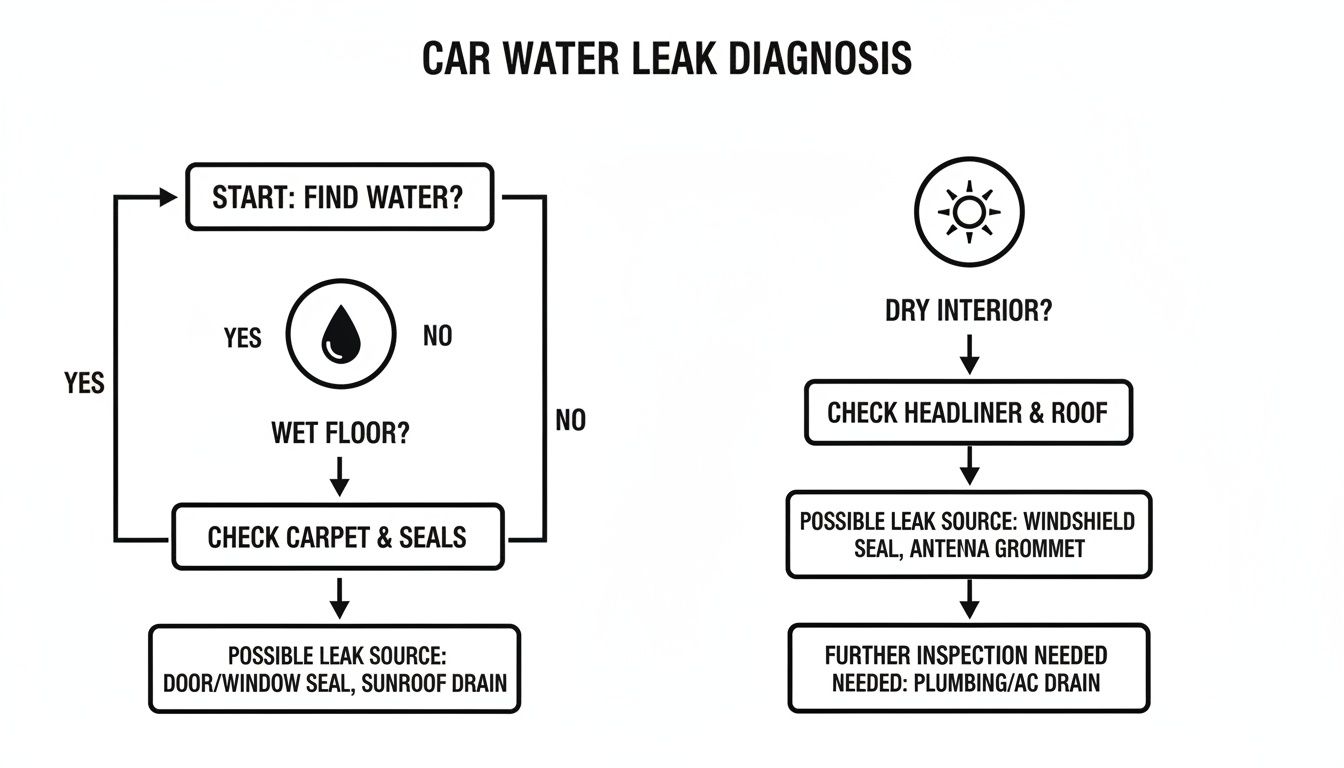
As you can see, simply noting where the water is and when it shows up can point you directly to the problem area.
Checking Lower Body and Trunk Leaks
If the top half of your car is dry, it's time to look lower. Two common but easily forgotten spots are the windshield cowl and the trunk.
The cowl is that plastic-grated area at the base of your windshield where the wipers rest. It’s supposed to channel rainwater away safely, but the drains here are magnets for leaves. Once clogged, rainwater can pour over the firewall and directly into the cabin, soaking your front carpets.
Pro Tip: If you're finding water on the passenger side floor, even when it hasn't rained, you likely have a clogged AC evaporator drain. Your AC system pulls humidity out of the air, and that condensation is supposed to drain out under the car. If the drain tube is blocked, it backs up right into the cabin.
Last but not least, check the trunk. Open it up and pull back the carpeting, paying special attention to the spare tire well—it's amazing how much water can hide in there. Inspect the big rubber seal around the trunk lid and the gaskets that seal your taillights to the car's body. These are both notorious for causing leaks in the rear of a vehicle.
The Hidden Culprit: A Clogged AC Drain
It’s one of the most confusing things to find in your car: a wet floorboard when it hasn’t rained a drop. If you’ve discovered a mystery puddle on your passenger-side floor on a perfectly dry day, your air conditioning system is the most likely suspect. It’s a classic case of a system working just as it should, but with one little snag in the process.
Think of your car's AC as a powerful dehumidifier on wheels. As it chills the air in your cabin, it pulls out a surprising amount of moisture. This condensation is supposed to collect in a drip tray and then flow out of the car through a small rubber drain tube that pokes out from underneath. When everything works right, you’ll never even notice it.
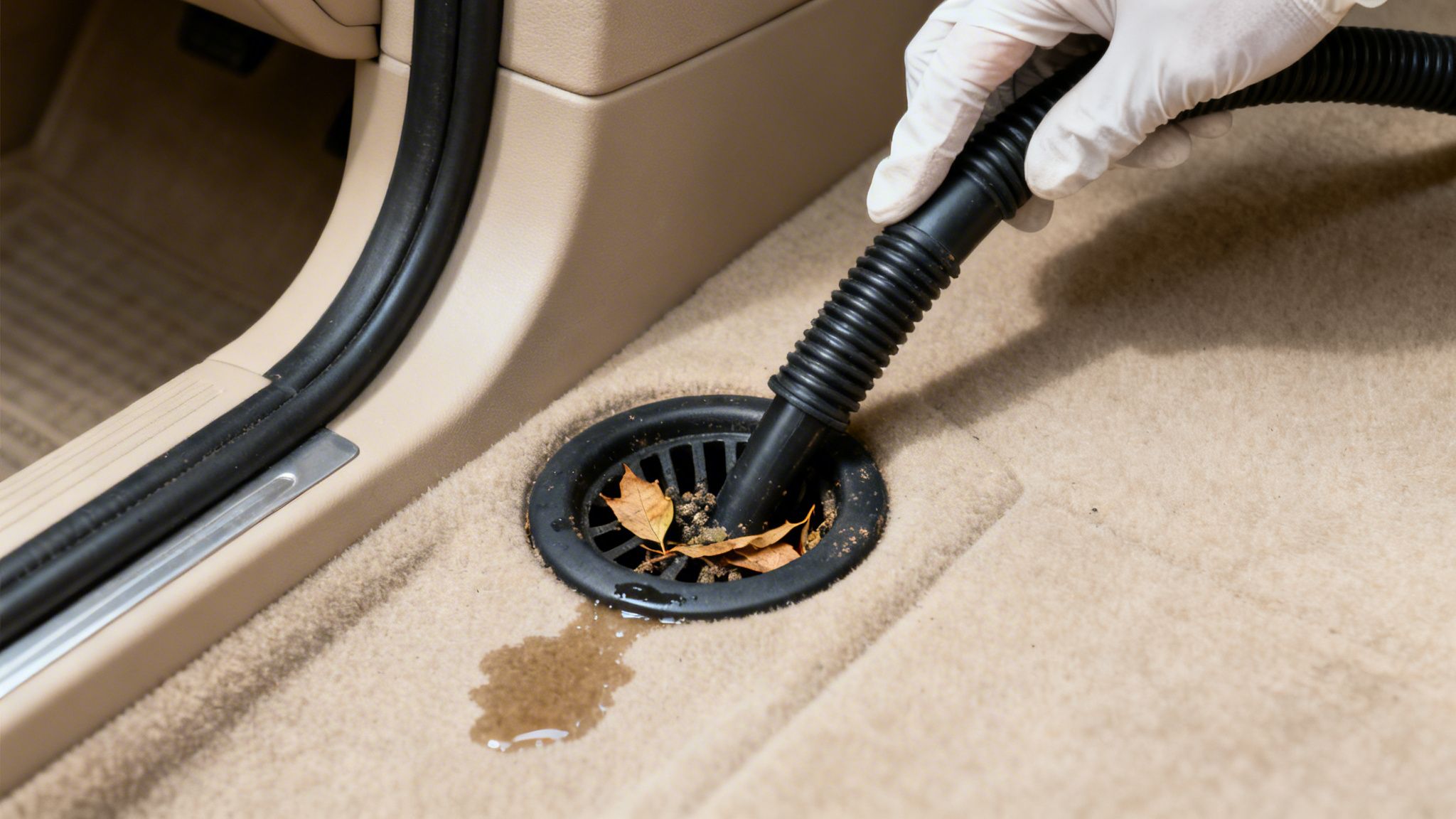
The problem is, that little drain tube is exposed to all the grime the road can throw at it. Over time, it can get plugged up with dirt, leaves, and other debris. When that happens, the water has nowhere to go. The drip tray simply fills up and overflows, spilling that collected water right into your car’s interior.
Symptoms of a Clogged AC Drain
Because this leak has nothing to do with the weather, the signs can be pretty puzzling at first. If you’re seeing these symptoms, though, a clogged AC drain is almost certainly your issue.
- Wet Passenger-Side Carpet: This is the tell-tale sign. The AC evaporator is usually housed behind the dashboard on the passenger side, so this is the first place an overflow will show up.
- A Musty or Mildewy Smell: You might get hit with a funky, damp odor when you first turn on your fan or AC. That’s the smell of stagnant water that’s been sitting in the system.
- Water Shows Up on Dry Days: The leak is tied directly to your AC usage, not rain. If the floor gets soaked after driving on a hot, sunny day, you’ve found your culprit.
A clogged AC drain can cause water to pool inside your vehicle, and it needs to be addressed quickly. If the problem seems too complex to handle on your own, understanding potential car air conditioning repair costs can help you prepare for getting professional help.
How to Locate and Clear the Blockage
For a lot of cars, clearing the AC drain is a task you can manage yourself, saving you a trip to the shop.
- Find the Drain Tube: First, park your car on a flat, safe surface and put the parking brake on. The drain is usually a small rubber hose, often with an L-shaped elbow, that sticks out from the firewall in the engine bay (on the passenger side) or pokes down from underneath the car in that same area.
- Try to Clear It from the Outside: If you can safely get to the end of the tube, try giving the tip a gentle squeeze to break up whatever is clogging it. You can also carefully use a piece of stiff wire (like from a coat hanger), but be cautious not to poke a hole in the hose itself. A quick blast of compressed air can also work wonders.
- Get Ready for Water: Have a towel or pan ready, because a sudden gush of water means you’ve successfully cleared the clog!
Important Takeaway: A clogged AC drain is behind a huge number of interior water leaks. Fixing it isn’t just about getting rid of a soggy carpet; it’s about preventing mold and protecting sensitive electronics that are often hidden under the floor.
If the clog is being stubborn or you just can’t get to the drain tube, don’t hesitate to let a professional handle it. Technicians have the right tools to clear the line safely without causing any damage. For a deeper dive into your car's cooling system, you can also check out our guide on https://www.kwikkarspringvalley.com/automotive-insights/ac-recharge-for-car/.
When Seals and Seams Begin to Fail
While a clogged drain can cause a sudden, messy flood in your car, some of the most frustrating leaks are the ones that sneak up on you. This kind of water intrusion happens slowly, over years, as your vehicle's natural defenses start to break down.
Think of it like this: your car is wrapped in a protective shield of rubber seals, gaskets, and seam sealers. When your car was new, this network was perfectly flexible and watertight. But after years of baking in the sun and enduring rain and cold, those defenses get tired, leading to a slow but certain failure.
This wear-and-tear is just a normal part of any car’s life. The same UV rays that can fade your paint are also doing a number on the rubber seals around your doors, windows, and trunk. Over time, this constant exposure makes the rubber hard, brittle, and cracked. It’s a lot like an old pair of rain boots you forgot outside—once they crack, they’re not keeping anything dry.
The Vulnerability of Sunroofs and Windows
Sunroofs and windows are often the first places to spring a leak, simply because they have so many moving parts and seals. A sunroof isn’t just a sheet of glass; it’s a whole assembly with its own drainage channels designed to guide water away. But those seals are always under pressure.
A study found that weatherstripping can lose up to 50% of its sealing effectiveness after just five to seven years of typical sun and weather exposure. This gradual decay is why a car that was perfectly dry for years can suddenly start showing signs of water in the car after a heavy storm.
When the main seal on your sunroof shrinks or cracks, it lets in more water than the drains can handle. The result is an overflow that drips down and stains your headliner. The same thing happens with the rubber seals along your side windows. As they harden and pull away from the glass, rainwater can trickle down inside your door, soaking the electronics, speakers, and eventually the carpet on your floor.
Invisible Failures in Body Seams
The most maddening leaks are often the ones you can’t see. When a car is built, its metal body panels are welded together. Those seams are then filled with a flexible body seam sealer to make the chassis watertight. You’ll find this sealer along the firewall, in the trunk, and under the car.
Just like rubber, this sealer eventually dries out, cracks, and pulls away from the metal. When that happens, it opens up tiny, hidden pathways for water to get inside.
- Firewall Seams: When seams on the firewall—the panel between the engine and the cabin—fail, water from the cowl area can seep right into the driver and passenger footwells.
- Trunk Channels: The seams inside the channels around your trunk lid are a very common failure point. A leak here usually causes water to pool in the spare tire well, creating a hidden, musty swamp you won't notice until it's too late.
- Floor Pan Seams: While less common, the seams on the underbody of your car can also fail. This allows road spray to be forced up into the cabin while you’re driving on wet roads.
These types of failures are tricky because they don't drip like a normal leak. You just find water mysteriously appearing in the lowest part of the car after it rains.
Identifying Age-Related Seal Failure
Unlike a sudden clog, a seal failure happens gradually. Here’s a quick guide on what to look for when you're inspecting your vehicle for these age-related issues:
| Seal Type | Visual Clues of Failure | Common Leak Locations |
|---|---|---|
| Door Seals | Brittle, cracked, or flattened rubber; visible tearing. | Floor mats near the door sill. |
| Window Seals | Gaps between the rubber and the glass; stiff texture. | Inside door panels, on the floor. |
| Sunroof Seal | Shrunken, cracked, or deformed gasket around the glass. | Headliner, A-pillars, front seats. |
| Trunk Seal | Similar to door seals; look for compressed, hard spots. | Spare tire well, trunk floor. |
| Body Seam Sealer | Visible cracks or gaps in the gray sealer in trunk channels. | Spare tire well, footwells. |
Finding and replacing these worn-out seals is critical to protecting your car's interior, electronics, and resale value from water damage. If you suspect that failing seals are the reason for water in a car, a thorough, professional inspection is the first step toward a dry interior.
Your Emergency Plan After Finding Water in Your Car
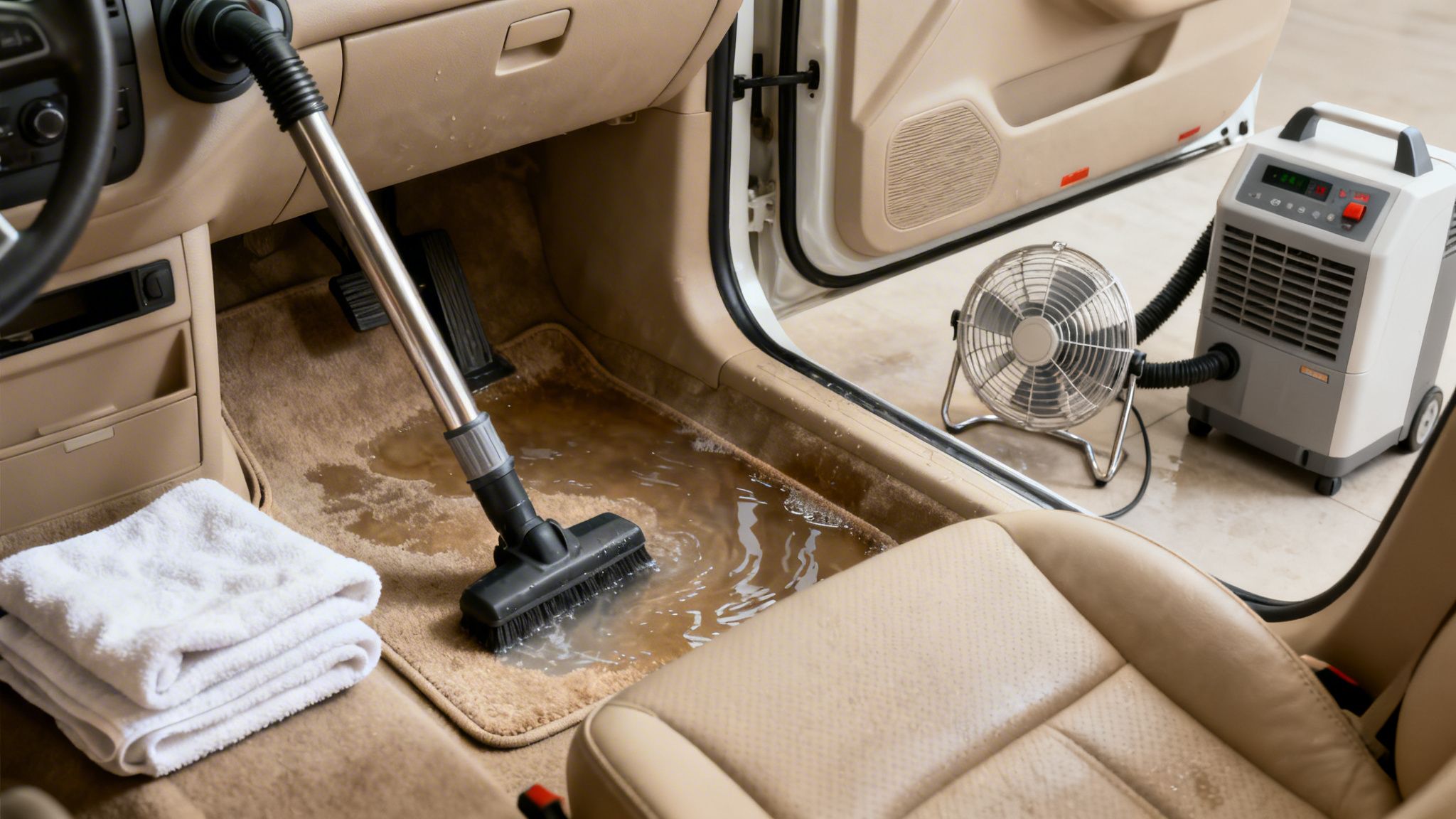
That sinking feeling when you open your car door and find a puddle on the floor is something no driver wants. When you find water, you’re officially in a race against the clock. Moisture is the number one enemy of your car's interior, and moving fast is your best shot at preventing long-term headaches like rust, fried electronics, and nasty mold growth.
Your first priority has to be getting the inside of your car bone dry, and quickly. Mold and mildew can start growing in as little as 24 to 48 hours in the damp, dark environment under your feet. Don't be fooled by just dabbing the surface; the real problem is the thick carpet padding underneath, which soaks up water like a giant sponge.
Step 1: Remove All Standing Water
First things first, you need to get the bulk of that water out of there. If you're dealing with more than just a small damp patch, a few towels aren't going to cut it. A wet/dry vacuum is your best friend for this job.
Go over every wet spot you can find—the carpets, the floor mats, and any part of the seats that got soaked. As you vacuum, press the nozzle down hard into the carpet. This helps squeeze the water out of that hidden padding below. After you’ve sucked up all the water you can, go back over the area with some old towels to blot up any moisture left on the surface.
Step 2: Promote Aggressive Air Circulation
With the puddles gone, it’s time to deal with the dampness you can’t see. To stop mold in its tracks, you need aggressive airflow. If you can, park the car in a garage or another covered spot where you can leave the doors and windows open without worry.
Then, bring in the fans to create a serious cross-breeze.
- Position Box Fans: Get one or two household fans and point them directly at the wet carpet. You need that constant, moving air to pull the moisture out of the carpet fibers and deep into the padding.
- Use a Dehumidifier: This is a pro-level move. If you have a dehumidifier, stick it inside the car and close the doors and windows. It will actively pull moisture right out of the air and the upholstery, cutting your drying time dramatically.
Once the leak is stopped, it's crucial to immediately address any moisture inside your car. Learning how to effectively dry wet carpet fast and prevent mould is vital to prevent long-term damage and unpleasant odors.
Step 3: Prevent Mold and Odors
After a day or two of serious drying effort, the carpet might feel dry when you touch it. Don't trust it. The padding underneath can hold onto dampness for days, and this is the most critical time to stop that musty, mildew smell from taking hold.
An easy, effective trick is to sprinkle a good amount of baking soda over the entire area that got wet. Let it sit for a few hours; it will absorb any leftover moisture and kill odors before you vacuum it all up. If you're really worried about mold, you can lightly spray the area with a 50/50 mix of white vinegar and water to help kill off any remaining spores.
Taking these immediate steps after finding water in your car can absolutely save you from bigger, more expensive problems later on. But if you’ve done all this and still have a stubborn musty smell or damp spots, it’s time to let a professional take a look. Our comprehensive vehicle inspection checklist gives you an idea of the thorough checks a technician will perform to get to the bottom of it.
DIY Fixes vs. Professional Repair at Kwik Kar
After you’ve found the water in your car and dried everything out, the final step is fixing the leak for good. While a do-it-yourself repair might seem tempting, it’s important to know where to draw the line. Choosing between a DIY fix and professional service isn't just about saving a few dollars—it's about protecting your vehicle’s value and your own safety.
Some water issues are perfect for a weekend afternoon project. If you’ve traced the problem back to a simple clog, you can often handle it yourself with some basic tools and a little bit of patience. These are usually fixes that are more about cleaning than complex repair work.
Manageable DIY Car Water Leak Fixes
Empowering yourself with a few key skills can definitely save you a trip to the shop. For many of the most common leak sources, a little routine maintenance is all that’s needed to solve the problem.
- Clearing an AC Drain Tube: This is a top cause of a wet passenger-side floor. You can often clear debris from the tube's exit point with a flexible piece of wire or a quick blast of compressed air.
- Cleaning Sunroof Drains: Pouring a bit of hot water or using compressed air to flush out the small drain holes in your sunroof channels can stop a leaky headliner in its tracks.
- Clearing Cowl Drains: The drains at the base of your windshield are notorious for collecting leaves and gunk. Simply removing this debris by hand can stop water from overflowing into your cabin.
For a closer look at how your AC system works and other common issues that can pop up, check out our guide on Kwik Kar's air conditioning services. Getting familiar with the system can make diagnosing these simple clogs even easier.
When to Trust the Professionals at Kwik Kar
While DIY fixes are great for simple clogs, many leaks call for specialized tools and a level of expertise you only get from experience. Trying a complex repair without the right skills can easily make the problem worse, leading to more extensive damage and a much higher repair bill down the road.
Think of it this way: a professional technician’s experience is like having a detailed map of every hidden path water can take inside your car. They know exactly how water travels and where it pools, letting them find those tricky leaks a simple visual inspection would miss.
You should always bring your car to a professional for these kinds of issues:
- Replacing a Windshield Seal: This is not a job for a tube of DIY adhesive from the auto parts store. A new windshield must be perfectly set and sealed to prevent dangerous leaks and to ensure the glass maintains your car's structural integrity.
- Resealing Body Seams: Finding and properly sealing failed body seam sealer in the trunk or firewall requires knowing exactly where to look and using the correct automotive-grade sealants that will last.
- Fixing Door and Window Seals: Replacing brittle, hardened weatherstripping often involves removing door panels and other components. An improper installation will almost certainly result in a leak that’s even worse than the one you started with.
- Diagnosing Elusive Leaks: If you've tried everything and still can't find where the water is coming from, it’s time to stop guessing. At Kwik Kar, our Dallas-area technicians use specialized diagnostic tools, like smoke machines and ultrasonic leak detectors, to pinpoint the exact entry point without having to tear your car apart.
Bringing your vehicle to Kwik Kar for a water leak diagnostic ensures the problem is fixed right the first time. We don’t just put a patch on the symptom; we get to the root cause, guaranteeing a watertight seal that protects your car’s interior, electronics, and resale value for years to come.
Frequently Asked Questions About Water in a Car
Okay, so you've found water in your car. Now what? It's natural to have a lot of questions running through your mind about the damage and what to do next. Dealing with a soaked interior can feel overwhelming, so we’ve put together some answers to the concerns we hear most often from drivers.
How Long Does It Take for a Car to Dry Out?
This really depends on how bad the situation is. If you just have some light dampness on the surface, you might get it dry within 24-48 hours by using fans to create aggressive airflow and running a good dehumidifier.
However, if water has soaked deep into the carpet and, more importantly, the thick foam padding underneath, you’re looking at a much longer process. Getting that padding bone-dry can easily take several days, and it's critical to be thorough to prevent bigger problems down the road.
Is Water in My Car Covered by Insurance?
The answer is almost always, "it depends." Your specific policy and the cause of the water are the two deciding factors. If the damage was from a covered event, like a flood or a collision that broke a seal, your comprehensive coverage will likely step in to help.
But if the leak is from simple wear and tear—like an old, dried-out sunroof seal or a drain clogged with leaves—it's typically considered a maintenance issue. In those cases, the repair costs are usually not covered by insurance.
Key Insight: The moment you discover significant water in your car, grab your phone and take pictures of everything. Documenting the damage right away and contacting your insurance agent immediately is the best way to understand your coverage options and start the claims process if applicable.
Can Water in a Car Cause Electrical Problems?
Yes, absolutely. This is one of the most serious risks when water gets inside your vehicle. Modern cars are packed with complex electronics, and many of the wiring harnesses, computers, and sensors are routed right under the carpet.
When those components are exposed to moisture for any length of time, corrosion begins to form on connectors and terminals. This can lead to short circuits, phantom warning lights, and all sorts of frustrating system failures that are often difficult and expensive to track down and fix.
Will the Musty Smell Ever Go Away?
That musty, mildewy smell is a dead giveaway that mold has started to grow. If you manage to dry out the interior completely and quickly, that odor should disappear along with the moisture.
If the smell lingers, it's a sure sign that moisture is still trapped somewhere, and the carpet padding is the most likely culprit. To truly get rid of stubborn odors and kill the remaining mold spores for good, you’ll often need professional-grade help, which might include steam cleaning or a specialized ozone treatment.
If you’re fighting a persistent leak or dealing with the aftermath of serious water damage, don’t wait for mold and electrical issues to take hold. The problem will only get worse. Contact the expert technicians at Kwik Kar Oil Change and Auto Care for a professional inspection and reliable repairs. Schedule your visit today and get back to driving with confidence.