



Ever feel a little overwhelmed staring at the wall of wiper blades at the auto parts store? The main types of windshield wipers you’ll come across are conventional, beam, and hybrid blades. Each one is designed differently, offering its own mix of price, performance, and how long it'll last, all to keep your view clear no matter the weather.
Your Quick Guide to Wiper Blade Types
Picking the right wiper blade is more than just a small maintenance chore; it’s a critical choice for your safety on the road. A good set of wipers means you have a clear, streak-free view during a sudden Dallas downpour or a messy winter storm. With our weather being as unpredictable as it is, reliable wipers are more important than ever.
Think of it like this: different jobs need different tools. You wouldn’t try to break up concrete with a tiny hammer. In the same way, the best wiper for a small sedan that only sees sunshine might not be the right fit for an SUV that has to deal with ice and slush. Knowing the basic differences helps you make a smart investment in your car's safety.
Comparing the Core Wiper Designs
To make your choice easier, let's break down the three main designs. Each type has a unique way of applying pressure against your windshield.
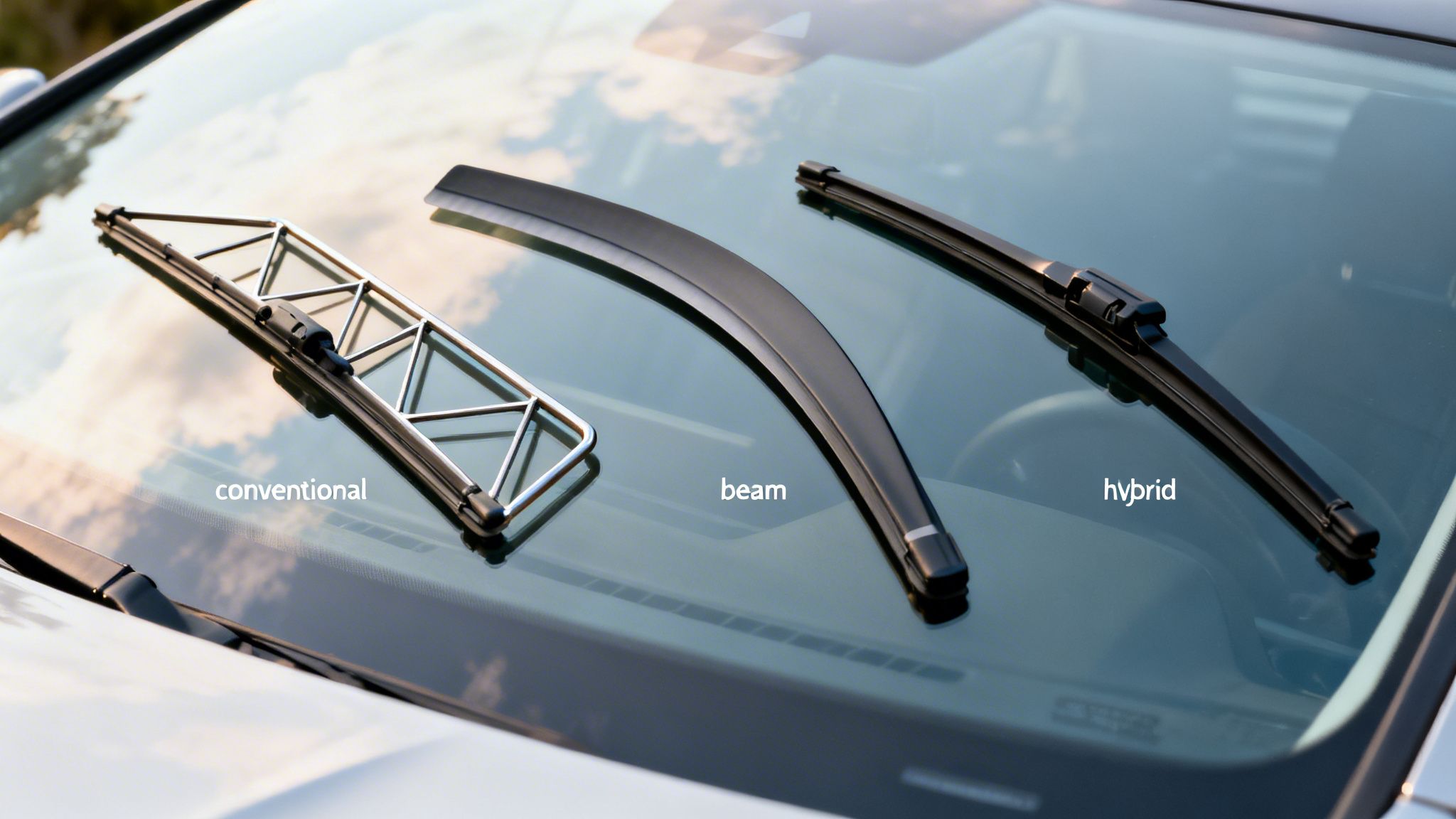
- Conventional Wipers: These are the classic, old-school wipers that are easy on the wallet. Picture a simple metal skeleton with several joints—these are the contact points that push the rubber blade onto the glass.
- Beam Wipers: Sleek and modern, these blades don’t have an external frame. They look more like a single, flexible strip. This design curves perfectly to your windshield, giving you smooth, even pressure from one end to the other for a clean wipe every time.
- Hybrid Wipers: This design gives you the best of both worlds. It takes the strong, jointed frame of a conventional wiper and wraps it in an aerodynamic shell, much like a beam blade, for great performance and durability.
The single most important job of a wiper blade is to stay in firm, consistent contact with the windshield. Worn-out or ineffective wipers are a major cause of poor visibility, which contributes to thousands of accidents every year.
To help you see the differences at a glance, the table below compares the main types of windshield wipers. We’ll get into more detail on each one after this quick summary.
Windshield Wiper Type Comparison
| Wiper Type | Key Feature | Best For | Average Lifespan |
|---|---|---|---|
| Conventional | External metal frame | Budget-conscious drivers; older vehicles | 6 months |
| Beam | Frameless, flexible design | All-weather performance; modern cars | 12+ months |
| Hybrid | Framed with an aero cover | Drivers wanting durability and performance | 12 months |
As you can see, your choice often comes down to balancing your budget with the level of performance you need for your driving habits and vehicle.
To really get a handle on the different windshield wipers you see today, it’s worth taking a quick look back at how this critical safety feature came to be. The trip from a simple hand-cranked lever to the high-tech blades we have now is all about making driving safer and vision clearer. It all kicked off with someone simply noticing a problem during a trolley ride.
The windshield wiper was truly born out of necessity. Back in 1903, a woman named Mary Anderson patented the first manual wiper after watching streetcar drivers in New York City struggle to see through rainy, slick glass. Her invention was simple: a lever inside the vehicle that you’d pull to move a rubber blade across the windshield.
By the 1920s, wipers were standard on most cars. Then, in 1926, Ford’s Model A rolled out with electric wipers, a huge step up from manual cranks that dramatically improved driver safety. If you're a history buff, you can dig deeper into the wiper blade market's past on cognitivemarketresearch.com.
From Clunky Frames to Aerodynamic Designs
Those first wipers were all function and no form. They had bulky metal frames that were often loud and didn't always do a great job. As cars got faster and windshields became more curved for aerodynamics, wiper technology had a lot of catching up to do. The basic metal-framed conventional blade was the go-to for decades, but it had some serious weak spots.
These older designs often had trouble with:
- Uneven Pressure: All those little joints and pressure points could leave streaks, especially as the blade got older.
- Wind Lift: At highway speeds, the wind could get under the frame and lift the blade right off the glass—the exact moment you needed it most.
- Ice and Snow Buildup: That open frame was a perfect trap for ice and snow, which would freeze up the joints and stop the blade from making good contact.
These problems forced engineers to go back to the drawing board. The new mission was to create a blade that kept even, constant pressure across its entire length, no matter how curved the windshield was or how fast you were driving.
The Modern Wiper Takes Shape
The flaws of older designs are exactly what led to the beam and hybrid wipers that come standard on most new cars. The arrival of the frameless beam blade was a massive leap. By getting rid of the external metal skeleton, designers created a single, flexible piece of rubber with a built-in spoiler.
Think of it this way: a beam blade works more like a high-end squeegee. It hugs the unique curve of your windshield and actually uses wind pressure to its advantage. Instead of lifting up, a beam blade gets pressed down harder at high speeds, giving you that perfectly clear view.
But the innovation didn't stop there. The hybrid wiper was developed as a best-of-both-worlds solution, mixing the solid, dependable pressure of a conventional frame with the sleek, wind-slicing performance of a beam blade. Each new type of wiper was created to solve a real-world problem, which is why we have such advanced and reliable options to choose from today.
A Deep Dive Into Each Wiper Blade Type
Now that we’ve covered the history, let’s get into the details of each wiper design. Knowing the pros and cons of the different types of windshield wipers is the simplest way to pick the right set for your car and how you drive. We'll start with the classic design and work our way toward the more specialized options.
Think of this as your practical guide for the next time you need a replacement. Each type strikes a different balance between price, durability, and how it performs in all kinds of weather.
Conventional Wiper Blades
Conventional wipers are the workhorses of the industry and have been for a long time. You can easily spot them by their exposed metal frame, which kind of looks like a tiny skeleton. This frame uses several hinges and pressure points to press the rubber blade against your windshield.
They are almost always the most affordable option out there, which makes them a go-to choice for older vehicles or for drivers keeping a close eye on their budget. That low price tag does come with a few trade-offs, though.
- Pro: Very budget-friendly and you can find them for just about any older car model.
- Con: The frame’s pressure points can create uneven wear, which leads to annoying streaks over time.
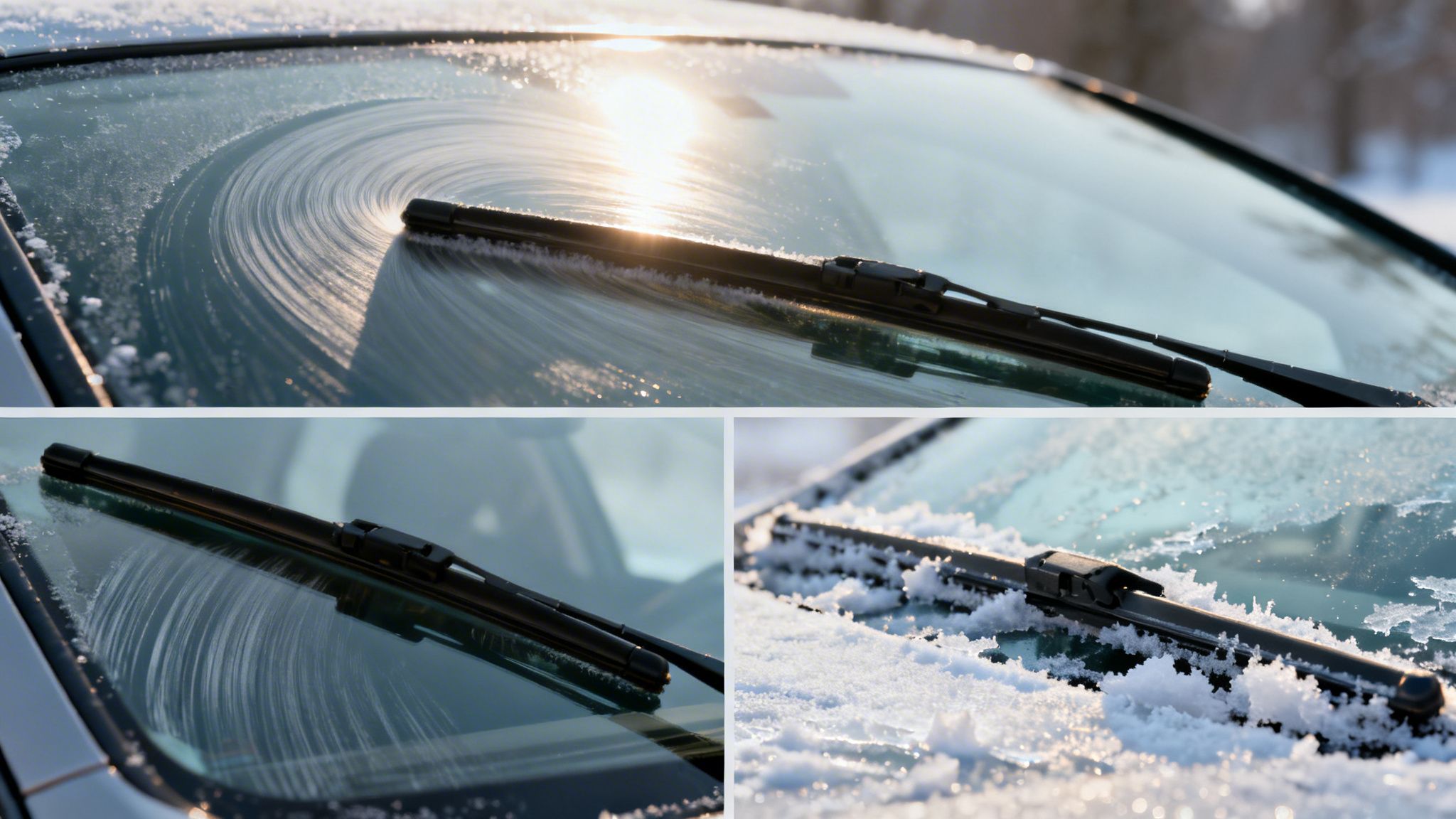
- Con: That open frame is a magnet for ice and snow, which can cause the blade to lift right off the glass when you need it most.
These wipers do a decent job in milder climates but can really struggle at high speeds and in tough winter conditions.
Beam Wiper Blades
Beam wipers are a major upgrade in both design and performance. Instead of that clunky external frame, they're made of a single, solid piece of rubber with a spoiler built right in. This sleek, frameless design lets the blade apply uniform pressure across its entire length.
Picture a high-end squeegee that perfectly matches the curve of your glass—that’s the idea behind a beam blade. The consistent contact gives you a much cleaner, streak-free view.
The aerodynamic shape of a beam blade actually uses the wind to its advantage. At highway speeds, the airflow pushes the blade firmly against the windshield, which prevents that dangerous "wind lift" you sometimes get with conventional frames.
This makes beam blades a fantastic choice for all-season driving, especially if you spend a lot of time on the highway. They handle rain, slush, and ice much more effectively than their framed cousins.
Hybrid Wiper Blades
What if you could get the solid pressure of a conventional frame with the sleek performance of a beam blade? That's exactly what hybrid wipers do. They take the strong, jointed foundation of a conventional blade and wrap it inside an aerodynamic plastic shell.
This design gives you the best of both worlds:
- Strong, Even Pressure: The internal frame ensures the blade makes solid, consistent contact with the glass.
- Aerodynamic Performance: The outer shell deflects wind and, just as importantly, keeps ice from jamming up the joints.
There's a reason hybrid blades come standard on so many new cars today. They offer a great mix of performance, durability, and style, making them a popular upgrade for drivers who want something better than a basic blade.
Specialty Wiper Blades
Beyond those main three types, you can also find wipers built for very specific jobs. These specialty blades are designed to solve unique problems that standard wipers just can't handle as well.
Winter Wipers
Built to battle the elements, winter wipers have a much tougher construction. They're wrapped in a heavy-duty, protective rubber boot that stops ice and snow from freezing the frame's moving parts. This ensures the blade stays flexible and maintains contact with the windshield, even in a blizzard.
Rear Wipers
A rear wiper is a different beast altogether because the airflow at the back of a car is completely different from the front. They are usually shorter and built with a more rugged frame to clear away the dirt, dust, and grime that swirls around the back of SUVs, hatchbacks, and minivans. You can’t just stick a front wiper on the back; it won't have the right pressure or fit to do the job properly.
The Rise of Hybrid and Silicone Wipers
As wiper technology moved forward, two top-tier options really changed the game for drivers. Hybrid and silicone wipers are what you’ll find at the premium end of the market, each tackling common windshield-clearing problems in their own smart way. They offer a serious upgrade over conventional and even standard beam blades.
Think of a hybrid wiper as the "best of both worlds." It takes the strong, hinged frame of a conventional blade and pairs it with the slick, aerodynamic shell of a beam blade. This gives you the solid, reliable pressure from the frame, while the cover shields it from wind and prevents ice from building up in the joints.
This design makes sure the blade stays pressed firmly and evenly against your windshield, no matter how fast you're driving or what the weather is doing. For drivers who want consistent, all-season performance without making any trade-offs, hybrid wipers are a fantastic choice.
Silicone Wipers: The Performance Game-Changer
While hybrids perfect an existing design, silicone wipers bring a whole new material into the picture. These blades aren't made from the usual rubber. Instead, they use a tough, long-lasting silicone compound that holds up against the most extreme conditions.
Silicone blades are truly in a class of their own, offering durability and performance that traditional rubber just can't match. First introduced back in the 1990s, silicone wipers resist cracking from UV sun exposure, intense heat or cold, and ozone. They can last up to twice as long as natural rubber blades, which usually need replacing every 6-12 months. You can learn more about the growing wiper blade market and what these innovations mean for drivers.
This incredible durability is a massive plus, especially here in Dallas where the intense sun can cook standard rubber blades in a single season.
The most impressive trick a silicone wiper has is the invisible water-repellent layer it leaves behind. Every time it swipes, it transfers a microscopic film of silicone to your windshield. This coating makes water bead up and roll right off the glass—sometimes so well you barely even need to turn your wipers on.
Premium Wiper Blade Showdown: Hybrid vs. Silicone
Choosing between these two advanced wiper types really comes down to what you value most. Are you looking for a powerful all-around design, or is your top priority getting the longest life and best water-repelling action possible?
This table breaks down the key differences to help you decide.
| Feature | Hybrid Wipers | Silicone Wipers |
|---|---|---|
| Primary Advantage | Combines frame strength with an aerodynamic shape | Extreme durability and water-repellent coating |
| Performance | Excellent all-weather clearing, resists wind lift | Superior in rain, creates a hydrophobic effect |
| Lifespan | Good; typically lasts around 12 months | Excellent; often lasts 2x longer than rubber |
| Best For | Drivers wanting a high-performance, all-in-one design | Drivers in extreme climates; maximum visibility |
| Cost | Premium | Highest initial investment |
Both hybrid and silicone wipers are a significant step up from what you might be used to, and both will give you a safer, clearer view of the road. The final choice often depends on your local weather and how much you’re willing to invest upfront for top-tier performance that lasts.
Okay, you've learned about the different kinds of wiper blades out there. Now it's time to put that knowledge to work. Picking the right blades and taking care of them is what ensures they’ll be there for you when a surprise Texas thunderstorm hits. Getting the fit right is non-negotiable; a blade that’s just one inch too long or too short can leave dangerous blind spots.
The simplest way to find the correct wiper size is to check your car’s owner's manual. It will list the exact lengths you need for the driver's side, passenger's side, and even the rear window. If you've misplaced your manual, don't worry. Most auto parts stores have handy guidebooks or online tools where you just plug in your vehicle’s make, model, and year to get a perfect match.
Signs It Is Time for a Replacement
Your wipers will give you some pretty clear hints when they're worn out. Ignoring these warnings isn't just annoying—it can be a real safety risk, especially when you're caught in a sudden downpour.
Here are the tell-tale signs to watch for:
- Streaking: The blade is worn and leaves behind thin lines of water or grime.
- Skipping: Instead of a smooth glide, the blade hops and bounces across the glass.
- Squeaking: That awful screeching or chattering sound means the rubber has become hard and inflexible.
- Splitting: You can see obvious cracks, tears, or chunks missing from the rubber edge.
For a quick visual guide, this decision tree can help you figure out if it's time to step up to a premium wiper.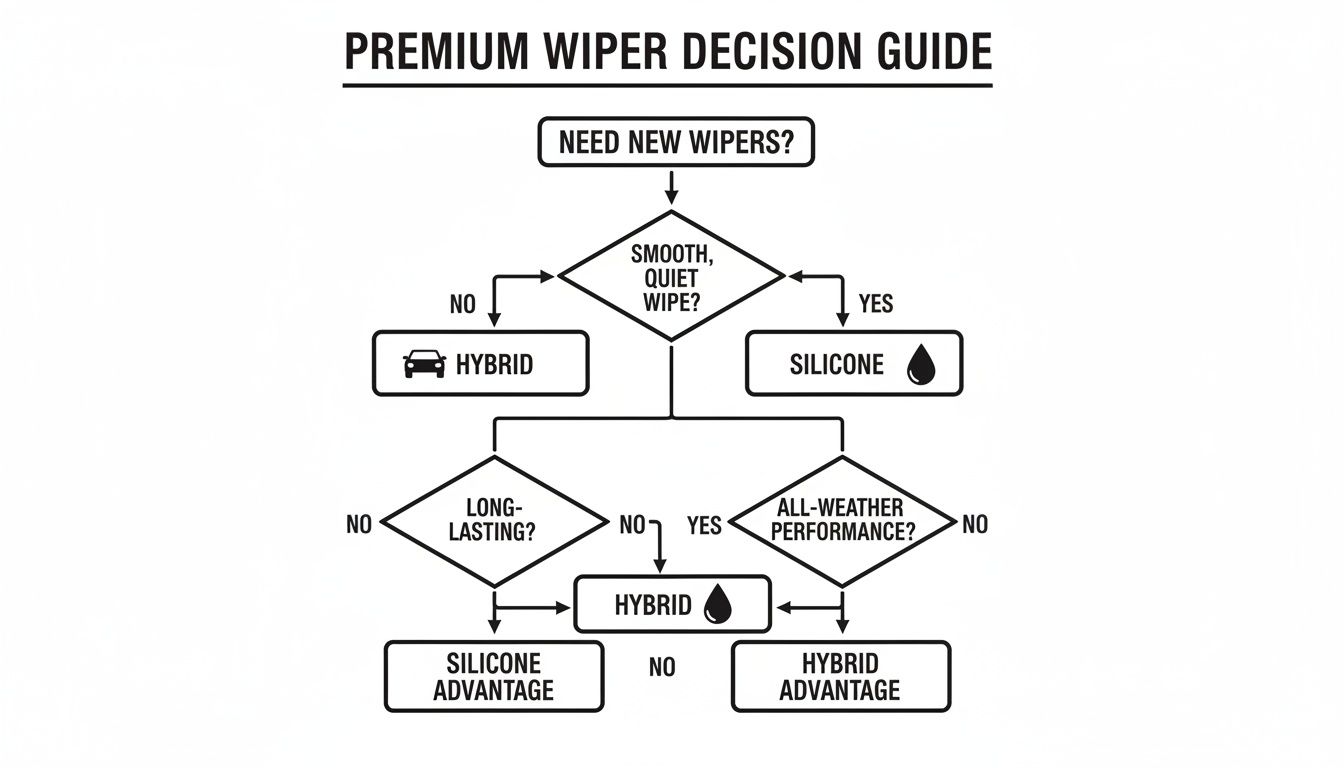
This flowchart breaks down the choice between high-performance hybrid wipers and long-lasting silicone blades based on what you really need from them.
Simple Maintenance for a Longer Lifespan
You can get more life out of your wiper blades with just a little bit of routine care. Every few weeks, take a clean cloth dampened with windshield washer fluid or rubbing alcohol and just wipe down the rubber edge of each blade. This quick step cleans off the road grime, tree sap, and gunk that builds up and causes streaks. It's a simple habit that helps you get a clean wipe every single time.
Even with perfect maintenance, the environment is tough on wipers. The intense Dallas sun can bake the rubber and cause it to crack, while ice and road salt in colder weather can speed up wear and tear.
For those who want the absolute best in visibility, looking into a windshield ceramic coating can make a world of difference. It complements your wipers by helping rain bead up and roll right off. And if you ever find yourself dealing with real winter weather, check out our guide on how to prepare your car for the cold.
While you can certainly replace wipers yourself, the different clip systems on modern cars can be frustrating to figure out. For total peace of mind, let a professional handle it. The next time you're at Kwik Kar for an oil change or state inspection, just ask. Our technicians can inspect your blades and install the perfect set, guaranteeing a flawless fit and peak performance.
Why Trust Kwik Kar with Your Vehicle's Vision
Picking out new windshield wipers can feel like a minor chore, but it’s actually one of the most important safety decisions you make for your car. When a sudden Dallas thunderstorm hits or dust kicks up on the highway, a clear view isn’t just nice to have—it’s absolutely essential. This is where getting a professional opinion makes all the difference.
At Kwik Kar, our technicians do more than just hand you a box off the shelf. We talk to you about your specific car, your daily commute, and the tough weather conditions we all deal with here. We know what that intense Texas sun does to rubber and what it takes to handle a heavy downpour.
Expert Installation and Peace of Mind
Sure, you can grab a new set of wipers anywhere, but how they’re installed is what truly matters. A blade that isn’t fitted correctly can skip, chatter across the glass, leave streaks, or even damage the wiper arm itself. Our trained technicians make sure your new wipers are put on perfectly, guaranteeing they make solid contact for a clean, quiet wipe every single time.
We see it day in and day out: a small investment in the right wipers prevents bigger headaches later. That’s why we always check your blades during routine services like an oil change or state inspection. It’s a quick, simple step that makes sure you’re ready for whatever the road throws at you.
For example, a lot of Dallas drivers are switching to hybrid windshield wipers. They combine the sturdy frame of a traditional blade with the modern, even pressure of a beam-style blade, which works great in our rainy season. For daily commuters and even fleet managers, making this switch can cut down on maintenance needs by as much as 25%—a real saving in both time and money. You can learn more about the latest trends in the wiper blade market and see why these newer designs are becoming so popular.
Choosing the right wiper isn't just about clearing rain. It's about ensuring you can react to road hazards instantly, giving you the confidence that your vehicle’s most important safety system is ready for action.
More Than Just Wipers: A Commitment to Safety
Our primary goal is your total safety on the road. A wiper check is just one piece of our larger focus on preventive maintenance. We look at your vehicle as a whole system, where every single part needs to work together correctly. You can see this philosophy in our detailed vehicle inspection checklist, which covers all the critical safety components.
Next time you’re in for service, just ask us to take a look at your wipers. It’s a fast, easy way to guarantee your vision is never compromised, and it reflects our dedication to keeping you and your family safe, no matter what the forecast holds.
Frequently Asked Questions About Wiper Blades
Even after you’ve picked out a new set of wipers, you might still have a few questions. That’s perfectly normal. Here are the answers to some of the most common ones we hear from drivers at our shop.
How Often Should I Replace My Wipers?
The general rule of thumb is to replace your wiper blades every six to twelve months. But let’s be realistic—that’s a guideline, not a hard-and-fast rule.
Here in Dallas, the intense sun and heat are brutal on rubber components. This constant exposure causes the blade material to break down much faster, so you’ll likely find yourself needing a new set sooner rather than later.
Your car will tell you when it’s time. If you notice your wipers are streaking, skipping, or making a squealing or chattering sound, those are clear signs they’re worn out and ready for replacement. Regular upkeep is a big part of their lifespan, a topic we cover in our complete car maintenance checklist.
Are More Expensive Wipers Really Better?
In our experience, yes, you generally get what you pay for. While a standard pair of conventional wipers will certainly work, premium beam, hybrid, and silicone blades are built to a higher standard and deliver better results. They provide a much more uniform pressure on the windshield for a streak-free wipe and are made from tougher materials that hold up longer against the elements.
Think of it as an investment in your safety. Paying a little more upfront for a premium blade means better visibility during a sudden Texas downpour. That peace of mind and long-term value are well worth the slightly higher cost.
At Kwik Kar Oil Change and Auto Care, our technicians are here to help you choose and install the perfect wipers for your car and your daily drive. Schedule your visit today!