



So, how much does a Firestone wheel alignment actually cost? You can expect to pay anywhere from $80 to $120 for a standard, one-time service. If you're looking at a long-term option, their lifetime alignment packages usually start around $200. The final number on your bill will depend on your specific car, which service you pick, and even your local shop's pricing.
Your Quick Guide to 2026 Firestone Alignment Costs
Let's get straight to the point. Your car is pulling to one side, or the steering wheel isn't straight when you're driving straight. The first thing on your mind is, "How much is this going to set me back?" Understanding Firestone's alignment costs is pretty simple once you see how they break down their services. They have a few different options, each built for a different kind of driver and budget.
It’s a bit like picking a phone plan. You can pay for a one-time fix (Standard Alignment), get coverage for a full year (Warranty Alignment), or make a single payment for as long as you own your car (Lifetime Alignment). The standard service is perfect if you just hit a nasty pothole and need a quick correction. But if you’re a daily commuter dealing with rough city streets, one of the longer-term packages usually makes more financial sense.
Comparing Firestone Alignment Packages
To give you a better idea of your options, let’s look at Firestone's main alignment packages side-by-side. The best choice really comes down to how long you plan on keeping your car and how often you think you'll need this service. For a lot of drivers, the lifetime package pays for itself after just the second visit.
A proper wheel alignment isn't just an expense; it's an investment in your car. It pays you back with better gas mileage, longer-lasting tires, and a much safer drive. That initial cost is a small price to pay compared to replacing a set of tires way too early.
Here’s a simple table breaking down the estimated costs for 2026 and what you get with each Firestone service tier. This should help you line up your car's needs with your wallet.
Firestone Wheel Alignment Service Tiers & Estimated 2026 Costs
| Service Type | Estimated Cost Range | Best For | Key Feature |
|---|---|---|---|
| Standard Alignment | $80 – $120 | One-time adjustments after hitting a major pothole or installing new tires. | A single, comprehensive alignment service to correct current issues. |
| Warranty Alignment | $100 – $150 | Drivers who want peace of mind with coverage for a set period, typically one year. | Includes free re-checks and adjustments within the 12-month warranty period. |
| Lifetime Alignment | $120 – $220+ | Long-term vehicle owners, daily commuters, or those in areas with poor road conditions. | Pay once and receive free alignments for as long as you own the vehicle. |
Choosing the right package from the start can save you a good bit of money and hassle down the road. Whether it's a one-and-done fix or a long-term plan, you have options to keep your car driving straight and true.
What a Wheel Alignment Actually Does for Your Car
Before we talk numbers on a Firestone wheel alignment, it's important to know what you’re actually paying for. The easiest way to think about a wheel alignment is to see it as perfecting your car's posture. Just like good posture prevents back pain, a proper alignment stops unnecessary wear and tear on your tires and suspension parts.
When your car rolled off the factory line, its wheels were set to very precise angles for peak performance and safety. But daily driving—especially hitting a nasty pothole or bumping a curb—can easily knock those settings out of whack. That’s where an alignment service comes in, restoring that perfect posture.
The Three Key Angles of Alignment
A technician adjusts three critical angles to get your vehicle back to factory specs. Each one has a specific job in how your car drives, handles, and wears down its tires.
- Toe: This is the angle of your tires when you look down at them from above. Think about your own feet—if they point inward ("pigeon-toed"), that’s toe-in. If they point outward, that's toe-out. An incorrect toe is the number one cause of premature tire wear.
- Camber: This is the inward or outward tilt of your tires when you look at them from the front of the car. Too much negative camber (tilting in) or positive camber (tilting out) will cause uneven wear on the inside or outside edges of your tires.
- Caster: This angle is all about steering stability. A correct caster angle helps your steering wheel naturally return to the center after you make a turn, giving you that stable, controlled feeling on the road.
This chart shows how alignment needs evolve, from a one-time fix to long-term vehicle care.
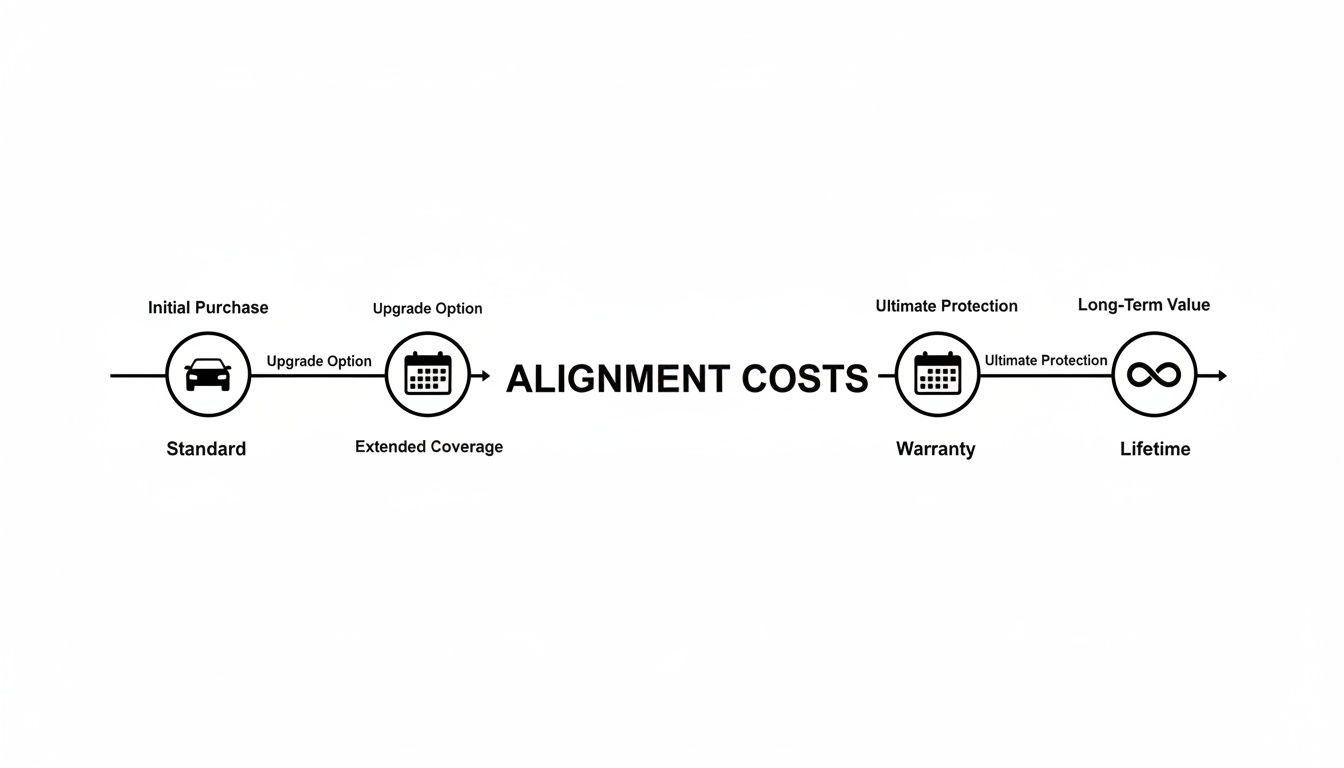
As you can see, the service you pick often lines up with how long you plan to keep your car, which is why lifetime options can be a smart investment over the years.
Driving on misaligned wheels doesn't just put your tires at risk; it also hurts your fuel economy. When the wheels are fighting each other, your engine has to work harder just to move forward, burning more gas along the way. You can learn more about how tire rotation and alignment work together in our comprehensive guide.
An alignment is preventative medicine for your car. Regular checks are far less expensive than replacing a full set of tires thousands of miles too early or repairing worn-out suspension parts.
At the end of the day, a wheel alignment is a smart investment in your car's health, safety, and efficiency. It makes sure your tires meet the road exactly how they were designed to, giving you a smoother ride, predictable handling, and the longest possible tire life.
Decoding the Firestone Wheel Alignment Cost Factors
Trying to pin down the exact cost for a Firestone wheel alignment isn’t as simple as checking a price tag. Several key factors come into play to determine your final bill, which is why you won’t find a single flat rate for every car that comes through the door.
The biggest variable, by far, is your vehicle type. A standard front-wheel-drive sedan is much simpler to work on than a large, all-wheel-drive SUV or a heavy-duty truck. Bigger vehicles often have more complex suspension systems, which demand more of a technician's time, specialized tools, and a higher degree of precision. Naturally, this increases the price.

The type of service you need also plays a major role. The main question is whether your car requires a two-wheel or a four-wheel alignment.
- Two-Wheel Alignment: This is often called a front-end alignment because it focuses solely on adjusting the front axle. It’s usually the right choice for front-wheel-drive vehicles with a solid rear axle that doesn’t allow for adjustments.
- Four-Wheel Alignment: As the more complete option, this service addresses all four wheels. It’s a must for all-wheel-drive (AWD) cars and most rear-wheel-drive (RWD) vehicles that have an independent rear suspension.
Because it involves more work and adjustments, a four-wheel alignment will always cost more than a two-wheel service. Your car's manufacturer specifications are what ultimately dictate which service is necessary to get the job done right.
Choosing Your Service Tier
Beyond the mechanical needs of your car, Firestone also provides different service packages that impact what you pay. This is where you can match your budget with how you plan to drive and maintain your car long-term.
Firestone's pricing strategy has evolved since the 2010s to match changes in vehicle technology and the economy. The structure is designed to offer value whether you need a single fix or ongoing care for your vehicle.
There are three main tiers, giving you control over your investment:
- Standard One-Time Alignment: This is your straightforward, pay-as-you-go option. It's a great choice if you just hit a nasty pothole and need a quick correction.
- 12-Month Warranty Alignment: This mid-level package lets you pay once and come back for any necessary re-checks or adjustments for a full year.
- Lifetime Alignment Plan: This is Firestone's flagship offer. You pay a larger one-time fee, but you get free alignments for as long as you own that specific car.
This tiered pricing makes sense when you look at market trends. By 2026, national averages for professional alignment services are holding steady between $75 and $200. A front-wheel alignment typically falls in the $75-$120 range, while a comprehensive four-wheel service runs between $100 and $200. Lifetime plans usually land in the $120-$200 bracket.
For drivers in high-traffic areas like Dallas, where roads can be rough, these plans offer real value. You can find out more about their four-wheel alignment services online. If you plan on keeping your car for a few years, especially on our pothole-ridden streets, the lifetime plan can easily pay for itself after just two or three visits.
Is the Firestone Lifetime Alignment a Smart Investment?
Firestone’s lifetime alignment is one of their most popular offers, but does it really save you money? The answer almost always comes down to your personal driving habits and how long you plan on keeping your car.
Think of it like buying your favorite coffee beans in a bulk bag. The upfront cost feels a little higher, but each cup you brew ends up costing far less over time.
To see if it makes sense for you, let’s do some quick math. A Firestone lifetime alignment package usually runs around $200, while a single, one-time alignment is about $100. This means the lifetime deal pays for itself after just two alignment services. After that, every single alignment is free for as long as you own that vehicle.
Who Really Benefits from the Lifetime Package?
The true value of a lifetime alignment really clicks for a few specific types of drivers. If any of these sound like you, the package is probably a solid financial move.
- The Daily Commuter: If you drive to work and back every day, especially on rough city streets full of potholes, your car is getting constantly jostled. You'll likely need an alignment check at least once a year, meaning you’d hit that break-even point in less than two years.
- The Long-Term Car Owner: Planning on keeping your car for five, six, or even more years? With a recommended alignment check every 12 months, you could easily get three to five "free" alignments after covering the initial cost.
- The High-Mileage Driver: Whether it's for work or just a love of road trips, putting a ton of miles on your car means you'll need more frequent maintenance. The lifetime plan offers great peace of mind, knowing your alignment is covered no matter how far you go.
Beyond just the service cost, a properly aligned vehicle can give you up to a 10% boost in fuel economy and a 22% improvement in handling, saving you real money at the pump while making your car safer. The data shows that skipping regular alignments can end up costing you twice as much in the long run from premature tire wear and poor gas mileage. You can find more details about Firestone's alignment offers on their website.
The Casual Driver Scenario
On the other hand, what if you barely use your car? If it’s mostly a weekend vehicle for running errands, the lifetime alignment might not be the right call. Paying for a standard, one-time service every few years when you need it will probably be more cost-effective.
It's still worth remembering, though, that one bad run-in with a Dallas pothole can be enough to knock your alignment out of spec and require an unexpected trip to the shop.
Ultimately, the lifetime plan is a bet on your future driving needs. For most people who depend on their car for daily transportation, it’s a bet that tends to pay off quickly, turning a recurring maintenance cost into a one-time purchase. If you're looking for expert service right here in Dallas, you can learn more about our four-wheel alignment process and see how we can help keep your car driving straight and true.
Actionable Tips to Save on Your Next Wheel Alignment
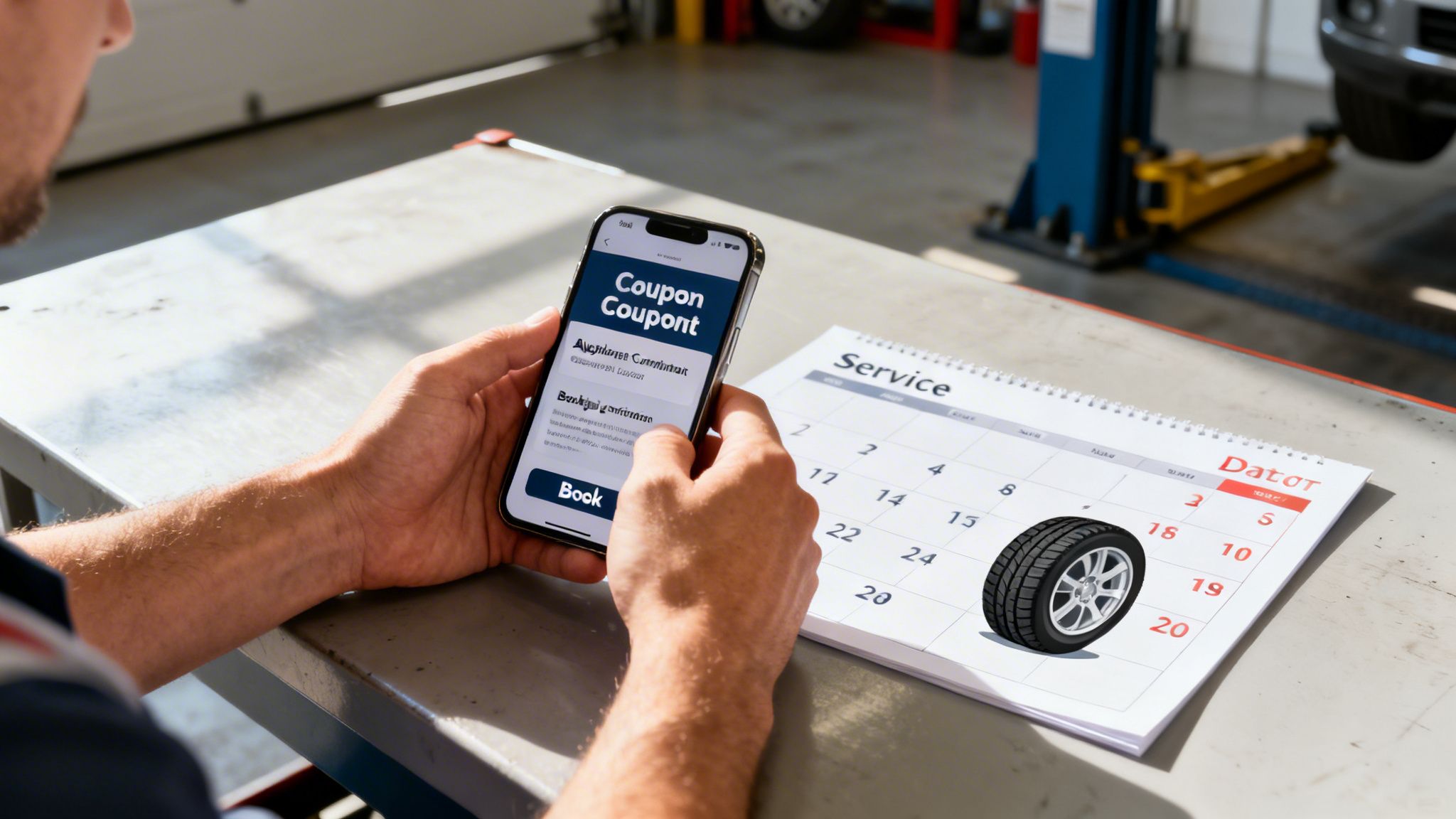
Everyone loves saving money without sacrificing quality. Thankfully, bringing down your Firestone wheel alignment cost is completely doable with a few smart moves. You can often find some great savings right on Firestone's website by looking for online coupons and seasonal promotions.
Think of it like checking the weekly flyer before you go grocery shopping. Before you book anything, always take a minute to check their "Offers" page for deals that can lower your bill right away. These discounts often show up around holidays or during seasonal car care events, like their Black Friday specials.
Bundle Services for Bigger Discounts
Another great tactic is to bundle your wheel alignment with other necessary services. Lots of auto shops, Firestone included, will offer package deals that give you more bang for your buck than paying for everything separately. The most common and effective bundle is getting an alignment when you buy a new set of tires.
Firestone has been a big believer in this model for a long time. They rolled out their popular Lifetime Wheel Alignment package back in the early 2000s, and by 2026, it’s still a solid offer. You’ll often see coupons like $40 off when you buy a set of Bridgestone tires. This strategy makes sense when you see how a proactive alignment can cut your long-term tire costs by 20-30%.
According to Firestone's own data, properly aligned vehicles can squeeze up to 15,000 extra miles out of their tires. That’s a huge benefit that both fleet managers and regular Dallas drivers understand well. You can see how Firestone's alignment services have evolved to offer more value over the years.
A quality alignment isn't just an expense; it's a strategic investment. It pays you back through extended tire life, improved fuel efficiency, and reduced strain on your car's suspension system.
Preventative Care Is the Ultimate Saver
At the end of the day, the best way to save money on alignments is simply through good old-fashioned preventative care. Regular checks help you find small problems before they turn into big, expensive headaches. Instead of waiting for your car to start pulling to one side, just ask for an alignment check during routine visits like an oil change or tire rotation.
This proactive mindset helps you:
- Avoid premature tire wear: Catching alignment issues early stops the uneven wear that sends tires to the scrap pile thousands of miles too soon.
- Protect suspension components: A bad alignment puts a ton of extra stress on parts like your ball joints and tie rods, which can lead to much more expensive repairs down the road.
- Maintain fuel economy: A car that rolls straight has less resistance, which saves you a little bit of money at the pump every time you fill up.
By staying on top of your car's health, you can make smarter choices for your vehicle and your wallet. For more ways to get the most out of your tires, take a look at our essential tire maintenance tips and keep your car running smooth.
Commonly Asked Questions About Wheel Alignment
Even with the pricing laid out, you probably still have a few questions floating around. Let's run through some of the most common things drivers ask so you can feel totally confident about your car's alignment.
How Often Should I Get a Wheel Alignment?
As a general guideline, we recommend having your alignment checked every 6,000 to 10,000 miles, or at the very least, once a year. However, if you're a Dallas driver who regularly deals with rough roads or can't seem to avoid those pesky potholes, more frequent checks are a very smart investment.
What Are the Signs of a Bad Alignment?
You don’t have to be a mechanic to know something’s wrong. Your car will give you some pretty clear signals when the alignment is off.
- Vehicle Pulling: You feel a constant tug to the left or right, even when you're trying to drive perfectly straight.
- Crooked Steering Wheel: The emblem on your steering wheel isn't level when your tires are pointed straight ahead.
- Uneven Tire Wear: You look at your tires and notice the inside or outside edge is wearing down much faster than the rest of the tread.
Hitting a single, nasty pothole is more than enough to throw your car's precise alignment completely out of whack. Think of it like taking a hard fall that messes up your own posture; your car's suspension is just as sensitive to those sudden jars and shocks.
Two-Wheel vs. Four-Wheel Alignment?
Deciding between a two-wheel and a four-wheel alignment isn't really a choice you make—it’s all about your vehicle’s specific design. A two-wheel alignment only adjusts the front axle and is meant for vehicles where the rear axle is fixed and can't be adjusted.
A four-wheel alignment is the standard for most modern cars. It’s absolutely essential for any all-wheel-drive (AWD) vehicle and nearly every car or SUV with an independent rear suspension, as it services both the front and rear axles.
For expert alignment services and transparent pricing right here in Dallas, trust the team at Kwik Kar Oil Change and Auto Care. We use advanced equipment to ensure your vehicle drives straight and true, protecting your tires and improving your safety on the road. Schedule your appointment today at https://www.kwikkarspringvalley.com.