


You’re probably here because something small started nagging at you. Maybe the oil light flicked on during a Dallas commute. Maybe the windshield sticker says you’re due. Maybe your car sounds normal, but you know it’s been a while and you don’t want to push your luck.
That’s a smart instinct. An oil changing service is one of the simplest ways to protect an engine before small wear turns into an expensive repair. Most drivers don’t need to become mechanics, but it helps to understand what the service does, what you’re paying for, and what to expect when you pull into a local shop.
The Ultimate Guide to Your Vehicle's Oil Changing Service
When a dashboard warning light shows up on the way to work, it's common to feel the same thing. Mild panic first, questions second. Is it urgent? Can you keep driving? Did something serious just happen?
In many cases, the light is your car’s way of asking for attention before real damage starts. Engine oil is often called the lifeblood of the engine, and that’s not just shop talk. Oil keeps moving parts separated, helps carry heat away, and holds onto contaminants so they don’t keep circulating through the engine.

A lot of drivers think an oil changing service is just “drain and refill.” It’s more important than that. Fresh oil creates a protective film between metal parts that move fast and get hot. Without that film, the engine starts rubbing itself raw, a little at a time.
What engine oil actually does
Think of your engine like a busy kitchen during dinner rush. Metal parts are moving constantly, temperatures climb fast, and tiny bits of debris can build up. Oil helps manage all of it.
- Lubricates moving parts so metal doesn’t grind on metal
- Helps cool internal components by carrying heat away
- Cleans as it circulates by suspending dirt, sludge, and wear particles until the filter catches them
If oil gets old, it can’t do those jobs as well. It thickens, breaks down, and gets dirty. That’s when engines start sounding rougher, running hotter, or wearing faster than they should.
Practical rule: If you can’t remember your last oil service, that alone is a reason to check it.
This isn’t a small niche service, either. The U.S. oil change services market is a $12.6 billion annual revenue industry employing about 101,000 people, and analysts value the market at $8.11 billion in 2024 with projected 5.9% CAGR from 2025 to 2030, according to Statista’s oil change services market figures. That size reflects how many vehicles depend on routine maintenance to stay reliable.
Why Dallas drivers should pay attention
Dallas traffic is hard on vehicles. Long commutes, stop-and-go driving, summer heat, and lots of short trips all make oil work harder. Even if your car feels fine, oil may be aging faster than you think.
If you drive an older performance sedan or just enjoy learning how different vehicles age, it’s interesting to learn about this classic sport sedan and notice how regular maintenance shapes long-term durability. Different cars have different personalities, but they all depend on clean oil.
A proper service also includes inspection, not just replacement. That’s why many drivers like to review what’s checked during a 17-point oil change service. It helps take the mystery out of the visit and shows why a routine stop can uncover leaks, low fluids, or worn belts before they leave you stranded.
Choosing the Right Oil and Filter for Your Car
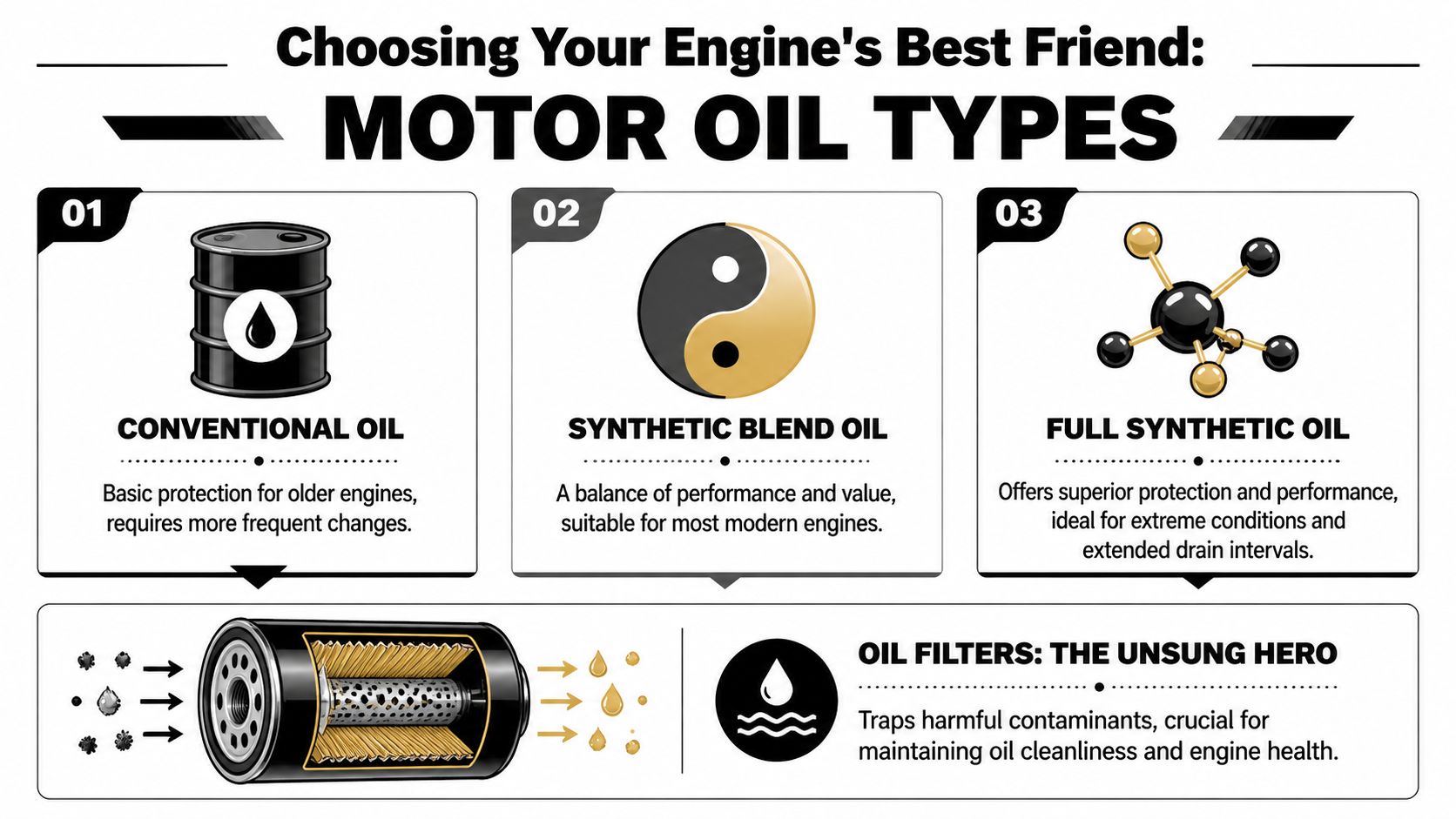
Standing at the service counter, most drivers hear a few familiar terms. Conventional, synthetic blend, full synthetic. Then there’s the filter choice. Standard or premium. If that all sounds like alphabet soup, you’re not alone.
The easiest way to make sense of it is to match the oil to the car, the way you drive, and how long you want the oil to hold up between services. Your owner’s manual always gets the final vote, but the basic differences are easier than they sound.
Comparing the main oil types
| Oil type | Best fit | What it’s like |
|---|---|---|
| Conventional oil | Some older engines and budget-focused maintenance | Basic protection, simpler formula, usually changed more often |
| Synthetic blend | Many daily drivers | Middle ground between cost and added protection |
| Full synthetic | Most modern engines, turbo engines, harsher driving conditions | Stronger performance in heat and cold, better resistance to breakdown |
Conventional oil still has a place. If you drive an older vehicle designed for it and your manufacturer allows it, it can be a reasonable choice. The tradeoff is that it generally doesn’t hold up as long or as consistently under stress.
Synthetic blend oil gives many drivers a practical middle option. It offers more stability than conventional oil without always carrying the highest price point. For a commuter car that sees city traffic, this can make sense if the manufacturer approves it.
Full synthetic is usually the easiest recommendation for modern vehicles because newer engines are built with tighter tolerances and often run hotter. Synthetic oil flows well in cold starts, resists breakdown better in heat, and typically supports longer manufacturer-recommended intervals.
Some people think full synthetic is “too much” for an everyday car. In reality, many everyday cars are designed around it.
Don’t overlook viscosity
Oil type and oil weight are not the same thing. A vehicle may need 5W-30, 0W-20, or another specific grade. That number matters because it describes how the oil flows in different temperatures.
If your manual calls for a certain viscosity, stick with it unless a qualified technician gives you a vehicle-specific reason to do otherwise. The wrong weight can affect lubrication, startup protection, and overall engine behavior.
Why the filter matters just as much
Fresh oil and a worn-out filter don’t make a great team. The oil filter traps debris that the oil picks up as it circulates. Over time, that includes dirt, sludge, and tiny particles from normal engine wear.
Here’s the simple version:
- A standard filter works well for many normal service intervals
- A higher-capacity filter may be a better match for longer intervals or more demanding use
- The right fit matters most because even a good filter is a bad choice if it isn’t designed for your engine
A quality oil changing service should include a filter that matches the oil and the vehicle’s service plan. That’s one reason it helps to understand the basics of different oil filter types and what they do.
A simple way to decide
If you want a quick rule of thumb, use this:
- Older car, lighter use, tighter budget: conventional may be acceptable if the manual allows it
- Mixed driving, everyday use: synthetic blend is often a comfortable middle ground
- Newer car, turbocharged engine, heavy traffic, hot weather: full synthetic is often the safer call
The best choice isn’t the most expensive one by default. It’s the one your engine was designed to use, with a filter that can keep contaminants under control for the interval you plan to drive.
Understanding Oil Change Intervals and Warning Signs
A lot of drivers still ask the same question: “Do I really need an oil change every 3,000 miles?” For most modern vehicles, the answer is no. That old rule stuck around for years, but it doesn’t match the way many current engines and oils are designed.
According to recent CARFAX maintenance data, 29% of car owners are behind on oil changes and 44% haven’t had their tires rotated as required. The same source notes that the old 3,000-mile rule has largely been replaced by manufacturer recommendations in the 5,000 to 10,000+ mile range for modern conventional and synthetic oils.
That doesn’t mean every car should wait to the high end of that range. It means your vehicle’s recommendation matters more than an old bumper-sticker rule.
Why intervals changed
Modern oils last longer, and many vehicles now use an Oil Life Monitoring System. That system doesn’t just count miles. It estimates service needs based on how the car is driven and how hard the oil is working.
If you spend a lot of time in Dallas traffic, make short trips, idle often, or drive in heavy heat, your oil may need service sooner than someone who mostly cruises on the highway. That’s why two drivers with the same car can get different timing from the same system.
A good starting point is the owner’s manual. If you want a practical local reference, this guide on when to change oil in a car helps translate general recommendations into real-world driving habits.
Warning signs you shouldn’t ignore
Even with a monitor, your senses still matter. Cars often give clues before a maintenance problem turns into a repair problem.
Watch for these signs:
- Dashboard oil light means don’t shrug it off. It can point to low oil level, pressure issues, or overdue service.
- Engine sounds rougher than usual because old oil doesn’t cushion moving parts as well.
- Burning oil smell can mean leaking oil is reaching a hot engine surface.
- Smoke from the exhaust may signal that oil is getting where it shouldn’t.
- Dirty or low dipstick reading is a direct sign to pay attention.
If your engine gets louder and rougher at the same time your oil reminder appears, don’t keep “testing it” for another week.
How to read the dipstick without overthinking it
Park on level ground and let the engine sit briefly if it was just running. Pull the dipstick, wipe it clean, reinsert it fully, then pull it again to read the level.
You’re checking two things:
- Level. Is it between the marked range?
- Condition. Does it look like used oil, or does it look abnormal?
Dark oil by itself isn’t always a crisis. But if the level is low, the texture looks sludgy, or something seems off compared with normal checks, schedule service instead of guessing.
What to Expect During Your Kwik Kar Visit
Walking into an auto shop can feel uncertain if you don’t know the routine. Customers often want the same three things. Clear answers, no surprises, and confidence that the work was done right.
A typical visit starts. You pull in, a technician greets you, and the first conversation is about your vehicle, your mileage, and the oil your manufacturer calls for. That first minute matters because it sets the tone. Good service starts with listening before anyone reaches for a wrench.

What happens in the bay
A full-service oil change follows a defined sequence. The technician checks the current oil condition, drains the old oil, removes the used filter, installs a new pre-lubricated filter, and refills the engine with the manufacturer-specified oil. A multi-point inspection then covers fluids, filters, belts, and hoses, as described in this technical overview of a full-service oil change.
That sequence matters because each step prevents a different kind of problem. Draining removes contaminated oil. Replacing the filter stops trapped debris from continuing to circulate. Using the correct oil weight protects the engine the way it was designed to be protected.
What you should hear from the technician
A good visit doesn’t feel rushed, even when the shop works efficiently. Before the service begins, you should understand what oil is being used and what the cost looks like. If your vehicle needs anything beyond the oil changing service, that should be explained clearly before extra work is done.
That’s also where transparent pricing comes in. You don’t need every possible add-on. You need to know what’s required now, what can wait, and why.
A practical example looks like this:
- Required today might include overdue oil service or a filter that’s reached the end of its usable life
- Worth watching might include a belt showing wear or a fluid that’s low but not urgent
- Not needed should also be said out loud when everything else looks fine
The most reassuring shops are the ones that can explain a service in plain English without trying to turn every visit into a long repair list.
The inspection is part of the value
People often focus on the oil and forget the inspection. But that inspection is where technicians spot the small things customers usually can’t see from the driver’s seat. Low fluids, cracked hoses, worn belts, and early leaks often show up there first.
If you’ve never watched the process, this quick video gives a helpful visual sense of what an oil service visit can involve.
That extra set of eyes is a big reason many drivers choose a shop visit over a parking-lot DIY approach. A routine service isn’t just maintenance. It’s also a checkpoint.
What the end of the visit should feel like
By the time you leave, you should know what was done, what oil went into the car, and whether the technician noticed anything that needs future attention. Your reminder sticker or service record should make the next visit easier to plan.
That’s the difference between a transaction and a useful maintenance stop. You leave with fresh oil, a new filter, and a clearer picture of your vehicle’s condition.
Fleet Maintenance Solutions for Dallas Businesses
For a business owner, an oil change isn’t just maintenance. It’s scheduling, cost control, driver safety, and uptime. One van down for half a day can throw off deliveries, appointments, or service calls across the whole schedule.
That’s why fleet maintenance works best when it’s planned instead of reactive. A fleet program gives managers a repeatable process for service timing, records, approvals, and inspections. Instead of guessing which unit is overdue, you work from a schedule and a paper trail.

Why planned service protects operations
Fleet-specific mobile oil change programs can produce 22% cost savings by reducing vehicle miles traveled, according to this fleet service overview. The same source notes that few shops offer complete 7-day programs and that improper oil changes in hybrid fleets can spike failures by 28%.
For Dallas fleets, the point isn’t only the oil itself. It’s avoiding wasted movement, missed service windows, and preventable wear caused by inconsistent maintenance practices.
A strong local plan usually includes:
- Scheduled service windows that fit routes and shift changes
- Centralized records so managers can track each unit’s maintenance history
- Bundled maintenance and inspections to reduce separate trips and compliance headaches
Local support matters more than generic scheduling
National fleet guides often stay broad. Dallas businesses usually need something more practical. They need a shop that understands city traffic, state inspection timing, and the difference between a sales car, a work truck, and a mixed fleet with hybrid units.
If you run an automotive business yourself, risk management matters alongside maintenance. This guide to garage liability insurance is a useful read because it explains another side of protecting operations that many shop owners and service businesses overlook.
What fleet managers should ask before signing up
Not every program fits every operation. Before choosing a provider, ask direct questions.
- How are service intervals tracked for each vehicle?
- Can billing be consolidated for easier accounting?
- Are inspection needs handled alongside maintenance when possible?
- How are hybrid or mixed-fleet requirements addressed?
For businesses that need a local option, Kwik Kar Oil Change and Auto Care offers fleet maintenance support alongside oil changes, state inspections, and preventive service. The practical benefit is having one local service point for routine upkeep and compliance-related needs instead of splitting that work across multiple vendors.
That kind of consistency saves time. It also reduces the chance that one overdue oil service turns into a breakdown that costs much more than the maintenance ever would have.
Common Questions About Oil Change Services
Drivers ask great questions about oil. The problem is that they often ask after something already feels wrong. It’s better to clear up the confusion early, especially with a service that sounds simple but has a lot of little details behind it.
Can I switch between synthetic and conventional oil
In many vehicles, yes, but only if the oil meets the manufacturer’s requirements. The bigger question isn’t whether you technically can. It’s whether your engine was designed to run on a certain type and viscosity.
If your manual calls for full synthetic, don’t downgrade just to save a little money on one visit. If your vehicle allows more than one option, ask the technician to explain the tradeoffs in durability, interval, and price before choosing.
Is a more expensive oil filter really worth it
Sometimes yes, sometimes no. It depends on the vehicle, the oil being used, and the service interval you plan to follow.
A better filter can make sense if your engine is picky, your oil interval is longer, or your driving conditions are harder on the vehicle. For a basic older car on shorter service intervals, a standard filter that meets spec may be perfectly appropriate.
The key is matching the filter to the job. “Premium” only matters if it improves fit, filtration, or service life for your actual engine.
Ask a simple question: “Why is this filter the right match for my car?” A good advisor should be able to answer that in one clear explanation.
What happens if I overfill the engine with oil
Too much oil is not harmless. People assume extra oil means extra protection, but engines don’t work that way.
When the oil level is too high, the crankshaft can whip the oil into foam. Foamy oil doesn’t lubricate as well as a stable oil film. That can lead to poor protection and messy leaks.
If you think the engine was overfilled, don’t ignore it and hope it burns off. Have the level checked and corrected.
Does Dallas stop-and-go driving affect oil life
Yes, it often does. Heavy traffic, frequent idling, short trips, and long hot-weather drives all make the oil’s job tougher. Even when mileage doesn’t climb fast, the engine is still accumulating operating stress.
That’s one reason the oil life monitor or the service schedule in your manual matters more than calendar guessing. A car that spends its life on open highway drives may age oil differently than one that crawls through city traffic every day.
Can I tell oil condition just by color
Not completely. Dark oil isn’t always bad oil. Fresh oil turns darker as it does its job.
Color is only one clue. You also want to know the level, whether the oil looks contaminated, and whether the engine is showing symptoms like noise, smell, or warning lights. If you’re unsure, get it checked rather than trying to diagnose it from one dipstick glance.
Is it okay to delay an oil change if the car seems fine
That’s where drivers get into trouble. Engines often keep running smoothly while oil quality is gradually dropping. By the time the car feels obviously different, the oil may have been overdue for a while.
A delayed service doesn’t always cause instant failure. But repeated delays add wear you can’t undo later. Staying close to the recommended interval is much cheaper than asking an engine to recover from neglect.
Why does level ground matter during an oil change
This is one of the most overlooked questions, especially for DIY oil changes in driveways or parking areas. If the car isn’t sitting level, the oil reading and final fill can be off.
According to this discussion of level-surface concerns around oil service, user experiments on automotive forums suggest fill levels can be inaccurate by 20% to 30% on slopes greater than 5 degrees. That matters because underfilling and overfilling can both create problems, and some manufacturers specify level surfaces for accurate service.
That’s one quiet advantage of a professional service bay. The vehicle is positioned for accurate draining and refilling, not guessed at on a sloped driveway.
Should I change oil before a road trip even if I’m not quite due
If you’re close to the interval, that’s usually a reasonable move. Starting a road trip with fresh oil can simplify your schedule and give you one less maintenance item to think about while you’re away.
If you’re nowhere near due and the oil is in good condition, it may not be necessary. This is one of those cases where a quick check and an honest conversation with a technician can save you from both over-servicing and under-servicing.
What if my car barely gets driven
Low-mileage cars still need attention. Oil ages with time as well as use, and short, infrequent trips can be surprisingly hard on an engine because the oil may not fully warm up and circulate under ideal conditions.
If you’re a low-mileage driver, follow the time-based part of your maintenance schedule, not just the odometer. “I hardly drive it” is common, but it doesn’t always mean the oil is still healthy.
How do I know I’m getting a trustworthy oil changing service
Look for a few simple signs:
- They explain the oil choice clearly
- They tell you the price before extra work starts
- They show you what they found if something needs attention
- They don’t use pressure to sell unrelated services
- They leave you with a clear record of what was done
Trust usually comes from clarity, not from fancy language. If the shop can explain the work in plain terms and answer questions without dodging them, that’s a good sign.
Regular oil service doesn’t have to feel complicated. Your engine needs clean oil, the right filter, accurate fill levels, and a schedule that matches how you drive. Once you understand those basics, the whole process becomes much easier to manage.
If your car is due, your oil light has come on, or you want a local shop to check things before a longer drive, Kwik Kar Oil Change and Auto Care offers Dallas drivers a straightforward place to schedule routine maintenance, inspections, and fleet service support.