



You leave work in Round Rock, merge into slow traffic, sit through heat that bakes the pavement, and tell yourself you’ll get the oil changed next week. That’s usually how it goes. The problem is that local driving conditions don’t give your engine much margin for delay.
In Williamson County, oil-related issues account for 45% of documented engine failures, according to local oil change data for Round Rock drivers. That matters here because heat, dust, short trips, and stop-and-go traffic all work against the oil that’s supposed to protect your engine.
A lot of shops talk about an oil change like it’s a quick errand. Around Round Rock, it’s better to think of it as preventive maintenance with real consequences. The right oil, changed at the right time, helps your engine handle I-35 traffic, summer heat, and daily commuting without carrying old contaminants and worn-out additives longer than it should.
Your Guide to Expert Oil Changes in Round Rock
If you’re searching for oil change round rock, you probably need one of two things. You either need service fast because your reminder sticker has been staring at you for weeks, or you want to make sure you’re not shortening the life of your engine without realizing it.
Both are reasonable. Most drivers aren’t ignoring maintenance on purpose. They’re busy, and modern vehicles often seem to run fine right up until they don’t.
What works in Round Rock is a maintenance approach built around local driving reality, not generic advice. Engines here deal with long hot stretches, heavy commuting, idling, and quick errands that don’t always let oil operate under ideal conditions. That’s why choosing the right service matters just as much as choosing the right interval.
For drivers who want a simple breakdown of oil options before they come in, this guide to different oil change types and what they’re for is a useful starting point.
What local drivers need most
Some customers come in focused only on price. Others focus only on speed. The better decision usually sits in the middle.
- Fast service matters when you’re fitting maintenance into a workday.
- Correct oil selection matters because the wrong choice can leave an engine underprotected in high heat.
- Consistent service records matter when you’re tracking maintenance or protecting resale value.
A cheap oil change is expensive if it leads to skipped intervals, the wrong viscosity, or a filter that doesn’t match the vehicle.
The goal is simple. Keep the engine protected, keep the visit straightforward, and help you leave knowing exactly what was done and why.
Protecting Your Engine from Texas Heat and Traffic
Texas heat changes the oil conversation. In Round Rock, your engine isn’t just working against mileage. It’s also working against ambient heat, traffic delays, dust, and long idling periods that wear oil down faster than many drivers expect.
Why local conditions are harder on oil
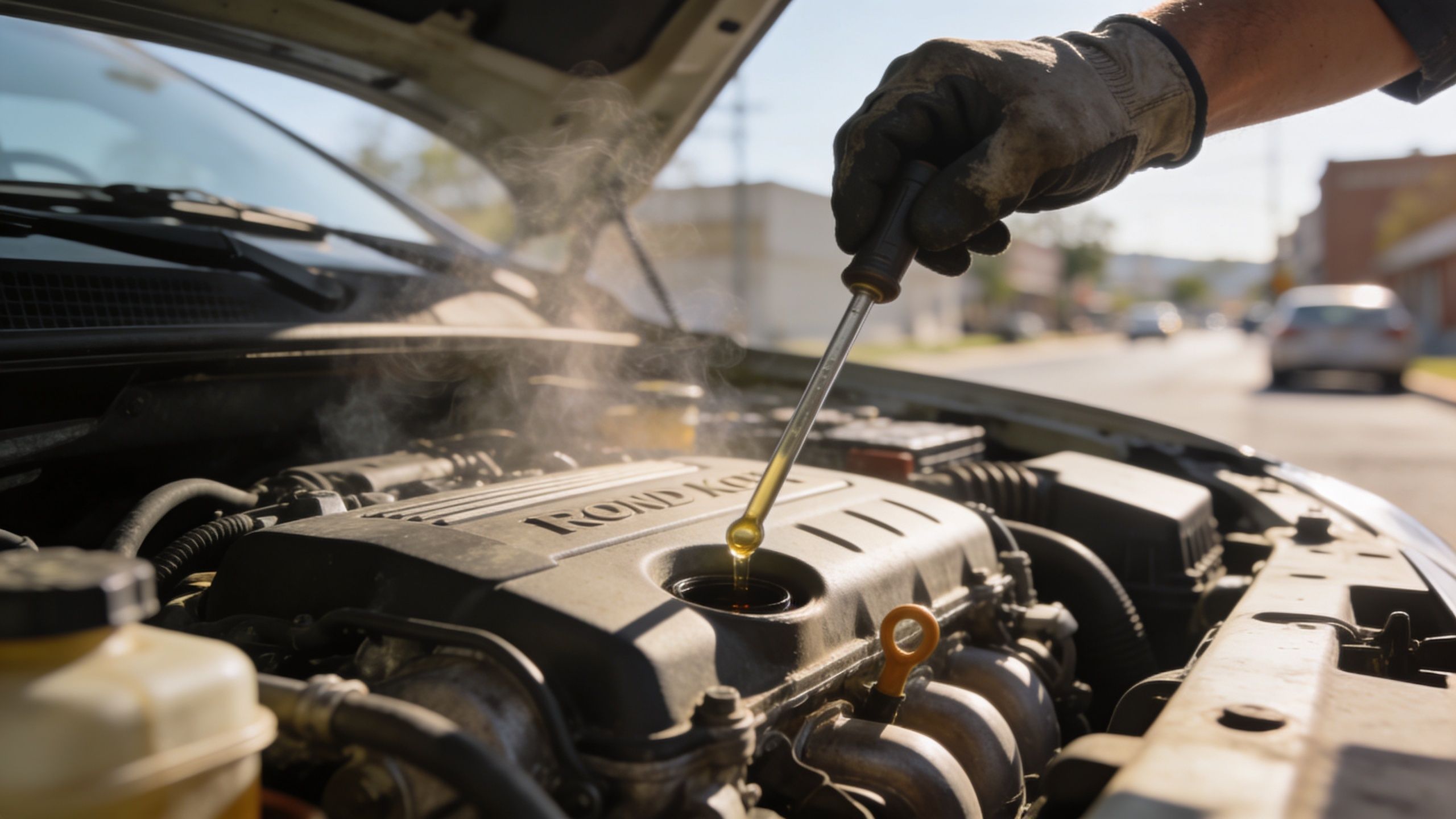
Motor oil does more than lubricate. It also helps carry heat away, suspend contaminants, and keep moving parts from grinding against each other. When oil gets old, dirty, or overheated, it doesn’t do those jobs as well.
Round Rock drivers often deal with a combination that’s especially rough on engines:
- Hot weather increases thermal stress inside the engine.
- Stop-and-go driving keeps the engine working while airflow is reduced.
- Short trips may not give the oil enough time to stabilize the way it does on longer highway runs.
- Dust and road grime add to contamination over time.
That mix is why the standard “I don’t drive that much” logic can backfire. Low mileage doesn’t always mean low stress.
What actually helps
The fix isn’t complicated, but it does need to be intentional. Use the oil your manufacturer calls for, change it on time, and pay attention to the kind of driving you do instead of relying on a generic interval from memory.
Here’s what usually works better than waiting for a dashboard reminder alone:
- Match the oil to the vehicle and conditions. Heat-heavy commuting often benefits from stronger high-temperature protection.
- Replace the filter every time. Fresh oil running through an old filter defeats part of the point.
- Check for leaks or consumption early. Small oil loss can become a major engine problem if it goes unnoticed.
- Adjust for real-world driving. Frequent idling and short trips are harder on oil than many drivers realize.
If your driving is mostly errands, traffic, and summer heat, your engine is on a tougher schedule than the odometer suggests.
That’s the local difference many generic service menus miss. In Round Rock, maintenance has to fit the environment your vehicle lives in.
Conventional vs Synthetic Which Oil Is Best for You
A lot of Round Rock drivers ask the same question after a week of 100 degree heat and I-35 traffic. Do they really need synthetic, or is conventional still fine? The right answer depends on the engine, the manufacturer spec, and how the vehicle is used here, not just the price on the service menu.
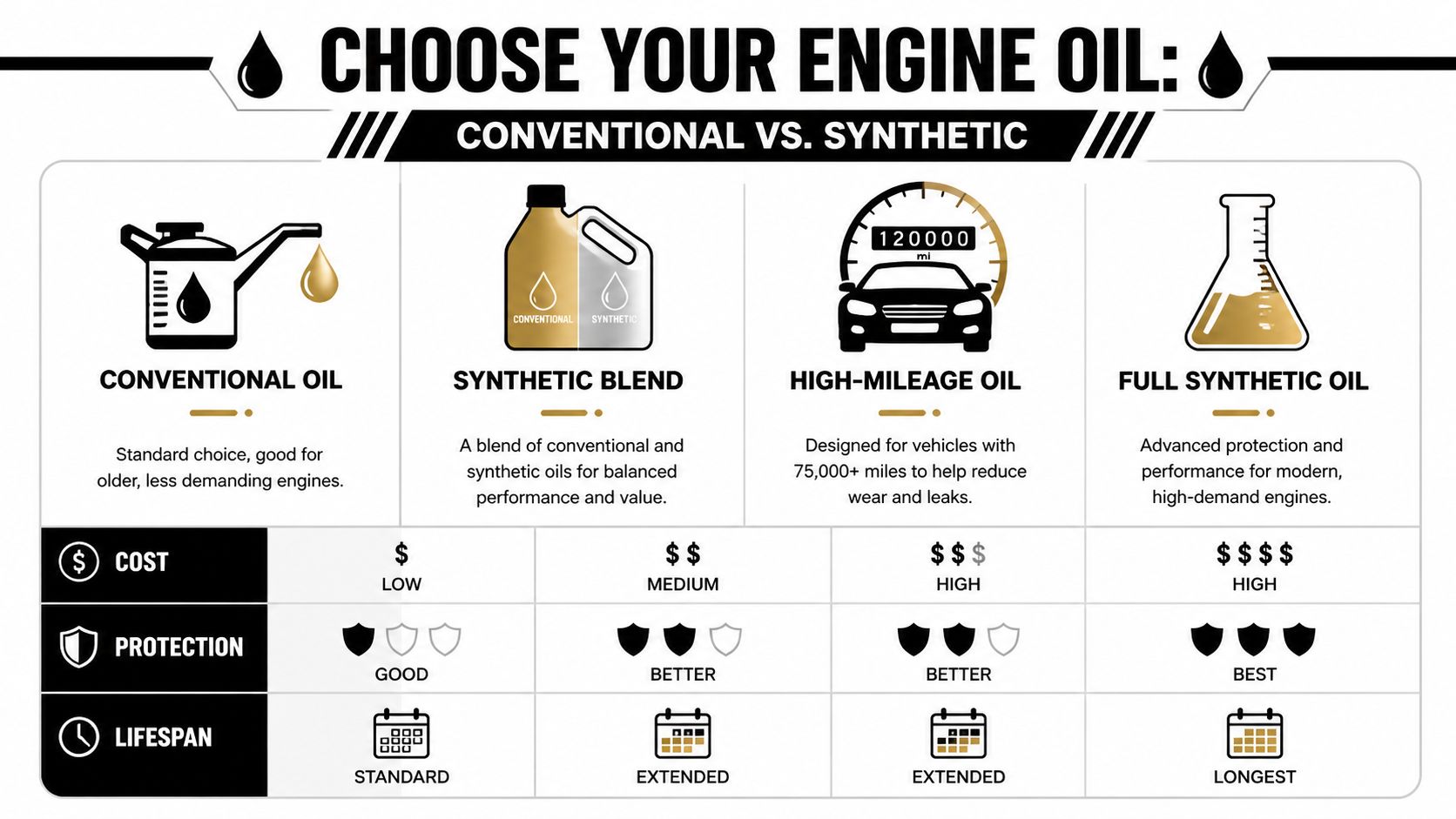
If you want a more detailed breakdown before you come in, this guide to synthetic vs conventional oil and when each makes sense lays out the differences clearly.
A quick comparison
| Oil type | Best fit | Cost | Protection | Lifespan |
|---|---|---|---|---|
| Conventional | Older engines or simpler driving needs | Lower | Good | Standard |
| Synthetic blend | Drivers who want a middle-ground option | Medium | Better | Extended |
| High-mileage | Vehicles with aging seals or higher engine wear | Medium to higher | Better for older engines | Extended |
| Full synthetic | Newer engines, hotter conditions, heavy commuting | Higher | Best | Longest |
Who should choose what
Conventional oil still works for some vehicles. If the owner’s manual allows it, the engine design is less demanding, and the driving pattern is fairly light, it can be a reasonable option. It usually gives up some heat resistance and long-interval stability compared with synthetic, which matters more in Round Rock than it might in milder climates.
Synthetic blend fits drivers who want better protection than conventional without paying for full synthetic. For many daily commuters, that middle option makes sense, especially if the vehicle does a mix of city driving and shorter highway runs.
High-mileage oil is aimed at engines that are starting to show age through minor seepage, oil consumption, or general wear. According to Round Rock oil service pricing and oil performance details from Midas, high-mileage formulations with seal conditioners can extend component life by 20% to 30% in engines over 75,000 miles. The same source notes that full synthetic oils resist varnish and sludge buildup that can reduce engine efficiency by 5% to 10% over time, and can improve fuel economy by 1% to 3% in mixed driving conditions.
Full synthetic is usually the better fit for newer engines, turbocharged vehicles, long commutes, and drivers who spend a lot of time in summer traffic. It stays more stable under heat and stress, which is one reason many manufacturers now specify it from the start.
The long-term cost
The lowest upfront price does not always mean the lowest ownership cost. If a vehicle runs hot, idles often, or calls for synthetic oil, using a cheaper option can lead to faster breakdown of the oil and less margin for protection.
At our shop, the practical decision usually comes down to how much strain your engine sees between visits.
- Choose conventional if your vehicle allows it and your driving is light and predictable.
- Choose a blend if you want a step up in protection without going to full synthetic.
- Choose high-mileage if the engine has higher miles and is starting to show normal wear.
- Choose full synthetic if you want stronger protection in Round Rock heat, traffic, and longer service intervals.
What to Expect During Your Kwik Kar Service Visit
A good oil change visit should feel simple from the moment you pull in. You shouldn’t have to guess what the technician is checking, what oil is going in, or whether anyone noticed a problem developing under the hood.

Local customers expect speed, and the market has set a clear bar. Round Rock quick-service benchmarks include Strickland Brothers completing most oil changes in under 10 minutes, while Take 5 Oil Change holds a 4.5 out of 5 rating from 122 Carfax reviews. That tells you what drivers in this area value. Fast service, clear process, and no surprises.
How the visit typically goes
When you arrive, the first step is confirming the vehicle information and the oil specification. That’s more important than it sounds. A quick service shouldn’t mean guessing at viscosity, filter fitment, or whether the engine calls for conventional, blend, high-mileage, or full synthetic.
Then the technician performs the service itself. Old oil is drained, the filter is replaced, and the new oil is installed to the correct level. The maintenance reminder is reset if needed, and the service is documented so you have a record for later.
A helpful walk-through of what a maintenance visit looks like is below.
What the inspection is for
The inspection portion matters almost as much as the oil itself. This isn’t about trying to sell extra work. It’s about catching the small stuff before it strands you or turns a routine visit into a larger repair.
Common checks during an oil service often include:
- Fluid condition so low or dirty fluids don’t go unnoticed
- Visible leaks around common problem areas
- Filter and drain plug confirmation to make sure the job is sealed correctly
- Basic wear items such as obvious issues with belts, hoses, or related maintenance concerns
The most useful oil change visit is the one that prevents your next breakdown, not just the one that gets you out the door quickly.
That’s why a clear explanation at the end matters. You should know what was done today, what looks fine, and what can wait versus what needs attention soon.
Keep Your Business Moving with Our Fleet Services
Fleet maintenance in Round Rock has a common problem. Plenty of shops can service a single vehicle, but fewer explain fleet support in a way that helps an owner or manager plan costs, track service history, and keep vehicles available for work.

That gap is real. Take 5’s fleet service overview for Round Rock highlights a lack of clear fleet-specific pricing details across local competitors, while noting that specialized programs and detailed reporting are what fleet managers need. That lines up with what business owners ask for at the counter every day. They want predictability.
What fleet operators usually care about
A fleet customer isn’t just buying oil changes. They’re trying to avoid missed appointments, prevent downtime, and keep records straight across multiple vehicles.
The basics that matter most are usually these:
- Scheduled preventive maintenance that fits how each vehicle is used
- Clear service records so nothing falls through the cracks
- Predictable billing that makes budgeting easier
- Fast turnaround because parked vehicles don’t earn revenue
For businesses comparing programs, this overview of a fleet preventive maintenance program and what to look for gives a useful framework.
One practical option in town
Kwik Kar Oil Change and Auto Care offers fleet programs built around uptime, routine maintenance, and operating-cost control. For local businesses running service vans, light trucks, or delivery vehicles, that kind of structure is often more useful than one-off visits handled vehicle by vehicle.
The right fleet plan isn’t the one with the longest service menu. It’s the one that makes maintenance easier to track and harder to ignore.
Book Your Next Round Rock Oil Change with Confidence
You leave work on a hot Round Rock afternoon, sit through traffic on I-35, and realize the oil change sticker is already past due. That is how routine maintenance gets pushed off. It is also how clean oil turns into extra engine wear, especially in the stop-and-go driving and long heat cycles local vehicles deal with every week.
A good oil change should feel simple. Your vehicle gets the oil and filter it calls for, the work gets done cleanly, and you leave knowing why that service fits the way you drive around Round Rock. That local piece matters. A car that sees short trips, school pickup lines, and heavy summer heat does not live the same life as one following a generic maintenance schedule from a national coupon ad.
At Kwik Kar Oil Change and Auto Care, the goal is straightforward service with clear answers. If your car, SUV, or light truck is due, set up your next visit and handle it before a small maintenance item turns into a bigger repair. Call the shop to find a time that works for your day. If you manage several vehicles, ask about fleet scheduling and recordkeeping so you can keep everything organized from the start.
Frequently Asked Questions About Our Oil Change Service
Do I need an appointment for an oil change
Appointments help if you want a specific time, especially on busy days. If your schedule changes often, call ahead and ask about current availability. That usually saves time and sets expectations before you arrive.
How long does an oil change usually take
That depends on the vehicle, the oil type, and whether the technician finds anything that needs a closer look. Some quick-service models in Round Rock move very fast, but the right goal is efficient service with the correct oil and filter, not rushing past important checks.
What if my car needs more than oil
You should expect a clear explanation before any additional work is done. If a technician notices a leak, worn component, or another maintenance concern, ask two questions: does it need attention now, and what happens if I wait? That helps separate urgent repairs from items you can plan for later.
Should I choose synthetic oil every time
Not always. Some vehicles do best with full synthetic, especially in hot conditions or when the manufacturer requires it. Others can use conventional or a blend. The right answer comes from your owner’s manual, your engine design, and how you drive around Round Rock.
Is high-mileage oil worth it
It can be. If your vehicle has higher miles, minor seepage, or normal age-related wear, high-mileage oil may be a better fit than standard conventional oil. It’s not a repair, but it can be a sensible maintenance choice for an older engine.
Will an oil change include an inspection
Most drivers should expect at least a basic check while the vehicle is in the bay. That can include fluid review, visible leak checks, and a quick look at related maintenance items. Those checks are useful because they can catch problems while they’re still small.
Do you keep service records
A professional shop should document the visit so you know what oil was installed, what filter was used, and when the service was performed. That record helps with future maintenance planning and can be useful when you sell the vehicle.
Are there options for business fleets
Yes. Fleet customers usually need more than routine consumer service. They often need grouped records, recurring maintenance planning, and billing that’s easier to manage across several vehicles.
If your vehicle is due for service, schedule your next visit with Kwik Kar Oil Change and Auto Care. You’ll get practical maintenance support, clear communication, and service that fits the way Round Rock drivers use their vehicles.