



Getting a repair estimate handed to you at the shop can feel like reading a foreign language. Numbers, codes, labor hours, parts markups — it adds up fast, and most car owners have no idea what they’re actually paying for. Learning to understand repair estimate breakdown details before you sign anything is one of the smartest moves you can make as a vehicle owner. This guide walks you through every line item, flags the red flags worth questioning, and gives you a clear financial framework so you can decide whether to repair or walk away.
Table of Contents
- Key takeaways
- Understanding the repair estimate breakdown
- How to read a repair estimate step by step
- Red flags and pitfalls to avoid
- Repair vs. replace: making the financial call
- Our take on decoding repair estimates
- Transparent estimates and trusted service at Kwik Kar
- FAQ
Key takeaways
| Point | Details |
|---|---|
| Know the five cost categories | Every estimate includes diagnostic fees, labor, parts, shop supplies, and taxes — each with its own logic. |
| Labor rates vary by shop type | Independent shops charge $80 to $130 per hour; dealerships run $120 to $180 per hour. |
| Supplemental estimates are common | Over 60% of initial insurance estimates require additional claims once hidden damage is found. |
| Watch for red flags | Vague line items, excessive shop supply fees, and pressure to approve quickly are warning signs. |
| Use the 50% rule | If repair costs exceed 50 to 60% of your vehicle’s current market value, replacement is worth serious consideration. |
Understanding the repair estimate breakdown
A repair estimate is not just a bill preview. It is a detailed document that tells you exactly what a shop plans to do, what parts they will use, and how long the work will take. Most estimates share five core cost categories.
Diagnostic fees cover the time a technician spends identifying the problem. Diagnostic fees typically range from $89 to $169 for a standard visit, though many shops waive this fee if you authorize the repair. Think of it as paying for the expertise to find the problem before fixing it.
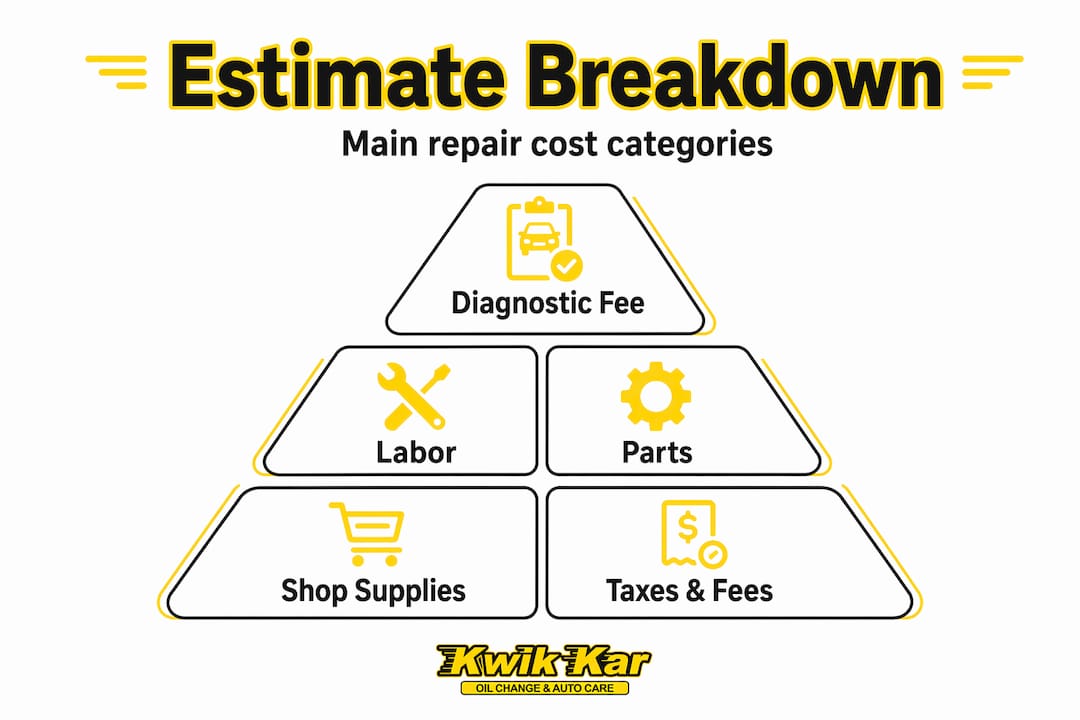
Labor charges are calculated by multiplying the shop’s hourly rate by the estimated hours for the job. Labor rates vary by shop type: independent repair shops typically charge $80 to $130 per hour, national chains run $90 to $140 per hour, and dealerships land between $120 and $180 per hour. Regional factors also matter. Major metro areas consistently show higher labor rates due to cost of living differences.
Parts costs reflect the wholesale price of each component plus the shop’s markup. A well-written estimate lists every part by name and part number so you can verify what is being installed. This is also where you will see whether parts are OEM (original equipment manufacturer) or aftermarket.
| Cost category | What it covers | Typical range |
|---|---|---|
| Diagnostic fee | Problem identification, technician time | $89 to $169 |
| Labor | Hourly rate × estimated hours | $80 to $180/hr by shop type |
| Parts | Wholesale cost + markup, listed by part name | Varies by part |
| Shop supplies | Rags, fluids, disposal fees | 5 to 10% of labor cost |
| Taxes | State and local tax on parts | Varies by location |
Shop supplies cover consumable items like shop rags, cleaning solvents, and fluid disposal. These should be a minor line item. Shop supplies fees are normally 5 to 10% of labor cost. Anything higher is worth questioning.
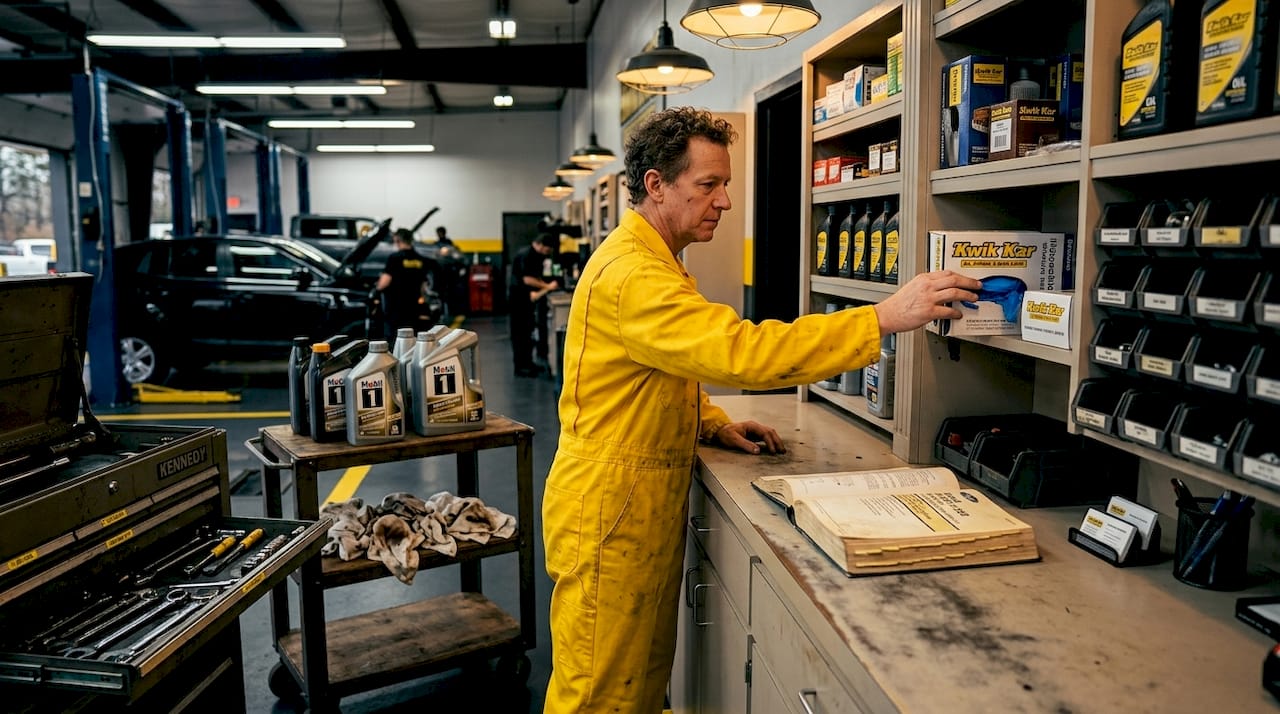
Most shops use one of two billing methods. Flat-rate billing is based on standardized repair times from industry price books, so you pay a set amount regardless of how long the job actually takes. Time-and-material billing charges you for actual hours worked. Both are legitimate, but knowing which method applies helps you evaluate whether the hours listed are reasonable.
Pro Tip: Ask the shop upfront which billing method they use. If they use flat-rate, you can cross-reference the labor hours with online repair databases to verify the estimate is in line with industry norms.
How to read a repair estimate step by step
Reading an estimate confidently takes a little practice, but the process is straightforward once you know what to look for.
- Verify the labor rate and hours. Check the posted hourly rate against regional norms for the shop type. Then look at the hours listed for each repair task. If a standard brake job shows eight hours of labor at a shop that typically bills two to three hours for that job, that gap deserves a direct question.
- Review every parts line item. Each part should have a description and ideally a part number. Look for whether parts are labeled OEM or aftermarket. OEM parts cost more but match your vehicle’s original specs. Aftermarket parts can be a smart value choice for non-critical components, but you should always know which type you are getting.
- Look for diagnostic and teardown fees. Some shops list a teardown fee separately from the diagnostic fee. This covers the labor to disassemble a component to inspect it more closely. It is legitimate, but it should be clearly itemized and not buried in a vague “miscellaneous” charge.
- Understand supplemental estimates. Over 60% of initial insurance estimates require supplemental claims once a certified shop performs a full teardown and finds hidden damage. If your estimate comes from an insurance adjuster, treat it as a starting point, not a final number.
- Scan for unusual entries. Watch for line items with no description, charges labeled only as “shop fees,” or labor hours that seem inflated with no explanation.
Here are the specific questions worth asking before you approve any estimate:
- What is your posted labor rate, and does it apply to all technicians?
- Are these parts OEM or aftermarket, and why did you choose that option?
- Does this estimate include all manufacturer-required procedures, such as ADAS calibration?
- What happens if you find additional damage once the work begins?
- Is the diagnostic fee waived if I authorize the repair today?
Pro Tip: Ask the shop to send you photos of any damage they find during teardown. Reputable shops do this routinely, and it gives you a visual record to match against the estimate line items.
Red flags and pitfalls to avoid
Knowing how to read an estimate also means knowing when something does not look right. These are the warning signs that deserve your attention.
- No itemization. A single lump-sum charge with no breakdown of labor, parts, or fees is not a real estimate. You have no way to verify what you are paying for.
- Inflated labor hours. Effective labor rates are built on real technician wages and overhead. If the hours listed far exceed industry norms for a given repair, the shop may be padding the bill.
- Excessive shop supply fees. A shop supply charge that exceeds 10% of the labor total, or one that is listed as an open-ended percentage with no cap, is a red flag.
- Missing OEM procedures. Estimates must include manufacturer-required procedures such as ADAS calibration and structural measurements. An estimate that skips these steps may leave your vehicle unsafe, even after repairs are complete.
- Pressure to approve immediately. A legitimate shop gives you time to review the estimate. High-pressure tactics to sign before you have read everything are a sign to slow down or walk away.
- No mention of warranty. Any reputable shop stands behind its work. If the estimate does not reference a parts or labor warranty, ask directly.
“Consumers have the right to request replaced parts back to verify work was done and that parts were new.” — Michigan Secretary of State, Repair Manual
Always ask for your old parts back. It is your legal right in most states and one of the most effective ways to confirm the work was actually performed.
Repair vs. replace: making the financial call
Once you understand what a repair will cost, the next question is whether it makes financial sense to pay for it. This is where a simple framework helps.
| Repair cost as % of vehicle value | Recommended action |
|---|---|
| Under 30% | Repair is generally the smart choice |
| 30% to 50% | Evaluate vehicle condition, age, and future maintenance needs |
| 50% to 60% | Replacement is worth serious consideration |
| Over 60% | Replacement is usually the better financial decision |
Repair costs exceeding 30 to 40% of vehicle value are a signal to start comparing repair cost against what the car is actually worth on the market. If the repair pushes past 50 to 60% of the vehicle’s current value, you are often better off putting that money toward a replacement.
There are real exceptions. A collector car, a vehicle with sentimental value, or a car that is otherwise in excellent condition may justify a higher repair investment. The key is making that decision with clear eyes, not because a shop pressured you or because you did not realize how much the repair actually costs relative to the car’s worth.
Review your car maintenance history alongside the estimate. A vehicle with a strong service record and no other pending issues is a better candidate for a major repair than one with multiple deferred maintenance items stacking up.
Pro Tip: Use free tools like Kelley Blue Book or NADA Guides to get your vehicle’s current market value before you approve any large repair. That number is the anchor for your repair-versus-replace decision.
Our take on decoding repair estimates
I have seen the same scenario play out hundreds of times at Kwik Kar Oil Change & Auto Care. A customer comes in with an estimate from another shop, confused and frustrated, and the problem is almost always the same: the estimate was not explained to them. Nobody walked them through what each line meant or why it was there.
In my experience, the customers who ask the most questions get the best outcomes. Not because they are difficult, but because a shop that cannot clearly explain its own estimate is a shop you should not trust with your vehicle. Asking “why does this labor take four hours?” or “is this part OEM?” is not being difficult. It is being a smart vehicle owner.
What I have also learned is that consumers often focus on the total cost and miss the procedures that actually matter for safety. A cheaper estimate that skips ADAS recalibration or structural measurements is not a deal. It is a liability. The right estimate is not always the lowest one. It is the one that covers everything your vehicle needs to be safe and reliable.
Never authorize repairs based solely on an initial insurance estimate. Customers who approve repairs without a thorough teardown inspection often find themselves liable for costs the initial estimate did not capture. Get the full picture before you sign.
— Kwik Kar
Transparent estimates and trusted service at Kwik Kar
When you bring your vehicle to Kwik Kar Oil Change & Auto Care, you get a detailed, itemized estimate before any work begins. Our ASE Certified Master technicians explain every line item in plain language, so you know exactly what you are paying for and why.
Our full auto repair services cover everything from diagnostics and oil changes to brake work, engine repair, and ADAS calibration. We are RepairPal and NAPA AutoCare certified, which means our pricing is fair and our work meets industry standards. We also offer current specials including $20 off oil changes, so maintaining your vehicle does not have to strain your budget. Stop by or call us to get an honest, transparent estimate from technicians who take the time to explain it.
FAQ
What is included in a repair estimate breakdown?
A repair estimate typically includes diagnostic fees, labor charges, parts costs, shop supply fees, and applicable taxes. Each category should be itemized so you can see exactly what you are paying for.
How do I know if labor hours on my estimate are accurate?
Compare the listed hours against industry flat-rate guides, which are publicly available online. Independent shops charge $80 to $130 per hour on average, so cross-referencing both the rate and the hours helps you spot inflated charges.
What is a supplemental estimate in auto repair?
A supplemental estimate covers additional damage found after a shop begins disassembly. Over 60% of initial insurance estimates require supplemental claims once hidden damage is discovered during teardown.
Should I choose OEM or aftermarket parts?
OEM parts match your vehicle’s original specifications and are the safer choice for safety-critical systems. Aftermarket parts can offer good value for non-critical repairs, but always confirm which type the shop plans to use before approving the estimate.
When does it make more financial sense to replace a vehicle than repair it?
If the repair cost exceeds 50 to 60% of the vehicle’s current market value, replacement is generally the smarter financial decision. Use a current market valuation tool to anchor that comparison before you approve any major repair.