

You’re on your way to work, the car feels mostly fine, and then a light shows up on the dash. Or maybe there’s no warning light at all. You just hear a squeak when you brake, feel a shake through the steering wheel, or notice the car pulling a little harder than it used to. That’s usually the moment stress kicks in. Is it minor maintenance, or the start of something expensive?
For local drivers, that’s where millbrae tire and auto repair becomes less about a shop name and more about a decision. You need to figure out what the car is telling you, what kind of service makes sense, and whether the place you choose will explain the problem clearly instead of talking around it.
A good repair experience isn’t built on mystery. It starts with symptoms, moves into diagnosis, and ends with a repair plan you can understand. That’s what this guide is for.
Your Guide to Navigating Car Care in Millbrae
You notice it on a normal drive. The steering wheel has a slight shake at 60 mph. The brakes still stop the car, but the pedal feels different. The engine starts, then idles rough for a few seconds before smoothing out.
That is usually how car trouble begins in real life. Not with a dramatic breakdown, but with a small change you are not sure you should take seriously. Waiting a few days is common. So is hoping the noise goes away on its own. Sometimes it does. More often, the extra time turns a simple service visit into a bigger repair conversation.
The practical move is to start with the symptom and work from there. You do not need to diagnose the car in your driveway. You do need to pay attention to what changed, when it happens, and whether it is getting worse.

Start with what changed
A shop can usually get to the answer faster when the problem description is specific. Three details help right away:
- When it happens. Cold start, highway speed, stop-and-go traffic, braking, turning, or idling.
- What it feels or sounds like. Grinding, clicking, shaking, pulling, overheating, or sluggish acceleration.
- Whether it changed suddenly or gradually. Sudden failures and slow wear usually point to different causes.
If you want a simple way to stay ahead of routine service before it turns into repair work, this car maintenance checklist is a useful reference.
A clear symptom description saves time. “It rattles over bumps after ten minutes of driving” helps more than “something feels off.”
Communication counts before the appointment too. A shop’s website, reviews, and service information often tell you whether they explain problems clearly or hide behind vague language. If you want to see how strong shops present that information online, this look at proven auto repair marketing offers a useful outside view.
What local drivers usually need
In Millbrae, the first question usually is not “Which service do I need?” It is “Am I dealing with tires, maintenance, or an actual repair?” That distinction matters because the process is different. A tire issue might call for pressure checks, rotation, alignment, or replacement. A warning light may need diagnostic time before anyone can quote the repair. A brake noise could be pads, rotors, hardware, or something in the suspension that only shows up during inspection.
That is why a neighborhood shop that handles day-to-day maintenance and mechanical repair is often the right place to start. You can bring in the symptom, get the car inspected, and decide on the next step with better information.
The goal is simple. Know what changed, describe it clearly, and choose a shop that explains the findings in plain language. That makes the whole process easier to handle and a lot less stressful.
Decoding Your Car’s Needs Tire and Maintenance Basics
You head out in Millbrae on a normal morning, and the car feels different before you reach El Camino. The steering wheel has a slight shake. One tire looks a little low. Nothing seems dramatic, but now you have the primary question drivers face first. Is this routine upkeep, a tire problem, or the start of a repair?
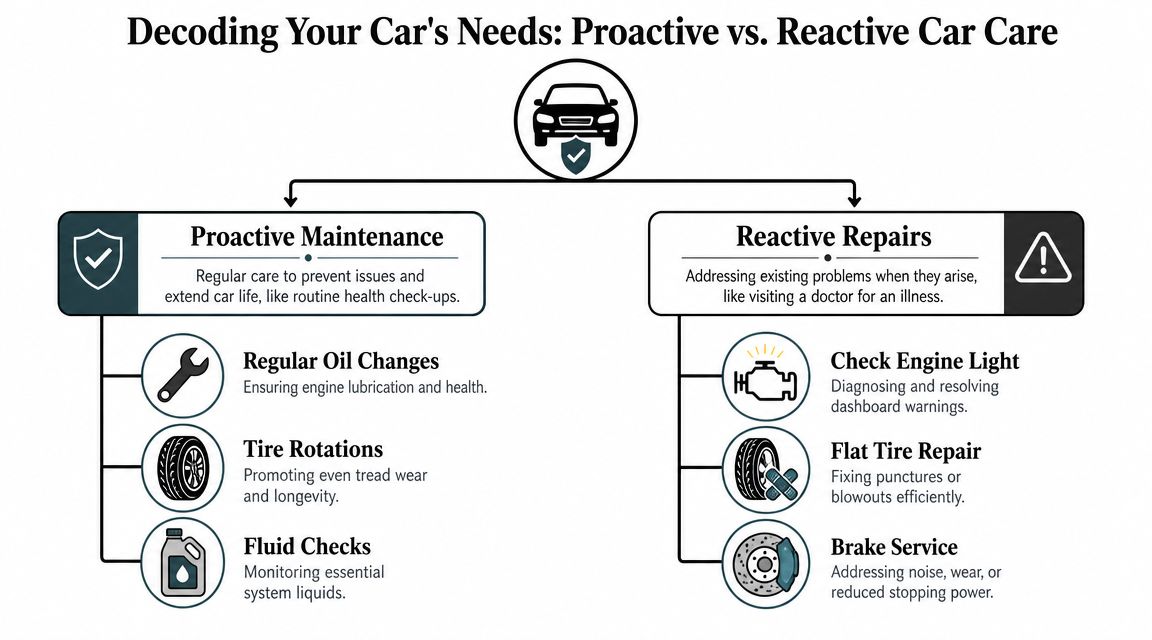
Cars usually need attention in two lanes. The first is proactive maintenance, which covers scheduled work that keeps wear under control. The second is reactive repair, which starts after a symptom shows up. Knowing which lane you are in helps you decide how quickly to act, what kind of shop visit to book, and whether the problem is likely to stay inexpensive.
Proactive work keeps small problems small
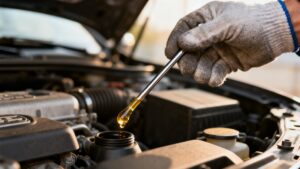
Routine service is what prevents simple wear from turning into a larger bill. Oil changes, fluid inspections, and tire checks often get delayed because the car still runs fine. That is usually when costs start creeping up.
Tires are a good example because they affect ride quality, braking, steering feel, and tread life all at once. Low pressure can wear the shoulders. Too much pressure can wear the center. Bad alignment can scrub off one edge while the rest of the tread still looks usable. A driver sees “one tire wearing out.” A technician sees a clue that may point to inflation habits, suspension wear, or alignment angles.
The safety side matters too. According to NHTSA tire safety guidance, tire-related crashes continue to cause hundreds of deaths each year, and the agency recommends checking tire pressure and tread monthly. It also notes that many manufacturers recommend replacing tires once they reach 6 to 10 years old, even if the tread still looks decent.
If you want a clearer sense of what a shop looks at during tire service and inspection, start with pressure, tread depth, age, wear pattern, and whether the vehicle tracks straight on the road.
Tire service terms that matter
Drivers hear rotation, balancing, and alignment in the same conversation all the time. They are related, but they solve different problems.
- Rotation moves tires to different positions so they wear more evenly over time.
- Balancing corrects uneven weight in the tire and wheel assembly. The usual clue is a vibration that shows up at certain speeds.
- Alignment adjusts wheel angles. The common signs are pulling, a crooked steering wheel, or unusual tread wear.
One symptom can point to more than one cause. A pull to the right might come from alignment, tire pressure, tire conicity, or worn steering parts. That is why guessing from the driver seat only gets you so far.
Reactive repair starts with symptoms
Reactive repair begins once the car starts asking for help. Brake noise, a coolant smell, a warning light, weak A/C, or hard shifting all belong in that category. At that stage, the goal is not to jump straight to a part. The goal is to inspect the car before a smaller issue creates collateral damage.
Timing matters here.
A tire that keeps losing air may only need a repair if the puncture is in the right spot and the internal structure is still sound. Keep driving on it while underinflated, and you may end up needing a replacement instead. The same pattern shows up across the car. A small fluid leak, a worn belt, or a mild brake vibration is usually cheaper to handle early than after related parts start wearing with it.
For a car owner, this is the practical split. Maintenance is planned. Repair is symptom-driven. The better you can spot the difference, the easier it is to book the right visit, approve the right work, and avoid paying for problems that could have been caught sooner.
Essential Auto Repair Services Explained
A solid shop should be able to cover both routine work and deeper mechanical issues. That includes the systems drivers ask about most often: brakes, diagnostics, cooling, steering and suspension, tire service, and emissions-related work. A high-quality full-service shop typically handles exactly those areas, as reflected in the service categories listed on the California labor market profile reference.
Brakes and warning signs you can feel
Brake problems usually announce themselves in one of three ways. Noise comes first. Then feel. Then performance.
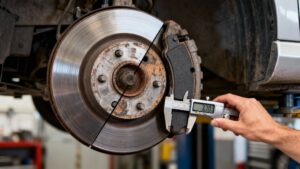
If the brakes squeal lightly, that can point to wear or debris. If they grind, that’s more serious. If the pedal feels soft, the car takes longer to stop, or the front end shakes when braking, you need an inspection, not guesswork.
What works is describing the exact condition. “Only when braking downhill” is useful. “All the time, but worse after traffic” is useful too. “My brakes are bad” isn’t enough on its own.
Diagnostics and cooling problems
A check engine light is not a repair. It’s a request for diagnosis. The same light can point to very different problems, from a minor drivability issue to something that affects emissions or engine operation. Good diagnosis connects the code, the symptom, and actual testing.
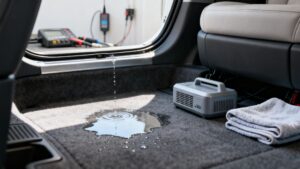
Cooling system trouble is similar. Drivers often notice a sweet smell, a temperature change, or a small puddle before they think “radiator problem.” Ignoring that can turn a manageable repair into an overheating event. Once an engine overheats, the repair path often gets more complicated.
If you want a plain-language overview of common wheel and tire work before talking with a shop, this guide to tire services is a practical place to start.
Steering suspension and emissions
Steering and suspension issues don’t always feel dramatic. Sometimes they show up as looseness over bumps, a clunk during turns, uneven tire wear, or a car that never quite tracks straight. Drivers often blame the tires first. Sometimes they’re right. Often the deeper cause sits in the suspension or steering linkage.
State emissions inspection adds another layer. Many drivers assume it’s just a formality. It isn’t. If the vehicle has a fault affecting emissions readiness or system performance, that inspection can reveal a problem that wasn’t obvious in daily driving.
Shops do better work when the customer reports symptoms clearly and stays open to the possibility that one complaint can involve more than one system.
How to Choose a Trustworthy Millbrae Auto Shop
Your car starts acting up on a workday morning. You need an answer fast, but speed alone is a poor reason to hand over the keys. The better question is whether the shop can identify the problem clearly, explain what matters now versus later, and put that in writing.
That is usually how trust is built. Not through a polished lobby or a quick promise, but through a repeatable process customers can follow.
Millbrae Tire and Auto Repair is a AAA Approved Auto Repair facility at 184 El Camino Real, Millbrae, CA 94030. As noted earlier in the article, its AAA listing also mentions a member labor discount. That kind of third-party listing matters less as a badge and more as a sign that the shop follows documented standards, publishes core information, and gives customers another place to verify what they are being told.
What to look for before you book
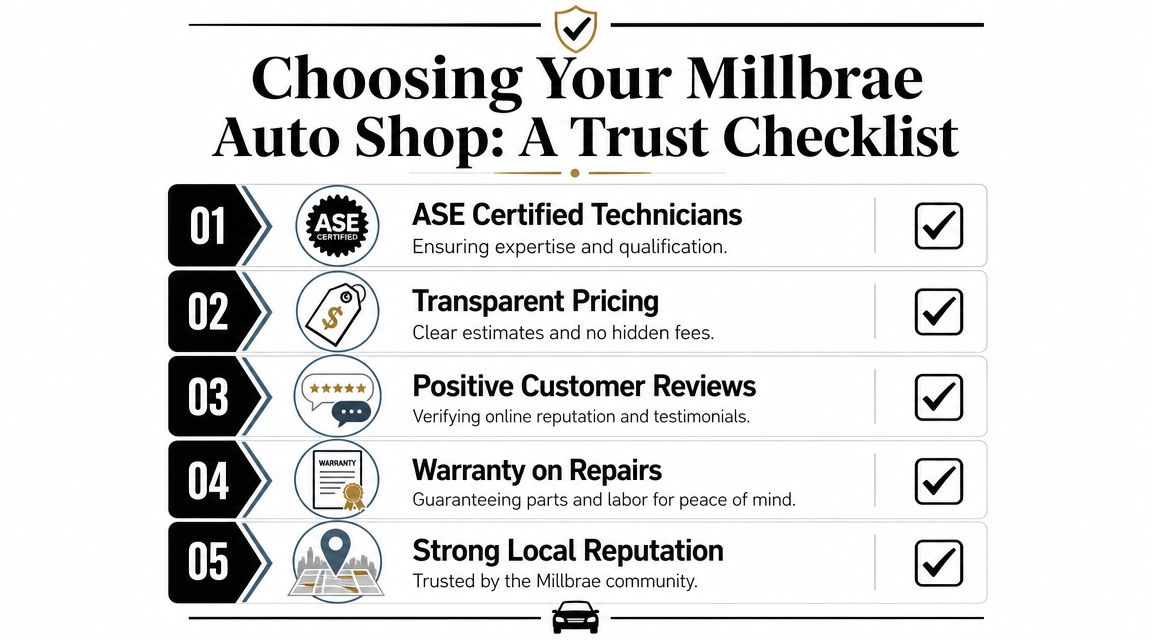
Before you schedule anything, check whether the shop makes the customer’s path easier or harder. A reliable shop gives you enough information to decide without forcing you to guess.
- Clear service range. A shop should be able to handle routine maintenance, tire work, and common repair categories without sending you somewhere else for every second problem.
- Consistent communication. Read reviews for patterns. Repeated comments about honesty, updates, and follow-through carry more weight than one enthusiastic review or one angry complaint.
- Written estimates. You should see what you reported, what the shop found, and what it recommends doing now.
- A process for feedback. Shops that ask for and respond to customer feedback usually care more about consistency. If you want a behind-the-scenes look at how businesses build that process, this article on getting more reviews gives useful context.
The estimate matters more than many drivers realize. If you want to compare one shop’s paperwork with another, this guide on how to understand a repair estimate breakdown can help you spot whether the shop is being clear or hiding behind vague line items.
Questions worth asking
Good questions save money and reduce bad approvals. Ask these before you say yes to the repair:
- What have you confirmed, and what still needs testing?
- Is this affecting safety, drivability, or long-term wear?
- What happens if I wait a week, a month, or until the next service visit?
- Are you recommending this because the part failed, or because it is worn and close to failing?
A solid service advisor should be able to answer those without getting defensive. If the response stays vague, the diagnosis may still be incomplete.
A short visual overview can help if you’re comparing shops and standards.
What usually lowers confidence
Be careful with shops that jump straight to parts replacement before explaining testing. “You need a lot of work” tells you nothing. “We’ll know once we open it up” can be fair in some cases, but only after the shop explains what it already checked and why more disassembly is necessary.
The best shops explain three things in plain language: what failed, what risk it creates, and how soon it should be addressed.
That helps you make a calm decision. It also fits the way real car owners handle repairs. Some jobs need approval the same day. Others can be planned, priced, and scheduled around your budget without putting the car or driver at risk.
Understanding Repair Costs and Setting Appointments
Repair estimates usually combine two things: parts and labor. The parts side can vary depending on whether the shop recommends original-equipment style components or aftermarket replacements. Neither category is automatically right or wrong. The right choice depends on the vehicle, the system involved, availability, and how long you plan to keep the car.
Labor reflects the time and skill needed to inspect, access, remove, replace, and verify the repair. Diagnosis can also be part of that cost. That catches some drivers off guard, but it shouldn’t. Finding the actual problem is work.
How to read an estimate
When you review a written estimate, look for these basics:
- The complaint. What you reported.
- The findings. What the shop observed or tested.
- The recommendation. What they say the car needs now.
- The line items. Parts, labor, shop supplies if applicable, and any separate diagnostic charge.
If you want help reading that paperwork without the jargon, this guide on how to understand a repair estimate breakdown is useful.
Make the appointment easier on yourself
When you call, have the vehicle year, make, model, and your symptoms ready. If a warning light is on, say whether it’s steady or flashing. If the issue happens only under certain conditions, mention that up front.
Before drop-off, remove valuables, note any drivability or starting concerns, and be specific about how to reach you. Shops can move faster when they don’t have to chase missing details. For drivers comparing options, Kwik Kar Oil Change and Auto Care is one example of a shop model that offers maintenance, diagnostics, state inspections, and general repair under one roof, which can make scheduling simpler when the exact issue isn’t clear yet.
Frequently Asked Questions About Local Auto Care
Some questions come up in almost every front-counter conversation. The best answers are short, practical, and tied to what helps you avoid wasted time or unnecessary risk.
Common questions drivers ask
| Question | Answer |
|---|---|
| How often should I check my tires? | Check them regularly, and don’t wait for a visible problem. Pressure and tread condition are easy to overlook because wear happens gradually. A quick monthly habit catches more than most drivers expect. |
| Can I bring my own parts to a shop? | Some shops allow it, some don’t, and some will install customer-supplied parts with limited or no warranty on the repair. Ask before the appointment. Even when a shop agrees, it may still want to verify that the part matches the vehicle and the actual failure. |
| What’s the difference between a steady check engine light and a flashing one? | A steady light usually means the car still needs diagnosis soon. A flashing light is more urgent and shouldn’t be ignored. If you’re trying to sort through no-start or warning-light situations before calling, this Blade Auto Keys starting guide offers a simple starting point for basic symptom checking. |
A few final practical answers
A tire issue isn't always just a tire issue. Pulling, vibration, and uneven wear can come from inflation, balance, alignment, suspension wear, or a mix of those. That's why good shops inspect the full system instead of replacing parts one by one and hoping the symptom disappears.
Customer-supplied parts can save money in some cases, but they can also complicate diagnosis and warranty coverage. If the wrong part shows up, the car still takes up a bay, and the repair still stops until the right component arrives.
If you're unsure whether the car is safe to drive, ask that question directly when you call. Don't assume the answer.
If you want a shop that handles routine maintenance, diagnostic work, inspections, and general repair with a straightforward approach, Kwik Kar Oil Change and Auto Care is a practical option to keep on your list. It's a good fit for drivers who want clear communication, preventive service, and one place to call when a small symptom starts turning into a bigger problem.