


Yes, European cars generally need stricter adherence to service specs and earlier attention to a handful of known weak points, but that doesn’t mean higher costs are inevitable. Stay slightly ahead of the manufacturer’s long-life intervals, insist on correct-spec oil and filters, get the cooling system and timing components inspected, and run a full diagnostic scan before small issues become expensive ones.
TL;DR:
- European cars benefit from more frequent fluid checks and inspections, especially if you drive short distances, in high heat, or tow regularly.
- Maintenance costs tend to be higher over time due to premium parts, longer labor times, and specialized diagnostics required for European models.
- Major expensive failures often involve cooling plastics, timing components, air suspension, and electronic modules, all of which show warning signs before total failure.
- Using manufacturer-approved oils and sourcing OE or OEM parts can significantly extend your vehicle’s reliability and help avoid costly breakdowns.
- Choosing a shop with ASE Certified Master technicians and a diagnostic-first approach ensures better long-term savings and proper care for your European vehicle.
Table of Contents
- What Is a Realistic European Car Maintenance Schedule?
- Are European Cars More Expensive to Maintain?
- What High-Cost Failures Should European Car Owners Watch For?
- Which Fluids and Parts Actually Matter for Reliability?
- Why Choose an ASE-Certified Shop for European Vehicle Care?
- Our Take: Preventive Beats Reactive, Every Time
- Book Your European Vehicle Inspection at Kwik Kar
- Sources
- FAQ
What Is a Realistic European Car Maintenance Schedule?
Manufacturer “long-life” service reminders on many European models are built around ideal driving conditions, which most commuters never actually experience. Short trips, stop-and-go Dallas traffic, and Texas summer heat all shorten the real lifespan of engine oil and other fluids faster than the dashboard admits. Technicians who work on these vehicles daily routinely recommend tightening those intervals instead of waiting for a warning light.
Here’s a workable framework built around common mileage buckets:
- 5,000 to 10,000 miles: Oil and filter check or change (sooner if you drive mostly short trips), tire pressure and tread inspection, visual fluid check.
- 15,000 miles: Cabin and engine air filter inspection, brake pad thickness check, battery terminal inspection.
- 30,000 miles: Brake fluid condition check, transmission fluid inspection, spark plug review on turbocharged engines, suspension component check.
- 60,000 miles: Coolant system inspection, timing component check, drive belt and tensioner review, deeper diagnostic scan for stored codes.
- 90,000 miles and beyond: Spark plug replacement, transmission service, air suspension module check, walnut-shell intake cleaning on direct-injection engines.
Shorten these intervals if you regularly tow, drive in extreme heat, or rack up mostly short trips under five miles. Those conditions accelerate oil breakdown and carbon buildup well past what the onboard computer estimates.
On each visit, ask your shop for four specific things: a computer scan for stored or pending trouble codes, a visual leak check around the engine and transmission, a fluid condition assessment (not just fluid level), and a brake inspection that measures pad and rotor thickness rather than just looking for obvious wear. A printable maintenance checklist makes it easier to track what’s been done and what’s coming up next.

Are European Cars More Expensive to Maintain?
Often, yes. Consumer Reports’ brand-cost analysis shows several European marques clustering among the priciest brands to maintain over a ten-year ownership window. The reasons are structural, not just brand markup.
European engines commonly require higher-spec synthetic oils and hold larger oil capacities, which raises the cost of every oil change. Labor time runs longer, too, since many components sit behind more layers of trim and hardware than on comparably priced domestic models. Add in premium electronics, air suspension, and turbocharging, and you get systems that require trained technicians and specialty diagnostic tools rather than a generalist’s toolbox.
That’s where Autoblog’s $3,000 rule becomes a useful gut check. If your annual repair bills are approaching or exceeding $3,000, and your car is seven to eight years old or past roughly 150,000 miles, it’s time to weigh replacement seriously against continued repair.
A simple way to apply it: add up everything you’ve spent on repairs in the last 12 months, ask your mechanic for a rough three-year cost forecast based on your car’s mileage and known wear points, then compare that number to what you’d lose to depreciation on a replacement. This exercise, more than gut instinct, tells you whether to keep fixing or start shopping.
What High-Cost Failures Should European Car Owners Watch For?
A small set of systems accounts for most of the expensive, unplanned repairs on European vehicles, and nearly all of them give warning signs before they fail completely.
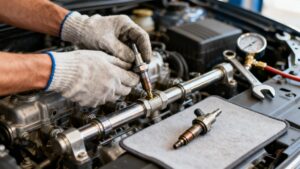
- Cooling system plastics: Coolant reservoirs, thermostat housings, and connectors often use engineered plastics that become brittle with heat cycling, especially in Texas summers.
- Timing chain guides and tensioners: Wear here can allow chain slap or, in worse cases, timing failure that damages valves and pistons.
- Air suspension modules: Compressors and air struts wear out gradually, often showing up first as a car that sits lower on one side overnight.
- Valve cover gaskets: Prone to seeping, and often overlooked until an oil leak stains other nearby components.
- Electronic control modules: Connectors and wiring harnesses can corrode or fail, particularly in high-heat environments.
Most of these components fail because of material choices and tight packaging designed to save weight and space, not because European engineering is inherently fragile. The tradeoff is that access labor is often higher when something does need replacing.
That’s why bundling related jobs pays off. Replacing a water pump at the same time as timing chain components, for example, avoids paying for the same disassembly labor twice. Owners who bundle preventive work rather than fixing failures one at a time tend to see meaningfully lower lifetime repair costs compared to reactive repair.
Pro Tip: Direct-injection engines don’t spray fuel over the intake valves the way older port-injection engines did, which lets carbon build up on the valves themselves over time. Walnut-shell blasting every so often helps clear carbon buildup on intake valves of direct-injection engines and restores power, though this service is rarely indicated by onboard diagnostics.
Which Fluids and Parts Actually Matter for Reliability?
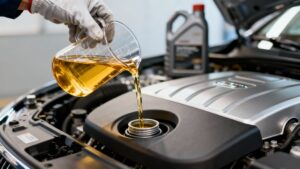
Not all motor oil is interchangeable, and this matters more on European engines than on most domestic ones. Manufacturer-approved specifications like BMW LL-01/04, Mercedes 229.5/229.51, and VW/Audi 504/507 exist because these engines are engineered around specific viscosity, detergent, and shear-stability profiles. Using an oil that doesn’t meet the approved spec, even if the viscosity number matches, can accelerate wear on turbochargers, timing chains, and variable valve components.
A correctly specified oil isn’t a premium upsell. It’s closer to a compatibility requirement, the way certain medications only work when paired with the right dosage. Get the spec wrong and you’re not saving money. You’re borrowing against the engine’s future.
Parts sourcing is another area where informed choices save real money without sacrificing reliability. Dealer-boxed genuine parts typically carry the highest markup. OE-supplier parts, meaning components made by the same manufacturer that supplies the dealership, often cost meaningfully less while meeting identical specifications. Aftermarket parts can be acceptable for non-safety wear items like cabin filters, but brakes, suspension components, and anything tied to safety systems are worth staying closer to OE quality.
Some services also require tools and training beyond a general shop’s scope:
- Service-position procedures for engines that need to be tilted or shifted to access timing or cooling components.
- DSG and dual-clutch transmission service, which requires manufacturer-specific fluid and adaptation procedures.
- Module coding and programming after replacing electronic components, since many parts must be paired to the vehicle’s computer to function correctly.
This is also a good moment to think beyond the mechanical side. Keeping the engine bay clean makes leaks and cracked hoses easier to spot early, and ceramic protection products designed for engine components can help preserve plastic and rubber parts against heat degradation over time.
Why Choose an ASE-Certified Shop for European Vehicle Care?
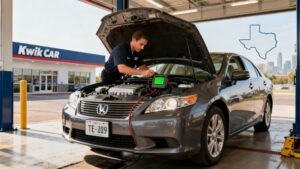
Finding a shop that treats European vehicles as a specialty rather than an afterthought makes a measurable difference in both repair quality and long-term cost. Kwik Kar Oil Change & Auto Care on Spring Valley Road works on both domestic and import vehicles, and several concrete factors back that up:
- ASE Certified Master technicians trained specifically on the diagnostic and repair procedures modern European vehicles require.
- Recognition from RepairPal and NAPA AutoCare, third-party organizations that vet shops for quality and reliability.
- A diagnostic-first process, meaning technicians scan and test before recommending parts replacement, which avoids paying for guesswork.
- Transparent estimates before work begins, so you know the cost and scope before anything is approved.
If your car is due for routine service, our oil change and full auto repair services cover everything from the mileage-interval checklist above to more involved timing and cooling system work. If you’re chasing an intermittent warning light, our engine diagnostics service is built exactly for that. Local fleets managing multiple vehicles can also reach out through our fleet program to keep every vehicle on a consistent preventive schedule.
Our Take: Preventive Beats Reactive, Every Time
The conventional advice around European car ownership treats high maintenance costs as a fixed tax you pay for driving something with a nicer badge. That framing gets the cause and effect backwards. The vehicles that rack up brutal repair bills are almost always the ones where small, predictable problems got ignored until they became big ones.
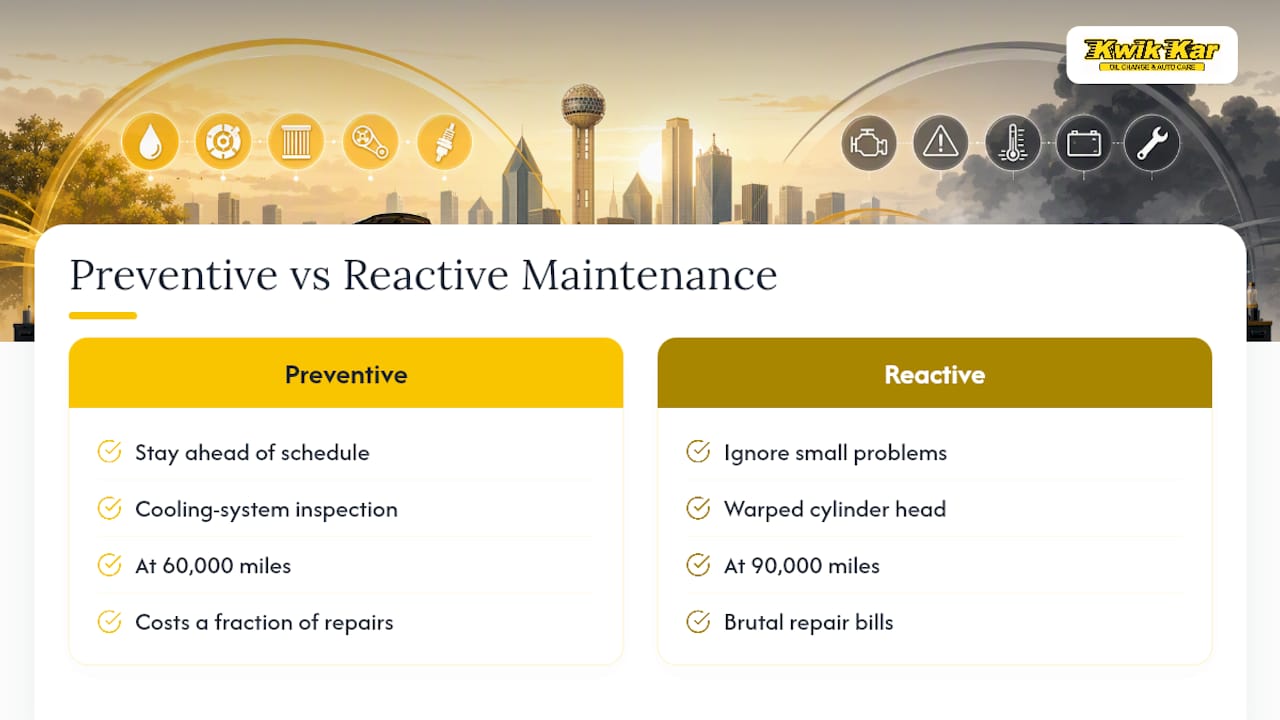
What the evidence actually supports is narrower and more useful: European vehicles reward owners who stay ahead of the schedule instead of reacting to warning lights. A cooling system inspection at 60,000 miles costs a fraction of what a warped cylinder head does at 90,000. A walnut-blasting service costs far less than diagnosing a mystery power loss that turns out to be carbon buildup nobody checked for.
If you own a European vehicle, the single highest-return move isn’t finding the cheapest oil change. It’s finding a shop that treats diagnostics as the first step, not the last resort, and sticking with a consistent interval schedule even when the dashboard says you still have time.
— Kwik Kar
Book Your European Vehicle Inspection at Kwik Kar
Kwik Kar Oil Change & Auto Care gives Spring Valley Road drivers something most general repair shops can’t: ASE Certified Master technicians who already know the correct oil specs, timing intervals, and diagnostic procedures for your specific European model, so you’re not paying to educate a shop through trial and error. Our diagnostic-first approach means we scan and test before we recommend parts, and you get a transparent estimate before any work begins.
Whether you’re due for a routine oil change, need a cooling system inspection ahead of a Texas summer, or want a full diagnostic check after a warning light appeared, our ASE and RepairPal certified team is ready to help. Commuters, families, and local fleets across Dallas trust us for honest assessments and dependable repairs. Schedule your next service or request a fleet maintenance consultation at Kwik Kar Oil Change & Auto Care today.
Sources
- Car Brands Ranked by Maintenance and Repair Costs Over Time – Consumer Reports
- The $3,000 Rule: When to Keep Your Car and When to Trade – Autoblog
- European Car Maintenance Schedule: Complete Service Guide | Maytas Parts
- Are European Cars More Expensive to Service? Real Cost Breakdown – Europarts360
FAQ
Do European Cars Require More Maintenance Than Domestic Cars?
European cars often need stricter adherence to fluid specifications and earlier preventive checks on systems like cooling and timing components, though the frequency of basic services like oil changes is comparable to most modern vehicles.
What Is the $3,000 Rule for Car Repairs?
The $3,000 rule suggests that if annual repair costs approach or exceed $3,000 on a vehicle that’s seven to eight years old or past roughly 150,000 miles, replacement is often more economical than continued repair.
How Often Should I Service My European Car?
Follow the mileage-based buckets covered above, but shorten manufacturer long-life intervals if you drive mostly short trips, live in a hot climate, or tow regularly, since those conditions wear out fluids faster than the dashboard estimates.
Are Oil Changes More Expensive for European Cars?
Usually, yes, because many European engines require manufacturer-approved synthetic oils and hold larger oil capacities than comparable domestic engines, which raises the per-service cost even when the labor time is similar.
How Do I Know If My Mechanic Is Qualified to Work on My European Car?
Look for ASE Certified Master technicians and shops recognized by organizations like RepairPal and NAPA AutoCare, both of which signal a track record of quality diagnostic and repair work on import vehicles.