



AC not blowing cold is a symptom, not a diagnosis. It can mean low refrigerant from a slow leak, a failing compressor, a clogged condenser, a stuck blend door, or something as simple as a blown fuse. If your system was recently recharged and the cold air is already gone, the answer isn’t another can of refrigerant. It’s a real diagnostic, because a recharge restores refrigerant but doesn’t fix whatever let it escape.
Here’s your one next step: run the five owner checks below. If the symptom showed up suddenly, came with new noise, or followed a recent recharge, skip the guesswork and book a diagnostic instead.
- Check vent airflow strength and which vents are affected
- Confirm the blower works on every fan speed
- Look at the condenser for debris or physical damage
- Verify your HVAC settings and check relevant fuses
- Note when the problem happens and any noises you’ve heard
At Kwik Kar Oil Change & Auto Care, ASE-certified technicians diagnose with pressure and temperature verification and leak detection, not guesswork, and that measurement-based approach is what separates a real fix from a temporary one.
Key Takeaways
A warm-blowing AC is almost always a symptom with a specific mechanical or electrical cause, and diagnosing that cause before recharging prevents paying for the same problem twice.
| Point | Details |
|---|---|
| Diagnose before recharging | Repeated cold-air loss after a recharge points to a leak, not normal refrigerant use. |
| Match the symptom pattern | Cold at speed but warm at idle usually points to condenser or fan airflow, not just low charge. |
| Expect measurement-based testing | A real diagnostic includes static pressure checks, dynamic tests at idle and 1,500 RPM, and leak detection. |
| Know the cost drivers | Minor hose repairs cost far less than condenser or compressor replacement, so get an itemized estimate first. |
| Choose a measurement-driven shop | Kwik Kar Oil Change & Auto Care uses ASE-certified technicians and written estimates before any AC repair begins. |
Table of Contents
- Five Quick Checks Before You Call It Ac Not Cold
- What’s Actually Causing Your Car AC Warm Air
- How Do Technicians Diagnose AC Not Cold When Idling?
- Recharge or Repair: What Should You Expect to Pay?
- Is It Safe to Recharge Your Own Car AC?
- What We’d Tell You if You Were a Friend
- Get an AC Diagnostic Backed by Measurement, Not Guesswork
- Sources
- FAQ
Five Quick Checks Before You Call It Ac Not Cold
These five checks take about ten minutes and either solve a trivial problem or give a technician a head start.
- Test every vent. Cycle through defrost, dash, and floor vents. If only some vents run warm, that points to a blend-door or duct issue rather than a refrigerant problem.
- Run the blower through all speeds to check for a weakening blower motor or a clogged cabin air filter like the Medify Air MA-CAR Replacement Filter in Dubai, not the refrigerant side at all. A weak blower on every setting suggests a failing blower motor or a clogged cabin air filter, not the refrigerant side at all.
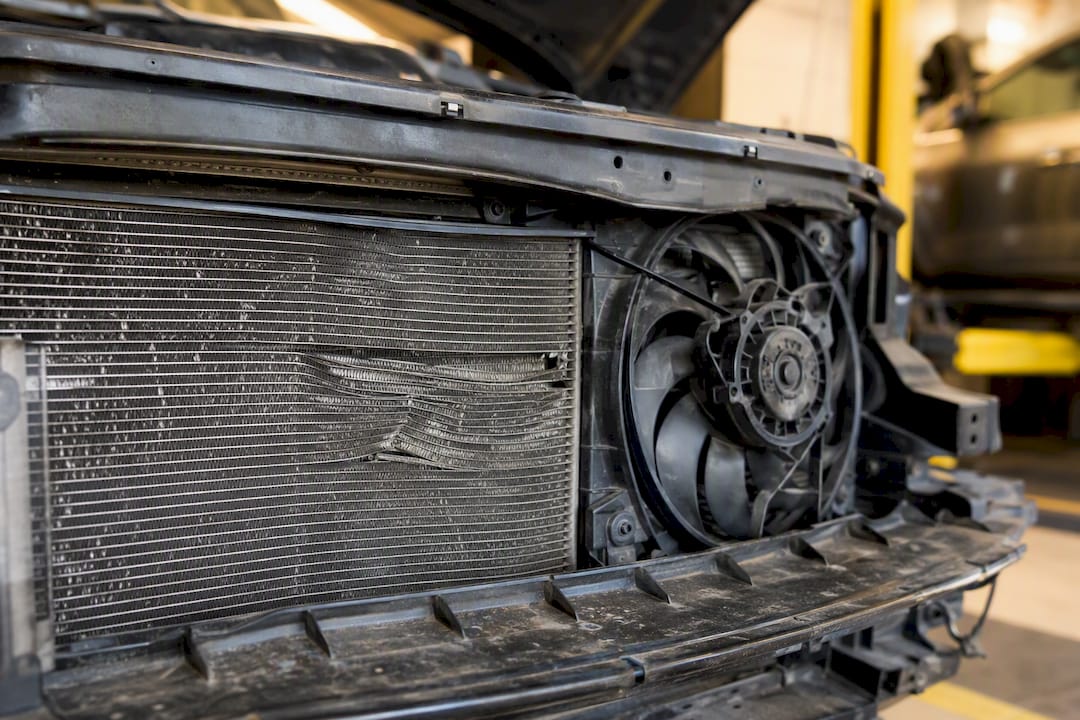
- Inspect the front grille and condenser. Bugs, leaves, and road debris block airflow across the condenser, and bent fins reduce heat rejection even with a full refrigerant charge.
- Look for oily residue near hoses and fittings. Refrigerant oil leaves a telltale film at leak points, which is one of the visual clues technicians look for during leak detection.
- Check your HVAC settings and fuses. Confirm recirculation mode is on and temperature is set to cold, then pull the manual for your blower and compressor clutch fuse locations.
Pro Tip: Write down exactly when the problem happens (idle vs. driving, hot days vs. cool mornings) and any noise you hear. That timeline often points a technician straight to the cause and can shave real time off your diagnostic visit.
What’s Actually Causing Your Car AC Warm Air
Most car AC problems fall into five categories, and each one tends to announce itself with a slightly different pattern.
Refrigerant loss from a slow leak is the most common culprit behind AC not cold when idling or gradually losing cool air over weeks. The system rarely just “runs low” on its own. Since it’s a closed loop, refrigerant loss almost always means a leak somewhere in a hose, seal, or fitting, not normal consumption. A recharge brings back cold air for a while, then the same warm air returns, often within days or weeks, along with oily residue at fittings.
Compressor or clutch failure shows up as clicking or grinding noise from under the hood, or a compressor that simply never engages when you flip the AC on. This is one of the more expensive faults on the list and rarely something an owner can address at home.
Condenser or cooling fan problems create a distinctive pattern: cold air at highway speed, warm air at a stoplight. Airflow across the condenser drops at idle, so a marginal system that seemed fine on the freeway suddenly blows warm the moment you sit in traffic. Bent condenser fins or a fan that’s stopped spinning are the usual suspects behind this exact symptom, though a low charge under heat-soak conditions can mimic it too.
Cabin-side airflow issues include a dirty cabin air filter, a weakening blower motor, or a blend-door actuator that’s stuck partway between hot and cold. These produce uneven vent temperatures or unusually weak airflow even when the refrigerant side is perfectly healthy.
Electrical and control faults are the wild card: blown fuses, failed relays, or HVAC module sensor errors can cause the compressor to never engage or the system to work intermittently with no obvious pattern at all.
- Refrigerant leak: gradual warm up, oily residue, temporary fix after recharge
- Compressor fault: clicking, grinding, or no engagement
- Condenser/fan issue: cold at speed, warm at idle
- Cabin airflow: dirty filter, weak blower, uneven vents
- Electrical fault: blown fuse, relay, or sensor error
How Do Technicians Diagnose AC Not Cold When Idling?
A real diagnostic follows a sequence, not a hunch. Here’s the flow a shop should walk you through.
- Static pressure and leak check. With the system at rest, technicians compare high and low side pressures. Equal pressure at rest generally rules out a blockage, while a decay test or UV dye method pinpoints exactly where refrigerant is escaping.
- Dynamic performance test. The system runs at idle, then at roughly 1,500 RPM, while the technician records vent temperature and both high and low side pressures alongside ambient temperature. The pattern that emerges separates a low charge from an airflow restriction; they look different on paper even though both can feel identical from the driver’s seat.
- Condenser and fan inspection. The technician checks whether the cooling fan actually spins, whether the condenser is clean, and how the system behaves once it heat soaks at idle.
- Compressor and electrical checks. This step confirms the clutch or variable compressor engages correctly and pulls any HVAC-related trouble codes stored in the vehicle’s computer.
- Cabin airflow and actuator checks. Blower motor amp draw, cabin filter condition, and blend-door actuation get tested to explain uneven vent temperatures or weak airflow.
Interpreting pressure, temperature, and airflow together is what makes a diagnosis reliable, because a single measurement in isolation can be misleading.
| Test Stage | What’s Measured | What It Reveals |
|---|---|---|
| Static pressure check | High/low side pressure at rest | Rules out blockage; flags suspected leaks |
| Dynamic idle/RPM test | Vent temp, pressures, ambient temp | Separates low charge from airflow issues |
| Condenser/fan inspection | Fan operation, fin condition | Explains cold-at-speed, warm-at-idle pattern |
| Electrical/compressor check | Clutch engagement, trouble codes | Identifies control or wiring faults |
Recharge or Repair: What Should You Expect to Pay?
A recharge and a repair solve two different problems, and confusing them is how owners end up paying for the same service twice. A recharge restores refrigerant. A repair fixes whatever let the refrigerant out or whatever component failed, whether that’s a hose, an O-ring, the condenser, the compressor, an expansion valve, or a blend-door actuator.
Recharging alone is a reasonable fix only when diagnosis confirms the system is low with no detectable leak. If cold air keeps disappearing after repeated recharges, that’s the clearest sign a leak is being masked instead of fixed, and it’s worth asking a shop directly whether they plan to diagnose the root cause or just top off refrigerant.
Costs vary by vehicle, refrigerant type, and labor rates, but minor repairs like hose or seal replacements tend to cost less, condenser replacements more due to parts and labor, and compressor replacements are usually the most expensive because of required additional system work.
- Ask for a written diagnosis before any repair begins
- Expect an itemized estimate, not a verbal ballpark
- Confirm the shop uses ASE-certified technicians
- Ask whether parts carry a warranty and what refrigerant type is used
Pro Tip: If a shop offers to “just add refrigerant” without running pressure and leak checks first, that’s a red flag. A proper recharge guide explains why a diagnosis should always come before topping off the system.
Is It Safe to Recharge Your Own Car AC?
Refrigerant is hazardous. Skin and eye contact should be avoided, and deliberately venting it to the atmosphere is both harmful and, in many cases, restricted. Overcharging a system can damage the compressor, which turns a cheap fix into an expensive one.
A DIY can is sometimes fine for a minor top-off on a system confirmed to be low without a leak, based on general consumer guidance. But if you’ve recharged recently, notice oily residue, or hear compressor noise, stop.
- Never add refrigerant to a system that was recently recharged
- Don’t attempt DIY if the compressor is noisy or the system is completely empty
- After a collision or sudden failure, have the vehicle towed to a shop instead of testing it yourself
What We’d Tell You if You Were a Friend
Most advice about car AC treats refrigerant like windshield washer fluid: something you top off when it runs low. That framing is the reason so many owners buy a second and third can before finally booking a real diagnostic. A closed refrigerant loop doesn’t consume refrigerant through normal use. If it’s low, something let it out, and no amount of recharging changes that fact.
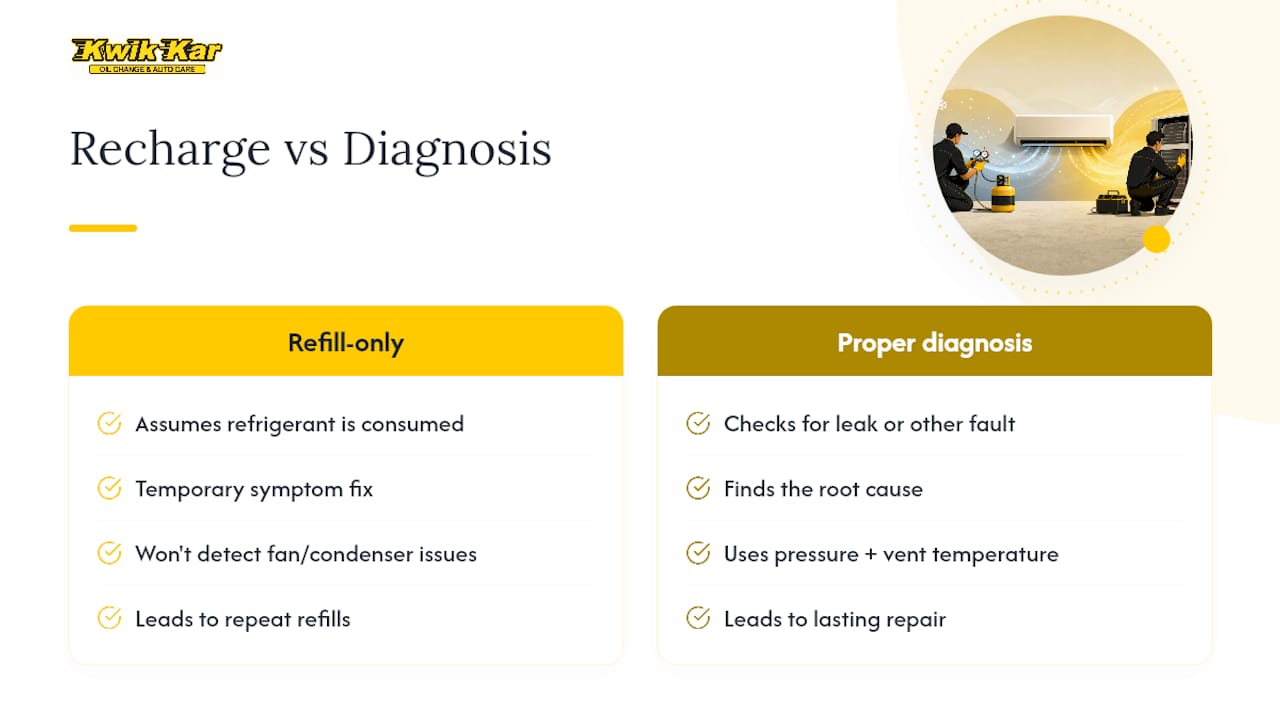
The overlooked part of this problem isn’t the refrigerant at all. It’s how often a warm-at-idle, cold-at-speed pattern gets misread as “just needs a recharge” when it’s actually a fan or condenser issue that a can of refrigerant will never fix. That’s why measurement matters more than intuition here: pressure and vent temperature readings taken together tell a different story than either one alone.
If there’s one thing worth prioritizing, it’s asking a straightforward question before you pay for anything: is this shop diagnosing the cause, or just refilling the tank? That single question separates a lasting repair from a problem you’ll be paying for again next month.
— Kwik Kar
Get an AC Diagnostic Backed by Measurement, Not Guesswork
Instead of guessing between a recharge and a repair, Kwik Kar Oil Change & Auto Care runs the same measurement-driven diagnostic outlined above: static and dynamic pressure checks, vent temperature readings, and visual leak detection, performed by ASE Certified Master technicians.

Every AC diagnostic ends with a written estimate before any work begins, so you know exactly what’s wrong and what it costs to fix, whether that’s a simple hose repair or a full compressor replacement. Kwik Kar’s recognition from RepairPal and NAPA AutoCare reflects the same standard applied across every service bay. Most AC diagnostics turn around the same day, and current specials like the $30 off maintenance coupon can help offset the cost of that first inspection.
If your AC has been blowing warm, cold then warm, or fine at speed but weak at idle, visit the AC service and repair page to schedule a diagnostic, or browse full auto repair services if you suspect the issue runs beyond the AC system.
Sources
For deeper detail beyond this checklist, review the OEM diagnostic test flow for technician-level procedures, AAA’s consumer guidance on early warning signs, and Kwik Kar Oil Change & Auto Care’s ASE and RepairPal credentials page for proof of certification standards.
- Car AC Recharge vs Repair: How to Know What You Actually Need — Mechanic Insights
- OEM diagnostic procedures and test flow (service bulletin PDF)
FAQ
Why Is My AC Cold Then Warm Again?
This pattern usually means a slow refrigerant leak, since a recharge temporarily restores cold air until the same amount escapes again through the same leak point.
Why Does My AC Blow Warm at Idle but Cold While Driving?
This typically points to a condenser or cooling fan problem, since airflow across the condenser drops at idle and a weak fan can’t make up the difference.
Is It Normal to Need an AC Recharge Every Year?
No. A properly sealed system shouldn’t lose refrigerant on a yearly basis, and needing repeat recharges is a sign a leak hasn’t been found and fixed yet.
Can I Just Add a DIY Refrigerant Can Myself?
A DIY can may work for a minor top-off on a system confirmed low without a leak, but it’s not appropriate if you’ve recharged recently, hear compressor noise, or see oily residue at fittings.
What Does a Professional AC Diagnostic Include?
A proper diagnostic includes static and dynamic pressure checks, vent temperature readings at idle and elevated RPM, and a visual inspection for leaks, which is the exact process Kwik Kar Oil Change & Auto Care’s ASE-certified technicians follow before recommending any repair.